



Caspase Activator
-
Simotaxel
 0 ImagesCat. No.: HY-16457CAS No.: 791635-59-1Synonyms: MST 997
Simotaxel (MST 997) is an orally active derivative of the taxane class. Simotaxel binds to β-tubulin and promotes tubulin polymerization (EC₅₀ = 0.9 μM), inhibits tubulin depolymerization, and causes cell cycle arrest at the G₂-M phase. Simotaxel disrupts the formation of the mitotic spindle and triggers the caspase-dependent apoptotic pathway (apoptosis). Simotaxel has inhibitory effects on Paclitaxel (HY-B0015) sensitive cell lines and overcomes drug resistance. Simotaxel can be used to study Paclitaxel / Docetaxel (HY-B0011) resistant solid tumors.
-
AS1604498
 0 ImagesCat. No.: HY-119159CAS No.: 361465-74-9
AS1604498 is a highly specific competitive inhibitor of human NAMPT, with an IC50 of 44.4 nM. AS1604498 functionally inhibits NAMPT enzymatic activity, reduces nicotinamide mononucleotide production, decreases intracellular NAD levels, activates caspase 3/7 and induces cancer cell apoptosis. AS1604498 is applicable to research related to chronic myeloid leukemia.
-
Anisomelic acid
 0 ImagesCat. No.: HY-N20712CAS No.: 59632-76-7
Anisomelic acid is a human papillomavirus HPV16 E6 and HPV E7 depletor. Anisomelic acid directly interacts with HPV16 E6, promotes its ubiquitination and proteasomal degradation by recruiting E3 ubiquitin ligase, downregulates E6 and facilitates E7 degradation. Anisomelic acid induces endogenous mitochondrial apoptosis, activates caspase-3, causes cleavage of PARP, and triggers p53-independent endogenous apoptosis by depleting cIAP2. Anisomelic acid can be used in research related to HPV-positive cancers and cervical cancer.
-
Fenobucarb (Standard)
 0 Images
Fenobucarb (Standard) is the analytical standard of Fenobucarb. This product is intended for research and analytical applications. Fenobucarb is a carbamate insecticide. Fenobucarb induces zebrafish developmental neurotoxicity through pathways involved in inflammation, oxidative stress, degeneration and apoptosis. Fenobucarb is a possible risk factor to cardiovascular and cerebrovascular systems in animals.
-
Glycocholic acid sodium (Standard)
 0 ImagesCat. No.: HY-N1423ARCAS No.: 863-57-0
Glycocholic acid (sodium) (Standard) is the analytical standard of Glycocholic acid sodium (HY-N1423A). This product is intended for research and analytical applications. Glycocholic acid sodium is a bile acid derivative. Glycocholic acid downregulates MDR1, Bcl-2, MRP1, MRP2 and FXR, upregulates Bax, p53, caspase-9, caspase-3, TGR5 and S1PR2. Glycocholic acid sodium inhibits multidrug resistance and efflux pumps, induces mitochondrial apoptosis, and enhances chemosensitivity. Glycocholic acid sodium modulates related bile acid receptor signaling. Glycocholic acid sodium suppresses growth and conjugation of Enterobacteriaceae and increases their antibiotic susceptibility. Glycocholic acid sodium can be used for the research of colon adenocarcinoma and cholangiocarcinoma (CCA).
-
Briciclib sodium
 0 ImagesCat. No.: HY-16366ACAS No.: 865784-01-6Synonyms: ON 014185 sodium
Briciclib (ON 014185) sodium is a eukaryotic translation initiation factor 4E (eIF4E) inhibitor. Briciclib sodium exhibits broad-spectrum anti-cancer activity, including in mantle cell leukemia, breast cancer, gastric cancer, and esophageal cancer cells. Briciclib sodium reduces the expression of cyclin D1 and c-Myc, and enhances the expression of P53 and Cleaved Caspase 3 pro-apoptotic proteins. Briciclib sodium can be used for the study of hematological system tumors and solid tumors.
-
Stigmalactam
 0 ImagesCat. No.: HY-N16535CAS No.: 289499-72-5
Stigmalactam is an aristolactam-type alkaloid extracted from Orophea enterocarpa with anticancer effects. Stigmalactam induces apoptosis via the mitochondrial pathway, with the activation of caspase-3/9, and a decrease in mitochondrial membrane potential (MTP). Stigmalactam exhibits antioxidant activity by decreasing ROS production. Stigmalactam can be used for liver and breast cancer research.
-
6-Methoxydihydrosanguinarine hydrochloride
 0 ImagesCat. No.: HY-N3000A
6-Methoxydihydrosanguinarine hydrochloride is an alkaloid with activity across multiple cancer cell types. 6-Methoxydihydrosanguinarine hydrochloride activates IRE1/JNK signaling, blocks Akt/mTOR and PI3K/AKT/mTOR pathways, reduces expression of Cdc25C, CyclinB1, Cdc2, YAP/TAZ, Survivin, GPX4, and EGFR, upregulates IRE1 and DR5, and activates JNK and caspases. 6-Methoxydihydrosanguinarine hydrochloride induces apoptosis, G2/M phase arrest, DNA damage, ROS generation, lipid peroxidation, ferroptosis, autophagy, and suppresses cancer cell growth. 6-Methoxydihydrosanguinarine hydrochloride disruptes the biofilm formation of Candida albicans (C. albicans). 6-Methoxydihydrosanguinarine hydrochloride can be used for the research of non-small cell lung cancer, hepatocellular carcinoma, melanoma, colon carcinoma, ovarian cancer and breast cancer.
-
Demethoxyfumitremorgin C
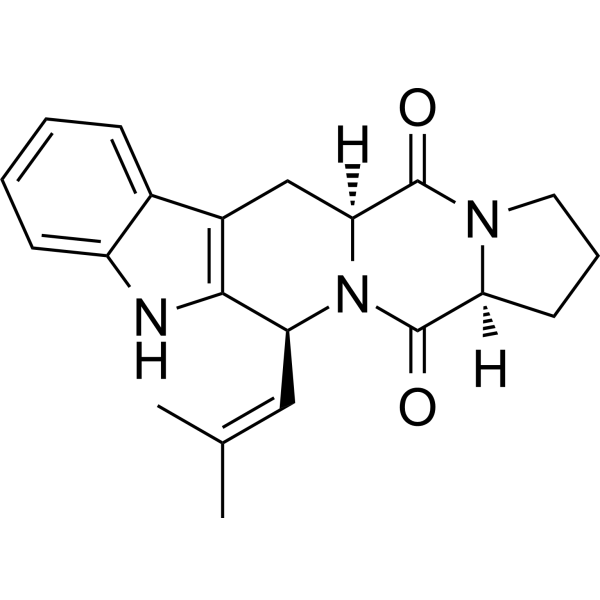 0 ImagesCat. No.: HY-N7569CAS No.: 111768-16-2
Demethoxyfumitremorgin C is a secondary metabolite of the marine fungus, Aspergillus fumigatus. Demethoxyfumitremorgin C induces prostate cancer cell apoptosis. Demethoxyfumitremorgin C activates caspase-3, -8, and -9, leading to PARP/ cleavage.
-
ATWLPPRAANLLMAAS
 0 ImagesCat. No.: HY-P10832CAS No.: 1228447-26-4
ATWLPPRAANLLMAAS is a chimeric peptide with anti-angiogenic and potent anti-tumor effects. ATWLPPRAANLLMAAS can inhibit the proliferation, viability, migration, and invasion of human hepatocellular carcinoma cells, and induce apoptosis..
-
Aminoflavone
 0 ImagesCat. No.: HY-132974CAS No.: 165179-35-1Synonyms: NSC-686288
Aminoflavone is an anti-tumor agent. Aminoflavone inhibits the expression of ITGA6/SOX2 by activating the AhR-miR-125b-2-3p axis, thereby targeting breast cancer stem cells. Aminoflavone induces an increase in intracellular ROS, increases the level of oxidative DNA damage marker 8-oxodG and DNA-protein cross-links. Aminoflavone causes S-phase arrest, activates caspase-3/8/9 and induces apoptosis (apoptosis). Aminoflavone inhibits HIF-1α expression in a manner independent of AhR. Aminoflavone can be used for the study of breast cancer.
-
5,7-Dihydroxychromone (Standard)
 0 ImagesCat. No.: HY-N1970RCAS No.: 31721-94-5
5,7-Dihydroxychromone (Standard) is the analytical standard of 5,7-Dihydroxychromone (HY-N1970). This product is intended for research and analytical applications. 5,7-Dihydroxychromone is a flavonoid compound with antioxidant properties. 5,7-Dihydroxychromone induces Nrf2 nuclear translocation, increases Nrf2/ARE binding activity, and up-regulates Nrf2-dependent antioxidant genes HO-1, NQO1, GCLc. 5,7-Dihydroxychromone attenuates excessive ROS generation, inhibits activated caspase-3, caspase-9, cleaved PARP expression, and prevents neuronal apoptosis and cell death. 5,7-Dihydroxychromone increases LXRα and PPARγ mRNA expression, induces preadipocyte differentiation, and regulates blood glucose levels. 5,7-Dihydroxychromone inhibits radial growth of soil pathogenic fungi, radicle elongation of select seedlings, and transiently inhibits Bradyrhizobium sp. growth in high mannitol medium. 5,7-Dihydroxychromone can be used for the research of Parkinson’s disease, type 2 diabetes mellitus and pathogenic fungal infection.
-
Flavokawain A (Standard)
 0 Images
Flavokawain A is a chalcone compound and an orally active inhibitor of PRMT5 and cytochrome P450. Flavokawain A has anti-inflammatory, anti-tumor, and immunomodulatory effects. Flavokawain A can inhibit the proliferation of tumor cells and induce apoptosis. Flavokawain A can be used in the research of diseases such as bladder cancer.
-
Berzosertib (Standard)
 0 ImagesCat. No.: HY-13902RCAS No.: 1232416-25-9Synonyms: VE-822 (Standard); VX-970 (Standard); M6620 (Standard)
Berzosertib (Standard) is the analytical standard of Berzosertib (HY-13902). This product is intended for research and analytical applications. Berzosertib (VE-822) is an orally active, CNS-penetrant, and selective ATR Kinase inhibitor. Berzosertib blocks ATR Kinase activity, abrogates G2/M cell cycle checkpoint, impairs DNA damage repair. Berzosertib induces apoptosis, inhibnits conlony migration, inhibits cell proliferation, and activates cGAS-STING axes in cancer cells. Berzosertib can be used for the research of cancers, such as head and neck squamous cell carcinoma, and colorectal cancer.
-
Phenoxodiol (Standard)
 0 ImagesSynonyms: Idronoxil (Standard); Dehydroequol (Standard); Haginin E (Standard)
Phenoxodiol (Standard) is the analytical standard of Phenoxodiol. This product is intended for research and analytical applications. Phenoxodiol (Idronoxil), a synthetic analog of Genestein, activates the mitochondrial caspase system, inhibits XIAP (an apoptosis inhibitor), and sensitizes the cancer cells to Fas-mediated apoptosis. Phenoxodiol also inhibits DNA topoisomerase II by stabilizing the cleavable complex. Phenoxodiol induces cell cycle arrest in the G1/S phase of the cell cycle and upregulates p21WAF1 via a p53 independent manner.
-
ALC67
 0 ImagesCat. No.: HY-117047CAS No.: 1044255-57-3
ALC67 is a cytotoxic thiazolidine compound with an IC50 of approximately 5 μM against liver, breast cancer, colon cancer, and endometrial cancer cell lines. ALC67 induces apoptosis in cancer cells by activating caspase-9 and causing cell cycle arrest at the SubG1/G1 phase, via a pathway that is independent of death receptors. ALC67 can be used in cancer research.
-
TFGF-18
 0 ImagesCat. No.: HY-171031CAS No.: 2222662-20-4
TFGF-18 is a GSK-3β inhibitor (IC50: 0.59 μM). TFGF-18 inhibits LPS-induced microglia activation and proinflammatory mediators release via inhibiting GSK-3β and downstream p65/NF-κB signaling. TFGF-18 inhibits neuronal apoptosis and oxidative stress, inhibits expressions of Bax, caspase3 and cleaved-caspase3 and increases the expression of Bcl-2. TFGF-18 has neuroprotection effect, inhibit neuroinflammation and attenuates cognitive impairment.
-
Glufosfamide (Standard)
 0 ImagesCat. No.: HY-16232RCAS No.: 132682-98-5Synonyms: D 19575 (Standard); Glucosylifosfamide mustard (Standard)
Glufosfamide (Standard) is the analytical standard of Glufosfamide. This product is intended for research and analytical applications. Glufosfamide is a glucose-conjugated alkylating cytotoxic agent and a derivative of Ifosfamide (HY-17419). Glufosfamide induces apoptosis frequency and increase the expression of caspase-9 and caspase-3 in cancer cells. Glufosfamide shows great anti-tumor activity in MiaPaCa-2-RFP mouse model. Glufosfamide can be used for the study of hepatocellular carcinoma, prostate cancer and pancreatic carcinoma.
-
Fucoxanthinol
 0 Images
Fucoxanthinol, a carotenoid, is a deacetylated Fucoxanthin (HY-N2302) metabolite with oral activity, and inhibits rat pancreatic lipase with an IC50 of 764 nM. Fucoxanthinol reduces expression of Bcl-2, Bcl-xL, survivin, XIAP, cIAP2, cyclin D1, cyclin D2, cyclin E, CDK4, CDK6, β-catenin, JunD, PPARγ, and induces GADD45α expression. Fucoxanthinol activates caspase-3, caspase-8, caspase-9, Nrf2/Keap1/ARE pathway, and inhibits activation of Akt, NF-κB, AP-1, PDPK1, GSK3β phosphorylation. Fucoxanthinol induces apoptosis, G0/G1 cell cycle arrest, inhibits cancer cell viability, proliferation, migration, invasiveness, tumour growth, adipocyte differentiation, oxidative stress, neurotoxicity, triglyceride absorption, angiogenesis, and obesity-induced inflammation. Fucoxanthinol can be used for the research of osteosarcoma, leukemia, lymphoma, adult T-cell leukemia, prostate cancer, colon cancer, breast cancer, hypertriglyceridaemia, Alzheimer’s disease, Parkinson’s disease, obesity, insulin resistance, malignant melanoma, and type II diabetes.
-
Oxidopamine hydrobromide (Standard)
 0 ImagesCat. No.: HY-B1081ARCAS No.: 636-00-0Synonyms: 6-Hydroxydopamine hydrobromide (Standard); 6-OHDA hydrobromide (Standard)
Oxidopamine hydrobromide (Standard) is the analytical standard of Oxidopamine hydrobromide (HY-B1081A). This product is intended for research and analytical applications. Oxidopamine (6-OHDA) hydrobromide is an antagonist of the neurotransmitter dopamine. Oxidopamine hydrobromide is a widely used neurotoxin and selectively destroys dopaminergic neurons. Oxidopamine hydrobromide promotes COX-2 activation, leading to PGE2 synthesis and pro-inflammatory cytoKine IL-1β secretion. Oxidopamine hydrobromide can be used for the research of ParKinson’s disease (PD), attention-deficit hyperactivity disorder (ADHD), and Lesch-Nyhan syndrome.



