



Microtubule/Tubulin
Microtubules are a component of the cytoskeleton, found throughout the cytoplasm. These tubular polymers of tubulin can grow as long as 50 micrometres, with an average length of 25 µm, and are highly dynamic. The outer diameter of a microtubule is about 24 nm while the inner diameter is about 12 nm. Microtubules are found in eukaryotic cells and are formed by the polymerization of a dimer of two globular proteins, alpha and beta tubulin. Tubulin is one of several members of a small family of globular proteins. The tubulin superfamily includes five distinct families, the alpha-, beta-, gamma-, delta-, and epsilon-tubulins and a sixth family which is present only in kinetoplastid protozoa. The most common members of the tubulin family are α-tubulin and β-tubulin, the proteins that make up microtubules. Microtubules are very important in a number of cellular processes. They are involved in maintaining the structure of the cell.
All Product Categories
-
Microtubule/Tubulin Inhibitors
(812)
View all products
-
Microtubule/Tubulin Agonists
(2)
View all products
-
Microtubule/Tubulin Antagonist
(1)
View all products
-
Microtubule/Tubulin Activators
(21)
View all products
-
Microtubule/Tubulin Modulators
(20)
View all products
-
Microtubule/Tubulin Inducers
(5)
View all products
-
Microtubule/Tubulin Degraders
(3)
View all products
-
Microtubule/Tubulin Controls
(19)
View all products
-
Microtubule/Tubulin Ligands
(5)
View all products
-
Microtubule/Tubulin Related Products (1003)
Related Products (1003)

-
Antibodies (69)
-
HDAC6-IN-61
 0 ImagesCat. No.: HY-176733HDAC6-IN-61 (Compound 4e) is a HDAC6 inhibitor (IC50: 73 nM) with selectivity over other HDAC isoforms. HDAC6-IN-61 is also a GPR40 activator. HDAC6-IN-61 increases acetylated tubulin and ERK phosphorylation levels. HDAC6-IN-61 can be used for research of neuroinflammation such as Alzheimer's disease.
-
EGFR-IN-57
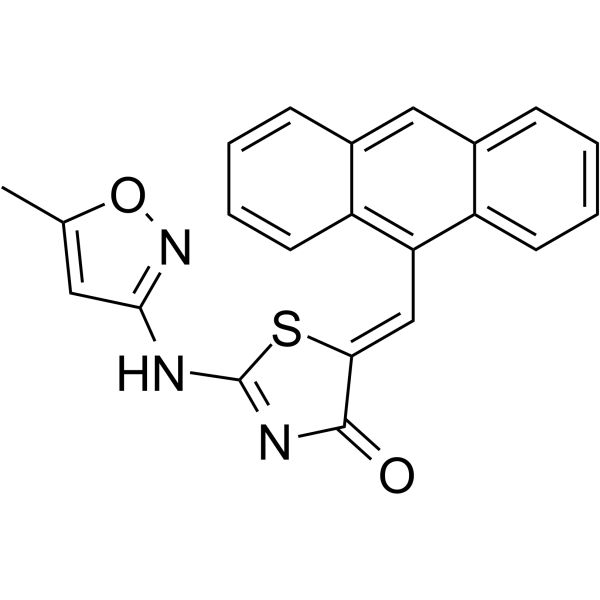 0 ImagesCat. No.: HY-146138CAS No.: 2492382-37-1EGFR-IN-57 (Compound 25a) is a potent, orally active EGFR-TK inhibitor with an IC50 of 0.054 µM. EGFR-IN-57 also inhibits VEGFR-2, CK2α, topoisomerase IIβ and tubulin polymerization with IC50 values of 0.087, 0.171, 0.13 and 3.61 µM, respectively. EGFR-IN-57 induces cell cycle arrest at G2/M and pre-G1 phases. EGFR-IN-57 induces cancer cell apoptosis.
-
EGFR/microtubule-IN-1
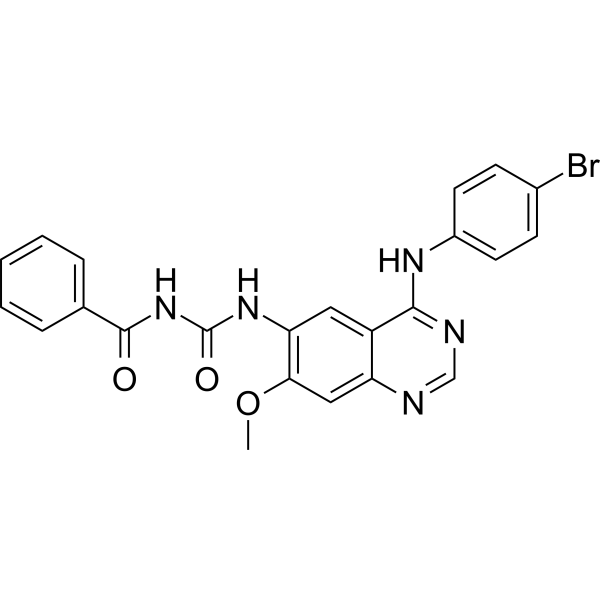 0 ImagesCat. No.: HY-161145CAS No.: 1970269-96-5
-
Tubulysin IM-3
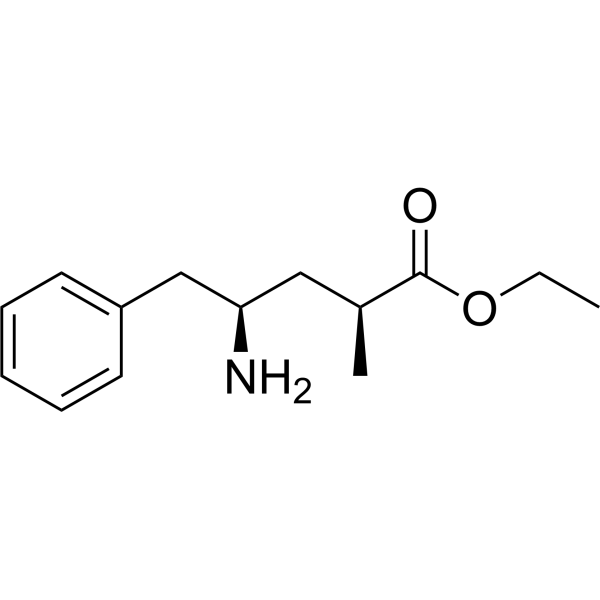 0 ImagesCat. No.: HY-130960CAS No.: 1639986-05-2Tubulysin IM-3 is a microtubule/Tubulin inhibitor that can act as an ADC cytotoxin (ADC Cytotoxin) and an anti-microtubule toxin (anti-microtubule toxins). Used for ADC synthesis.
-
PKM2-IN-11
 0 ImagesCat. No.: HY-178441PKM2-IN-11 is a PKM2 inhibitor (IC50 = 0.363 μM). PKM2-IN-11 has dual mechanisms involving pyruvate kinase M2 (PKM2) inhibition and microtubule stabilization. PKM2-IN-11 can decrease PKM2 protein levels in MCF-7 cells. PKM2-IN-11 can slightly reduce reactive oxygen species (ROS) levels and significantly increase early apoptotic cells. PKM2-IN-11 induces G2/M phase arrest. PKM2-IN-11 can be used for the study of breast cancer.
-
Denibulin
 0 ImagesCat. No.: HY-14919CAS No.: 284019-34-7Synonyms: MN-029 free baseDenibulin, a novel vascular-disrupting agent, inhibits microtubule assembly reversibly, disrupting tumor vascular endothelial cell cytoskeletons. Denibulin demonstrated tolerability and potential anti-vascular effects, warranting further investigation in cancer therapy.
-
CAY10701
 0 ImagesCat. No.: HY-121092CAS No.: 1616967-52-2CAY10701 (Compound 20) is a 7-deazahypoxanthine analogue with anticancer activity.
-
Eribulin mesylate (purity>99%, single impurity ≤ 0.15%)
 0 ImagesCat. No.: HY-13442CCAS No.: 441045-17-6Synonyms: B1939 mesylate (purity>99%, single impurity ≤ 0.15%); E7389 mesylate (purity>99%, single impurity ≤ 0.15%); ER-086526 mesylate (purity>99%, single impurity ≤ 0.15%)Eribulin (B1939; E7389; ER-086526) mesylate (purity>99%, single impurity ≤ 0.15%) is an inhibitor for microtubule. Eribulin mesylate (purity>99%, single impurity ≤ 0.15%) inhibits the proliferation of cancer cell LM8 and Dunn, inhibits the cell migration of LM8, arrests the cell cycle at G2/M phase, and induces apoptosis in LM8. Eribulin mesylate (purity>99%, single impurity ≤ 0.15%) exhibits antitumor efficacy in mouse model.
-
HDAC-IN-91
 0 ImagesCat. No.: HY-175021HDAC-IN-91 is a multiple inhibitor of HDAC (IC50 = 134.22 nM for HDAC1, 66.29 nM for HDAC2), carbonic anhydrase (CA) (Ki = 72.03 nM for CA IX, 50.76 nM for XII), and tubulin polymerization ( IC50 = 2.56 μM). HDAC-IN-91 inhibits PARP1 and increases the Bax/Bcl-2 ratio. HDAC-IN-91 blocks the cell cycle at the G2/M phase and induces apoptosis through a mitochondrial apoptosis activation mechanism. HDAC-IN-91 can exert potent cytotoxic activity through tubulin polymerization inhibition. HDAC-IN-91 can be used in breast, colorectal, cervical and lung cancer research.
-
Tubulin polymerization-IN-69
 0 ImagesCat. No.: HY-168128Tubulin polymerization-IN-69 (compund 6c) significantly inhibits microtubule/tubulin polymerization in vitro (78.3% inhibition) with an IC50 value of 6.53 μM, and rapidly induces apoptotic cell death and G2/M cell cycle arrest in MCF-7 cells.
-
Cornigerine
 0 ImagesCornigerine (Colchicine impurity H) is an antimitotic agent and tubulin antagonist. Cornigerine inhibits tubulin polymerization, blocks colchicine binding to tubulin, and stimulates tubulin-dependent GTP hydrolysis. Cornigerine induces metaphase arrest in leukemia cells and exhibits toxic activity against leukemia cells. Cornigerine can be used in research on mouse leukemia.
-
MC-VC(S)-PABQ-Tubulysin M
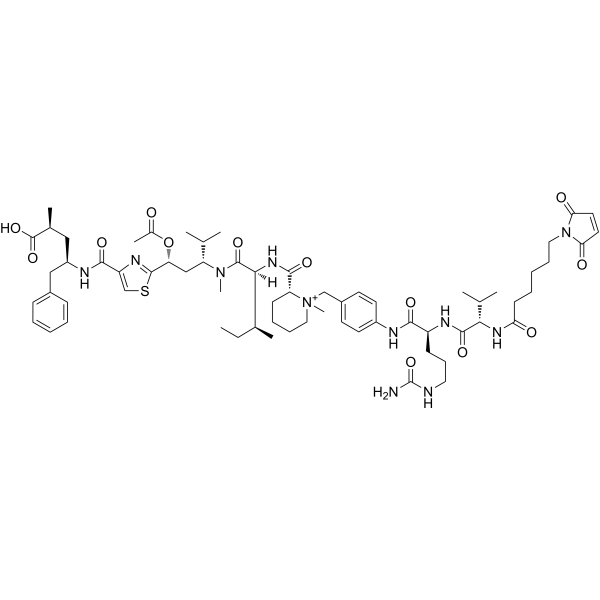 0 ImagesCat. No.: HY-128910CAS No.: 2055896-86-9MC-VC(S)-PABQ-Tubulysin M is a synthetic ADC drug-linker conjugate composed of the tubulin polymerization inhibitor Tubulysin M (an ADC Cytotoxin) (HY-N7053) and MC-VC(S)- PABQ (an ADC linker) is connected. MC-VC(S)-PABQ-Tubulysin M is effective against multidrug-resistant lymphoma cell lines and tumors.
-
BMS 275183
 0 ImagesCat. No.: HY-106219CAS No.: 355113-98-3BMS 275183 is a potent, orally active analogue of Paclitaxel (HY-B0015). BMS 275183 can stabilize microtubules and exhibits antitumor activity in in vivo tumor models. BMS 275183 is active in vitro against Paclitaxel-resistant tumors including those harboring tubulin mutations or overexpressing P-glycoprotein. BMS 275183 can be used for cancer research, such as non-small cell lung cancer (NSCLC) and prostate carcinoma.
-
Anti-SLC34A2 (Lifastuzumab)-McMMAF
 0 ImagesCat. No.: HY-171737Anti-SLC34A2 (Lifastuzumab)-McMMAF is an antibody-drug conjugate (ADC) consisting of the humanized anti-SLC34A2 (sodium-dependent phosphate transporter 2) antibody Lifastuzumab (HY-P99970) conjugated to the protective group maleimidocaproyl and the tubulin inhibitor MMAF (HY-15579). The ADC toxic molecule and linker part McMMAF (HY-15578). Anti-SLC34A2 (Lifastuzumab)-McMMAF induces apoptosis and can be used in cancer research.
-
Flutax-2
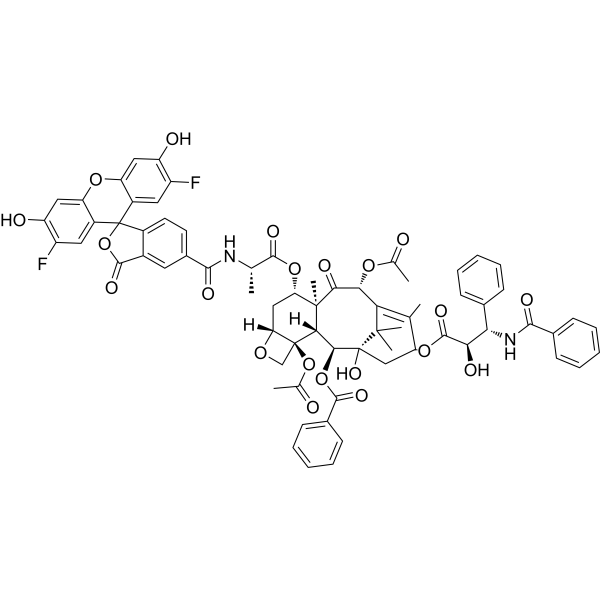 0 ImagesCat. No.: HY-162161CAS No.: 301844-13-3Flutax-2 is an active fluorescent derivative of Paclitaxel (HY-B0015) that binds to polymerized αβ-tubulin dimers. Flutax-2 is applicable for imaging microtubules in live cells, isolated cytoskeletons and parasites (Ex/Em=496/526 nm).
-
N-MeVal-Val-Dil-Dap-2-(pyridin-3-yl)ethanamine
 0 ImagesCat. No.: HY-164787CAS No.: 1448364-29-1N-MeVal-Val-Dil-Dap-2-(pyridin-3-yl)ethanamine (Compound 14) is a tubulin polymerization inhibitor that can be used as an ADC payload.
-
Tubulin polymerization-IN-17
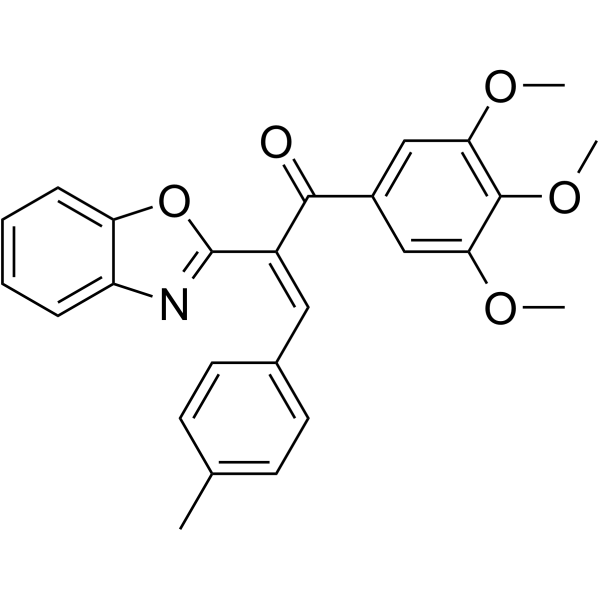 0 ImagesCat. No.: HY-146362CAS No.: 2454175-89-2
-
Tubulin-IN-56
 0 ImagesCat. No.: HY-178038Tubulin-IN-56 is a tubulin inhibitor. Tubulin-IN-56 exerts cytotoxic effects against colon cancer cell lines (LS180, HCT116, SW620, LoVo). Tubulin-IN-56 downregulates βIII-tubulin and upregulates βIVa-tubulin in colon cancer cell lines. Tubulin-IN-56 inhibits cell invasiveness and elevates intracellular ROS levels in colon cancer cell lines. Tubulin-IN-56 can be used for the study of colon cancer.
-
Paclitaxel-13C6
 0 ImagesCat. No.: HY-W768912Paclitaxel-13C6 is the 13C-labeled Paclitaxel. Paclitaxel is a naturally occurring antineoplastic agent and stabilizes?tubulin?polymerization. Paclitaxel can cause both mitotic arrest and?apoptotic?cell death. Paclitaxel also induces?autophagy.
-
BKT300
 0 ImagesCat. No.: HY-179466CAS No.: 2551033-16-8BKT300 is a potent and selective protein regulator of cytokinesis 1 (PRC1) inhibitor. BKT300 inhibits PRC1 dephosphorylation at T481, disrupts actin and microtubule formation, induces G2/M cell cycle arrest, triggers mitotic catastrophe, and promotes apoptosis, thereby inhibiting proliferation and migration of acute myeloid leukemia (AML) cells while sparing normal cells. BKT300 inhibits tumor growth in mouse xenograft AML models. BKT300 can be used for the research of AML.




