



PI3K
Phosphoinositide 3-kinase
PI3K (Phosphoinositide 3-kinase), via phosphorylation of the inositol lipid phosphatidylinositol 4,5-bisphosphate (PI(4,5)P2), forms the second messenger molecule phosphatidylinositol (3,4,5)-trisphosphate (PI(3,4,5)P3) which recruits and activates pleckstrin homology domain containing proteins, leading to downstream signalling events crucial for proliferation, survival and migration. Class I PI3K enzymes consist of four distinct catalytic isoforms, PI3Kα, PI3Kβ, PI3Kδ and PI3Kγ.
There are three major classes of PI3K enzymes, being class IA widely associated to cancer. Class IA PI3K are heterodimeric lipid kinases composed of a catalytic subunit (p110α, p110β, or p110δ; encoded by PIK3CA, PIK3CB, and PIK3CD genes, respectively) and a regulatory subunit (p85).
The PI3K pathway plays an important role in many biological processes, including cell cycle progression, cell growth, survival, actin rearrangement and migration, and intracellular vesicular transport.
PI3K Isoform Specific Products
-
PI3Kα
(240)
View all products
-
PI3Kβ
(165)
View all products
-
PI3Kγ
(185)
View all products
-
PI3Kδ
(205)
View all products
-
PI3KC2α
(8)
View all products
-
PI3KC2β
(12)
View all products
-
PI3KC2γ
(4)
View all products
-
Vps34
(25)
View all products
-
PI3K
(671)
View all products
-
PI3KC3
(1)
View all products
-
p120γ
(1)
View all products
All Product Categories
-
PI3K Inhibitors
(881)
View all products
-
PI3K Agonists
(9)
View all products
-
PI3K Antagonist
(1)
View all products
-
PI3K Activators
(133)
View all products
-
PI3K Modulators
(23)
View all products
-
PI3K Inducers
(3)
View all products
-
PI3K Degraders
(7)
View all products
-
PI3K Controls
(4)
View all products
-
PI3K Substrate
(1)
View all products
-
PI3K Ligands
(9)
View all products
-
PI3K Related Products (1133)
Related Products (1133)

-
Antibodies (16)
-
PI3K Signaling Pathway
-
PI3K Isoform Comparison
-
Dinitramine
 0 ImagesCat. No.: HY-W714183CAS No.: 29091-05-2Dinitramine is a herbicide. Dinitramine activates the Erk/P38/JNK/MAPK pathway and inactivates the PI3k/Akt pathway in testicular cells. Dinitramine induces endoplasmic reticulum stress, dysregulation of calcium homeostasis in the cytoplasm and mitochondria, apoptosis, and downregulated expression of cell cycle genes in testicular cells. Dinitramine reduces the viability and proliferation capacity of testicular cells, and inhibits cell division by suppressing the synthesis of tubulin. Dinitramine induces abnormal heart development, inhibited angiogenesis, inflammatory responses, apoptosis, and impaired embryonic growth in zebrafish embryos.
 -
loading...Please select quantityGet Quote
August 31
-
Please select quantity
August 31
Get Quote
loading... -
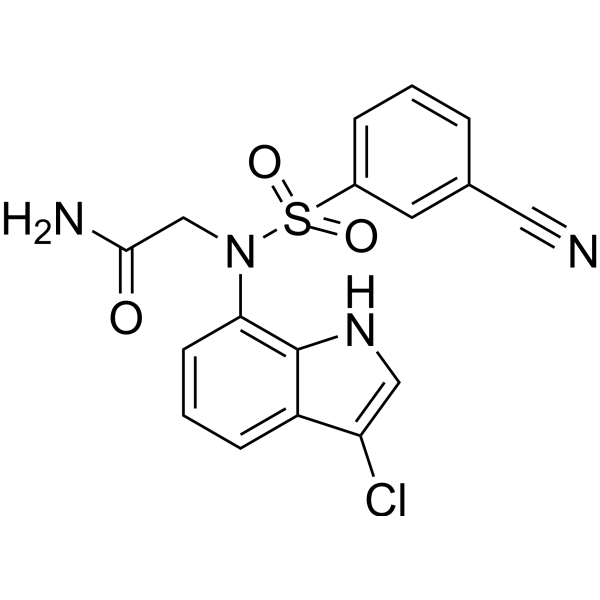
- WXM-1-170
-
loading...Please select quantityGet Quote
August 31
-
Please select quantity
August 31
Get Quote
loading... -
-
Fenhexamid-d10
 0 ImagesCat. No.: HY-W701943CAS No.: 1246815-53-1Fenhexamid-d10 is the deuterium labeled Fenhexamid (HY-118065). Fenhexamid, a botryticide, is a sterol biosynthesis inhibitor. Fenhexamid shows fungicide efficient against the plant pathogenic fungus Botryotinia fuckeliana (Botrytis cinerea).
 -
loading...Please select quantityGet Quote
August 31
-
Please select quantity
August 31
Get Quote
loading... -
-
Demethoxyviridiol
 0 ImagesCat. No.: HY-135526CAS No.: 56617-66-4Synonyms: DesmethoxyviridiolDemethoxyviridiol is a mycotoxin originally isolated from N. hinnuleum. Demethoxyviridiol induces lethality in day-old cockerels (LD50=4.2 mg/kg). Demethoxyviridiol is also an inhibitor of phosphatidylinositol 3-kinase (PI3K).
 -
loading...Please select quantityGet Quote
August 31
-
Please select quantity
August 31
Get Quote
loading... -
-
YPX-C-05
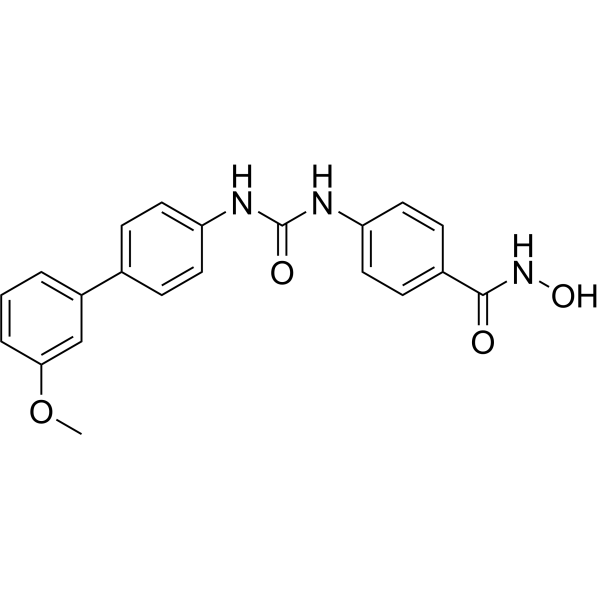 0 ImagesYPX-C-05 is an orally active HDAC inhibitor and vasodilator. YPX-C-05 inhibits HDAC enzymatic activity, increases histone H4 acetylation, activates the PI3K/Akt pathway, promotes Akt and eNOS phosphorylation, enhances eNOS activity, and boosts nitric oxide production. YPX-C-05 increases Tetrahydrobiopterin (HY-107383) levels, restores serum nitric oxide levels, reduces endothelin-1 levels, and improves endothelial function. YPX-C-05 reduces vascular remodeling and exerts antihypertensive effects in hypertensive Mus musculus mice. YPX-C-05 can be used for the research of hypertension.
 -
loading...Please select quantityGet Quote
August 31
-
Please select quantity
August 31
Get Quote
loading... -
-
PI3K-IN-26
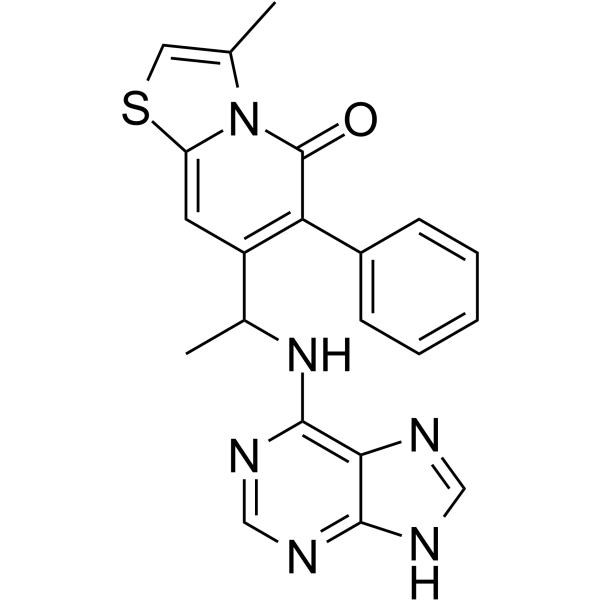 0 ImagesCat. No.: HY-142676CAS No.: 1918151-65-1PI3K-IN-26 is a potent PI3K inhibitor with an IC50 of 36 nM for SU-DHL-6 cells (WO2016066142A1, compound 1).
 -
loading...Please select quantityGet Quote
August 31
-
Please select quantity
August 31
Get Quote
loading... -
-
(3R,10R,14aS)-AZD4625
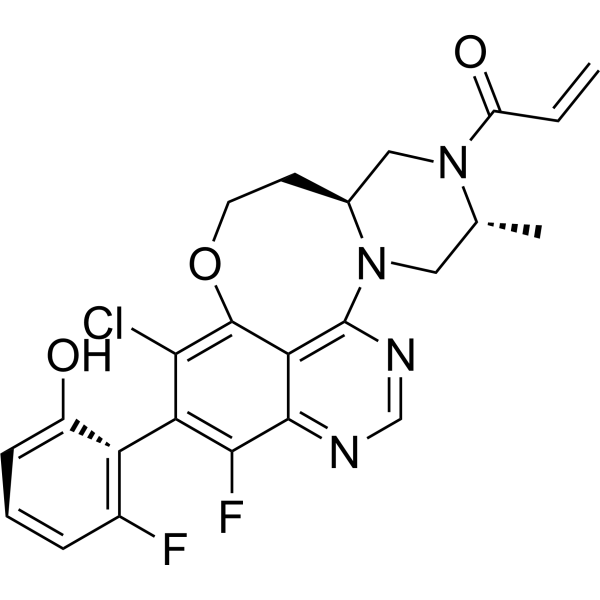 0 ImagesCat. No.: HY-146223APurity: 98.00%(3R,10R,14aS)-AZD4625 is the isomer of AZD4625 (HY-146223), and can be used as an experimental control. AZD4625 is an orally active, selective irreversible, covalent allosteric GTPase KRASG12C inhibitor with an IC50 of 3 nM. AZD4625 can inhibit the MAPK pathway (with decreased pCRAF, pMEK, and pERK) and the PI3K pathway (with decreased pAKT and pS6), and induce cell apoptosis. AZD4625 has no binding and inhibition of wild-type RAS or isoforms carrying non-KRASG12C mutations. AZD4625 can be used for the study of KRASG12C mutant non-small cell lung cancer.
 -
loading...Please select quantityGet Quote
August 31
-
Please select quantity
August 31
Get Quote
loading... -
- PI3K-IN-55
-
loading...Please select quantityGet Quote
August 31
-
Please select quantity
August 31
Get Quote
loading... -

-
Dihydrocapsaicin-d3
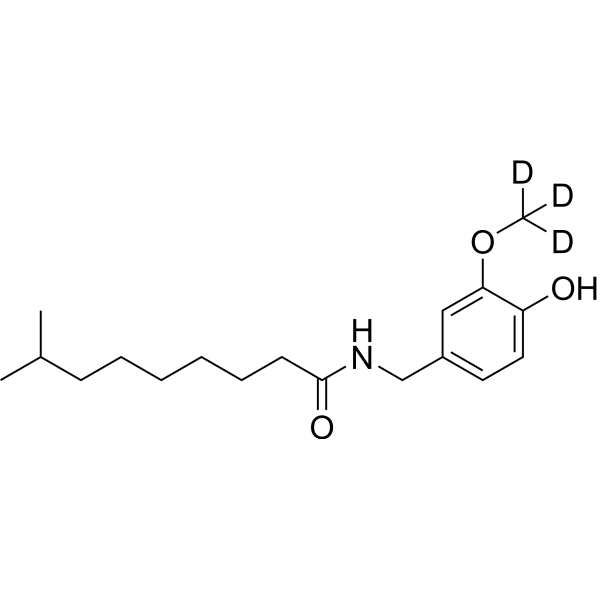 0 ImagesCat. No.: HY-N0361SCAS No.: 1330261-21-6Dihydrocapsaicin-d3 is the deuterium labeled Dihydrocapsaicin (HY-N0361). Dihydrocapsaicin, a capsaicin, is a potent and selective TRPV1 (transient receptor potential vanilloid channel 1) agonist. Dihydrocapsaicin reduces AIF, Bax, and Caspase-3 expressions, and increased Bcl-2, Bcl-xL and p-Akt levels. Dihydrocapsaicin enhances the hypothermia-induced neuroprotection following ischemic stroke via PI3K/Akt regulation in rat.
 -
loading...Please select quantityGet Quote
August 31
-
Please select quantity
August 31
Get Quote
loading... -
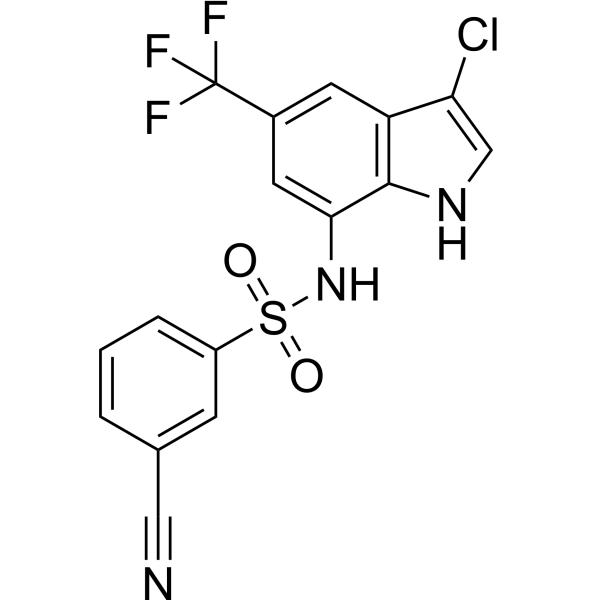
- SR-3-65
-
loading...Please select quantityGet Quote
August 31
-
Please select quantity
August 31
Get Quote
loading... -
-
PI3K-IN-29
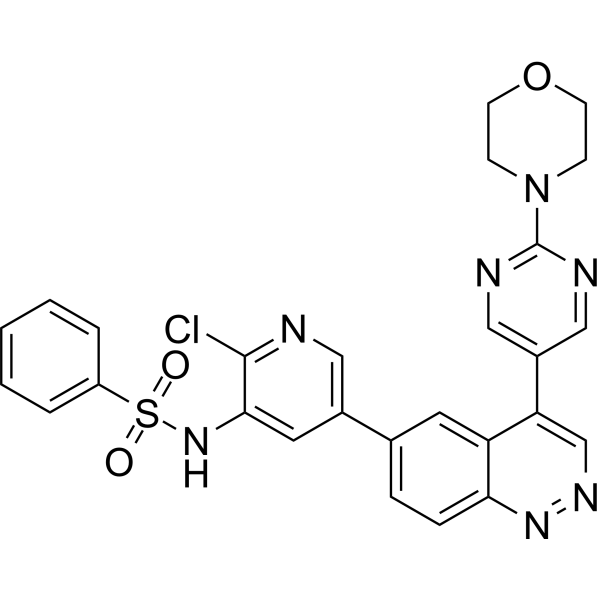 0 ImagesCat. No.: HY-144450CAS No.: 2768005-77-0
 -
loading...Please select quantityGet Quote
August 31
-
Please select quantity
August 31
Get Quote
loading... -
-
PROTAC PI3K/110β degrader-2
 0 ImagesCat. No.: HY-174469CAS No.: 3070438-79-5PROTAC PI3K/110β degrader-2 is a VHL-recruiting PI3K/110β PROTAC degrader, with DC50 values of 1.258 μM and 2.185 μM in MCF-7/ADM and A549/DDP cells, respectively. PROTAC PI3K/110β degrader-2 induces proteasomal degradation of PI3K/110β, inhibits phosphorylation of AKT and expression of Bcl-2, while suppressing the activity and expression of P-gp. It also induces endoplasmic reticulum stress and mitochondrial apoptosis via the PERK/CHOP pathway. PROTAC PI3K/110β degrader-2 exerts anti-tumor activity against multidrug-resistant cancer cells both in vitro and in vivo, and produces a synergistic effect when combined with Doxorubicin (HY-15142A) or Cisplatin (HY-17394), making it applicable for the research of multidrug-resistant cancers.
 -
loading...Please select quantityGet Quote
August 31
-
Please select quantity
August 31
Get Quote
loading... -
-
PI3K-IN-10
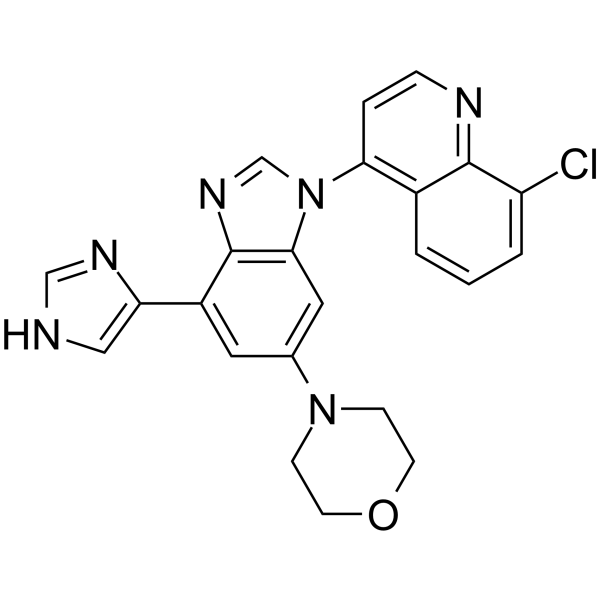 0 ImagesCat. No.: HY-112191CAS No.: 2211922-64-2PI3K-IN-10 is a potent pan-PI3K inhibitor as a benzimidazole derivative, compound 332, extracted from patent WO2018057808A1.
 -
loading...Please select quantityGet Quote
August 31
-
Please select quantity
August 31
Get Quote
loading... -
-
VVD-844
 0 ImagesCat. No.: HY-183741CAS No.: 3080226-63-4VVD-844 is an orally active covalent inhibitor of PI3Kα, which inhibits Pl3Kα/p110α interaction with an IC50 of 4 nM. VVD-844 covalently binds to Cys242 in the RAS binding domain of p110α, blocking RAS-p110α interaction and inhibiting PI3Kα activity. VVD-844 inhibits PI3Kα signaling activation in HER2-overexpressing cells via a RAS-independent mechanism. VVD-844 suppresses tumor growth in mouse. VVD-844 can be used for the research of cancers.
 -
loading...Please select quantityGet Quote
August 31
-
Please select quantity
August 31
Get Quote
loading... -
-
PI3K/mTOR Inhibitor-6
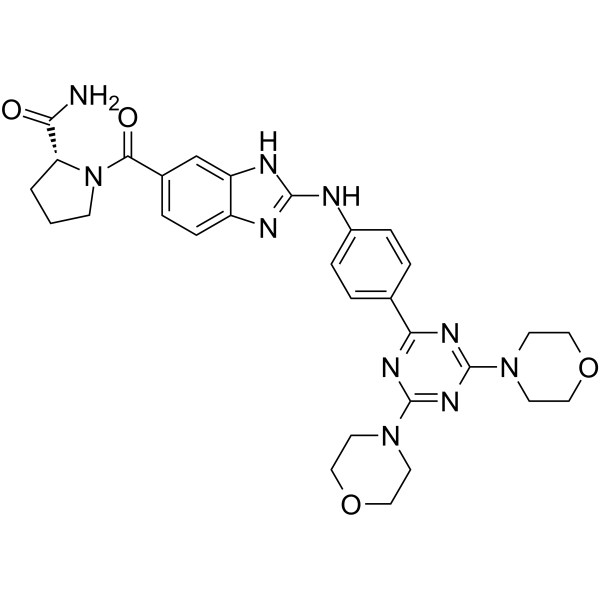 0 ImagesCat. No.: HY-147613CAS No.: 2456295-59-1PI3K/mTOR Inhibitor-6 (Compound 19c) is a potent and dual inhibitor of PI3K/mTOR. PI3K/mTOR Inhibitor-6 displays better stability in artificial gastric fluids than gedatolisib. PI3K/mTOR Inhibitor-6 significantly suppresses the PI3K/Akt/mTOR signaling pathway at 10 μM. PI3K/mTOR Inhibitor-6 has the potential for the research of cancer diseases.
 -
loading...Please select quantityGet Quote
August 31
-
Please select quantity
August 31
Get Quote
loading... -
-
TYM-3-98
 0 ImagesTYM-3-98 is a selective inhibitor for PI3Kδ, with an IC50 of 7.1 nM. TYM-3-98 inhibits proliferationso of B-lymphoma cells. TYM-3-98 inhibits PI3K/AKT/mTOR signaling pathway through induction of apoptosis. TYM-3-98 exhibits good pahrmacokinetic characters and antitumor efficacy in mouse/rat model, without significant toxicity.
 -
loading...Please select quantityGet Quote
August 31
-
Please select quantity
August 31
Get Quote
loading... -
-
Fusaric acid (Standard)
 0 ImagesFusaric acid (Standard) is the analytical standard of Fusaric acid (HY-128483). This product is intended for research and analytical applications. Fusaric acid is an orally active multi-pathway inhibitor with the activity of inducing oxidative stress and apoptosis. Fusaric acid can chelate divalent metal cations, damage mitochondrial membrane structure, and activate apoptosis-related proteases such as Caspase-3/7, -8, and -9. Fusaric acid also regulates Bax/Bcl-2 protein, inhibits fibrosis-related signaling pathways such as NF-κB, TGF-β1/SMADs, and PI3K/AKT/mTOR, and reduces collagen deposition. Fusaric acid is also a dopamine β-hydroxylase inhibitor, which reduces endogenous levels of norepinephrine and epinephrine in the brain, heart, spleen, and adrenal glands. Fusaric acid can play a role in myocardial fibrosis and improve cardiac hypertrophy in heart disease, and can also be used in the study of esophageal cancer and liver cancer.
 -
loading...Please select quantityGet Quote
August 31
-
Please select quantity
August 31
Get Quote
loading... -
- PI3Kδ-IN-23
-
loading...Please select quantityGet Quote
August 31
-
Please select quantity
August 31
Get Quote
loading... -

-
Benzoin-d10
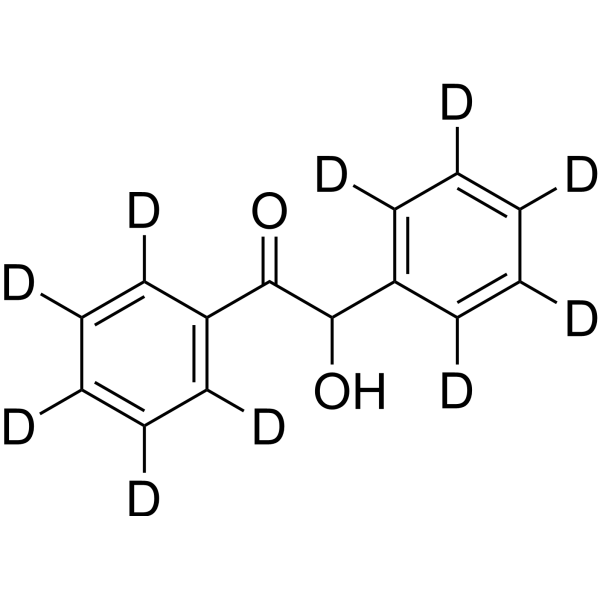 0 ImagesCat. No.: HY-B1550SCAS No.: 56830-64-9Synonyms: DL-Benzoin-d10; Desyl alcohol-d10; (±)-2-Hydroxy-2-phenylacetophenone-d10
 -
loading...Please select quantityGet Quote
August 31
-
Please select quantity
August 31
Get Quote
loading... -
-
MPT0L145
 0 ImagesCat. No.: HY-122888CAS No.: 2070837-24-8MPT0L145 is a PIK3C3/FGFR inhibitor, with a Kd value of 0.53 nM for PIK3C3. MPT0L145 decreases the phosphorylation of FGFR1, FGFR3 and their downstream proteins (FRS2, ERK and Akt). MPT0L145 induces G0/G1 cell cycle arrest and decreased protein levels of cyclin E. MPT0L145 promotes mitochondrial dysfunction, ROS production, and DNA damage. MPT0L145 is an autophagy inhibitor. MPT0L145 significantly sensitizes cancer cells to targeted or chemotherapeutic agents. MPT0L145 can be used for cancer research, such as bladder cancer and NSCLC.
 -
loading...Please select quantityGet Quote
August 31
-
Please select quantity
August 31
Get Quote
loading... -
No matching results
No matching results
No matching results
No matching results
No matching results
No matching results
No matching results
No matching results
No matching results
No matching results

Phosphatidylinositol 3 kinases (PI3Ks) are a family of lipid kinases that integrate signals from growth factors, cytokines and other environmental cues, translating them into intracellular signals that regulate multiple signaling pathways. These pathways control many physiological functions and cellular processes, which include cell proliferation, growth, survival, motility and metabolism[1].
In the absence of activating signals, p85 interacts with p110 and inhibits p110 kinase activity. Following receptor tyrosine kinase (RTK) or G protein-coupled receptor (GPCR) activation, class I PI3Ks are recruited to the plasma membrane, where p85 inhibition of p110 is relieved and p110 phosphorylates PIP2 to generate PIP3. The activated insulin receptor recruits intracellular adaptor protein IRS1. Phosphorylation of IRS proteins on tyrosine residues by the insulin receptor initiates the recruitment and activation of PI3K. PIP3 acts as a second messenger which promotes the phosphorylation of Akt at Thr308 by PDK-1. RTK activation can also trigger Ras-Raf-MEK-ERK pathway. Activated Akt, ERK and RSK phosphorylate TSC2 at multiple sites to inhibit TSC1-TSC2-TBC1D7, which is the TSC complex that acts as a GTPase-activating protein (GAP) for the small GTPase RHEB. During inhibition of the TSC complex, GTP-loaded RHEB binds the mTOR catalytic domain to activate mTORC1. Glycogen synthase kinase 3β (GSK-3β) activates the TSC complex by phosphorylating TSC2 at Ser1379 and Ser1383. Phosphorylation of these two residues requires priming by AMPK-dependent phosphorylation of Ser1387. Wnt signaling inhibits GSK-3β and the TSC complex, and thus activates mTORC1. mTORC2 is activated by Wnt in a manner dependent on the small GTPase RAC1. Akt activation contributes to diverse cellular activities which include cell survival, growth, proliferation, angiogenesis, metabolism, and migration. Important downstream targets of Akt are GSK-3, FOXOs, BAD, AS160, eNOS, and mTOR. mTORC1 negatively regulates autophagy through multiple inputs, including inhibitory phosphorylation of ULK1, and promotes protein synthesis through activation of the translation initiation promoter S6K and through inhibition of the inhibitory mRNA cap binding 4E-BP1[1][2][3].
PI3Kδ is a heterodimeric enzyme, typically composed of a p85α regulatory subunit and a p110δ catalytic subunit. In T cells, the TCR, the costimulatory receptor ICOS and the IL-2R can activate PI3Kδ. In B cells, PI3Kδ is activated upon crosslinking of the B cell receptor (BCR). The BCR co-opts the co-receptor CD19 or the adaptor B cell associated protein (BCAP), both of which have YXXM motifs to which the p85α SH2 domains can bind. In lumphocytes, BTK and ITK contribute to the activation of PLCγ and promotes the generation of DAG and the influx of Ca2+, which in turn activate PKC and the CARMA1-, BCL 10- and MALT1 containing (CBM) complex. The resulting NF-κB inhibitor kinase (IKK) activation leads to the phosphorylation and the degradation of IκB, and to the nuclear accumulation of the p50-p65 NF-κB heterodimer. MyD88 is an adapter protein that mediates signal transduction for most TLRs and leads to activation of PI3K[4].
Reference:
[1]. Thorpe LM, et al. PI3K in cancer: divergent roles of isoforms, modes of activation and therapeutic targeting.Nat Rev Cancer. 2015 Jan;15(1):7-24.
[2]. Vanhaesebroeck B, et al. PI3K signalling: the path to discovery and understanding.Nat Rev Mol Cell Biol. 2012 Feb 23;13(3):195-203.
[3]. Fruman DA, et al. The PI3K Pathway in Human Disease.Cell. 2017 Aug 10;170(4):605-635.
[4]. Lucas CL, et al. PI3Kδ and primary immunodeficiencies.Nat Rev Immunol. 2016 Nov;16(11):702-714.
Your Search Returned No Results.
Sorry. There is currently no product that acts on isoform Bcl-2, Bcl-W and Bim together.Please
try each isoform separately.



