



Reactive Oxygen Species (ROS)
Reactive oxygen species (ROS), such as superoxide anion (O2-), hydrogen peroxide (H2O2), and hydroxyl radical (HO•), consist of radical and non-radical oxygen species formed by the partial reduction of oxygen. Cellular ROS are generated endogenously during mitochondrial oxidative metabolism as well as in cellular response to xenobiotics, cytokines, and bacterial invasion.
ROS also activates MAPK pathways by the direct inhibition of MAPK phosphatases. Through PTEN, the PI3K pathway is subject to reversible redox regulation by ROS generated by growth factor stimulation. The activation of autophagy may be a cellular defense mechanism in response to ROS.
All Product Categories
-
Reactive Oxygen Species (ROS) Inhibitors
(1091)
View all products
-
Reactive Oxygen Species (ROS) Agonists
(37)
View all products
-
Reactive Oxygen Species (ROS) Antagonists
(2)
View all products
-
Reactive Oxygen Species (ROS) Activators
(525)
View all products
-
Reactive Oxygen Species (ROS) Modulators
(22)
View all products
-
Reactive Oxygen Species (ROS) MDM2 Inhibitor
(1)
View all products
-
Reactive Oxygen Species (ROS) Inducers
(645)
View all products
-
Reactive Oxygen Species (ROS) Controls
(5)
View all products
-
Reactive Oxygen Species (ROS) Substrates
(3)
View all products
-
Reactive Oxygen Species (ROS) Related Products (2859)
Related Products (2859)

-
Antibodies (8)
-
Autophagy-IN/Ferroptosis inducer-modulator-1
 0 ImagesCat. No.: HY-187191Autophagy-IN/Ferroptosis inducer-modulator-1 is a dual-functional molecule that acts as an Autophagy inhibitor and a Ferroptosis inducer. Autophagy-IN/Ferroptosis inducer-modulator-1 downregulates GPX4 expression, elevates ROS levels and reduces mitochondrial membrane potential. Autophagy-IN/Ferroptosis inducer-modulator-1 arrests the cell cycle of non-small cell lung cancer (NSCLC) cells, induces mild apoptosis and inhibits autophagy. Autophagy inhibition induced by Autophagy-IN/Ferroptosis inducer-modulator-1 acts upstream of ferroptosis to produce a synergistic effect. Autophagy-IN/Ferroptosis inducer-modulator-1 exhibits anti-tumor activity against both human tumor cells and zebrafish xenograft models. Autophagy-IN/Ferroptosis inducer-modulator-1 can be used for research related to non-small cell lung cancer.
-
Isosteviol (Standard)
 0 ImagesCat. No.: HY-N0872RCAS No.: 27975-19-5Synonyms: (-)-Isosteviol (Standard); iso-Steviol (Standard)Isosteviol (Standard) is the analytical standard of Isosteviol. This product is intended for research and analytical applications. Isosteviol ((-)-Isosteviol) is a derivative of Stevioside through acid catalyzed hydrolysis of Stevioside. Isosteviol inhibits DNA polymerase and DNA topoisomerase and has antibacterial, anticancer and anti-tuberculosis effects.
-
STAT3/NF-κB-IN-3
 0 ImagesCat. No.: HY-184736STAT3/NF-κB-IN-3 is an orally active STAT3/NF-κB inhibitor with anti-inflammatory and antioxidant activities, which specifically blocks the phosphorylation of NF-κB and STAT3 proteins. STAT3/NF-κB-IN-3 downregulates the expression of iNOS and NOX-2 in macrophages, reduces intracellular levels of ROS and MDA, and upregulates the expression of antioxidant genes at the same time. In a mouse model of acute liver failure induced by LPS/D-GalN, STAT3/NF-κB-IN-3 alleviates liver necrosis and inflammatory cell infiltration, and reduces the release of pro-inflammatory cytokines such as IL-6 and IL-12 via the TLR4 pathway. STAT3/NF-κB-IN-3 can be used in studies related to acute liver failure.
-
Fa-Au
 0 ImagesCat. No.: HY-183554Fa-Au is a TrxR inhibitor. Fa-Au downregulates GPX4, induces oxidative stress, mitochondria-associated ferroptosis (ferroptosis) and immunogenic cell death. Fa-Au induces ROS production in hepatoma cells. Fa-Au remodels the tumor immune microenvironment via M1 macrophage polarization, dendritic cell maturation, CD8+ T cell activation and reduction of regulatory T cells. Fa-Au induces an anti-tumor immune feedback loop through the IFNγ/STAT1/SLC7A11 axis. Fa-Au inhibits tumor growth. Fa-Au is applicable to hepatocellular carcinoma-related research.
-
Picrasidine A
 0 ImagesCat. No.: HY-N16720CAS No.: 82652-20-8Picrasidine A is an active compound that can be extracted from the natural product Picrasma quassioides (D. Don) Benn. Picrasidine A has the potential to prevent UVB-induced reactive oxygen species (ROS) generation.
-
2,4-Dihydroxybenzaldehyde (Standard)
 0 Images2,4-Dihydroxybenzaldehyde (Standard) is the analytical standard of 2,4-Dihydroxybenzaldehyde. This product is intended for research and analytical applications. 2,4-Dihydroxybenzaldehyde is an endogenous metabolite. 2,4-Dihydroxybenzaldehyde is a pharmaceutical intermediate that can be used to synthesize various Schiff base compounds. 2,4-Dihydroxybenzaldehyde exhibits significant anti angiogenic, anti-inflammatory, and analgesic activities. 2,4-Dihydroxybenzaldehyde reduces the production of NO and ROS by inhibiting the expression of iNOS and COX-2. 2,4-Dihydroxybenzaldehyde is commonly used in the study of inflammatory conditions.
-
Histamine phosphate (Standard)
 0 ImagesHistamine phosphate (Standard) is the analytical standard of Histamine phosphate (HY-A0129). This product is intended for research and analytical applications. Histamine phosphate is the agonist for histamine receptor and a vasodilator. Histamine phosphate is an organic nitrogen compound that participates in local immune responses, regulates intestinal physiological functions, and acts as a neurotransmitter. Histamine phosphate affects p38 MAPK/Akt signaling pathway, exhibits antitumor, antioxidant and anti-inflammatory activities. Histamine phosphate can be used in the research of acute myeloid leukemia, malignant melanoma, and renal cell carcinoma.
-
PKM2-IN-12
 0 ImagesCat. No.: HY-178748PKM2-IN-12 is an orally active PKM2 inhibitor with an IC50 of 10 nM. PKM2-IN-12 inhibits COLO-205 cell proliferation and migration, arrests the cell cycle, and induces apoptosis. PKM2-IN-12 significantly reduces cellular levels of lactate, pyruvate, and ROS. PKM2-IN-12 directly kills cancer cells and restores disrupted gut microbiota balance in mice model. PKM2-IN-12 can be used to study colorectal cancer.
-
Antitumor agent-204
 0 ImagesCat. No.: HY-176738Antitumor agent-204 (compound 15a) is a potent antitumor agent. Antitumor agent-204 shows cytotoxicity. Antitumor agent-204 induces nitric oxide (NO) release and reactive oxygen species (ROS) generation. Antitumor agent-204 induces apoptosis and induces cell cycle arrest at G2/M phase. Antitumor agent-204 shows antitumor activity.
-
Malformin C
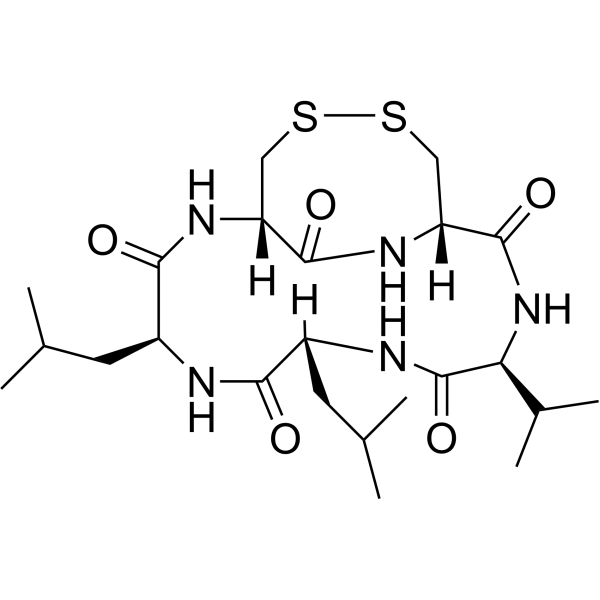 0 ImagesCat. No.: HY-P2005CAS No.: 59926-78-2Malformin C is an algicidal peptide can be isolated from Aspergillus and exhibits dose-dependent algicidal activity. Malformin C induces a significant increase in ROS levels in algal cells, resulting in impaired SOD activity and high production of MDA content.
-
STING-IN-17
 0 ImagesCat. No.: HY-178951CAS No.: 3069635-58-8STING-IN-17 (compound 10a) is an orally active STING (human STING IC50 = 29 nM, mouse STING IC50 = 15 nM) inhibitor. STING-IN-17 can inhibit the phosphorylation of STING, TBK1 and IRF3. STING-IN-17 dose dependently inhibits the mRNA expression of IP10, IFNB1 and ISG56. STING-IN-17 can reduce ROS and inhibit the expression of cleaved-PARP/caspase-3. STING-IN-17 can improve kidney function. STING-IN-17 can be used for research on inflammatory conditions such as acute kidney injury.
-
hMAO-B-IN-9
 0 ImagesCat. No.: HY-163879hMAO-B-IN-9 (Compound 25c) is a non-competitive inhibitor for monoamine oxidase B (MAO-B) with an IC50 of 1.58 µM (hMAO-B). hMAO-B-IN-9 forms complex with iron ions as a chelator, and inhibits Erastin (HY-15763)-induced ferroptosis. hMAO-B-IN-9 exhibits antioxidant activity by downregulating the level of reactive oxygen species (ROS). hMAO-B-IN-9 improves cognitive function in mice, without significant toxicity (30 mg/kg). hMAO-B-IN-9 is blood-brain barrier permeable, according to the in silico prediction.
-
XAN-5
 0 ImagesCat. No.: HY-181599XAN-5 is a mitochondrial DNA G-quadruplex (mtG4) ligand with a Kd of 3.8 μM. XAN-5 selectively binds and stabilizes mtG4 structures, disrupting mitochondrial gene transcription and DNA replication. XAN-5 triggers mitochondrial dysfunction, ROS overproduction, G0 phase arrest and caspase-dependent apoptosis. XAN-5 inhibits autophagy and induces immunogenic cell death. XAN-5 inhibits tumor growth in a mouse liver cancer model while enhancing tumor-infiltrating CD4+ and CD8+ T cells. XAN-5 targets two cancer resistance mechanisms simultaneously. XAN-5 can be used for the research of liver cancer.
-
Mycosporine glycine
 0 ImagesCat. No.: HY-N12630CAS No.: 65318-21-0Synonyms: Mycosporine-GlyMycosporine glycine (Mycosporine-Gly) is a mycosporine-like amino acid derived from marine organisms, which possesses free radical scavenging, antioxidant, anti-inflammatory and photoprotective activities. Mycosporine glycine inhibits the UV-induced upregulation of COX-2 mRNA and gene expression levels, scavenges free radicals, ROS and peroxyl radicals, and inhibits free radical chain lipid peroxidation and phosphatidylcholine peroxidation. Mycosporine glycine restores PCOLCE and elastin levels suppressed by ultraviolet radiation, alleviates photooxidative stress and UV-mediated skin cell damage. Mycosporine glycine can be used in studies related to UV-induced skin inflammation, skin photoaging and skin damage.
-
HDAC3-IN-6
 0 ImagesCat. No.: HY-172133CAS No.: 3070532-72-5HDAC3-IN-6 (Compound SC26) is a selective HDAC3 inhibitor with an IC50 of 53 nM. HDAC3-IN-6 dose-dependently induces the expression of PD-L1. HDAC3-IN-6 induces more pronounced Apoptosis and production of ROS. HDAC3-IN-6 exhibits high antitumor efficacy against colorectal cancer.
-
Apoptosis inducer 62
 0 ImagesCat. No.: HY-184302Apoptosis inducer 62 is an apoptosis inducer that reduces the expression levels of anti-apoptotic proteins Bcl-2 and Bcl-xL. Apoptosis inducer 62 induces ROS accumulation, mitochondrial membrane potential depolarization, DNA damage, cell cycle arrest. Apoptosis inducer 62 exhibits activity in colorectal tumor xenograft models. Apoptosis inducer 62 can be used for research related to colorectal cancer.
-
Phytoene
 0 ImagesPhytoene (trans-Phytoene) is a carotene pigment. Phytoene is the precursor of all carotenoids. Phytoene is the predominant PT isomer in most carotenogenic organisms. Phytoene can delay the skin tumors appearance and reduce their number in mice that are induced the tumors with UV-B light. Phytoene leads to protection against oxidative stress and malignant transformation. Phytoene inhibits the proliferation of breast cancer cells.
-
Anticancer agent 212
 0 ImagesCat. No.: HY-163558Anticancer agent 212 (compound 10a) is a potent anticancer agent. Anticancer agent 212 shows cytotoxicity[1]
-
3'-Methoxy tamarixin
 0 ImagesCat. No.: HY-N18365CAS No.: 127982-19-8Synonyms: Dillenetin-3-O-β-D-glucopyranoside3'-Methoxy tamarixin (compound 6) is a flavonoid glycoside and antioxidant. 3'-Methoxy tamarixin can be found in the leaves of Cadaba farinosa Forssk.3'-Methoxy tamarixin exhibits free radical scavenging activity and 49.1% antioxidant activity.
-
TPP-C8-CO-DSG bromide
 0 ImagesCat. No.: HY-184737TPP-C8-CO-DSG bromide is a derivative of Diosgenin (HY-N0177) and an anticancer agent. TPP-C8-CO-DSG bromide downregulates Bcl-2 expression and upregulates Bax expression. TPP-C8-CO-DSG bromide promotes the cleavage of Caspase 9, Caspase 3 and PARP-1. TPP-C8-CO-DSG bromide depolarizes mitochondrial membrane potential, reduces intracellular ATP production, and induces intracellular ROS accumulation. TPP-C8-CO-DSG bromide promotes Apoptosis. TPP-C8-CO-DSG bromide exhibits anticancer activity against prostate cancer, breast cancer, lung adenocarcinoma, cervical cancer and colorectal cancer. TPP-C8-CO-DSG bromide can be used in the research of cervical cancer.




