



RSC133
Based on 1 publication(s) in Google Scholar
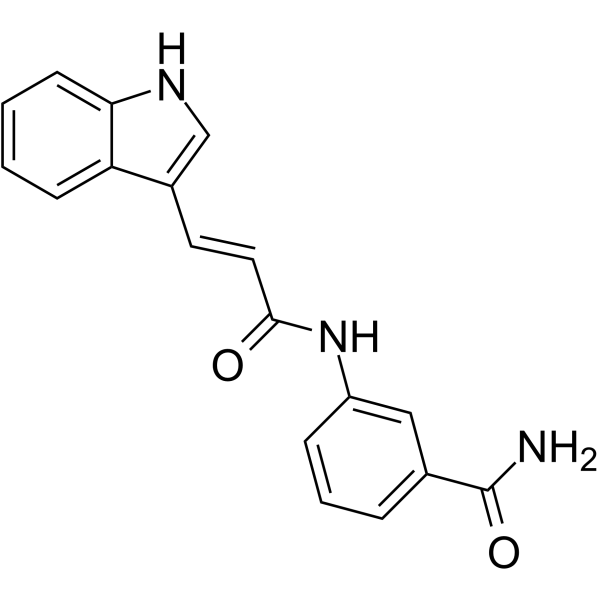
RSC133 is a dual inhibitor of DNA methyltransferase 1 and histone deacetylase 1 inhibitor. RSC133 promotes cell proliferation, up-regulates H3K9 histone acetylation, down-regulates p53, p21, p16/INK4A, and ablates pro-senescence phenotypes.
For research use only. We do not sell to patients.
- Purity : 98.45%
- CAS No.: 1418131-46-0
- Formula: C18H15N3O2
- Molecular Weight:305.33
-
Storage:Powder -20°C, 3 years ; In solvent -80°C, 6 months , -20°C, 1 month

To place orders, for customer services and technical support, please contact: MedChemExpress USA
Tel: 609-228-6898 E-mail: [email protected] [email protected]


-
 Biological Activity
-
Chemical Information
-
Solvent & Solubility
- Protocols
- Purity & Documentation
- References
-
 Help & FAQs


-
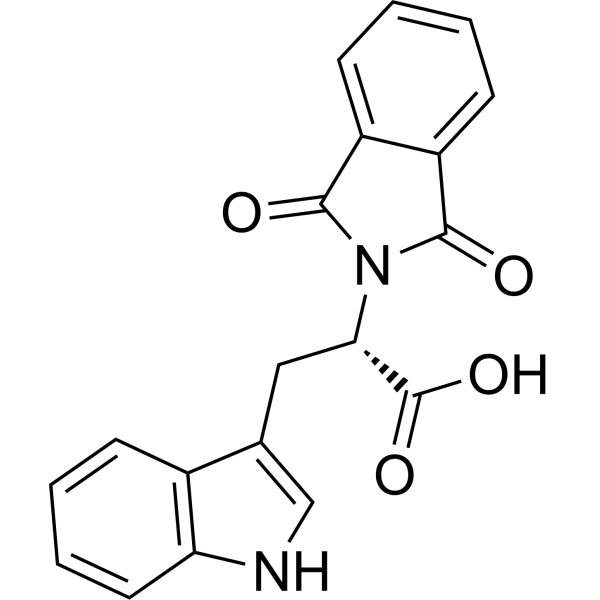
HY-13642
RG108DNMT Inhibitor -
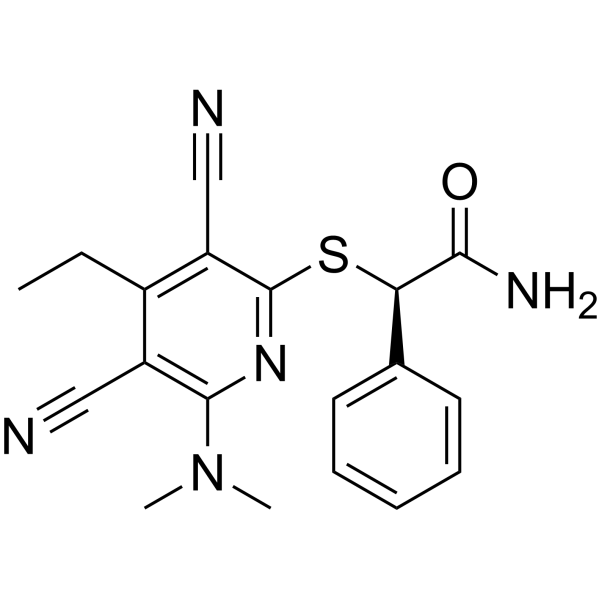
HY-135146
GSK-3484862DNMT1 Inhibitor -
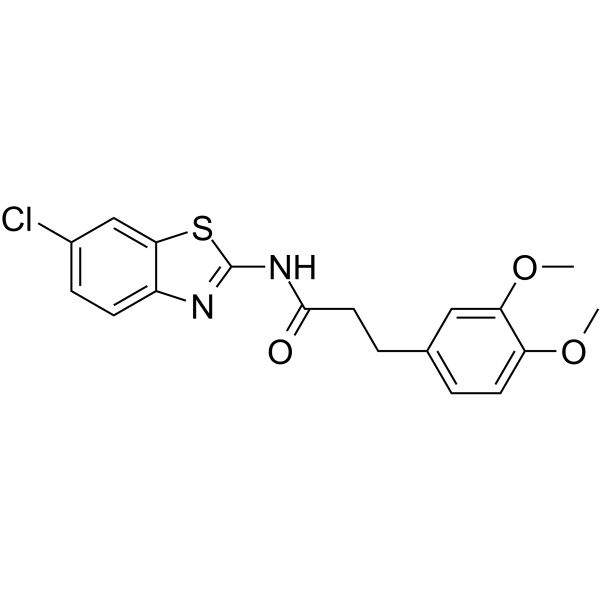
HY-13815
KY02111WNT Signaling/β-catenin Inhibitor -
HY-B2230
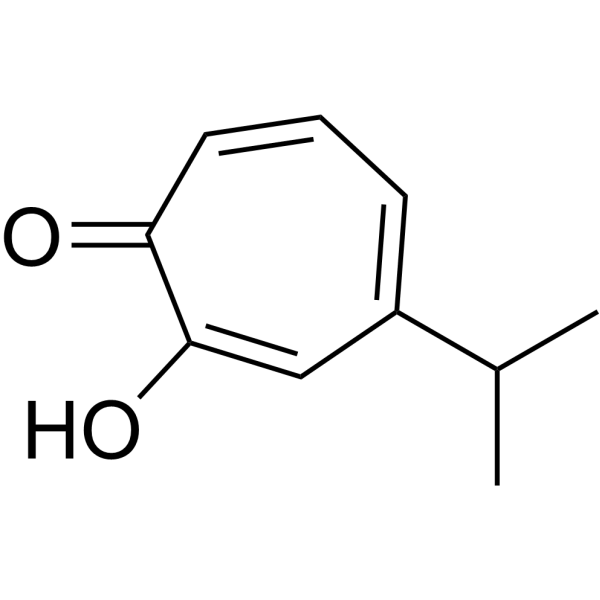
HinokitiolVirus Protease Inhibitor -
HY-139664
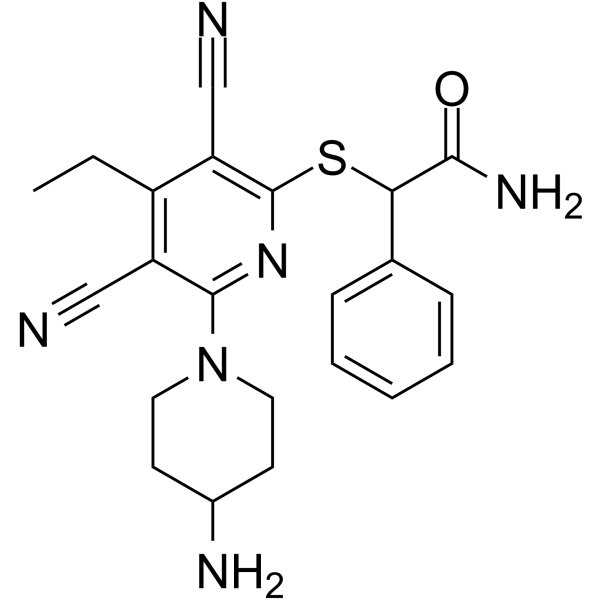
GSK-3685032DNMT1 Inhibitor -

HY-B2194
γ-OryzanolDNA Methyltransferase Inhibitor -
HY-111558A
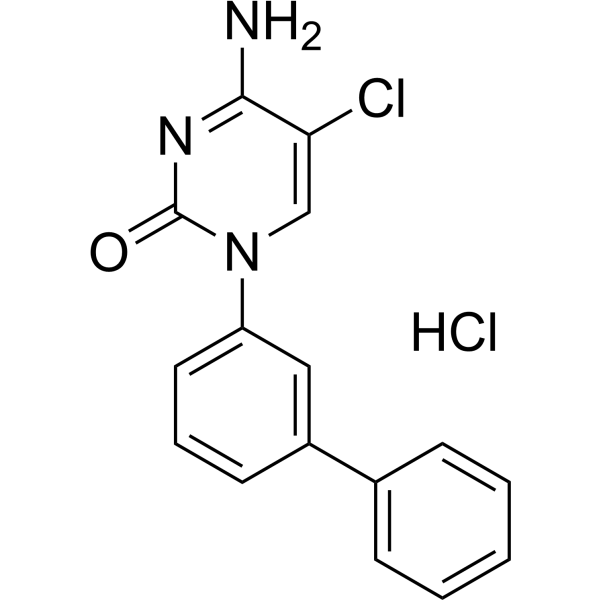
Bobcat339 hydrochlorideTET Inhibitor -
HY-12746
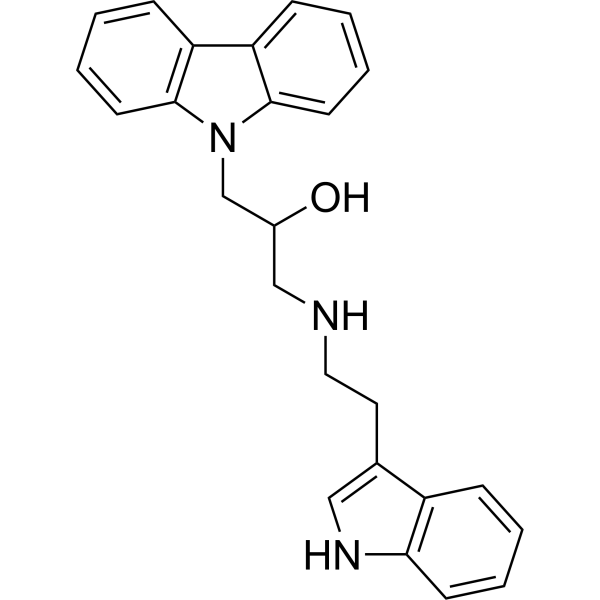
DC-05DNA Methyltransferase Inhibitor -

HY-135146G
GSK-3484862 (GMP)DNMT1 Inhibitor -
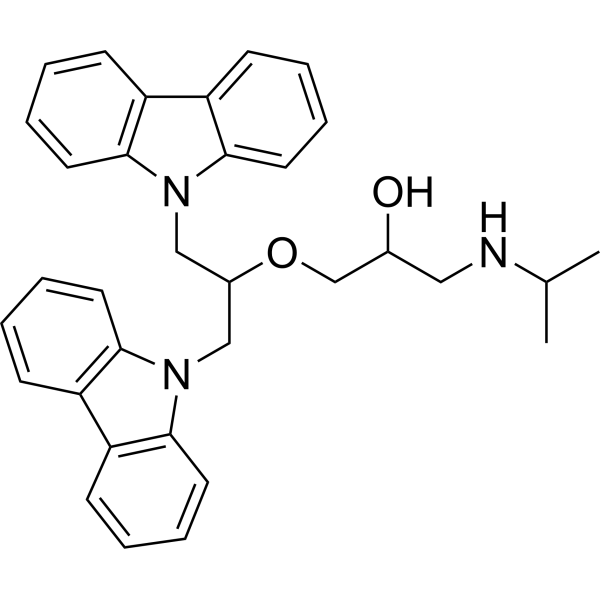
HY-12747
DC_517DNA Methyltransferase Inhibitor -
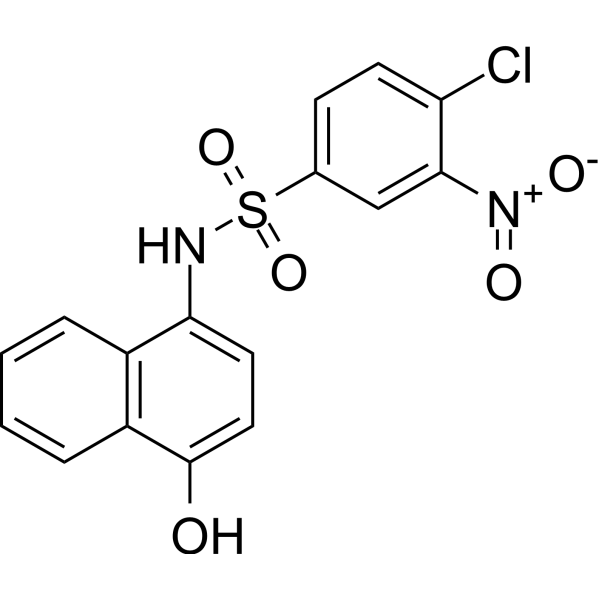
HY-123346
SW155246DNMT1 Inhibitor -
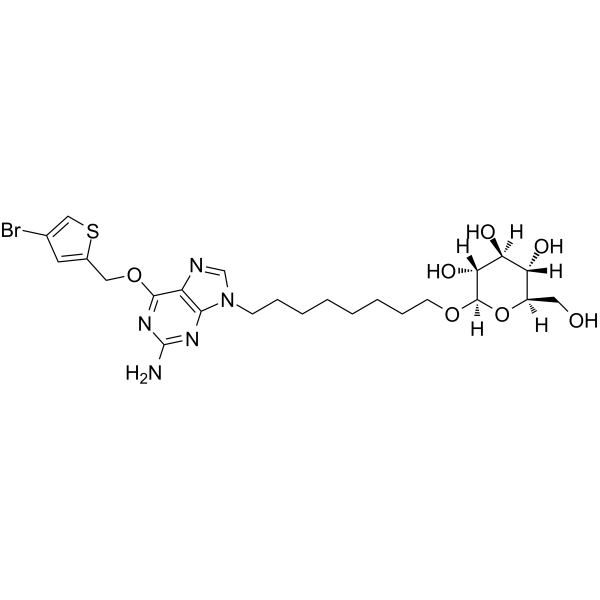
HY-13057
O6BTG-octylglucosideMGMT Inhibitor
Publications Citing Use of MedChemExpress (MCE) RSC133
MoreAll DNA Methyltransferase Isoforms
More

Biological Activity
Description
In Vitro
RSC133 (0.1-20 μM; 5-20 days) dose-dependently enhances the efficiency and accelerates the kinetics of OSKM-mediated reprogramming of human foreskin fibroblasts (hFFs) into induced pluripotent stem cells, with maximal 3.3-fold increased AP-positive colony formation at 10 μM and optimal effects from continuous treatment throughout the 20-day reprogramming period[1].
RSC133 (10 μM; 10 days) enhances proliferation and reduces senescence in OSKM-transduced human foreskin fibroblasts (hFFs) during reprogramming, increasing cell numbers by 1.7-fold and reducing SA-β-gal-positive cells by 37% on day 10[1].
RSC133 (10 μM; 10 days) specifically binds to Dnmt1 (docking score -9.7) and inhibits its enzymatic activity by 38% in OSKM-transduced human foreskin fibroblasts (hFFs), while also reducing HDAC activity by 13.7% and increasing H3K9 acetylation to enhance reprogramming[1].
RSC133 supports the maintenance of an undifferentiated state in H9 human embryonic stem cells (hESCs) cultured in unconditioned medium by preserving hESC morphology, pluripotency marker expression, and H3K9 acetylation levels comparable to conditioned medium controls[1].
MedChemExpress (MCE) has not independently confirmed the accuracy of these methods. They are for reference only.
-
Cell Line:OSKM-transduced human foreskin fibroblasts (hFFs, ATCC# CRL-2097)
-
Concentration:10 μM
-
Incubation Time:10 days
-
Result:Increased total viable cell number by approximately 1.7-fold and the percentage of BrdU-positive proliferating cells by approximately 2.5-fold on day 10 compared to untreated controls.
Down-regulated OSKM-induced up-regulation of senescence-associated genes p53, p21, and p16/INK4A by 2.13-fold, 3.09-fold, and 2.79-fold, respectively, on day 10 compared to untreated controls.
Reduced the proportion of SA-β-gal-positive cells by approximately 37% on day 10 compared to untreated controls.
- BrdU Incorporation Assay
- Somatic Cell Culture
- CFSE Dye Dilution Proliferation Assay
- Dye-dilution cell tracking and proliferation staining
- CCK-8/WST-8 Cell Proliferation Assay
- Protocol for Cell Cycle
- Cell Counting-Based Growth Curve Assay
- Colony Formation (Clonogenic) Assay
- Senescence-associated β-galactosidase staining
- Cell Viability Determination by MTT Colorimetric Assay
- EdU Incorporation Assay (Click Chemistry-Based DNA Synthesis Measurement)
- Ki-67 Immunostaining Proliferation Assay
- PCNA Immunodetection Proliferation Assay
- Protocol for Cell Counting and Cell Density Analysis
- MTT Cell Proliferation Assay


Chemical Information
-
CAS No. 1418131-46-0
-
Appearance Solid
-
Molecular Weight 305.33
-
Formula C18H15N3O2
-
Color Light yellow to yellow
-
SMILES
NC(C1=CC=CC(NC(/C=C/C2=CNC3=CC=CC=C23)=O)=C1)=O
-
Shipping
Room temperature in continental US; may vary elsewhere.
-
Storage
Powder -20°C 3 years In solvent -80°C 6 months -20°C 1 month


Publications (1)
-
Journal Impact Factor
-
Most Recent
-
Cell Rep
A natural nucleotide variation in the MIR172C promoter modulates temperature-dependent plant height in maize. [Abstract]2026 Jun 11;45(6):117548. PMID: 42275216


Solvent & Solubility
In Vitro:
DMSO : 100 mg/mL (327.51 mM; Need ultrasonic; Hygroscopic DMSO has a significant impact on the solubility of product, please use newly opened DMSO)
Please refer to the solubility information to select the appropriate solvent. Once prepared, please aliquot and store the solution to prevent product inactivation from repeated freeze-thaw cycles.
Storage method and period of stock solution: -80°C, 6 months; -20°C, 1 month. When stored at -80°C, please use it within 6 months. When stored at -20°C, please use it within 1 month.
Please refer to the solubility information to select the appropriate solvent. Once prepared, please aliquot and store the solution to prevent product inactivation from repeated freeze-thaw cycles.
Storage method and period of stock solution: -80°C, 6 months; -20°C, 1 month. When stored at -80°C, please use it within 6 months. When stored at -20°C, please use it within 1 month.
Concentration (start) × Volume (start) = Concentration (final) × Volume (final)
In Vivo:
Select the appropriate dissolution method based on your experimental animal and administration route.
- For the following dissolution methods, please ensure to first prepare a clear stock solution using an In Vitro approach and then sequentially add co-solvents:
- To ensure reliable experimental results, the clarified stock solution can be appropriately stored based on storage conditions. As for the working solution for In Vivo experiments, it is recommended to prepare freshly and use it on the same day.
- The percentages shown for the solvents indicate their volumetric ratio in the final prepared solution. If precipitation or phase separation occurs during preparation, heat and/or sonication can be used to aid dissolution.
Add each solvent one by one: 10% DMSO 40% PEG300 5% Tween-80 45% Saline
Solubility: ≥ 2.5 mg/mL (8.19 mM); Clear solution
This protocol yields a clear solution of ≥ 2.5 mg/mL (saturation unknown).
Taking 1 mL working solution as an example, add 100 μL DMSO stock solution (25.0 mg/mL) to 400 μL PEG300, and mix evenly; then add 50 μL Tween-80 and mix evenly; then add 450 μL Saline to adjust the volume to 1 mL.
Preparation of Saline: Dissolve 0.9 g sodium chloride in ddH₂O and dilute to 100 mL to obtain a clear Saline solution.
Add each solvent one by one: 10% DMSO 90% (20% SBE-β-CD in Saline)
Solubility: 2.5 mg/mL (8.19 mM); Suspended solution; Need ultrasonic
This protocol yields a suspended solution of 2.5 mg/mL. Suspended solution can be used for oral and intraperitoneal injection.
Taking 1 mL working solution as an example, add 100 μL DMSO stock solution (25.0 mg/mL) to 900 μL 20% SBE-β-CD in Saline, and mix evenly.
Preparation of 20% SBE-β-CD in Saline (4°C, storage for one week): 2 g SBE-β-CD powder is dissolved in 10 mL Saline, completely dissolve until clear.
In Vivo Dissolution Calculator
Please enter the basic information of animal experiments:
-
-
-
-
Recommended: Prepare an additional quantity of animals to account for potential losses during experiments.
Please enter your animal formula composition:
-
%DMSO +
Recommended: Keep the proportion of DMSO in working solution below 2% if your animal is weak.
-
%+
-
+%Tween-80 + +
-
%Saline +
The co-solvents required include: DMSO, . All of co-solvents are available by MedChemExpress (MCE). , Tween 80. All of co-solvents are available by MedChemExpress (MCE).
Working solution concentration: 0.22 mg/mL
Method for preparing stock solution: mg drug dissolved in μL DMSO. Stock solution concentration: mg/mL.
1. Take μL DMSO stock solution;
2. Add μL .
μL , mix evenly;
3. Then add μL Tween 80, mix evenly;
4. Then add μL
Please ensure that the stock solution in the first step is dissolved to a clear state, and add co-solvents in sequence. You can use ultrasonic heating (ultrasonic cleaner, recommended frequency 20-40 kHz), vortexing, etc. to assist dissolution.


Purity & Documentation
-
Data Sheet (276 KB)
-
SDS (597 KB)
- English - EN (597 KB)
- Français - FR (597 KB)
- Deutsch - DE (597 KB)
- Norwegian - NO (597 KB)
- Español - ES (597 KB)
- Swedish - SV (597 KB)
- Italian - IT (597 KB)
- Korean - KR (597 KB)
- Portuguese - PT (597 KB)
-
Handling Instructions (2659 KB)
References
[1]. Lee J, et al. A novel small molecule facilitates the reprogramming of human somatic cells into a pluripotent state and supports the maintenance of an undifferentiated state of human pluripotent stem cells. Angew Chem Int Ed Engl. 2012;51(50):12509-12513. [Content Brief]
[2]. Kwon D, et al. The Effect of Fetal Bovine Serum (FBS) on Efficacy of Cellular Reprogramming for Induced Pluripotent Stem Cell (iPSC) Generation. Cell Transplant. 2016;25(6):1025-1042. [Content Brief]


Complete Stock Solution Preparation Table
Please refer to the solubility information to select the appropriate solvent. Once prepared, please aliquot and store the solution to prevent product inactivation from repeated freeze-thaw cycles.
Storage method and period of stock solution: -80°C, 6 months; -20°C, 1 month. When stored at -80°C, please use it within 6 months. When stored at -20°C, please use it within 1 month.
| Optional Solvent | Concentration Solvent Mass | 1 mg | 5 mg | 10 mg | 25 mg |
|---|---|---|---|---|---|
| DMSO | 1 mM | 3.2751 mL | 16.3757 mL | 32.7515 mL | 81.8786 mL |
| 5 mM | 0.6550 mL | 3.2751 mL | 6.5503 mL | 16.3757 mL | |
| 10 mM | 0.3275 mL | 1.6376 mL | 3.2751 mL | 8.1879 mL | |
| 15 mM | 0.2183 mL | 1.0917 mL | 2.1834 mL | 5.4586 mL | |
| 20 mM | 0.1638 mL | 0.8188 mL | 1.6376 mL | 4.0939 mL | |
| 25 mM | 0.1310 mL | 0.6550 mL | 1.3101 mL | 3.2751 mL | |
| 30 mM | 0.1092 mL | 0.5459 mL | 1.0917 mL | 2.7293 mL | |
| 40 mM | 0.0819 mL | 0.4094 mL | 0.8188 mL | 2.0470 mL | |
| 50 mM | 0.0655 mL | 0.3275 mL | 0.6550 mL | 1.6376 mL | |
| 60 mM | 0.0546 mL | 0.2729 mL | 0.5459 mL | 1.3646 mL | |
| 80 mM | 0.0409 mL | 0.2047 mL | 0.4094 mL | 1.0235 mL | |
| 100 mM | 0.0328 mL | 0.1638 mL | 0.3275 mL | 0.8188 mL |


RSC133 Related Classifications
HY-12310 Related Classifications
 Powered by Bioz