



Triflusal

Based on 1 Customer Validation
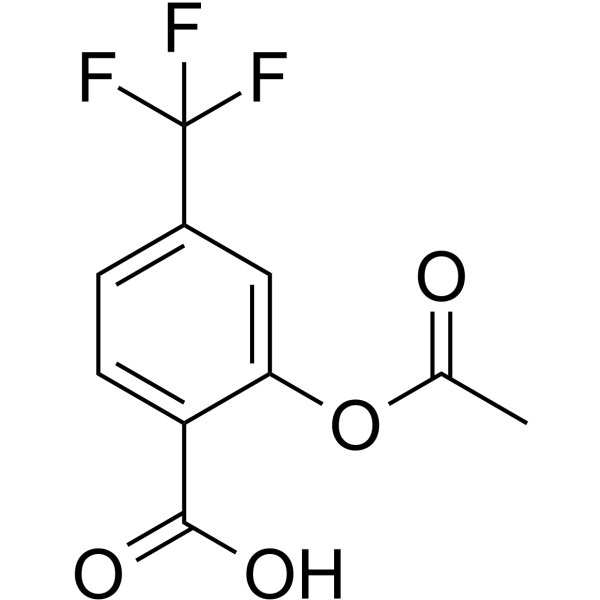
Triflusal is an orally bioavailable, blood-brain barrier-permeable dual Cyclooxygenase-1 (COX-1)/cAMP phosphodiesterase inhibitor. Triflusal inhibits platelet aggregation, NF-κB activation, iNOS activity, and prostaglandin synthesis in ischaemic tissue. Triflusal stimulates neutrophil nitric oxide production, eNOS protein expression, and cNOS activity. Triflusal alleviates cerebral ischemic injury in rats and ameliorates pathological lesions and related gene expression in transgenic Alzheimer’s disease models. Triflusal can be used for the research of thromboembolic/ischemic cardiovascular and cerebrovascular diseases, and Alzheimer’s disease.
Nos produits utilisent uniquement pour la recherche. Nous ne vendons pas aux patients.
- Pureté : 99.56%
- CAS No.: 322-79-2
- Formule: C10H7F3O4
- Masse moléculaire:248.16
-
Stockage:Powder -20°C, 3 years , 4°C, 2 years ; In solvent -80°C, 2 years , -20°C, 1 year

To place orders, for customer services and technical support, please contact: MedChemExpress USA
Tel: 609-228-6898 E-mail: [email protected] [email protected]


-
 Activité biologique
-
Chemical Information
-
Solvant et solubilité
- Protocole
- Pureté et documentation
- Références
-
 Help & FAQs


-
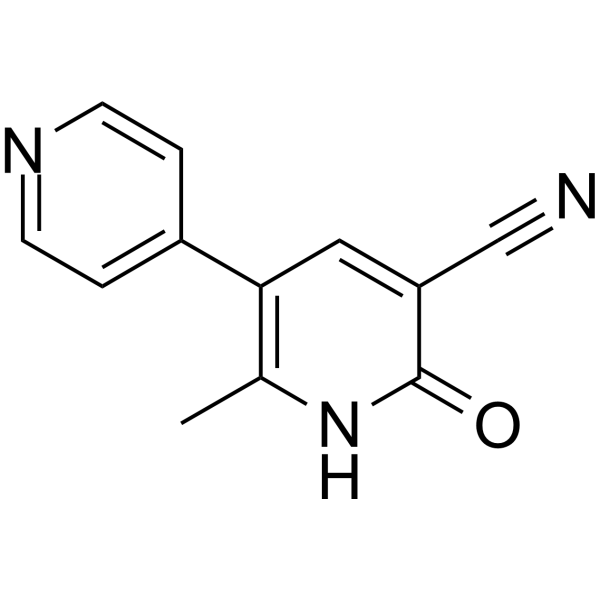
HY-14252
Milrinone -

HY-B0531R
Triflusal (Standard)COX-1/CAMP Phosphodiesterase Inhibitor -
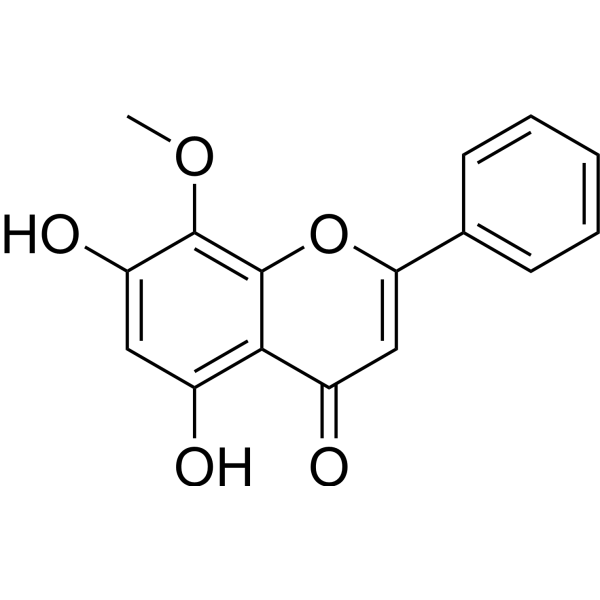
HY-N0400
WogoninCDK Inhibitor -
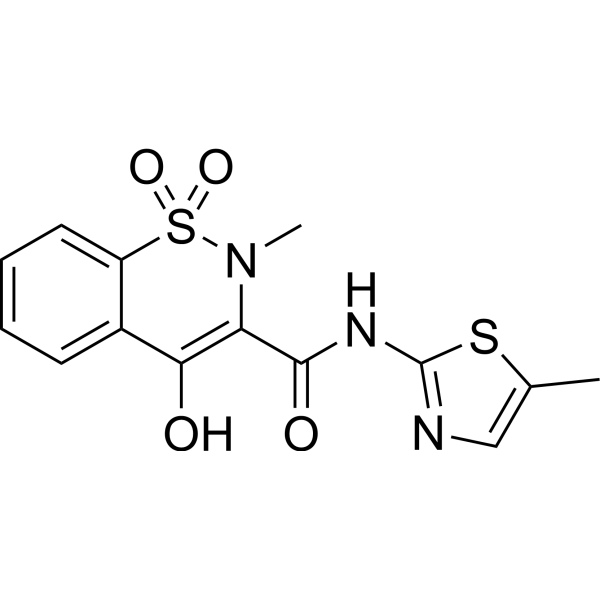
HY-B0261
MeloxicamCOX Inhibitor -
HY-B0253
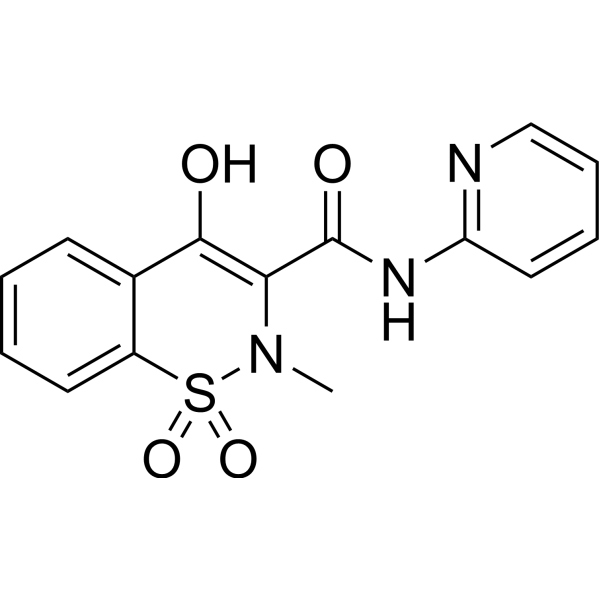
PiroxicamCOX Inhibitor -
HY-15037
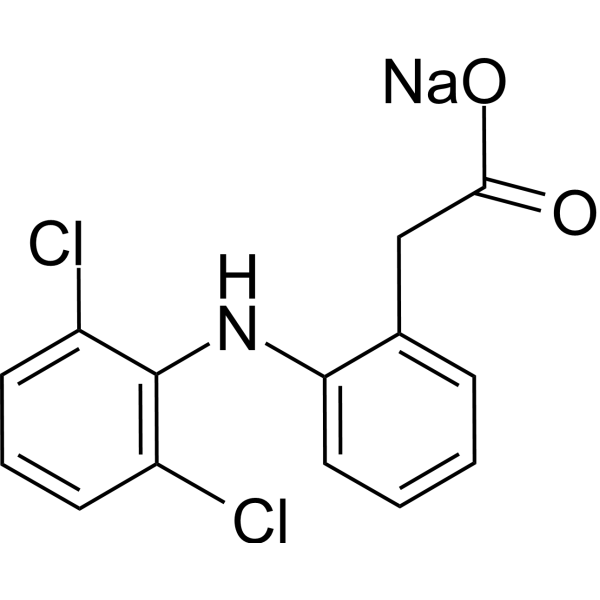
Diclofenac SodiumCOX Inhibitor -
HY-B0335
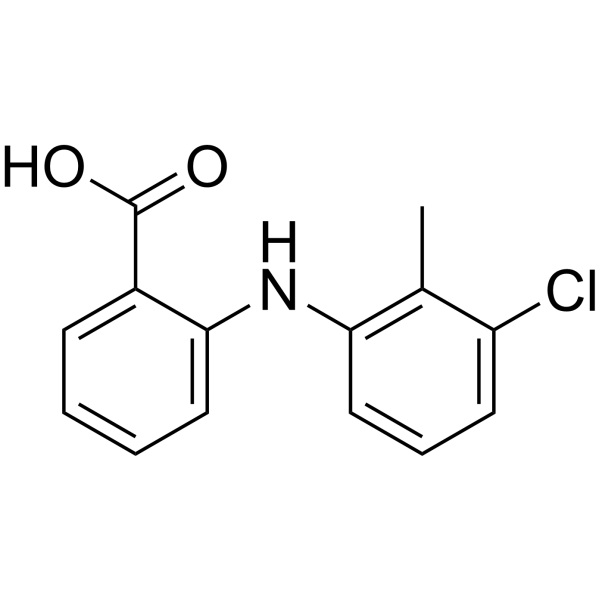
Tolfenamic AcidCOX-2 Inhibitor -

HY-B0261R
Meloxicam (Standard)COX Inhibitor -
HY-W010995
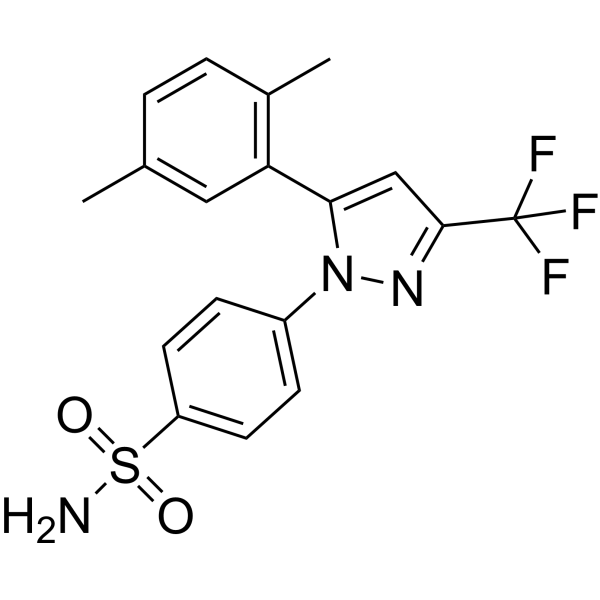
2,5-DimethylcelecoxibWnt/β-catenin inhibitor -
HY-B0335R
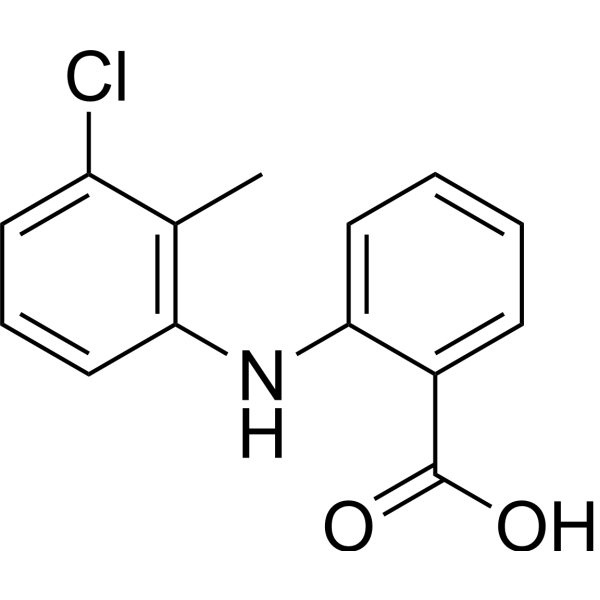
Tolfenamic Acid (Standard)COX-2 Inhibitor -
HY-15037R
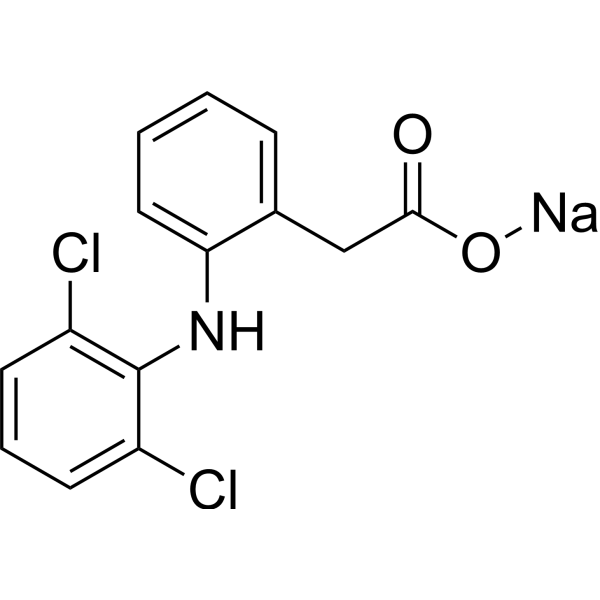
Diclofenac Sodium (Standard)COX Inhibitor -
HY-17484
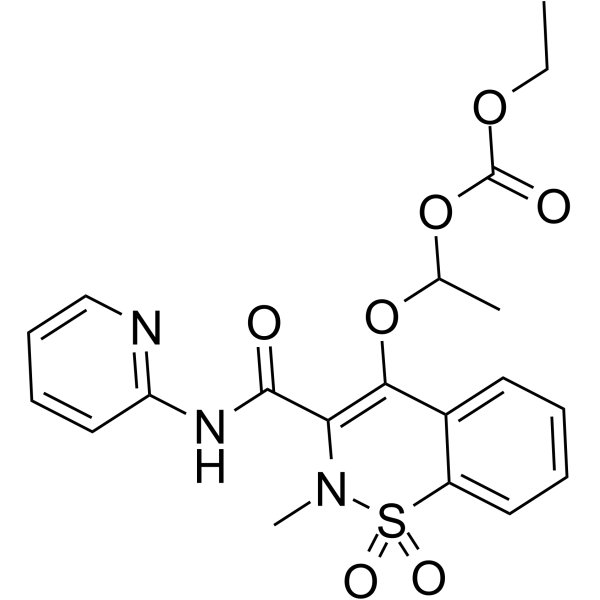
AmpiroxicamNSAID Prodrug


Activité biologique
Description
IC50 & Target
[4]|
COX-1 |
NF-κB |
iNOS |
eNOS |
In Vitro
Triflusal (37.5-300 μM; 30 min pre-incubation) does not significantly inhibit endothelial Cox-2 activity or reduce prostacyclin synthesis in Phorbol 12-myristate 13-acetate (HY-18739)-stimulated porcine aortic endothelial cells[2].
Triflusal irreversibly inhibits COX-1 and reduces TXB2 production in human platelets while sparing vascular endothelial cell arachidonic acid metabolism, and exhibits greater anti-aggregant potency in human whole blood than in platelet rich plasma[3].
Triflusal increases NO production by human neutrophils by 150%, inhibits NF-κB activation in human mononuclear cells[3].
Triflusal (3.3 mM) inhibits thrombin-induced platelet activation by 61% in human platelet-rich plasma[4].
Triflusal (1 mM) increases basal cAMP levels by 36% in rat[4].
Triflusal (3 mM) inhibits NF-κB activation in human peripheral blood mononuclear cells[4].
Triflusal potently inhibits cAMP phosphodiesterase, significantly elevates cGMP levels in human platelets and neutrophils: it is ~2-fold more potent at inhibiting TNFα-induced NFκB activation, ~4-10-fold more potent at inhibiting NFAT-mediated transcription, and effective at attenuating anoxia/reperfusion-related injury, iNOS activity and lipid peroxidation in rat brain slices[4].
Triflusal inhibits NF-κB activation and downstream expression of proinflammatory mediators in human peripheral blood mononuclear cells and endothelial cells, and strongly suppresses inflammation-induced COX-2 expression in human cells[5].
MedChemExpress (MCE) has not independently confirmed the accuracy of these methods. They are for reference only.
In Vivo
Triflusal (40 mg/kg/day; p.o.; daily; 8 days) reduces secondary platelet deposition on preformed primary thrombi in a rabbit model of severe carotid stenosis by 53-63% [2].
Triflusal (10 mg/kg; i.v.; single dose) reduces secondary platelet deposition on preformed primary thrombi in a rabbit model of thrombosis by 48-66%[2].
Triflusal (chronic administration) provides 60% protection against arachidonic acid-induced cerebral ischaemia in rats[3].
Triflusal (30 mg/kg) reduces NMDA (HY-17551)-induced excitotoxic brain lesions in rats[3].
Triflusal inhibits neuronal and glial NF-κB activation, reduces lesion volume by approximately 50%, and dampens the astroglial response in a postnatal rat model of excitotoxic brain injury[4].
Triflusal reduces inflammatory markers and functional deficits in rat models of isolated cerebral ischaemia or isolated Alzheimer's disease-like pathology, but has reduced efficacy in a model of concurrent cerebral ischaemia and Alzheimer's disease-like pathology[4].
Triflusal (30 mg/kg; p.o.; daily; 3-5 consecutive months) rescues cognitive deficits, reduces dense-core amyloid plaque load by up to 64%, lowers neuroinflammatory markers, normalizes axonal curvature, and upregulates memory-related gene expression in Tg2576 Alzheimer's disease transgenic mice[5].
MedChemExpress (MCE) has not independently confirmed the accuracy of these methods. They are for reference only.
-
Animal Model:New Zealand White (male, 2.8 kg)[2]
-
Dosage:40 mg/kg/day
-
Administration:p.o.; daily; 8 days
-
Result:Left vascular Cox-1 mRNA levels unchanged relative to placebo.
Reduced Cox-2 mRNA levels.
Reduced Cox-2 protein levels by 39%.
-
Animal Model:New Zealand White (male, 2.8 kg)[2]
-
Dosage:40 mg/kg/day
-
Administration:p.o.; daily; 8 days
-
Result:Reduced platelet deposition on subendothelium-induced primary thrombus (severe stenosis, 1690 s-1) by 63% relative to placebo.
Reduced platelet deposition on tunica media-induced primary thrombus (severe stenosis, 1690 s-1) by 53% relative to placebo.
-
Animal Model:New Zealand White (male, 2.8 kg)[2]
-
Dosage:10 mg/kg
-
Administration:i.v.; single dose
-
Result:Reduced platelet deposition on subendothelium-induced primary thrombus (mild stenosis, 212 s-1) by 66% relative to placebo.
Reduced platelet deposition on tunica media-induced primary thrombus (mild stenosis, 212 s-1) by 48% relative to placebo.
-
Animal Model:Tg2576 (gender-matched; starting treatment at 10 or 13 months of age; overexpressing human mutant APP with KM670/671NL on mixed hybrid C57Bl6j/SJL background)[5]
-
Dosage:30 mg/kg
-
Administration:p.o.; daily; 3 or 5 consecutive months
-
Result:Achieved significantly more platform crossings in Morris water maze probe trials, and restored contextual fear conditioning freezing levels.
Decreased dense-core (Thioflavin-S-reactive) plaque burden by 47% at 13 months and 64% at 18 months, and reduced total Thioflavin-S-positive plaque counts by 37% at 13 months and 57% at 18 months.
Reduced astrocyte counts in the hippocampal CA1 subfield and entorhinal cortex, decreased microglial counts in the CA1 region at both 13 and 18 months, and lowered brain proinflammatory cytokine levels (IL-1β by 70%; TNF-α by 50%) at 13 months.
Ameliorated axonal curvature near plaques (<50 μm) at 13 months and in both peri-plaque and distal regions (>50 μm) at 18 months, and upregulated hippocampal c-fos and BDNF mRNA expression, restoring BDNF levels to those of non-transgenic controls.
Essai clinique
| NCT Number | Sponsor | Condition | Start Date |
Phase

|
|---|---|---|---|---|
| NCT01329991 | Plexxikon| | 2011-05 | PHASE1 |


Chemical Information
-
CAS No. 322-79-2
-
Appearance Solid
-
Masse moléculaire 248.16
-
Formule C10H7F3O4
-
Color White to off-white
-
SMILES
O=C(O)C1=CC=C(C(F)(F)F)C=C1OC(C)=O
-
Livraison
Room temperature in continental US; may vary elsewhere.
-
Stockage
Powder -20°C 3 years 4°C 2 years In solvent -80°C 2 years -20°C 1 year


Solvant et solubilité
In Vitro:
DMSO : 100 mg/mL (402.97 mM; Need ultrasonic; Hygroscopic DMSO has a significant impact on the solubility of product, please use newly opened DMSO)
Please refer to the solubility information to select the appropriate solvent. Once prepared, please aliquot and store the solution to prevent product inactivation from repeated freeze-thaw cycles.
Storage method and period of stock solution: -80°C, 2 years; -20°C, 1 year. When stored at -80°C, please use it within 2 years. When stored at -20°C, please use it within 1 year.
Please refer to the solubility information to select the appropriate solvent. Once prepared, please aliquot and store the solution to prevent product inactivation from repeated freeze-thaw cycles.
Storage method and period of stock solution: -80°C, 2 years; -20°C, 1 year. When stored at -80°C, please use it within 2 years. When stored at -20°C, please use it within 1 year.
Concentration (start) × Volume (start) = Concentration (final) × Volume (final)
In Vivo:
Select the appropriate dissolution method based on your experimental animal and administration route.
- For the following dissolution methods, please ensure to first prepare a clear stock solution using an In Vitro approach and then sequentially add co-solvents:
- To ensure reliable experimental results, the clarified stock solution can be appropriately stored based on storage conditions. As for the working solution for In Vivo experiments, it is recommended to prepare freshly and use it on the same day.
- The percentages shown for the solvents indicate their volumetric ratio in the final prepared solution. If precipitation or phase separation occurs during preparation, heat and/or sonication can be used to aid dissolution.
Add each solvent one by one: 10% DMSO 40% PEG300 5% Tween-80 45% Saline
Solubility: ≥ 3 mg/mL (12.09 mM); Clear solution
This protocol yields a clear solution of ≥ 3 mg/mL (saturation unknown).
Taking 1 mL working solution as an example, add 100 μL DMSO stock solution (30.0 mg/mL) to 400 μL PEG300, and mix evenly; then add 50 μL Tween-80 and mix evenly; then add 450 μL Saline to adjust the volume to 1 mL.
Preparation of Saline: Dissolve 0.9 g sodium chloride in ddH₂O and dilute to 100 mL to obtain a clear Saline solution.
Add each solvent one by one: 10% DMSO 90% (20% SBE-β-CD in Saline)
Solubility: ≥ 3 mg/mL (12.09 mM); Clear solution
This protocol yields a clear solution of ≥ 3 mg/mL (saturation unknown).
Taking 1 mL working solution as an example, add 100 μL DMSO stock solution (30.0 mg/mL) to 900 μL 20% SBE-β-CD in Saline, and mix evenly.
Preparation of 20% SBE-β-CD in Saline (4°C, storage for one week): 2 g SBE-β-CD powder is dissolved in 10 mL Saline, completely dissolve until clear.
In Vivo Dissolution Calculator
Please enter the basic information of animal experiments:
-
-
-
-
Recommended: Prepare an additional quantity of animals to account for potential losses during experiments.
Please enter your animal formula composition:
-
%DMSO +
Recommended: Keep the proportion of DMSO in working solution below 2% if your animal is weak.
-
%+
-
+%Tween-80 + +
-
%Saline +
The co-solvents required include: DMSO, . All of co-solvents are available by MedChemExpress (MCE). , Tween 80. All of co-solvents are available by MedChemExpress (MCE).
Working solution concentration: 0.22 mg/mL
Method for preparing stock solution: mg drug dissolved in μL DMSO. Stock solution concentration: mg/mL.
1. Take μL DMSO stock solution;
2. Add μL .
μL , mix evenly;
3. Then add μL Tween 80, mix evenly;
4. Then add μL
Please ensure that the stock solution in the first step is dissolved to a clear state, and add co-solvents in sequence. You can use ultrasonic heating (ultrasonic cleaner, recommended frequency 20-40 kHz), vortexing, etc. to assist dissolution.


Pureté et documentation
-
Fiche technique (286 KB)
-
SDS (393 KB)
- English - EN (393 KB)
- Français - FR (393 KB)
- Deutsch - DE (393 KB)
- Norwegian - NO (393 KB)
- Español - ES (393 KB)
- Swedish - SV (393 KB)
- Italian - IT (393 KB)
- Korean - KR (393 KB)
- Portuguese - PT (393 KB)
-
Instruction de manipulation (2659 KB)
Références
[1]. De Miguel LS, et al. A 4-trifluoromethyl derivative of salicylate, triflusal, stimulates nitric oxide production by human neutrophils: role in platelet function. Eur J Clin Invest. 2000;30(9):811-817. [Content Brief]
[2]. Duran X, et al. Protective effects of triflusal on secondary thrombus growth and vascular cyclooxygenase-2. J Thromb Haemost. 2008;6(8):1385-1392. [Content Brief]
[3]. Anninos H, et al. Triflusal: an old drug in modern antiplatelet therapy. Review of its action, use, safety and effectiveness. Hellenic J Cardiol. 2009 May-Jun;50(3):199-207. [Content Brief]
[4]. Murdoch D, et al. Triflusal: a review of its use in cerebral infarction and myocardial infarction, and as thromboprophylaxis in atrial fibrillation. Drugs. 2006;66(5):671-692. [Content Brief]
[5]. Coma M, et al. Triflusal reduces dense-core plaque load, associated axonal alterations and inflammatory changes, and rescues cognition in a transgenic mouse model of Alzheimer's disease. Neurobiol Dis. 2010;38(3):482-491. [Content Brief]


Complete Stock Solution Preparation Table
Please refer to the solubility information to select the appropriate solvent. Once prepared, please aliquot and store the solution to prevent product inactivation from repeated freeze-thaw cycles.
Storage method and period of stock solution: -80°C, 2 years; -20°C, 1 year. When stored at -80°C, please use it within 2 years. When stored at -20°C, please use it within 1 year.
| Optional Solvent | Concentration Solvent Mass | 1 mg | 5 mg | 10 mg | 25 mg |
|---|---|---|---|---|---|
| DMSO | 1 mM | 4.0297 mL | 20.1483 mL | 40.2966 mL | 100.7415 mL |
| 5 mM | 0.8059 mL | 4.0297 mL | 8.0593 mL | 20.1483 mL | |
| 10 mM | 0.4030 mL | 2.0148 mL | 4.0297 mL | 10.0741 mL | |
| 15 mM | 0.2686 mL | 1.3432 mL | 2.6864 mL | 6.7161 mL | |
| 20 mM | 0.2015 mL | 1.0074 mL | 2.0148 mL | 5.0371 mL | |
| 25 mM | 0.1612 mL | 0.8059 mL | 1.6119 mL | 4.0297 mL | |
| 30 mM | 0.1343 mL | 0.6716 mL | 1.3432 mL | 3.3580 mL | |
| 40 mM | 0.1007 mL | 0.5037 mL | 1.0074 mL | 2.5185 mL | |
| 50 mM | 0.0806 mL | 0.4030 mL | 0.8059 mL | 2.0148 mL | |
| 60 mM | 0.0672 mL | 0.3358 mL | 0.6716 mL | 1.6790 mL | |
| 80 mM | 0.0504 mL | 0.2519 mL | 0.5037 mL | 1.2593 mL | |
| 100 mM | 0.0403 mL | 0.2015 mL | 0.4030 mL | 1.0074 mL |


Triflusal Related Classifications
HY-B0531 Related Classifications
 Powered by Bioz