



D-Allose

Based on 1 Customer Validation
D-Allose exhibits antitumor activity against various cancer cells. D-Allose scavenges reactive oxygen species (ROS) and reduces oxidative stress damage. D-Allose exhibits anti-inflammatory and neuroprotective through inhibition of TLR4/PI3K/AKT signaling pathway. D-Allose exhibits antihypertensive, cryoprotective, and anti-osteoporotic activities.
For research use only. We do not sell to patients.
- Purity : 99.85%
- CAS No.: 2595-97-3
- Formula: C6H12O6
- Molecular Weight:180.16
-
Storage:
4°C, sealed storage, away from moisture and light
* In solvent : -80°C, 6 months; -20°C, 1 month (sealed storage, away from moisture and light)

To place orders, for customer services and technical support, please contact: MedChemExpress USA
Tel: 609-228-6898 E-mail: [email protected] [email protected]


-
 Biological Activity
-
Chemical Information
-
Solvent & Solubility
- Protocols
- Purity & Documentation
- References
-
 Help & FAQs


-
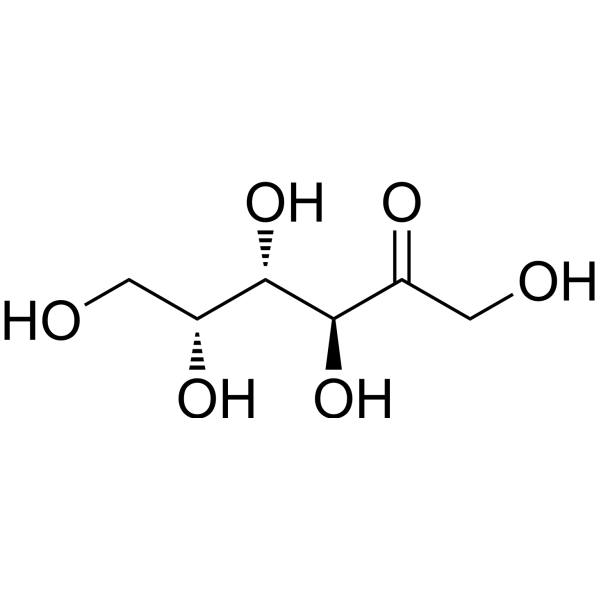
HY-42680
D-TagatoseMonosaccharide -
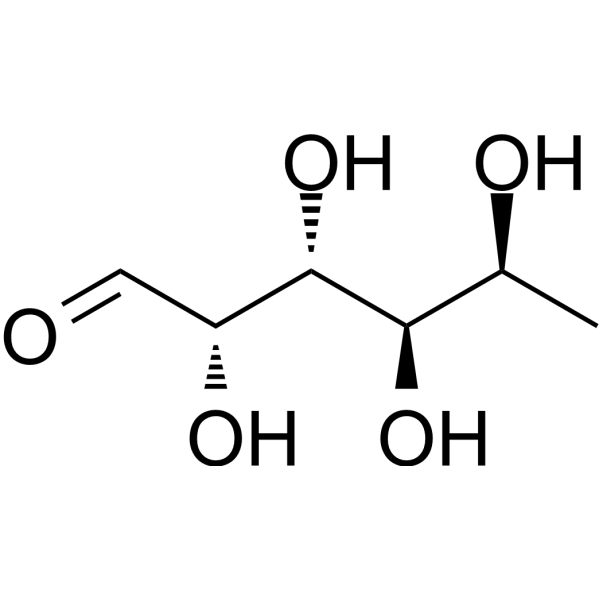
HY-N1480
(-)-FucoseEndogenous Metabolite -

HY-128741R
D-Allose (Standard)Analytical Standard -
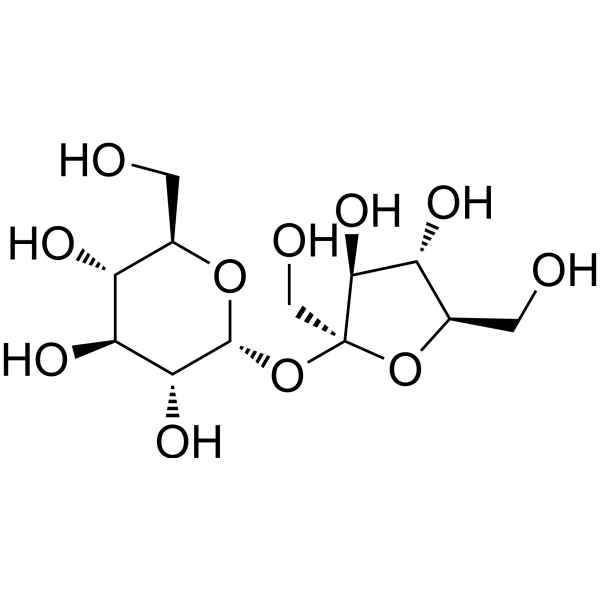
HY-B1779
SucroseDisaccharide -
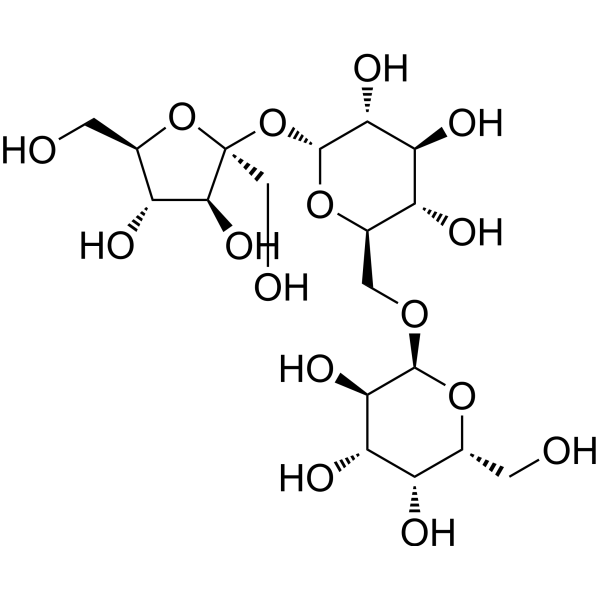
HY-N7088
RaffinoseNrf2 Activator -

HY-B1779R
Sucrose (Standard)Disaccharide -
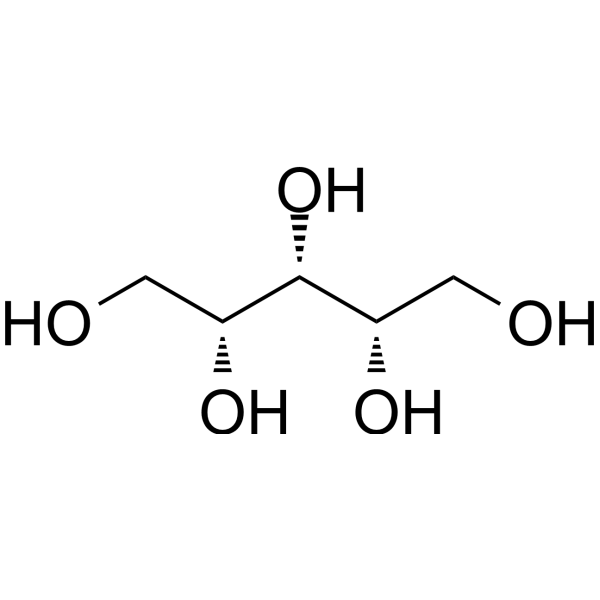
HY-N0538
XylitolSugar Alcohol -
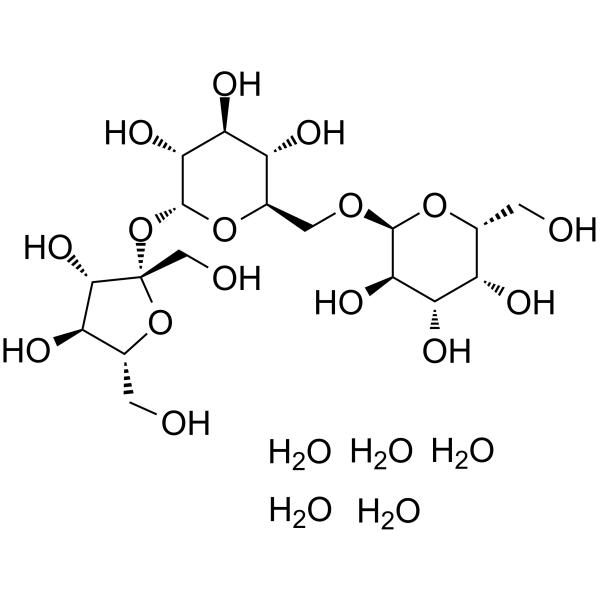
HY-N1938
D(+)-Raffinose pentahydrateBiofilm-inhibitory Agent -

HY-N7088R
Raffinose (Standard)Nrf2 Activator -

HY-N0538R
Xylitol (Standard)Sugar Alcohol -

HY-N1480R
(-)-Fucose (Standard)Endogenous Metabolite -
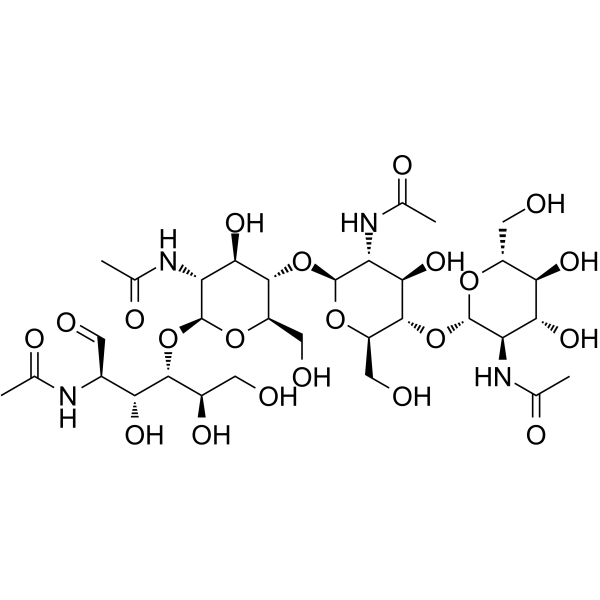
HY-N7698
Tetra-N-acetylchitotetraoseLinear Chitosan Oligosaccharides
All Endogenous Metabolite Isoforms
More

Biological Activity
Description
In Vitro
D-Allose (50 mM, 1-5 days) inhibits the proliferation of cancer cell OVCAR-3, upregulates the expression of cell cycle inhibitors p21 and p27, arrests the cell cycle at G2/M phase, and induces apoptosis[2].
MedChemExpress (MCE) has not independently confirmed the accuracy of these methods. They are for reference only. Further protocols information, click here.
-
Cell Line:OVCAR-3
-
Concentration:50 mM
-
Incubation Time:5 days
-
Result:Arrested the cell cycle at G2/M phase.
-
Cell Line:OVCAR-3
-
Concentration:50 mM
-
Incubation Time:5 days
-
Result:Induced apoptosis.
-
Cell Line:OVCAR-3
-
Concentration:50 mM
-
Incubation Time:5 days
-
Result:Upregulated the expression of p21 and p27.
In Vivo
D-Allose (5% in drinking water for 14 days) reduces Isoproterenol (HY-B0468)-induced cardiac hypertrophy in mouse models[4].
MedChemExpress (MCE) has not independently confirmed the accuracy of these methods. They are for reference only.
-
Animal Model:Rats cerebral I/R injury models[3]
-
Dosage:300 mg/kg
-
Administration:iv, two doses
-
Result:Reduced the area of cerebral infarction.
Reduced the number of MPO-positive and COX2-positive cells.
-
Animal Model:Isoproterenol-induced cardiac hypertrophy mouse model[4]
-
Dosage:5% in drinking water
-
Administration:po for 14 days
-
Result:Decreased heart weight and expression of hypertrophy markers Nppa, Nppb.


Chemical Information
-
CAS No. 2595-97-3
-
Appearance Solid
-
Molecular Weight 180.16
-
Formula C6H12O6
-
Color White to off-white
-
SMILES
O=C[C@@H]([C@@H]([C@@H]([C@@H](CO)O)O)O)O
-
Structure Classification
-
Initial Source
-
Shipping
Room temperature in continental US; may vary elsewhere.
-
Storage
4°C, sealed storage, away from moisture and light
* In solvent : -80°C, 6 months; -20°C, 1 month (sealed storage, away from moisture and light)


Solvent & Solubility
In Vitro:
H2O : 100 mg/mL (555.06 mM; Need ultrasonic)
DMSO : 100 mg/mL (555.06 mM; Need ultrasonic; Hygroscopic DMSO has a significant impact on the solubility of product, please use newly opened DMSO)
Please refer to the solubility information to select the appropriate solvent. Once prepared, please aliquot and store the solution to prevent product inactivation from repeated freeze-thaw cycles.
Storage method and period of stock solution: -80°C, 6 months; -20°C, 1 month (sealed storage, away from moisture and light). When stored at -80°C, please use it within 6 months. When stored at -20°C, please use it within 1 month.
* Note: If you choose water as the stock solution, please dilute it to the working solution, then filter and sterilize it with a 0.22 μm filter before use.
Please refer to the solubility information to select the appropriate solvent. Once prepared, please aliquot and store the solution to prevent product inactivation from repeated freeze-thaw cycles.
Storage method and period of stock solution: -80°C, 6 months; -20°C, 1 month (sealed storage, away from moisture and light). When stored at -80°C, please use it within 6 months. When stored at -20°C, please use it within 1 month.
* Note: If you choose water as the stock solution, please dilute it to the working solution, then filter and sterilize it with a 0.22 μm filter before use.
Concentration (start) × Volume (start) = Concentration (final) × Volume (final)
In Vivo:
Select the appropriate dissolution method based on your experimental animal and administration route.
- For the following dissolution methods, please ensure to first prepare a clear stock solution using an In Vitro approach and then sequentially add co-solvents:
- To ensure reliable experimental results, the clarified stock solution can be appropriately stored based on storage conditions. As for the working solution for In Vivo experiments, it is recommended to prepare freshly and use it on the same day.
- The percentages shown for the solvents indicate their volumetric ratio in the final prepared solution. If precipitation or phase separation occurs during preparation, heat and/or sonication can be used to aid dissolution.
Add each solvent one by one: 10% DMSO 40% PEG300 5% Tween-80 45% Saline
Solubility: ≥ 2.5 mg/mL (13.88 mM); Clear solution
This protocol yields a clear solution of ≥ 2.5 mg/mL (saturation unknown).
Taking 1 mL working solution as an example, add 100 μL DMSO stock solution (25.0 mg/mL) to 400 μL PEG300, and mix evenly; then add 50 μL Tween-80 and mix evenly; then add 450 μL Saline to adjust the volume to 1 mL.
Preparation of Saline: Dissolve 0.9 g sodium chloride in ddH₂O and dilute to 100 mL to obtain a clear Saline solution.
Add each solvent one by one: 10% DMSO 90% (20% SBE-β-CD in Saline)
Solubility: ≥ 2.5 mg/mL (13.88 mM); Clear solution
This protocol yields a clear solution of ≥ 2.5 mg/mL (saturation unknown).
Taking 1 mL working solution as an example, add 100 μL DMSO stock solution (25.0 mg/mL) to 900 μL 20% SBE-β-CD in Saline, and mix evenly.
Preparation of 20% SBE-β-CD in Saline (4°C, storage for one week): 2 g SBE-β-CD powder is dissolved in 10 mL Saline, completely dissolve until clear.
For the following dissolution methods, please prepare the working solution directly:
It is recommended to prepare fresh solutions and use them promptly within a short period of time.
The percentages shown for the solvents indicate their volumetric ratio in the final prepared solution. If precipitation or phase separation occurs during preparation, heat and/or sonication can be used to aid dissolution.
Add each solvent one by one: PBS
Solubility: 100 mg/mL (555.06 mM); Clear solution; Need ultrasonic
In Vivo Dissolution Calculator
Please enter the basic information of animal experiments:
-
-
-
-
Recommended: Prepare an additional quantity of animals to account for potential losses during experiments.
Working solution concentration: 0.22 mg/mL
This product has good water solubility, please refer to the measured solubility data in water/PBS/Saline for details.

Protocols
-
ROS/oxidative-stress fluorescent staining
ROS/oxidative-stress fluorescent staining uses cell-permeant fluorogenic probes that become fluorescent after oxidation inside cells or tissues; commonly used examples include DCFH-DA/DCFDA for broad cellular oxidant detection, DHE for superoxide-related signal detection, MitoSOX for mitochondrial superoxide-related signal detection, and CellROX probes for oxidative-stress-associated fluorescence readouts. The assay detects probe oxidation rather than a single ROS species unless the probe and analysis method have been chemically validated for that species. DCFH-DA enters cells, is deacetylated by intracellular esterases to DCFH, and produces fluorescent DCF after oxidation, so the readout is used as an operational measure of total cellular oxidative stress rather than a species-specific ROS measurement. DHE and MitoSOX can report superoxide-related oxidation, but red fluorescence alone can include non-specific ethidium-like oxidation products; HPLC or optimized spectral approaches are
-
Research Protocol for Inflammation-related Diseases
The NLRP3 inflammasome is a cytosolic innate immune signaling platform that integrates priming signals and danger-signal activation to promote caspase-1 activation, maturation of IL-1β and IL-18, and gasdermin D-mediated pyroptotic cell death. The core experimental logic is to determine whether inflammatory disease phenotypes are driven by increased NLRP3 expression, ASC-containing inflammasome assembly, caspase-1 cleavage, GSDMD cleavage, and extracellular release of IL-1β/IL-18 rather than by nonspecific cell injury alone. The pathway is strongly linked to inflammation-related disease phenotypes because monosodium urate crystals activate NALP3/NLRP3 inflammasome signaling in gout-like crystal inflammation, cholesterol crystals activate NLRP3 inflammasomes in atherogenesis models, and DSS-induced intestinal inflammation has been reported to involve NLRP3 inflammasome activity. However, experimental colitis studies also show context-dependent protective effects of NLRP3 inflammasome co
-
Subcutaneous Cell-Line-Derived Xenograft
Subcutaneous cell-line-derived xenograft (CDX) models are established by implanting cultured human cancer cell lines into immunodeficient mice, where the injected cells form localized tumors that can be monitored in vivo as a measure of tumorigenic potential, growth kinetics, and treatment response. These models are widely used in oncology research because they allow reproducible tumor formation and enable comparative assessment of tumor growth between different cell lines or genetic manipulations in a controlled in vivo microenvironment. Subcutaneous implantation of cancer cells in immunodeficient mice is a standard approach for evaluating tumor growth behavior and therapeutic response across multiple cancer types, including prostate, esophageal, pancreatic, and colon cancer models.


Purity & Documentation
-
Data Sheet (286 KB)
-
SDS (394 KB)
- English - EN (394 KB)
- Français - FR (394 KB)
- Deutsch - DE (394 KB)
- Norwegian - NO (394 KB)
- Español - ES (394 KB)
- Swedish - SV (394 KB)
- Italian - IT (394 KB)
- Korean - KR (394 KB)
- Portuguese - PT (394 KB)
-
Handling Instructions (2659 KB)
References
[1]. Chen Z, et al., Recent research on the physiological functions, applications, and biotechnological production of D-allose. Appl Microbiol Biotechnol. 2018 May;102(10):4269-4278. [Content Brief]
[2]. Sui L, et al., Growth inhibitory effect of D-allose on human ovarian carcinoma cells in vitro. Anticancer Res. 2005 Jul-Aug;25(4):2639-44. [Content Brief]
[3]. Gao D, et al., Anti-inflammatory effect of D-allose in cerebral ischemia/reperfusion injury in rats. Neurol Med Chir (Tokyo). 2013;53(6):365-74. [Content Brief]
[4]. Akumwami S, et al., Effects of D-Allose on experimental cardiac hypertrophy. J Pharmacol Sci. 2024 Oct;156(2):142-148. [Content Brief]
[5]. Luo Y, et al., D-allose Inhibits TLR4/PI3K/AKT Signaling to Attenuate Neuroinflammation and Neuronal Apoptosis by Inhibiting Gal-3 Following Ischemic Stroke. Biol Proced Online. 2023 Nov 28;25(1):30. [Content Brief]


Complete Stock Solution Preparation Table
Please refer to the solubility information to select the appropriate solvent. Once prepared, please aliquot and store the solution to prevent product inactivation from repeated freeze-thaw cycles.
Storage method and period of stock solution: -80°C, 6 months; -20°C, 1 month (sealed storage, away from moisture and light). When stored at -80°C, please use it within 6 months. When stored at -20°C, please use it within 1 month.
| Optional Solvent | Concentration Solvent Mass | 1 mg | 5 mg | 10 mg | 25 mg |
|---|---|---|---|---|---|
| H2O / DMSO | 1 mM | 5.5506 mL | 27.7531 mL | 55.5062 mL | 138.7655 mL |
| 5 mM | 1.1101 mL | 5.5506 mL | 11.1012 mL | 27.7531 mL | |
| 10 mM | 0.5551 mL | 2.7753 mL | 5.5506 mL | 13.8766 mL | |
| 15 mM | 0.3700 mL | 1.8502 mL | 3.7004 mL | 9.2510 mL | |
| 20 mM | 0.2775 mL | 1.3877 mL | 2.7753 mL | 6.9383 mL | |
| 25 mM | 0.2220 mL | 1.1101 mL | 2.2202 mL | 5.5506 mL | |
| 30 mM | 0.1850 mL | 0.9251 mL | 1.8502 mL | 4.6255 mL | |
| 40 mM | 0.1388 mL | 0.6938 mL | 1.3877 mL | 3.4691 mL | |
| 50 mM | 0.1110 mL | 0.5551 mL | 1.1101 mL | 2.7753 mL | |
| 60 mM | 0.0925 mL | 0.4626 mL | 0.9251 mL | 2.3128 mL | |
| 80 mM | 0.0694 mL | 0.3469 mL | 0.6938 mL | 1.7346 mL | |
| 100 mM | 0.0555 mL | 0.2775 mL | 0.5551 mL | 1.3877 mL |
* Note: If you choose water as the stock solution, please dilute it to the working solution, then filter and sterilize it with a 0.22 μm filter before use.


D-Allose Related Classifications
HY-128741 Related Classifications
 Powered by Bioz