



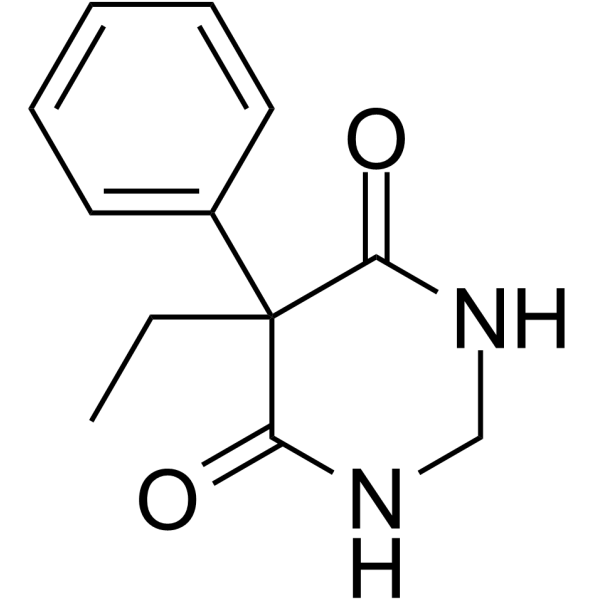
Primidone
Based on 2 publication(s) in Google Scholar
Primidone is the orally active inhibitor for TRPM3 (IC50 = 0.6 μM), RIP kinase and voltage-gated sodium channel, and the antagonist for GABA receptor. Primidone can be used as the analgesic and anticonvulsant agent.
For research use only. We do not sell to patients.
- Purity : 99.96%
- CAS No.: 125-33-7
- Formula: C12H14N2O2
- Molecular Weight:218.25
-
Storage:Powder -20°C, 3 years , 4°C, 2 years ; In solvent -80°C, 2 years , -20°C, 1 year

To place orders, for customer services and technical support, please contact: MedChemExpress USA
Tel: 609-228-6898 E-mail: [email protected] [email protected]


-
 Biological Activity
-
Chemical Information
-
Solvent & Solubility
- Protocols
- Purity & Documentation
- References
-
 Help & FAQs


-
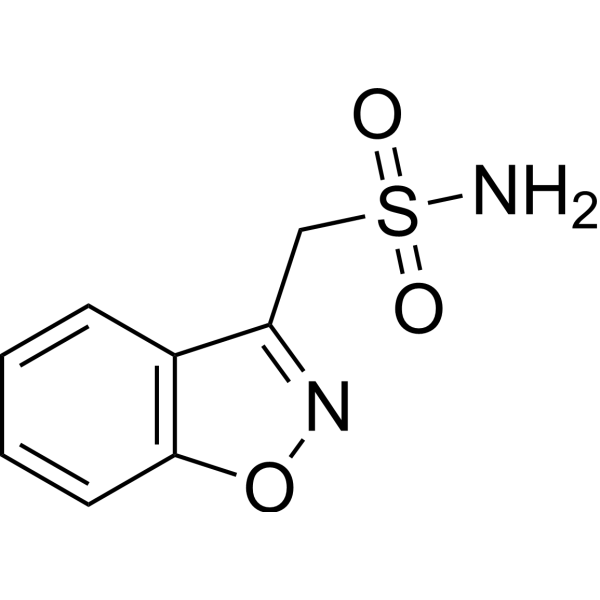
HY-B0124
ZonisamideCarbonic Anhydrase Inhibitor -
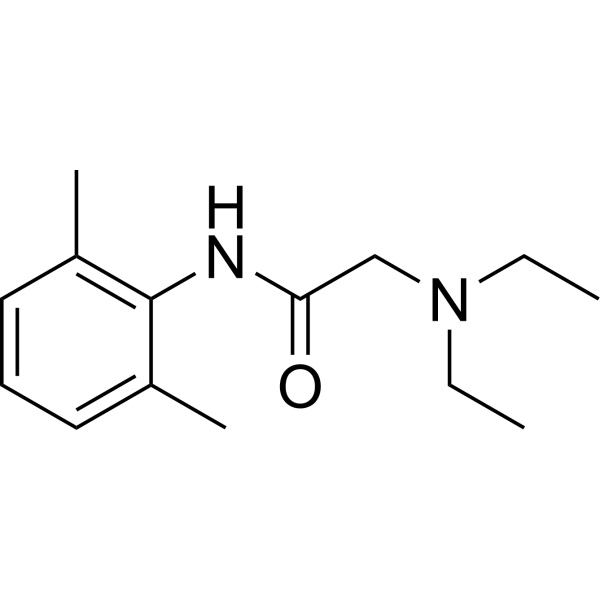
HY-B0185
LidocaineNa+ Channel Blocker -
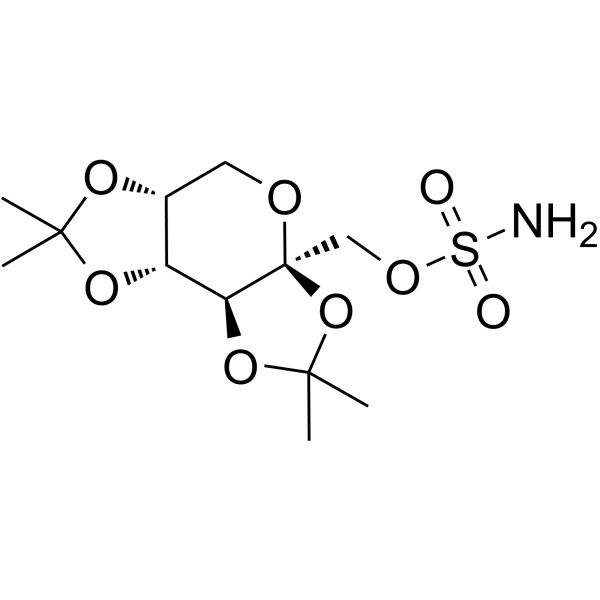
HY-B0122
TopiramateAntiepileptic Agent -
HY-110220
CIM0216TRPM3 Agonist -
HY-B0468
Isoprenaline hydrochlorideβ-adrenoceptor Agonist -
HY-A0057
GabapentinCalcium Channel Blocker. -
HY-B0495
LamotrigineAnticonvulsant Agent -
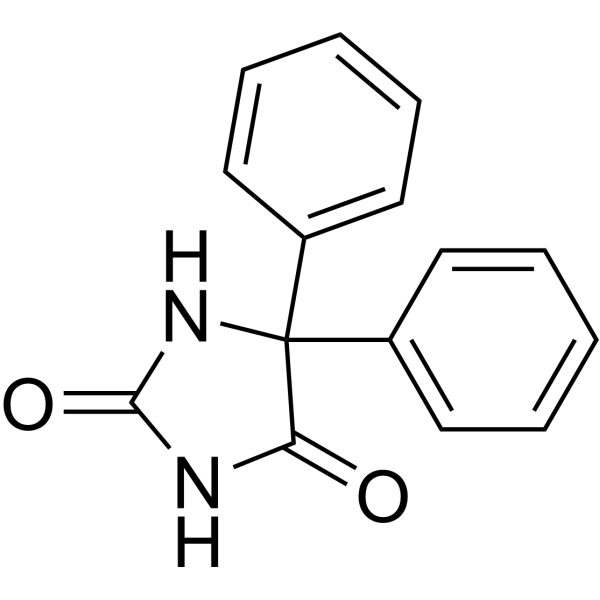
HY-B0448
PhenytoinVirus Protease Inhibitor -
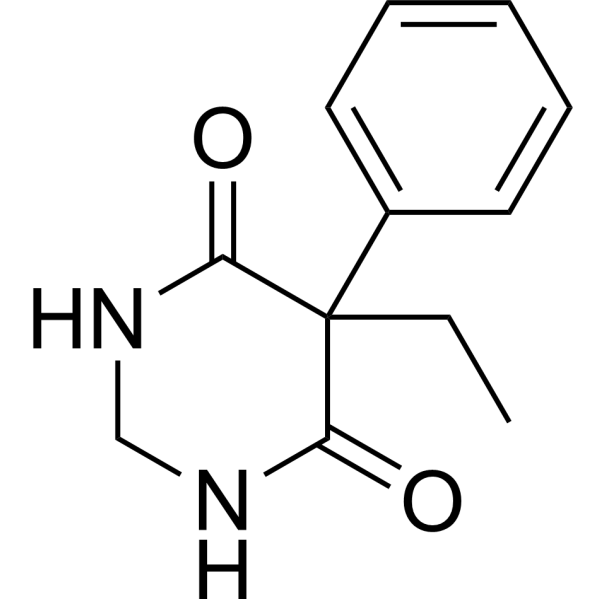
HY-B0339R
Primidone (Standard) -
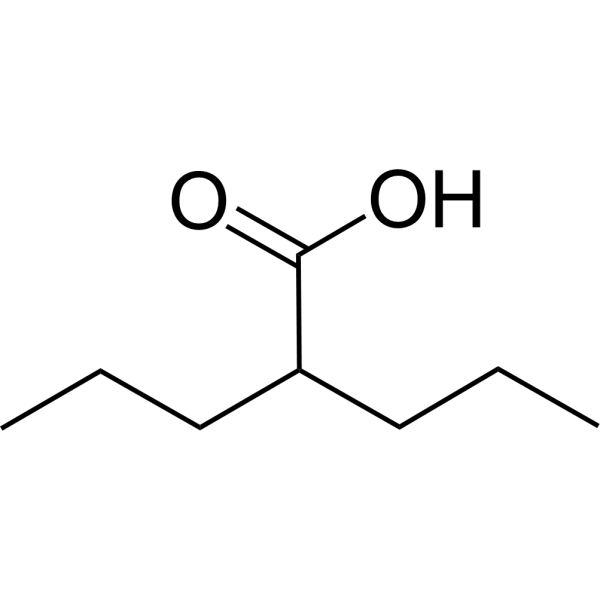
HY-10585
Valproic acidHDAC Inhibitor -
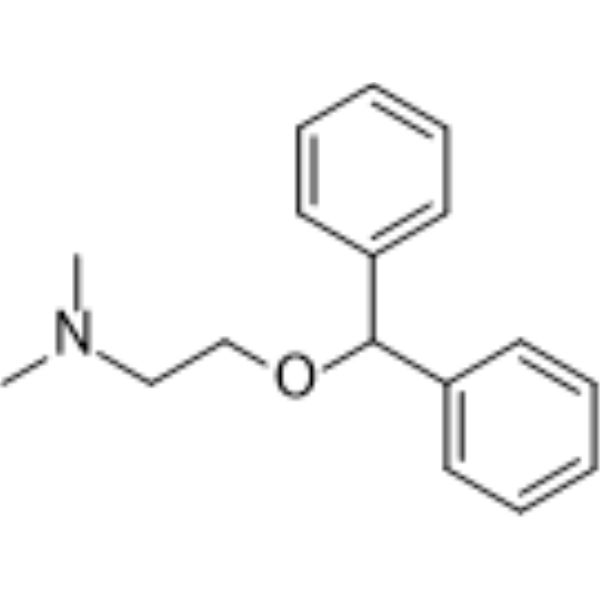
HY-B0303
DiphenhydramineAntihistamine -
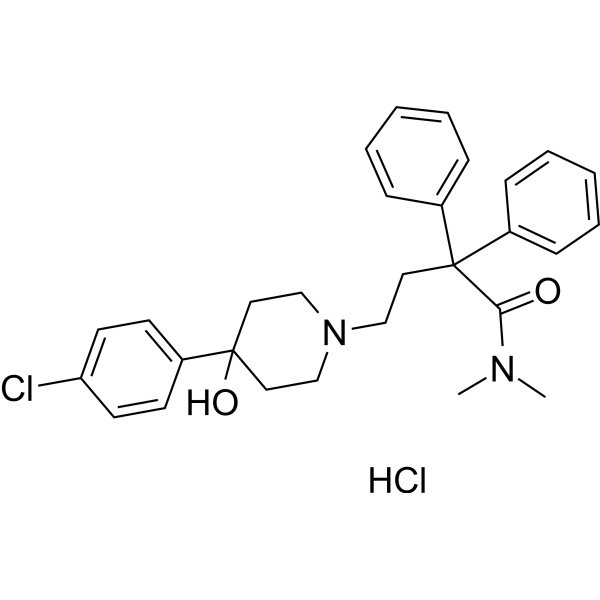
HY-B0418A
Loperamide hydrochlorideAutophagy Inducer
Publications Citing Use of MedChemExpress (MCE) Primidone
More

Biological Activity
Description
In Vitro
Primidone (1-10 μM) reversibly and voltage-independently inhibits TRPM3-mediated Ca2+ influx and current in HEKmTRPM3 cells[1].
Primidone (0-2.5 mM, 8 h) inhibits TNFα-induced necroptosis by inhibiting the binding of RIPK1 to FADD and preventing the formation of cell death complex II[2].
Primidone (1 mM, 8h) inhibits the phosphorylation of RIPK1, RIPK3 and MLKL[2].
MedChemExpress (MCE) has not independently confirmed the accuracy of these methods. They are for reference only. Further protocols information, click here.
-
Cell Line:U937
-
Concentration:1 mM
-
Incubation Time:8 h
-
Result:Inhibited p-RIPK1/3 and p-MLKL.
In Vivo
Primidone (2.875 mM in drinking water for 5 days) exhibits protective effect in mouse renal ischemia-reperfusion injury (IRI) model[2].
Primidone (6.25 mg/kg, ip, single dose) exhibits anti-inflammatory activity in mouse TNFα-induced systemic inflammatory response syndrome (SIRS) model[2].
MedChemExpress (MCE) has not independently confirmed the accuracy of these methods. They are for reference only.
-
Animal Model:PregS-induced chemical pain in mouse models[1]
-
Dosage:0.5-10 mg/kg
-
Administration:ip, single dose
-
Result:Alleviated chemical pain.
-
Animal Model:Mouse IRI model[2]
-
Dosage:2.875 mM in drinking water
-
Administration:po for 5 days
-
Result:Reduced the levels of plasma urea and creatinine.
-
Animal Model:Mouse SIRS model[2]
-
Dosage:6.25 mg/kg
-
Administration:ip, single dose
-
Result:Alleviated TNFα-induced hypothermia and mortality.


Chemical Information
-
CAS No. 125-33-7
-
Appearance Solid
-
Molecular Weight 218.25
-
Formula C12H14N2O2
-
Color White to off-white
-
SMILES
O=C(C1(CC)C2=CC=CC=C2)NCNC1=O
-
Shipping
Room temperature in continental US; may vary elsewhere.
-
Storage
Powder -20°C 3 years 4°C 2 years In solvent -80°C 2 years -20°C 1 year


Publications (2)
-
Journal Impact Factor
-
Most Recent
-
Cell Res
Gut microbiota drives macrophage-dependent self-renewal of intestinal stem cells via niche enteric serotonergic neurons. [Abstract]2022 Jun;32(6):555-569. PMID: 35379903 -


Solvent & Solubility
In Vitro:
DMSO : 50 mg/mL (229.10 mM; Need ultrasonic; Hygroscopic DMSO has a significant impact on the solubility of product, please use newly opened DMSO)
H2O : < 0.1 mg/mL (insoluble)
Please refer to the solubility information to select the appropriate solvent. Once prepared, please aliquot and store the solution to prevent product inactivation from repeated freeze-thaw cycles.
Storage method and period of stock solution: -80°C, 2 years; -20°C, 1 year. When stored at -80°C, please use it within 2 years. When stored at -20°C, please use it within 1 year.
Please refer to the solubility information to select the appropriate solvent. Once prepared, please aliquot and store the solution to prevent product inactivation from repeated freeze-thaw cycles.
Storage method and period of stock solution: -80°C, 2 years; -20°C, 1 year. When stored at -80°C, please use it within 2 years. When stored at -20°C, please use it within 1 year.
Concentration (start) × Volume (start) = Concentration (final) × Volume (final)
In Vivo:
Select the appropriate dissolution method based on your experimental animal and administration route.
- For the following dissolution methods, please ensure to first prepare a clear stock solution using an In Vitro approach and then sequentially add co-solvents:
- To ensure reliable experimental results, the clarified stock solution can be appropriately stored based on storage conditions. As for the working solution for In Vivo experiments, it is recommended to prepare freshly and use it on the same day.
- The percentages shown for the solvents indicate their volumetric ratio in the final prepared solution. If precipitation or phase separation occurs during preparation, heat and/or sonication can be used to aid dissolution.
Add each solvent one by one: 10% DMSO 40% PEG300 5% Tween-80 45% Saline
Solubility: ≥ 2.5 mg/mL (11.45 mM); Clear solution
This protocol yields a clear solution of ≥ 2.5 mg/mL (saturation unknown).
Taking 1 mL working solution as an example, add 100 μL DMSO stock solution (25.0 mg/mL) to 400 μL PEG300, and mix evenly; then add 50 μL Tween-80 and mix evenly; then add 450 μL Saline to adjust the volume to 1 mL.
Preparation of Saline: Dissolve 0.9 g sodium chloride in ddH₂O and dilute to 100 mL to obtain a clear Saline solution.
Add each solvent one by one: 10% DMSO 90% (20% SBE-β-CD in Saline)
Solubility: ≥ 2.5 mg/mL (11.45 mM); Clear solution
This protocol yields a clear solution of ≥ 2.5 mg/mL (saturation unknown).
Taking 1 mL working solution as an example, add 100 μL DMSO stock solution (25.0 mg/mL) to 900 μL 20% SBE-β-CD in Saline, and mix evenly.
Preparation of 20% SBE-β-CD in Saline (4°C, storage for one week): 2 g SBE-β-CD powder is dissolved in 10 mL Saline, completely dissolve until clear.
In Vivo Dissolution Calculator
Please enter the basic information of animal experiments:
-
-
-
-
Recommended: Prepare an additional quantity of animals to account for potential losses during experiments.
Please enter your animal formula composition:
-
%DMSO +
Recommended: Keep the proportion of DMSO in working solution below 2% if your animal is weak.
-
%+
-
+%Tween-80 + +
-
%Saline +
The co-solvents required include: DMSO, . All of co-solvents are available by MedChemExpress (MCE). , Tween 80. All of co-solvents are available by MedChemExpress (MCE).
Working solution concentration: 0.22 mg/mL
Method for preparing stock solution: mg drug dissolved in μL DMSO. Stock solution concentration: mg/mL.
1. Take μL DMSO stock solution;
2. Add μL .
μL , mix evenly;
3. Then add μL Tween 80, mix evenly;
4. Then add μL
Please ensure that the stock solution in the first step is dissolved to a clear state, and add co-solvents in sequence. You can use ultrasonic heating (ultrasonic cleaner, recommended frequency 20-40 kHz), vortexing, etc. to assist dissolution.

Protocols
-
Cell Cytotoxicity Assay
Cytotoxicity assays are usually based on the assessment of cell membrane damage, which can also be indirectly detected by measuring cell viability. Detection methods include MTT assay, CKK-8 assay, LDH assay and ATP assay, etc.


Purity & Documentation
-
Data Sheet (283 KB)
-
SDS (418 KB)
- English - EN (418 KB)
- Français - FR (418 KB)
- Deutsch - DE (418 KB)
- Norwegian - NO (418 KB)
- Español - ES (418 KB)
- Swedish - SV (418 KB)
- Italian - IT (418 KB)
- Korean - KR (418 KB)
- Portuguese - PT (418 KB)
-
Handling Instructions (2659 KB)
References
[1]. Krügel U, et al., Primidone inhibits TRPM3 and attenuates thermal nociception in vivo. Pain. 2017 May;158(5):856-867. [Content Brief]
[2]. Riebeling T, et al., Primidone blocks RIPK1-driven cell death and inflammation. Cell Death Differ. 2021 May;28(5):1610-1626. [Content Brief]
[3]. Vogelnik Žakelj K, et al., Mechanisms of tremor-modulating effects of primidone and propranolol in essential tremor. Parkinsonism Relat Disord. 2024 Nov;128:107151. [Content Brief]


Complete Stock Solution Preparation Table
Please refer to the solubility information to select the appropriate solvent. Once prepared, please aliquot and store the solution to prevent product inactivation from repeated freeze-thaw cycles.
Storage method and period of stock solution: -80°C, 2 years; -20°C, 1 year. When stored at -80°C, please use it within 2 years. When stored at -20°C, please use it within 1 year.
| Optional Solvent | Concentration Solvent Mass | 1 mg | 5 mg | 10 mg | 25 mg |
|---|---|---|---|---|---|
| DMSO | 1 mM | 4.5819 mL | 22.9095 mL | 45.8190 mL | 114.5475 mL |
| 5 mM | 0.9164 mL | 4.5819 mL | 9.1638 mL | 22.9095 mL | |
| 10 mM | 0.4582 mL | 2.2910 mL | 4.5819 mL | 11.4548 mL | |
| 15 mM | 0.3055 mL | 1.5273 mL | 3.0546 mL | 7.6365 mL | |
| 20 mM | 0.2291 mL | 1.1455 mL | 2.2910 mL | 5.7274 mL | |
| 25 mM | 0.1833 mL | 0.9164 mL | 1.8328 mL | 4.5819 mL | |
| 30 mM | 0.1527 mL | 0.7637 mL | 1.5273 mL | 3.8183 mL | |
| 40 mM | 0.1145 mL | 0.5727 mL | 1.1455 mL | 2.8637 mL | |
| 50 mM | 0.0916 mL | 0.4582 mL | 0.9164 mL | 2.2910 mL | |
| 60 mM | 0.0764 mL | 0.3818 mL | 0.7637 mL | 1.9091 mL | |
| 80 mM | 0.0573 mL | 0.2864 mL | 0.5727 mL | 1.4318 mL | |
| 100 mM | 0.0458 mL | 0.2291 mL | 0.4582 mL | 1.1455 mL |


Primidone Related Classifications
HY-B0339 Related Classifications
 Powered by Bioz