



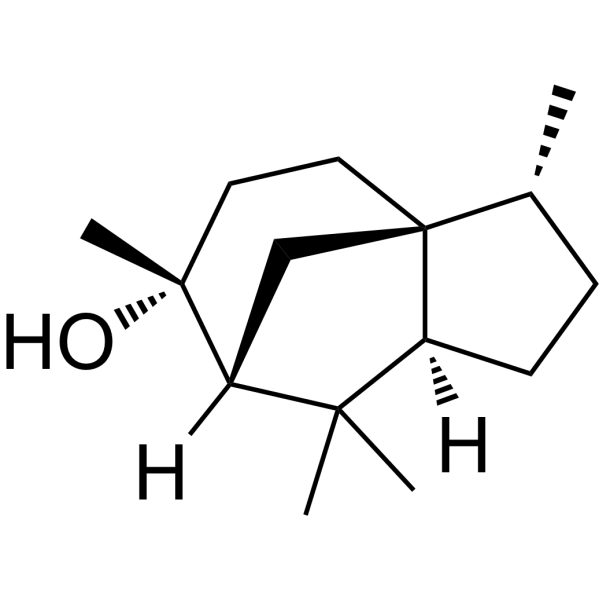
Cedrol
Based on 1 publication(s) in Google Scholar
Cedrol is a potent competitive inhibitor of cytochrome P-450(CYP) enzyme. Cedrol plays an anticancer role by inducing cell cycle arrest and Caspase-dependent apoptosis. Cedrol acts as a neutrophil agonist that can desensitize cells to subsequent stimulation of N-formyl peptides. Cedrol prevents neuropathic pain caused by chronic contractile injury by inhibiting oxidative stress and inflammation. In addition, Cedrol has antibacterial, hair loss prevention and anti-anxiety properties.
For research use only. We do not sell to patients.
- Purity : 99.76%
- CAS No.: 77-53-2
- Formula: C15H26O
- Molecular Weight:222.37
-
Storage:
4°C, protect from light
* In solvent : -80°C, 6 months; -20°C, 1 month (protect from light)

To place orders, for customer services and technical support, please contact: MedChemExpress USA
Tel: 609-228-6898 E-mail: [email protected] [email protected]


-
 Biological Activity
-
Chemical Information
-
Solvent & Solubility
- Protocols
- Purity & Documentation
- References
-
 Help & FAQs


-
HY-N2195
NootkatoneAntioxidant Agent -
HY-18642
CYP3cideCYP3A4 Inhibitor -

HY-N2071R
Cedrol (Standard)Cytochrome P450 Inhibitor -
HY-B0852
TebuconazoleCytochrome P450 Inhibitor -
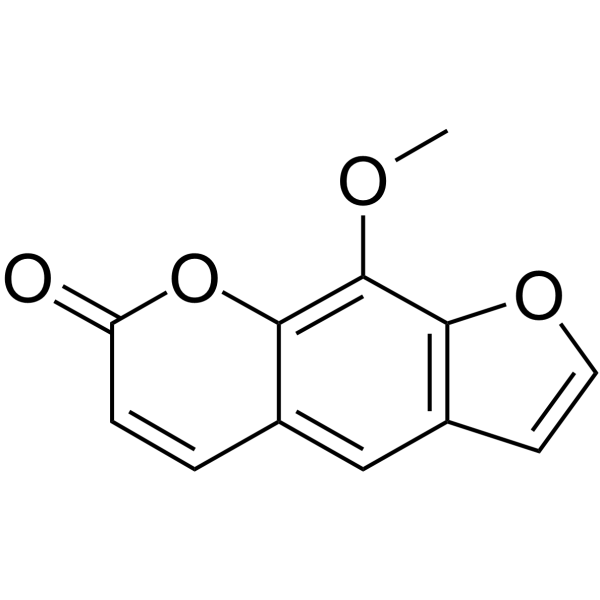
HY-30151
MethoxsalenCytochrome P450 Inhibitor -
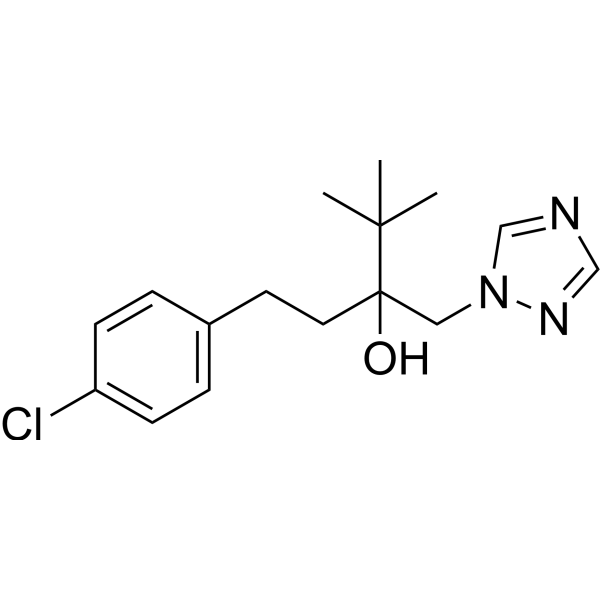
HY-B0852R
Tebuconazole (Standard)Cytochrome P450 Inhibitor -
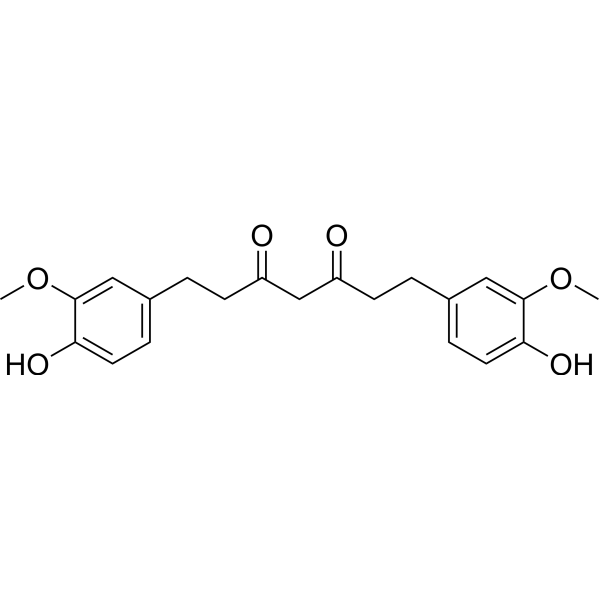
HY-N0893
TetrahydrocurcuminCytochrome P450 Inhibitor -
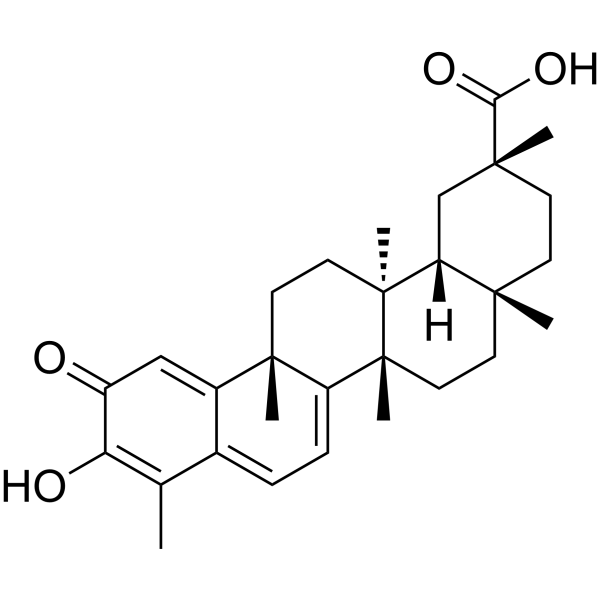
HY-13067
CelastrolAutophagy Inducer -
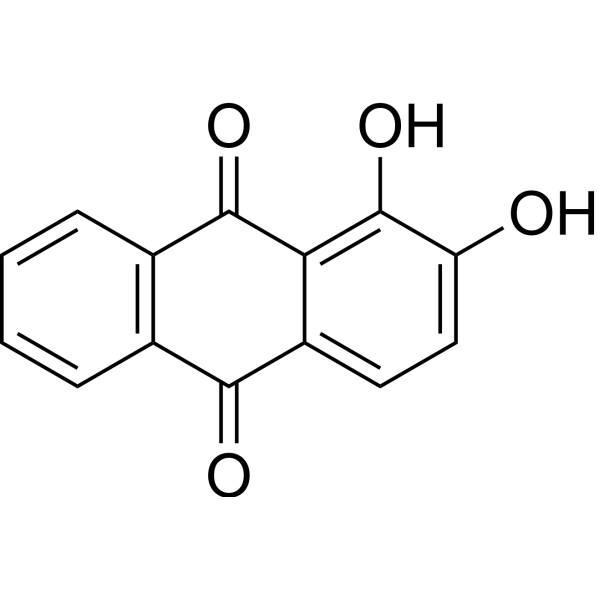
HY-N0563
AlizarinNatural Dye -
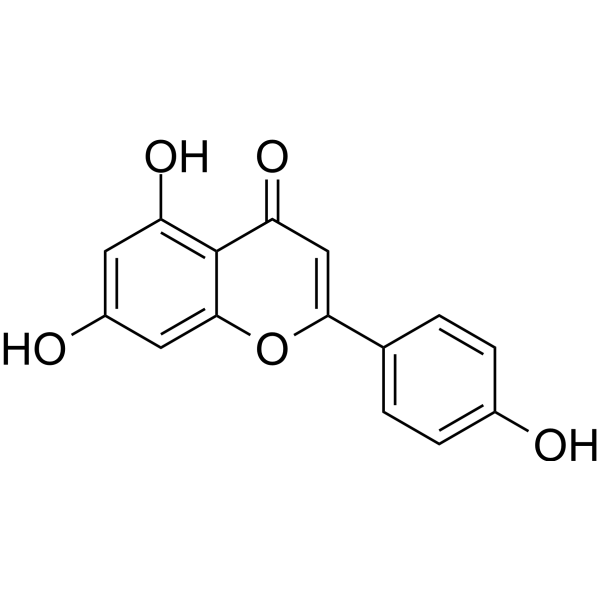
HY-N1201
ApigeninCytochrome P450 Inhibitor -
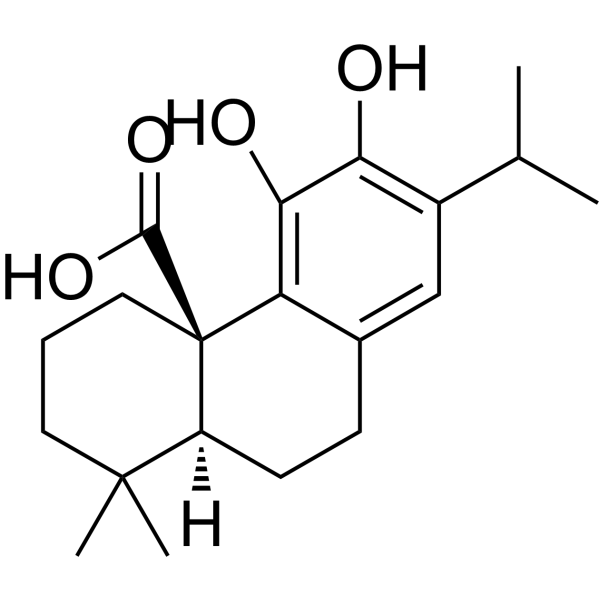
HY-N0644
Carnosic acidLipid Absorption Inhibitor -
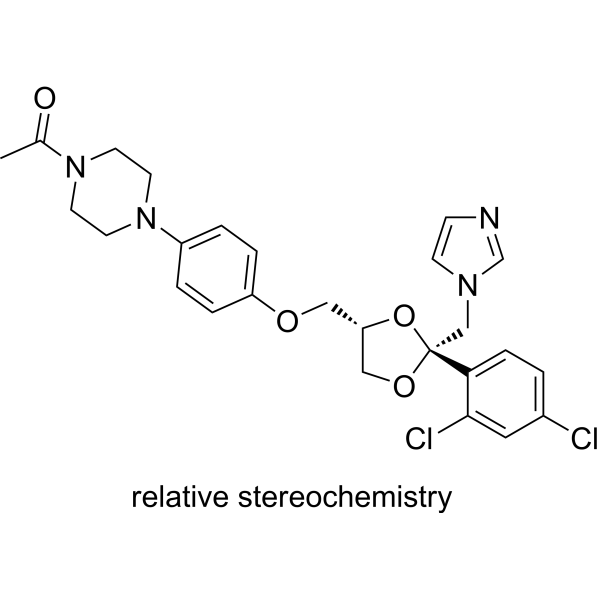
HY-B0105
KetoconazoleCYP3A4 Inhibitor
Publications Citing Use of MedChemExpress (MCE) Cedrol
MoreAll Caspase Isoforms
More

Biological Activity
Description
IC50 & Target
|
CYP2 |
CYP3 |
Cellular Effect
|
Cell Line

|
Type | Value | Description | References |
|---|---|---|---|---|
| CTX TNA2 | IC50 |
238.3 μM
Compound: Ced
|
Cytotoxicity against rat CTX TNA2 cells assessed as reduction in cell viability after 24 hrs by MTT assay
Cytotoxicity against rat CTX TNA2 cells assessed as reduction in cell viability after 24 hrs by MTT assay
|
[PMID: 32960603] |
| CTX TNA2 | IC50 |
254.7 μM
Compound: Ced
|
Cytotoxicity against rat CTX TNA2 cells assessed as reduction in cell viability after 72 hrs by MTT assay
Cytotoxicity against rat CTX TNA2 cells assessed as reduction in cell viability after 72 hrs by MTT assay
|
[PMID: 32960603] |
| CTX TNA2 | IC50 |
279.9 μM
Compound: Ced
|
Cytotoxicity against rat CTX TNA2 cells assessed as reduction in cell viability after 48 hrs by MTT assay
Cytotoxicity against rat CTX TNA2 cells assessed as reduction in cell viability after 48 hrs by MTT assay
|
[PMID: 32960603] |
| DBTRG-05MG | IC50 |
101.5 μM
Compound: Ced
|
Cytotoxicity against human DBTRG-05MG cells assessed as reduction in cell viability after 48 hrs by MTT assay
Cytotoxicity against human DBTRG-05MG cells assessed as reduction in cell viability after 48 hrs by MTT assay
|
[PMID: 32960603] |
| DBTRG-05MG | IC50 |
107.2 μM
Compound: Ced
|
Cytotoxicity against human DBTRG-05MG cells assessed as reduction in cell viability after 72 hrs by MTT assay
Cytotoxicity against human DBTRG-05MG cells assessed as reduction in cell viability after 72 hrs by MTT assay
|
[PMID: 32960603] |
| DBTRG-05MG | IC50 |
118.7 μM
Compound: Ced
|
Cytotoxicity against human DBTRG-05MG cells assessed as reduction in cell viability after 24 hrs by MTT assay
Cytotoxicity against human DBTRG-05MG cells assessed as reduction in cell viability after 24 hrs by MTT assay
|
[PMID: 32960603] |
| RG2 | IC50 |
107 μM
Compound: Ced
|
Cytotoxicity against rat RG2 cells assessed as reduction in cell viability after 24 hrs by MTT assay
Cytotoxicity against rat RG2 cells assessed as reduction in cell viability after 24 hrs by MTT assay
|
[PMID: 32960603] |
| RG2 | IC50 |
89.2 μM
Compound: Ced
|
Cytotoxicity against rat RG2 cells assessed as reduction in cell viability after 72 hrs by MTT assay
Cytotoxicity against rat RG2 cells assessed as reduction in cell viability after 72 hrs by MTT assay
|
[PMID: 32960603] |
| RG2 | IC50 |
93.3 μM
Compound: Ced
|
Cytotoxicity against rat RG2 cells assessed as reduction in cell viability after 48 hrs by MTT assay
Cytotoxicity against rat RG2 cells assessed as reduction in cell viability after 48 hrs by MTT assay
|
[PMID: 32960603] |
In Vitro
Cedrol (0-450 μM; 24-72 h) inhibits HT-29 and CT-26 cell proliferation in a dose - and time-dependent manner, with IC50 values of 138.91 and 92.46 µM, respectively[4].
Cedrol (0-225 μM; 0-48 h) induces cell cycle arrest in G0/G1 phase by regulating the expression of cell cycle regulators CDK4 and cyclin D1 and apoptosis through both exogenous (FasL/caspase-8) and endogenous (Bax/caspase-9) pathways in HT-29 and CT-26 cells[4].
Cedrol (0-180 µM; 48 h) combined with 5-FU (HY-90006) significantly decreases HT-29 cell viability[4].
MedChemExpress (MCE) has not independently confirmed the accuracy of these methods. They are for reference only.
-
Cell Line:HT-29 and CT-26 cells
-
Concentration:0, 14, 28, 56, 112, 225, and 450 μM
-
Incubation Time:24, 48, and 72 h
-
Result:Inhibited the growth of cells in a dose- and time-dependent manner.
-
Cell Line:HT-29 and CT-26 cells
-
Concentration:180 µM;
0, 135, 180 and 225 µM -
Incubation Time:0, 6, 12, 24 and 48 h;
24 h -
Result:Reduced the levels of CDK4 and cyclin D1.
Significantly increased the expression levels of FasL/cleaved-caspase-8, Bax/cleaved-caspase-9 and cleaved-caspase-3 in a time- and dose-dependent manner.
In Vivo
Cedrol (200-1600 mg/kg; Intraperitoneal injection; Single dose; 30 minutes before the test) exerts anti-anxiety effects in female mice through the 5-hydroxyindoleacetic or dopamine system[5].
Cedrol (50-200 mg/kg; Topical application; 27 days) prevents alopecia in a mouse model of hair loss induced by Cyclophosphamide (HY-17420)[6].
Cedrol (20-40 mg/kg; Intraperitoneal injection; Once a day; 14 days) relieves neuropathic pain by inhibiting oxidative stress and inflammation in a rat model of chronic contractile injury[7].
MedChemExpress (MCE) has not independently confirmed the accuracy of these methods. They are for reference only.
-
Animal Model:CT-26 cells treated BALB/c mice aged 10-12 weeks old (20-23 g)[4]
-
Dosage:150 mg/kg
-
Administration:Subcutaneous injection (s.c.); once every 2 days for 10 times
-
Result:Suppressed the progression of colorectal cancer.
Improved the survival rate of animals.
-
Animal Model:Female ICR mice aged 5-6 weeks old[5]
-
Dosage:200, 400, 800, 1200 and 1600 mg/kg
-
Administration:Intraperitoneal injection (i.p.); Single dose; 30 min prior to the test
-
Result:Exhibited anxiolytic activity on the female mice at dose of 1200-1600 mg/kg.
Increased the level of 5-hydroxytryptamine, decreased the level of dopamine.
Reduced the ratio of 5-hydroxyindoleacetic acid/5-hydroxytryptamine, increased the ratio of 3,4-dihydroxyphenyl acetic acid/dopamine.
-
Animal Model:Cyclophosphamide (HY-17420) treated adult female C57BL/6 mice aged 6 weeks (20 g)[6]
-
Dosage:50, 100 and 200 mg/kg
-
Administration:Topical application; 27 days
-
Result:Inhibited alopecia in a dose-dependent manner, manifested mild alopecia with 40% suppression at a dose of 200 mg/kg on day 6 of the experiment.
Restored the hair follicles to its nearly normal modality at a dose of 200 mg/kg on day 15 of the experiment.
Promoted hair regrowth on day 11 of the experiment.
-
Animal Model:Adult male Wistar rats (220-270 g) with chronic constriction injury (CCI)[7]
-
Dosage:20 and 40 mg/kg
-
Administration:Intraperitoneal injection (i.p.); once a day for 14 days
-
Result:Attenuated the CCI-induced mechanical and thermal hypersensitivity.
Increased the level of total thiol.
Reduced the levels of MDA.
Reduced the levels of TNF-α and IL-6.
- Phagocytosis Functional Assay
- Research Protocol for Infectious Diseases
- Detection of Apoptosis
- TUNEL staining for apoptotic DNA fragmentation
- Flow cytometric DNA-content cell-cycle staining
- Annexin V plus membrane-impermeant dye apoptosis staining
- BrdU Incorporation Assay
- ROS/oxidative-stress fluorescent staining
- Apoptosis Solutions
- Protocol for Cell Cycle
- Research Protocol for Inflammation-related Diseases


Chemical Information
-
CAS No. 77-53-2
-
Appearance Solid
-
Molecular Weight 222.37
-
Formula C15H26O
-
Color White to off-white
-
SMILES
O[C@@]1(CC[C@]23[C@@H](CC[C@]2(C(C)([C@]1(C3)[H])C)[H])C)C
-
Synonyms
(+)-Cedrol; α-Cedrol
-
Structure Classification
-
Initial Source
-
Shipping
Room temperature in continental US; may vary elsewhere.
-
Storage
4°C, protect from light
* In solvent : -80°C, 6 months; -20°C, 1 month (protect from light)


Publications (1)
-
Journal Impact Factor
-
Most Recent


Solvent & Solubility
In Vitro:
DMSO : 110 mg/mL (494.67 mM; Need ultrasonic; Hygroscopic DMSO has a significant impact on the solubility of product, please use newly opened DMSO)
H2O : < 0.1 mg/mL (insoluble)
Please refer to the solubility information to select the appropriate solvent. Once prepared, please aliquot and store the solution to prevent product inactivation from repeated freeze-thaw cycles.
Storage method and period of stock solution: -80°C, 6 months; -20°C, 1 month (protect from light). When stored at -80°C, please use it within 6 months. When stored at -20°C, please use it within 1 month.
Please refer to the solubility information to select the appropriate solvent. Once prepared, please aliquot and store the solution to prevent product inactivation from repeated freeze-thaw cycles.
Storage method and period of stock solution: -80°C, 6 months; -20°C, 1 month (protect from light). When stored at -80°C, please use it within 6 months. When stored at -20°C, please use it within 1 month.
Concentration (start) × Volume (start) = Concentration (final) × Volume (final)
In Vivo:
Select the appropriate dissolution method based on your experimental animal and administration route.
- For the following dissolution methods, please ensure to first prepare a clear stock solution using an In Vitro approach and then sequentially add co-solvents:
- To ensure reliable experimental results, the clarified stock solution can be appropriately stored based on storage conditions. As for the working solution for In Vivo experiments, it is recommended to prepare freshly and use it on the same day.
- The percentages shown for the solvents indicate their volumetric ratio in the final prepared solution. If precipitation or phase separation occurs during preparation, heat and/or sonication can be used to aid dissolution.
Add each solvent one by one: 10% DMSO 40% PEG300 5% Tween-80 45% Saline
Solubility: 2.75 mg/mL (12.37 mM); Suspended solution; Need ultrasonic
This protocol yields a suspended solution of 2.75 mg/mL. Suspended solution can be used for oral and intraperitoneal injection.
Taking 1 mL working solution as an example, add 100 μL DMSO stock solution (27.5 mg/mL) to 400 μL PEG300, and mix evenly; then add 50 μL Tween-80 and mix evenly; then add 450 μL Saline to adjust the volume to 1 mL.
Preparation of Saline: Dissolve 0.9 g sodium chloride in ddH₂O and dilute to 100 mL to obtain a clear Saline solution.
Add each solvent one by one: 10% DMSO 90% (20% SBE-β-CD in Saline)
Solubility: ≥ 2.75 mg/mL (12.37 mM); Clear solution
This protocol yields a clear solution of ≥ 2.75 mg/mL (saturation unknown).
Taking 1 mL working solution as an example, add 100 μL DMSO stock solution (27.5 mg/mL) to 900 μL 20% SBE-β-CD in Saline, and mix evenly.
Preparation of 20% SBE-β-CD in Saline (4°C, storage for one week): 2 g SBE-β-CD powder is dissolved in 10 mL Saline, completely dissolve until clear.
In Vivo Dissolution Calculator
Please enter the basic information of animal experiments:
-
-
-
-
Recommended: Prepare an additional quantity of animals to account for potential losses during experiments.
Please enter your animal formula composition:
-
%DMSO +
Recommended: Keep the proportion of DMSO in working solution below 2% if your animal is weak.
-
%+
-
+%Tween-80 + +
-
%Saline +
The co-solvents required include: DMSO, . All of co-solvents are available by MedChemExpress (MCE). , Tween 80. All of co-solvents are available by MedChemExpress (MCE).
Working solution concentration: 0.22 mg/mL
Method for preparing stock solution: mg drug dissolved in μL DMSO. Stock solution concentration: mg/mL. * In solvent : -80°C, 6 months; -20°C, 1 month (protect from light)
1. Take μL DMSO stock solution;
2. Add μL .
μL , mix evenly;
3. Then add μL Tween 80, mix evenly;
4. Then add μL
Please ensure that the stock solution in the first step is dissolved to a clear state, and add co-solvents in sequence. You can use ultrasonic heating (ultrasonic cleaner, recommended frequency 20-40 kHz), vortexing, etc. to assist dissolution.


Purity & Documentation
-
Data Sheet (290 KB)
-
SDS (393 KB)
- English - EN (393 KB)
- Français - FR (393 KB)
- Deutsch - DE (393 KB)
- Norwegian - NO (393 KB)
- Español - ES (393 KB)
- Swedish - SV (393 KB)
- Italian - IT (393 KB)
- Korean - KR (393 KB)
- Portuguese - PT (393 KB)
-
Handling Instructions (2659 KB)
References
[1]. Jeong HU, et al. Inhibitory effects of cedrol, β-cedrene, and thujopsene on cytochrome P450 enzyme activities in human liver microsomes. J Toxicol Environ Health A. 2014;77(22-24):1522-32. [Content Brief]
[2]. Jin MH, et al. Cedrol Enhances Extracellular Matrix Production in Dermal Fibroblasts in a MAPK-Dependent Manner. Ann Dermatol. 2012 Feb;24(1):16-21 [Content Brief]
[3]. Özek G, et al. Innate Immunomodulatory Activity of Cedrol, a Component of Essential Oils Isolated from Juniperus Species. Molecules. 2021 Dec 16;26(24):7644. [Content Brief]
[4]. Chien JH, et al. Cedrol restricts the growth of colorectal cancer in vitro and in vivo by inducing cell cycle arrest and caspase-dependent apoptotic cell death. Int J Med Sci. 2022 Oct 31;19(13):1953-1964. [Content Brief]
[5]. Zhang K, et al. Anxiolytic Effect of Cedrol on Behavior and Brain Neurotransmitter Levels of Female Mice. Biol Pharm Bull. 2019 Sep 1;42(9):1575-1580. [Content Brief]
[6]. Chen SS, et al. Preventive effects of cedrol against alopecia in cyclophosphamide-treated mice. Environ Toxicol Pharmacol. 2016 Sep;46:270-276. [Content Brief]
[7]. Sakhaee MH, et al. Cedrol protects against chronic constriction injury-induced neuropathic pain through inhibiting oxidative stress and inflammation. Metab Brain Dis. 2020 Oct;35(7):1119-1126. [Content Brief]


Complete Stock Solution Preparation Table
Please refer to the solubility information to select the appropriate solvent. Once prepared, please aliquot and store the solution to prevent product inactivation from repeated freeze-thaw cycles.
Storage method and period of stock solution: -80°C, 6 months; -20°C, 1 month (protect from light). When stored at -80°C, please use it within 6 months. When stored at -20°C, please use it within 1 month.
| Optional Solvent | Concentration Solvent Mass | 1 mg | 5 mg | 10 mg | 25 mg |
|---|---|---|---|---|---|
| DMSO | 1 mM | 4.4970 mL | 22.4850 mL | 44.9701 mL | 112.4252 mL |
| 5 mM | 0.8994 mL | 4.4970 mL | 8.9940 mL | 22.4850 mL | |
| 10 mM | 0.4497 mL | 2.2485 mL | 4.4970 mL | 11.2425 mL | |
| 15 mM | 0.2998 mL | 1.4990 mL | 2.9980 mL | 7.4950 mL | |
| 20 mM | 0.2249 mL | 1.1243 mL | 2.2485 mL | 5.6213 mL | |
| 25 mM | 0.1799 mL | 0.8994 mL | 1.7988 mL | 4.4970 mL | |
| 30 mM | 0.1499 mL | 0.7495 mL | 1.4990 mL | 3.7475 mL | |
| 40 mM | 0.1124 mL | 0.5621 mL | 1.1243 mL | 2.8106 mL | |
| 50 mM | 0.0899 mL | 0.4497 mL | 0.8994 mL | 2.2485 mL | |
| 60 mM | 0.0750 mL | 0.3748 mL | 0.7495 mL | 1.8738 mL | |
| 80 mM | 0.0562 mL | 0.2811 mL | 0.5621 mL | 1.4053 mL | |
| 100 mM | 0.0450 mL | 0.2249 mL | 0.4497 mL | 1.1243 mL |


Cedrol Related Classifications
HY-N2071 Related Classifications
 Powered by Bioz