



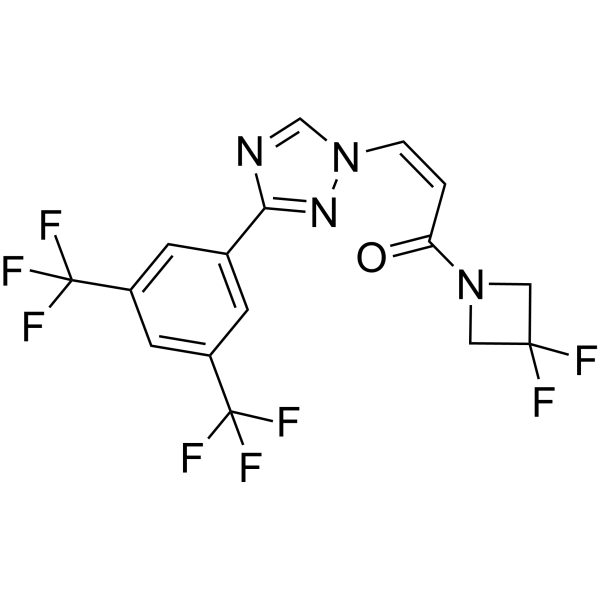
KPT-276
Based on 1 publication(s) in Google Scholar
KPT-276 is an orally active and blood-brain barrier-penetrant selective XPO1/CRM1 inhibitor. KPT-276 blocks XPO1-mediated nuclear export function and promotes nuclear retention of various tumor suppressor proteins. KPT-276 induces apoptosis and G1 cell cycle arrest in tumor cells, and downregulates c-MYC, CDC25A, and BRD4. KPT-276 reduces immune cell proliferation through nuclear accumulation of cell cycle inhibitors, rescues TDP-43 cytoplasmic mislocalization, and restores axon growth and growth rate in mutant PFN1 motor neurons. KPT-276 maintains axonal cytoskeletal integrity and mitochondrial function, and inhibits tumor growth. KPT-276 can be used for research on glioblastoma, non-Hodgkin lymphoma, amyotrophic lateral sclerosis, multiple myeloma, and non-small cell lung cancer.
For research use only. We do not sell to patients.
- Purity : 99.94%
- CAS No.: 1421919-75-6
- Formula: C16H10F8N4O
- Molecular Weight:426.26
-
Storage:Powder -20°C, 3 years , 4°C, 2 years ; In solvent -80°C, 2 years , -20°C, 1 year

To place orders, for customer services and technical support, please contact: MedChemExpress USA
Tel: 609-228-6898 E-mail: [email protected] [email protected]


-
 Biological Activity
-
Chemical Information
-
Solvent & Solubility
- Protocols
- Purity & Documentation
- References
-
 Help & FAQs


-
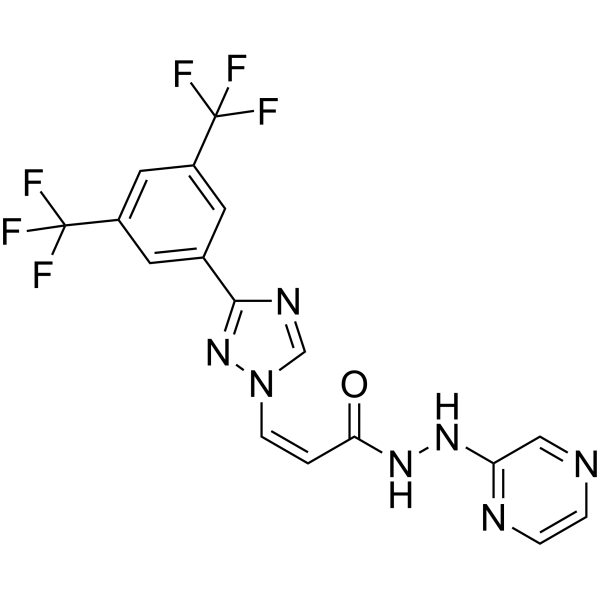
HY-17536
SelinexorCRM1 Inhibitor -
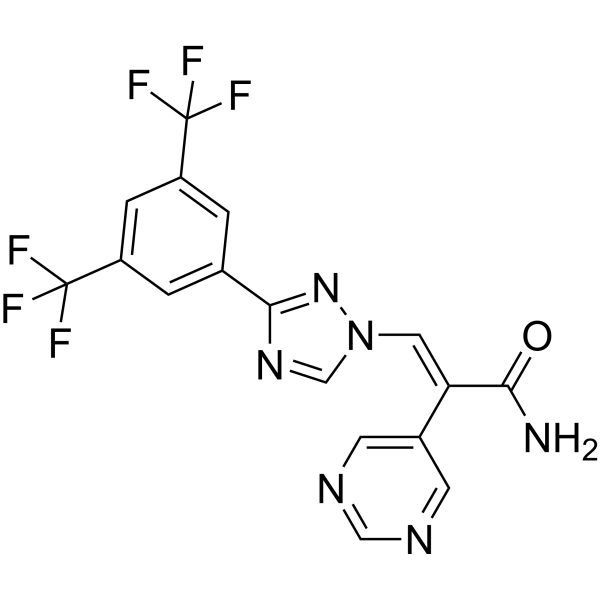
HY-100423
EltanexorXPO1 Inhibitor -
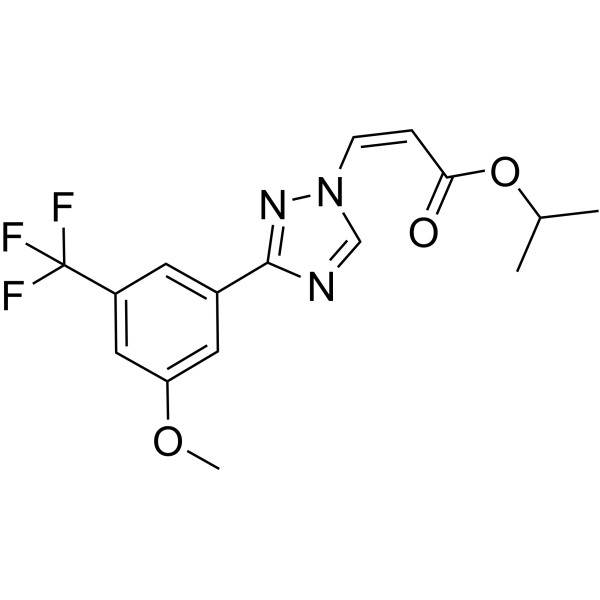
HY-15611
KPT-185CRM1 Inhibitor -
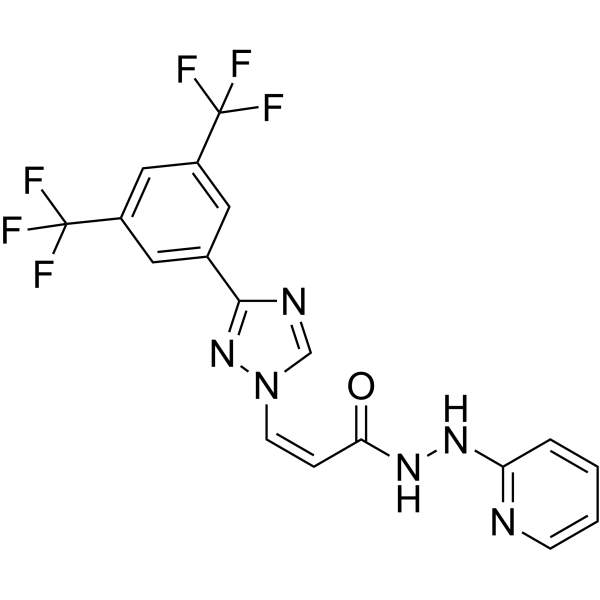
HY-15970
VerdinexorSINE Inhibitor -
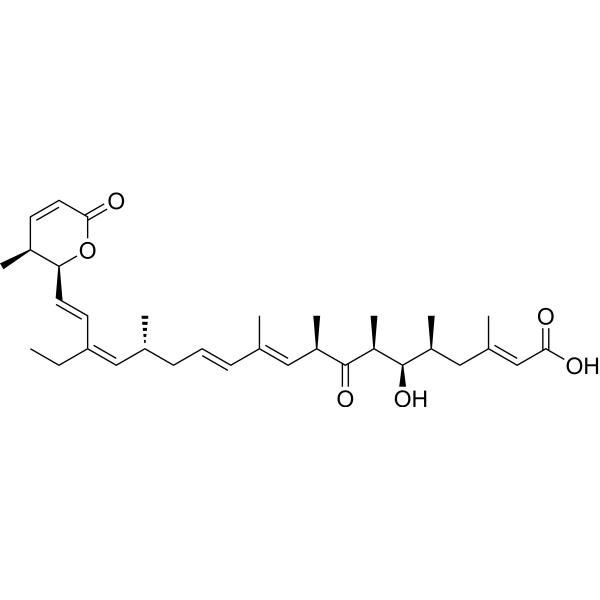
HY-16909
Leptomycin BCRM1/Exportin 1 Inhibitor -
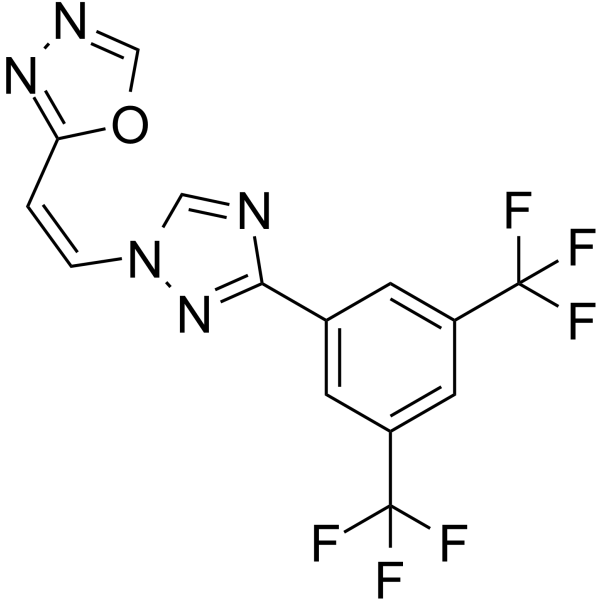
HY-117996
KPT-251CRM1 Inhibitor -

HY-17536R
Selinexor (Standard)CRM1 Inhibitor -

HY-108716
Felezonexor -
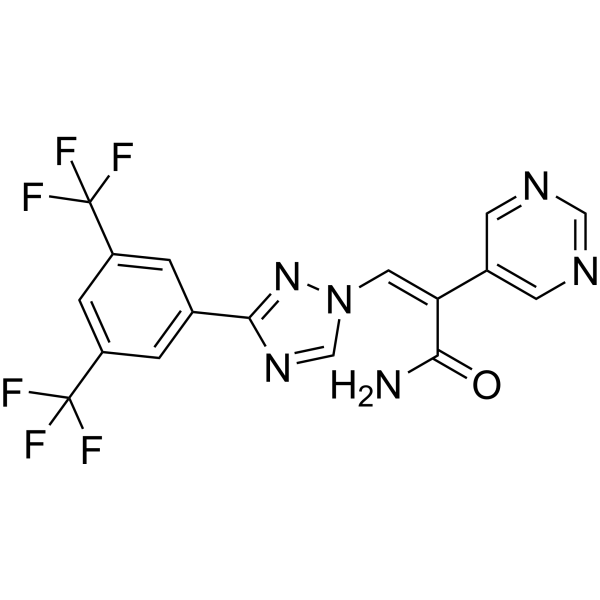
HY-100423A
Eltanexor Z-isomerKPT-8602 Z-isomer -

HY-17536A
(E)-SelinexorSelinexor Isomer -

HY-100423AR
Eltanexor Z-isomer (Standard)KPT-8602 Z-isomer
Publications Citing Use of MedChemExpress (MCE) KPT-276
More

Biological Activity
Description
|
BRD4 |
IL-10 |
IL-17A |
IL-6 |
TNF-α |
Cellular Effect
|
Cell Line

|
Type | Value | Description | References |
|---|---|---|---|---|
| U-266 | IC50 |
488 nM
|
Antiproliferative activity against human U266 myeloma cells assessed as reduction in cell viability incubated for 72 hrs by MTT assay.
Antiproliferative activity against human U266 myeloma cells assessed as reduction in cell viability incubated for 72 hrs by MTT assay.
|
23752175 |
| RPMI-8226 | IC50 |
903 nM
|
Antiproliferative activity against human RPMI-8226 myeloma cells assessed as reduction in cell viability incubated for 72 hrs by MTT assay.
Antiproliferative activity against human RPMI-8226 myeloma cells assessed as reduction in cell viability incubated for 72 hrs by MTT assay.
|
23752175 |
In Vitro
KPT-276 (100 nM - 10 mM; 5 days) inhibits the growth of primary human adult and pediatric GBM cell lines (BT 145, BT 159, BT 172, AGBM1, BT 245, DIPG 4, DIPG 6) under neurosphere culture conditions with submicromolar IC50 values[1].
KPT-276 (IC50, 2 x IC90; 48 h) causes a dose-dependent decrease in MCL1 protein levels in AGBM1 cells, but this effect is not observed in BT 145 or BT 159 cells, indicating that MCL1 reduction is not a universal mechanism of increased apoptosis in GBM cells[1].
KPT-276 (15.625-1000 nM; 72 h) reduces the viability of 12 human myeloma cell lines with a median IC50 of approximately 160 nM[5].
KPT-276 (15.6-1000 nM; 72 h) exhibits synergy with the BRD4 inhibitor JQ1 in the resistant HMCLs RPMI-8226, U266, and KMS18[5].
KPT-276 (50 nM) treatment of mouse primary motor neurons expressing mutant PFN1C71G rescues TDP-43 mislocalization; rescues axonal growth defects; rescues axonal growth rate defects[4].
KPT-276 (IC80 dose; 6-48 h) leads to differential expression of genes in sensitive HMCLs MM1.S and OCI-MY5, including downregulation of CDC25A and BRD4; it reduces c-Myc, CDC25A, and BRD4 protein levels in MM1.S and OCI-MY5 cells[5].
KPT-276 disrupts the binding of CRM1 to PKI NES in vitro[6].
KPT-276 (0.1-1,000 nM; 24 h) exhibits low cytotoxicity in cultured spinal cord neurons, cortical neurons, mature oligodendrocytes, and splenocytes[6].
KPT-276 (24 h) induces G1 phase cell cycle arrest and reduces the S phase cell population in MM1.S cells[5].
MedChemExpress (MCE) has not independently confirmed the accuracy of these methods. They are for reference only.
-
Cell Line:BT 145, BT 159, BT 172, AGBM1, BT 245, DIPG 4, DIPG 6
-
Concentration:100 nM - 10 mM
-
Incubation Time:5 days
-
Result:Inhibited growth with a combined IC50 range of 6-354 nM for the three SINE compounds tested in parallel.
-
Cell Line:mouse primary motor neurons expressing V5-tagged PFN1C71G or PFN1WT
-
Concentration:50 nM
-
Incubation Time:6 h
-
Result:Fully rescued TDP-43 cytoplasmic mislocalization in MNs expressing PFN1C71G.
-
Cell Line:mouse primary motor neurons expressing V5-tagged PFN1C71G or PFN1WT
-
Concentration:50 nM
-
Incubation Time:3 days
-
Result:Fully rescued the axon length defect in MNs expressing PFN1C71G.
-
Cell Line:KMS11, KMS12PE, KMS18, OPM2, H929, JJN3, U266, 8226, MY5, SKMM2, MM1R and MM1S
-
Concentration:15.6, 31.3, 62.5, 125, 250, 500, 1000 nM
-
Incubation Time:72 h
-
Result:Reduced cell viability in multiple human multiple myeloma cell lines (including KMS11, KMS12PE, KMS18, OPM2, H929, JJN3, U266, 8226, MY5, SKMM2, MM1R and MM1S) in a concentration‑dependent manner.
-
Cell Line:RPMI-8226, U266, KMS18
-
Concentration:0, 15.6, 31.3, 62.5, 125, 250, 500, 1000 nM
-
Incubation Time:72 h
-
Result:Decreased viability at concentrations lower than treatment with KPT-276 alone.
Synergy observed with JQ1 in all three cell lines with combination index values of 0.258 for RPMI-8226 (KPT-276 IC50 of 903 nM), 0.335 for U266 (KPT-276 IC50 of 488 nM), and 0.063 for KMS18 (KPT-276 IC50 of 176 nM).
Parmacokinetics
| Species | Dose | Route | Brain Concentration | Plasma Concentration |
|---|---|---|---|---|
| Rat[7] | 2 mg/kg | p.o. | 70.5 ng/mL | 17.6 ng/mL |
In Vivo
KPT-276 (75-150 mg/kg; p.o.; 13 days) shows similar or stronger antitumor potential compared with CHOP in the WSU-DLCL2 mouse xenograft model[2].
KPT-276 (100 mg/kg; p.o.; three times per week; 16 days) significantly inhibits tumor growth in the Jeko-1 xenograft mouse model and is well tolerated[3].
KPT-276 (p.o.; 3 days per week; 12 days, followed by a 10-day drug holiday, then resumed dosing) reduces MM1.S xenograft tumor volume by 40% and remains active when dosing is restarted after treatment interruption[5].
KPT-276 (150 mg/kg; p.o.; 3 days/week; 3 weeks) reduces the serum M protein peak by an average of 57% in the Vk*MYC transgenic MM mouse model[5].
KPT-276 (75 mg/kg; p.o.; every other day; 12 days) treatment significantly alleviates EAE, reducing the cumulative disease score to 60% of that in the vehicle group [6].
KPT-276 (75 mg/kg; p.o.; every other day; 19 days) reduces disease onset and severity in the EAE model[6].
MedChemExpress (MCE) has not independently confirmed the accuracy of these methods. They are for reference only.
-
Animal Model:NOD-SCID gamma (NSG) mice (BT 145-luc cells 1.8 × 10⁵ cells/μL in PBS)[1]
-
Dosage:50 mg/kg (escalated to 75 mg/kg after 1 week)
-
Administration:p.o.; 3 times a week (Monday, Wednesday, Friday)
-
Result:Showed reduced intracranial tumor growth assessed by BLI relative to vehicle.
Confirmed diminished tumor burden on day‑61 MRI versus vehicle‑treated controls.
Demonstrated extended animal survival compared with vehicle.
Revealed decreased proportion of MCL1‑positive tumor cells relative to vehicle‑treated controls.
Detected increased fraction of TUNEL‑positive tumor cells versus vehicle (3.2% vs 1.2%).
Found comparable tumor‑cell‑density ratios between main tumor mass and invasive regions across groups.
Observed comparable fractions of NUMA1‑positive cells co‑expressing MKI67 across groups.
-
Animal Model:NOD/SCID (male, 7-week-old, Jeko-1 cells (1 × 10⁷ cells) were subcutaneously inoculated into the flank)[3]
-
Dosage:100 mg/kg
-
Administration:p.o.; three times a week; 16 days
-
Result:Inhibited tumor growth more significantly than vehicle control.
Caused a maximum body-weight loss of 15%.
Enhanced nuclear staining for survivin in tumor sections.
-
Animal Model:Vk*MYC transgenic mice[5]
-
Dosage:150 mg/kg (formulated in 0.6% (w/v) Pluronic F‑68 and 0.6% (w/v) PVP K‑29/32)
-
Administration:p.o.; 3 days/week; 3 weeks
-
Result:Reduced the M-spike by an average of 52% after 2 weeks.
Reduced the M-spike by an average of 57% over 3 weeks compared with day 0 levels.
-
Animal Model:C57BL/6J (female, 8 weeks old, immunized with 300 μg MOG35-55 emulsified in complete Freund’s adjuvant)[6]
-
Dosage:75 mg/kg
-
Administration:p.o. (oral gavage); every other day; 12 days
-
Result:Reduced the cumulative disease score to 60% of the vehicle group.
Preserved both myelinated and demyelinated axons in the lumbo-sacral area of the spinal cord.
Reduced the numbers of CD45+ leukocytes, B220+ B cells, and CD4+ and CD8+ T cells in the CNS.
Decreased cytokine messenger RNA levels (Il6, Tgfb1, Il10, Il17a, Tnf, Ifng).
Increased nuclear accumulation of cell cycle inhibitory molecules (e.g., p27Kip1) fourfold.
Resulted in fewer axons with Wallerian degeneration and preserved axons per unit area in the lumbosacral spinal cord.
-
Animal Model:C57BL/6J (female, 8 weeks old, immunized with 300 μg MOG35-55 emulsified in complete Freund’s adjuvant)[6]
-
Dosage:75 mg/kg
-
Administration:p.o. (oral gavage); every other day; prophylactic treatment started concurrently with immunization for 19 days
-
Result:Decreased both disease onset and severity.
Reduced B220+ B cells, and CD4+ and CD8+ T cells in the spinal cord.
Reduced the total number of splenocytes and splenic cell populations.
- Somatic Cell Culture
- Phalloidin F-actin cytoskeleton staining
- Detection of Apoptosis
- TUNEL staining for apoptotic DNA fragmentation
- Flow cytometric DNA-content cell-cycle staining
- Mitochondrial membrane-potential and mitochondrial mass staining
- Apoptosis Solutions
- MTT Cell Proliferation Assay
- Mitochondrial membrane-potential fluorescent assay
- Annexin V plus membrane-impermeant dye apoptosis staining
- BrdU Incorporation Assay
- CFSE Dye Dilution Proliferation Assay
- Dye-dilution cell tracking and proliferation staining
- Patient-Derived Orthotopic Xenograft (PDOX)
- Protocol for Cell Cycle
- CCK-8/WST-8 Cell Proliferation Assay
- Cell Counting-Based Growth Curve Assay
- Colony Formation (Clonogenic) Assay
- Cell Viability Determination by MTT Colorimetric Assay
- EdU Incorporation Assay (Click Chemistry-Based DNA Synthesis Measurement)
- Ki-67 Immunostaining Proliferation Assay
- PCNA Immunodetection Proliferation Assay
- Protocol for Cell Counting and Cell Density Analysis
- Patient-Derived Xenograft (PDX)
- Subcutaneous Cell-Line-Derived Xenograft
- Orthotopic Cell-Line Xenograft


Chemical Information
-
CAS No. 1421919-75-6
-
Appearance Solid
-
Molecular Weight 426.26
-
Formula C16H10F8N4O
-
Color White to off-white
-
SMILES
O=C(N1CC(F)(F)C1)/C=C\N2N=C(C3=CC(C(F)(F)F)=CC(C(F)(F)F)=C3)N=C2
-
Shipping
Room temperature in continental US; may vary elsewhere.
-
Storage
Powder -20°C 3 years 4°C 2 years In solvent -80°C 2 years -20°C 1 year


Publications (1)
-
Journal Impact Factor
-
Most Recent


Solvent & Solubility
In Vitro:
DMSO : 20 mg/mL (46.92 mM; Need ultrasonic; Hygroscopic DMSO has a significant impact on the solubility of product, please use newly opened DMSO)
Please refer to the solubility information to select the appropriate solvent. Once prepared, please aliquot and store the solution to prevent product inactivation from repeated freeze-thaw cycles.
Storage method and period of stock solution: -80°C, 2 years; -20°C, 1 year. When stored at -80°C, please use it within 2 years. When stored at -20°C, please use it within 1 year.
Please refer to the solubility information to select the appropriate solvent. Once prepared, please aliquot and store the solution to prevent product inactivation from repeated freeze-thaw cycles.
Storage method and period of stock solution: -80°C, 2 years; -20°C, 1 year. When stored at -80°C, please use it within 2 years. When stored at -20°C, please use it within 1 year.
Concentration (start) × Volume (start) = Concentration (final) × Volume (final)
In Vivo:
Select the appropriate dissolution method based on your experimental animal and administration route.
- For the following dissolution methods, please ensure to first prepare a clear stock solution using an In Vitro approach and then sequentially add co-solvents:
- To ensure reliable experimental results, the clarified stock solution can be appropriately stored based on storage conditions. As for the working solution for In Vivo experiments, it is recommended to prepare freshly and use it on the same day.
- The percentages shown for the solvents indicate their volumetric ratio in the final prepared solution. If precipitation or phase separation occurs during preparation, heat and/or sonication can be used to aid dissolution.
Add each solvent one by one: 10% DMSO 40% PEG300 5% Tween-80 45% Saline
Solubility: ≥ 2 mg/mL (4.69 mM); Clear solution
This protocol yields a clear solution of ≥ 2 mg/mL (saturation unknown).
Taking 1 mL working solution as an example, add 100 μL DMSO stock solution (20.0 mg/mL) to 400 μL PEG300, and mix evenly; then add 50 μL Tween-80 and mix evenly; then add 450 μL Saline to adjust the volume to 1 mL.
Preparation of Saline: Dissolve 0.9 g sodium chloride in ddH₂O and dilute to 100 mL to obtain a clear Saline solution.
In Vivo Dissolution Calculator
Please enter the basic information of animal experiments:
-
-
-
-
Recommended: Prepare an additional quantity of animals to account for potential losses during experiments.
Please enter your animal formula composition:
-
%DMSO +
Recommended: Keep the proportion of DMSO in working solution below 2% if your animal is weak.
-
%+
-
+%Tween-80 + +
-
%Saline +
The co-solvents required include: DMSO, . All of co-solvents are available by MedChemExpress (MCE). , Tween 80. All of co-solvents are available by MedChemExpress (MCE).
Working solution concentration: 0.22 mg/mL
Method for preparing stock solution: mg drug dissolved in μL DMSO. Stock solution concentration: mg/mL.
1. Take μL DMSO stock solution;
2. Add μL .
μL , mix evenly;
3. Then add μL Tween 80, mix evenly;
4. Then add μL
Please ensure that the stock solution in the first step is dissolved to a clear state, and add co-solvents in sequence. You can use ultrasonic heating (ultrasonic cleaner, recommended frequency 20-40 kHz), vortexing, etc. to assist dissolution.


Purity & Documentation
-
Data Sheet (302 KB)
-
SDS (393 KB)
- English - EN (393 KB)
- Français - FR (393 KB)
- Deutsch - DE (393 KB)
- Norwegian - NO (393 KB)
- Español - ES (393 KB)
- Swedish - SV (393 KB)
- Italian - IT (393 KB)
- Korean - KR (393 KB)
- Portuguese - PT (393 KB)
-
Handling Instructions (2659 KB)
References


Complete Stock Solution Preparation Table
Please refer to the solubility information to select the appropriate solvent. Once prepared, please aliquot and store the solution to prevent product inactivation from repeated freeze-thaw cycles.
Storage method and period of stock solution: -80°C, 2 years; -20°C, 1 year. When stored at -80°C, please use it within 2 years. When stored at -20°C, please use it within 1 year.
| Optional Solvent | Concentration Solvent Mass | 1 mg | 5 mg | 10 mg | 25 mg |
|---|---|---|---|---|---|
| DMSO | 1 mM | 2.3460 mL | 11.7299 mL | 23.4599 mL | 58.6496 mL |
| 5 mM | 0.4692 mL | 2.3460 mL | 4.6920 mL | 11.7299 mL | |
| 10 mM | 0.2346 mL | 1.1730 mL | 2.3460 mL | 5.8650 mL | |
| 15 mM | 0.1564 mL | 0.7820 mL | 1.5640 mL | 3.9100 mL | |
| 20 mM | 0.1173 mL | 0.5865 mL | 1.1730 mL | 2.9325 mL | |
| 25 mM | 0.0938 mL | 0.4692 mL | 0.9384 mL | 2.3460 mL | |
| 30 mM | 0.0782 mL | 0.3910 mL | 0.7820 mL | 1.9550 mL | |
| 40 mM | 0.0586 mL | 0.2932 mL | 0.5865 mL | 1.4662 mL |


KPT-276 Related Classifications
HY-17539 Related Classifications
 Powered by Bioz