1. Search Result
Search Result
Results for "

glutamate receptors

" in MedChemExpress (MCE) Product Catalog:

360

Inhibitors & Agonists

1

Fluorescent Dyes

1

Biochemical Assay Reagents

11

Peptides

45

Natural
Products

55

Isotope-Labeled Compounds

1

Click Chemistry

2

Oligonucleotides

Cat. No. Product Name Target Research Areas Chemical Structure
  • HY-14608
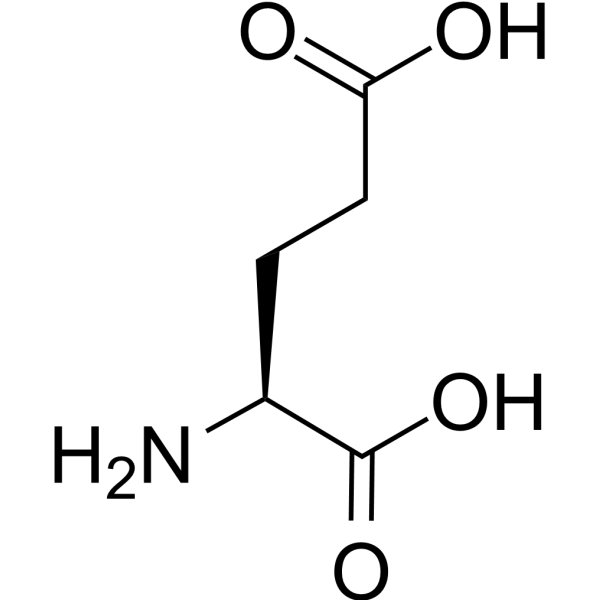
    L-Glutamic acid
    10+ Cited Publications

    Environmental Pollutants Endogenous Metabolite iGluR Ferroptosis Apoptosis Neurological Disease
    L-Glutamic acid is an excitatory amino acid neurotransmitter that acts as an agonist for all subtypes of glutamate receptors (metabolic rhodophylline, NMDA, and AMPA). L-Glutamic acid has an agonist effect on the release of DA from dopaminergic nerve endings. L-Glutamic acid can be used in the study of neurological diseases. L-Glutamic acid acts at ionotropic and metabotropic glutamate receptors .
    L-Glutamic acid
  • HY-N2309
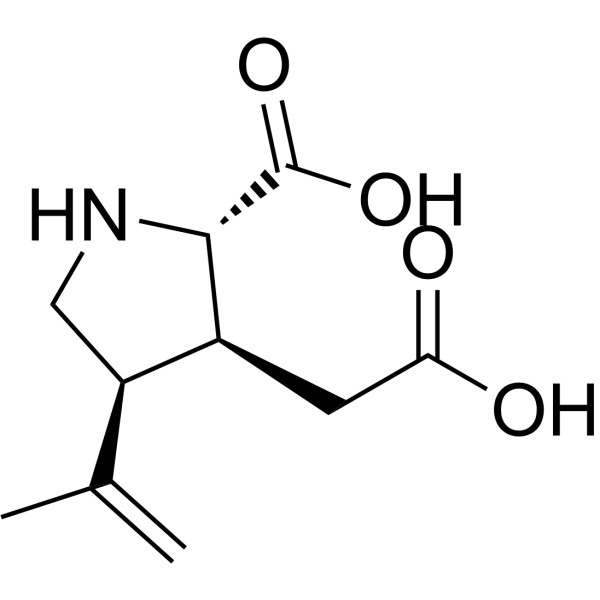
    Kainic acid
    Maximum Cited Publications
    35 Publications Verification

    EAAT Neurological Disease
    Kainic acid is a potent excitotoxic agent. Kainic acid hydrate also is an agonist for a subtype of ionotropic glutamate receptor. Kainic acid induces seizures .
    Kainic acid
  • HY-100714A
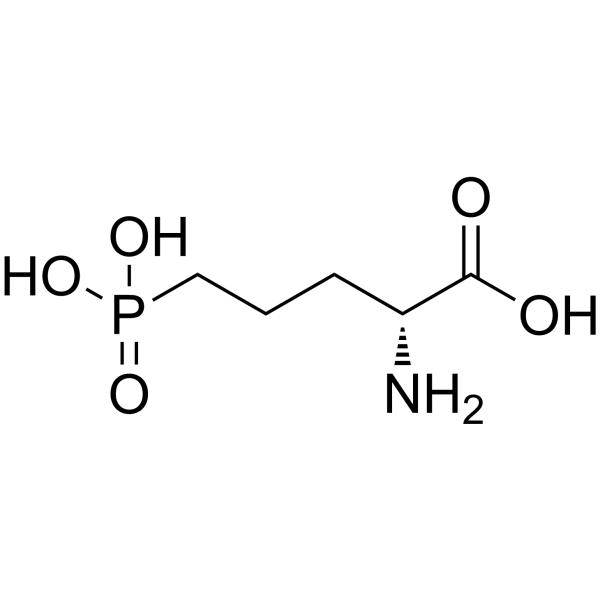
    D-AP5
    25+ Cited Publications

    D-APV; D-2-Amino-5-phosphonovaleric acid

    iGluR Neurological Disease
    D-AP5 (D-APV) is a selective and competitive NMDA receptor antagonist with a Kd of 1.4 μM. D-AP5 (D-APV) inhibits the glutamate binding site of NMDA receptors .
    D-AP5
  • HY-B0649
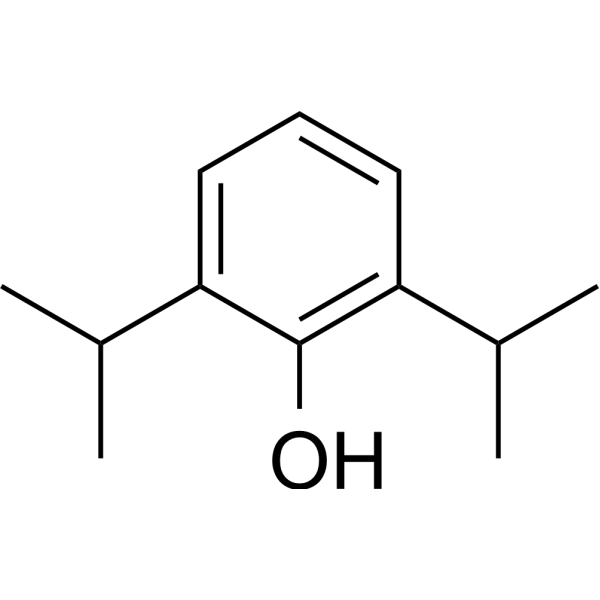
    Propofol
    20+ Cited Publications

    2,6-Diisopropylphenol

    Environmental Pollutants Endogenous Metabolite GABA Receptor Neurological Disease Cancer
    Propofol potently and directly activates GABAA receptor and inhibits glutamate receptor mediated excitatory synaptic transmission. Propofol has antinociceptive properties and is used for sedation and hypnotic .
    Propofol
  • HY-17551
    NMDA
    25+ Cited Publications

    N-Methyl-D-aspartic acid

    iGluR Endogenous Metabolite Neurological Disease
    NMDA is a specific agonist for NMDA receptor mimicking the action of glutamate, the neurotransmitter which normally acts at that receptor.
    NMDA
  • HY-14608A
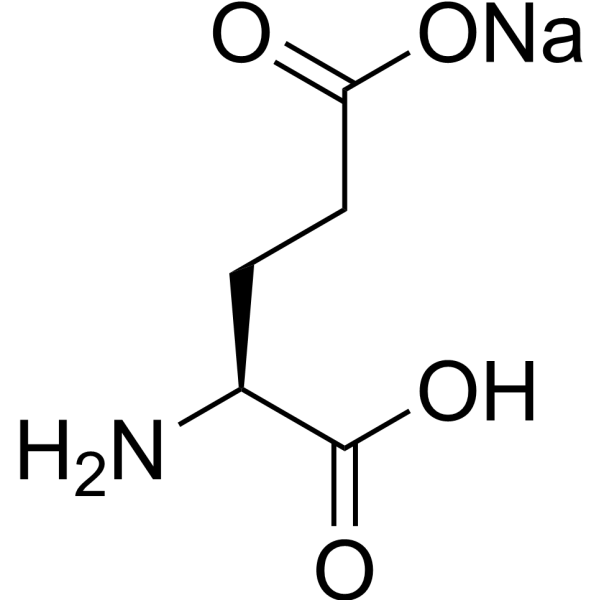
    L-Glutamic acid monosodium salt
    10+ Cited Publications

    Environmental Pollutants iGluR Apoptosis Ferroptosis Endogenous Metabolite Neurological Disease
    L-Glutamic acid monosodium salt is an excitatory amino acid neurotransmitter that acts as an agonist for all subtypes of glutamate receptors (metabolic rhodophylline, NMDA, and AMPA). L-Glutamic acid monosodium salt has an agonist effect on the release of DA from dopaminergic nerve endings. L-Glutamic acid monosodium salt can be used in the study of neurological diseases. L-Glutamic acid monosodium salt acts at ionotropic and metabotropic glutamate receptors .
    L-Glutamic acid monosodium salt
  • HY-W014666
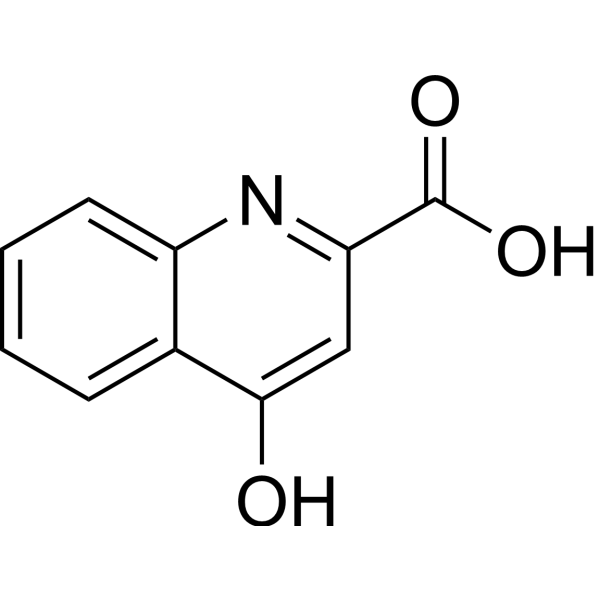
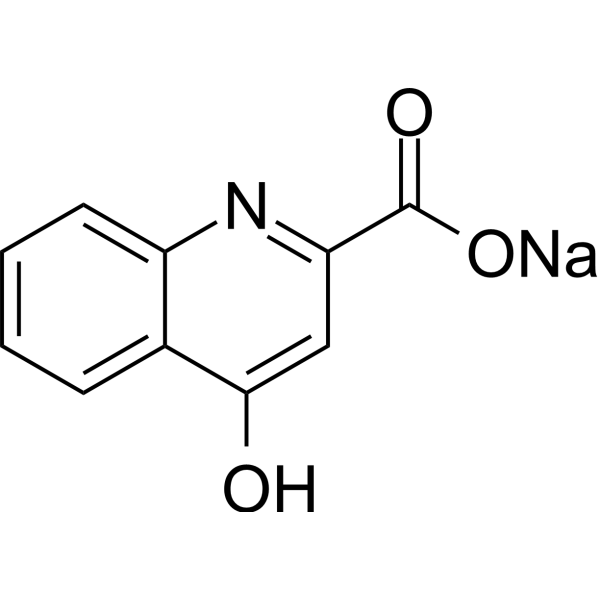
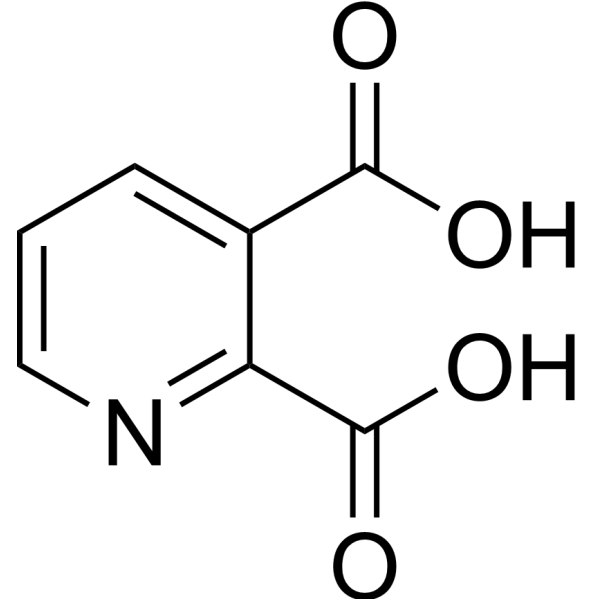
    Xanthurenic acid
    2 Publications Verification

    Endogenous Metabolite mGluR Apoptosis Neurological Disease Metabolic Disease
    Xanthurenic acid is a putative endogenous Group II metabotropic glutamate receptor agonist, on sensory transmission in the thalamus.
    Xanthurenic acid
  • HY-15067
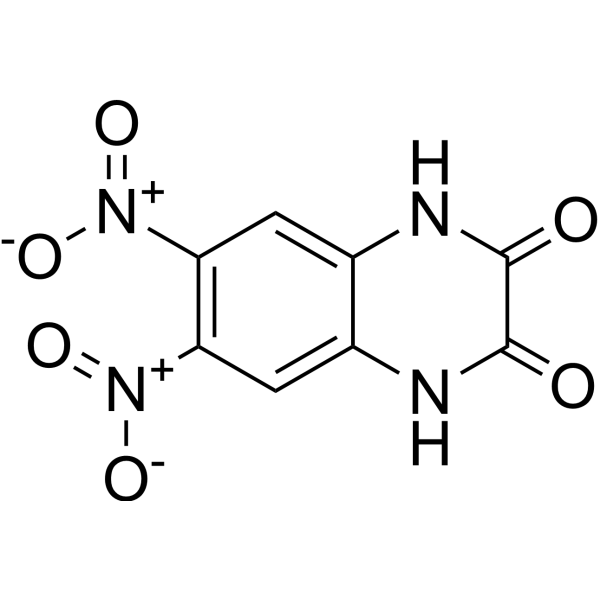
    DNQX
    10+ Cited Publications

    FG 9041

    iGluR Cancer
    DNQX (FG 9041), a quinoxaline derivative, is a selective, potent competitive non-NMDA glutamate receptor antagonist (IC50s = 0.5, 2 and 40 μM for AMPA, kainate and NMDA receptors, respectively) .
    DNQX
  • HY-12598

    mGluR Neurological Disease
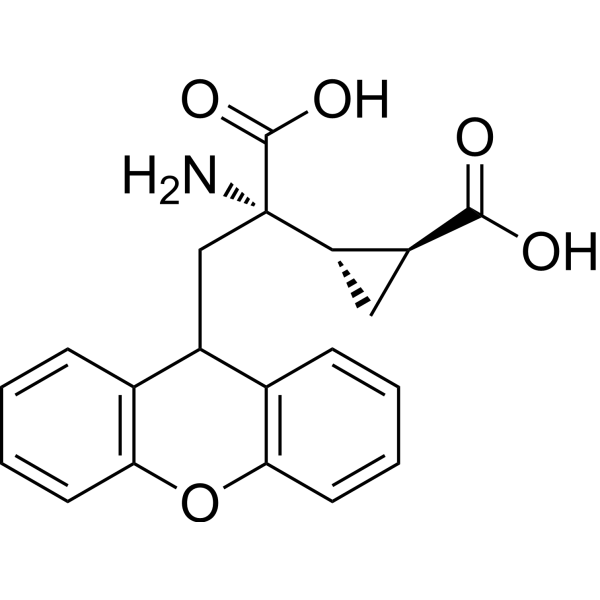
    (S)-3,5-DHPG is a weak, but selective group I metabotropic glutamate receptors (mGluRs) agonist with Ki values of 0.9 μM and 3.9 μM for mGluR1a and mGluR5a, respectively . (S)-3,5-DHPG exhibits anxiolytic activity in rats subjected to hypoxia .
    (S)-3,5-DHPG
  • HY-107602

    iGluR Neurological Disease
    UBP310 is a selective GluR5 antagonist, with a Kd of 130 nM .
    UBP310
  • HY-16974
    Afoxolaner
    1 Publications Verification

    GABA Receptor Chloride Channel Parasite Infection
    Afoxolaner is an orally active isoxazoline insecticide/acaricide against Ixodes scapularis in dogs. Afoxolaner acts on the insect γ-aminobutyric acid receptor (GABA) and glutamate receptors, inhibiting GABA & glutamate-regulated uptake of chloride ions, resulting in excess neuronal stimulation and death of the arthropod .
    Afoxolaner
  • HY-122808

    mGluR NF-κB AP-1 Metabolic Disease
    (-)-Camphoric acid is the less active enantiomer of Camphoric acid. Camphoric acid induces glutamate receptor expression. Camphoric acid also significantly induces the activation of NF-κB and AP-1. Camphoric acid significantly stimulates the differentiation of mouse osteoblastic MC3T3-E1 subclone 4 cells. Camphoric acid has weak regulatory function towards glutamate receptors. Camphoric acid can induce mRNA expression of glutamate signaling molecules and activate transcription factors, thereby stimulating osteoblast differentiation .
    (-)-Camphoric acid
  • HY-N2309A
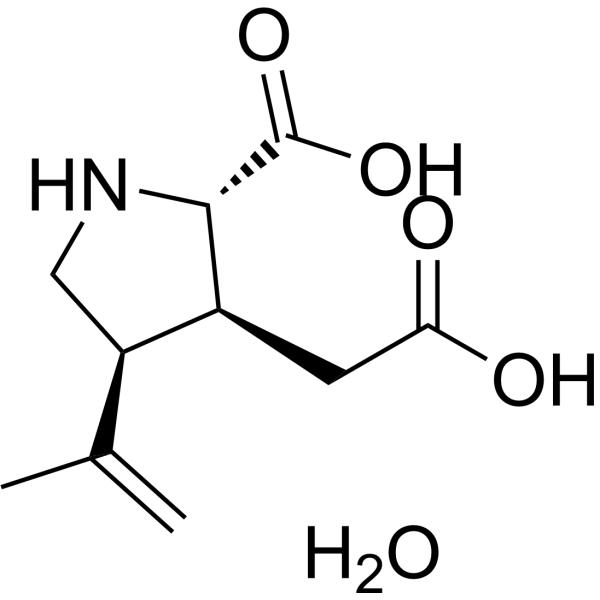
    Kainic acid hydrate
    Maximum Cited Publications
    35 Publications Verification

    mGluR Neurological Disease
    Kainic acid hydrate is a potent excitotoxic agent. Kainic acid hydrate also is an agonist for a subtype of ionotropic glutamate receptor. Kainic acid hydrate induces seizures .
    Kainic acid hydrate
  • HY-N7144A

    Environmental Pollutants PKC TRP Channel PKA Neurological Disease
    Citronellyl acetate, a monoterpene product of the secondary metabolism of plants, is an orally active antinociceptive agent. Citronellyl acetate modulates TRPV1, TRPM8, ASIC, glutamate receptors, PKC, and PKA-mediated nociception. Citronellyl acetate can be used for the research of acute pain .
    Citronellyl acetate
  • HY-100371
    (RS)-MCPG
    1 Publications Verification

    alpha-MCPG

    mGluR Neurological Disease
    (RS)-MCPG (alpha-MCPG) is a competitive and selective group I/group II metabotropic glutamate receptor (mGluR) antagonist. (RS)-MCPG blocks theta-burst stimulation (TBS)-induced shifts in both juvenile and neonatal rat hippocampal neurons .
    (RS)-MCPG
  • HY-W419700
    L-Glutamic acid ammonium
    10+ Cited Publications

    Endogenous Metabolite iGluR Ferroptosis Apoptosis Neurological Disease
    L-Glutamic acid ammonium is an excitatory amino acid neurotransmitter that acts as an agonist for all subtypes of glutamate receptors (metabolic rhodophylline, NMDA, and AMPA). L-Glutamic acid ammonium has an agonist effect on the release of DA from dopaminergic nerve endings. L-Glutamic acid can be used in the study of neurological diseases. L-Glutamic acid ammonium acts at ionotropic and?metabotropic glutamate receptors .
    L-Glutamic acid ammonium
  • HY-W014666S

    Apoptosis mGluR Endogenous Metabolite Metabolic Disease
    Xanthurenic acid-d4 is the deuterium labeled Xanthurenic acid . Xanthurenic acid is a putative endogenous Group II metabotropic glutamate receptor agonist, on sensory transmission in the thalamus .
    Xanthurenic acid-d4
  • HY-107481

    NS 105

    mGluR Neurological Disease
    Fasoracetam (NS 105) is the activator of metabotropic glutamate receptor (mGluR). Fasoracetam (NS 105) has the potential for the research of attention-deficit hyperactivity disorder (ADHD) and Alzheimer's disease (AD) .
    Fasoracetam
  • HY-W016145

    Endogenous Metabolite iGluR Ferroptosis Apoptosis Neurological Disease Metabolic Disease Inflammation/Immunology Cancer
    L-Glutamic acid monosodium hydrate is an excitatory amino acid neurotransmitter that acts as an agonist for all subtypes of glutamate receptors (metabolic rhodophylline, NMDA, and AMPA). L-Glutamic acid monosodium hydrate has an agonist effect on the release of DA from dopaminergic nerve endings. L-Glutamic acid monosodium hydrate can be used in the study of neurological diseases. L-Glutamic acid monosodium hydrate acts at ionotropic and?metabotropic glutamate receptors .
    L-Glutamic acid monosodium hydrate
  • HY-18654
    ADX88178
    1 Publications Verification

    mGluR Neurological Disease
    ADX88178 is a potent metabotropic glutamate receptor 4 positive allosteric modulator (mGluR4 PAM) with an EC50 of 4 nM for human mGluR4.
    ADX88178
  • HY-101226

    mGluR Neurological Disease
    MSOP is a selective group III metabotropic glutamate receptor antagonist with apparent KD of 51 μM for the L-AP4-sensitive presynaptic mGluR.
    MSOP
  • HY-14612

    mGluR Neurological Disease
    CPPHA is potent and selective positive allosteric modulator (PAM) of the mGluR5 and mGluR1 (metabotropic glutamate receptor). CPPHA can potentiate responses of mGluR5 and mGluR1 to activation of these receptors. CPPHA is developed for the research of central nervous system disorders .
    CPPHA
  • HY-110278

    mGluR Neurological Disease
    ADX71743 is a highly selective, noncompetitive and brain-penetrant metabotropic glutamate receptor 7 negative allosteric modulator (mGlu7 NAM). ADX71743 can cross the blood-brain barrier (BBB) and possesses anxiolytic activity. .
    ADX71743
  • HY-107520

    Drug Derivative Neurological Disease
    MNI-caged-L-glutamate is an inert photolabile glutamate precursor. MNI-caged-L-glutamate does not modulate NMDA and AMPA receptor function in cultured neurones. MNI-caged-L-glutamate can be used for research on neurotransmitters .
    MNI-caged-L-glutamate
  • HY-103230

    iGluR Neurological Disease
    IEM-1460 blocks both AMPA and NMDA glutamate receptor with anticonvulsant effect in vivo .
    IEM-1460
  • HY-W017500

    iGluR Neurological Disease
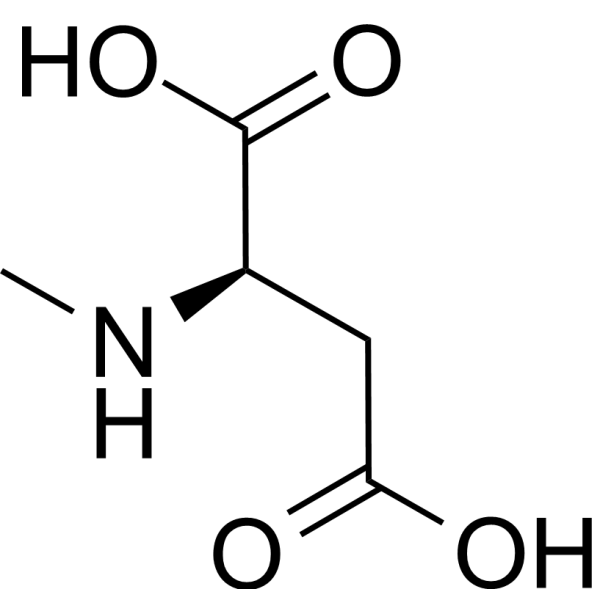
    N-Methyl-DL-aspartic acid is a glutamate analogue and NMDA receptor agonist and can be used for neurological diseases research .
    N-Methyl-DL-aspartic acid
  • HY-101356

    mGluR Neurological Disease
    CPCCOEt is a low affinity, selective, non-competitive and reversible antagonist of metabotropic glutamate receptor 1b (mGluR1b) .
    CPCCOEt
  • HY-W014666R
    Xanthurenic acid (Standard)
    2 Publications Verification

    Reference Standards Endogenous Metabolite mGluR Apoptosis Neurological Disease Metabolic Disease
    Xanthurenic acid (Standard) is the analytical standard of Xanthurenic acid. This product is intended for research and analytical applications. Xanthurenic acid is a putative endogenous Group II metabotropic glutamate receptor agonist, on sensory transmission in the thalamus.
    Xanthurenic acid (Standard)
  • HY-103344

    Aminopeptidase Carboxypeptidase mGluR Neurological Disease
    ZJ43 is a NAAG peptidase inhibitor and glutamate carboxypeptidase II/III (GCP II/III) inhibitor with human GCP II IC50 of 2.4 nM and Ki of 0.8 nM. ZJ43 blocks N-acetylaspartylglutamate hydrolysis, elevates extracellular N-acetylaspartylglutamate levels, and activates group II metabotropic glutamate receptors (mGluR). ZJ43 can be used for the research of schizophrenia, inflammatory pain, neuropathic pain, and traumatic brain injury .
    ZJ43
  • HY-B0649S

    GABA Receptor Endogenous Metabolite Neurological Disease
    Propofol-d17 is the deuterium labeled Propofol. Propofol potently and directly activates GABAA receptor and inhibits glutamate receptor mediated excitatory synaptic transmission. Propofol has antinociceptive properties .
    Propofol-d17
  • HY-15072

    YM 872

    iGluR Metabolic Disease
    Zonampanel (YM 872) is a selective antagonist of the glutamate receptor subtype, α-amino-3-hydroxy-5-methylisoxazole-4-propionic acid (AMPA) receptor.
    Zonampanel
  • HY-114403

    mGluR Neurological Disease
    VU6012962 is an orally bioavailable and CNS-penetrant metabotropic glutamate receptor 7 negative allosteric modulator (mGlu7 NAM) with an IC50 of 347 nM .
    VU6012962
  • HY-103233
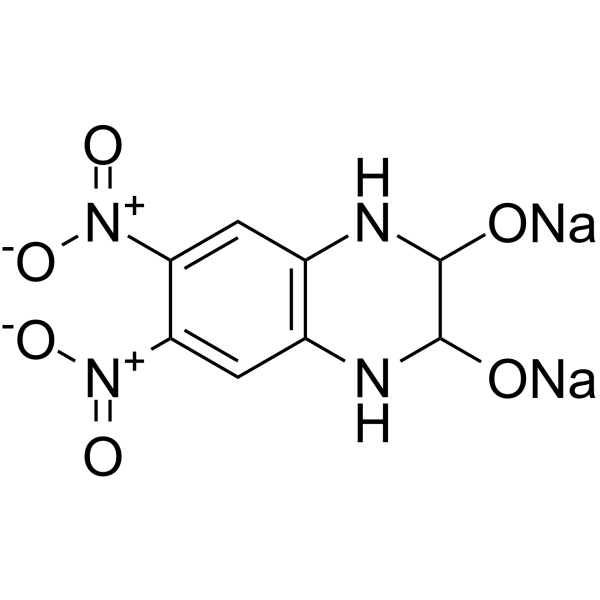
    DNQX disodium salt
    10+ Cited Publications

    FG 9041 disodium salt

    iGluR Cancer
    DNQX (FG 9041) disodium salt, a quinoxaline derivative, is a selective, potent competitive non-NMDA glutamate receptor antagonist (IC50s = 0.5, 2 and 40 μM for AMPA, kainate and NMDA receptors, respectively) .
    DNQX disodium salt
  • HY-131286A

    LY-544344 (hydrochloride)

    Drug Derivative mGluR Neurological Disease
    Talaglumetad hydrochloride (LY-544344 hydrochloride) is an orally active prodrug of Eglumegad (HY-18941) and a metabotropic glutamate receptor 2/3 (mGluR2/3) agonist. Talaglumetad hydrochloride undergoes transmembrane transport via the intestinal peptide transporter hPepT1, and is enzymatically hydrolyzed to produce L-alanine and the parent drug Eglumegad after entering the body. Talaglumetad hydrochloride can be used in research related to metabotropic glutamate receptor 2-associated neurological systems .
    Talaglumetad (hydrochloride)
  • HY-W141876

    Bacterial Others
    DL-2-Aminopimelic Acid is a weak agonist of glutamate receptors and also reduces the sensitivity of leech glutamate receptors to glutamate .
    DL-2-Aminopimelic Acid
  • HY-103568

    mGluR Neurological Disease
    YM-298198 hydrochloride is a high-affinity, selective, orally active, and non-competitive antagonist of metabotropic glutamate receptor type 1 (mGluR1). YM-298198 hydrochloride can be used for the research of neurological disorders .
    YM-298198 hydrochloride
  • HY-108546

    3-Phosphono-L-alanine

    mGluR Neurological Disease
    L-AP3, metabotropic glutamate receptor (mGluR) antagonist, inhibits D-phosphoserine and L-phosphoserine with IC50s of 368 μM and 2087 μM, respectively .
    L-AP3
  • HY-110152

    mGluR Neurological Disease
    LSN2463359 is positive allosteric modulator of metabotropic glutamate 5 (mGlu5). LSN2463359 attenuates aspects of the behavioral response to administration of the competitive NMDA receptor antagonist. LSN2463359 selectively attenuates reversal learning deficits observed in the neurodevelopmental MAM E17 model . LSN2463359 is a click chemistry reagent, it contains an Alkyne group and can undergo copper-catalyzed azide-alkyne cycloaddition (CuAAc) with molecules containing Azide groups.
    LSN2463359
  • HY-101311

    AIDA

    mGluR Inflammation/Immunology Cancer
    UPF-523 (AIDA), a rigid (carboxyphenyl) glycine derivative, is a relatively potent and selective antagonist of group I metabotropic glutamate receptors (mGlu1a) with an IC50 of 214 μM. But UPF-523 has no effect on group II (mGlu2), group III (mGlu4) receptors or ionotropic glutamate receptors. UPF-523 has the potential for the research of the acute arthritis .
    UPF-523
  • HY-18162

    mGluR Neurological Disease
    JNJ-42153605 is a positive allosteric modulator of the metabotropic glutamate 2 (mGlu2) receptor with an EC50 of 17 nM.
    JNJ-42153605
  • HY-B0649S1

    GABA Receptor Endogenous Metabolite Neurological Disease
    Propofol-d18 is the deuterium labeled Propofol. Propofol potently and directly activates GABAA receptor and inhibits glutamate receptor mediated excitatory synaptic transmission .
    Propofol-d18
  • HY-103232

    mGluR Neurological Disease
    IEM-1925 bromide is an orally active glutamate receptor antagonist, increases the latent period and decreases the duration of status epilepticus in rats in a lithium-pilocarpine model of epilepsy .
    IEM-1925 bromide
  • HY-16974R

    Reference Standards GABA Receptor Chloride Channel Parasite Infection
    Afoxolaner (Standard) is the analytical standard of Afoxolaner. This product is intended for research and analytical applications. Afoxolaner is an orally active isoxazoline insecticide/acaricide against Ixodes scapularis in dogs. Afoxolaner acts on the insect γ-aminobutyric acid receptor (GABA) and glutamate receptors, inhibiting GABA & glutamate-regulated uptake of chloride ions, resulting in excess neuronal stimulation and death of the arthropod .
    Afoxolaner (Standard)
  • HY-19623

    mGluR Neurological Disease
    VU0092273 is a potent mGlu5 positive allosteric modulator (PAM) that also binds to the MPEP site, with an EC50 of 0.27 μM .
    VU0092273
  • HY-101227

    EAAT Metabolic Disease
    (±)-threo-3-Methylglutamic acid is a potent EAAT2/4 inhibitor. (±)-threo-3-Methylglutamic acid also is an ionotropic glutamate receptor agonist. (±)-threo-3-Methylglutamic acid inhibits glutamate uptake by rod outer segments .
    (±)-threo-3-Methylglutamic acid
  • HY-101375

    mGluR Neurological Disease
    (RS)-APICA is a selective group II metabotropic glutamate receptor (mGluR II) antagonist. (RS)-APICA shows potential neuroprotective effect .
    (RS)-APICA
  • HY-119078

    mGluR Neurological Disease
    VU0080241 is a positive allosteric modulator (PAM) of the metabotropic glutamate receptor subtype 4 (mGluR4), with an EC50 of 4.6 μM .
    VU0080241
  • HY-101809A

    iGluR Cardiovascular Disease
    CNS-5161 is a novel NMDA ion-channel antagonist that interacts with the NMDA receptor/ion channel site to produce a noncompetitive blockade of the actions of glutamate.
    CNS 5161
  • HY-B0649R

    2,6-Diisopropylphenol (Standard)

    Reference Standards GABA Receptor Endogenous Metabolite Neurological Disease Cancer
    Propofol (Standard) is the analytical standard of Propofol. This product is intended for research and analytical applications. Propofol potently and directly activates GABAA receptor and inhibits glutamate receptor mediated excitatory synaptic transmission. Propofol has antinociceptive properties and is used for sedation and hypnotic .
    Propofol (Standard)
  • HY-170409

    Trk Receptor Apoptosis Neurological Disease Inflammation/Immunology
    BNN27 is the agonist for TrkA receptor and p75NTR receptor, that exhibits neurotrophic and anti-apoptotic effects. BNN27 increases the levels of glutamate, GABA, and glutamine in the rat hippocampus and prefrontal cortex, improves glutamate turnover. BNN27 exhibits neuroprotective efficacy in mouse amyotrophic lateral sclerosis (ALS) model, exhibits anti-inflammatory efficacy in experimental autoimmune encephalomyelitis (EAE) model, exhibits retinal protective efficacy in rat diabete models. BNN27 is blood-brain barrier penetrable .
    BNN27

Inquiry Online

Your information is safe with us. * Required Fields.

Salutation


Country or Region *

Applicant Name *


Organization Name *

Department *


Email Address *


Product Name *

Cat. No.


Requested quantity *

Phone Number *


Remarks

Inquiry Online

Inquiry Information

Product Name:
Cat. No.:
Quantity:
MCE Japan Authorized Agent:

