



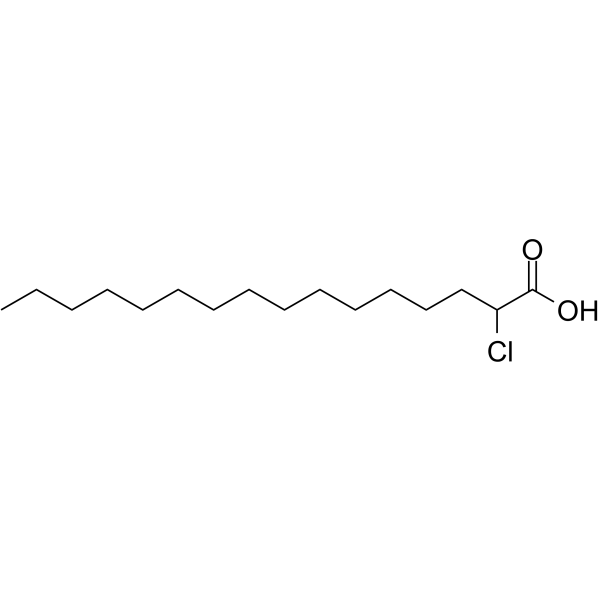
2-Chlorohexadecanoic acid

Based on 1 Customer Validation
2-Chlorohexadecanoic acid, an inflammatory lipid mediator, interferes with protein palmitoylation,induces ER-stress markers, reduced the ER ATP content, and activates transcription and secretion of IL-6 as well as IL-8.2-Chlorohexadecanoic acid disrupts the mitochondrial membrane potential and induces procaspase-3 and PARP cleavage.2-Chlorohexadecanoic acid can across blood-brain barrier (BBB) and compromises ER- and mitochondrial functions in the human brain endothelial cell line hCMEC/D3.
For research use only. We do not sell to patients.
- Purity : 99.89%
- CAS No.: 19117-92-1
- Formula: C16H31ClO2
- Molecular Weight:290.87
-
Storage:Powder -20°C, 3 years , 4°C, 2 years ; In solvent -80°C, 6 months , -20°C, 1 month

To place orders, for customer services and technical support, please contact: MedChemExpress USA
Tel: 609-228-6898 E-mail: [email protected] [email protected]


-
 Biological Activity
-
Chemical Information
-
Solvent & Solubility
- Protocols
- Purity & Documentation
- References
-
 Help & FAQs


-

HY-131688R
2-Chlorohexadecanoic acid (Standard)Inflammatory Lipid Mediator -
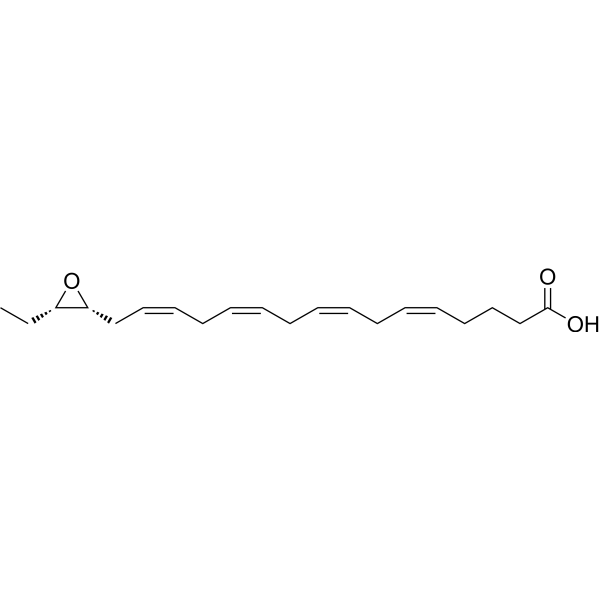
HY-113040A
(17R,18S)-Epoxyeicosatetraenoic acidBKα Activator -
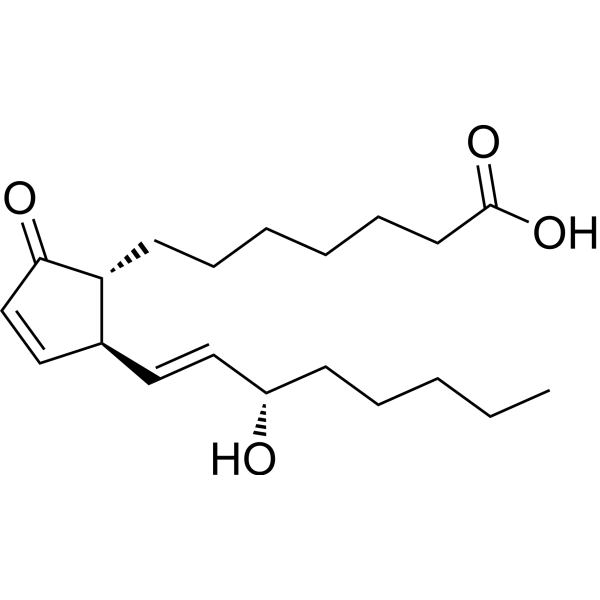
HY-113053
Prostaglandin A1Prostaglandin -
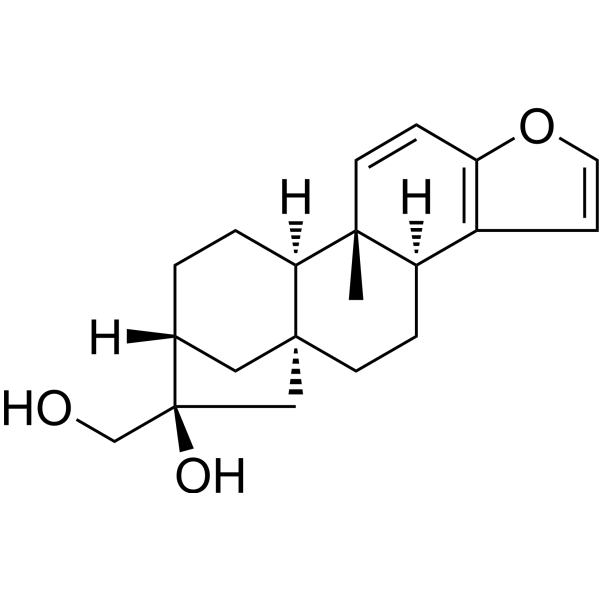
HY-N6258
KahweolApoptosis Inducer -
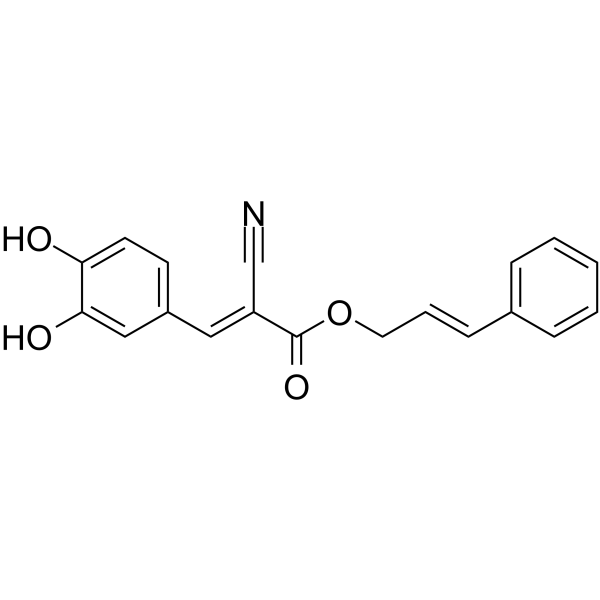
HY-138688
Cinnamyl-3,4-dihydroxy-α-cyanocinnamate12/15-Lipoxygenases Inhibitor -
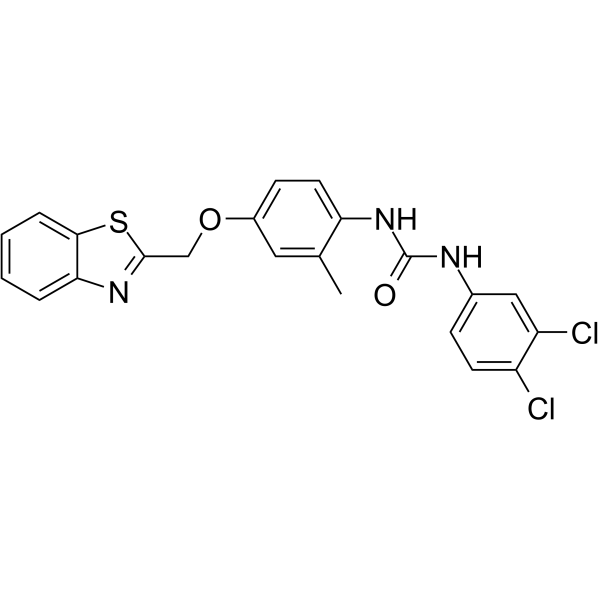
HY-128171
DiflapolinFLAP/sEH Inhibitor -
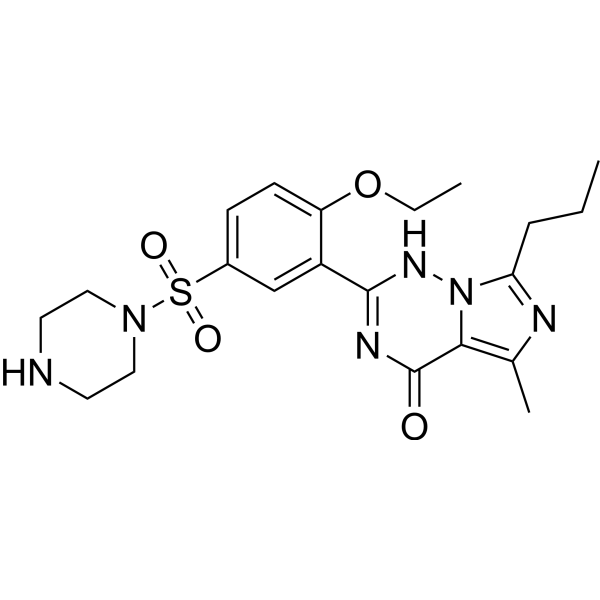
HY-129903
N-Desethyl vardenafilMetabolite -
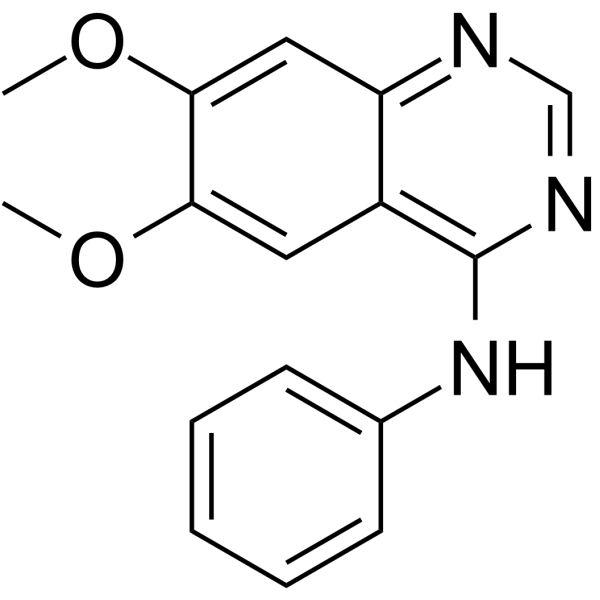
HY-108419
WHI-P258 -
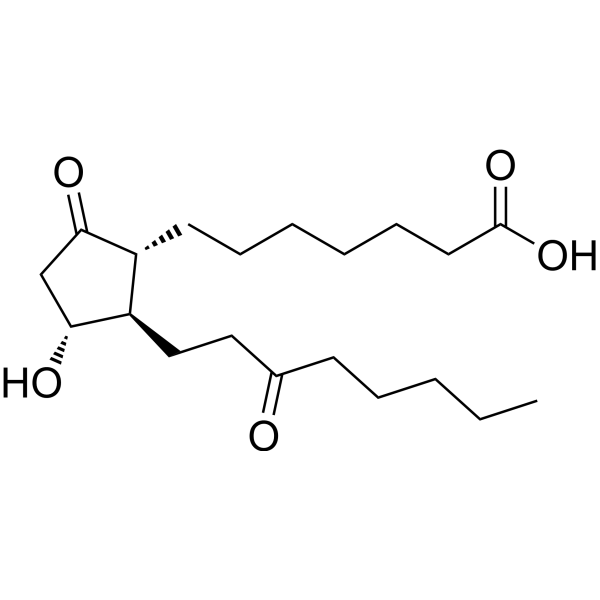
HY-137591
13,14-Dihydro-15-keto-PGE1PGE1 Metabolite -
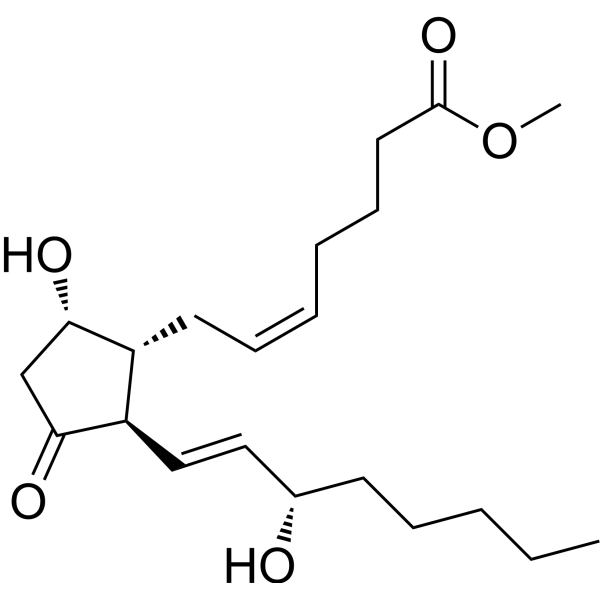
HY-114623
Prostaglandin D2 methyl esterDP Receptor Inhibitor -

HY-N6258R
Kahweol (Standard)Apoptosis Inducer -

HY-129903R
N-Desethyl vardenafil (Standard)Metabolite
All Caspase Isoforms
More

Biological Activity
Description
In Vitro
2-Chlorohexadecanoic acid (2-ClHA; 10?μM; 4, 6 h) results phosphorylation of eIF2α starting 4?h post treatment, while total eIF2α levels remained unchanged incubation of hCMEC/D3 cells. 2-Chlorohexadecanoic acid increases expression of ATF4, a target gene of eIF2α[1].
2-Chlorohexadecanoic acid (25?μM, 30?min) induces a decrease in the FRET ratio signal of ERAT by 40%, indicating significantly diminished [ATP]ER?in cells that were treated with 2-Chlorohexadecanoic acid[1].
MedChemExpress (MCE) has not independently confirmed the accuracy of these methods. They are for reference only. Further protocols information, click here.


Chemical Information
-
CAS No. 19117-92-1
-
Appearance Solid
-
Molecular Weight 290.87
-
Formula C16H31ClO2
-
Color White to off-white
-
SMILES
CCCCCCCCCCCCCCC(Cl)C(O)=O
-
Shipping
Room temperature in continental US; may vary elsewhere.
-
Storage
Powder -20°C 3 years 4°C 2 years In solvent -80°C 6 months -20°C 1 month


Solvent & Solubility
In Vitro:
DMSO : 20 mg/mL (68.76 mM; Need ultrasonic; Hygroscopic DMSO has a significant impact on the solubility of product, please use newly opened DMSO)
Please refer to the solubility information to select the appropriate solvent. Once prepared, please aliquot and store the solution to prevent product inactivation from repeated freeze-thaw cycles.
Storage method and period of stock solution: -80°C, 6 months; -20°C, 1 month. When stored at -80°C, please use it within 6 months. When stored at -20°C, please use it within 1 month.
Please refer to the solubility information to select the appropriate solvent. Once prepared, please aliquot and store the solution to prevent product inactivation from repeated freeze-thaw cycles.
Storage method and period of stock solution: -80°C, 6 months; -20°C, 1 month. When stored at -80°C, please use it within 6 months. When stored at -20°C, please use it within 1 month.
Concentration (start) × Volume (start) = Concentration (final) × Volume (final)
In Vivo:
Select the appropriate dissolution method based on your experimental animal and administration route.
- For the following dissolution methods, please ensure to first prepare a clear stock solution using an In Vitro approach and then sequentially add co-solvents:
- To ensure reliable experimental results, the clarified stock solution can be appropriately stored based on storage conditions. As for the working solution for In Vivo experiments, it is recommended to prepare freshly and use it on the same day.
- The percentages shown for the solvents indicate their volumetric ratio in the final prepared solution. If precipitation or phase separation occurs during preparation, heat and/or sonication can be used to aid dissolution.
Add each solvent one by one: 10% DMSO 40% PEG300 5% Tween-80 45% Saline
Solubility: 2 mg/mL (6.88 mM); Clear solution; Need ultrasonic
This protocol yields a clear solution of 2 mg/mL.
Taking 1 mL working solution as an example, add 100 μL DMSO stock solution (20.0 mg/mL) to 400 μL PEG300, and mix evenly; then add 50 μL Tween-80 and mix evenly; then add 450 μL Saline to adjust the volume to 1 mL.
Preparation of Saline: Dissolve 0.9 g sodium chloride in ddH₂O and dilute to 100 mL to obtain a clear Saline solution.
In Vivo Dissolution Calculator
Please enter the basic information of animal experiments:
-
-
-
-
Recommended: Prepare an additional quantity of animals to account for potential losses during experiments.
Please enter your animal formula composition:
-
%DMSO +
Recommended: Keep the proportion of DMSO in working solution below 2% if your animal is weak.
-
%+
-
+%Tween-80 + +
-
%Saline +
The co-solvents required include: DMSO, . All of co-solvents are available by MedChemExpress (MCE). , Tween 80. All of co-solvents are available by MedChemExpress (MCE).
Working solution concentration: 0.22 mg/mL
Method for preparing stock solution: mg drug dissolved in μL DMSO. Stock solution concentration: mg/mL.
1. Take μL DMSO stock solution;
2. Add μL .
μL , mix evenly;
3. Then add μL Tween 80, mix evenly;
4. Then add μL
Please ensure that the stock solution in the first step is dissolved to a clear state, and add co-solvents in sequence. You can use ultrasonic heating (ultrasonic cleaner, recommended frequency 20-40 kHz), vortexing, etc. to assist dissolution.

Protocols
-
Mitochondrial membrane-potential fluorescent assay
Mitochondrial membrane potential fluorescent assays estimate ΔΨm in living cells using lipophilic cationic dyes such as TMRM, TMRE, rhodamine 123, and JC-1, which accumulate in mitochondria according to membrane polarization; loss of signal after FCCP or CCCP treatment is interpreted as mitochondrial depolarization. TMRM/TMRE and rhodamine 123 are commonly used for semi-quantitative live-cell microscopy or flow cytometry, while JC-1 can report a shift from red aggregate fluorescence to green monomer fluorescence during depolarization; interpretation requires controls because dye concentration, quenching mode, cell type, dye efflux, and mitochondrial mass can affect fluorescence independently of ΔΨm.
-
Fluorescent plasma-membrane potential dye assay
Fluorescent plasma-membrane potential dye assays measure changes in cell membrane potential using voltage-sensitive dyes whose fluorescence changes when cells depolarize or hyperpolarize. Anionic bis-oxonol dyes such as DiBAC4(3) enter depolarized cells more readily and show increased fluorescence after intracellular binding, while hyperpolarization reduces dye accumulation and fluorescence. FMP/FLIPR membrane-potential dyes are used for faster, homogeneous microplate assays of ion-channel or receptor-mediated membrane-potential changes.
-
Mitochondrial membrane-potential and mitochondrial mass staining
Mitochondrial membrane potential staining measures the electrochemical polarization across the mitochondrial inner membrane in live cells using lipophilic cationic fluorescent probes; early rhodamine-based work showed that selective mitochondrial dye accumulation is lost when the mitochondrial transmembrane potential is dissipated. JC-1 reports mitochondrial polarization by shifting from green monomer fluorescence to red J-aggregate fluorescence as dye concentration increases within energized mitochondria; therefore, the red/green fluorescence ratio is used as a relative readout of mitochondrial membrane potential. TMRE or TMRM staining provides a single-channel relative readout because these cationic rhodamine esters accumulate in polarized mitochondria, and lower fluorescence indicates reduced mitochondrial polarization when acquisition and dye-loading conditions are controlled. Mitochondrial mass staining is commonly performed with MitoTracker Green FM or related MitoTracker dyes as


Purity & Documentation
-
Data Sheet (266 KB)
-
SDS (251 KB)
- English - EN (251 KB)
- Français - FR (251 KB)
- Deutsch - DE (251 KB)
- Norwegian - NO (251 KB)
- Español - ES (251 KB)
- Swedish - SV (251 KB)
- Italian - IT (251 KB)
- Korean - KR (251 KB)
- Portuguese - PT (251 KB)
-
Handling Instructions (2659 KB)
References


Complete Stock Solution Preparation Table
Please refer to the solubility information to select the appropriate solvent. Once prepared, please aliquot and store the solution to prevent product inactivation from repeated freeze-thaw cycles.
Storage method and period of stock solution: -80°C, 6 months; -20°C, 1 month. When stored at -80°C, please use it within 6 months. When stored at -20°C, please use it within 1 month.
| Optional Solvent | Concentration Solvent Mass | 1 mg | 5 mg | 10 mg | 25 mg |
|---|---|---|---|---|---|
| DMSO | 1 mM | 3.4380 mL | 17.1898 mL | 34.3796 mL | 85.9491 mL |
| 5 mM | 0.6876 mL | 3.4380 mL | 6.8759 mL | 17.1898 mL | |
| 10 mM | 0.3438 mL | 1.7190 mL | 3.4380 mL | 8.5949 mL | |
| 15 mM | 0.2292 mL | 1.1460 mL | 2.2920 mL | 5.7299 mL | |
| 20 mM | 0.1719 mL | 0.8595 mL | 1.7190 mL | 4.2975 mL | |
| 25 mM | 0.1375 mL | 0.6876 mL | 1.3752 mL | 3.4380 mL | |
| 30 mM | 0.1146 mL | 0.5730 mL | 1.1460 mL | 2.8650 mL | |
| 40 mM | 0.0859 mL | 0.4297 mL | 0.8595 mL | 2.1487 mL | |
| 50 mM | 0.0688 mL | 0.3438 mL | 0.6876 mL | 1.7190 mL | |
| 60 mM | 0.0573 mL | 0.2865 mL | 0.5730 mL | 1.4325 mL |


2-Chlorohexadecanoic acid Related Classifications
HY-131688 Related Classifications
 Powered by Bioz