Infection
-
Infection Produits associés (18904)
Produits associés (18904)

-
Anticorps (22)
-
Bacampicillin
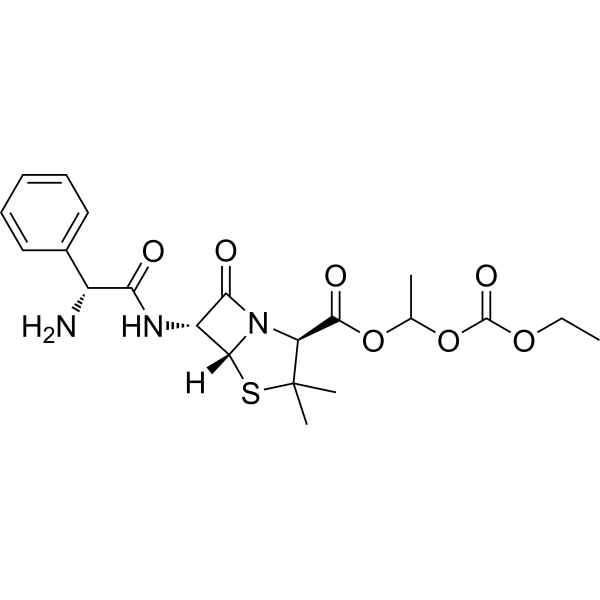 0 ImagesCat. No.: HY-B1149CAS No.: 50972-17-3
Bacampicillin is an orally active semi-synthetic aminopenicillin derivative, prodrug and bactericide that is readily inactivated by β-lactamases. Bacampicillin is hydrolyzed by carboxylester hydrolases and non-specific esterases in the gastrointestinal wall and plasma to form Ampicillin (HY-B0522), and produces higher levels of Ampicillin in rodents in vivo. Bacampicillin exhibits bactericidal activity against Gram-positive and Gram-negative bacteria. Bacampicillin can be used in studies related to bacterial infections.
-
Lavendamycin
 0 ImagesCat. No.: HY-121873CAS No.: 81645-09-2
Lavendamycin is a quinolinedione that can be extracted from bacteria and has potent antibacterial and antitumor properties.
-
Antibacterial agent 224
 0 ImagesCat. No.: HY-161752CAS No.: 16371-55-4
Antibacterial agent 224 is a potent and selective synthetic hydrazone inhibitor against the Salmonella PhoP/PhoQ system.
-
Primaquine diphosphate (Standard)
 0 ImagesSynonyms: Primaquine phosphate (Standard); Primaquine (bisphosphate) (Standard)
Primaquine (diphosphate) (Standard) is the analytical standard of Primaquine (diphosphate). This product is intended for research and analytical applications. Primaquine diphosphate is a potent antimalaria agent and a potent gametocytocide in falciparum malaria. Primaquine diphosphate prevents relapse in vivax and ovale malaria.
-
Dimercaprol (Standard)
 0 ImagesSynonyms: 2,3-Dimercapto-1-propanol (Standard); Dithioglycerol (Standard)
Dimercaprol (Standard) is the analytical standard of Dimercaprol. This product is intended for research and analytical applications. Dimercaprol (2,3-Dimercapto-1-propanol) is an anti-heavy metal-poisoning agent, which exhibits anti-HIV activity. Dimercaprol can be used for the study for arsenic, mercury, gold, lead, antimony, and other toxic metal poisoning.
-
Methyl tridecanoate
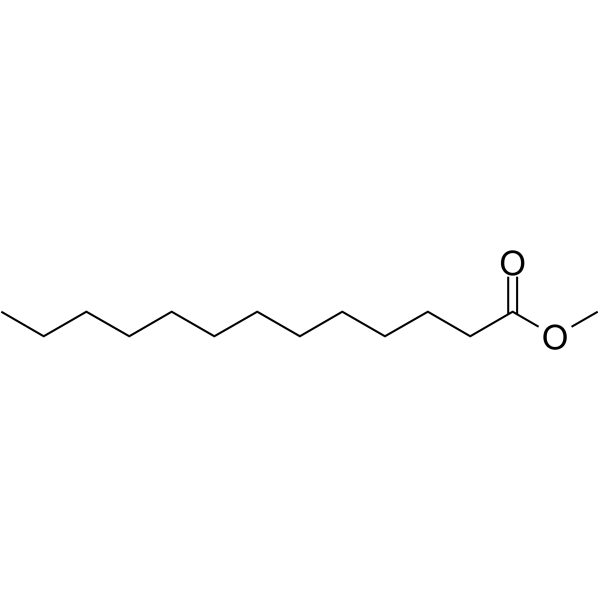 0 Images
Methyl tridecanoate is a fatty acid methyl ester. Methyl tridecanoate exhibits an IC50 of 3.26 μM and a Ki of 2.30 μM against AsOBP21f in Anopheles sinensis. Methyl tridecanoate induces electroantennographic responses in female Anopheles sinensis. Methyl tridecanoate shows a dose-dependent attractive effect on Anopheles sinensis. Methyl tridecanoate weakly inhibits β-amyloid aggregation and AChE activity. Methyl tridecanoate can be used in the research of malaria and Alzheimer's disease.
-
Punicalagin (Standard)
 0 Images
Punicalagin (Standard) is the analytical standard of Punicalagin. This product is intended for research and analytical applications. Punicalagin is a polyphenol ingredient isolated from Pomegranate (Punica granatum L.) or the leaves of Terminalia catappa L.. Punicalagin is a reversible and non-competitive 3CLpro inhibitor and inhibits SARS-CoV-2 replication in vitro. Punicalagin is an anti-hepatitis B virus (HBV) agent and has antioxidant, anti-inflammatory, and anticancer effects. Punicalagin has the potential for the research of COVID-19.
-
Sapindoside B
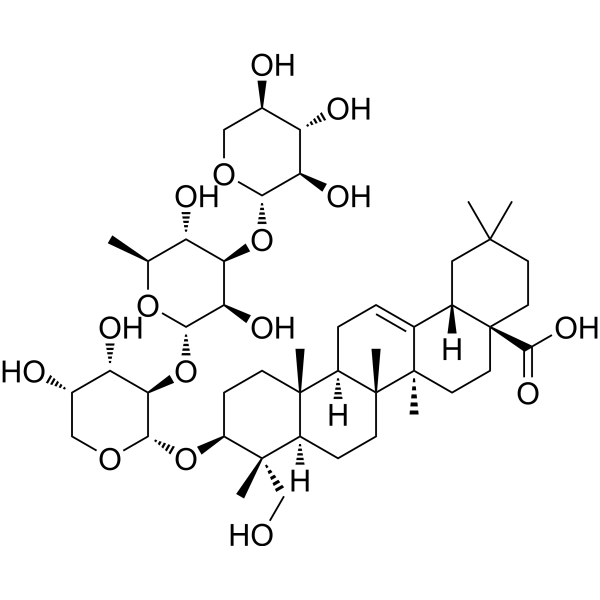 0 ImagesCat. No.: HY-N11546CAS No.: 30994-75-3
Sapindoside B is a substance with hepatoprotective activity, and also acts as a cytochrome P-450 (cytochrome P-450) inhibitor, antibacterial agent and membrane-disrupting agent. Sapindoside B reversibly inhibits the content of cytochrome P-450 in liver microsomes, suppresses the phenobarbital-induced increase in enzyme content, reduces the production of active metabolites mediated by cytochrome P-450, and alleviates hepatotoxic injury. Sapindoside B binds to Cutibacterium acnes lipase, reduces lipase activity, inhibits biofilm formation, and decreases bacterial adhesion. Sapindoside B exhibits cytotoxicity against human cancer, liver cancer, leukemia and glioblastoma cells. Sapindoside B inhibits mycelial growth of phytopathogenic fungal strains, possesses antibacterial activity against dermatophytes, and also has hemolytic/membrane-lytic activity. Sapindoside B can be used in research related to liver injury, Cutibacterium acnes biofilm-associated infections, gastric cancer, carcinoma, promyelocytic leukemia, glioblastoma, apple scab and grape gray mold.
-
Conimine
 0 Images
Conimine is a steroidal alkaloid, antibacterial agent and potentiator. Conimine is isolated from the seeds of Holarrhena antidysenteriaca Wall.ex A.DC. Conimine exhibits intrinsic antibacterial activity against methicillin-sensitive Staphylococcus aureus and methicillin-resistant Staphylococcus aureus. When combined with Penicillin, Conimine shows synergistic antibacterial effects against methicillin-resistant Staphylococcus aureus; when combined with Vancomycin (HY-B0671), it exerts synergistic antibacterial effects against both methicillin-sensitive and methicillin-resistant Staphylococcus aureus.
-
DNA polymerase-IN-6
 0 ImagesCat. No.: HY-170547CAS No.: 2701561-91-1
DNA polymerase-IN-6 is an antiviral agent and a DNA polymerase inhibitor. DNA polymerase-IN-6 inhibits the replication of HCMV, HSV-1, HSV-2 and EBV. DNA polymerase-IN-6 exhibits low cytotoxicity in mammalian cells. DNA polymerase-IN-6 can be used in research related to viral infections.
-
Calcium hydroxide
 0 Images
Calcium hydroxide (Dihydroxycalcium) is a strongly alkaline inorganic compound that can create a strongly alkaline environment by releasing hydroxide ions. Calcium hydroxide can cause lipid peroxidation of bacterial cell membranes, protein denaturation, and DNA strand breaks. Calcium hydroxide can be used in research on osteoporosis, apical periodontitis, and bacterial infections.
-
Propyl paraben-13C6
 0 ImagesCat. No.: HY-W654020CAS No.: 2075718-26-0Synonyms: Propyl parahydroxybenzoate-13C6; Propyl 4-hydroxybenzoate-13C6
Propyl paraben-13C6 (Propyl parahydroxybenzoate-13C6) is 13C labeled Propylparaben. Propylparaben (Propyl parahydroxybenzoate) is an antibacterial preservative that can be produced by plants and bacteria. Propylparaben is commonly used in cosmetics, pharmaceuticals and foods. Propylparaben disrupts follicular growth and steroidogenic function by altering cell cycle, apoptosis and steroidogenic pathways. Propylparaben also reduced sperm count and motility in rats.
-
Myclobutanil-d9
 0 ImagesCat. No.: HY-W654282Pureté: 99.94%
Myclobutanil-d9 is deuterium labeled Myclobutanil. Myclobutanil is a conazole class fungicide widely used as an agrichemical.
-
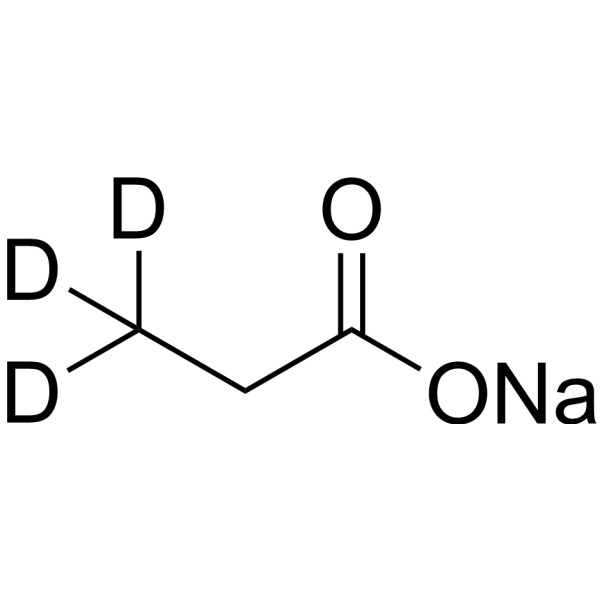
Sodium propionate-d3
 0 Images
Sodium propionate-d3 is the deuterium labeled Propionate sodium (HY-B1773A). Sodium propionate is an orally active short-chain fatty acid. Sodium propionate can be produced by intestinal bacteria from the metabolism of dietary fiber. Sodium propionate increases PPAR-γ, inhibits NF-κB activation, and reduces COX-2 expression and NO production. Sodium propionate also induces Apoptosis and Autophagy. Sodium propionate reduces HSV-1-induced keratitis. Sodium propionate has anticancer effects against glioblastoma. Sodium propionate exhibits neuroprotective, antioxidant, and anti-inflammatory activities. Sodium propionate can be used in the research of spinal cord injury and Alzheimer's disease.
-
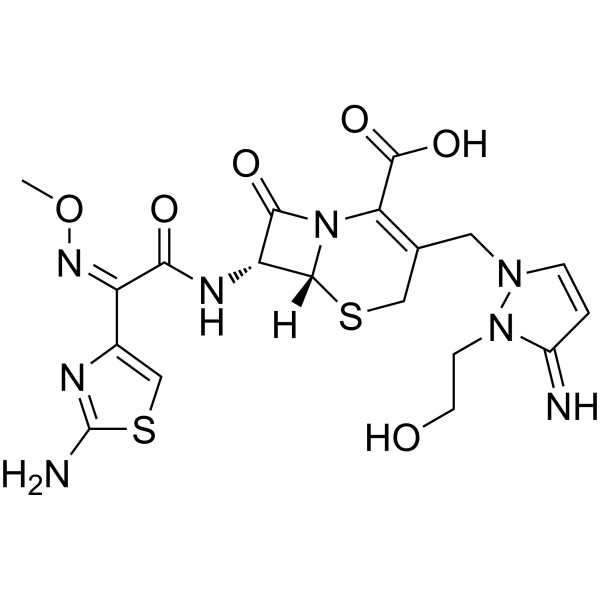
Cefoselis
 0 ImagesCat. No.: HY-B0186CAS No.: 122841-10-5
Cefoselis, the fourth gen-eration of cephalosporin, is a β-lactam antibiotic. Cefoselis exhibits good activity against a wide range of Gram-positive and Gram-negative organisms. Cefoselis penetrates the blood-brain barrier.
-
Dihydromyrcenol
 0 Images
Dihydromyrcenol is an orally active flavor ingredient and Antifungal agent. Dihydromyrcenol acts as a toxicant. Dihydromyrcenol induces phototoxicity-related growth inhibition in Bakers' Yeast. In pregnant rats, Dihydromyrcenol causes threshold maternal toxicity by reducing feed consumption and body weight gain, and also induces threshold developmental toxicity by decreasing fetal body weight, inhibiting ossification of metatarsal bones in the hind paws, increasing the number of extra thoracic vertebrae ribs, and altering vertebral counts.
-
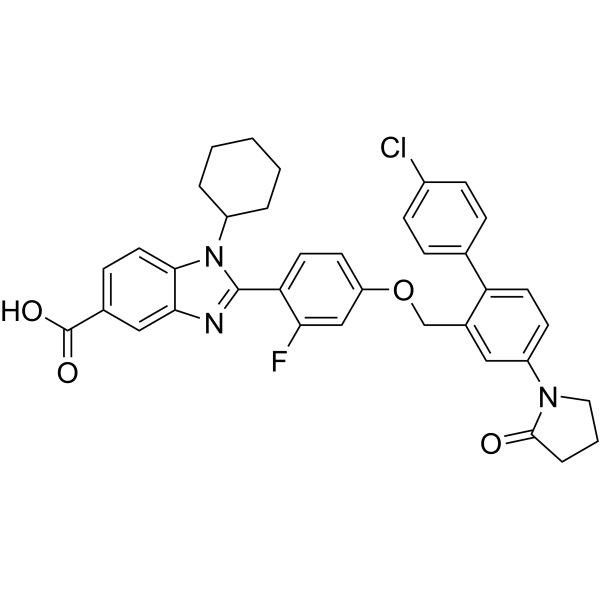
Velpatasvir (Standard)
 0 ImagesSynonyms: GS-5816 (Standard)
Velpatasvir (Standard) is the analytical standard of Velpatasvir. This product is intended for research and analytical applications. Velpatasvir (VEL, GS-5816) is a novel pan-genotypic hepatitis C virus (HCV) nonstructural protein 5A (NS5A) inhibitor with activity against genotype 1 (GT1) to GT6 HCV replicons. Velpatasvir is also a SARS-CoV 3CLpro inhibitor with an IC50 of 2.16 μM.
-
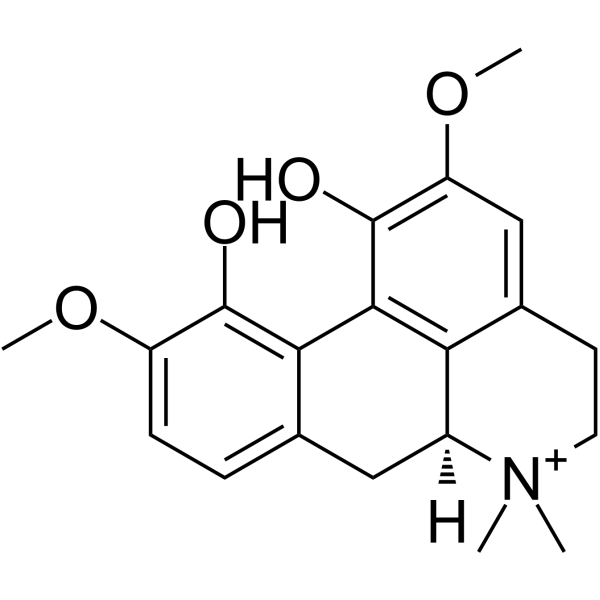
(+)-Magnoflorine
 0 Images
(+)-Magnoflorine (α-Magnoflorine) is an orally active aporphine alkaloid with multiple biological activities. (+)-Magnoflorine promotes Parkin/PINK1 -mediated mitochondrial autophagy, inhibits the activation of NLRP3/Caspase-1 pathway, regulates the intestinal microbiota, and exhibits significant anti-inflammatory and immunomodulatory activities. (+)-Magnoflorine inhibits JNK and TLR4/NF-κB signaling pathways, activates Sirt1/AMPK pathway, alleviates neuronal oxidative stress and apoptosis. Magnoflorine upregulates miR-410-3p, inhibits HMGB1/NF-κB pathway, and has anti-tumor activity. (+)-Magnoflorine also has significant antifungal activity.
-
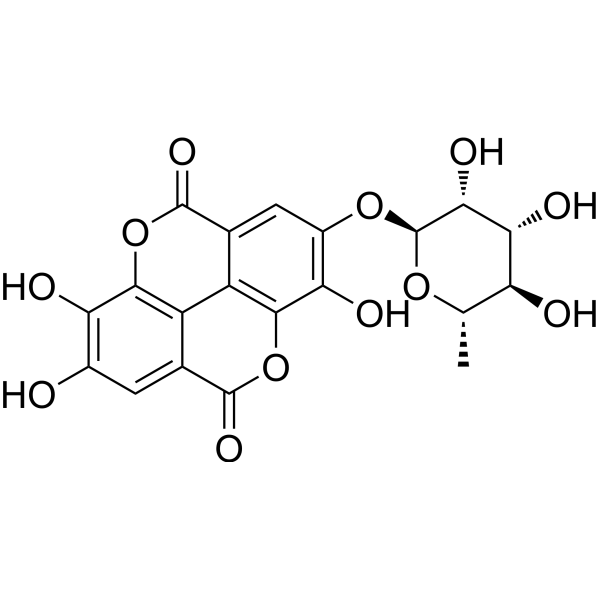
Eschweilenol C
 0 ImagesCat. No.: HY-N12352CAS No.: 211371-02-7
Eschweilenol C is a selective Plasmodium falciparum growth inhibitor. Eschweilenol C disrupts haemoglobin metabolism, reduces haemozoin production, kills Plasmodium falciparum ring and trophozoite stages. Eschweilenol C can be used for the research of inflammatory disorders and malaria.