



Apoptosis
Apoptosis
Apoptosis is a distinctive form of cell death exhibiting specific morphological and biochemical characteristics, including cell membrane blebbing, chromatin condensation, genomic DNA fragmentation, and exposure of specific phagocytosis signaling molecules on the cell surface. Cells undergoing apoptosis differ from those dying through necrosis. Necrotic cells are usually recognized by the immune system as a danger signal and, thus, resulting in inflammation; in contrast, apoptotic death is quiet and orderly.
There are two major pathways of apoptotic cell death induction: The intrinsic pathway, also called the Bcl-2-regulated or mitochondrial pathway, is activated by various developmental cues or cytotoxic insults, such as viral infection, DNA damage and growth-factor deprivation, and is strictly controlled by the BCL-2 family of proteins. The extrinsic or death-receptor pathway is triggered by ligation of death receptors (members of the tumor necrosis factor (TNF) receptor family, such as Fas or TNF receptor-1 (TNFR1)) that contain an intracellular death domain, which can recruit and activate caspase-8 through the adaptor protein Fas-associated death domain (FADD; also known as MORT1) at the cell surface. This recruitment causes subsequent activation of downstream (effector) caspases, such as caspase-3, -6 or -7, without any involvement of the BCL-2 family.
Studies suggest that alterations in cell survival contribute to the pathogenesis of a number of human diseases, including cancer, viral infections, autoimmune diseases, neurodegenerative disorders, and AIDS (acquired immunodeficiency syndrome). Treatments designed to specifically alter the apoptotic threshold may have the potential to change the natural progression of some of these diseases.
All Product Categories
-
Apoptosis Inhibitors
(904)
View all products
-
Apoptosis Agonists
(7)
View all products
-
Apoptosis Antagonists
(9)
View all products
-
Apoptosis Activators
(363)
View all products
-
Apoptosis Modulators
(60)
View all products
-
Apoptosis Inducers
(7944)
View all products
-
Apoptosis Degrader
(1)
View all products
-
Apoptosis Controls
(33)
View all products
-
Apoptosis Related Products (9888)
Related Products (9888)

-
Antibodies (120)
-
NSP-116
 0 ImagesCat. No.: HY-189150CAS No.: 1643925-08-9NSP-116 is an orally active antioxidant and neuroprotective agent. NSP-116 protects corneal epithelial cells from UV-A and blue light LED-induced photo-oxidative damage. NSP-116 scavenges DPPH, superoxide anion, and hydroxyl radicals, inhibits light-induced ROS production in photoreceptor cells, and inhibits lipid peroxidation in retinal homogenates. NSP-116 prevents light-induced photoreceptor cell death and retinal degeneration, and inhibits intracellular Fe2+ accumulation, autophagy, apoptosis, p38 phosphorylation, and microglial/macrophage activation. NSP-116 exerts neuroprotective effects in hemorrhagic stroke models. NSP-116 can be used for research on photokeratitis, dry age-related macular degeneration, and intracranial hemorrhage.
-
(-)-CMLD010509
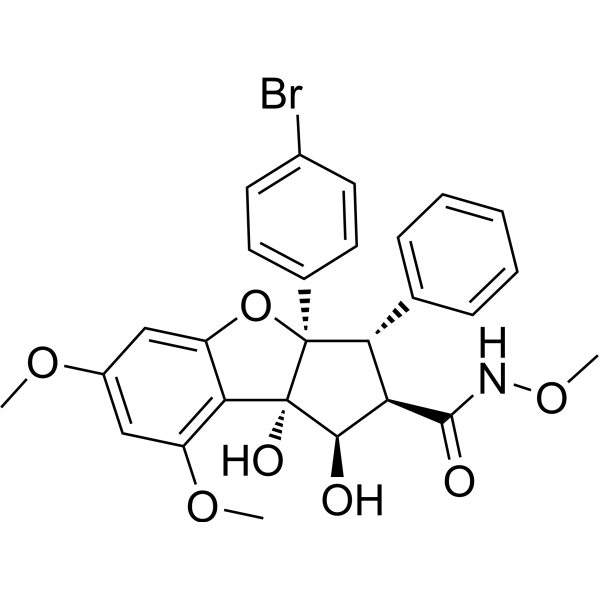 0 ImagesCat. No.: HY-119271ACAS No.: 2240186-24-5Synonyms: (-)-SDS-1-021(-)-CMLD010509 ((-)-SDS-1-021) is an isomer of CMLD010509 (SDS-1-021) (HY-119271). CMLD010509 (SDS-1-021) is a highly specific inhibitor of the oncogenic translation program supporting multiple myeloma (MM)-including key oncoproteins such as MYC, MDM2, CCND1, MAF, and MCL-1. CMLD010509 (SDS-1-021) shows an IC50 below 10 nM for most MM cell lines and induces apoptosis. CMLD010509 (SDS-1-021) is a potent and selective translation inhibitor through an eIF4E phosphorylation-independent mechanism.
-
BV02 (Standard)
 0 ImagesCat. No.: HY-101985RCAS No.: 292870-53-2BV02 (Standard) is the analytical standard of BV02 (HY-101985). This product is intended for research and analytical applications. BV02 is a 14-3-3 inhibitor and an antibacterial agent. BV02 enhances the cleavage of PARP and caspase-3. BV02 induces Apoptosis, Autophagy, and enhances Akt activation. BV02 has anti-B. melitensis infection and epilepsy-promoting effects. BV02 can also be used in colitis research.
-
Stachyose tetrahydrate (Standard)
 0 ImagesCat. No.: HY-113529RCAS No.: 10094-58-3Stachyose (tetrahydrate) (Standard) is the analytical standard of Stachyose (tetrahydrate). This product is intended for research and analytical applications. Stachyose tetrahydrate, a functional oligosaccharide, acts as a prebiotic. Stachyose tetrahydrate can prevent indirectly colon cancer cell growth by promoting the proliferation of probiotics or producing beneficial materials in the intestine.
-
Barasertib-HQPA (Standard)
 0 ImagesCat. No.: HY-10126RCAS No.: 722544-51-6Synonyms: AZD2811 (Standard); INH-34 (Standard); AZD1152-HQPA (Standard)Barasertib-HQPA (Standard) is the analytical standard of Barasertib-HQPA (HY-10126). This product is intended for research and analytical applications. Barasertib-HQPA (AZD2811) is a highly selective Aurora B inhibitor with an IC50 of 0.37 nM in a cell-free assay. Barasertib-HQPA (AZD2811) induces growth arrest and apoptosis in cancer cells.
-
Thymoquinone (Standard)
 0 ImagesThymoquinone (Standard) is the analytical standard of Thymoquinone. This product is intended for research and analytical applications. Thymoquinone is an orally active natural product isolated from N. sativa Thymoquinone down-regulates the VEGFR2-PI3K-Akt pathway. Thymoquinone has antioxidant, anti-inflammatory, anticancer, antiviral, anticonvulsant, antifungal, antiviral, antiangiogenic activity and hepatoprotective effects. Thymoquinone can be used to study Alzheimer's disease, cancer, cardiovascular disease, infectious disease and inflammation .
-
Volasertib (Standard)
 0 ImagesSynonyms: BI 6727 (Standard)Volasertib (Standard) is the analytical standard of Volasertib. This product is intended for research and analytical applications. Volasertib (BI 6727) is an orally active, highly potent and ATP-competitive Polo-like kinase 1 (PLK1) inhibitor with an IC50 of 0.87 nM. Volasertib inhibits PLK2 and PLK3 with IC50s of 5 and 56 nM, respectively. Volasertib induces mitotic arrest and apoptosis. Volasertib, a dihydropteridinone derivative, shows marked antitumor activity in multiple cancer models.
-
Guanosine triphosphate
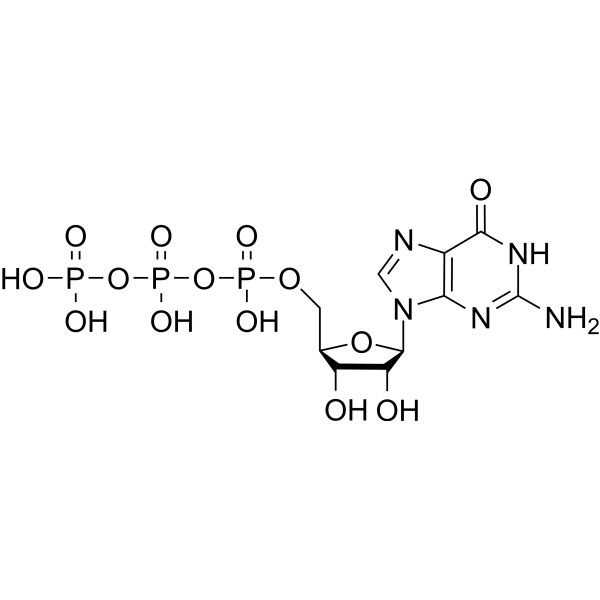 0 ImagesGuanosine triphosphate (GTP) is a critical nucleotide and regulator of cellular metabolism. Guanosine triphosphate promotes ribosomal DNA localization, pre-rRNA transcription and ribosome biogenesis by binding to RNA polymerase I and GPN proteins (GPN1/3). Guanosine triphosphate links MYC-dependent ribosome biogenesis to nucleotide sufficiency, acts as a metabolic gatekeeper supporting protein synthesis, DNA/RNA synthesis and cellular signal transduction, while also participating in the physiological activities of pancreatic β-cells and serving as an oxidative substrate for reactive oxygen species. In small cell lung cancer with high MYC expression, Guanosine triphosphate accumulates through the IMPDH-driven synthetic pathway, thereby affecting apoptosis and mitotic processes. Guanosine triphosphate is used in the research of small cell lung cancer, hepatoblastoma and cellular metabolism.
-
Isomahanine
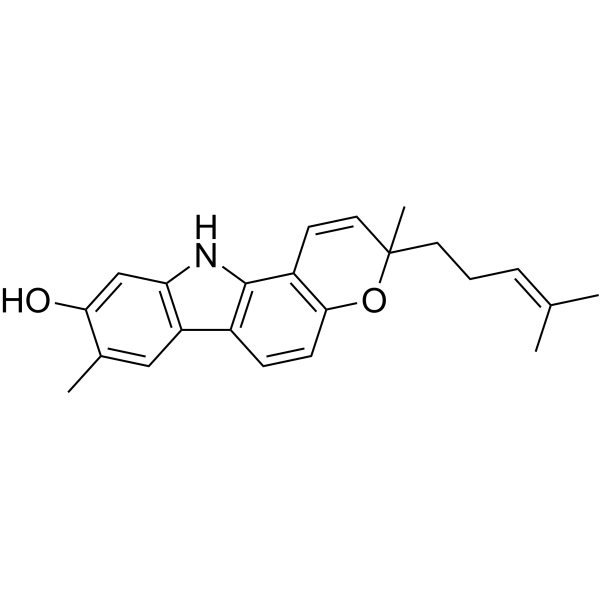 0 ImagesCat. No.: HY-111523CAS No.: 144606-95-1Isomahanine, carbazole alkaloid, is an antioxidative agent. Isomahanine has DPPH radical scavenging activity with an IC50 value of 24 μM.
-
Sabizabulin hydrochloride
 0 ImagesCat. No.: HY-120599ACAS No.: 2635953-17-0Synonyms: VERU-111 hydrochloride; ABI-231 hydrochlorideSabizabulin hydrochloride is a potent orally bioavailable microtubule inhibitor with activity that interacts with the colchicine binding site. Sabizabulin hydrochloride demonstrated significant inhibition of melanoma tumor growth with an average IC50 of 5.2 nM in melanoma and prostate cancer cell lines. Pharmacological screening of Sabizabulin hydrochloride shows it has a low risk of potential side effects.
-
NVP-ADW742 (Standard)
 0 ImagesCat. No.: HY-10252RCAS No.: 475488-23-4Synonyms: ADW742 (Standard); GSK 552602A (Standard); ADW (Standard)NVP-ADW742 (Standard) is the analytical standard of NVP-ADW742 (HY-10252). This product is intended for research and analytical applications. NVP-ADW742 (ADW742) is an orally active, selective IGF-1R tyrosine kinase inhibitor with an IC50 of 0.17 μM. NVP-ADW742 inhibits insulin receptor (InsR) with an IC50 of 2.8 μM. NVP-ADW742 induces pleiotropic antiproliferative/proapoptotic biologic sequelae in tumor cells.
-
Furazolidone (Standard)
 0 ImagesFurazolidone (Standard) is the analytical standard of Furazolidone. This product is intended for research and analytical applications. Furazolidone is a nitrofuran derivative with antiprotozoal and antibacterial activity. It inhibits AML1-ETO transformed cells with an IC50 of 12.7 μM.
-
Rilmenidine (Standard)
 0 ImagesCat. No.: HY-100490RCAS No.: 54187-04-1Rilmenidine (Standard) is the analytical standard of Rilmenidine. This product is intended for research and analytical applications. Rilmenidine, an innovative antihypertensive agent, is an orally active, selective I1 imidazoline receptor agonist. Rilmenidine is an alpha 2-adrenoceptor agonist. Rilmenidine induces autophagy. Rilmenidine acts both centrally by reducing sympathetic overactivity and in the kidney by inhibiting the Na+/H+ antiport. Rilmenidine modulates proliferation and stimulates the proapoptotic protein Bax thus inducing the perturbation of the mitochondrial pathway and apoptosis in human leukemic K562 cells.
-
Kinetin riboside-d5
 0 ImagesCat. No.: HY-101055SSynonyms: N6-Furfuryladenosine-d5Kinetin riboside-d5 (N6-Furfuryladenosine-d5) is the deuterium labeled Kinetin riboside (HY-101055). Kinetin riboside, a cytokinin analog, can induce apoptosis in cancer cells. It inhibits the proliferation of HCT-15 cells with an IC50 of 2.5 μM.
-
Mocetinostat (Standard)
 0 ImagesSynonyms: MGCD0103 (Standard)Mocetinostat (Standard) is the analytical standard of Mocetinostat. This product is intended for research and analytical applications. Mocetinostat (MGCD0103) is a potent, orally active and isotype-selective HDAC (Class I/IV) inhibitor with IC50s of 0.15, 0.29, 1.66 and 0.59 μM for HDAC1, HDAC2, HDAC3 and HDAC11, respectively. Mocetinostat shows no inhibition on HDAC4, HDAC5, HDAC6, HDAC7, or HDAC8.
-
ASP3026 (Standard)
 0 ImagesASP3026 (Standard) is the analytical standard of ASP3026. This product is intended for research and analytical applications. ASP3026 is a selective and orally active inhibitor of anaplastic lymphoma kinase (ALK). ASP3026 is a selective and oral active anaplastic lymphoma kinase (ALK) inhibitor with a IC50 value of 3.5 nM. ASP3026 can inhibit the phosphorylation of IGF-1R, STAT3, AKT and JNK proteins, and induce the cleavage of caspase 3 and PARP. It also inhibited ROS and ACK. ASP3026 can be used in anti-tumor research.
-
USP7-IN-20
 0 ImagesCat. No.: HY-183942CAS No.: 2196246-28-1USP7-IN-20 is a highly selective USP7 inhibitor that binds allosterically to the allosteric pocket of USP7 in a non-competitive and reversible manner. USP7-IN-20 downregulates MDM2 protein levels and stabilizes p53, thereby inducing p21 expression and enhancing the ubiquitin-dependent degradation of MDM2. USP7-IN-20 effectively binds endogenous USP7 to inhibit cancer cell proliferation, and also induces apoptosis by promoting the cleavage of PARP and caspase 3. USP7-IN-20 can be widely used in cancer-related basic and translational research.
-
Digallic acid
 0 ImagesDigallic acid is an antioxidant, antimutagenic, antigenotoxic, and anti-hyperuricemic compound. Digallic acid is a reverse transcriptase and XOD, URAT1 (IC50: 5.34 μM) inhibitor. Digallic acid scavenges DPPH· and O2·− radicals. Digallic acid induces apoptosis. Digallic acid can be isolated from the fruits of Pistascia lentiscus.
-
Tamsulosin hydrochloride (Standard)
 0 ImagesSynonyms: (R)-(-)-YM12617 (Standard); LY253351 (Standard)Tamsulosin (hydrochloride) (Standard) is the analytical standard of Tamsulosin hydrochloride (HY-B0661A). Tamsulosin hydrochloride ((R)-(-)-YM12617 free base) is an orally active antagonist of α1-adrenergic receptor. Tamsulosin hydrochloride induces Apoptosis. Tamsulosin hydrochloride is used for the research of prostatic hyperplasia. Tamsulosin hydrochloride attenuates abdominal aortic aneurysm growth and inhibits inflammation in animal models.
-
Ucf-101 (Standard)
 0 ImagesCat. No.: HY-125959RCAS No.: 313649-08-0Ucf-101 (Standard) is the analytical standard of Ucf-101. This product is intended for research and analytical applications. Ucf-101 is a selective and competitive inhibitor of pro-apoptotic protease Omi/HtrA2, with an IC50 of 9.5 μM for His-Omi. Ucf-101 exhibits very little activity against various other serine proteases (IC50>200 μM). Ucf-101 has a natural red fluorescence at 543 nm that is used to monitor its ability to enter mammalian cells. Ucf-101 has a significant cardioprotective effect against MI/R injury and also has certain neuroprotective effect.




