



Apoptosis
Apoptosis
Apoptosis is a distinctive form of cell death exhibiting specific morphological and biochemical characteristics, including cell membrane blebbing, chromatin condensation, genomic DNA fragmentation, and exposure of specific phagocytosis signaling molecules on the cell surface. Cells undergoing apoptosis differ from those dying through necrosis. Necrotic cells are usually recognized by the immune system as a danger signal and, thus, resulting in inflammation; in contrast, apoptotic death is quiet and orderly.
There are two major pathways of apoptotic cell death induction: The intrinsic pathway, also called the Bcl-2-regulated or mitochondrial pathway, is activated by various developmental cues or cytotoxic insults, such as viral infection, DNA damage and growth-factor deprivation, and is strictly controlled by the BCL-2 family of proteins. The extrinsic or death-receptor pathway is triggered by ligation of death receptors (members of the tumor necrosis factor (TNF) receptor family, such as Fas or TNF receptor-1 (TNFR1)) that contain an intracellular death domain, which can recruit and activate caspase-8 through the adaptor protein Fas-associated death domain (FADD; also known as MORT1) at the cell surface. This recruitment causes subsequent activation of downstream (effector) caspases, such as caspase-3, -6 or -7, without any involvement of the BCL-2 family.
Studies suggest that alterations in cell survival contribute to the pathogenesis of a number of human diseases, including cancer, viral infections, autoimmune diseases, neurodegenerative disorders, and AIDS (acquired immunodeficiency syndrome). Treatments designed to specifically alter the apoptotic threshold may have the potential to change the natural progression of some of these diseases.
All Product Categories
-
Apoptosis Inhibitors
(904)
View all products
-
Apoptosis Agonists
(7)
View all products
-
Apoptosis Antagonists
(9)
View all products
-
Apoptosis Activators
(363)
View all products
-
Apoptosis Modulators
(60)
View all products
-
Apoptosis Inducers
(7944)
View all products
-
Apoptosis Degrader
(1)
View all products
-
Apoptosis Controls
(33)
View all products
-
Apoptosis Related Products (9888)
Related Products (9888)

-
Antibodies (120)
-
Cyclamic acid-d4 sodium
 0 ImagesCat. No.: HY-W014839S1CAS No.: 1627119-76-9Synonyms: Sodium cyclamate-d4; Cyclohexylsulfamic acid-d4 sodiumCyclamic acid-d4 (Sodium cyclamate-d4) sodium is the deuterium labeled Cyclamic acid sodium (HY-W014839). Cyclamic acid sodium (Sodium cyclamate) is a commonly used sweetener. Cyclamic acid sodium is toxic to osteoblasts and can inhibit cell proliferation, induce apoptosis and reduce cell mineralization. Cyclamic acid sodium causes focal necrosis of bladder organs in rats in vitro, which can promote bladder cancer, but some studies have shown that low doses of Cyclamic acid sodium have no carcinogenic effect. In addition, Cyclamic acid sodium has no effect on insulin and glucagon secretion induced by arginine.
-
Sudachitin
 0 ImagesSudachitin is an orally active compound that potently inhibits mouse PDE1C and human PDE4B, with IC50 values of 5.0 μM and 15.0 μM, respectively. Sudachitin upregulates Sirt1 and PGC‑1α expression in skeletal muscle to regulate energy metabolism and promote mitochondrial biogenesis. Sudachitin improves lipid metabolism, glucose tolerance, insulin sensitivity, energy expenditure, and fatty acid β‑oxidation. Sudachitin activates p38MAPK signaling, induces HSP27 phosphorylation and caspase‑dependent apoptosis, and blocks EGF‑driven keratinocyte migration and proliferation. Sudachitin suppresses LPS‑induced TNF‑α, NO, and iNOS expression in macrophages and shows potent anti‑inflammatory activity. Sudachitin can be used for the research of metabolic syndrome, type 2 diabetes, and psoriasis..
-
SB 415286 (Standard)
 0 ImagesSB 415286 (Standard) is the analytical standard of SB 415286. This product is intended for research and analytical applications. SB 415286 is a potent and selective cell permeable inhibitor of GSK-3α, with an IC50 of 77.5 nM, and a Ki of 30.75 nM; SB 415286 is equally effective at inhibiting human GSK-3α and GSK-3β.
-
1400W Dihydrochloride (Standard)
 0 Images1400W (Dihydrochloride) (Standard) is the analytical standard of 1400W (Dihydrochloride). This product is intended for research and analytical applications. 1400W dihydrochloride is the dihydrochloride form of 1400W (HY-18730). 1400W is a slow, tight binding, and highly selective inducible nitric-oxide synthase (iNOS) inhibitor, with a Kd value ≤ 7 nM. 1400W inhibits iNOS induction in microglial cells, and reduces generation of NO, thereby mitigating oxidative stress and neuronal cell apoptosis in the rat cerebral cortex, and improving the spatial memory dysfunction caused by acute hypobaric hypoxia-reoxygenation.
-
N-Desmethyl clomipramine-d6
 0 ImagesCat. No.: HY-12388S1Synonyms: Desmethylclomipramine-d6; Norclomipramine-d6N-Desmethyl clomipramine-d6 (Desmethylclomipramine-d6; Norclomipramine-d6) is the deuterated-labeled N-Desmethyl clomipramine (HY-12388). N-Desmethyl clomipramine (Desmethylclomipramine; Norclomipramine) is the orally active major active metabolite of the tricyclic antidepressant Clomipramine (HY-B0457A), possessing multiple activities including anti-inflammatory, antioxidant, antibacterial, and antiparasitic effects. N-Desmethyl clomipramine blocks autophagosome-lysosome fusion, leading to the accumulation of LC3-II, p62, ATG7, WIPI2, and ATG5-12, reactivates the p53/p21 pathway, induces apoptosis through C-PARP and C-CAS3, and inhibits the proliferation, migration, and invasion of renal cancer cells. N-Desmethyl clomipramine inhibits LdTOPIA, inducing R-loop accumulation in the nucleus of Leishmania, ultimately causing parasite death. N-Desmethyl clomipramine can be used for research on depression, metastatic renal cell carcinoma, and leishmaniasis.
-
Silybin B-d3
 0 ImagesCat. No.: HY-N7046SSynonyms: Silibinin B-d3Silybin B-d3 (Silibinin B-d3) is a deuterated Silybin B (HY-N7046). Silybin B (Silibinin B) is an orally active amyloid-β aggregation inhibitor and ATR pathway activator, that can cross the blood-brain barrier. Silybin B inhibits Aβ fibril formation and promotes amorphous aggregate formation, while activating the ATR-mediated DNA damage repair pathway and inhibiting JNK/p38 MAPK signaling. Silybin B can reduce Cisplatin (HY-17394)-induced neuronal DNA damage and apoptosis. Silybin B has anti-oxidative stress, cell cycle regulation and neuroprotective activities. Silybin B is mainly used in the study of Alzheimer's disease and Cisplatin chemotherapy-related neurotoxicity.
-
Etidronic acid,60% in water (Standard)
 0 ImagesSynonyms: Etidronate (Standard); HEDPA (Standard); HEDP (Standard)Etidronic acid,60% in water (Standard) is the analytical standard of Etidronic acid,60% in water. This product is intended for research and analytical applications. Etidronic acid (Etidronate) is an orally and intravenously active bisphosphonate. Etidronic acid inhibits resorption of bone, reduces arterial calcification and can be used for osteoporosis research. Etidronic acid has anticancer activity. Etidronic acid is a chelating agent and can be used to remove heavy metal in water.

-
SecinH3 (Standard)
 0 ImagesCat. No.: HY-100559RCAS No.: 853625-60-2SecinH3 (Standard) is the analytical standard of SecinH3 (HY-100559). This product is intended for research and analytical applications. SecinH3 is an antagonist of cytohesins with IC50s of 5.4 μM, 2.4 μM, 5.4 μM, 5.6 μM, 5.6 μM and 65 μM for hCyh1, hCyh2, mCyh3, hCyh3, drosophila steppke and yGea2-S7, respectively.
-
TPEN (Standard)
 0 ImagesSynonyms: TPEDA (Standard)TPEN (Standard) is the analytical standard of TPEN (HY-100202). This product is intended for research and analytical applications. TPEN (TPEDA) is a specific cell-permeable heavy metal chelator. TPEN has a higher affinity for Zn2+, but a lower affinity for Mg2+ and Ca2+. TPEN induces DNA damage and increases intracellular ROS production. TPEN also inhibits cell proliferation and induces apoptosis.
-
ON012380
 0 ImagesCat. No.: HY-10365CAS No.: 592543-24-3ON012380 is a kinase inhibitor with an IC50 of 9 nM against BCR-ABL. As a substrate-competitive BCR-ABL inhibitor, ON012380 binds to a non-ATP site, and inhibits the kinase activities of PDGFR, Fyn and LynB at higher concentrations. ON012380 induces apoptosis, inhibits STAT-5 phosphorylation, reduces cell viability and suppresses cell growth in leukemia cells. ON012380 can be used in the research of chronic myeloid leukemia and Imatinib (HY-15463)-resistant chronic myeloid leukemia.

-
Pipermethystine
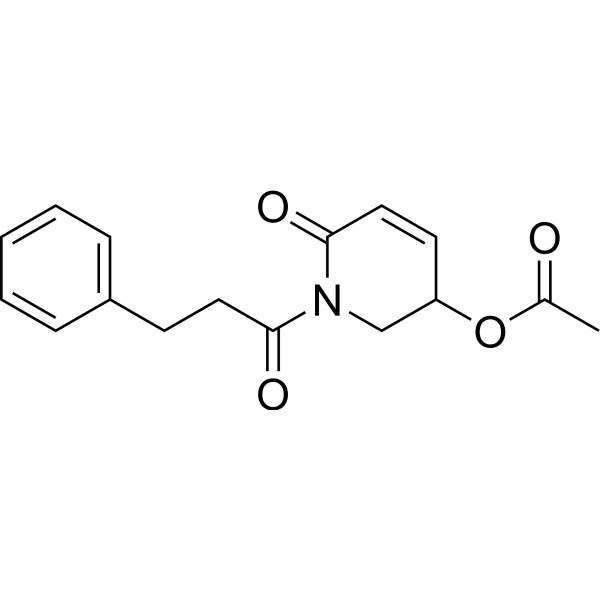 0 ImagesCat. No.: HY-N12158CAS No.: 71627-22-0Pipermethystine is an alkaloid that can be isolated from the Kava plant. Pipermethystine decreases HepG2 cell cellular ATP levels, mitochondrial membrane potential, and induces apoptosis.
-
Taltobulin intermediate-12
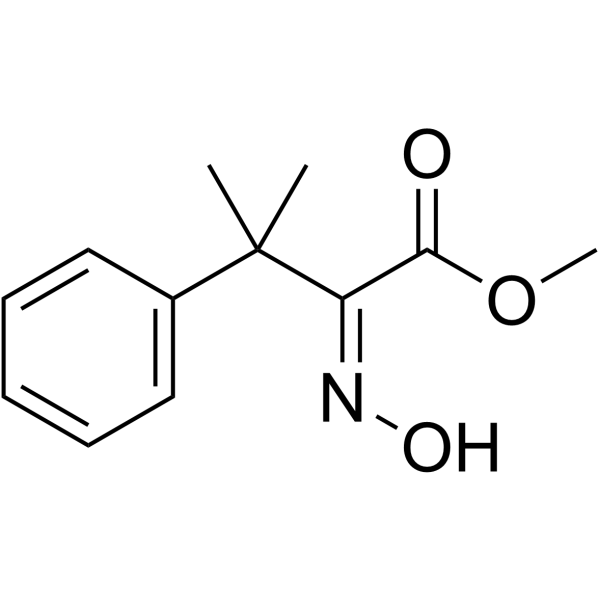 0 ImagesCat. No.: HY-46006Taltobulin intermediate-12 is an intermediate in the synthesis of Taltobulin (HY-15584). Taltobulin is a common toxin component in ADC preparation (ADC Cytotoxin), and it is also a powerful tubulin (Microtubule/Tubulin) inhibitor. Taltobulin disrupts tubulin polymerization, induces mitotic arrest, and induces apoptosis.
-
Diclofenac diethylamine (Standard)
 0 ImagesDiclofenac (diethylamine) (Standard) is the analytical standard of Diclofenac (diethylamine). This product is intended for research and analytical applications. Diclofenac diethylamine is a potent and nonselective anti-inflammatory agent, acts as a COX inhibitor, with IC50s of 4 and 1.3 nM for human COX-1 and COX-2 in CHO cells, and 5.1 and 0.84 μM for ovine COX-1 and COX-2, respectively. Diclofenac diethylamine induces apoptosis of neural stem cells (NSCs) via the activation of the caspase cascade.

-
Onvansertib (Standard)
 0 ImagesCat. No.: HY-15828RCAS No.: 1034616-18-6Onvansertib (Standard) is the analytical standard of Onvansertib (HY-15828). This product is intended for research and analytical applications. NMS-1286937 is a potent, selective and orally available PLK1 inhibitor, with an IC50 of 2 nM.
-
Astragaloside III (Standard)
 0 ImagesCat. No.: HY-N0434RCAS No.: 84687-42-3Astragaloside III (Standard) is the analytical standard of Astragaloside III (HY-N0434). This product is intended for research and analytical applications. Astragaloside III is a triterpenoid saponin. Astragaloside III can be extracted from Astragalus root. Astragaloside III increases NKG2D and induces TACE phosphorylation. Astragaloside III induces Apoptosis. Astragaloside III has antiviral activity against dengue serotypes 1 and 3. Astragaloside III has anticancer activity against breast and colon cancer.
-
EGFR-IN-12 (Standard)
 0 ImagesCat. No.: HY-17499RCAS No.: 879127-07-8EGFR-IN-12 (Standard) is the analytical standard of EGFR-IN-12. This product is intended for research and analytical applications. EGFR-IN-12 is a 4,6-disubstituted pyrimidine and is a potent, ATP-competitive, irreversible and highly selective EGFR inhibitor with an IC50of 21 nM. EGFR-IN-12 also inhibits mutant EGFRL858R and EGFRL861Q with IC50s of 63 nM and 4 nM, respectively. EGFR-IN-12 displays strong selectivity for EGFR over HER4 (IC50 = 7640 nM) and a panel of 55 other kinases. EGFR-IN-12 induces cells apoptosis and has antitumor activity.
-
2,4-D (Standard)
 0 ImagesSynonyms: 2,4-Dichlorophenoxyacetic acid (Standard)2,4-D (Standard) is the analytical standard of 2,4-D (HY-18572). This product is intended for research and analytical applications. 2,4-D (2, 4-dichlorophenoxyacetic acid) is a selective herbicide that can be used for the control of broad-leaved weeds. 2,4-D can induce apoptosis. 2,4-D inhibits DNA and protein synthesis, thereby preventing normal plant growth and development.




