



CDK
Cyclin dependent kinase
CDKs (Cyclin-dependent kinases) are serine-threonine kinases first discovered for their role in regulating the cell cycle. They are also involved in regulating transcription, mRNA processing, and the differentiation of nerve cells. CDKs are relatively small proteins, with molecular weights ranging from 34 to 40 kDa, and contain little more than the kinase domain. In fact, yeast cells can proliferate normally when their CDK gene has been replaced with the homologous human gene. By definition, a CDK binds a regulatory protein called a cyclin. Without cyclin, CDK has little kinase activity; only the cyclin-CDK complex is an active kinase.
There are around 20 Cyclin-dependent kinases (CDK1-20) known till date. CDK1, 4 and 5 are involved in cell cycle, and CDK 7, 8, 9 and 11 are associated with transcription.
CDK levels remain relatively constant throughout the cell cycle and most regulation is post-translational. Most knowledge of CDK structure and function is based on CDKs of S. pombe (Cdc2), S. cerevisia (CDC28), and vertebrates (CDC2 and CDK2). The four major mechanisms of CDK regulation are cyclin binding, CAK phosphorylation, regulatory inhibitory phosphorylation, and binding of CDK inhibitory subunits (CKIs).
CDK Isoform Specific Products
-
CDK
(487)
View all products
-
CDK1
(196)
View all products
-
CDK2
(315)
View all products
-
CDK3
(28)
View all products
-
CDK4
(233)
View all products
-
CDK5
(98)
View all products
-
CDK6
(178)
View all products
-
CDK7
(119)
View all products
-
CDK8
(57)
View all products
-
CDK9
(205)
View all products
-
CDK11
(9)
View all products
-
CDK12
(53)
View all products
-
CDK13
(27)
View all products
-
CDK14
(6)
View all products
-
CDK16
(8)
View all products
-
CDK19
(25)
View all products
-
CDC
(21)
View all products
-
CLK
(31)
View all products
-
Pho85
(1)
View all products
-
CDK10
(1)
View all products
-
CDK15
(1)
View all products
-
CDK17
(2)
View all products
-
CDK18
(1)
View all products
-
CDK20
(1)
View all products
-
PITSLRE
(1)
View all products
All Product Categories
-
CDK Inhibitors
(1077)
View all products
-
CDK Agonists
(3)
View all products
-
CDK Antagonists
(2)
View all products
-
CDK Activators
(18)
View all products
-
CDK Modulators
(15)
View all products
-
CDK Degraders
(95)
View all products
-
CDK Controls
(4)
View all products
-
CDK Substrate
(1)
View all products
-
CDK Ligands
(16)
View all products
-
Cyclin-Dependent Kinases (CDKs) Proteins
(80)
View all products
-
Cyclin Dependent Kinase 1 (CDK1) Proteins
(9)
View all products
-
Cyclin-Dependent Kinase 2 (CDK2) Proteins
(12)
View all products
-
Cyclin-Dependent Kinase 3 (CDK3) Proteins
(6)
View all products
-
Cyclin-Dependent Kinase 4 (CDK4) Proteins
(4)
View all products
-
Cyclin-Dependent Kinase 5 (CDK5) Proteins
(5)
View all products
-
Cyclin-Dependent Kinase 6 (CDK6) Proteins
(6)
View all products
-
Cyclin-Dependent Kinase 7 (CDK7) Proteins
(4)
View all products
-
CDK Related Products (1353)
Related Products (1353)

-
Recombinant Proteins (82)
-
Antibodies (42)
-
CDK Isoform Comparison
-
(S)-JNJ-3738
 0 ImagesCat. No.: HY-172194ACAS No.: 2796279-22-4
-
Cdk2/Cyclin Inhibitory Peptide I acetate
 0 ImagesCat. No.: HY-P3730APurity: 99.61%Cdk2/Cyclin Inhibitory Peptide I (Tat-LFG) acetate, a CDK2 inhibitor, kills U2OS osteosarcoma cells in a dose-dependent manner.
-
KWZY-11
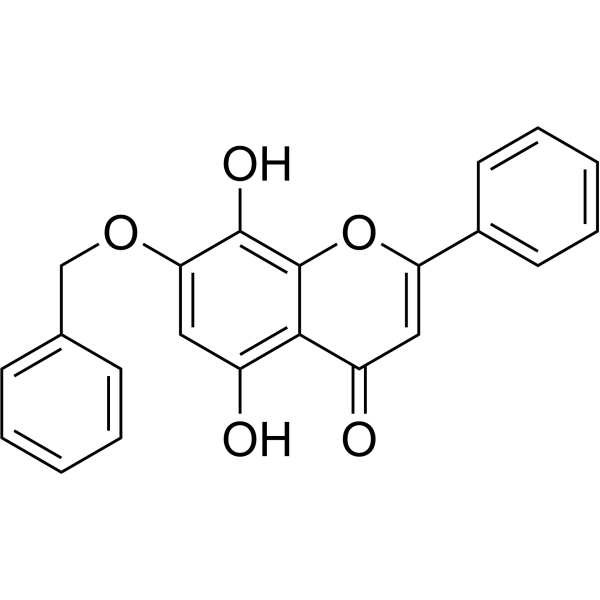
 0 ImagesCat. No.: HY-176713CAS No.: 3077131-44-0KWZY-11 (Compound 11) is a potent PARP/CDK6 dual inhibitor with IC50 values of 156.8, 197.3, and 13.3 nM for PARP1, PARP2, and CDK6, respectively. KWZY-11 inhibits tumor cell proliferation by regulating the Wnt/β-catenin signaling pathway. KWZY-11 induces excessive DNA damage and apoptosis in MDA-MB-231 breast cancer cells.

-
TMX-2138
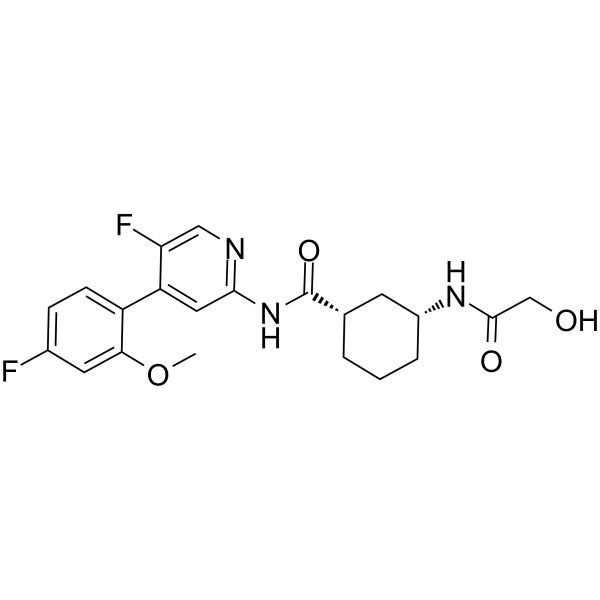
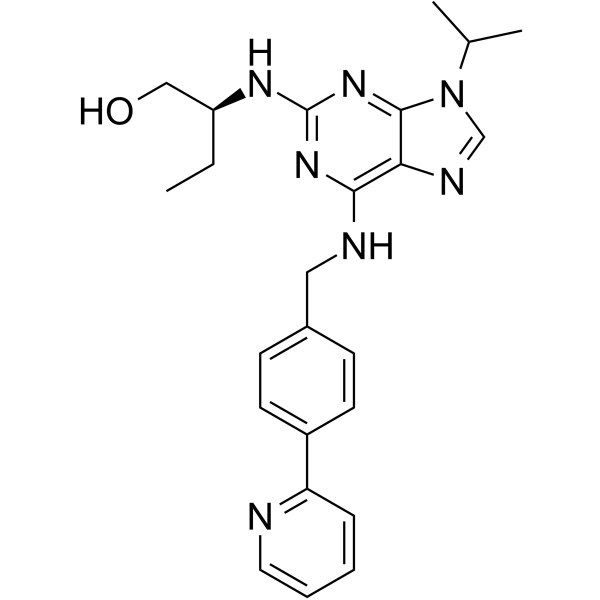
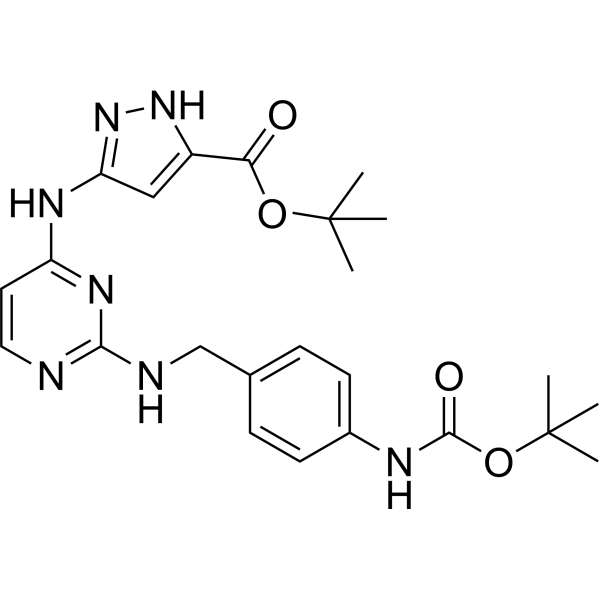
 0 ImagesTMX-2138 is a CDK PROTAC degrader, with IC50 values against different targets as follows: CDK1 (IC50 = 8.7 nM), CDK2 (IC50 = 10.9 nM), CDK5 (IC50 = 7.0 nM), CDK4 (IC50 = 901.0 nM), CDK6 (IC50 = 465.0 nM), CDK7 (IC50 = 286.0 nM), and CDK9 (IC50 = 25.7 nM). TMX-2138 promotes the ubiquitination of CDK and induces its degradation via the proteasomal pathway. TMX-2138 can be used in ovarian cancer research.
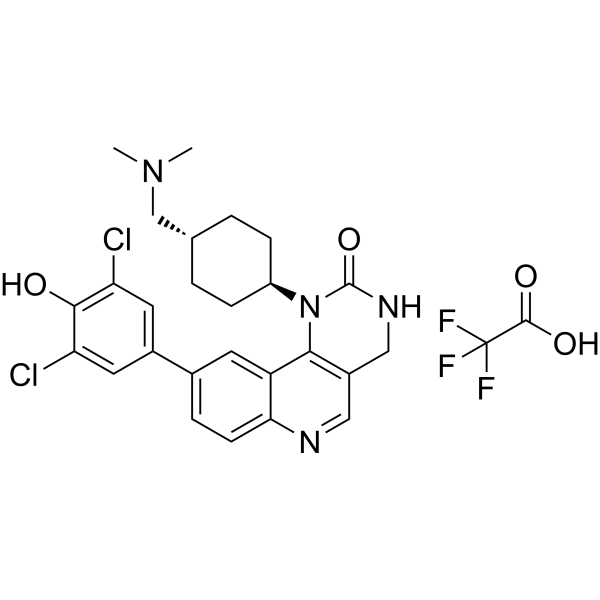
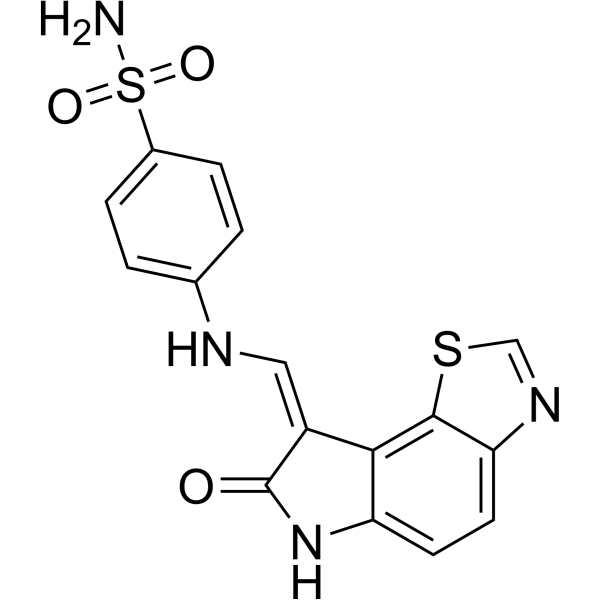
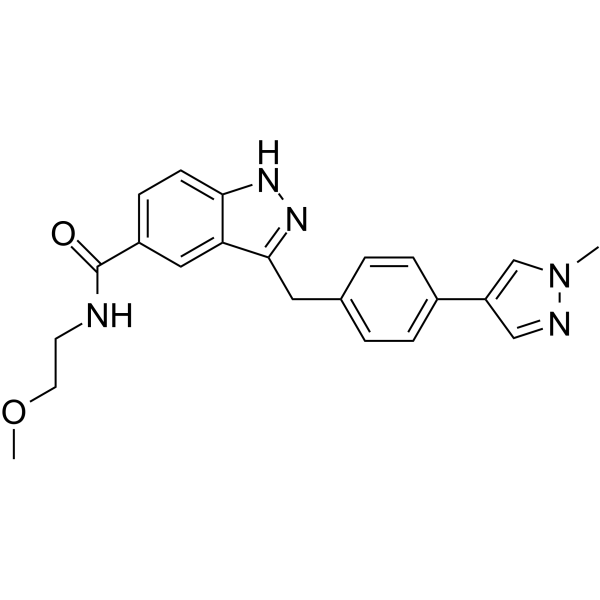
-
(E/Z)-THZ1 dihydrochloride
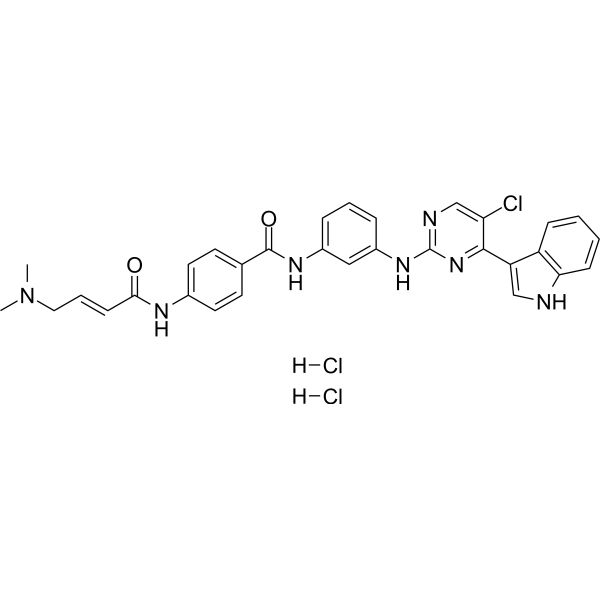 0 ImagesCat. No.: HY-80013BCAS No.: 2095433-94-4(E/Z)-THZ1 dihydrochloride is a selective inhibitor of CDK7 with an IC50 of 3.2 nM. (E/Z)-THZ1 dihydrochloride has antiproliferative effect.

-
2,4,6-Trihydroxybenzoic acid (Standard)
 0 Images2,4,6-Trihydroxybenzoic acid (Standard) is the analytical standard of 2,4,6-Trihydroxybenzoic acid (HY-W077292). This product is intended for research and analytical applications. 2,4,6-Trihydroxybenzoic acid is a CDK inhibitor that dose-dependently inhibits recombinant CDK1, CDK2, and CDK4 with IC50 values of 580, 262, and 403 μM, respectively. 2,4,6-Trihydroxybenzoic acid is also a flavonoid metabolite. Cellular uptake of 2,4,6-Trihydroxybenzoic acid depends on functional SLC5A8. 2,4,6-Trihydroxybenzoic acid can be used in colorectal cancer-related research.
-
Cyproheptadine hydrochloride sesquihydrate (Standard)
 0 ImagesCyproheptadine hydrochloride sesquihydrate (Standard) is the analytical standard of Cyproheptadine hydrochloride sesquihydrate (HY-B1165). This product is intended for research and analytical applications. Cyproheptadine hydrochloride sesquihydrate acts as a p38 MAP kinase activator, CHK2 activator, histamine H1 receptor inhibitor and serotonin receptor inhibitor. Cyproheptadine hydrochloride sesquihydrate mediates cell cycle arrest via G1 phase arrest, G1/S transition arrest, G0/G1 phase arrest, reduced expression of cyclins D1/D2/D3, upregulated expression of HBP1, p16, p21, p27, and decreased phosphorylation of retinoblastoma protein. Cyproheptadine hydrochloride sesquihydrate induces Apoptosis by increasing PARP and cleaved PARP, as well as activating the mitochondrial caspase pathway. Cyproheptadine hydrochloride sesquihydrate inhibits tumor growth with extremely low toxicity to normal cells. Cyproheptadine hydrochloride sesquihydrate can be used in research related to hepatocellular carcinoma, multiple myeloma and acute myeloid leukemia.
-
AT7519 Hydrochloride (Standard)
 0 ImagesAT7519 (Hydrochloride) (Standard) is the analytical standard of AT7519 (Hydrochloride). This product is intended for research and analytical applications. AT7519 Hydrochloride is a potent inhibitor of CDKs, with IC50s of 210, 47, 100, 13, 170, and <10 nM for CDK1, CDK2, CDK4 to CDK6, and CDK9, respectively.
-
Olomoucine II
 0 ImagesCat. No.: HY-112450CAS No.: 500735-47-7Olomoucine II is a potent CDK inhibitor with IC50 values of 0.06, 0.1, 0.45, 7.6, 19.8 µM for CDK9/cyclin T, CDK2/cyclin E, CDK7/cyclin H, CDK1/cyclin B, CDK4/cyclin D1, respectively. Olomoucine II shows antiproliferative activity.
-
(S)-(-)-O-Demethylbuchenavianine
 0 ImagesCat. No.: HY-N12625ACAS No.: 91147-18-1
-
CDK4-IN-1
 0 ImagesCat. No.: HY-15612CAS No.: 1256963-02-6CDK4 inhibitor is a novel and specific CDK4/Cyclin D1 inhibitor with an IC50 of 10 nM; 1500 and 500 fold than CDK1/Cyclin B (IC50>15 uM) and CDK2/Cyclin A (IC50=5.265 uM) respectively.




