



ERK
Extracellular signal regulated kinases
ERKs (Extracellular-signal-regulated kinases) are widely expressed protein kinase intracellular signalling molecules that are involved in functions including the regulation of meiosis, mitosis, and postmitotic functions in differentiated cells. Many different stimuli, including growth factors, cytokines, virus infection, ligands for heterotrimeric G protein-coupled receptors, transforming agents, and carcinogens, activate the ERK pathway. In the MAPK/ERK pathway, Ras activates c-Raf, followed by mitogen-activated protein kinase kinase (abbreviated as MKK, MEK, or MAP2K) and then MAPK1/2 (below). Ras is typically activated by growth hormones through receptor tyrosine kinases and GRB2/SOS, but may also receive other signals. ERKs are known to activate many transcription factors, such as ELK1, and some downstream protein kinases. Disruption of the ERK pathway is common in cancers, especially Ras, c-Raf and receptors such as HER2.
ERK Isoform Specific Products
All Product Categories
-
ERK Inhibitors
(762)
View all products
-
ERK Agonists
(10)
View all products
-
ERK Activators
(267)
View all products
-
ERK Modulators
(19)
View all products
-
ERK Chemical
(1)
View all products
-
ERK Inducers
(17)
View all products
-
ERK Degraders
(2)
View all products
-
ERK Controls
(3)
View all products
-
ERK Ligands
(2)
View all products
-
ERK Related Products (1167)
Related Products (1167)

-
Antibodies (22)
-
ERK Isoform Comparison
-
Acenocoumarol-d4
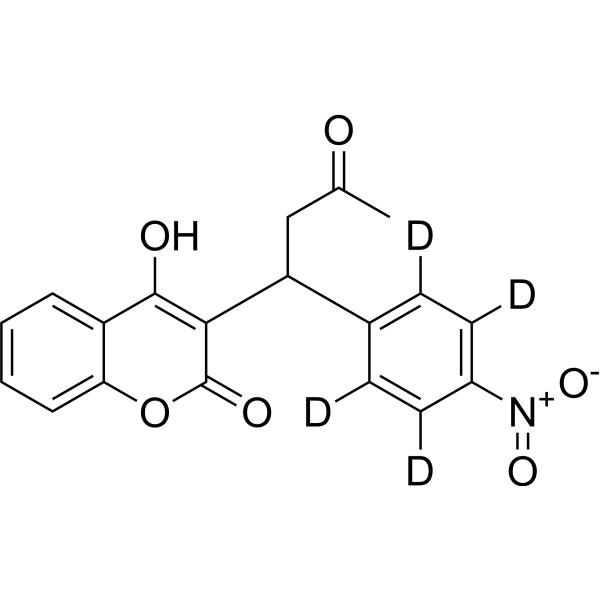 0 ImagesCat. No.: HY-B1014S1CAS No.: 2937878-24-3Acenocoumarol-d4 is deuterium labeled Acenocoumarol (HY-B1014). Acenocoumarol is an anticoagulant that functions as a Vitamin K antagonist. Acenocoumarol inhibits MAPK/ERK/JNK signaling pathway, reduces the nuclear translocation of NF-κB p65, activates Akt/GSK3β signaling pathway. Acenocoumarol induces apoptosis in cell A549, arrests cell cycle at S phase.
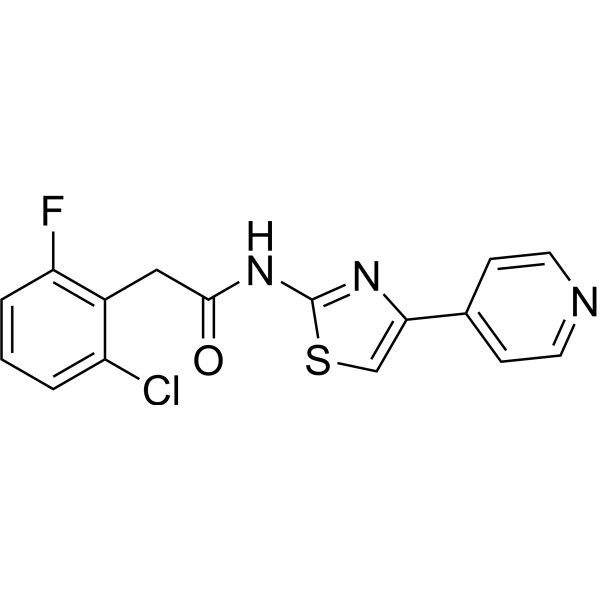
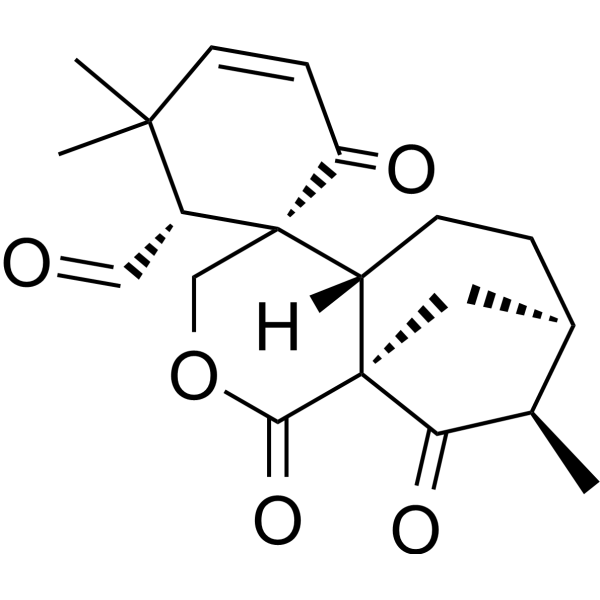
-
HYD-1
 0 ImagesCat. No.: HY-P11716CAS No.: 351327-13-4HYD-1 is a D-amino acid tumor cell adhesion peptide. HYD-1 contains overlapping linear peptide elements required for adhesion, migration blocking, and ERK signaling activation. HYD-1 supports adhesion of breast, prostate, ovarian, and pancreatic tumor cells, and shows no effect on tumor cell cycle distribution. HYD-1 can be used for the research of prostate cancer.
-
Cm-CATH2
 0 ImagesCat. No.: HY-P11242Cm-CATH2 is an antimicrobial peptide discovered from Chelonia mydas. Cm-CATH2 has a potent, broad-spectrum and rapid bactericidal ability by rapidly destroying the integrity of bacterial cell membranes. It shows strong activity against Gram-positive bacteria (such as VREF, Staphylococcus aureus), Gram-negative bacteria (such as Escherichia coli, Klebsiella pneumoniae), and fungi (such as Candida albicans) with MICs ranges from 1.17 to 18.75 μg/mL. Cm-CATH2 is also effective against various aquatic pathogenic bacteria. Cm-CATH2 not only inhibits biofilm formation but can also remove the formed biofilms. Cm-CATH2 has immunomodulatory functions and chemotactic effects on immune cells, and can inhibit the production of pro-inflammatory cytokines by macrophages stimulated by LPS (HY-D1056). Cm-CATH2 prevents the activation of NF-κB by inhibiting the degradation of IκBα, and also inhibits the phosphorylation of MAPK signaling pathways (p38, JNK, ERK). Cm-CATH2 demonstrates strong anti-infective ability in mouse peritonitis models and pneumonia models.

-
MK-8353 hydrochloride
 0 ImagesCat. No.: HY-111407ACAS No.: 1951448-73-9Synonyms: SCH900353 hydrochloride; MK-8353-001MK-8353 (SCH900353) hydrochloride is a potent, selective, orally active ERK1/2 inhibitor with IC50 values of 23.0 nM and 8.8 nM, respectively. MK-8353 exhibits antitumor activity.
-
RWT9996
 0 ImagesCat. No.: HY-179606CAS No.: 2877694-62-5RWT9996 is a GPR17 antagonist. RWT9996 inhibits GPR17-mediated signal transduction processes, including G protein activation and β-arrestin-2 recruitment. RWT9996 inhibits MDL-29951 (HY-16312)-mediated phosphorylation of ERK1/2, phosphorylation of CREB, and accumulation of inositol phosphate (IP1) in oligodendrocyte precursor cells in vitro. RWT9996 can be used in studies related to demyelinating diseases.
-
Jujuboside B (Standard)
 0 ImagesCat. No.: HY-N0660RCAS No.: 55466-05-2Jujuboside B (Standard) is the analytical standard of Jujuboside B. This product is intended for research and analytical applications. Jujuboside B is a bioactive saponin component isolated from Ziziphi Spinosae Semen (sour jujube seed), with oral efficacy and blood-brain barrier permeability. Jujuboside B induces acute leukemia cell death and drives necroptosis apoptosis by activating the RIPK1/RIPK3/MLKL pathway. Jujuboside B upregulates the expression of NOXA, PARP and caspase-3, activates AMPK, inhibits the proliferation of breast cancer cells, and induces cell apoptosis and autophagy. Jujuboside B inhibits angiogenesis and tumor growth by blocking the VEGFR-2 signaling pathway. Jujuboside B alleviates liver injury in mice by regulating the Nrf2-STING signaling pathway. Jujuboside B alleviates liver injury by regulating anti-inflammatory responses and downregulating the expression of 11β-HSD2. Jujuboside B induces ferroptosis and overcomes radioresistance in non-small cell lung cancer via the PPARγ-ATF3-Gpx4 signaling pathway. Jujuboside B exerts inhibitory effects on platelet aggregation. Jujuboside B inhibits febrile seizures by suppressing the activity of AMPA receptors. Jujuboside B reverses chronic unpredictable mild stress-promoted tumor progression by blocking the PI3K/Akt and MAPK/ERK pathways and dephosphorylating CREB signaling. Jujuboside B is applicable to related studies on acute leukemia, breast cancer, PM2.5-induced lung injury, hepatotoxicity, liver injury, colorectal cancer, non-small cell lung cancer, thromboembolic diseases, cardiovascular diseases associated with high platelet aggregation, febrile seizures, and depressive-like phenotypes.
-
HDB-1
 0 ImagesHDB-1 is a selective inhibitor of the P2Y14 receptor (P2Y14R) with an IC50 of 26 pM. HDB-1 shows no significant inhibition on P2Y1R, P2Y2R, P2Y4R, P2Y6R, and P2Y12R. HDB-1 blocks the activation of hepatic stellate cells (HSC) by inhibiting the PKA/Raf1/MEK/ERK signaling pathway mediated by P2Y14R, thereby alleviating the core pathological process of liver fibrosis. HDB-1 can be used for the study of liver fibrosis.
-
Aspafilioside B
 0 ImagesCat. No.: HY-122465CAS No.: 131123-73-4Aspafilioside B is a steroidal saponin. Aspafilioside B is extractable from Asparagus filicinus. Aspafilioside B activates the ERK, c-Raf and p38 MAPK signaling pathways, and upregulates H-Ras and N-Ras. Aspafilioside B mediates G2/M cell cycle arrest by altering the expression of cell cycle regulatory proteins. Aspafilioside B induces Apoptosis. Aspafilioside B increases intracellular ROS levels. Aspafilioside B is applicable to research related to hepatocellular carcinoma.
-
Trilinolein-d5
 0 ImagesCat. No.: HY-128393S2Trilinolein-d5 is the deuterium labeled Trilinolein (HY-128393). Trilinolein is an orally active triglyceride that inhibits the PI3K/Akt, Ras/MEK/ERK signaling pathways, and MMP-2. Trilinolein can reduce oxidative stress, induce apoptosis, and inhibit cell migration. Trilinolein can be used in the research fields of cardiovascular disease, cerebrovascular disease (such as cerebral ischemia), and non-small cell lung cancer.
-
SF-9-2
 0 ImagesCat. No.: HY-175236CAS No.: 3053768-78-5SF-9-2 is a PD-L1/PD-1 binding inhibitor (IC50 = 24.9 nM). SF-9-2 inhibits epithelial-mesenchymal transition, migration, invasion, and proliferation of SK-N-SH cells, and also induces apoptosis and cell cycle arrest. SF-9-2 blocks PD-L1-induced SK-N-SH cell growth through the MAPK signaling pathway. SF-9-2 restores GSK-3β activity and enhances PD-L1 degradation through the ubiquitin-proteasome pathway. SF-9-2 inhibits tumor growth in the SK-N-SH NOG mouse model without significant toxicity. SF-9-2 also acts as an immune checkpoint inhibitor, blocking PD-L1 to restore T cell function. SF-9-2 can be used in neuroblastoma research.
-
PROTAC CB1R Degrader-1
 0 ImagesCat. No.: HY-178176PROTAC CB1R Degrader-1 is a potent and selective CB1R PROTAC degrader that exploits the ubiquitin-proteasome system (UPS) achieving a DC50 of 3.37 μM in MCF-7 cells and showing no impact on CB2R. PROTAC CB1R Degrader-1 reduces CB1R-associated downstream signaling (p-AKT, p-ERK, BCL2, and MCM5), thereby inhibiting breast cancer cell proliferation and inducing apoptosis. PROTAC CB1R Degrader-1 can be used for breast cancer research.
-
Lazertinib mesylate hydrate
 0 ImagesCat. No.: HY-109061ACAS No.: 2411549-88-5Synonyms: YH25448 mesylate hydrate; GNS-1480 mesylate hydrateLazertinib (YH25448; GNS-1480) mesylate hydrate is an orally active, blood-brain barrier permeable third-generation EGFR tyrosine kinase inhibitor, as well as an ABCB1/ABCG2 inhibitor and a TRPA1 activator. Lazertinib mesylate hydrate exhibits IC50 values of 0.4 mM and 0.2 mM against human ABCB1 and ABCG2, respectively. By inhibiting mutant EGFR signaling, EGFR phosphorylation and the downstream ERK/AKT pathway, as well as upregulating surface expression of EGFR/MET, Lazertinib mesylate hydrate induces cell cycle arrest, apoptosis, spontaneous calcium responses, hyperexcitability of dorsal root ganglion (DRG) neurons, and TRPA1-dependent pain-like behaviors. Lazertinib mesylate hydrate competitively binds to the substrate-binding sites of ABCB1/ABCG2, stimulates their ATPase activity without altering their expression or plasma membrane localization, thereby enhancing ADCC activity, acting as a chemosensitizer, and reversing ABCB1-mediated multidrug resistance. It exerts antitumor activity as a single agent or in combination with other drugs. Lazertinib mesylate hydrate is applicable to research related to non-small cell lung cancer, multidrug-resistant cancers, and paresthesia.
-
Pamoic acid (Standard)
 0 ImagesSynonyms: Embonic acid (Standard)Pamoic acid (Standard) is the analytical standard of Pamoic acid. This product is intended for research and analytical applications. Pamoic acid (Embonic acid) is a potent GPR35 agonist with an EC50 of 79 nM. Pamoic acid exhibits neuroprotective and anti-inflammatory properties.
-
Zoniporide mesylate
 0 ImagesCat. No.: HY-105064ACAS No.: 249296-45-5Synonyms: CP-597396 mesylateZoniporide mesylate (CP-597396 mesylate) is a selective Na+/H+ exchanger subtype 1 (NHE1) inhibitor with cardioprotective activity, with IC50 values of 67 nM and 73 nM against rat NHE1. Zoniporide mesylate reduces intracellular Na+ and Ca2+ overload, preserves mitochondrial integrity, activates pro-survival ERK1/2 and STAT3 signaling pathways, reduces necrosis and apoptosis, and decreases neutrophil aggregation. Zoniporide mesylate is applicable to research related to myocardial ischemia-reperfusion injury and heart graft ischemia-reperfusion injury.
-
ETI41
 0 ImagesCat. No.: HY-178166CAS No.: 2773474-99-8ETI41 is an orally active, selective TLR inhibitor that targets the nucleoside-binding Site I on TLR7 (IC50 = 0.63 μM) and TLR9 (IC50 = 0.16 μM), sparing surface TLRs (including TLR1/TLR2, TLR2/TLR6, TLR4 and TLR5). ETI41 potently inhibits endosomal TLR-mediated pro-inflammatory signaling with nanomolar activity in cellular, biophysical and in vivo assays. ETI41 suppresses the expression of inflammation-associated genes and effectively ameliorates symptoms in mouse models of psoriasis, and systemic lupus erythematosus (SLE). ETI41 can be used for autoimmune and inflammatory diseases research.
-
ERK5-IN-3
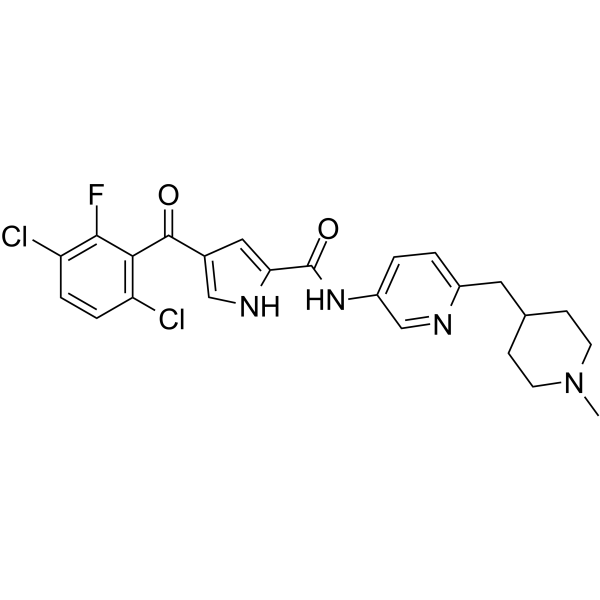 0 ImagesCat. No.: HY-150605CAS No.: 1888305-85-8ERK5-IN-3 (compound 33j) is a potent and selective ERK5 (extracellular signal-related kinase 5) inhibitor, with an IC50 of 6 nM. ERK5-IN-3 shows antiproliferation activity against Hela cells, with an IC50 of 31 nM.
-
LYP-IN-5
 0 ImagesCat. No.: HY-182299CAS No.: 459853-10-2LYP-IN-5 is a lymphoid tyrosine phosphatase (LYP) inhibitor with an IC50 value of 20.6 μM. LYP-IN-5 enhances the phosphorylation of ZAP70 and ERK1/2 following TCR stimulation, and promotes T cell activation. LYP-IN-5 can be used in the research of autoimmune diseases.




