



ERK
Extracellular signal regulated kinases
ERKs (Extracellular-signal-regulated kinases) are widely expressed protein kinase intracellular signalling molecules that are involved in functions including the regulation of meiosis, mitosis, and postmitotic functions in differentiated cells. Many different stimuli, including growth factors, cytokines, virus infection, ligands for heterotrimeric G protein-coupled receptors, transforming agents, and carcinogens, activate the ERK pathway. In the MAPK/ERK pathway, Ras activates c-Raf, followed by mitogen-activated protein kinase kinase (abbreviated as MKK, MEK, or MAP2K) and then MAPK1/2 (below). Ras is typically activated by growth hormones through receptor tyrosine kinases and GRB2/SOS, but may also receive other signals. ERKs are known to activate many transcription factors, such as ELK1, and some downstream protein kinases. Disruption of the ERK pathway is common in cancers, especially Ras, c-Raf and receptors such as HER2.
ERK Isoform Specific Products
All Product Categories
-
ERK Inhibitors
(762)
View all products
-
ERK Agonists
(10)
View all products
-
ERK Activators
(267)
View all products
-
ERK Modulators
(19)
View all products
-
ERK Chemical
(1)
View all products
-
ERK Inducers
(17)
View all products
-
ERK Degraders
(2)
View all products
-
ERK Controls
(3)
View all products
-
ERK Ligands
(2)
View all products
-
ERK Related Products (1167)
Related Products (1167)

-
Antibodies (22)
-
ERK Isoform Comparison
-
Anticancer agent 231
 0 ImagesCat. No.: HY-162575CAS No.: 128519-30-2Anticancer agent 231 (Compound P5) is a tyrosine protein kinase inhibitor with a IC50 value of 3.95 μM. Anticancer agent 231 inhibits the cell viability, cell proliferation, cell migration and cancer dryness of triple negative breast cancer (TNBC) cells by targeting EGFR-ERK 1/2 signaling pathway, and is expected to play an important role in the field of TNBC disease therapy.
-
Polfurmetinib hydrate
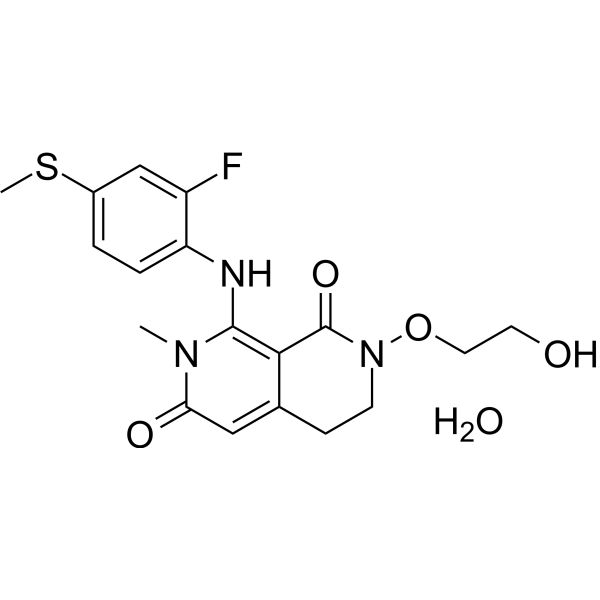 0 ImagesCat. No.: HY-153445ACAS No.: 2845153-35-5Synonyms: MEK-IN-6 hydrate
-
Geranylgeranyl pyrophosphate
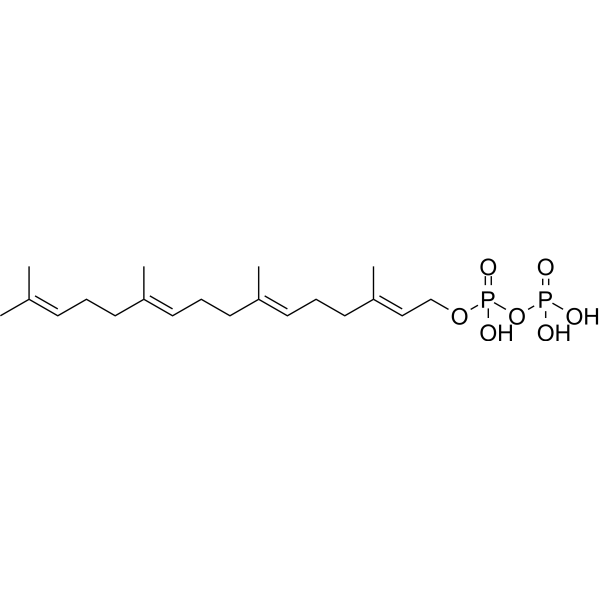 0 ImagesGeranylgeranyl pyrophosphate is a type of isoprenoid metabolic intermediate, mainly synthesized through the mevalonate pathway. Geranylgeranyl pyrophosphate is a key precursor in various biological synthesis processes, especially as a necessary substrate for post-translational modification of proteins - geranylgeranyl phosphorylation. Geranylgeranyl pyrophosphate regulates various cellular processes and disease progression through protein geranylgeranyl phosphorylation, such as activating the YAP signaling pathway, promoting cell proliferation and inhibiting apoptosis; promoting IL-2 production and STAT5 phosphorylation; and influencing metabolic homeostasis and cancer, etc.
-
DDN
 0 ImagesCat. No.: HY-138842CAS No.: 118006-14-7DDN is a selective insulin receptor (Insulin Receptor) activator, an insulin sensitizer, and a glucose-lowering insulin mimetic with oral bioavailability. DDN can directly bind to the receptor kinase domain and induce Akt and ERK phosphorylation, and it can also enhance insulin's effect on glucose uptake. DDN significantly reduces blood glucose levels in wild-type and diabetic ob/ob and db/db mice.
-
DSO-5a
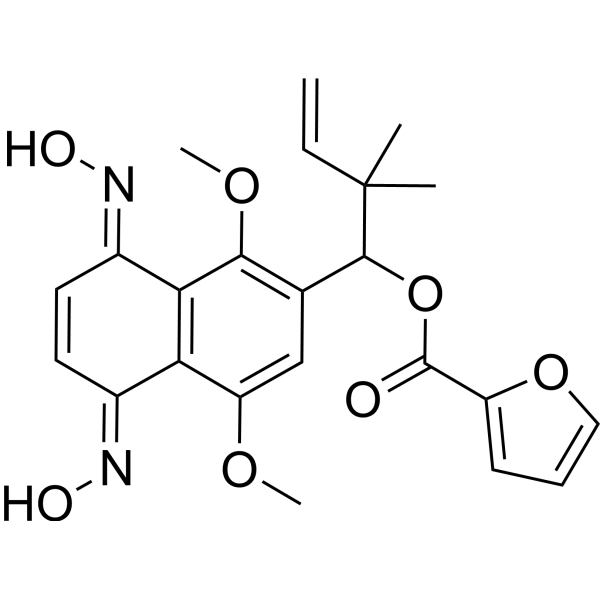 0 ImagesCat. No.: HY-154985CAS No.: 2195411-63-1DSO-5a is a potent, selective, orally active BB3 agonist. DSO-5a is a representative DMAKO-00 derivative compound. DSO-5a upregulates ppar-γ activity through BB3 and activates ERK1/2 phosphorylation. DSO-5a can be used in diabetes-related research.
-
Pizotyline-d3
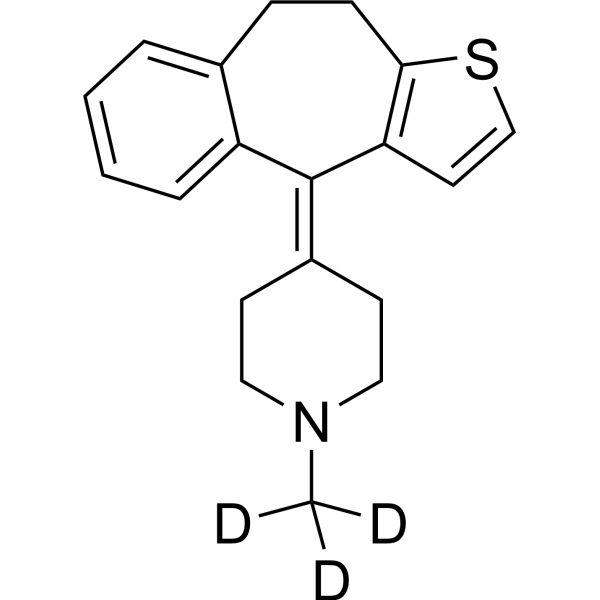 0 ImagesCat. No.: HY-B0115SSynonyms: Pizotyline-d3; BC-105-d3Pizotyline-d3 (BC-105-d3) is the d3-labeled Pizotifen (HY-B0115). Pizotifen (Pizotyline) is a 5-HT2 receptor antagonist. Pizotifen inhibits the Wnt/β-catenin-EMT signaling pathway and induces mitochondria-mediated Apoptosis. Pizotifen causes transient ERK1/2 phosphorylation and restores ATP. Pizotifen blocks Serotonin (HY-B1473A)-mediated platelet activation, inhibits Serotonin-enhanced ADP-induced platelet aggregation, and prolongs carotid artery occlusion and tail bleeding time. Pizotifen exhibits anticancer activity against gastric cancer and colon cancer. Pizotifen exerts neuroprotective effects in the striatum of R6/2 mice. Pizotifen can be used for research on gastric cancer, colon cancer, Huntington's disease, metastasis, and thromboembolic diseases.
-
PROTAC Bcl-xL degrader-4
 0 ImagesCat. No.: HY-176740CAS No.: 2930759-37-6PROTAC Bcl-xL degrader-4 is a Bcl-xL PROTAC degrader. PROTAC Bcl-xL degrader-4 exhibits cytotoxicity against hepatocellular carcinoma cells, inhibits their migration and colony formation, and shows low cytotoxicity toward normal cells. PROTAC Bcl-xL degrader-4 induces apoptosis by reducing mitochondrial membrane potential and activating the MAPK signaling pathway. PROTAC Bcl-xL degrader-4 significantly suppresses tumor growth in xenograft tumor mouse models. PROTAC Bcl-xL degrader-4 can be used in hepatocellular carcinoma-related research.
-
EXP3179 (Standard)
 0 ImagesCat. No.: HY-114950RCAS No.: 114798-36-6Synonyms: Losartan Carboxaldehyde (Standard); DuP 167 (Standard)EXP3179 (Standard) (Losartan Carboxaldehyde (Standard)) is the analytical standard of EXP3179 (HY-114950). This product is intended for research and analytical applications. EXP3179 is a metabolite of Losartan (HY-17512). EXP3179 binds to AT1R with an affinity of 20 nM and blocks ANGII-induced AT1R signaling, inhibiting ERK1/2 activation. EXP3179 reduces NADPH oxidase activity. EXP3179 inhibits Phenylephrine (HY-B0769)-induced aortic contraction through an endothelium-dependent, NO-dependent mechanism. EXP3179 dose-dependently inhibits type I collagen-induced platelet aggregation and activation through GPVI binding, reducing platelet adhesion to the injured site. EXP3179 lowers blood pressure in normotensive and spontaneously hypertensive rats and mice. EXP3179 can be used for research on type 2 diabetes, hypertensive heart disease, hypertension, thrombosis, and coronary artery disease.
-
SST0116CL1 free base
 0 ImagesCat. No.: HY-164399ACAS No.: 1202920-93-1SST0116CL1 free base is a HSP90 inhibitor (IC50: 0.21 μM). SST0116CL1 free base binds to the ATP binding pocket of Hsp90, and interferes with Hsp90 chaperone function thus resulting in client protein (EGFR, CDK4 and AKT) degradation. SST0116CL1 free base induces degradation of Her2 in BT-474 cell (IC50: 0.2 μM). SST0116CL1 free base has antiproliferative activity and inhibits tumor growth. SST0116CL1 free base has antiproliferative activity and inhibits tumor growth. SST0116CL1 free base can be used for the study of leukemia, gastric and ovarian carcinoma.
-
GP369
 0 ImagesCat. No.: HY-P991583GP369 is a humanized FGFR2-IIIb-specific antibody. GP369 significantly inhibits the proliferation of tumor cells. GP369 can significantly inhibit phosphorylation of FGFR2 and downstream signaling pathways. GP369 can be used for research on cancer such as gastric cancer and breast cancer.
-
ERK5-IN-6
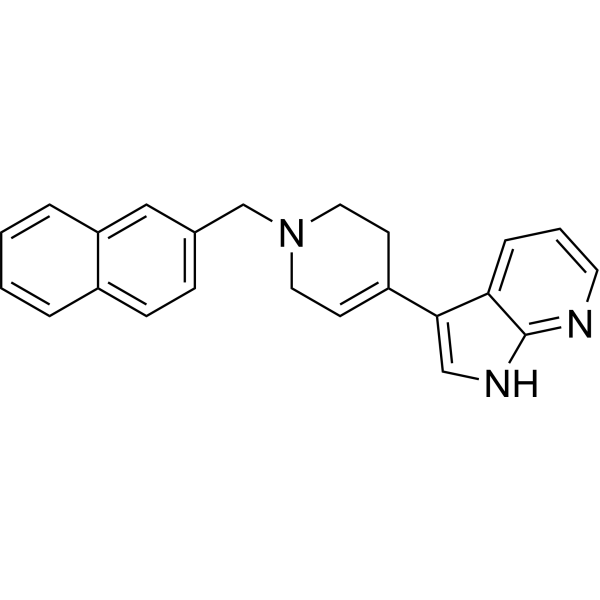 0 ImagesCat. No.: HY-156451CAS No.: 2734916-64-2ERK5-IN-6 (compound 5J) is an ERK5 kinase inhibitor with anticancer activity. ERK5-IN-6 exhibits good anti-proliferative activity with the IC50 value of 4.56 µg/mL for A549 cells.
-
Flavokawain A (Standard)
 0 ImagesFlavokawain A is a chalcone compound and an orally active inhibitor of PRMT5 and cytochrome P450. Flavokawain A has anti-inflammatory, anti-tumor, and immunomodulatory effects. Flavokawain A can inhibit the proliferation of tumor cells and induce apoptosis. Flavokawain A can be used in the research of diseases such as bladder cancer.
-
ETP-45835 dihydrochloride
 0 ImagesCat. No.: HY-110336CAS No.: 2136571-30-5D-106669 is an inhibitor of Erk2 with an IC50 value of 18.7 μM. D-106669 inhibits cell proliferation with an EC50 value of 0.9 μM.
-
Sitagliptin (Standard)
 0 ImagesCat. No.: HY-13749RCAS No.: 486460-32-6Synonyms: MK-0431 (Standard)Sitagliptin (Standard) is the analytical standard of Sitagliptin (HY-13749). This product is intended for research and analytical applications. Sitagliptin is an orally active and highly selective DPP4 inhibitor with an IC50 value of 19 nM. Sitagliptin blocks the degradation of glucagon-like peptide-1 (GLP-1) and glucose-dependent insulinotropic peptide (GIP) by competing inhibition mechanism (Kᵢ = 1 nM), thereby increasing the level of active incretin. Sitagliptin can also directly stimulate the secretion of GLP-1 by intestinal L cells by activating the cAMP/PKA and ERK1/2 pathways, and this effect is independent of DPP-4. Sitagliptin shows protective effects on pancreatic islet grafts in 1-type diabetes models. Sitagliptin can be used for the study of 1-type and 2-type diabetes.
-
26-Deoxyactein (Standard)
 0 ImagesCat. No.: HY-N6264RCAS No.: 264624-38-626-Deoxyactein (Standard) is the analytical standard of 26-Deoxyactein. This product is intended for research and analytical applications. 26-Deoxyactein is a constituent isolated from Cimicifuga racemosa, prevents TCDD-induced osteoblasts damage. 26-Deoxyactein inhibits increased AhR, CYP1A1 and ERK levels.
-
7α-Hydroxycholesterol (Standard)
 0 Images7α-Hydroxycholesterol is a cholesterol oxide and can serve as a biomarker for oxidative stress and lipid peroxidation. 7α-Hydroxycholesterol has cytotoxic and pro-inflammatory activities. 7α-Hydroxycholesterol can also inhibit sterol synthesis and reduce the activity of HMG-CoA reductase. 7α-Hydroxycholesterol can be used in the research of diseases such as diabetes and atherosclerosis.
-
Leupeptin hydrochloride
 0 ImagesCat. No.: HY-183478CAS No.: 39740-82-4Leupeptin hydrochloride is a broad-spectrum protease inhibitor. By inhibiting the activation of the PTEN/PI3K/Akt/NF-κB/ERK1/2/p38 signaling pathway, Leupeptin hydrochloride significantly reduces LPS-induced NO and ROS production, mitochondrial membrane potential hyperpolarization, phagocytic activity, pro-inflammatory cytokine release, and M1 polarization in mouse peritoneal macrophages, and reverses autophagic flux impairment. It also decreases Concanavalin A (HY-P2149)-induced proliferation index of mouse splenic lymphocytes and the Th1/IL-10 and Th2/IL-10 cytokine ratios, thereby modulating innate and adaptive immune responses. Leupeptin hydrochloride inhibits blood coagulation and tumorigenesis in mouse skin. Leupeptin hydrochloride can be used in research on chronic inflammatory diseases and skin tumorigenesis.
-
Trimebutine maleate (Standard)
 0 ImagesTrimebutine maleate (Standard) is the analytical standard of Trimebutine maleate (HY-B0380A). This product is intended for research and analytical applications. Trimebutine maleate is a multi-target inhibitor and opioid receptor agonist with antimuscarinic activity. Trimebutine maleate inhibits L-type Ca2+ channels and large-conductance calcium-activated potassium channels (BKCa channels), thereby inhibiting extracellular calcium influx and potassium ion efflux. Trimebutine maleate also targets Toll-like receptors, inhibits Toll-like receptor 2/4/7/8/9 signals, and inhibits LPS-induced IRAK1 activation, as well as ERK1/2, JNK and NF-κB activation, thereby exerting anti-inflammatory effects. Trimebutine maleate also induces tumor cell apoptosis by inhibiting the AKT/ERK pathway. Trimebutine maleate also inhibits excessive contraction of smooth muscle and can be used in the study of gastrointestinal disorders such as irritable bowel syndrome (IBS).
-
BMS-554417
 0 ImagesCat. No.: HY-10263CAS No.: 468741-42-6BMS-554417 is an orally active inhibitor of insulin receptor and insulin-like growth factor-I receptor (IGF-1R) kinases, with IC50 values of 50.6 nM and 67.9 nM, respectively. BMS-554417 blocks downstream signal transduction via the ERK and PI3K/Akt pathways. BMS-554417 induces G0-G1 cell cycle arrest, prevents cyclin D1 accumulation in the nucleus, triggers mitochondrial pathway-mediated apoptosis, promotes HER2 phosphorylation, and inhibits the proliferation and growth of cancer cells. BMS-554417 can be used in research related to colon cancer, ovarian cancer, and breast cancer.
-
2,5-Dihydroxyacetophenone (Standard)
 0 Images2,5-Dihydroxyacetophenone, isolated from Rehmannia glutinosa, inhibits the production of inflammatory mediators in activated macrophages by blocking the ERK1/2 and NF-κB signaling pathways.




