



MDM-2/p53
The p53 tumor suppressor is a principal mediator of growth arrest, senescence, and apoptosis in response to a broad array of cellular damage. p53 is a short-lived protein that is maintained at low, often undetectable, levels in normal cells. Under stress conditions, the p53 protein accumulates in the cell, binds in its tetrameric form to p53-response elements and induces the transcription of various genes.
MDM-2 is transcriptionally activated by p53 and MDM-2, in turn, inhibits p53 activity in several ways. MDM-2 binds to the p53 transactivation domain and thereby inhibits p53-mediated transactivation. MDM-2 also contains a signal sequence that is similar to the nuclear export signal of various viral proteins and, after binding to p53, it induces its nuclear export. As p53 is a transcription factor, it needs to be in the nucleus to be able to access the DNA; its transport to the cytoplasm by MDM-2 prevents this. Finally, MDM-2 is a ubiquitin ligase, so is able to target p53 for degradation by the proteasome.
In many tumors p53 is inactivated by the overexpression of the negative regulators MDM2 and MDM4 or by the loss of activity of the MDM2 inhibitor ARF. The pathway can be reactivated in these tumors by small molecules that inhibit the interaction of MDM2 and/or MDM4 with p53. Such molecules are now in clinical trials.
All Product Categories
-
MDM-2/p53 Inhibitors
(116)
View all products
-
MDM-2/p53 Agonists
(8)
View all products
-
MDM-2/p53 Antagonists
(4)
View all products
-
MDM-2/p53 Activators
(166)
View all products
-
MDM-2/p53 Modulators
(29)
View all products
-
MDM-2/p53 MDM2 Inhibitors
(65)
View all products
-
MDM-2/p53 p53 Activators
(115)
View all products
-
MDM-2/p53 p53 Inhibitors
(16)
View all products
-
MDM-2/p53 Inducers
(17)
View all products
-
MDM-2/p53 Degraders
(8)
View all products
-
MDM-2/p53 Controls
(6)
View all products
-
MDM-2/p53 Ligands
(9)
View all products
-
MDM-2/p53 Related Products (639)
Related Products (639)

-
Antibodies (17)
-
MDM-2/p53 Signaling Pathway
-
Lumichrome-d8
 0 ImagesCat. No.: HY-W708917Lumichrome-d8 is the deuterium labeled Lumichrome (HY-115385). Lumichrome, a photodegradation product of Riboflavin, is an endogenous compound in humans. Lumichrome inhibits human lung cancer cell growth and induces apoptosis via a p53-dependent mechanism. Lumichrom is the inhibitor for AKT/β-catenin signaling pathway.
-
TAT-N24
 0 ImagesCat. No.: HY-P10797Purity: 99.83%TAT-N24 is a cell-penetrating peptide and also an inhibitor of p55PIK. TAT-N24 disrupts the interactions between p55PIK and p53, PCNA or Rb, blocks the p53-dependent ubiquitin-mediated degradation process, and inhibits the nuclear translocation and phosphorylation of NF-κB p65. TAT-N24 enhances MMS-induced p53-dependent cell apoptosis, inhibits DNA synthesis, reduces the expression of Cyclin D1, and induces cell cycle arrest at the G0/G1 or S phase. TAT-N24 inhibits the activation of NLRP3 and NLRC4 inflammasomes, reduces the expression of ZBP1-PANoptosome components, and suppresses PANoptosis. TAT-N24 can be used in research related to leukemia, colon cancer, cervical cancer, liver cancer, corneal neovascularization, restenosis and acute glaucoma.
-
β-Zearalenol (Standard)
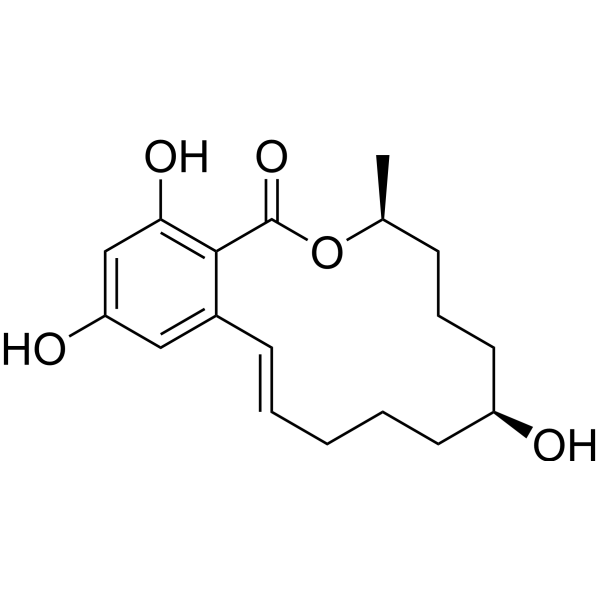 0 ImagesCat. No.: HY-N6741RCAS No.: 71030-11-0β-Zearalenol (Standard) is the analytical standard of β-Zearalenol (HY-N6741). This product is intended for research and analytical applications. β-Zearalenol is a zearalenone metabolite and Estrogen receptor binder (Kd = 0.406 nM) that induces apoptosis through activation of p53, JNK, and p38 kinases and the mitochondrial apoptosis pathway, while inhibiting CYP19A1 and inducing autophagy via SIRT1. β-Zearalenol is used in research on cardiotoxicity, mycotoxin-induced reproductive toxicity, and breast cancer.
-
p53-Y220C stabilizer-1
 0 ImagesCat. No.: HY-184397P53-Y220C stabilizer-1 as an indole-based p53-Y220C stabilizer (EC50 = 0.46 μM) that engages the mutation-induced cavity. P53-Y220C stabilizer-1 binds the p53-Y220C mutant with high affinity (KD = 56 nM) and acts as a selective indole-based p53-Y220C stabilizer that engages the mutation-induced cavity. P53-Y220C stabilizer-1 increases mutant protein thermal stability and restores p53 transcriptional activity, mainly triggering cell cycle arrest instead of acute apoptosis. P53-Y220C stabilizer-1 can be applied to cancers harboring the p53-Y220C mutation, such as gastric cancer.
-
USP7-IN-18
 0 ImagesCat. No.: HY-174301CAS No.: 3052223-40-9USP7-IN-18 is a naphthalene derivative. USP7-IN-18 is a selective USP7 inhibitor (IC50 : 130.9 nM), with no or very weak inhibition of the other 8 DUBs including USP47. USP7-IN-18 specifically binds to the catalytic domain of USP7, blocking its deubiquitinase activity. USP7-IN-18 causes degradation of the oncogenic proteins MDM2 and DNMT1, and also degrades the novel target PCLAF. USP7-IN-18 activates the p53-p21 pathway. USP7-IN-18 exerts anti-tumor effects in colon cancer animal models and reshapes the tumor immune microenvironment. USP7-IN-18 achieves both direct cytotoxic and immune-synergistic anti-tumor actions.
-
Apoptosis inducer 43
 0 ImagesCat. No.: HY-175332Apoptosis inducer 43 is an apoptosis inducer. Apoptosis inducer 43 can induce apoptosis, SubG0-G1 cell cycle arrest, secondary necrosis, and upregulate caspase-3, p53, and Bax/Bcl-2 expression in HCT116 cells. Apoptosis inducer 43 can inhibit tumor growth in a solid Ehrlich carcinoma (SEC) mouse model. Apoptosis inducer 43 can be used to study cancers such as colon cancer, leukemia, and non-small cell lung cancer.
-
p53-MDM2-IN-7 hydrochloride
 0 ImagesCat. No.: HY-168606Ap53-MDM2-IN-7 (compound 6d) (hydrochloride) is a p53-MDM2 inhibitor. p53-MDM2-IN-7 has an IC50 value of 8.13 μM against A549 cells. p53-MDM2-IN-7 can be used in anti-cancer research.
-
p53 CBS
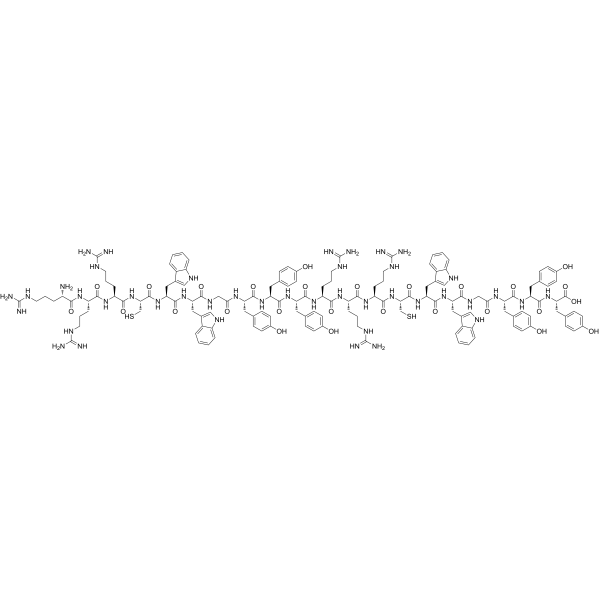 0 ImagesCat. No.: HY-P5343CAS No.: 721963-21-9Synonyms: p53 Consensus binding sequencep53 CBS (p53 Consensus binding sequence) is a biological active peptide. (p53 consensus DNA binding site)
-
Polygalasaponin F (Standard)
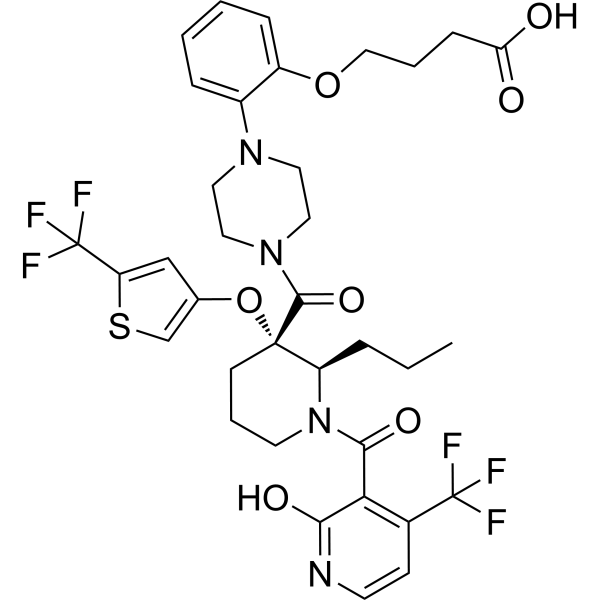
 0 ImagesCat. No.: HY-N0392RCAS No.: 882664-74-6Polygalasaponin F (Standard) is the analytical standard of Polygalasaponin F. This product is intended for research and analytical applications. Polygalasaponin F is an orally active triterpenoid saponin monomer. Polygalasaponin F downregulates the expression of Bax, p53, caspase-3, NF-κB p65 and MEK1; restores and upregulates the expression of Bcl-2; activates the PI3K/Akt signaling pathway; inhibits the phosphorylation of p38 MAPK, nuclear translocation of NF-κB, TLR4-mediated signaling pathway, mitophagy (Mitophagy) and ROS production; enhances cell viability and suppresses apoptosis (Apoptosis). Polygalasaponin F maintains mitochondrial function, alleviates Ca2+ overload, upregulates pCREB and BDNF, preserves cell viability and inhibits the release of inflammatory cytokines. Polygalasaponin F alleviates lung injury induced by influenza A H1N1 and cerebral ischemia-reperfusion injury. Polygalasaponin F is applicable to researches related to Parkinson's disease, cerebral ischemia, pneumonia induced by influenza A H1N1, stroke and Alzheimer's disease.
-
MI-888
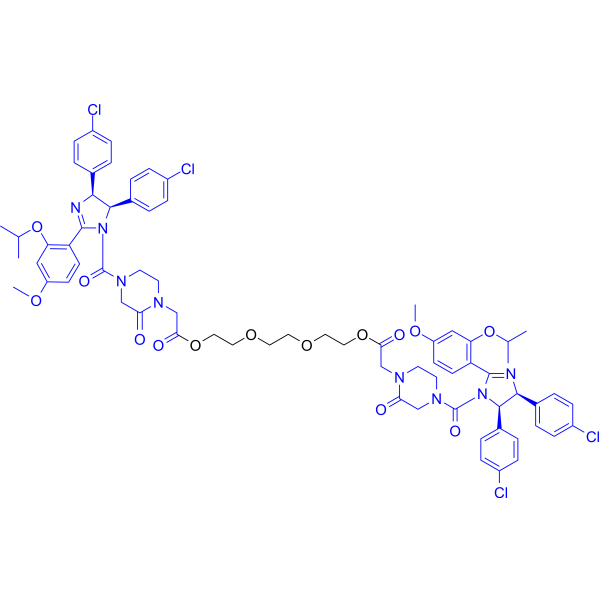
 0 ImagesCat. No.: HY-133760CAS No.: 1303607-59-1MI-888 is an orally active MDM2 inhibitor with a Ki of 0.44 nM. MI-888 can inhibit the MDM2-p53 interaction. MI-888 has favorable pharmacokinetic properties and anti-tumor activity.
-
Cephaeline hydrochloride
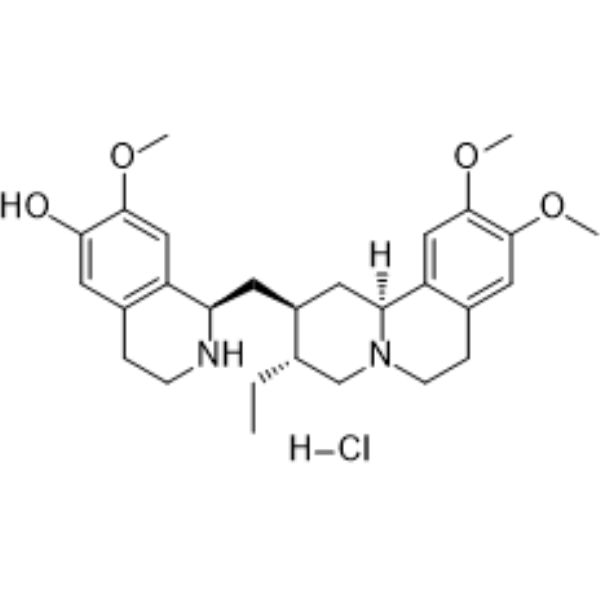 0 ImagesSynonyms: (-)-Cephaeline hydrochloride; NSC 32944 monohydrochlorideCephaeline hydrochloride ((-)-Cephaeline (hydrochloride); NSC 32944 (monohydrochloride)) is a ferroptosis inducer, with broad-spectrum anticancer and antiviral activities. Cephaeline hydrochloride induces Ferroptosis by upregulating p53, inhibiting NRF2, activating ULK3, downregulating the expressions of SLC7A11 and GPX4 in a p53-dependent manner, reducing GSH and mitochondrial membrane potential, and increasing lipid peroxidation and iron accumulation. Cephaeline hydrochloride inhibits cancer cell proliferation, migration and tumor growth. Cephaeline hydrochloride inhibits Ebola virus (EBOV) VLP entry and infection, with IC50 values of 3.27 μM and 22.18 μM respectively; it also inhibits Zika virus (ZIKV) NS5 RdRp activity (IC50 = 976 nM), and binds to severe acute respiratory syndrome coronavirus 2 (SARS-CoV-2) RdRp and N protein, with Kd values of 8.9 μM and 53.8 μM respectively. Cephaeline hydrochloride can be used in studies related to breast cancer, lung cancer, COVID-19, EBOV and ZIKV infections.
-
Triglycidyl Isocyanurate-d15
 0 ImagesCat. No.: HY-W750535CAS No.: 2732873-64-0Triglycidyl Isocyanurate-d15 is the deuterium labeled Triglycidyl isocyanurate (HY-W011434). Triglycidyl isocyanurate (TGIC; Teroxirone) is a triazene triepoxide with antiangiogenic and antineoplastic activities. Triglycidyl isocyanurate inhibits the growth of non-small-cell-lung cancer cells via p53 activation. Triglycidyl isocyanurate induces cell apoptosis. Triglycidyl isocyanurate can be used for cancer research.
-
TH-407a
 0 ImagesTH-407a is an orally active and selective USP15 inhibitor with an IC50 of 0.76 μM. As an allosteric modulator, TH-407a binds to a non-catalytic site to block deubiquitinating activity. TH-407a inhibits cell growth, proliferation, clonogenicity and migration, regulates the p53 signaling pathway, and reduces the stability of PARP1. TH-407a exhibits anti-tumor activity in breast cancer xenograft mouse models. TH-407a can be used for the research of breast cancer.
-
PROTAC LZK degrader 1
 0 ImagesCat. No.: HY-170595CAS No.: 2763268-64-8PROTAC LZK degrader 1 is an LZK (MAP3K13) PROTAC degrader. PROTAC LZK degrader 1 binds LZK with a Kd of 35 nM and recruits VHL E3 ubiquitin ligase to induce ubiquitin-proteasome dependent degradation of LZK in MAP3K13-amplified HNSCC cells. PROTAC LZK degrader 1 eliminates both kinase-dependent c-MYC stabilization and kinase-independent GOF p53 accumulation downstream of LZK, suppresses colony formation of LZK-amplified head and neck squamous cell carcinoma (HNSCC) cells. PROTAC LZK degrader 1 can be used for research on LZK-driven HNSCC.
-
XRF-1021
 0 ImagesCat. No.: HY-179378CAS No.: 2968523-32-0XRF-1021 is an orally active HIPK2 inhibitor (IC50 = 0.18 μM). XRF-1021 reduces the expression of fibrotic markers in TGF-β1 stimulated NRK-49F and HK-2 cells, including Fibronectin, Collagen I and α-SMA. XRF-1021 blocks TGF-β, NF-κB, p53, Wnt/β-catenin, and Notch signaling. XRF-1021 reduces renal injury and fibrosis in vivo. XRF-1021 can be used for the research of chronic kidney disease.
-
CBLC100
 0 ImagesCat. No.: HY-124922CAS No.: 1197996-83-0CBLC100 is an anticancer compound that targets FACT, while inhibiting NF-κB and activating p53. CBLC100 induces cytotoxicity through p53-dependent apoptotic and non-apoptotic pathways. CBLC100 is applicable to the research of cancers such as fibrosarcoma.
-
8-Acetonyldihydronitidine
 0 ImagesCat. No.: HY-N21597CAS No.: 80330-39-88‑Acetonyldihydronitidine is a naturally occurring benzophenanthridine alkaloid with antibacterial, antifungal, and anti-proliferative activities against colorectal cancer cells. 8‑Acetonyldihydronitidine inhibits Staphylococcus aureus and exerts a potent antifungal effect against Cladosporium cladosporioides. 8‑Acetonyldihydronitidine activates the p53 signaling pathway, upregulates the expression of target genes including p21, BAX, and FAS, downregulates cyclin A and cyclin B, and induces cell cycle arrest and apoptosis, thereby suppressing the proliferation of colorectal cancer cells. 8‑Acetonyldihydronitidine is used in research related to colorectal cancer, fungal infections, and bacterial infections.
-
Topoisomerase I/II-IN-1
 0 ImagesCat. No.: HY-175034Topoisomerase I/II-IN-1 is a dual inhibitor of topoisomerase I/II. Topoisomerase I/II-IN-1 induces G2/M arrest and apoptosis in cancer cells by upregulating p53, p21, and Bax mRNA levels, caspase-3 protein levels, and the Bax/Bcl-2 ratio, while downregulating Bcl-2. Topoisomerase I/II-IN-1 is useful in the study of various cancers, including melanoma, renal cancer, colorectal cancer, and breast cancer.




