



NF-κB
NF-κB regulates innate and adaptive immunity, inflammatory responses, immune-cell survival, activation, and differentiation[1]. Mechanistically, canonical NF-κB signaling depends on phosphorylation-induced proteasomal degradation of IκB proteins, releasing cytosolic NF-κB dimers for transcriptional control[2]. In inflammation models, NF-κB induces cytokines, chemokines, adhesion molecules, and inflammasome-related responses, linking pathway activation to chronic inflammatory disease and cancer research[1][3][4]. Compared with related isoforms, mammalian NF-κB includes RelA/p65, RelB, c-Rel, p50/NF-κB1, and p52/NF-κB2, and RelA loss causes embryonic lethality with liver apoptosis, whereas p50 loss produces immune-response defects without developmental abnormalities[2][5][6]. For experimental applications, NF-κB inhibitors, including IKK-targeting agents and BAY 11-7082, help test pathway dependence in inflammatory signaling, but broad pathway targeting requires careful interpretation because NF-κB also supports normal immune physiology[4][7].
References:
- [1]. Liu T, et al. NF-κB signaling in inflammation. Signal Transduct Target Ther. 2017;2:17023–. [Content Brief]
- [2]. Oeckinghaus A, et al. The NF-kappaB family of transcription factors and its regulation. Cold Spring Harb Perspect Biol. 2009 Oct;1(4):a000034. [Content Brief]
- [3]. Lawrence T. The nuclear factor NF-kappaB pathway in inflammation. Cold Spring Harb Perspect Biol. 2009 Dec;1(6):a001651. doi: 10.1101/cshperspect.a001651. Epub 2009 Oct 7. PMID: 20457564; PMCID: PMC2882124. et al. The nuclear factor NF-kappaB pathway in inflammation. Cold Spring Harb Perspect Biol. 2009 Dec;1(6):a001651. [Content Brief]
- [4]. Yu H, et al. Targeting NF-κB pathway for the therapy of diseases: mechanism and clinical study. Signal Transduct Target Ther. 2020 Sep 21;5(1):209. [Content Brief]
- [5]. Beg AA, et al. Embryonic lethality and liver degeneration in mice lacking the RelA component of NF-kappa B. Nature. 1995 Jul 13;376(6536):167-70. [Content Brief]
- [6]. Sha WC, et al. Targeted disruption of the p50 subunit of NF-kappa B leads to multifocal defects in immune responses. Cell. 1995 Jan 27;80(2):321-30. [Content Brief]
- [7]. Lee J, et al. BAY 11-7082 is a broad-spectrum inhibitor with anti-inflammatory activity against multiple targets. Mediators Inflamm. 2012;2012:416036. [Content Brief]
All Product Categories
-
NF-κB Inhibitors
(1212)
View all products
-
NF-κB Agonists
(4)
View all products
-
NF-κB Activators
(101)
View all products
-
NF-κB Modulators
(26)
View all products
-
NF-κB Inducers
(2)
View all products
-
NF-κB Degraders
(2)
View all products
-
NF-κB Controls
(6)
View all products
-
NF-κB Ligand
(1)
View all products
-
NF-κB Related Products (1455)
Related Products (1455)

-
Antibodies (24)
-
sEH-IN-21
 0 ImagesCat. No.: HY-176554CAS No.: 3084814-46-7sEH-IN-21 is an orally active sEH inhibitor with IC50s of 0.1 nM for hsEH and msEH. sEH-IN-21 potently inhibits NF-κB signaling pathways. sEH-IN-21 shows a strong anti-inflammatory activity, decreases the release of IL-6 and TNF-α and maintained the integrity of the intestinal barrier. sEH-IN-21 can be used for the study of inflammatory bowel disease (IBD).
-
NF-κB-IN-20
 0 ImagesCat. No.: HY-175833NF-κB-IN-20 is an orally active NF-κB inhibitor. NF-κB-IN-20 directly binds to the Keap1 protein, activating the Keap1/Nrf2/HO-1 antioxidant pathway, and simultaneously inhibiting the NF-κB inflammatory pathway, thereby synergistically reducing oxidative stress and inflammatory responses. NF-κB-IN-20 M11 inhibits the expression of IL-6, IL-1β, and TNF-α, significantly reduces the level of ROS, and restores the mitochondrial membrane potential. NF-κB-IN-20 can be used for the study of acute lung injury (ALI).
-
RIPK1-IN-32
 0 ImagesCat. No.: HY-175007RIPK1-IN-32 is a RIPK inhibitor with anti-inflammatory activity. RIPK1-IN-32 inhibits nitric oxide (NO) release with an IC50 of 3.26 μM. RIPK1-IN-32 significantly alleviates acute liver injury associated with sepsis through the RIPK1/NF-κB/MAPK pathway, therefore preventing the nuclear translocation of p65 and c-fos, which results in reduced expression of TNF-α and IL-6. RIPK1-IN-32 can be used for the study of acute liver injury and sepsis.
-
Hypoglycemic agent 3
 0 ImagesCat. No.: HY-170692Hypoglycemic agent 3 (Compound H26), a derivative of corosolic acid, exhibits lipid-lowering and significant hypoglycemic effects and can be used as a hypoglycemic agent. Hypoglycemic agent 3 inhibits insulin resistance by targeting MCCC1 and can be used in the study of type 2 diabetes.
-
Antioxidant agent-20
 0 ImagesCat. No.: HY-170579Antioxidant agent-20 (Compound 3d) has potent anti-inflammatory and antioxidant activity. Antioxidant agent-20 reduces reactive oxygen species (ROS) and apoptosis in a dose-dependent manner. Antioxidant agent-20 exhibits photoprotective effect against UVB-irradiated human skin keratinocytes (HaCaT) (IC50=5.13 µM) via activation of Nrf2/HO-1 signaling and inhibition of NF-κB pathway.
-
Menthone (Standard)
 0 ImagesMenthone (Standard) is the analytical standard of Menthone. This product is intended for research and analytical applications. Menthone, an orally active monoterpene that can be isolated from plants and Mentha oil with antibacterial, antitumor, antioxidation, and antivirus properties. Menthone is a main volatile component of the essential oil, and has anti-Inflammatory properties in Schistosoma mansoni infection and rheumatoid arthritis.
-
Isoquinoline (Standard)
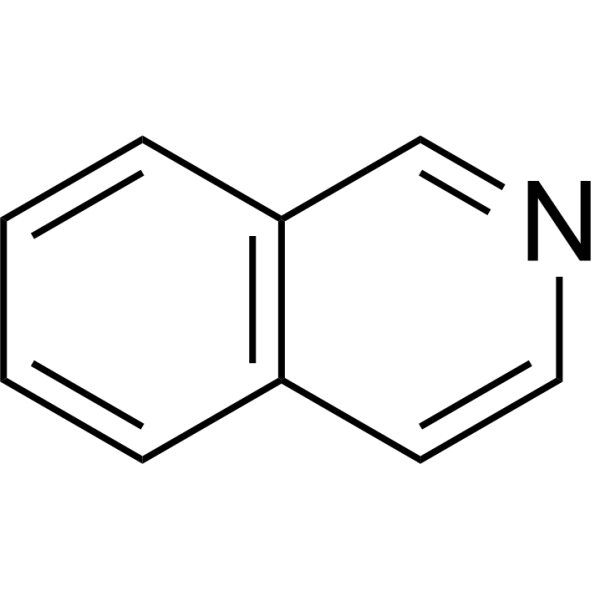 0 ImagesIsoquinoline (Standard) is the analytical standard of Isoquinoline. This product is intended for research and analytical applications. Isoquinoline is an analog of pyridine. Isoquinoline structural-based alkaloids, such as tropoloisoquinoline, phthalideisoquinoline, and naphthylisoquinoline has anti-cancer activities.
-
Aspirin DL-lysine
 0 ImagesCat. No.: HY-14654BCAS No.: 62952-06-1Synonyms: Acetylsalicylic acid DL-lysine; ASA DL-lysineAspirin DL-lysine (ASA DL-lysine) is a lysine-containing aspirin derivative. Aspirin DL-lysine inhibits cyclooxygenase (COX) in platelets, blocks the synthesis of thromboxane A2 (TXA2), and thus inhibits platelet aggregation and activation. Aspirin DL-lysine can be used to study thrombin generation in patients with unstable angina pectoris.
-
Boldine hydrochloride
 0 ImagesCat. No.: HY-W683756CAS No.: 16625-69-7Boldine hydrochloride is an aporphine alkaloid telomerase (telomerase) inhibitor (IC50 of 0.17 μM for TERT) and a pannexin/connexin hemichannel blocker, with oral activity and blood-brain barrier permeability. Boldine hydrochloride inhibits telomerase activity through direct interaction with the telomerase ribonucleoprotein and non-competitive binding near the TERT active site, and downregulates hTERT mRNA while shifting alternative splicing toward non-functional transcripts. Boldine hydrochloride blocks Panx1, Cx43, Cx26, and Cx30 hemichannels as well as P2X7 receptor-mediated calcium influx. Boldine hydrochloride exhibits antioxidant, anti-inflammatory, antiproliferative, and cytotoxic activities by scavenging ROS, inhibiting NFκB, dephosphorylating SGK1, and reducing TNF-alpha levels. Boldine hydrochloride can be used in research on breast cancer, Alzheimer's disease, glioblastoma, diabetes, and spinal cord injury.
-
Perindopril erbumine (Standard)
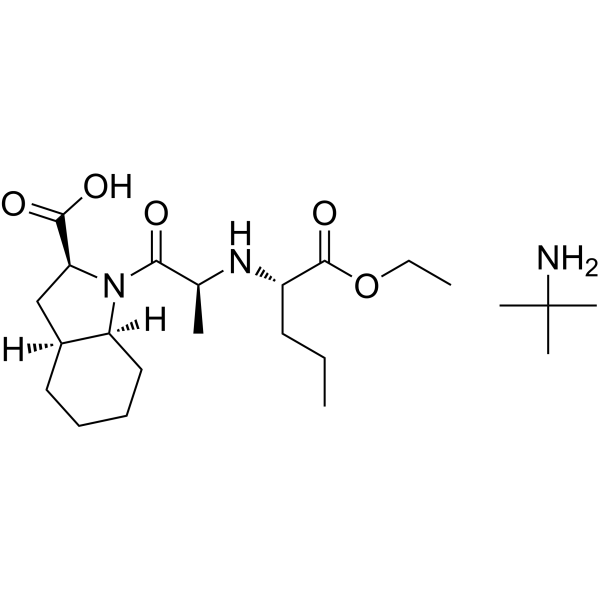 0 ImagesSynonyms: Perindopril (tert-butylamine salt) (Standard); S-9490 erbumine (Standard)Perindopril (erbumine) (Standard) is the analytical standard of Perindopril (erbumine). This product is intended for research and analytical applications. Perindopril erbumine is an angiotensin-converting enzyme inhibitor. Perindopril erbumine modulates NF-κB and STAT3 signaling and inhibits glial activation and neuroinflammation. Perindopril erbumine can be used for the research of Chronic Kidney Disease and high blood pressure.
-
2-Undecanone (Standard)
 0 Images2-Undecanone (Standard) is the analytical standard of 2-Undecanone (HY-W016969). This product is intended for research and analytical applications. 2-Undecanone is an orally active organic ketone. 2-Undecanone exerts antibacterial effects by inhibiting bacterial chaperone systems and interfering with the refolding of heat-inactivated proteins. 2-Undecanone also ameliorates asthmatic inflammation and airway remodeling by blocking the NF-κB pathway, and activates the Nrf2 pathway to reduce oxidative damage and prevent lung cancer induced by Benzo[a]pyrene (HY-107377). 2-Undecanone can be used in research related to cancer, asthma and infections.
-
Omtriptolide sodium
 0 ImagesCat. No.: HY-16362CAS No.: 195883-09-1Synonyms: PG 490-88NaOmtriptolide sodium (PG490-88Na) is a derivative of Triptolide (HY-32735). Omtriptolide sodium exhibits significant immunosuppressive, anti-fibrotic and anti-inflammatory properties. The mechanism of action of Omtriptolide sodium is diverse, including inhibiting T cell activation and proliferation, inducing T cell apoptosis (apoptosis), blocking fibroblast maturation/proliferation, inhibiting TGF-β mRNA expression, and suppressing pro-inflammatory cytokines (such as IL-2, IFN-γ, TNF-α) by blocking transcription factors such as NF-κB. Omtriptolide sodium can be used for research on obstructive airway diseases, pulmonary fibrosis and graft-versus-host disease.
-
Apoptosis inducer 46
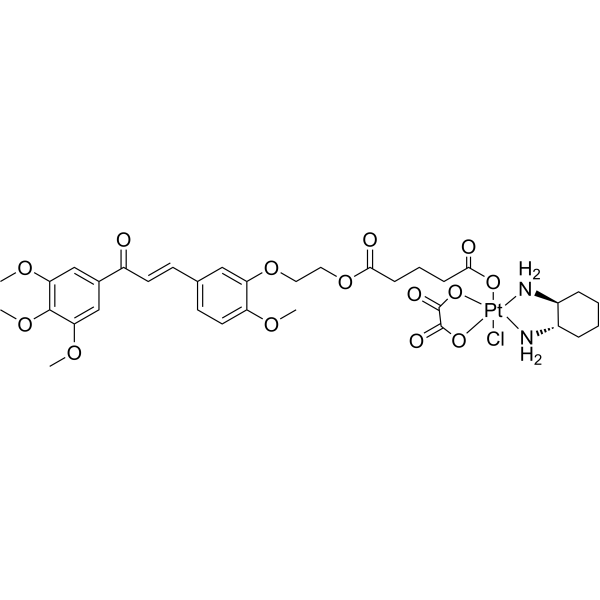
 0 ImagesCat. No.: HY-178132CAS No.: 3085356-41-5Apoptosis inducer 46 is an apoptosis inducer. Apoptosis inducer 46 exhibits potent and selective growth inhibitory effects on metastatic triple-negative breast cancer (TNBC) cells. Apoptosis inducer 46 induces G2/M phase cell cycle arrest and apoptotic cell death in MDA-MB-231 cells, and blocks NF-κB nuclear translocation. Apoptosis inducer 46 can be used for the study of TNBC.
-
Acenocoumarol-d4
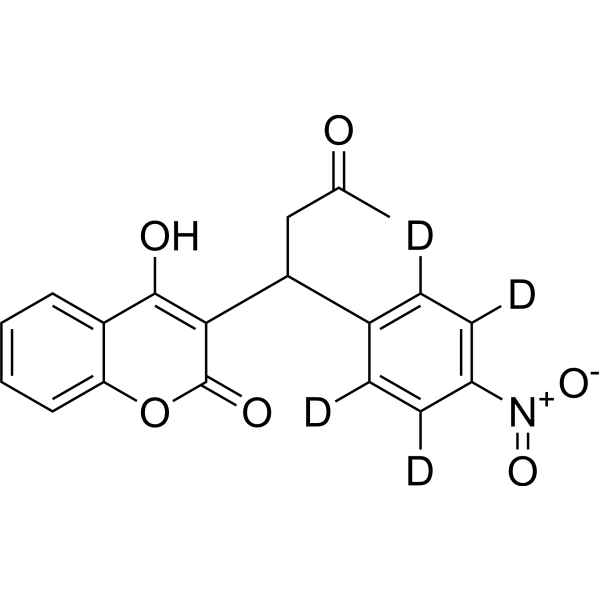 0 ImagesCat. No.: HY-B1014S1CAS No.: 2937878-24-3Acenocoumarol-d4 is deuterium labeled Acenocoumarol (HY-B1014). Acenocoumarol is an anticoagulant that functions as a Vitamin K antagonist. Acenocoumarol inhibits MAPK/ERK/JNK signaling pathway, reduces the nuclear translocation of NF-κB p65, activates Akt/GSK3β signaling pathway. Acenocoumarol induces apoptosis in cell A549, arrests cell cycle at S phase.
-
Rubioncolin C
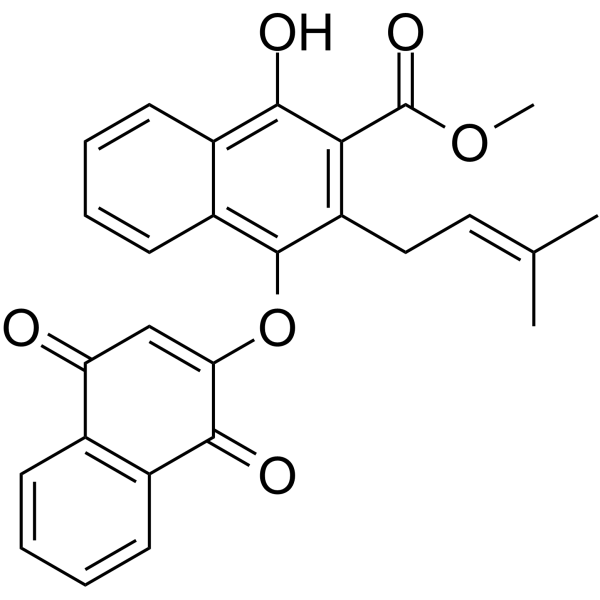 0 ImagesCat. No.: HY-N1333CAS No.: 132242-52-5
-
Curculigoside (Standard)
 0 ImagesCat. No.: HY-N0705RCAS No.: 85643-19-2Curculigoside (Standard) is the analytical standard of Curculigoside. This product is intended for research and analytical applications. Curculigoside is the main saponin in C. orchioide, exerts significant antioxidant, anti-osteoporosis, antidepressant and neuroprotection effects. Curculigoside possesses significant anti-arthritic effects in vivo and in vitro via regulation of the JAK/STAT/NF-κB signaling pathway.
-
MG-1131
 0 ImagesCat. No.: HY-P991475MG-1131 is a human monoclonal antibody (mAb) targeting TIGIT. MG-1131 activates NF-κB signaling in T cells and enhances NK-mediated tumor killing activity in a PVR-dependent manner. MG-1131 blocks TIGIT to increase IFN-γ secretion. MG-1131 can be used in anti-tumor immunity research. Recommended isotype control: Human IgG1 kappa, Isotype Control (HY-P99001).
-
Dimethyl diacetyl cystinate
 0 ImagesCat. No.: HY-W550315CAS No.: 32381-28-5Synonyms: DACDMDimethyl diacetyl cystinate (DACDM) is a potent NF-κB inhibitor. Dimethyl diacetyl cystinate shifts the intracellular redox balance toward the oxidized state by increasing intracellular oxidized glutathione (GSSG) content, competitively blocking the binding of activated NF-κB to DNA, thereby inhibiting the production of inflammatory factors such as IL-1κ. Dimethyl diacetyl cystinate is promising for research of UVB-induced skin inflammation and related oxidative stress diseases.
-
S-HP210
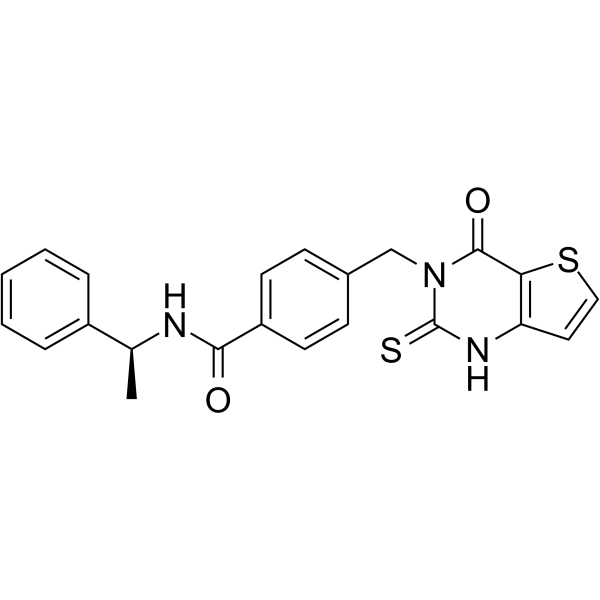 0 ImagesS-HP210 is a potent and selective glucocorticoid receptor (GR) with an IC50 value of 1.92 μM for NF-κB transrepression (TR). S-HP210 represses the LPS-induced transcription of a variety of proinflammatory genes such as IL-1β, IL-6 and COX-2. S-HP210 is nontoxic at effective doses against mouse fibroblasts 3T3 cells.




