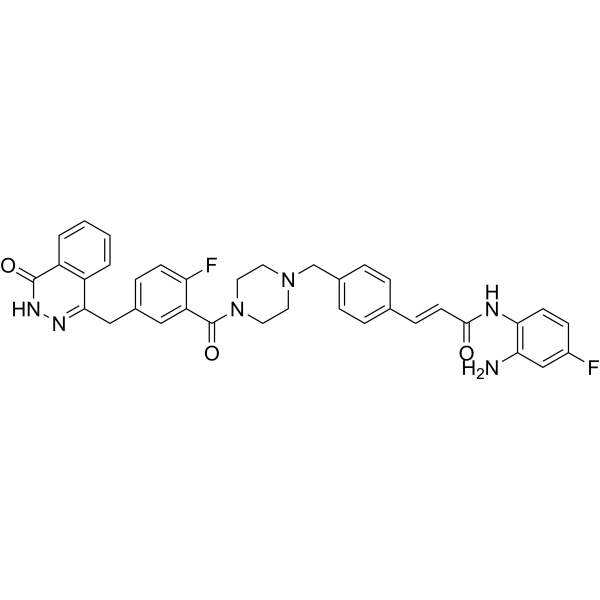
PARP
poly ADP ribose polymerase
PARP is a family of proteins involved in a number of cellular processes involving mainly DNA repair and programmed cell death. The PARP family comprises 17 members. They have all very different structures and functions in the cell. PARP1, PARP2, VPARP (PARP4), Tankyrase-1 and -2 (PARP-5a or TNKS, and PARP-5b or TNKS2) have a confirmed PARP activity. Others include PARP3, PARP6, TIPARP (or PARP7), PARP8, PARP9, PARP10, PARP11, PARP12, PARP14, PARP15, and PARP16. PARP is found in the cell’s nucleus. The main role is to detect and signal single-strand DNA breaks (SSB) to the enzymatic machinery involved in the SSB repair.
PARP Isoform Specific Products
-
PARP
(307)
View all products
-
PARP1
(212)
View all products
-
PARP2
(84)
View all products
-
PARP3
(23)
View all products
-
PARP4
(11)
View all products
-
TNKS1/
PARP5A (41)View all products
-
TNKS2/
PARP5B (38)View all products
-
PARP7
(25)
View all products
-
PARP10
(20)
View all products
-
PARP14
(17)
View all products
-
PARP15
(14)
View all products
-
PARP12
(4)
View all products
-
PARP16
(3)
View all products
All Product Categories
-
PARP Inhibitors
(464)
View all products
-
PARP Agonists
(4)
View all products
-
PARP Activators
(111)
View all products
-
PARP Modulators
(13)
View all products
-
PARP Inducers
(20)
View all products
-
PARP Degraders
(25)
View all products
-
PARP Substrate
(1)
View all products
-
PARP Ligands
(4)
View all products
-
PARP Related Products (702)
Related Products (702)

-
Antibodies (11)
-
PARP Isoform Comparison

-
Ola-NC-SS-PEG-Lap
 0 ImagesCat. No.: HY-181017Ola-NC-SS-PEG-Lap is a selective immunogenic cell death inducer. Ola-NC-SS-PEG-Lap exploits the synergistic interplay between an NQO1-bioactivated compound and a PARP inhibitor to selectively induce immunogenic cell death in tumor cells without harming normal cells. Ola-NC-SS-PEG-Lap induces ROS accumulation, increases DNA damage. Ola-NC-SS-PEG-Lap can be activated by GSH and release Ola, ultimately producing the synergistic antitumor effect with the Lap portion. Ola-NC-SS-PEG-Lap has anti-cancer activity against colon cancer.
-
7-Epi 10-desacetyl paclitaxel (Standard)
 0 ImagesCat. No.: HY-77572RCAS No.: 78454-17-8Synonyms: 7-epi-10-deacetyltaxol (Standard); 10-Deacetyl-7-epipaclitaxel (Standard)7-Epi 10-desacetyl paclitaxel (Standard) (7-epi-10-deacetyltaxol (Standard); 10-Deacetyl-7-epipaclitaxel (Standard)) is the analytical standard of 7-Epi 10-desacetyl paclitaxel (HY-77572). This product is intended for research and analytical applications. 7-Epi 10-desacetyl paclitaxel (7-epi-10-deacetyltaxol; 10-Deacetyl-7-epipaclitaxel) is a taxane diterpenoid that can be found in Taxus species and is also produced by the endophytic fungus Pestalotiopsis microspora. 7-Epi 10-desacetyl paclitaxel inhibits cancer cell proliferation and induces apoptosis and cell cycle arrest. 7-Epi 10-desacetyl paclitaxel induces apoptosis through the intrinsic mitochondrial pathway, a process associated with ROS generation, an increased Bax/Bcl-2 ratio, and PARP cleavage. 7-Epi 10-desacetyl paclitaxel can be used in research on hepatocellular carcinoma.
-
Continentalic acid (Standard)
 0 ImagesCat. No.: HY-N6908RCAS No.: 19889-23-7Continentalic acid (Standard) is the analytical standard of Continentalic acid (HY-N6908). This product is intended for research and analytical applications. Continentalic acid is a diterpenoid organic acid. Continentalic acid exhibits multiple activities including anti-inflammatory, antioxidant, neuroprotective, antibacterial and antitumor effects. Continentalic acid alleviates oxidative stress, reduces pro-inflammatory cytokine production, inhibits MAPK phosphorylation and neutrophil infiltration, and induces growth inhibition and apoptosis of cancer cells. Continentalic acid can be used in research related to traumatic brain injury, cancer, inflammation and infections.
-
FGFR-IN-28
 0 ImagesCat. No.: HY-184250CAS No.: 2634677-16-8FGFR-IN-28 is a FGFR inhibitor with inhibitory activity against multiple subtypes of the FGFR family, with an IC50 of 4.4 nM against FGFR4. FGFR-IN-28 inhibits kinase activity and phosphorylation processes, and blocks the downstream MAPK and AKT signaling pathways. FGFR-IN-28 induces cellular DNA damage, cell cycle arrest, apoptosis and ferroptosis, and reduces the adhesion, invasion and metastasis abilities of cancer cells. FGFR-IN-28 exhibits anti-tumor activity in in vitro experiments on colon cancer cells, and inhibits tumor growth in colon cancer xenograft models. FGFR-IN-28 can be used in colon cancer-related research.
-
DLC-50
 0 ImagesCat. No.: HY-161868CAS No.: 2928537-98-6
-
RO5068760
 0 ImagesCat. No.: HY-111033CAS No.: 947182-25-4RO5068760 is a potent, orally active and selective non-ATP-competitive MEK1/2 inhibitor with an IC50 of 0.025 μM for MEK1. RO5068760 significantly inhibits MAPK pathway activity, thereby inducing G1 cell cycle arrest and apoptosis to inhibit cancer cell growth. RO5068760 exhibits significant efficacy in a broad spectrum of tumors with aberrant MAPK pathway activation. RO5068760 can be used for melanoma, colorectal cancer, non-small cell lung cancer (NSCLC), and pancreatic cancer research.
-
Desethylamiodarone
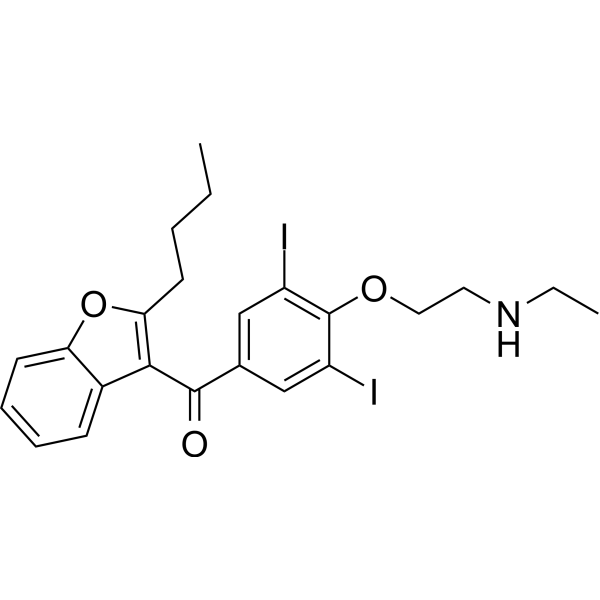 0 ImagesCat. No.: HY-122423CAS No.: 83409-32-9Synonyms: N-Desethylamiodarone; LB 33020Desethylamiodarone (N-Desethylamiodarone; LB 33020) is the major active metabolite of Amiodarone (HY-14187) generated via CYP3A4 metabolism. Desethylamiodarone downregulates p‑Akt, p‑Bad and Bcl‑2, upregulates Bax, promotes mitochondrial release of cytochrome c, activates caspase‑3 and cleaves PARP‑1, thereby inducing cell cycle arrest and apoptosis. Desethylamiodarone can be used in cervical cancer-related research.

-
HL435
 0 ImagesCat. No.: HY-161769HL435 is a BRD4 PROTAC degrader with DC50 values of 11.9 nM (MDA-MB-231 cells) and 21.9 nM (MCF-7 cells), respectively. HL435 recruits the CRL4DCAF11 E3 ubiquitin ligase complex to degrade BRD4 via the ubiquitin-proteasome system. HL435 induces cell cycle arrest and apoptosis (apoptosis) in cancer cells, downregulates the expression levels of cyclin D1 and cyclin B1, activates caspase-9, and induces PARP1 cleavage. HL435 exerts anti-tumor activity both in vitro and in mouse xenograft tumor models. HL435 can be used for the research of breast cancer and prostate cancer.
-
Paris saponin VII (Standard)
 0 ImagesCat. No.: HY-N3584RCAS No.: 68124-04-9Synonyms: Chonglou Saponin VII (Standard)Paris saponin VII (Standard) is the analytical standard of Paris saponin VII. This product is intended for research and analytical applications. Paris saponin VII (Chonglou Saponin VII) is a steroidal saponin isolated from the roots and rhizomes of Trillium tschonoskii. Paris saponin VII-induced apoptosis in K562/ADR cells is associated with Akt/MAPK and the inhibition of P-gp. Paris saponin VII attenuates mitochondrial membrane potential, increases the expression of apoptosis-related proteins, such as Bax and cytochrome c, and decreases the protein expression levels of Bcl-2, caspase-9, caspase-3, PARP-1, and p-Akt. Paris saponin VII induces a robust autophagy in K562/ADR cells and provides a biochemical basis in the treatment of leukemia.
-
PARP1-IN-27
 0 ImagesCat. No.: HY-161934PARP1-IN-27 (Compound 9B) is the inhibitor for PARP1 and PARP2, with IC50 of 2.53 nM and 6.45 nM in cell SUM149PT. PARP1-IN-27 inhibits the proliferation of BRCA-mutated cancer cells SUM149PT, HCC1937 and Capan-1, with IC50 of 0.62, 1.91 and 4.26 μM respectively. PARP1-IN-27 aggravates DNA double-strand breaks, increases ROS generation, arrests cell cycle at G2/M phase, and induces apoptosis in SUM149PT.
-
(rac)-Talazoparib
 0 ImagesCat. No.: HY-14687CAS No.: 1207454-56-5Synonyms: (rac)-BMN-673; (rac)-LT-673(rac)-Talazoparib ((rac)-BMN-673) (Compound 47) is the orally active inhibitor for PARP1/2 with Ki of 1.2 nM and 0.87 nM. (rac)-Talazoparib inhibits cellular PARylation with an EC50 of 2.51 nM. (rac)-Talazoparib causes the accumulation of DNA damage, inhibits proliferation of BRCA1/2-mutated MX-1 cell and Capan-1 cell with IC50 of 0.3 nM and 5 nM. (rac)-Talazoparib exhibits antitumor efficacy in mouse models.
-
Quinidine sulfate
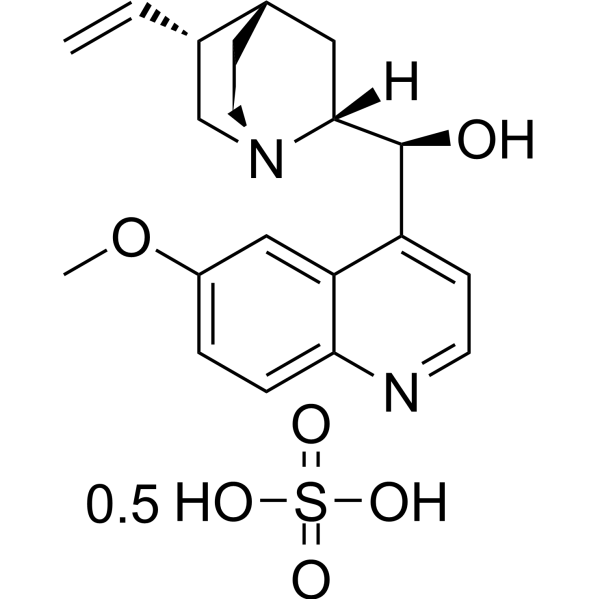 0 ImagesQuinidine sulfate is an orally active antiarrhythmic agent. Quinidine sulfate reduces the expression level of P-gp, inhibits P-gp-mediated efflux, increases the intracellular accumulation of P-gp substrates, induces PARP cleavage and Caspase-3 activation, and elevates the proportion of Apoptotic cells at the sub-G1 phase. Quinidine sulfate exerts sustained block and open-channel block effects on IK(f). Quinidine sulfate alters the urinary metabolic ratio of Amphetamine, modulates the Pentylenetetrazol-induced seizure threshold, and regulates the anticonvulsant effect of Dextromethorphan. Quinidine sulfate can be used in studies related to uterine sarcoma and seizures.
-
PARP1-IN-8
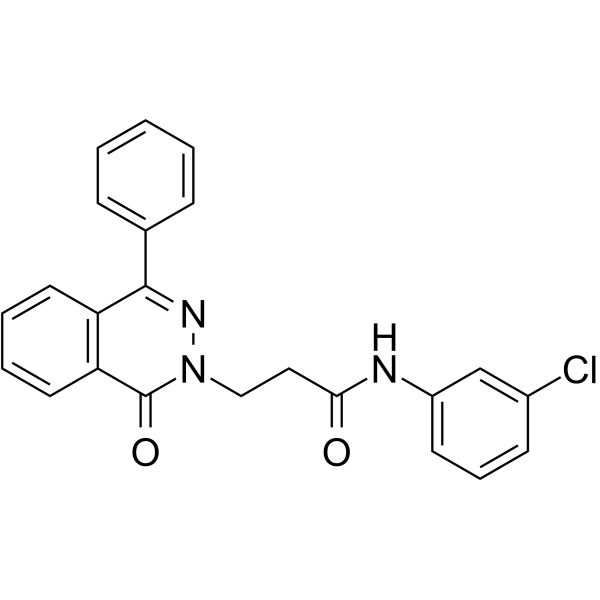 0 ImagesPARP1-IN-8 (compound 11c) is a potent and BBB-penetrated PARP1 inhibitor, with an IC50 of 97 nM. PARP1-IN-8 shows significantly potent anti-proliferative activity against Human lung adenocarcinoma epithelial cell line A549.
-
Ru3
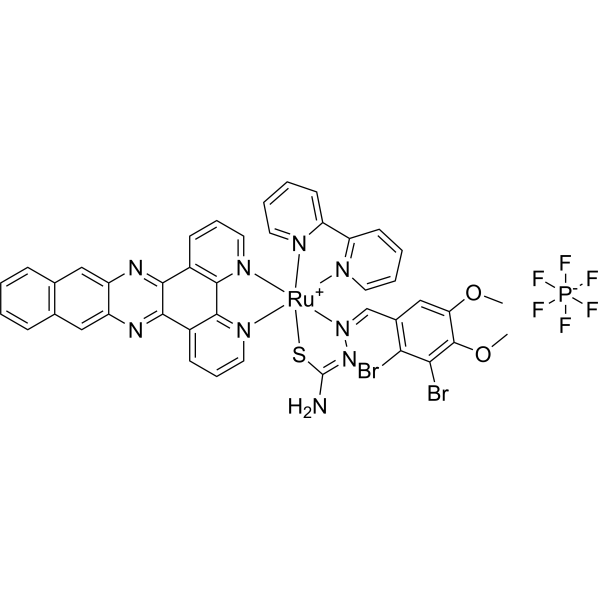 0 ImagesCat. No.: HY-155348Ru3 is a poly(ADP-ribose) polymerase 1 inhibitor. Ru3 induces apoptosisin MCF-7 cells by multiple modes, inclusive of inducing DNA damage, suppressing DNA damage repair, disturbing cell cycle distribution, decreasing the mitochondrial membrane potential, and increasing the intracellular reactive oxygen species levels.
-
CM002
 0 ImagesCat. No.: HY-184895CM002 is a circadian clock activator. CM002 inhibits the lineage commitment and terminal differentiation of preadipocytes by activating the circadian clock, thereby blocking the adipogenesis process driven by Wnt signaling-mediated transcriptional induction. CM002 attenuates lipid storage in a clock-dependent manner via inhibition of the lipogenic program in mature adipocytes. CM002 enhances circadian clock output across various adipose depots in both lean and obese mice through BMAL1/CLOCK-dependent metabolic reprogramming, inhibits adipocyte development and hypertrophy, and improves insulin sensitivity. CM002 can be used in research on obesity and type 2 diabetes.
-
EGFR-IN-197
 0 ImagesCat. No.: HY-181502CAS No.: 3060883-16-8EGFR-IN-197 is an EGFR inhibitor with IC50 values of 19.5 nM and 12.0 nM against EGFRL858R/T790M and EGFRL858R/T790M/C797S, respectively. EGFR-IN-197 arrests the cell cycle of NCI-H1975 cells at the G2/M phase, while inhibiting their proliferation, colony formation and migration; it also inhibits mitochondrial translocation and upregulates mitochondrial H2S levels. EGFR-IN-197 disrupts anti-apoptotic signaling pathways by regulating apoptosis-related proteins; it induces DNA damage and activates pro-apoptotic pathways to trigger apoptosis. EGFR-IN-197 can be used in studies related to non-small cell lung cancer (NSCLC).
-
ADPRP
 0 ImagesCat. No.: HY-134355CAS No.: 53595-18-9ADPRP is an intranuclear enzyme whose main activity is to use NAD+ (nicotinamide adenine dinucleotide) as a substrate to add ADP-ribose units to chromatin-bound proteins, including the ADPRP enzyme itself. This process, called poly(ADP-ribosylation), is a post-translational modification that regulates the interaction between DNA and nuclear proteins.