



TGF-β Receptor
Transforming growth factor beta receptors
TGF-β receptors (Transforming growth factor-β receptors) are single pass serine/threonine kinase receptors. Transforming growth factor beta (TGF-beta) is a member of a large family of pleiotropic cytokines that are involved in many biological processes, including growth control, differentiation, migration, cell survival, adhesion, and specification of developmental fate, in both normal and diseased states. TGF-beta superfamily members signal through a receptor complex comprising a type II and type I receptor, both serine/threonine kinases.
The type I receptors, referred to as activin receptor-like kinases (ALK), lie at the epicenter of the signaling cascade as they transduce TGF-beta signals to intracellular regulators of transcription known as Smad proteins. ALKs possess an extracellular binding domain, a transmembrane domain, a GS domain that serves as the site of activation by type II receptors, and a kinase domain that activates downstream signaling molecules. ALKs mediate the effect of TGF-beta superfamily on a variety of cellular processes such as proliferation, differentiation, apoptosis, adhesion and migration, and therefore play important roles in many biological processes. Some ALKs have been implicated in several disorders, including tumorigenesis and immune diseases, suggesting that these receptors can be used as drug targets.
TGF-β Receptor Isoform Specific Products
-
TGF-β Receptor
(219)
View all products
-
ALK1
(9)
View all products
-
ALK2
(31)
View all products
-
ALK3
(12)
View all products
-
ALK4
(10)
View all products
-
ALK5
(31)
View all products
-
ALK6
(7)
View all products
-
ALK7
(7)
View all products
-
TGFβR2
(6)
View all products
-
ACVR2A
(5)
View all products
-
ACVR2B
(3)
View all products
-
BMP
(2)
View all products
-
GDF15
(13)
View all products
All Product Categories
-
TGF-β Receptor Inhibitors
(248)
View all products
-
TGF-β Receptor Agonists
(10)
View all products
-
TGF-β Receptor Antagonists
(9)
View all products
-
TGF-β Receptor Activators
(21)
View all products
-
TGF-β Receptor Modulators
(2)
View all products
-
TGF-β Receptor Inducer
(1)
View all products
-
TGF-β Receptor Degraders
(2)
View all products
-
TGF-β Receptor Controls
(6)
View all products
-
TGF-beta Receptor Proteins
(22)
View all products
-
ALK-3 Proteins
(4)
View all products
-
ALK-6 Proteins
(3)
View all products
-
BMP Type II Receptor (BMPR2) Proteins
(5)
View all products
-
ALK-2/ACVR1 Proteins
(14)
View all products
-
ALK-4/Activin RIB Proteins
(7)
View all products
-
ALK-7 Proteins
(6)
View all products
-
Activin A Receptor Type 2A (ACTR-IIA) Proteins
(9)
View all products
-
Activin A Receptor Type 2B (ACVR2B) Proteins
(10)
View all products
-
ALK-1/ACVRL1 Proteins
(9)
View all products
-
Anti-Muellerian Hormone Type-2 Receptor (AMHR2) Proteins
(8)
View all products
-
TGF-β Receptor 1 Proteins
(7)
View all products
-
TGF-beta Receptor 2 Proteins
(13)
View all products
-
Type III TGF-β Receptor Proteins
(3)
View all products
-
ALK-3/CD292 Proteins
(4)
View all products
-
TGF-β Receptor Related Products (352)
Related Products (352)

-
Recombinant Proteins (98)
-
Antibodies (16)
-
TGF-β Receptor Isoform Comparison
-
PROTAC AR Degrader-9
 0 ImagesCat. No.: HY-170448PROTAC AR Degrader-9 is a topically applicable androgen receptor (AR) PROTAC degrader. PROTAC AR Degrader-9 recruits Cereblon (CRBN) E3 ubiquitin ligase to induce AR ubiquitination and proteasomal degradation in human dermal papilla cells (HDPCs) with a DC50 of 262.38 nM. PROTAC AR Degrader-9 possesses excellent skin retention, modulates androgenetic alopecia (AGA)-related downstream paracrine factors including TGF-β1 and β-catenin, promotes hair regeneration in mice. and exhibits favorable skin pharmacokinetics profiles with minimal systemic exposure. PROTAC AR Degrader-9 can be used for the study of androgenetic alopecia (AGA).
-
3-Ethyltoluene
 0 ImagesSynonyms: 3-Methylethylbenzene3-Ethyltoluene (3-Methylethylbenzene) is an isomer of Ethyltoluenes. 3-Ethyltoluene inhibits cell survival and proliferation and increases ROS production. 3-Ethyltoluene upregulates cellular inflammatory gene expression. 3-Ethyltoluene induces cell fibrosis with increased level of AST, FGF-23, Cyt-7 p21, TGFβ, TIMP2, and MMP2. 3-Ethyltoluene can be used for liver diseases such as NAFLD research.
-
K02288 (GMP)
 0 ImagesCat. No.: HY-12278GCAS No.: 1431985-92-0K02288 (GMP) is K02288 (HY-12278) produced by using GMP guidelines. GMP small molecules works appropriately as an auxiliary reagent for cell therapy manufacture. K02288 is a potent bone morphogenetic protein (BMP) type I receptor inhibitor with IC50s of 1.8, 1.1, 6.4 nM for ALK1, ALK2 and ALK6, respectively. K02288 shows slightly weaker inhibition against ALK3 and ALK6 with IC50s of of 5-34 nM.
-
GK-136901
 0 ImagesCat. No.: HY-124487CAS No.: 1062624-71-8GK-136901 is an orally active, dual Nox1/Nox4 NADPH oxidase inhibitor with a Ki of 160 nM for Nox1 and 165 nM for Nox4. GK-136901 potently blocks high glucose-induced intracellular reactive oxygen species production, p38-MAPK phosphorylation, and upregulation of TGF-β1/2 and fibronectin (fibronectin) in renal cells. GK-136901 also inhibits the proliferation of mouse pulmonary vascular cells under hypoxic conditions. GK-136901 is applicable to the research on the pathogenesis of type 2 diabetic nephropathy, high glucose-related renal lesions and pulmonary hypertension.
-
TGF-βR1/VEGFR2-IN-1
 0 ImagesCat. No.: HY-187187TGF-βR1/VEGFR2-IN-1 is a dual inhibitor targeting TGF-βR1/VEGFR2, with an IC50 of 232.5 nM against human TGF-βR1 and an IC50 of 371.4 nM against human VEGFR2. TGF-βR1/VEGFR2-IN-1 mediates antiproliferative effects by inhibiting the TGF-βR1 and VEGFR2 signaling pathways. TGF-βR1/VEGFR2-IN-1 can be used in research related to colorectal cancer, non-small cell lung cancer, cervical cancer, and hepatocellular carcinoma.
-
Endotrophin (Mus musculus) TFA
 0 ImagesCat. No.: HY-P5081AEndotrophin (Mus musculus) TFA is an adipokine, a cleavage fragment derived from Collagen VI, whose levels are elevated in adipose tissue and breast tumors of obese mice. Endotrophin (Mus musculus) TFA activates the TGF-β signaling pathway and reduces the expression of hormone-sensitive lipase. Endotrophin (Mus musculus) TFA induces adipogenesis, lipid accumulation, fibrosis, inflammation, angiogenesis, adipose tissue expansion, epithelial-mesenchymal transition, and insulin resistance; it also induces Cisplatin (HY-17394) resistance in cancer cells. Endotrophin (Mus musculus) TFA can be used in research related to metabolic diseases such as obesity and type 2 diabetes, as well as cancers such as breast cancer.
-
Suberic acid-13C2
 0 ImagesCat. No.: HY-W015300S2CAS No.: 2251773-62-1Synonyms: Octanedioic acid-13C2Suberic acid-13C2 (Octanedioic acid-13C2) is the 13C-labeled Suberic acid (HY-W015300). Suberic acid (Octanedioic acid) is an orally active crystalline dibasic acid. Suberic acid activates the Akt signaling pathway and regulates the expression of molecules related to the TGF-β and MAPK signaling pathways. Suberic acid inhibits skin dryness.
-
ALK5-IN-33
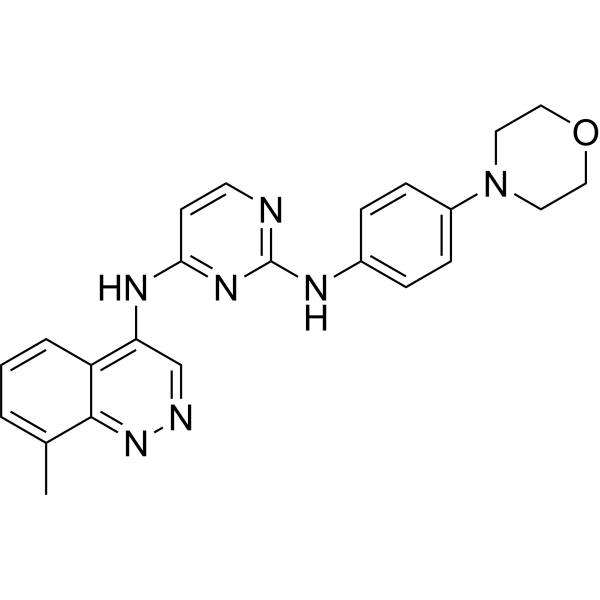 0 ImagesCat. No.: HY-151283CAS No.: 2785430-89-7ALK5-IN-33 (Compound EX-10) is a selective, orally active ALK-5 inhibitor with an IC50 ≤10 nM.
-
Endotrophin (Mus musculus)
 0 ImagesCat. No.: HY-P5081CAS No.: 1678414-54-4Endotrophin (Mus musculus) is an adipokine, a cleavage fragment derived from Collagen VI, whose levels are elevated in adipose tissue and breast tumors of obese mice. Endotrophin (Mus musculus) activates the TGF-β signaling pathway and reduces the expression of hormone-sensitive lipase. Endotrophin (Mus musculus) induces adipogenesis, lipid accumulation, fibrosis, inflammation, angiogenesis, adipose tissue expansion, epithelial-mesenchymal transition, and insulin resistance; it also induces Cisplatin (HY-17394) resistance in cancer cells. Endotrophin (Mus musculus) can be used in research related to metabolic diseases such as obesity and type 2 diabetes, as well as cancers such as breast cancer.
-
Axl-IN-21
 0 ImagesCat. No.: HY-179535CAS No.: 1958081-87-2Axl-IN-21 is an orally active and selective AXL inhibitor (Kd = 2.7 nM, IC50 = 4.0 nM). Axl-IN-21 displays kinase selectivity and retains strong activity against cancer-related mul-kinases (Mer with Kd = 1.4 nM, DDR1 with IC50 = 22.2 nM, HIPK4 with Kd = 11.0 nM and LOK with Kd =10 nM). Axl-IN-21 overcomes tumor microenvironment-driven resistance by blocking CAF-derived GAS6-induced AXL/STAT3/ABCG1 signaling, restoring chemosensitivity and inhibiting drug efflux in gastric cancer (GC). Axl-IN-21 suppresses TGF-β1-induced epithelial-mesenchymal transition (EMT), migration, and invasion in MDA-MB-231 cells. Axl-IN-21 exhibits no significant cytotoxicity in non-cancerous cells. Axl-IN-21 can be research for triple negative breast cancer and gastric cancer[1] [2] .
-
1-Oleoyl lysophosphatidic acid sodium (GMP)
 0 ImagesCat. No.: HY-107614GCAS No.: 325465-93-8Synonyms: 1-Oleoyl-sn-glycero-3-phosphate sodium (GMP); 1-Oleoyl-LPA sodium (GMP)1-Oleoyl lysophosphatidic acid sodium (GMP) is the GMP-grade form of 1-Oleoyl lysophosphatidic acid sodium (HY-107614). GMP-grade small molecules serve as auxiliary reagents in cell therapy. 1-Oleoyl lysophosphatidic acid sodium is a bioactive lipid signaling molecule. 1-Oleoyl lysophosphatidic acid sodium inhibits lysoPLD-catalyzed hydrolysis of lysophosphatidylcholine and FS-3. 1-Oleoyl lysophosphatidic acid sodium activates LPA1 and LPA2, thereby triggering calcium mobilization, NFATc1 translocation, Rho/ROCK activation, Smad2/3 phosphorylation and c-Fos expression. 1-Oleoyl lysophosphatidic acid sodium induces anxiety-like, depression-like and hypoactivity phenotypes, regulates osteoclast cytoskeleton and viability, reduces osteoclast bone resorptive activity, and drives mesenchymal stem cell differentiation into myofibroblast-like cells. 1-Oleoyl lysophosphatidic acid sodium stimulates the secretion of transforming growth factor-β1 and stromal cell-derived factor-1. 1-Oleoyl lysophosphatidic acid sodium is applicable to research related to anxiety, depression and ovarian cancer.
-
TP-DEA2
 0 ImagesCat. No.: HY-162929CAS No.: 2871739-84-1TP-DEA2, a predictable-release Triptolide (HY-32735) prodrug, block Bleomycin-induced pulmonary fibrosis and inflammation. TP-DEA2 significantly inhibits α-SMA production.
-
ALK5-IN-80
 0 ImagesCat. No.: HY-161662CAS No.: 3039952-63-8
-
GM103 antibody
 0 ImagesCat. No.: HY-P991863GM103 Antibody is a humanized IgG1 antibody against AMHRII. GM103 Antibody can generate antibody drug conjugate (ADC) (GM103) with a potent auristatin derivative. GM103 Antibody can be used for the study of ovarian cancer and hepatocarcinoma.
-
KRFK
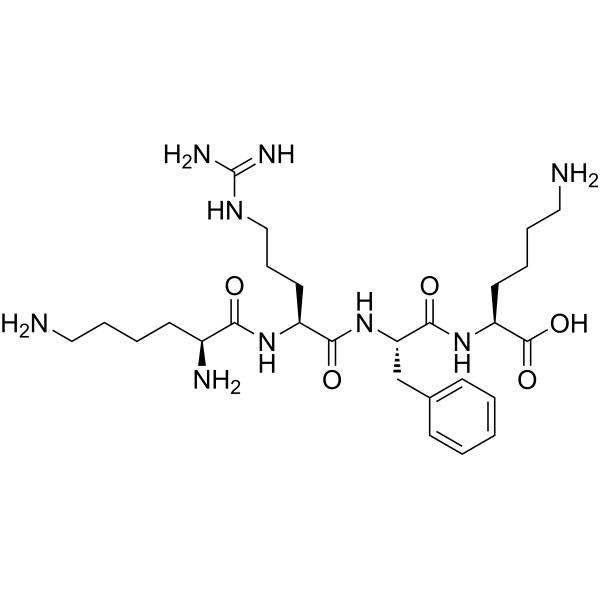 0 ImagesCat. No.: HY-P3970CAS No.: 162290-78-0
-
Rinvatercept
 0 ImagesCat. No.: HY-P991158CAS No.: 2996105-98-5Rinvatercept, a fusion protein, is a glycyl (1)-chimeric N-terminal (1-108)-peptide (2-109) combined from the sequences of the extracellular domains of the human ACVR2A/B, and is fused via a G3 peptide linker (110-112) to an immunoglobulin G1 (IgG1) Fc fragment. Rinvatercept can be used for research of neuromuscular disease.
-
RO-7303509
 0 ImagesCat. No.: HY-P992453Synonyms: MTBT1466A; RG-6315RO-7303509 (MTBT1466A; RG-6315) is a human monoclonal antibody and TGFβ3 neutralizer. RO-7303509 targets the profibrotic mediator TGFβ3 to alleviate fibrosis. RO-7303509 can be administered via subcutaneous or intravenous routes and is used in research on systemic sclerosis. Recommended isotype control: Human IgG1 kappa, Isotype Control (HY-P99001).
-
Buloxibutid hydrochloride
 0 ImagesCat. No.: HY-100113ACAS No.: 1947313-60-1Synonyms: AT2 receptor agonist C21 hydrochlorideBuloxibutid (AT2 receptor agonist C21) hydrochloride is an orally active, selective angiotensin II type 2 receptor (AT2R) agonist, with a Ki value of 0.4 nM for porcine AT2R. Buloxibutid hydrochloride exerts vasodilatory, anti-inflammatory, antifibrotic (promoting the expression of collagenase MMP-13) and tissue repair effects mainly by activating the NO/cGMP pathway, inhibiting the pro-proliferative MAPK signaling, and suppressing the pro-fibrotic TGF-β/Smad pathway and inflammatory NF-κB pathway. Buloxibutid hydrochloride can be used in research related to idiopathic pulmonary fibrosis, hypertension, systemic sclerosis and other conditions.
-
J-1149
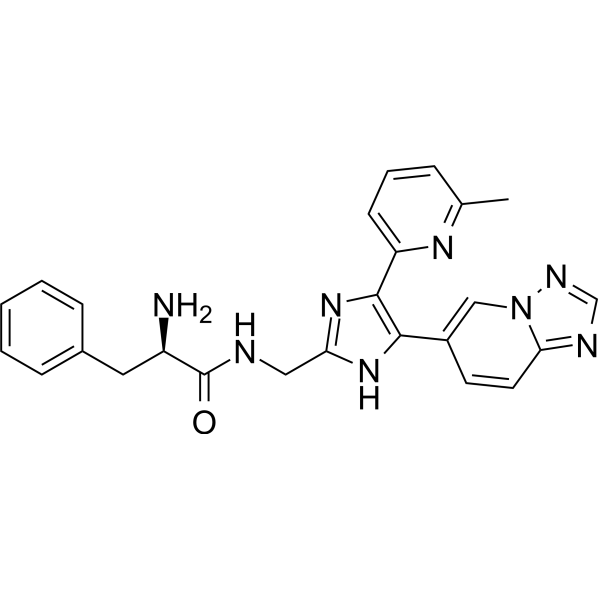 0 ImagesCat. No.: HY-163429CAS No.: 2883580-95-6
-
Phenamil
 0 ImagesPhenamil is a compound that promotes bone repair and regulates stem cell differentiation. It can activate the bone morphogenetic protein signaling pathway to promote bone repair, but it also induces adipogenesis. A specific 3D scaffold strategy can improve its induced osteogenic differentiation and reduce adipogenesis.




