



TNF Receptor
Tumor Necrosis Factor Receptor; TNFR
Tumor necrosis factor (TNF) is a major mediator of apoptosis as well as inflammation and immunity, and it has been implicated in the pathogenesis of a wide spectrum of human diseases, including sepsis, diabetes, cancer, osteoporosis, multiple sclerosis, rheumatoid arthritis, and inflammatory bowel diseases.
TNF-α is a 17-kDa protein consisting of 157 amino acids that is a homotrimer in solution. In humans, the gene is mapped to chromosome 6. Its bioactivity is mainly regulated by soluble TNF-α–binding receptors. TNF-α is mainly produced by activated macrophages, T lymphocytes, and natural killer cells. Lower expression is known for a variety of other cells, including fibroblasts, smooth muscle cells, and tumor cells. In cells, TNF-α is synthesized as pro-TNF (26 kDa), which is membrane-bound and is released upon cleavage of its pro domain by TNF-converting enzyme (TACE).
Many of the TNF-induced cellular responses are mediated by either one of the two TNF receptors, TNF-R1 and TNF-R2, both of which belong to the TNF receptor super-family. In response to TNF treatment, the transcription factor NF-κB and MAP kinases, including ERK, p38 and JNK, are activated in most types of cells and, in some cases, apoptosis or necrosis could also be induced. However, induction of apoptosis or necrosis is mainly achieved through TNFR1, which is also known as a death receptor. Activation of the NF-κB and MAPKs plays an important role in the induction of many cytokines and immune-regulatory proteins and is pivotal for many inflammatory responses.
TNF Receptor Isoform Specific Products
-
TNF Receptor
(685)
View all products
-
TNFRSF1A/
CD120a (8)View all products
-
TNFRSF3/
CD18 (1)View all products
-
TNFRSF4
(5)
View all products
-
TNFRSF5/
CD40 (117)View all products
-
TNFRSF6/
Fas/ (2)CD95 View all products
-
TNFRSF7/
CD27 (2)View all products
-
TNFRSF8/
CD30 (3)View all products
-
TNFRSF9/
4-1BB/ (3)CD137 View all products
-
TNFRSF10B/
DR5/ (1)CD262 View all products
-
TNFRSF12A/
TWEAK (5)View all products
-
TNFRSF16/
NGF Receptor/ (1)CD271 View all products
-
TNFRSF18/
GITR/ (6)CD357 View all products
All Product Categories
-
TNF Receptor Inhibitors
(867)
View all products
-
TNF Receptor Agonists
(35)
View all products
-
TNF Receptor Antagonists
(25)
View all products
-
TNF Receptor Activators
(73)
View all products
-
TNF Receptor Modulators
(8)
View all products
-
TNF Receptor Inducers
(10)
View all products
-
TNF Receptor Controls
(4)
View all products
-
TNF Receptor Ligands
(2)
View all products
-
TNF Receptor Superfamily Proteins
(282)
View all products
-
TNF Receptor Related Products (1220)
Related Products (1220)

-
Recombinant Proteins (282)
-
Antibodies (23)
-
TNF Receptor Signaling Pathway
-
TNF Receptor Isoform Comparison
-
Gamma-glutamylcysteine ammonium
 0 ImagesCat. No.: HY-113402BSynonyms: γ-Glu-Cys ammoniumGamma-glutamylcysteine ammonium (γ-Glu-Cys ammonium) is an orally active, blood-brain barrier permeable dipeptide. Gamma-glutamylcysteine ammonium activates AMPK, SIRT1, IL-4/STAT6, AC/cAMP/PI3K, IGF-1R/IRS1/PI3K, and Nrf2 signaling pathways; it inhibits NF-κB, JAK1/STAT1/3, MAPKs, cadmium-induced p38 MAPK, JNK, and PI3K/Akt signaling pathways. Gamma-glutamylcysteine ammonium regulates macrophage polarization, modulates the trafficking of CD36 and GLUT4, induces glutathione synthesis, improves metabolic dysfunction, reduces lipid deposition, ameliorates glucose homeostasis, inhibits apoptosis (Apoptosis), stabilizes mitochondria, suppresses lipid peroxidation, iron accumulation and ferroptosis (Ferroptosis), reduces ds-HMGB1 levels, reverses mechanical hyperalgesia, and alleviates hepatic lipid droplet formation. Gamma-glutamylcysteine ammonium is applicable to research related to inflammatory bowel disease, type 2 diabetes, cadmium-induced neurotoxicity, Alzheimer's disease, cerebral ischemia/reperfusion injury, neuropathy, and alcoholic liver disease.
-
ODE-(S)-HPMPA formate
 0 ImagesCat. No.: HY-173595CAS No.: 3032979-17-9ODE-(S)-HPMPA formate is an antiviral compound with strong inhibitory activity against poxviruses and adenoviruses. ODE-(S)-HPMPA formate activates TNF-α secretion.
-
NS-6740
 0 ImagesNS-6740 is a silent agonist of α7 nicotinic acetylcholine receptor (α7 nAChR) with an IC50 of 3 nM. NS-6740 reduces LPS-induced TNF-α release and regulates the cholinergic anti-inflammatory pathway. NS-6740 exerts anti-inflammatory effects. NS-6740 reduces long-term potentiation in hippocampal brain slices. NS-6740 can be used in research related to neuroinflammation and schizophrenia.
-
2-O-Methyl PAF C-16
 0 ImagesCat. No.: HY-134070CAS No.: 78858-44-3Synonyms: ET-18-O-OCH32-O-Methyl PAF C-16 (ET-18-O-OCH3), a structural analog of the mediator of inflammation platelet-activating factor (PAF), is a cytotoxic ether lipid. 2-O-Methyl PAF C-16 stimulates TNF-α release in murine macrophages.
-
Maceneolignan A
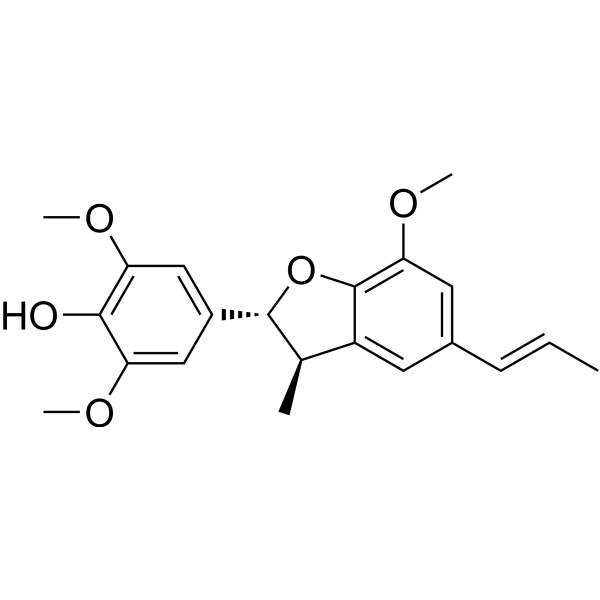 0 ImagesCat. No.: HY-N12116CAS No.: 1967042-42-7Maceneolignan A is a natural product that can be isolated from mace, the aril of Myristica fragrans (Myristicaceae). Maceneolignan A inhibits the release of β-hexosaminidase in RBL-2H3 cells, with an IC50 of 48.4 μM. Maceneolignan A inhibits the release of TNF-α in antigen stimulated RBL-2H3 cells, with an IC50 of 63.7 μM.
-
Arecaidine hydrochloride (Standard)
 0 ImagesCat. No.: HY-N2368ARCAS No.: 6018-28-6Arecaidine hydrochloride (Standard) is the analytical standard of Arecaidine hydrochloride (HY-N2368A). This product is intended for research and analytical applications. Arecaidine hydrochloride is a GABA transport system inhibitor. Arecaidine hydrochloride inhibits the proliferation of oral mucosal fibroblasts, increases the secretion of IL-6, TGF-β and TNF-α in cells, downregulates the expression of PPAR-γ and PCK1 in cells, and upregulates the expression of TGF-β1. Arecaidine hydrochloride inhibits the uptake of γ-aminobutyric acid and β-alanine by the central nervous system of cats. Arecaidine hydrochloride inhibits hPAT1-mediated L-[3H]proline uptake in cells. Arecaidine hydrochloride can be used in research related to neurological diseases.
-
LY 303511
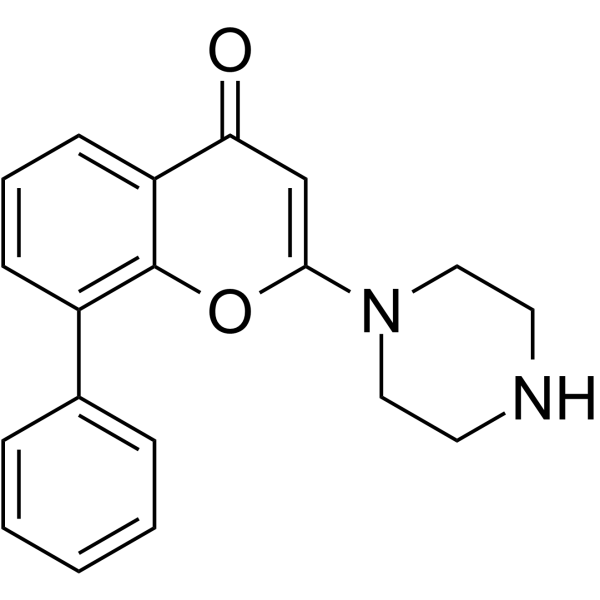 0 ImagesCat. No.: HY-15643CAS No.: 154447-38-8LY303511 is a structural analogue of LY294002. LY303511 does not inhibit PI3K. LY303511 enhances TRAIL sensitivity of SHEP-1 neuroblastoma cells. LY303511 reversibly blocks K+ currents (IC50=64.6±9.1 μM) in MIN6 insulinoma cells.
-
Tiratricol (Standard)
 0 ImagesTiratricol (Standard) is the analytical standard of Tiratricol. This product is intended for research and analytical applications. Tiratricol is an orally available thyroid hormone analog that inhibits pituitary thyroid-stimulating hormone secretion. Tiratricol is an intracellular toxin neutralizer that inhibits LPS and lipid A cytotoxicity with IC50s of 20 μM and 32 μM, respectively. Tiratricol reduces TNF production in lipopolysaccharide-stimulated macrophages. Tiratricol also has antiviral activity and is an inhibitor of yellow fever virus (Flavivirus). It can bind to the RdRp domain of the viral NS5 protein to hinder YFV replication..
-
JH-I-25
 0 ImagesCat. No.: HY-138834CAS No.: 1042673-20-0JH-I-25 is an orally active IRAK1 and IRAK4 inhibitor. JH-I-25 inhibits LPS-induced IRAK4 phosphorylation, IRAK1 degradation, MAPK activation, and the expression of proinflammatory cytokines TNF-α and IL-6 in lung tissues. JH-I-25 improves the survival rate of LPS-induced septic mice and serves as an IRAK4 recruiter in the design of proteolysis-targeting chimeric molecules. JH-I-25 can be used in research related to diffuse large B-cell lymphoma, Waldenström's macroglobulinemia, septic shock, rheumatoid arthritis, atherosclerosis, Alzheimer's disease, acute lung injury, sepsis, and psoriasis.
-
β-Carotene-15,15'-epoxide
 0 ImagesCat. No.: HY-N15378CAS No.: 132541-62-9β-carotene-15,15ʹ-epoxide is a XIAP antagonist with apoptosis-inducing and antitumor activity, found in the leaves of Spondias mombin. In a DMBA (HY-W011845)-induced rat model of breast cancer, β-carotene-15,15ʹ-epoxide binds to the BIR3 domain of the anti-apoptotic protein XIAP, blocking its interaction with caspase-9 and thereby promoting tumor cell apoptosis. In addition, β-carotene-15,15ʹ-epoxide significantly downregulates the expression of BCL-2, COX-2, and TNF-α in tumor tissues, reduces MDA levels, increases catalase activity, and modulates serum levels of LDH, ALP, and ALT, demonstrating strong antioxidant, anti-inflammatory, and metabolic protective effects. β-carotene-15,15ʹ-epoxide may be used in research on inflammation-related conditions and cancers such as breast cancer.
-
7-Acetoxycoumarin
 0 ImagesCat. No.: HY-N20744CAS No.: 10387-49-2Synonyms: Acetylumbelliferone7-Acetoxycoumarin (Acetylumbelliferone) is an anti-inflammatory inhibitor with antibacterial and amoebicidal activities. 7-Acetoxycoumarin reduces the phosphorylation levels of ERK, JNK, NF-κB and p38 MAPK. 7-Acetoxycoumarin downregulates the protein and mRNA expression levels of iNOS and COX-2. 7-Acetoxycoumarin inhibits the production of IL-1β, IL-6, TNF-α, NO and PG2. 7-Acetoxycoumarin reduces the degradation of IκBα. 7-Acetoxycoumarin can be used in studies related to amoebiasis and Bacillus lentus infection.
-
Sciadopitysin (Standard)
 0 ImagesSciadopitysin (Standard) is the analytical standard of Sciadopitysin. This product is intended for research and analytical applications. Sciadopitysin is a type of biflavonoids in leaves from ginkgo biloba. Sciadopitysi inhibits RANKL-induced osteoclastogenesis and bone loss by inhibiting NF-κB activation and reducing the expression of c-Fos and NFATc1.
-
Pochonin D
 0 ImagesCat. No.: HY-N14780CAS No.: 544712-82-5Synonyms: (+)-Pochonin DPochonin D ((+)-Pochonin D) is an inhibitor of heat shock protein 90 (Hsp90) with antiviral and anti-inflammatory activities. Pochonin D inhibits Hsp90, affects the homeostasis, folding and assembly processes of viral proteins, and reduces the replication capacity of viruses. Pochonin D is a copper ion carrier that can induce cuproptosis in triple-negative breast cancer cells by targeting PRDX1. Pochonin D reduces the infiltration of inflammatory cells, decreases the secretion of inflammatory cytokines such as TNF-α and IL-1β, and alleviates inflammatory responses. Pochonin D is a promising candidate for research on human rhinovirus (HRV) infection and cancer.
-
Patrinoside aglucone
 0 ImagesCat. No.: HY-160121CAS No.: 76319-15-8Synonyms: Patrinoside aglyconePatrinoside aglucone (Compound 8) is an iridoid glucoside that can be isolated from the Valeriana tuberosa. Patrinoside aglucone has potent anticancer activity with G2/M phase tumor cell cycle arrest and apoptosis induction. Patrinoside aglucone also significantly inhibits the proliferation of cancer stem cells (such as MDA-MB-231 and U-251MG cells). Patrinoside aglucone has great anti-inflammatory activity by inhibiting NO release (IC50: 43.44 μM) and significantly reduces the level of TNF-α, IL-1β, IL-6, PGE2 and COX-2.
-
BU224 hydrochloride (Standard)
 0 ImagesCat. No.: HY-101170RCAS No.: 205437-64-5BU224 (hydrochloride) (Standard) is the analytical standard of BU224 (hydrochloride). This product is intended for research and analytical applications. BU224 hydrochloride is a selective and high affinity imidazoline I2 receptor ligand, with a Ki of 2.1 nM. BU224 hydrochloride is sometimes used as an I2 receptor antagonist. BU224 hydrochloride exerts neuroprotective effects, with anti-inflammatory and anti-apoptotic properties. BU224 hydrochloride improves memory in 5XFAD mice, enlarging dendritic spines and reducing Aβ-induced changes in NMDARs. BU224 hydrochloride can be used for Alzheimer's disease research.
-
DBM 1285 dihydrochloride
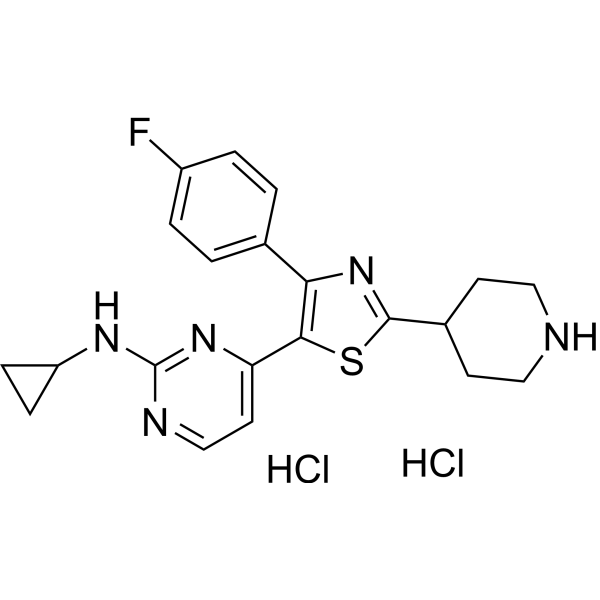 0 ImagesCat. No.: HY-110343CAS No.: 1782532-29-9DBM 1285 dihydrochloride is an orally active TNF-α production inhibitor with anti-inflammatory effects. DBM 1285 dihydrochloride inhibits Lipopolysaccharide (LPS)-induced TNF-α secretion in various cells of macrophage/monocyte lineage.
-
QNZ (Standard)
 0 ImagesSynonyms: EVP4593 (Standard)QNZ (Standard) is the analytical standard of QNZ. This product is intended for research and analytical applications. QNZ (EVP4593) shows strong inhibitory effects on NF-κB transcriptional activation and TNF-α production with IC50s of 11 and 7 nM, respectively. QNZ (EVP4593) is a neuroprotective inhibitor of SOC channel.
-
1,2-DLPC (Standard)
 0 ImagesCat. No.: HY-107737RCAS No.: 18194-25-7Synonyms: 1,2-Dilauroyl-sn-glycero-3-phosphocholine (Standard)1,2-DLPC (Standard) is the analytical standard of 1,2-DLPC (HY-107737). This product is intended for research and analytical applications. 1,2-DLPC (1,2-Dilauroyl-sn-glycero-3-phosphocholine) is a ligand for LRH-1 agonists. 1,2-DLPC is a phospholipid used in the synthesis of liposomes. 1,2-DLPC enhances fat breaKdown and apoptosis in fat cells through a TNFα-dependent pathway, while also inhibiting palmitate-induced insulin resistance through PPARα-mediated inflammation in muscle cells.
-
BSF2
 0 ImagesCat. No.: HY-183008CAS No.: 179118-06-0BSF2 is a anti-Leishmania agent. BSF2 modulates gene expression linked to ubiquitination, chromatin remodeling, and peroxisomal membrane transport pathways in Leishmania braziliensis. BSF2 downregulates TNF, IL-17, NF-κB, and Toll-like receptor pathways in Leishmania-infected macrophages. BSF2 exerts leishmanicidal activity against intracellular Leishmania braziliensis amastigotes. BSF2 can be used for the research of american tegumentary leishmaniasis.
-
Lenalidomide-d4
 0 ImagesCat. No.: HY-A0003S3CAS No.: 1130061-52-7Synonyms: CC-5013-d4Lenalidomide-d4 (CC-5013-d4) is the d4-labeled Lenalidomide (HY-A0003). Lenalidomide (CC-5013) is an orally active immunomodulatory agent that binds CRBN as a molecular glue to alter substrate specificity, inducing ubiquitination and proteasome-dependent degradation of IKZF1, IKZF3 and CK1α. Lenalidomide induces apoptosis by degrading IKZF1/3, and activates p53 by degrading CK1α. Lenalidomide promotes IL-2 release and effector functions of CD8+ T/NK cells, while inhibiting TNF-α secretion and M1-type pyroptosis. Lenalidomide can be used in research related to hematological malignancies, acute liver failure and acute kidney injury.




