



TNF Receptor
Tumor Necrosis Factor Receptor; TNFR
Tumor necrosis factor (TNF) is a major mediator of apoptosis as well as inflammation and immunity, and it has been implicated in the pathogenesis of a wide spectrum of human diseases, including sepsis, diabetes, cancer, osteoporosis, multiple sclerosis, rheumatoid arthritis, and inflammatory bowel diseases.
TNF-α is a 17-kDa protein consisting of 157 amino acids that is a homotrimer in solution. In humans, the gene is mapped to chromosome 6. Its bioactivity is mainly regulated by soluble TNF-α–binding receptors. TNF-α is mainly produced by activated macrophages, T lymphocytes, and natural killer cells. Lower expression is known for a variety of other cells, including fibroblasts, smooth muscle cells, and tumor cells. In cells, TNF-α is synthesized as pro-TNF (26 kDa), which is membrane-bound and is released upon cleavage of its pro domain by TNF-converting enzyme (TACE).
Many of the TNF-induced cellular responses are mediated by either one of the two TNF receptors, TNF-R1 and TNF-R2, both of which belong to the TNF receptor super-family. In response to TNF treatment, the transcription factor NF-κB and MAP kinases, including ERK, p38 and JNK, are activated in most types of cells and, in some cases, apoptosis or necrosis could also be induced. However, induction of apoptosis or necrosis is mainly achieved through TNFR1, which is also known as a death receptor. Activation of the NF-κB and MAPKs plays an important role in the induction of many cytokines and immune-regulatory proteins and is pivotal for many inflammatory responses.
TNF Receptor Isoform Specific Products
-
TNF Receptor
(701)
View all products
-
TNFRSF1A/
CD120a (8)View all products
-
TNFRSF3/
CD18 (1)View all products
-
TNFRSF4
(5)
View all products
-
TNFRSF5/
CD40 (142)View all products
-
TNFRSF6/
Fas/ (2)CD95 View all products
-
TNFRSF7/
CD27 (2)View all products
-
TNFRSF8/
CD30 (3)View all products
-
TNFRSF9/
4-1BB/ (3)CD137 View all products
-
TNFRSF10B/
DR5/ (1)CD262 View all products
-
TNFRSF12A/
TWEAK (5)View all products
-
TNFRSF16/
NGF Receptor/ (1)CD271 View all products
-
TNFRSF18/
GITR/ (6)CD357 View all products
All Product Categories
-
TNF Receptor Inhibitors
(903)
View all products
-
TNF Receptor Agonists
(35)
View all products
-
TNF Receptor Antagonists
(25)
View all products
-
TNF Receptor Activators
(80)
View all products
-
TNF Receptor Modulators
(8)
View all products
-
TNF Receptor Inducers
(11)
View all products
-
TNF Receptor Controls
(4)
View all products
-
TNF Receptor Ligands
(2)
View all products
-
TNF Receptor Superfamily Proteins
(282)
View all products
-
TNF Receptor Related Products (1268)
Related Products (1268)

-
Recombinant Proteins (282)
-
Antibodies (23)
-
TNF Receptor Signaling Pathway
-
TNF Receptor Isoform Comparison
-
BU224 hydrochloride (Standard)
 0 ImagesCat. No.: HY-101170RCAS No.: 205437-64-5BU224 (hydrochloride) (Standard) is the analytical standard of BU224 (hydrochloride). This product is intended for research and analytical applications. BU224 hydrochloride is a selective and high affinity imidazoline I2 receptor ligand, with a Ki of 2.1 nM. BU224 hydrochloride is sometimes used as an I2 receptor antagonist. BU224 hydrochloride exerts neuroprotective effects, with anti-inflammatory and anti-apoptotic properties. BU224 hydrochloride improves memory in 5XFAD mice, enlarging dendritic spines and reducing Aβ-induced changes in NMDARs. BU224 hydrochloride can be used for Alzheimer's disease research.
-
DBM 1285 dihydrochloride
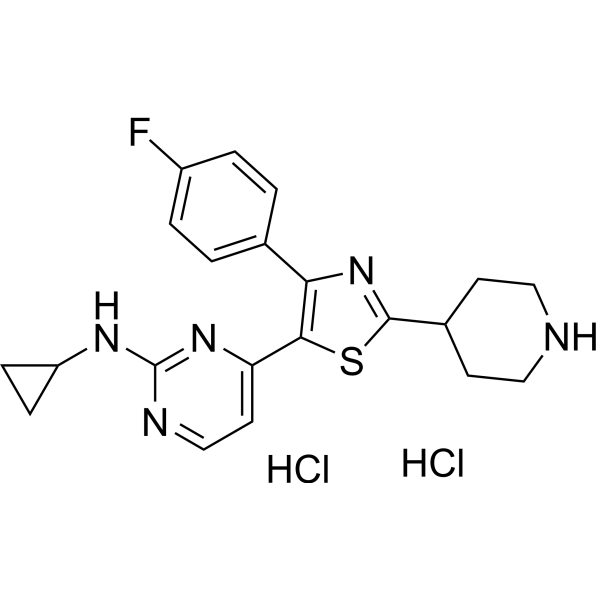 0 ImagesCat. No.: HY-110343CAS No.: 1782532-29-9DBM 1285 dihydrochloride is an orally active TNF-α production inhibitor with anti-inflammatory effects. DBM 1285 dihydrochloride inhibits Lipopolysaccharide (LPS)-induced TNF-α secretion in various cells of macrophage/monocyte lineage.
-
QNZ (Standard)
 0 ImagesSynonyms: EVP4593 (Standard)QNZ (Standard) is the analytical standard of QNZ. This product is intended for research and analytical applications. QNZ (EVP4593) shows strong inhibitory effects on NF-κB transcriptional activation and TNF-α production with IC50s of 11 and 7 nM, respectively. QNZ (EVP4593) is a neuroprotective inhibitor of SOC channel.
-
1,2-DLPC (Standard)
 0 ImagesCat. No.: HY-107737RCAS No.: 18194-25-7Synonyms: 1,2-Dilauroyl-sn-glycero-3-phosphocholine (Standard)1,2-DLPC (Standard) is the analytical standard of 1,2-DLPC (HY-107737). This product is intended for research and analytical applications. 1,2-DLPC (1,2-Dilauroyl-sn-glycero-3-phosphocholine) is a ligand for LRH-1 agonists. 1,2-DLPC is a phospholipid used in the synthesis of liposomes. 1,2-DLPC enhances fat breaKdown and apoptosis in fat cells through a TNFα-dependent pathway, while also inhibiting palmitate-induced insulin resistance through PPARα-mediated inflammation in muscle cells.
-
BSF2
 0 ImagesCat. No.: HY-183008CAS No.: 179118-06-0BSF2 is a anti-Leishmania agent. BSF2 modulates gene expression linked to ubiquitination, chromatin remodeling, and peroxisomal membrane transport pathways in Leishmania braziliensis. BSF2 downregulates TNF, IL-17, NF-κB, and Toll-like receptor pathways in Leishmania-infected macrophages. BSF2 exerts leishmanicidal activity against intracellular Leishmania braziliensis amastigotes. BSF2 can be used for the research of american tegumentary leishmaniasis.
-
Lenalidomide-d4
 0 ImagesCat. No.: HY-A0003S3CAS No.: 1130061-52-7Synonyms: CC-5013-d4Lenalidomide-d4 (CC-5013-d4) is the d4-labeled Lenalidomide (HY-A0003). Lenalidomide (CC-5013) is an orally active immunomodulatory agent that binds CRBN as a molecular glue to alter substrate specificity, inducing ubiquitination and proteasome-dependent degradation of IKZF1, IKZF3 and CK1α. Lenalidomide induces apoptosis by degrading IKZF1/3, and activates p53 by degrading CK1α. Lenalidomide promotes IL-2 release and effector functions of CD8+ T/NK cells, while inhibiting TNF-α secretion and M1-type pyroptosis. Lenalidomide can be used in research related to hematological malignancies, acute liver failure and acute kidney injury.
-
LASSBio-1829 hydrochloride
 0 ImagesCat. No.: HY-118973CAS No.: 1807810-16-7LASSBio-1829 hydrochloride is an orally active IKK2 inhibitor with an IC50 of 3.8 μM against the human target (Sf21 cells). LASSBio-1829 hydrochloride blocks signal transduction of the inflammation-associated NF-κB activation pathway. LASSBio-1829 hydrochloride reduces leukocyte migration, TNF-α biosynthesis, ROS production and NO production. LASSBio-1829 hydrochloride exhibits anti-inflammatory activity in a carrageenan-induced subcutaneous air pouch mouse model. LASSBio-1829 hydrochloride alleviates licking behavior during the inflammatory phase of the mouse formalin test. LASSBio-1829 hydrochloride can be used in inflammation-related research.
-
19-epi-Scholaricine
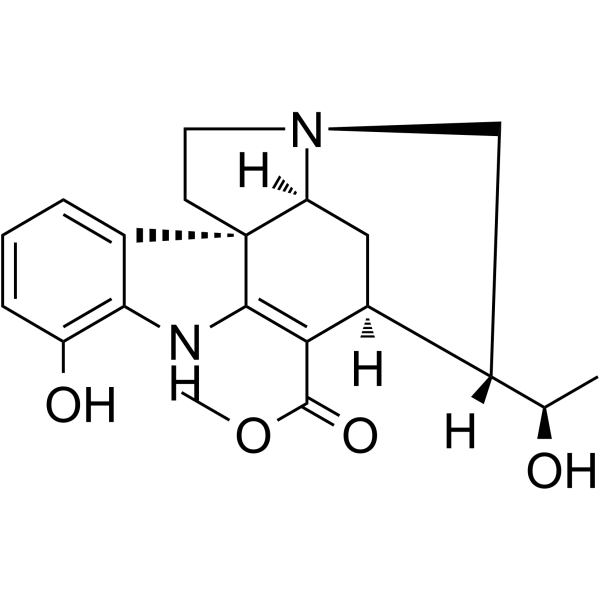 0 Images19-epi-Scholaricine is an orally active indole alkaloid. 19-epi-Scholaricine downregulates the expression of profibrotic/apoptotic proteins (HRAS, HSP90AA1, KDR) and upregulates the expression of cell cycle-related protein (CDK2). 19-epi-Scholaricine suppresses ROS production and reduces the release of inflammatory mediators, thereby attenuating podocyte apoptosis, renal inflammation and oxidative stress by inhibiting AKT/mTOR. 19-epi-Scholaricine can be used in the research of chronic glomerulonephritis and membranous nephropathy.
-
Anti-Mouse GITR (LALA-PG) Antibody (DTA-1)
 0 ImagesCat. No.: HY-P990240Purity: 98.19%Anti-Mouse GITR (LALA-PG) Antibody (DTA-1) is an anti-mouse GITR IgG2a monoclonal antibody. Anti-Mouse GITR (LALA-PG) Antibody (DTA-1) is a chimeric antibody of the original DTA-1 antibody (HY-P990124). Anti-Mouse GITR (LALA-PG) Antibody (DTA-1) contains the LALA-PG mutation region. Anti-Mouse GITR (LALA-PG) Antibody (DTA-1) can be used for research on cancer and allergic conditions. The recommed isotype control of Anti-Mouse GITR (LALA-PG) Antibody (DTA-1) is Mouse IgG2a kappa, Isotype Control (HY-P99978).
-
GW-405833 (Standard)
 0 ImagesCat. No.: HY-110036RCAS No.: 180002-83-9Synonyms: L768242 (Standard)GW-405833 (Standard) is the analytical standard of GW-405833 (HY-110036). This product is intended for research and analytical applications. GW-405833 (L768242) is a potent, selective cannabinoid receptor 2 (CB2) agonist. GW405833 has EC50 and Ki values of 0.65 nM and 3.92 nM for CB2, and EC50 and Ki values of 16.1 μM and 4772 nM for CB1. GW-405833 also exhibits non-competitive CB1 antagonist, exerting its analgesic and and anti-inflammatory effect through a CB1 receptor (rather than CB2) dependent mechanism. GW-405833 can significantly inhibit the production of cAMP stimulated by Forskolin (HY-15371). GW405833 inhibits glycolysis by down-regulating HIF-1α, thereby alleviating acute liver failure (ALF).
-
GO-Y078
 0 ImagesCat. No.: HY-137059CAS No.: 1217503-60-0GO-Y078 is a curcumin (HY-N0005) analog. GO-Y078 activates p38/JNK1/2. GO-Y078 activates the MAPK pathway, Caspase 3/8/9, PARP, AP-1, DR5, and TP53, while inhibiting cIAP-1, XIAP, and NF-κB. GO-Y078 induces sub-G1/G2/M phase arrest and Apoptosis. GO-Y078 impairs angiogenesis. GO-Y078 can be used in research related to osteosarcoma, cervical cancer, oral squamous cell carcinoma, and peritoneal metastasis of gastric cancer.
-
AX-024 hydrochloride (Standard)
 0 ImagesCat. No.: HY-107390ARCAS No.: 1704801-24-0AX-024 hydrochloride (Standard) is the analytical standard of AX-024 (hydrochloride) (HY-107390A). This product is intended for research and analytical applications. AX-024 hydrochloride is an orally available, first-in-class inhibitor of the TCR-Nck interaction that selectively inhibits TCR-triggered T cell activation with an IC50 ~1 nM. AX-024 hydrochloride modulates cell signaling by targeting SH3 domains. AX-024 hydrochloride has low-acute toxicity and high potency and selectivity, and strongly inhibit the production of IL-6, TNF-α, IFN-γ, IL-10 and IL-17A.
-
M04
 0 ImagesCat. No.: HY-168384CAS No.: 875158-73-9M04 is an agonist of STING. It induces the expression of the IFN reporter gene in HEK293T cells expressing wild-type human STING, but does not induce this expression in HEK293T cells expressing the R71H-G230A-R293Q (HAQ) STING variant or in mouse RAW 264.7 cells, indicating that its activity is dependent on allelic and species variations. M04 induces the production of TNF-α, IL-10, IL-1β, and IL-12p70 in human peripheral blood mononuclear cells (PBMCs). At a concentration of 50 µM, M04 stimulates dendritic cells isolated from PBMCs to express the MHC class II cell surface receptor HLA-DR and co-stimulatory molecules CD40, CD80, and CD86, and also enhances their ability to activate T cells in an ex vivo assay. M04 can be used in research on inflammatory immune diseases.
-
Lubiprostone-d7
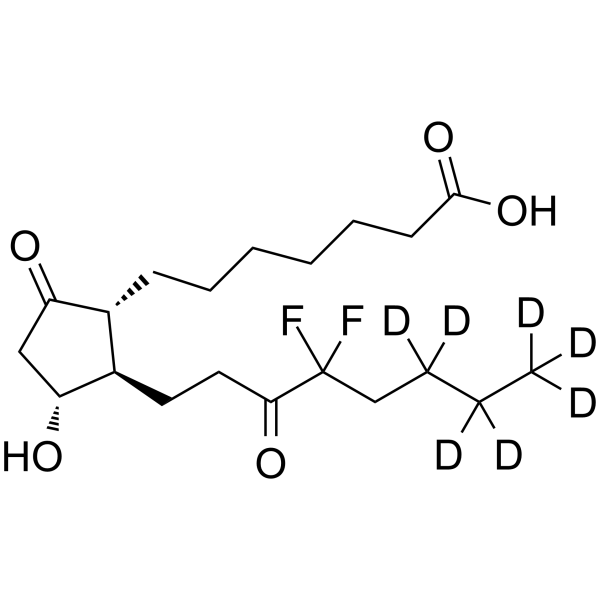 0 ImagesCat. No.: HY-B0679SCAS No.: 1217675-13-2Synonyms: RU-0211-d7; SPI-0211-d7Lubiprostone-d7 (RU-0211-d7) is the deuterium labeled Lubiprostone. Lubiprostone (SPI-0211) increases intestinal fluid secretion through generation of CIC-2/CFTR and activation of cAMP signaling pathway. Lubiprostone inhibits myeloperoxidase (MPO) activity, downregulates Indomethacin (HY-14397)-induced iNOS and TNFα expression. Lubiprostone can be used for chronic constipation research.
-
O-Methylbulbocapnine
 0 ImagesO-Methylbulbocapnine is an aporphine alkaloid that acts as an inhibitor of LPS-induced inflammatory signaling and a dopamine D1R antagonist. O-Methylbulbocapnine inhibits LPS-induced phosphorylation of p38, ERK1/2, c-Jun, NF-κB p65 at Ser536, and Akt, decreases MyD88 protein levels, and reduces NF-κB nuclear translocation and DNA-binding activity. O-Methylbulbocapnine inhibits LPS-induced production of IL-6, TNF-α, PGE2, and NO, and decreases COX-2 and iNOS expression. O-Methylbulbocapnine can be used for research on Alzheimer's disease, cervical cancer, breast cancer, and malaria.
-
IK-862
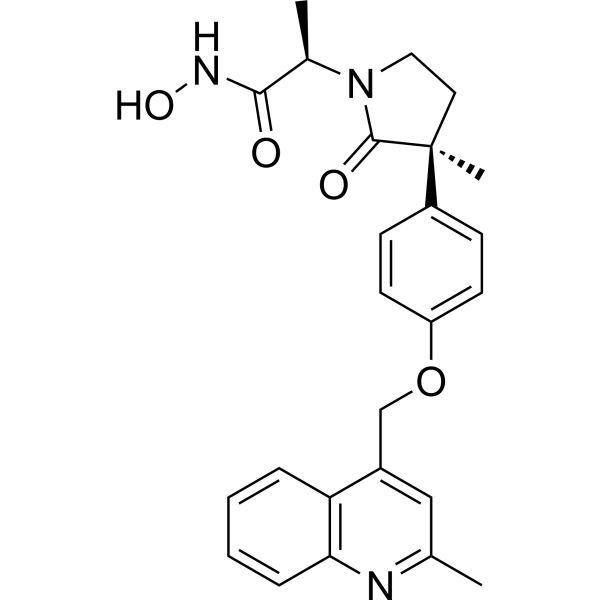 0 ImagesCat. No.: HY-118734CAS No.: 478911-60-3IK-862 is a selective inhibitor of TACE.
-
Diethylcarbamazine citrate (Standard)
 0 ImagesDiethylcarbamazine citrate (Standard) is the analytical standard of Diethylcarbamazine citrate (HY-12642). This product is intended for research and analytical applications. Diethylcarbamazine citrate is an orally active microfilaricidal agent used originally in onchocerciasis and lymphatic filiariasis. Diethylcarbamazine citrate reduces eosinophil trafficking to the lung tissue and exerts anti-allergic effects. Diethylcarbamazine citrate reduces serum levels of leptin, TNF-α, IL-6, MCP-1, glucose, insulin, and triglycerides, and ameliorates insulin resistance without altering body, liver, or adipose tissue weights. Diethylcarbamazine citrate enhances reactive oxygen intermediate expression by polymorphonuclear neutrophils, increases lymphocyte proliferation, and inhibits actinomycetoma lesion development. Diethylcarbamazine citrate can be used for the researches of bronchial asthma, insulin resistance and infection.
-
Apratastat (Standard)
 0 ImagesCat. No.: HY-119307RCAS No.: 287405-51-0Synonyms: TMI-005 (Standard)Apratastat (Standard) is the analytical standard of Apratastat. This product is intended for research and analytical applications. Apratastat (TMI-005) is an orally active, non-selective and reversible TACE/MMPs inhibitor, can inhibit inhibit the release of TNF-α. Apratastat has the potential to overcome radiotherapy-resistance in non-small cell lung cancer (NSCLC). Apratastat is a click chemistry reagent, it contains an Alkyne group and can undergo copper-catalyzed azide-alkyne cycloaddition (CuAAc) with molecules containing Azide groups.
-
N-Desmethyl clomipramine-d7
 0 ImagesCat. No.: HY-12388SSynonyms: Desmethylclomipramine-d7; Norclomipramine-d7N-Desmethyl clomipramine-d7 (Desmethylclomipramine-d7; Norclomipramine-d7) is the deuterated-labeled N-Desmethyl clomipramine (HY-12388). N-Desmethyl clomipramine is the orally active major active metabolite of the tricyclic antidepressant Clomipramine (HY-B0457A), possessing multiple activities including anti-inflammatory, antioxidant, antibacterial, and antiparasitic effects. N-Desmethyl clomipramine blocks autophagosome-lysosome fusion, leading to the accumulation of LC3-II, p62, ATG7, WIPI2, and ATG5-12, reactivates the p53/p21 pathway, induces apoptosis through C-PARP and C-CAS3, and inhibits the proliferation, migration, and invasion of renal cancer cells. N-Desmethyl clomipramine inhibits LdTOPIA, inducing R-loop accumulation in the nucleus of Leishmania, ultimately causing parasite death. N-Desmethyl clomipramine can be used for research on depression, metastatic renal cell carcinoma, and leishmaniasis.
-
Forsythoside B (Standard)
 0 ImagesForsythoside B (Standard) is the analytical standard of Forsythoside B. This product is intended for research and analytical applications. Forsythoside B is a phenylethanoid glycoside isolated from Forsythia suspensa (Thunb.) Vahl, a Chinese folk medicinal plant for treating inflammatory diseases and promoting blood circulation. Forsythoside B could inhibit TNF-alpha, IL-6, IκB and modulate NF-κB.




