



TNF Receptor
Tumor Necrosis Factor Receptor; TNFR
Tumor necrosis factor (TNF) is a major mediator of apoptosis as well as inflammation and immunity, and it has been implicated in the pathogenesis of a wide spectrum of human diseases, including sepsis, diabetes, cancer, osteoporosis, multiple sclerosis, rheumatoid arthritis, and inflammatory bowel diseases.
TNF-α is a 17-kDa protein consisting of 157 amino acids that is a homotrimer in solution. In humans, the gene is mapped to chromosome 6. Its bioactivity is mainly regulated by soluble TNF-α–binding receptors. TNF-α is mainly produced by activated macrophages, T lymphocytes, and natural killer cells. Lower expression is known for a variety of other cells, including fibroblasts, smooth muscle cells, and tumor cells. In cells, TNF-α is synthesized as pro-TNF (26 kDa), which is membrane-bound and is released upon cleavage of its pro domain by TNF-converting enzyme (TACE).
Many of the TNF-induced cellular responses are mediated by either one of the two TNF receptors, TNF-R1 and TNF-R2, both of which belong to the TNF receptor super-family. In response to TNF treatment, the transcription factor NF-κB and MAP kinases, including ERK, p38 and JNK, are activated in most types of cells and, in some cases, apoptosis or necrosis could also be induced. However, induction of apoptosis or necrosis is mainly achieved through TNFR1, which is also known as a death receptor. Activation of the NF-κB and MAPKs plays an important role in the induction of many cytokines and immune-regulatory proteins and is pivotal for many inflammatory responses.
TNF Receptor Isoform Specific Products
-
TNF Receptor
(701)
View all products
-
TNFRSF1A/
CD120a (8)View all products
-
TNFRSF3/
CD18 (1)View all products
-
TNFRSF4
(5)
View all products
-
TNFRSF5/
CD40 (142)View all products
-
TNFRSF6/
Fas/ (2)CD95 View all products
-
TNFRSF7/
CD27 (2)View all products
-
TNFRSF8/
CD30 (3)View all products
-
TNFRSF9/
4-1BB/ (3)CD137 View all products
-
TNFRSF10B/
DR5/ (1)CD262 View all products
-
TNFRSF12A/
TWEAK (5)View all products
-
TNFRSF16/
NGF Receptor/ (1)CD271 View all products
-
TNFRSF18/
GITR/ (6)CD357 View all products
All Product Categories
-
TNF Receptor Inhibitors
(903)
View all products
-
TNF Receptor Agonists
(35)
View all products
-
TNF Receptor Antagonists
(25)
View all products
-
TNF Receptor Activators
(80)
View all products
-
TNF Receptor Modulators
(8)
View all products
-
TNF Receptor Inducers
(11)
View all products
-
TNF Receptor Controls
(4)
View all products
-
TNF Receptor Ligands
(2)
View all products
-
TNF Receptor Superfamily Proteins
(282)
View all products
-
TNF Receptor Related Products (1268)
Related Products (1268)

-
Recombinant Proteins (282)
-
Antibodies (23)
-
TNF Receptor Signaling Pathway
-
TNF Receptor Isoform Comparison

-
SC-67655
 0 ImagesCat. No.: HY-120794CAS No.: 182134-00-5SC 67655 is a potent and stable pentapeptide MHC class II haplotype DR4 (DR4 Dw4 or DRB 1"0401) ligand with an IC50 of 50 nM. SC 67655 can be used for the study of autoimmune diseases.
-
Fosfenopril (Standard)
 0 ImagesSynonyms: Fosinoprilat (Standard); Fosinoprilic acid (Standard); SQ 27519 (Standard)Fosfenopril (Standard) is the analytical standard of Fosfenopril. This product is intended for research and analytical applications. Fosfenopril (Fosinoprilat) is a potent angiotensin converting enzyme (ACE) inhibitor. Fosfenopril alleviates lipopolysaccharide (LPS)-induced inflammation by inhibiting TLR4/NF-κB signaling in monocytes.
-
Anti-neuroinflammation agent-4
 0 ImagesCat. No.: HY-189271CAS No.: 3113312-38-9Anti-neuroinflammation agent-4 is a blood-brain barrier-penetrating inhibitor of IκBα, NLRP3, and NF-κB p65. Anti-neuroinflammation agent-4 exerts anti-neuroinflammatory effects by inhibiting IκBα phosphorylation, reducing NLRP3 and caspase-1 expression, and suppressing p65 phosphorylation and its nuclear translocation, thereby decreasing the release of inflammatory mediators such as ROS, NO, IL-1β, IL-6, TNF-α, and IL-18 in microglia. Anti-neuroinflammation agent-4 can be used for research on neuroinflammation.
-
Taxamairin B
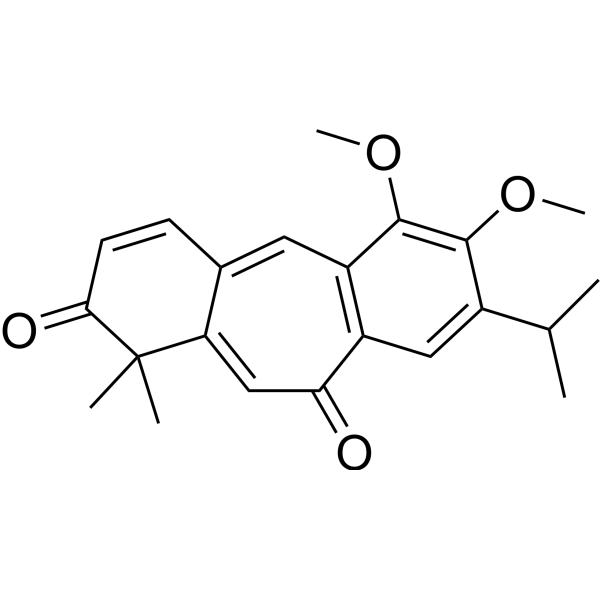 0 ImagesCat. No.: HY-N12042CAS No.: 110300-77-1Taxamairin B is a potent anti-inflammatory agent. Taxamairin B decreases proinflammatory cytokines (TNF-α, IL-1β and IL-6) expression and the production of NO and ROS in LPS-induced RAW264.7 cells. Taxamairin B exhibits significant protective effects in LPS-induced acute lung injury in mice.
-
PPARγ agonist 20
 0 ImagesCat. No.: HY-178447PPARγ agonist 20 is a potent, orally active PPAR-γ agonist. PPARγ agonist 20 effectively increases antioxidant defenses (SOD, GSH) and reduces lipid peroxidation. PPARγ agonist 20 can upregulate of Pparg, Glut4, and AdipoQ, suppresses of TNF-α, IL-6, and NF-κB p65. PPARγ agonist 20 significantly lowers fasting blood glucose, improving glucose tolerance, and restoring metabolic balance in Streptozotocin (HY-13753)-Nicotinamide (HY-B0150)-induced diabetic rats. PPARγ agonist 20 can be used for the study of type 2 diabetes.
-
LSD1-IN-21
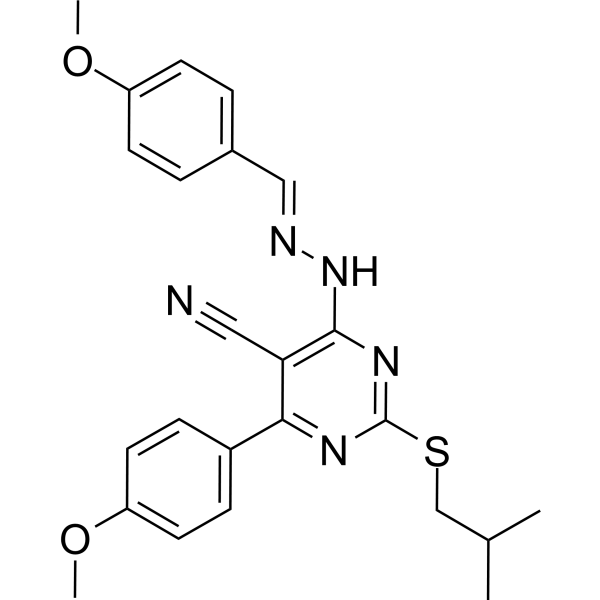 0 ImagesCat. No.: HY-147697LSD1-IN-21 (compound 5a) is a potent and BBB-penetrated LSD1 (Lysine specific demethylase-1) inhibitor, with an IC50 of 0.956 µM. LSD1-IN-21 significantly reduces the pro-inflammatory cytokine TNF-α. LSD1-IN-21 shows good anticancer and anti-inflammatory activity.
-
15N-Labeled Adalimumab
 0 ImagesCat. No.: HY-P9908S15N-Labeled Adalimumab is the 15N-labeled Adalimumab (HY-P9908). Adalimumab is a human monoclonal IgG1 antibody targeting tumour necrosis factor?α (TNF-α).
-
Undecane-d24
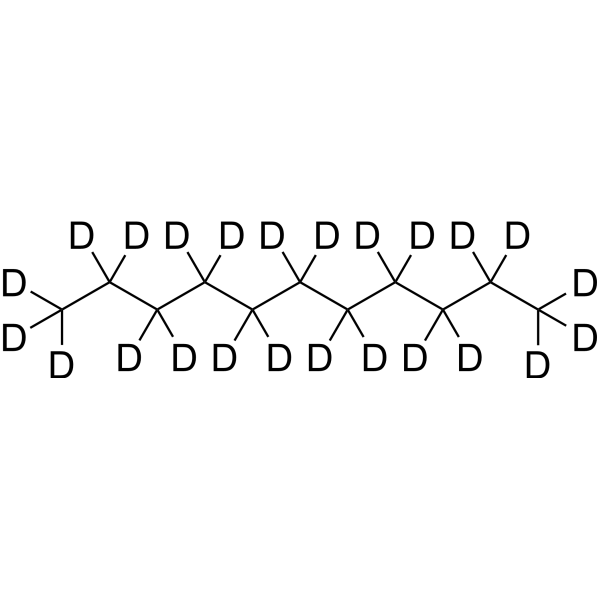 0 ImagesCat. No.: HY-N8593SCAS No.: 164858-54-2Undecane-d24 is the deuterium labeled Undecane (HY-N8593).Undecane is a potent cAMP agonist with anti-allergic and anti-inflammatory activities. Undecane inhibits degranulation and the secretion of histamine and TNF-α. Undecane reverses the increased levels of p38 phosphorylation, NF-κB transcriptional activity and target cytokine/chemokine genes, including thymus and activation-regulated chemokine (TARC), macrophage-derived chemokine (MDC) and interleukin-8 (IL-8). Undecane can be used for the study of skin inflammatory disorders, such as atopic dermatitis.
-
CTB006
 0 ImagesCat. No.: HY-P992340CTB006 is a monoclonal antibody targeting a humanized chimeric recombinant anti-DR5. CTB006 specifically binds to and activates DR5, thereby inducing tumor cell apoptosis, inhibiting tumor growth and reducing tumor drug resistance. 177Lu-radiolabeled CTB006 can deliver targeted radiotherapy to tumor cells; while 89Zr- or 177Lu-labeled CTB006 can serve as a PET/CT imaging agent for detecting DR5 expression levels in preclinical tumor models and screening cancers with DR5 overexpression. CTB006 can be applied to research related to gastrointestinal cancer, colorectal cancer and other solid tumors.
-
Tellimagrandin I
 0 ImagesCat. No.: HY-N7764CAS No.: 79786-08-6Tellimagrandin I is a gap junction protein 43 (Cx43) activator, which is a hydrolyzable ellagitannin (ellagitannin) secondary metabolite extractable from various plants. Tellimagrandin I mainly restores gap junction intercellular communication (GJIC) and induces S-phase arrest in tumor cells by upregulating Cx43; activates inflammatory cells to release TNF-α and VEGF to promote angiogenesis in vivo; and protects DNA from damage via antioxidant and metal chelating effects. Tellimagrandin I can be used in research related to human cervical cancer.
-
EGFR-IN-200
 0 ImagesCat. No.: HY-181657CAS No.: 3102899-89-5EGFR-IN-200 is an inhibitor targeting EGFR, TNF-α, and the IL-6/GP130 complex, which potently targets human EGFR (IC50=0.03 μM), TNF-α (IC50=3.1 μM), and the IL-6/GP130 complex (IC50=1.6 μM). EGFR-IN-200 binds to the ATP pocket of EGFR, the trimer interface of TNF-α, and the cytokine-receptor interface of IL-6/GP130, induces G2/M cell cycle arrest, apoptosis, and antiproliferative activity. EGFR-IN-200 exhibits high gastrointestinal absorbability, low BBB permeability, and complies with the Lipinski's rule. EGFR-IN-200 can be used for the research of lung cancer and breast adenocarcinoma.
-
Phosphodiesterase-IN-5
 0 ImagesCat. No.: HY-179645Phosphodiesterase-IN-5 is a potent, orally active and selective phosphodiesterase 10A (PDE10A) inhibitor with an IC50 of 6.2 nM. Phosphodiesterase-IN-5 shows >1612-fold selectivity over other PDEs. Phosphodiesterase-IN-5 exhibits potent antifibrotic efficacy in a Bleomycin (BLM) (HY-108345)-induced murine model of pulmonary fibrosis (PF) by blocking myofibroblast differentiation via the cAMP/PKA/CREB signaling pathway. Phosphodiesterase-IN-5 can be used for the research of PF.
-
TNF-α-IN-13
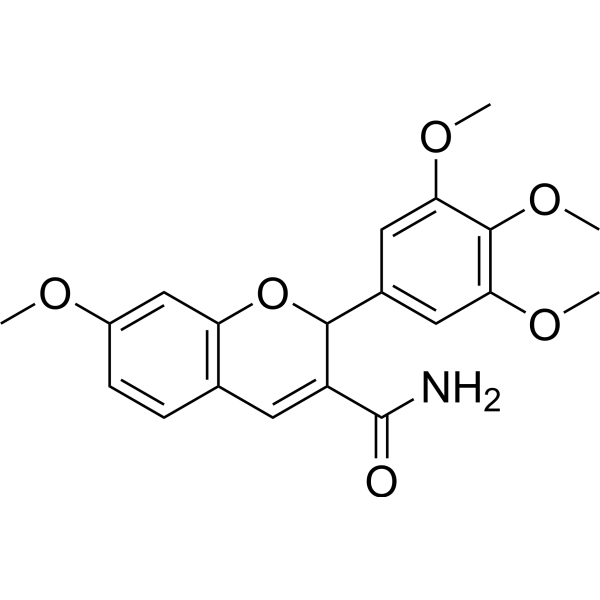 0 ImagesCat. No.: HY-160434CAS No.: 364039-48-5TNF-α-IN-13 is a potent TNFα inhibitor with an IC50 of <0.6 μM. TNF-α-IN-13 has antiinflammatory properties (WO2001072735A2; example 6).
-
2-O-Methyl PAF C-16
 0 ImagesCat. No.: HY-134070CAS No.: 78858-44-3Synonyms: ET-18-O-OCH32-O-Methyl PAF C-16 (ET-18-O-OCH3), a structural analog of the mediator of inflammation platelet-activating factor (PAF), is a cytotoxic ether lipid. 2-O-Methyl PAF C-16 stimulates TNF-α release in murine macrophages.
-
COX-2/CaV2.2-IN-1
 0 ImagesCat. No.: HY-181612COX-2/CaV2.2-IN-1 is an orally active and selective dual COX-2/CaV2.2 inhibitor, exhibiting a COX-2 IC50 of 0.26 μM and a CaV2.2 IC50 of 0.29 μM. COX-2/CaV2.2-IN-1 suppresses inflammatory responses and inflammatory mediator (IL-6, TNF-α, NO) production. COX-2/CaV2.2-IN-1 produces pronounced analgesic effects in diverse models of inflammatory, neuropathic, and visceral pain. COX-2/CaV2.2-IN-1 can be used for the research of chronic pain.
-
L-Norvaline (Standard)
 0 ImagesL-Norvaline (Standard) is the analytical standard of L-Norvaline (HY-Y0399). This product is intended for research and analytical applications. L-Norvaline is the inhibitor for arginase, that promotes the production of NO, reduces oxidative stress, improves insulin resistance, and exhibits antioxidant and anti-hyperglycemic effects. L-Norvaline can be used in research of Alzheimer’s disease.
-
Anti-DR3 Antibody
 0 ImagesCat. No.: HY-P992225
-
RIPK2-IN-9
 0 ImagesCat. No.: HY-210247CAS No.: 3066447-73-9RIPK2-IN-9 is a RIPK2 inhibitor with an IC50 < 2.5 nM. RIPK2-IN-9 inhibits NOD2-mediated NF-κB signaling and the protein-protein interaction between RIPK2 and XIAP, and inhibits NOD2 ligand-induced TNF-α secretion in human whole blood. RIPK2-IN-9 exhibits low inhibitory activity against the hERG channel. RIPK2-IN-9 can be used for research on RIPK2-related inflammatory diseases such as inflammatory bowel disease and rheumatoid arthritis.
-
12-Nitrolinoleate
 0 ImagesCat. No.: HY-171895CAS No.: 774603-05-3Synonyms: 12-Nitro-9-cis,12-cis-octadecadienoic acid12-Nitrolinoleate (12-Nitro-9-cis,12-cis-octadecadienoic acid) is an activator for peroxisome proliferator-activated receptor γ (PPARγ). 12-Nitrolinoleate is a nitrated form of linoleic acid. 12-Nitrolinoleate can be formed upon exposure to acidified nitrate and found in human red blood cells and plasma. 12-Nitrolinoleate can activate PPARγ-dependent gene expression in MCF-7 cells expressing PPARγ with an EC50 = 0.045 μM. 12-Nitrolinoleate is able to inhibit LPS (HY-D1056)-induced NF-κB transcription in RAW 264.7 cells. 12-Nitrolinoleate can inhibit IL-6, TNF-α and CCL2 induced by LPS.




