



Toll-like Receptor (TLR)
Toll-like receptors (TLRs) are a class of proteins that play a key role in the innate immune system. They are single, membrane-spanning, non-catalytic receptors usually expressed in sentinel cells such as macrophages and dendritic cells, that recognize structurally conserved molecules derived from microbes. Once these microbes have breached physical barriers such as the skin or intestinal tract mucosa, they are recognized by TLRs, which activate immune cell responses. The TLRs include TLR1, TLR2, TLR3, TLR4, TLR5, TLR6, TLR7, TLR8, TLR9, TLR10, TLR11, TLR12, and TLR13. Toll-Like Receptors (TLRs) play a critical role in the early innate immune response to invading pathogens by sensing microorganism and are involved in sensing endogenous danger signals. TLRs are evolutionarily conserved receptors are homologues of the Drosophila Toll protein, discovered to be important for defense against microbial infection. TLRs recognize highly conserved structural motifs known as pathogen-associated microbial patterns (PAMPs), which are exclusively expressed by microbial pathogens.
Toll-like Receptor (TLR) Isoform Specific Products
All Product Categories
-
Toll-like Receptor (TLR) Inhibitors
(299)
View all products
-
Toll-like Receptor (TLR) Agonists
(254)
View all products
-
Toll-like Receptor (TLR) Antagonists
(53)
View all products
-
Toll-like Receptor (TLR) Activators
(45)
View all products
-
Toll-like Receptor (TLR) Modulators
(7)
View all products
-
Toll-like Receptor (TLR) Chemicals
(2)
View all products
-
Toll-like Receptor (TLR) Inducers
(3)
View all products
-
Toll-like Receptor (TLR) Controls
(6)
View all products
-
Toll-like Receptor (TLR) Substrate
(1)
View all products
-
Toll-like Receptor (TLR) Ligands
(5)
View all products
-
TLR2/CD282 Proteins
(3)
View all products
-
TLR3/CD283 Proteins
(4)
View all products
-
TLR4/CD284 Proteins
(2)
View all products
-
Toll-like Receptor Proteins
(8)
View all products
-
Toll-like Receptor (TLR) Related Products (757)
Related Products (757)

-
Recombinant Proteins (9)
-
Antibodies (10)
-
Toll-like Receptor (TLR) Isoform Comparison
-
Fosfenopril (Standard)
 0 ImagesSynonyms: Fosinoprilat (Standard); Fosinoprilic acid (Standard); SQ 27519 (Standard)Fosfenopril (Standard) is the analytical standard of Fosfenopril. This product is intended for research and analytical applications. Fosfenopril (Fosinoprilat) is a potent angiotensin converting enzyme (ACE) inhibitor. Fosfenopril alleviates lipopolysaccharide (LPS)-induced inflammation by inhibiting TLR4/NF-κB signaling in monocytes.
-
Lipopolysaccharides, from S. enterica serotype abortus equi
 0 ImagesCat. No.: HY-D1056C4Synonyms: LPS, from Salmonella enterica (Serotype abortus equi)Lipopolysaccharides, from S. enterica (Salmonella enterica) serotype Abortusequi are lipopolysaccharide endotoxins and TLR-4 activators derived from the Abortusequi serotype of S. enterica, classified as a mutated R-type LPS, which can activate pathogen-associated molecular patterns (PAMP) of the immune system and induce cellular secretion of migrasomes. Lipopolysaccharides, from S. enterica serotype abortus equi consist of core oligosaccharide (core oligosaccharide) and lipid A (Lipid A). S. enterica serotype Abortusequi is a major pathogen causing abortion in mares and is also associated with neonatal sepsis, multiple abscesses, orchitis, and polyarthritis in equids. It is primarily grouped based on lipopolysaccharides (O-antigen) and flagellin (H-antigen).
It is recommended to prepare a solution with concentration ≥2 mg/mL. Vortex thoroughly for more than 10 minutes. Due to the adsorption characteristics of LPS, silanized container or low adsorption centrifuge tubes should be used for aliquoting and storage, and mix thoroughly before use.
-
TLR8 agonist 6
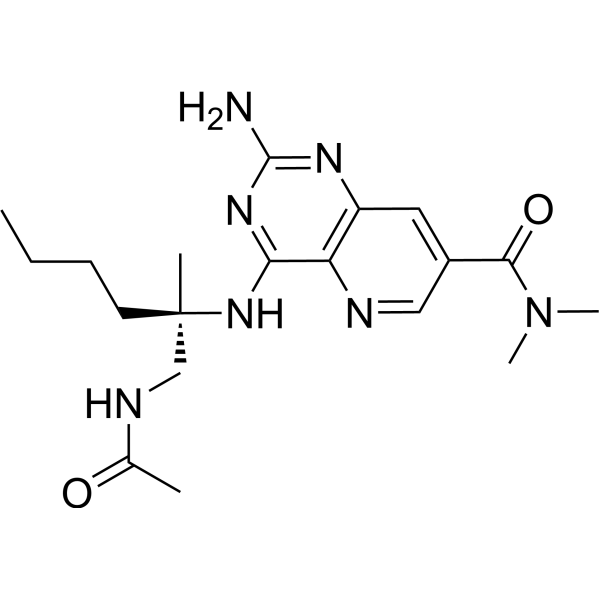 0 ImagesCat. No.: HY-153900CAS No.: 2616605-55-9TLR8 agonist 6 (Compound A) is a TLR8 agonist, with an EC50 of 0.052 μM. TLR8 agonist 6 induces IL-12p40 production in human PBMC (EC50: 0.031 μM). TLR8 agonist 6 can be used in the research of virus resistance, infection resistance, autoimmunity, tumor, etc.
-
(Rac)-VB-201
 0 ImagesCat. No.: HY-101132ACAS No.: 873842-97-8(Rac)-VB-201 is the racemate of VB-201, an oxidized phospholipid small molecule that inhibits CD14- and toll-like receptor 2-dependent innate cell activation and suppresses atherosclerosis.
-
Biotin-labeled ODN 2088 sodium
 0 ImagesCat. No.: HY-150738A
-
Imiquimod dihydrochloride
 0 ImagesCat. No.: HY-B0180CCAS No.: 2995277-02-4Synonyms: R 837 dihydrochloride
-
Pamidronate disodium pentahydrate (Standard)
 0 ImagesCat. No.: HY-B0730RCAS No.: 109552-15-0Pamidronate (disodium pentahydrate) (Standard) is the analytical standard of Pamidronate (disodium pentahydrate). This product is intended for research and analytical applications. Pamidronate disodium pentahydrate, the second-generation nitrogen-containing bisphosphonate, is an inhibitor of bone loss. Pamidronate disodium pentahydrate significantly inhibits subchondral bone loss in early osteoarthritis by upregulating the expression of osteoprotegerin in cartilage and subchondral bone, and inhibiting the expression of RANKL and MMP-9 in both tissues, as well as TLR-4 in cartilage, thereby alleviating cartilage degeneration. Additionally, Pamidronate disodium pentahydrate can inhibit the signaling of Wnt and β-catenin, and is applicable for research on osteoporosis and osteosarcoma.
-
Macrophage-activating lipopeptide 2
 0 ImagesCat. No.: HY-P10586CAS No.: 250718-44-6Synonyms: MALP-2Macrophage-activating lipopeptide 2 (MALP-2) is an agonist of Toll like receptors TLR-2/TLR-6. Macrophage-activating lipopeptide-2 can enhance endothelial nitric oxide synthase (eNOS) phosphorylation and endothelial cell release of NO, thereby improving vasodilation. Macrophage-activating lipopeptide-2 can enhance endothelial adhesion of white blood cells and improve perfusion recovery and collateral growth in the hind limbs of hypercholesterolemic Apoe deficient mice undergoing experimental femoral artery ligation (FAL).
-
TLR4/NF-κB-IN-2
 0 ImagesCat. No.: HY-181765TLR4/NF-κB-IN-2 is an orally active TLR4/NF-κB inhibitor and Nrf2/HO-1 activator. TLR4/NF-κB-IN-2 combats oxidative stress and exerts anti-inflammatory effects by regulating the Nrf2/HO-1 and TLR4/NF-κB pathways. TLR4/NF-κB-IN-2 reduces Aβ aggregation and protects neurons. TLR4/NF-κB-IN-2 can be used in the research of Alzheimer's disease.
-
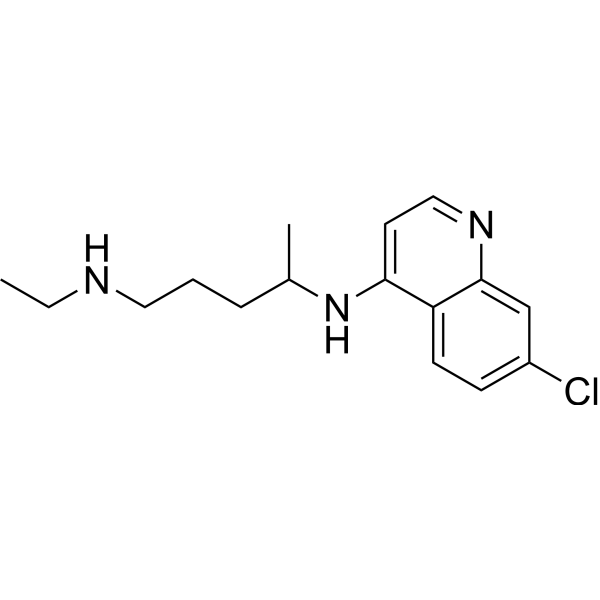
Chloroquine-d5 diphosphate
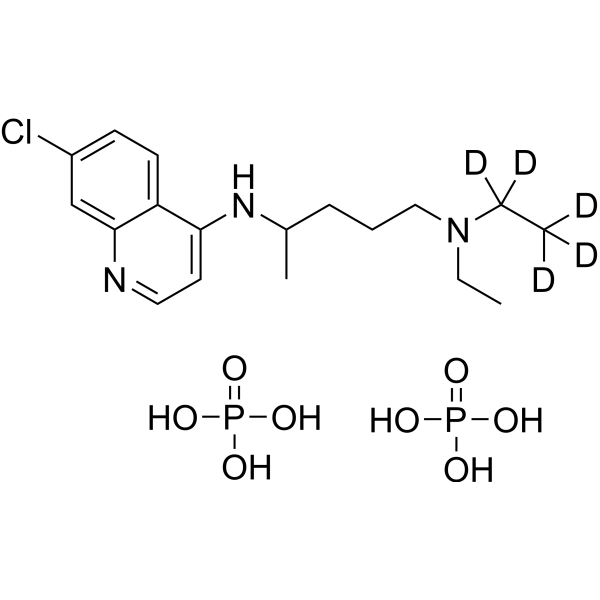 0 ImagesCat. No.: HY-17589SCAS No.: 1854126-42-3Chloroquine-d5 (diphosphate) is the deuterium labeled Chloroquine (phosphate). Chloroquine phosphate is an antimalarial and anti-inflammatory agent widely used to treat malaria and rheumatoid arthritis. Chloroquine phosphate is an autophagy and toll-like receptors (TLRs) inhibitor. Chloroquine phosphate is highly effective in the control of SARS-CoV-2 (COVID-19) infection in vitro (EC50=1.13 μM).

-
Phoenixin-20 TFA
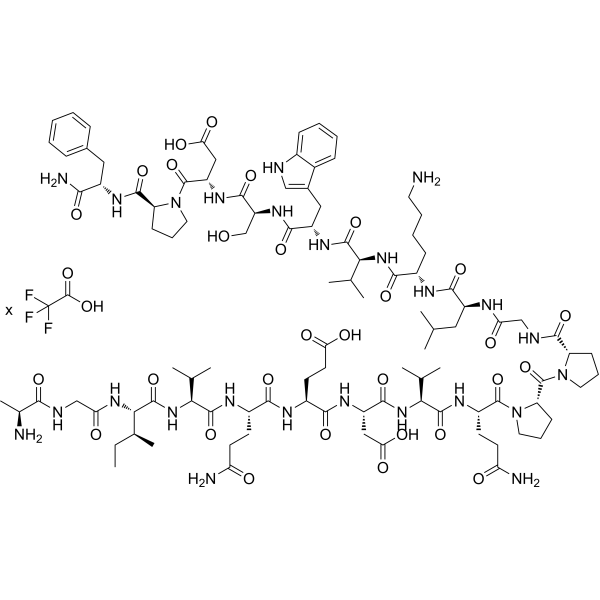 0 ImagesCat. No.: HY-P5763ASynonyms: PNX-20 TFAPhoenixin-20 TFA (PNX-20 TFA) is a neuropeptide that activates GPR173. Phoenixin-20 TFA inhibits LPS-induced TLR-4/MyD88/NF-κB signaling, pro-inflammatory cytokines, adhesion molecules, MMPs, and cytotoxicity. Phoenixin-20 TFA increases SIRT1 and inhibits NLRP3/ASC/caspase-1, oxidative stress, and IL-1β/IL-18. Phoenixin-20 TFA alleviates ox-LDL-induced endothelial dysfunction, monocyte adhesion, adhesion molecules, cytokines, NADPH oxidase/NOX-4, and ROS. Phoenixin-20 TFA promotes GPR173/STAT6-mediated anti-inflammatory polarization of microglia and neuroprotection. Phoenixin-20 TFA can be used in research on dental pulp infection, pulmonary arterial hypertension, atherosclerosis, neuroinflammation, anxiety, and neurodegenerative diseases.
-
Phoenixin-14 TFA
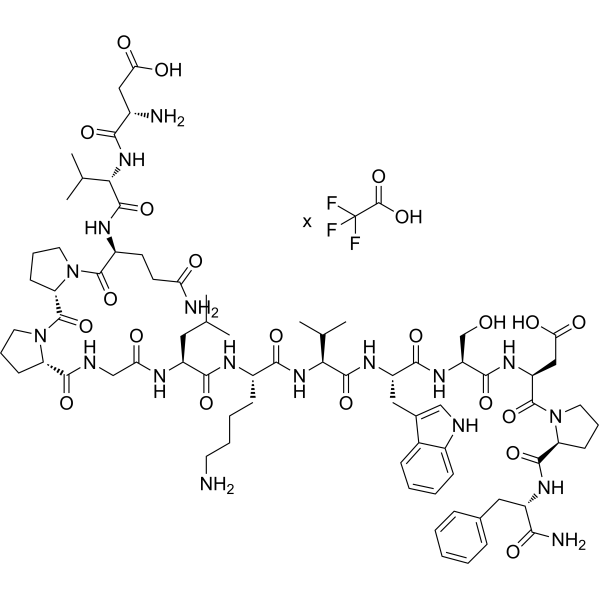 0 ImagesCat. No.: HY-P5762ASynonyms: PNX-14 TFAPhoenixin-14 (PNX-14) TFA is an endogenous neuropeptide with multiple biological activities, and serves as the endogenous ligand of GPR173. Phoenixin-14 TFA reduces ROS production by inhibiting the HMGB1/TLR4/MyD88/NF-κB signaling axis, thereby exerting antioxidant and mitochondrial protective effects. Phoenixin-14 TFA inhibits FOXO3 phosphorylation by upregulating SIRT3 expression, suppresses apoptosis, and improves myocardial systolic/diastolic function. Phoenixin-14 TFA resists ferroptosis by activating the ATF4/SLC7A11/GPX4 axis; it activates ERK1/2 phosphorylation via GPR173. Phoenixin-14 TFA can be used in researches on neuroprotection, diabetes, cardiomyopathy, reproductive protection and so on.
-
TLR8 agonist 8
 0 ImagesCat. No.: HY-161630CAS No.: 3034750-58-5TLR8 agonist 8 (Compound II-72) is an agonist for Toll-like receptor 8 (TLR8) with EC50 of 0.25-1 μM. TLR8 agonist 8 is stable in human and murine plasma, induces secretion of cytokines TNFα, with EC50 <1 μM. TLR8 agonist 8 exhibits antitumor activity in MC38-HER2 xenograft mouse model with a tumor growth inhibition (TGI) rate of 89%.
-
3D-Monophosphoryl Lipid (14) triethylamine
 0 ImagesCat. No.: HY-159671ACAS No.: 252042-60-7Synonyms: 3D-MPL (14) triethylamine3D-Monophosphoryl Lipid (14) (3D-Monophosphoryl Lipid (14)) triethylamine is a TLR4 agonist that can be used as a vaccine adjuvant to enhance the immunogenicity of vaccines.
-
Phytolacca americana Lectin
 0 ImagesCat. No.: HY-NP187Synonyms: PWMPhytolacca americana Lectin (PWM) is an acidic monomeric glycoprotein specific to N-acetylglucosamine and a B cell-specific stimulator. Phytolacca americana Lectin acts as a mitogen to induce cell mitosis. Phytolacca americana Lectin sensitizes B cells to Toll-like receptor stimulation, enabling their activation by immunostimulatory DNA. When used in combination with copurified microbial Toll-like receptor ligands, Phytolacca americana Lectin triggers B cell proliferation and immunoglobulin secretion.
-
TLR2/1 agonist-1
 0 ImagesCat. No.: HY-183301TLR2/1 agonist-1 is a selective agonist of the TLR2/1 heterodimer. TLR2/1 agonist-1 acts as a hematopoietic recovery inducer to accelerate the recovery of peripheral blood cells. TLR2/1 agonist-1 serves as a G-CSF production inducer to increase serum G-CSF levels. TLR2/1 agonist-1 exhibits radioprotective effects in mice exposed to radiation. TLR2/1 agonist-1 can be used in studies related to acute radiation syndrome.
-
BXY-14
 0 ImagesCat. No.: HY-181916BXY-14 is a TLR2 agonist and vaccine adjuvant. BXY-14 significantly downregulates the expression of intratumoral PD-L1 in mouse models. BXY-14 acts as a vaccine adjuvant to induce antibody responses. BXY-14 exhibits synergistic efficacy when combined with the anti-PD-L1 monoclonal antibody Atezolizumab (HY-P9904) in mouse models of melanoma, and prolongs overall survival. BXY-14 is applicable to research related to melanoma.
-
D-Allose (Standard)
 0 ImagesCat. No.: HY-128741RCAS No.: 2595-97-3D-Allose (Standard) is the analytical standard of D-Allose (HY-128741). This product is intended for research and analytical applications. D-Allose exhibits antitumor activity against various cancer cells. D-Allose scavenges reactive oxygen species (ROS) and reduces oxidative stress damage. D-Allose exhibits anti-inflammatory and neuroprotective through inhibition of TLR4/PI3K/AKT signaling pathway. D-Allose exhibits antihypertensive, cryoprotective, and anti-osteoporotic activities.




