



Thymoquinone
Based on 15 publication(s) in Google Scholar
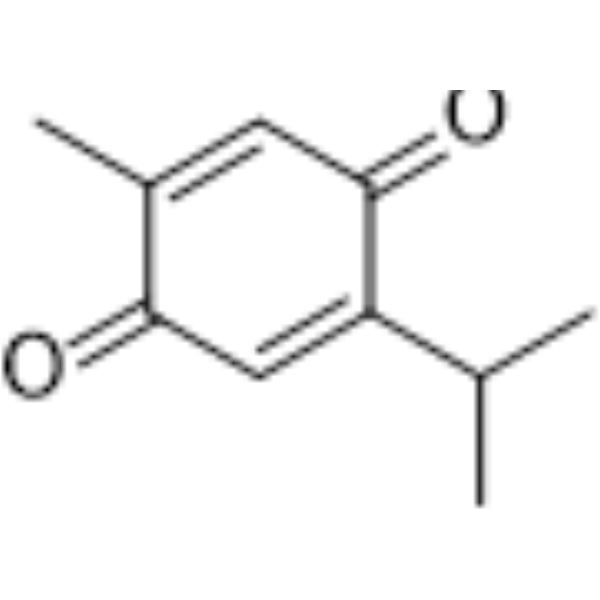
Thymoquinone is an orally active natural product isolated from N. sativa Thymoquinone down-regulates the VEGFR2-PI3K-Akt pathway. Thymoquinone has antioxidant, anti-inflammatory, anticancer, antiviral, anticonvulsant, antifungal, antiviral, antiangiogenic activity and hepatoprotective effects. Thymoquinone can be used to study Alzheimer's disease, cancer, cardiovascular disease, infectious disease and inflammation .
Nur für Forschungszwecke. Wir verkaufen nicht an Patienten.
- Reinheit : 99.80%
- CAS. Nr.: 490-91-5
- Formel: C10H12O2
- Molecular Weight:164.20
-
Speicherung:
4°C, protect from light
* In solvent : -80°C, 6 months; -20°C, 1 month (protect from light)

To place orders, for customer services and technical support, please contact: MedChemExpress USA
Tel: 609-228-6898 E-mail: [email protected] [email protected]


-
 Biologische Aktivität
-
Chemical Information
-
Lösungsmittel & Löslichkeit
- Protokoll
- Reinheit & Dokumentation
- Verweise
-
 Help & FAQs


-
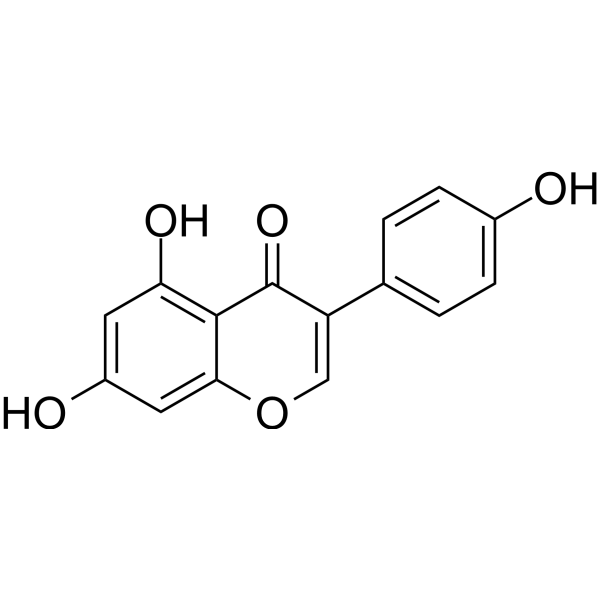
HY-14596
GenisteinAutophagy Inducer -
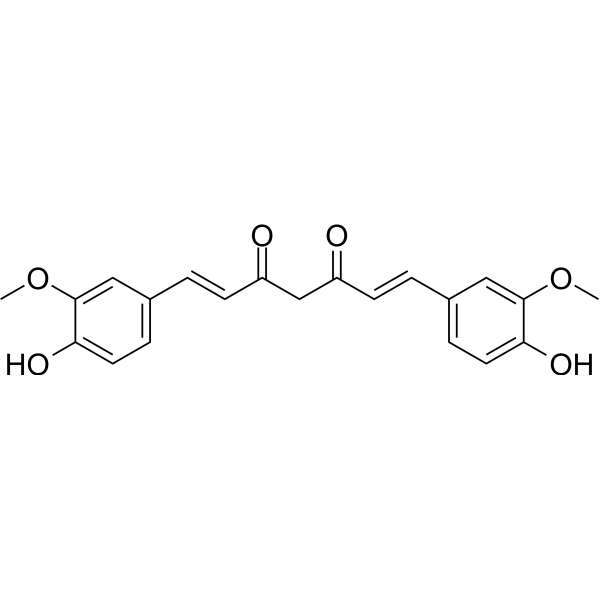
HY-N0005
Curcuminp300 Histone Acetylatransferase Inhibitor -
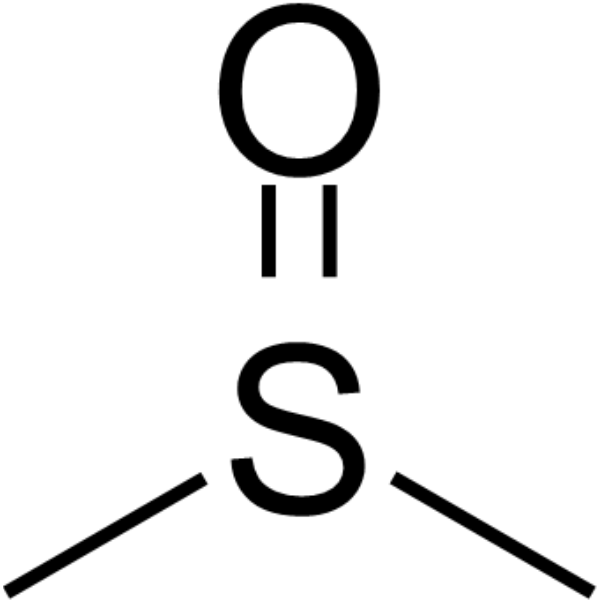
HY-Y0320
Dimethyl sulfoxide, meets analytical specification of Ch.P.Aprotic Solvent -
HY-Y0873
PEG300Neutral Polymer -
HY-N0035
ArctigeninAntitumor Agent -
HY-13636
FulvestrantEstrogen Receptor Antagonist -
HY-13520
NocodazoleMicrotubule Inhibitor -
HY-10999
TrametinibMEK Inhibitor -
HY-B1328
PyridoxinePyridine Derivative -
HY-B1756
RotenoneMitochondrial Complex I Inhibitor -
HY-100579
Ferrostatin-1Ferroptosis Inhibitor -
HY-114245
Se-MethylselenocysteineChemopreventive Agent
Publications Citing Use of MedChemExpress (MCE) Thymoquinone
More- Int J Biol Sci. 2021 Aug 12;17(13):3456-3475. [Abstract]
- Phytomedicine. 2026 Jan:150:157740. [Abstract]
- Int J Mol Med. 2025 Apr;55(4):59. [Abstract]
- Int J Mol Sci. 2026 May 28;27(11):4901. [Abstract]
- Biofactors. 2023 Jul-Aug;49(4):831-848. [Abstract]
- Molecules. 2023 May 15;28(10):4096. [Abstract]
- World J Stem Cells. 2025 Nov 26;17(11):112393. [Abstract]
- J Cell Mol Med. 2026 Feb;30(3):e70911. [Abstract]
- BMC Neurosci. 2024 Sep 27;25(1):45. [Abstract]
- Genes (Basel). 2023 Aug 30;14(9):1730. [Abstract]
- J Egypt Natl Canc Inst. 2025 Mar 10;37(1):7. [Abstract]
- Narra J. 2025 Aug;5(2):e2439. [Abstract]
- Heliyon. 2024 Jan 17;10(2):e24840. [Abstract]
- Instituto tecnologico de Querétaro. 2023 Jul 27.
- Research Square Preprint. 2023 May 22.
 Customer Validation & Images

-
Cell Proliferation/Viability Assay
-
IF
-
WB

-
RT-PCR
-
Histological Imaging/Staining
Alle VEGFR Isoform-spezifische Produkte anzeigen
More

Biologische Aktivität
Beschreibung
IC50 & Target
|
VEGFR2 |
PI3K |
Akt |
Cellular Effect
|
Cell Line

|
Type | Value | Description | References |
|---|---|---|---|---|
| 518A2 | IC50 |
28 μM
Compound: TQ
|
Cytotoxicity against human 518A2 cells after 72 hrs by MTT assay
Cytotoxicity against human 518A2 cells after 72 hrs by MTT assay
|
[PMID: 21216607] |
| A2780 | IC50 |
7.9 μM
Compound: 1; TQ
|
Growth inhibition of human A2780 cells after 72 hrs by SRB assay
Growth inhibition of human A2780 cells after 72 hrs by SRB assay
|
[PMID: 29519737] |
| A2780cis | IC50 |
7.8 μM
Compound: 1; TQ
|
Growth inhibition of human A2780cis cells after 72 hrs by SRB assay
Growth inhibition of human A2780cis cells after 72 hrs by SRB assay
|
[PMID: 29519737] |
| ADR5000 cell line | EC50 |
0.3 μM
Compound: 6
|
Cytotoxicity against human CEM/ADR5000 cells over-expressing P-gp assessed as reduction in cell viability after 72 hrs by resazurin dye based assay
Cytotoxicity against human CEM/ADR5000 cells over-expressing P-gp assessed as reduction in cell viability after 72 hrs by resazurin dye based assay
|
[PMID: 29887512] |
| ADR5000 cell line | EC50 |
0.3 μM
Compound: 3; TQ
|
Cytotoxicity against human CEM/ADR5000 cells overexpressing P-gp assessed as reduction in cell viability after 72 hrs by resazurin dye based assay
Cytotoxicity against human CEM/ADR5000 cells overexpressing P-gp assessed as reduction in cell viability after 72 hrs by resazurin dye based assay
|
[PMID: 29937978] |
| CCRF-CEM | EC50 |
0.3 μM
Compound: 6
|
Cytotoxicity against human CCRF-CEM cells assessed as reduction in cell viability after 72 hrs by resazurin dye based assay
Cytotoxicity against human CCRF-CEM cells assessed as reduction in cell viability after 72 hrs by resazurin dye based assay
|
[PMID: 29887512] |
| CCRF-CEM | EC50 |
0.3 μM
Compound: 3; TQ
|
Cytotoxicity against human CCRF-CEM cells assessed as reduction in cell viability after 72 hrs by resazurin dye based assay
Cytotoxicity against human CCRF-CEM cells assessed as reduction in cell viability after 72 hrs by resazurin dye based assay
|
[PMID: 29937978] |
| HCT-116 | IC50 |
50.1 μM
Compound: Thymoquinone
|
Antiproliferative activity against human HCT-116 cells
Antiproliferative activity against human HCT-116 cells
|
[PMID: 31945642] |
| HeLa | IC50 |
2.06 μM
Compound: Thymoquinone
|
Antiproliferative activity against human HeLa cells assessed as growth inhibition after 72 hrs by MTT assay
Antiproliferative activity against human HeLa cells assessed as growth inhibition after 72 hrs by MTT assay
|
[PMID: 25556101] |
| HFF | IC50 |
33 μM
Compound: TQ
|
Cytotoxicity against human HFF after 72 hrs by MTT assay
Cytotoxicity against human HFF after 72 hrs by MTT assay
|
[PMID: 21216607] |
| HL-60 | IC50 |
28 μM
Compound: TQ
|
Cytotoxicity against human HL60 cells after 72 hrs by MTT assay
Cytotoxicity against human HL60 cells after 72 hrs by MTT assay
|
[PMID: 21216607] |
| HT-29 | IC50 |
47 μM
Compound: TQ
|
Cytotoxicity against human HT-29 cells after 72 hrs by MTT assay
Cytotoxicity against human HT-29 cells after 72 hrs by MTT assay
|
[PMID: 21216607] |
| MCF7 | IC50 |
6.19 μM
Compound: Thymoquinone
|
Antiproliferative activity against human MCF7 cells assessed as growth inhibition after 72 hrs by MTT assay
Antiproliferative activity against human MCF7 cells assessed as growth inhibition after 72 hrs by MTT assay
|
[PMID: 25556101] |
| OVCAR-8 | IC50 |
11.6 μM
Compound: 1; TQ
|
Growth inhibition of human OVCAR8 cells after 72 hrs by SRB assay
Growth inhibition of human OVCAR8 cells after 72 hrs by SRB assay
|
[PMID: 29519737] |
| PC-3 | IC50 |
50.1 μM
Compound: Thymoquinone
|
Antiproliferative activity against human PC-3 cells
Antiproliferative activity against human PC-3 cells
|
[PMID: 31945642] |
| U-937 | IC50 |
101.9 μM
Compound: 5
|
Antiinflammatory activity in PMA-activated human U937 cells assessed as inhibition of LPS-induced TNF-alpha expression preincubated for 2 hrs followed by LPS challenge measured after 6 hrs by ELISA
Antiinflammatory activity in PMA-activated human U937 cells assessed as inhibition of LPS-induced TNF-alpha expression preincubated for 2 hrs followed by LPS challenge measured after 6 hrs by ELISA
|
[PMID: 24491635] |
In Vitro
Thymoquinone (20-100 μM, 24-72 h) has anti-proliferation and pro-apoptotic activity in non-small cell lung cancer SCLC cell lines, and has a synergistic effect with Cisplatin (CDDP) (HY-17394) [3].
Thymoquinone (100 nM, 24 h) inhibits VEGF expression in HUVECs cells through the VEGFR2/PI3K/Akt signaling pathway[5].
MedChemExpress (MCE) has not independently confirmed the accuracy of these methods. They are for reference only.
-
Cell Line:SCLC cell line NCI-H146
-
Concentration:20-100 μM
-
Incubation Time:24-72 h
-
Result:Thymoquinone of 80 and 100 μM showed significant inhibition of cell proliferation, most pronounced at 24 hours. The effect of Thymoquinone alone on cell proliferation diminished over time.
In Vivo
Thymoquinone (10 mg/kg/day for 5 days, p.o.) can protect against Doxorubicin (HY-15142A)-induced cardiotoxicity in rats through superoxide clearance and anti-lipid peroxidation[2].
Thymoquinone (5-20 mg/kg subcutaneously (s.c.) on Monday, Wednesday and Friday for 3 weeks) alone can effectively reduce the tumor volume of NCI-H460 mouse xenograft model, overcome Cisplatin (CDDP) (HY-17394) resistance, and improve its efficacy [3].
Thymoquinone (10 or 20 mg/kg/day for 15 days, i.g.) could clear Aβ plaques and restore neuronal vitality, which could improve the memory ability of Aβ1-42 perfusion rats[4].
Thymoquinone (single 3 mg/kg, i.p.) down-regulates the VEGFR2-PI3K-Akt pathway and inhibits inflammation and new angiogenesis in asthmatic mice[5].
MedChemExpress (MCE) has not independently confirmed the accuracy of these methods. They are for reference only.
-
Animal Model:Male albino mice (22-27g), Paraquat-induced hepatotoxicity in mice[1]
-
Dosage:5-20 mg/kg/day for 3days
-
Administration:i.p.
-
Result:Significantly reduced the level of LPO and restored the endogenous antioxidant capacity of liver tissue.
Restored SOD activity inhibited by Paraquat.
Thymoquinone’s optimum, safe, and protective dose against Paraquat-hepatotoxicity is about 10 mg/kg, which is comparable to the antioxidant properties of Vitamin E.
Clinical Trial
| NCT Number | Sponsor | Condition | Start Date |
Phase
|
|---|---|---|---|---|
| NCT01329991 | Plexxikon| | 2011-05 | PHASE1 |


Chemical Information
-
CAS. Nr. 490-91-5
-
Appearance Solid
-
Molecular Weight 164.20
-
Formel C10H12O2
-
Color Light yellow to yellow
-
SMILES
O=C1C(C)=CC(C(C(C)C)=C1)=O
-
Structure Classification
-
Initial Source
-
Versand
Room temperature in continental US; may vary elsewhere.
-
Speicherung
4°C, protect from light
* In solvent : -80°C, 6 months; -20°C, 1 month (protect from light)


Publications (15)
-
Journal Impact Factor
-
Most Recent
-
Int J Biol Sci
Thymoquinone Suppresses the Proliferation, Migration and Invasiveness through Regulating ROS, Autophagic Flux and miR-877-5p in Human Bladder Carcinoma Cells. [Abstract]2021 Aug 12;17(13):3456-3475. PMID: 34512159 -
Phytomedicine
Bruceantin inhibits the c-Myc/RL27A axis to suppress tumor progression in hepatocellular carcinoma. [Abstract]2026 Jan:150:157740. PMID: 41477978 -
Int J Mol Med
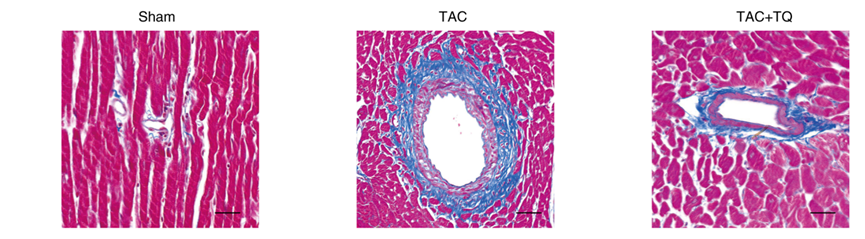
Thymoquinone mitigates cardiac hypertrophy by activating adaptive autophagy via the PPAR‑γ/14‑3‑3γ pathway. [Abstract]2025 Apr;55(4):59. PMID: 39918010
Thymoquinone purchased from MedChemExpress. Usage Cited in: Int J Mol Med. 2025 Apr;55(4):59. [Abstract]
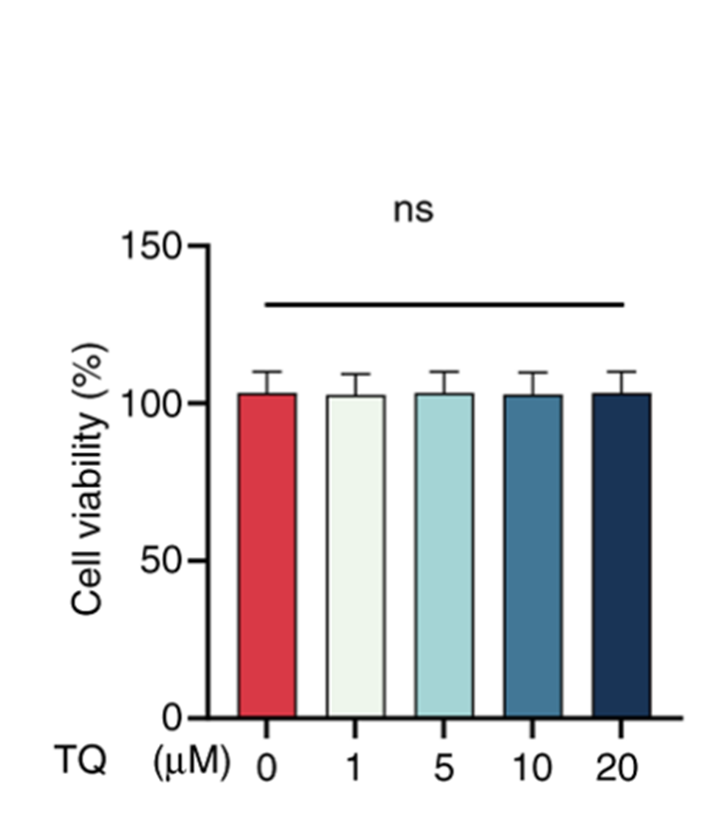
The viability of H9C2 cells following treatment with varying concentrations of Thymoquinone (TQ) (0, 1, 5, 10 and 20 µM) was assessed.
Thymoquinone purchased from MedChemExpress. Usage Cited in: Int J Mol Med. 2025 Apr;55(4):59. [Abstract]
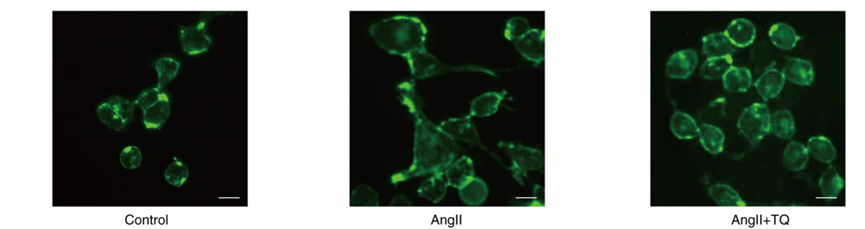
Images of H9C2 cells stained for wheat germ agglutinin expression treated with Thymoquinone (TQ) (10 μM).
Thymoquinone purchased from MedChemExpress. Usage Cited in: Int J Mol Med. 2025 Apr;55(4):59. [Abstract]
Immunoblotting analysis of ANP and BNP protein expression levels in H9C2 cells treated with Thymoquinone (TQ) (10 μM).
Thymoquinone purchased from MedChemExpress. Usage Cited in: Int J Mol Med. 2025 Apr;55(4):59. [Abstract]
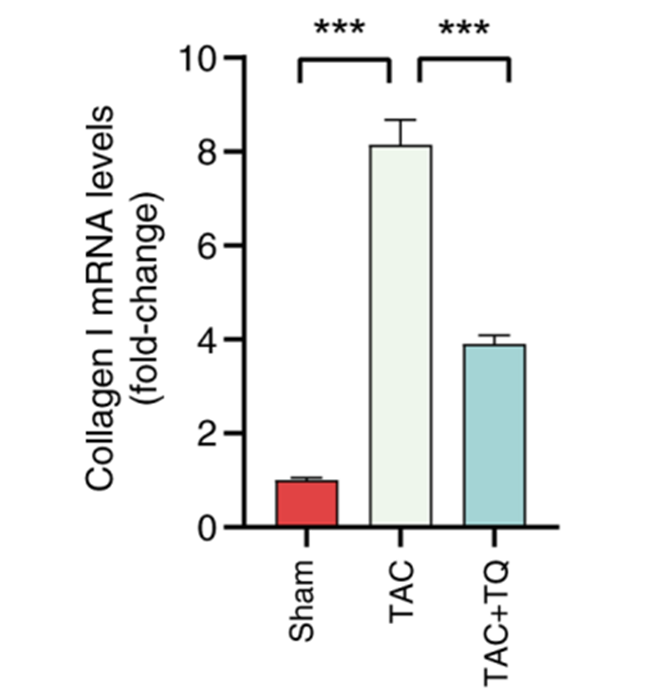
The effects of Thymoquinone (TQ) (10 μM) on collagen I mRNA expression in vivo was assessed using reverse transcription-quantitative PCR.
Thymoquinone purchased from MedChemExpress. Usage Cited in: Int J Mol Med. 2025 Apr;55(4):59. [Abstract]
Masson's trichrome staining for cardiac fibrosis treated with Thymoquinone (TQ) (50 mg/kg. i.g.).
-
Int J Mol Sci
Integrating Metabolomics and Network Pharmacology to Reveal the Mechanism of Thymoquinone Alleviating Renal Interstitial Fibrosis in UUO Mice. [Abstract]2026 May 28;27(11):4901. PMID: 42278429 -
Biofactors
Metformin and thymoquinone co-treatment enhance 5-fluorouracil cytotoxicity by suppressing the PI3K/mTOR/HIF1α pathway and increasing oxidative stress in colon cancer cells. [Abstract]2023 Jul-Aug;49(4):831-848. PMID: 36929658 -
Molecules
Characterization of Thymoquinone-Sulfobutylether-β-Cyclodextrin Inclusion Complex for Anticancer Applications. [Abstract]2023 May 15;28(10):4096. PMID: 37241838 -
World J Stem Cells
Thymoquinone inhibited the chondrogenic differentiation of tendon-derived stem cells caused by tendon injury. [Abstract]2025 Nov 26;17(11):112393. PMID: 41356382 -
J Cell Mol Med
2026 Feb;30(3):e70911. PMID: 41614426 -
BMC Neurosci
Thymoquinone ameliorate oxidative stress, GABAergic neuronal depletion and memory impairment through Nrf2/ARE signaling pathway in the dentate gyrus following cypermethrin administration. [Abstract]2024 Sep 27;25(1):45. PMID: 39333878 -
Genes (Basel)
Thymoquinone Potentially Modulates the Expression of Key Onco- and Tumor Suppressor miRNAs in Prostate and Colon Cancer Cell Lines: Insights from PC3 and HCT-15 Cells. [Abstract]2023 Aug 30;14(9):1730. PMID: 37761870 -
J Egypt Natl Canc Inst
Exploring potential additive effects of 5-fluorouracil, thymoquinone, and coenzyme Q10 triple therapy on colon cancer cells in relation to glycolysis and redox status modulation. [Abstract]2025 Mar 10;37(1):7. PMID: 40059278 -
Narra J
Thymoquinone and madecassoside improve motor function in a rotenone-induced mouse model of early Parkinson's disease: Role of dopamine, alpha-synuclein and mBDNF. [Abstract]2025 Aug;5(2):e2439. PMID: 40951472 -
Heliyon
Thymoquinone alleviates cisplatin-induced kidney damage by reducing apoptosis in a rat model. [Abstract]2024 Jan 17;10(2):e24840. PMID: 38304804 -
-


Lösungsmittel & Löslichkeit
In Vitro:
DMSO : 100 mg/mL (609.01 mM; Need ultrasonic; Hygroscopic DMSO has a significant impact on the solubility of product, please use newly opened DMSO)
Please refer to the solubility information to select the appropriate solvent. Once prepared, please aliquot and store the solution to prevent product inactivation from repeated freeze-thaw cycles.
Storage method and period of stock solution: -80°C, 6 months; -20°C, 1 month (protect from light). When stored at -80°C, please use it within 6 months. When stored at -20°C, please use it within 1 month.
Please refer to the solubility information to select the appropriate solvent. Once prepared, please aliquot and store the solution to prevent product inactivation from repeated freeze-thaw cycles.
Storage method and period of stock solution: -80°C, 6 months; -20°C, 1 month (protect from light). When stored at -80°C, please use it within 6 months. When stored at -20°C, please use it within 1 month.
Konzentration (Stammlösung) × Volumen (Stammlösung) = Konzentration (Ziellösung) × Volumen (Ziellösung)
In Vivo:
Select the appropriate dissolution method based on your experimental animal and administration route.
- For the following dissolution methods, please ensure to first prepare a clear stock solution using an In Vitro approach and then sequentially add co-solvents:
- To ensure reliable experimental results, the clarified stock solution can be appropriately stored based on storage conditions. As for the working solution for In Vivo experiments, it is recommended to prepare freshly and use it on the same day.
- The percentages shown for the solvents indicate their volumetric ratio in the final prepared solution. If precipitation or phase separation occurs during preparation, heat and/or sonication can be used to aid dissolution.
Add each solvent one by one: 10% DMSO 40% PEG300 5% Tween-80 45% Saline
Solubility: ≥ 5 mg/mL (30.45 mM); Clear solution
This protocol yields a clear solution of ≥ 5 mg/mL (saturation unknown).
Taking 1 mL working solution as an example, add 100 μL DMSO stock solution (50.0 mg/mL) to 400 μL PEG300, and mix evenly; then add 50 μL Tween-80 and mix evenly; then add 450 μL Saline to adjust the volume to 1 mL.
Preparation of Saline: Dissolve 0.9 g sodium chloride in ddH₂O and dilute to 100 mL to obtain a clear Saline solution.
Add each solvent one by one: 10% DMSO 90% (20% SBE-β-CD in Saline)
Solubility: ≥ 5 mg/mL (30.45 mM); Clear solution
This protocol yields a clear solution of ≥ 5 mg/mL (saturation unknown).
Taking 1 mL working solution as an example, add 100 μL DMSO stock solution (50.0 mg/mL) to 900 μL 20% SBE-β-CD in Saline, and mix evenly.
Preparation of 20% SBE-β-CD in Saline (4°C, storage for one week): 2 g SBE-β-CD powder is dissolved in 10 mL Saline, completely dissolve until clear.
In Vivo Dissolution Calculator
Please enter the basic information of animal experiments:
-
-
-
-
Recommended: Prepare an additional quantity of animals to account for potential losses during experiments.
Please enter your animal formula composition:
-
%DMSO +
Recommended: Keep the proportion of DMSO in working solution below 2% if your animal is weak.
-
%+
-
+%Tween-80 + +
-
%Saline +
The co-solvents required include: DMSO, . All of co-solvents are available by MedChemExpress (MCE). , Tween 80. All of co-solvents are available by MedChemExpress (MCE).
Working solution concentration: 0.22 mg/mL
Method for preparing stock solution: mg drug dissolved in μL DMSO. Stock solution concentration: mg/mL. * In solvent : -80°C, 6 months; -20°C, 1 month (protect from light)
1. Take μL DMSO stock solution;
2. Add μL .
μL , mix evenly;
3. Then add μL Tween 80, mix evenly;
4. Then add μL
Please ensure that the stock solution in the first step is dissolved to a clear state, and add co-solvents in sequence. You can use ultrasonic heating (ultrasonic cleaner, recommended frequency 20-40 kHz), vortexing, etc. to assist dissolution.


Reinheit & Dokumentation
-
Data Sheet (284 KB)
-
SDS (394 KB)
- English - EN (394 KB)
- Français - FR (394 KB)
- Deutsch - DE (394 KB)
- Norwegian - NO (394 KB)
- Español - ES (394 KB)
- Swedish - SV (394 KB)
- Italian - IT (394 KB)
- Korean - KR (394 KB)
- Portuguese - PT (394 KB)
-
Handling Instructions (2659 KB)
Verweise
[1]. Zeinvand-Lorestani H, et al. Protective role of thymoquinone against paraquat-induced hepatotoxicity in mice. Pestic Biochem Physiol. 2018 Jun;148:16-21. [Content Brief]
[2]. Nagi MN, et al. Protective effect of thymoquinone against doxorubicin-induced cardiotoxicity in rats: a possible mechanism of protection. Pharmacol Res. 2000 Mar;41(3):283-9. [Content Brief]
[3]. Jafri SH, et al. Thymoquinone and cisplatin as a therapeutic combination in lung cancer: In vitro and in vivo. J Exp Clin Cancer Res. 2010 Jul 1;29(1):87. [Content Brief]
[4]. Elibol B, et al. Thymoquinone administration ameliorates Alzheimer's disease-like phenotype by promoting cell survival in the hippocampus of amyloid beta1-42 infused rat model. Phytomedicine. 2020 Dec;79:153324. [Content Brief]
[5]. Su X, et al. Thymoquinone inhibits inflammation, neoangiogenesis and vascular remodeling in asthma mice. Int Immunopharmacol. 2016 Sep;38:70-80. [Content Brief]


Complete Stock Solution Preparation Table
Please refer to the solubility information to select the appropriate solvent. Once prepared, please aliquot and store the solution to prevent product inactivation from repeated freeze-thaw cycles.
Storage method and period of stock solution: -80°C, 6 months; -20°C, 1 month (protect from light). When stored at -80°C, please use it within 6 months. When stored at -20°C, please use it within 1 month.
| Optional Solvent | Concentration Solvent Mass | 1 mg | 5 mg | 10 mg | 25 mg |
|---|---|---|---|---|---|
| DMSO | 1 mM | 6.0901 mL | 30.4507 mL | 60.9013 mL | 152.2534 mL |
| 5 mM | 1.2180 mL | 6.0901 mL | 12.1803 mL | 30.4507 mL | |
| 10 mM | 0.6090 mL | 3.0451 mL | 6.0901 mL | 15.2253 mL | |
| 15 mM | 0.4060 mL | 2.0300 mL | 4.0601 mL | 10.1502 mL | |
| 20 mM | 0.3045 mL | 1.5225 mL | 3.0451 mL | 7.6127 mL | |
| 25 mM | 0.2436 mL | 1.2180 mL | 2.4361 mL | 6.0901 mL | |
| 30 mM | 0.2030 mL | 1.0150 mL | 2.0300 mL | 5.0751 mL | |
| 40 mM | 0.1523 mL | 0.7613 mL | 1.5225 mL | 3.8063 mL | |
| 50 mM | 0.1218 mL | 0.6090 mL | 1.2180 mL | 3.0451 mL | |
| 60 mM | 0.1015 mL | 0.5075 mL | 1.0150 mL | 2.5376 mL | |
| 80 mM | 0.0761 mL | 0.3806 mL | 0.7613 mL | 1.9032 mL | |
| 100 mM | 0.0609 mL | 0.3045 mL | 0.6090 mL | 1.5225 mL |


Thymoquinone Related Classifications
HY-D0803 Related Classifications
 Powered by Bioz