



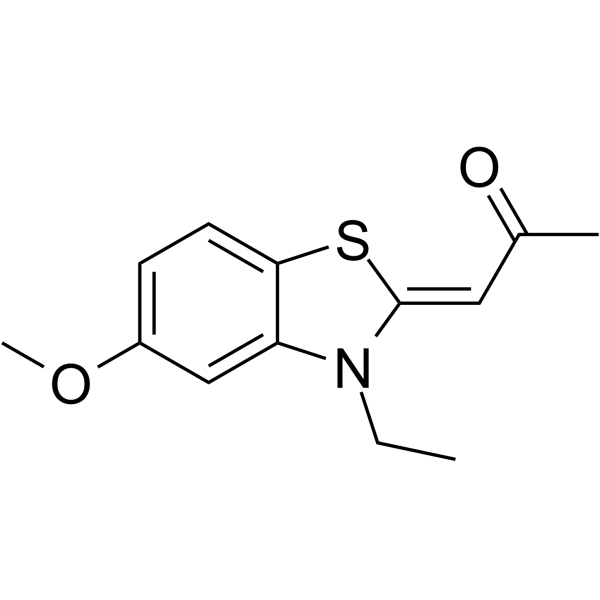
TG003
Based on 10 publication(s) in Google Scholar
TG003 is a potent inhibitor of Clk1/Sty; inhibits Clk1 and Clk4 with IC50 values of 20 and 15 nM, respectively.
For research use only. We do not sell to patients.
- Purity : 99.72%
- CAS No.: 719277-26-6
- Formula: C13H15NO2S
- Molecular Weight:249.33
-
Storage:Powder -20°C, 3 years , 4°C, 2 years ; In solvent -80°C, 2 years , -20°C, 1 year

To place orders, for customer services and technical support, please contact: MedChemExpress USA
Tel: 609-228-6898 E-mail: [email protected] [email protected]


-
 Biological Activity
-
Chemical Information
-
Solvent & Solubility
- Purity & Documentation
- References
-
 Help & FAQs


-
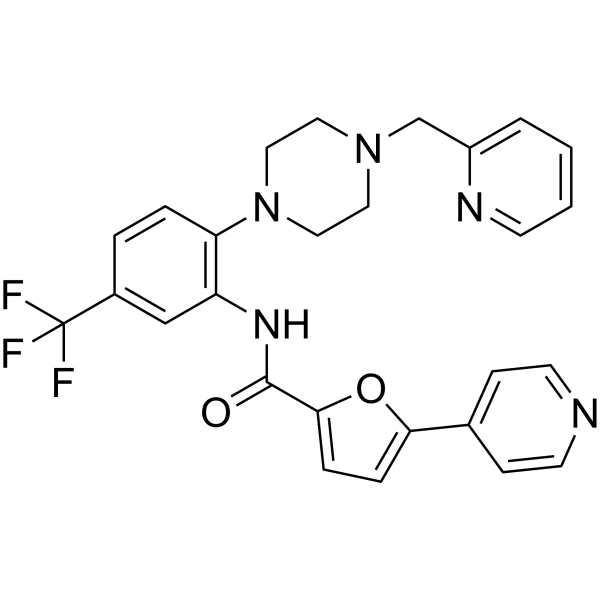
HY-117661
SPHINX31SRPK1 Inhibitor -
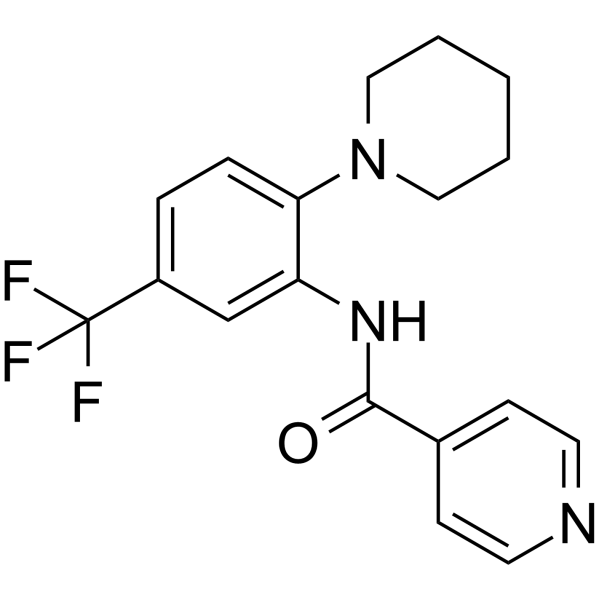
HY-13949
SRPIN340Virus Protease Inhibitor -
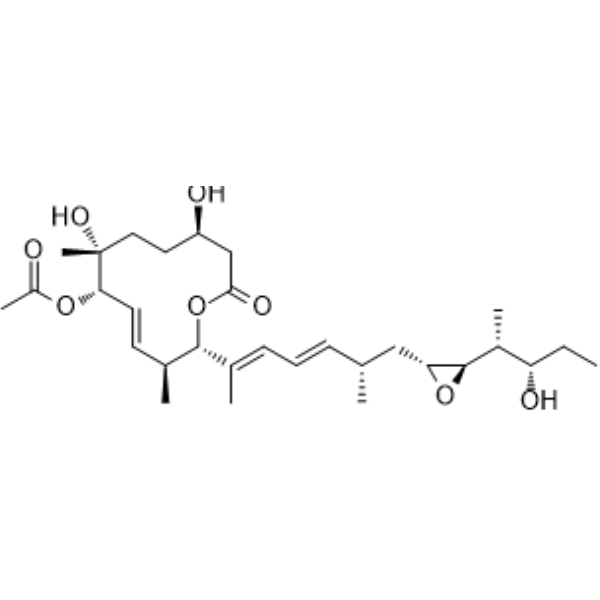
HY-16399
Pladienolide BSplicing Inhibitor -
HY-13650
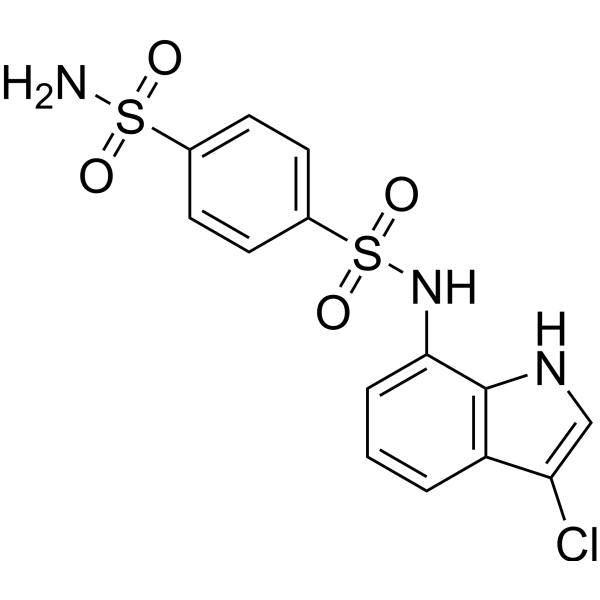
IndisulamCarbonic Anhydrase Inhibitor/RBM39 Molecular Glue Degrader -
HY-137435
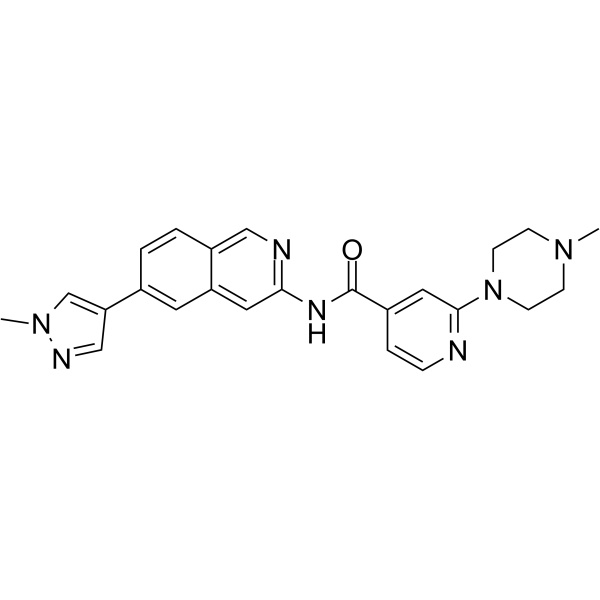
CirtuvivintCLK Inhibitor -
HY-115470
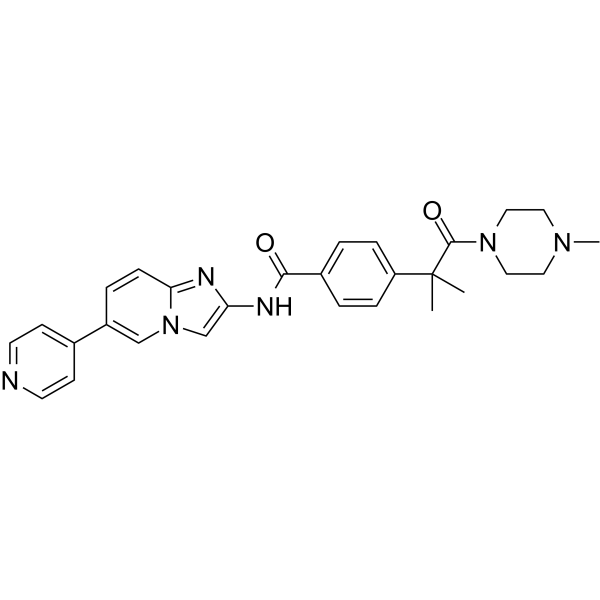
CLK-IN-T3Selective CLK Inhibitor -
HY-100558
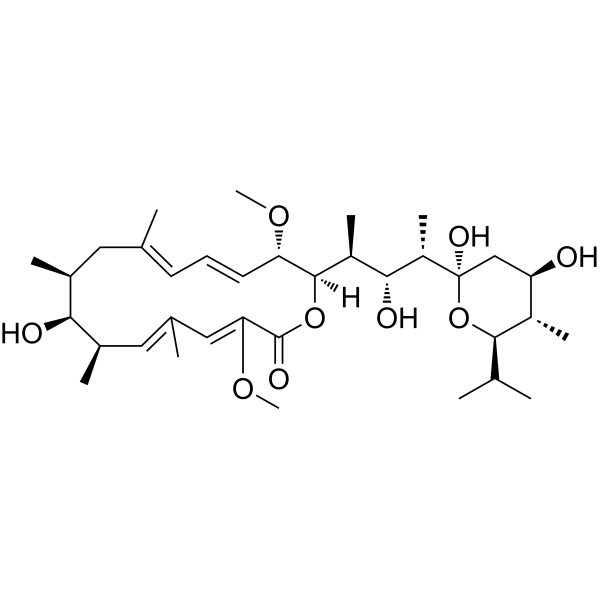
Bafilomycin A1V-ATPase Inhibitor -
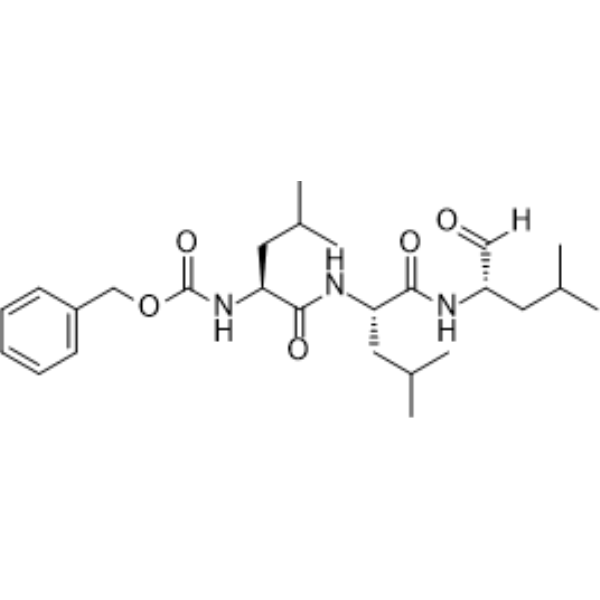
HY-13259
MG-132Proteasome Inhibitor -
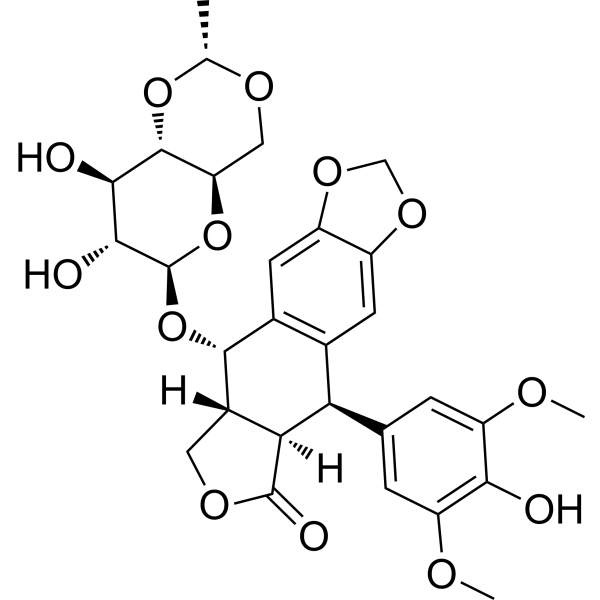
HY-13629
EtoposideTopoisomerase II Inhibitor -
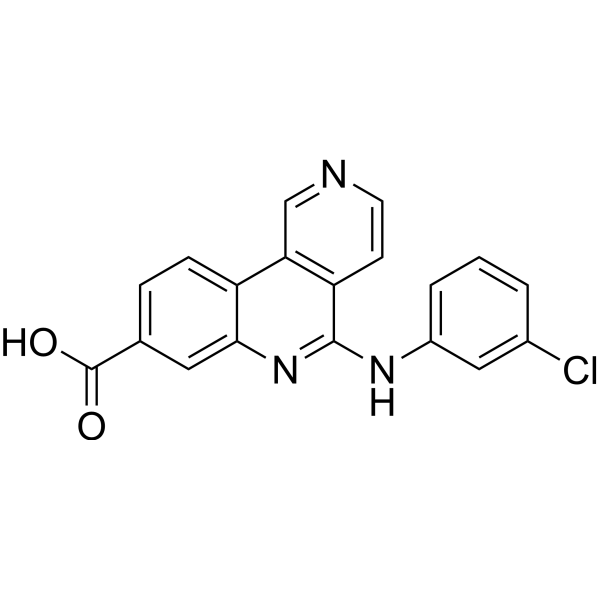
HY-50855
SilmitasertibCasein Kinase 2 Inhibitor -
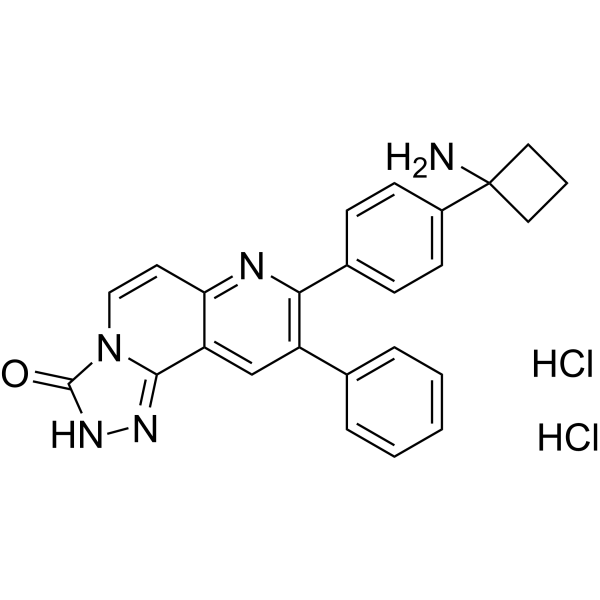
HY-10358
MK-2206 dihydrochlorideAllosteric Akt Inhibitor -
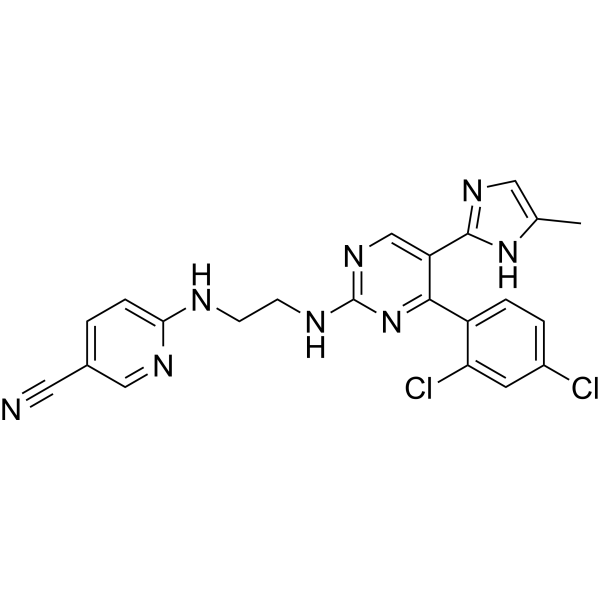
HY-10182
LaduviglusibGSK-3 Inhibitor
Publications Citing Use of MedChemExpress (MCE) TG003
More- Sci Adv. 2025 Nov 28;11(48):eadz2345. [Abstract]
- Cell Chem Biol. 2025 Jul 17;32(7):908-925.e9. [Abstract]
- Cancer Immunol Res. 2026 May 4;14(5):875-891. [Abstract]
- Br J Pharmacol. 2026 Jul 24.
- Int J Mol Sci. 2023 Apr 4;24(7):6733. [Abstract]
- Cancers (Basel). 2023 Apr 13;15(8):2271. [Abstract]
- Mol Oncol. 2025 Oct 17. [Abstract]
- Glycobiology. 2024 Dec 10;34(12):cwae081. [Abstract]
- SSRN. 2026 May 27.
- bioRxiv. 2024 Aug 16:2024.08.15.608201. [Abstract]
 Customer Validation & Images

-
In Vivo Efficacy Study

-
Others

-
Bio/Physico-chemical Assay

-
RT-PCR

-
Bio/Physico-chemical Assay


Biological Activity
Description
IC50 & Target
[1]|
CLK1 20 nM (IC50) |
CLK2 200 nM (IC50) |
CLK4 15 nM (IC50) |
In Vitro
TG003, shows the most potent effect on Clk1/Sty and Clk4 (IC50, 15–20 nM) and lesser on Clk2 (200 nM). TG003 inhibits SF2/ASF-dependent splicing of β-globin pre-mRNA in vitro by suppression of Clk-mediated phosphorylation. It suppresses serine/arginine-rich protein phosphorylation, dissociation of nuclear speckles, and Clk1/Sty-dependent alternative splicing in mammalian cells[1]. The small drug TG003 increases endogenous expression of p53β and p53γ protein isoforms by modulation of TP53 intron 9 alternative splicing[2].
MedChemExpress (MCE) has not independently confirmed the accuracy of these methods. They are for reference only.
In Vivo
MedChemExpress (MCE) has not independently confirmed the accuracy of these methods. They are for reference only.


Chemical Information
-
CAS No. 719277-26-6
-
Appearance Solid
-
Molecular Weight 249.33
-
Formula C13H15NO2S
-
Color White to yellow
-
SMILES
CC(/C=C1SC2=CC=C(C=C2N\1CC)OC)=O
-
Shipping
Room temperature in continental US; may vary elsewhere.
-
Storage
Powder -20°C 3 years 4°C 2 years In solvent -80°C 2 years -20°C 1 year


Publications (10)
-
Journal Impact Factor
-
Most Recent
-
Sci Adv
FeaSion decodes the regulatory landscape and functional diversity of RNA polymerase II CTD phosphorylation. [Abstract]2025 Nov 28;11(48):eadz2345. PMID: 41313762
TG003 purchased from MedChemExpress. Usage Cited in: Sci Adv. 2025 Nov 28;11(48):eadz2345. [Abstract]
Metagene profiles and boxplots (top) and log2(fold change) metagene heatmaps (bottom) showing pS7 and RNAPII ChIP-seq density in control, CLK1 KO, and CLK4 KO cells, as well as in untreated and TG003-treated (20 μM, 4 hours) cells (top). Statistical significance was assessed by a two-sided Wilcoxon test. ***P < 0.001. The value on the box plot indicating the fold change.
-
Cell Chem Biol
2025 Jul 17;32(7):908-925.e9. PMID: 40553690 -
Cancer Immunol Res
CLK1 Promotes Myeloid-Derived Suppressor Cell Trafficking and Reprograms the Tumor Microenvironment by Activating Hippo/YAP Signaling in Colorectal Cancer. [Abstract]2026 May 4;14(5):875-891. PMID: 41686262
TG003 purchased from MedChemExpress. Usage Cited in: Cancer Immunol Res. 2026 May 4;14(5):875-891. [Abstract]
Representative images of CRC tumors (left) from the orthotopic allograft model at endpoint, along with quantified tumor volume (middle) and weight (right) in MC38 allografts with or without the CLK1 inhibitor TG003 (10 mg/kg, daily), with statistical analysis.
TG003 purchased from MedChemExpress. Usage Cited in: Cancer Immunol Res. 2026 May 4;14(5):875-891. [Abstract]
Enrichment plots of the cytokine–cytokine receptor interaction pathway in MC38 cells treated with or without the CLK1 inhibitor TG003.
TG003 purchased from MedChemExpress. Usage Cited in: Cancer Immunol Res. 2026 May 4;14(5):875-891. [Abstract]
Heatmap showed the cytokine mRNA expression level by PCR array analysis of MC38 cells treated with or without the CLK1 inhibitor TG003.
TG003 purchased from MedChemExpress. Usage Cited in: Cancer Immunol Res. 2026 May 4;14(5):875-891. [Abstract]
qPCR analysis of Cxcl1 mRNA expression in MC38 and CT26 treated with or without the CLK1 inhibitor TG003.
-
-
Int J Mol Sci
2023 Apr 4;24(7):6733. PMID: 37047705 -
Cancers (Basel)
SRSF5 Regulates the Expression of BQ323636.1 to Modulate Tamoxifen Resistance in ER-Positive Breast Cancer. [Abstract]2023 Apr 13;15(8):2271. PMID: 37190199 -
Mol Oncol
CDK11 inhibition induces cytoplasmic p21WAF1 splice variant by p53 stabilisation and SF3B1 inactivation. [Abstract]2025 Oct 17. PMID: 41105927 -
Glycobiology
Compromised CDK12 activity causes dependency on the high activity of O-GlcNAc transferase. [Abstract]2024 Dec 10;34(12):cwae081. PMID: 39361894 -
-
bioRxiv
2024 Aug 16:2024.08.15.608201. PMID: 39211199


Solvent & Solubility
In Vitro:
DMSO : 125 mg/mL (501.34 mM; Need ultrasonic; Hygroscopic DMSO has a significant impact on the solubility of product, please use newly opened DMSO)
Please refer to the solubility information to select the appropriate solvent. Once prepared, please aliquot and store the solution to prevent product inactivation from repeated freeze-thaw cycles.
Storage method and period of stock solution: -80°C, 2 years; -20°C, 1 year. When stored at -80°C, please use it within 2 years. When stored at -20°C, please use it within 1 year.
Please refer to the solubility information to select the appropriate solvent. Once prepared, please aliquot and store the solution to prevent product inactivation from repeated freeze-thaw cycles.
Storage method and period of stock solution: -80°C, 2 years; -20°C, 1 year. When stored at -80°C, please use it within 2 years. When stored at -20°C, please use it within 1 year.
Concentration (start) × Volume (start) = Concentration (final) × Volume (final)
In Vivo:
Select the appropriate dissolution method based on your experimental animal and administration route.
- For the following dissolution methods, please ensure to first prepare a clear stock solution using an In Vitro approach and then sequentially add co-solvents:
- To ensure reliable experimental results, the clarified stock solution can be appropriately stored based on storage conditions. As for the working solution for In Vivo experiments, it is recommended to prepare freshly and use it on the same day.
- The percentages shown for the solvents indicate their volumetric ratio in the final prepared solution. If precipitation or phase separation occurs during preparation, heat and/or sonication can be used to aid dissolution.
Add each solvent one by one: 10% DMSO 40% PEG300 5% Tween-80 45% Saline
Solubility: ≥ 2.08 mg/mL (8.34 mM); Clear solution
This protocol yields a clear solution of ≥ 2.08 mg/mL (saturation unknown).
Taking 1 mL working solution as an example, add 100 μL DMSO stock solution (20.8 mg/mL) to 400 μL PEG300, and mix evenly; then add 50 μL Tween-80 and mix evenly; then add 450 μL Saline to adjust the volume to 1 mL.
Preparation of Saline: Dissolve 0.9 g sodium chloride in ddH₂O and dilute to 100 mL to obtain a clear Saline solution.
Add each solvent one by one: 10% DMSO 90% (20% SBE-β-CD in Saline)
Solubility: ≥ 2.08 mg/mL (8.34 mM); Clear solution
This protocol yields a clear solution of ≥ 2.08 mg/mL (saturation unknown).
Taking 1 mL working solution as an example, add 100 μL DMSO stock solution (20.8 mg/mL) to 900 μL 20% SBE-β-CD in Saline, and mix evenly.
Preparation of 20% SBE-β-CD in Saline (4°C, storage for one week): 2 g SBE-β-CD powder is dissolved in 10 mL Saline, completely dissolve until clear.
In Vivo Dissolution Calculator
Please enter the basic information of animal experiments:
-
-
-
-
Recommended: Prepare an additional quantity of animals to account for potential losses during experiments.
Please enter your animal formula composition:
-
%DMSO +
Recommended: Keep the proportion of DMSO in working solution below 2% if your animal is weak.
-
%+
-
+%Tween-80 + +
-
%Saline +
The co-solvents required include: DMSO, . All of co-solvents are available by MedChemExpress (MCE). , Tween 80. All of co-solvents are available by MedChemExpress (MCE).
Working solution concentration: 0.22 mg/mL
Method for preparing stock solution: mg drug dissolved in μL DMSO. Stock solution concentration: mg/mL.
1. Take μL DMSO stock solution;
2. Add μL .
μL , mix evenly;
3. Then add μL Tween 80, mix evenly;
4. Then add μL
Please ensure that the stock solution in the first step is dissolved to a clear state, and add co-solvents in sequence. You can use ultrasonic heating (ultrasonic cleaner, recommended frequency 20-40 kHz), vortexing, etc. to assist dissolution.


Purity & Documentation
-
Data Sheet (278 KB)
-
SDS (254 KB)
- English - EN (254 KB)
- Français - FR (254 KB)
- Deutsch - DE (254 KB)
- Norwegian - NO (254 KB)
- Español - ES (254 KB)
- Swedish - SV (254 KB)
- Italian - IT (254 KB)
- Korean - KR (254 KB)
- Portuguese - PT (254 KB)
-
Handling Instructions (2659 KB)
References
[1]. Muraki M, et al. Manipulation of alternative splicing by a newly developed inhibitor of Clks. J Biol Chem. 2004 Jun 4;279(23):24246-54. [Content Brief]
[2]. Marcel V, et al. Modulation of p53β and p53γ expression by regulating the alternative splicing of TP53 gene modifies cellular response. Cell Death Differ. 2014 Sep;21(9):1377-87. [Content Brief]
[3]. Kurihara T, et al. Alleviation of behavioral hypersensitivity in mouse models of inflammatory pain with two structurally different casein kinase 1 (CK1) inhibitors. Mol Pain. 2014 Mar 10;10:17. [Content Brief]


Complete Stock Solution Preparation Table
Please refer to the solubility information to select the appropriate solvent. Once prepared, please aliquot and store the solution to prevent product inactivation from repeated freeze-thaw cycles.
Storage method and period of stock solution: -80°C, 2 years; -20°C, 1 year. When stored at -80°C, please use it within 2 years. When stored at -20°C, please use it within 1 year.
| Optional Solvent | Concentration Solvent Mass | 1 mg | 5 mg | 10 mg | 25 mg |
|---|---|---|---|---|---|
| DMSO | 1 mM | 4.0107 mL | 20.0537 mL | 40.1075 mL | 100.2687 mL |
| 5 mM | 0.8021 mL | 4.0107 mL | 8.0215 mL | 20.0537 mL | |
| 10 mM | 0.4011 mL | 2.0054 mL | 4.0107 mL | 10.0269 mL | |
| 15 mM | 0.2674 mL | 1.3369 mL | 2.6738 mL | 6.6846 mL | |
| 20 mM | 0.2005 mL | 1.0027 mL | 2.0054 mL | 5.0134 mL | |
| 25 mM | 0.1604 mL | 0.8021 mL | 1.6043 mL | 4.0107 mL | |
| 30 mM | 0.1337 mL | 0.6685 mL | 1.3369 mL | 3.3423 mL | |
| 40 mM | 0.1003 mL | 0.5013 mL | 1.0027 mL | 2.5067 mL | |
| 50 mM | 0.0802 mL | 0.4011 mL | 0.8021 mL | 2.0054 mL | |
| 60 mM | 0.0668 mL | 0.3342 mL | 0.6685 mL | 1.6711 mL | |
| 80 mM | 0.0501 mL | 0.2507 mL | 0.5013 mL | 1.2534 mL | |
| 100 mM | 0.0401 mL | 0.2005 mL | 0.4011 mL | 1.0027 mL |


TG003 Related Classifications
HY-15338 Related Classifications
 Powered by Bioz