



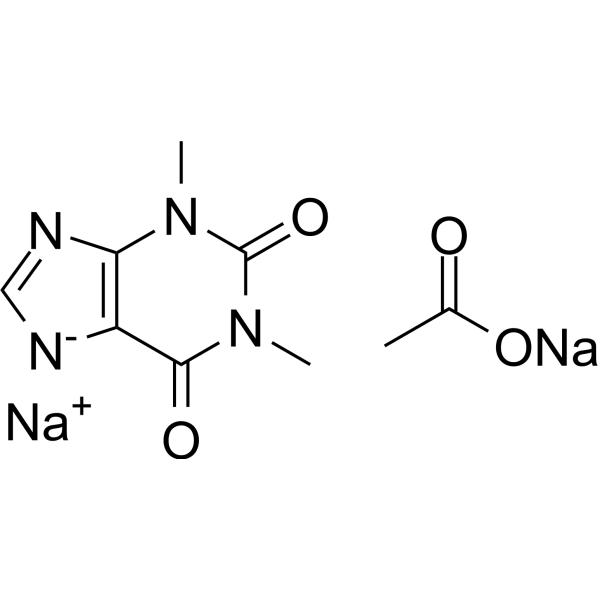
Theophylline sodium acetate
Theophylline (1,3-Dimethylxanthine) sodium acetate is a potent phosphodiesterase (PDE) inhibitor, adenosine receptor antagonist, and histone deacetylase (HDAC) activator. Theophylline (1,3-Dimethylxanthine) sodium acetate inhibits PDE3 activity to relax airway smooth muscle. Theophylline (1,3-Dimethylxanthine) sodium acetate has anti-inflammatory activity by increase IL-10 and inhibit NF-κB into the nucleus. Theophylline (1,3-Dimethylxanthine) sodium acetate induces apoptosis. Theophylline (1,3-Dimethylxanthine) sodium acetate can be used for asthma and chronic obstructive pulmonary disease (COPD) research.
Para uso exclusivo en investigación. No vendemos a pacientes.
- No. CAS: 8002-89-9
- Fòrmula: C9H10N4Na2O4
- Peso molecular:284.18
-
Almacenamiento:
Please store the product under the recommended conditions in the Certificate of Analysis.

To place orders, for customer services and technical support, please contact: MedChemExpress USA
Tel: 609-228-6898 E-mail: [email protected] [email protected]


-
 Actividad biológica
-
Chemical Information
- Protocolo
- Pureza y Documentación
- Referencias
-
 Help & FAQs


-
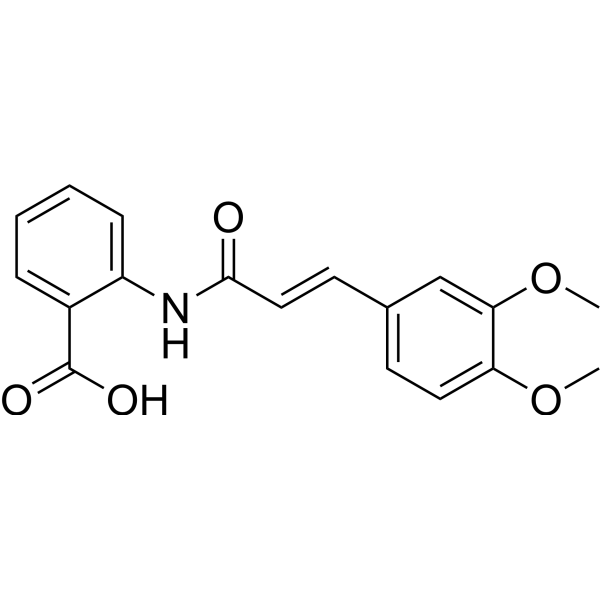
HY-B0195
TranilastAnti-allergic Agent -
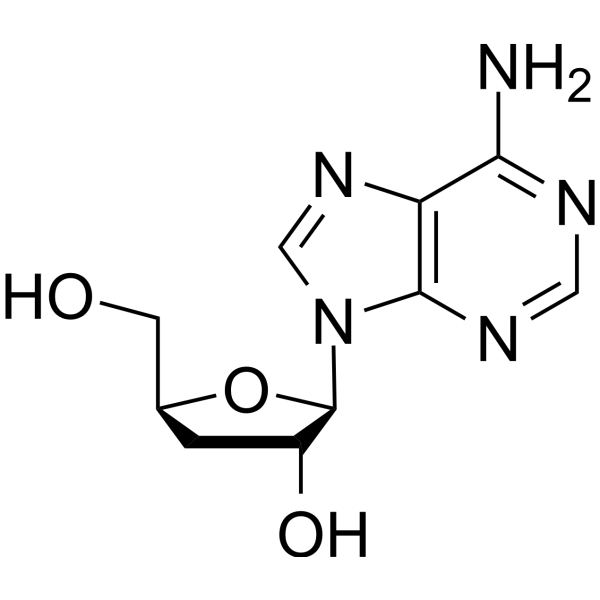
HY-N0262
CordycepinBacterial Inhibitor -
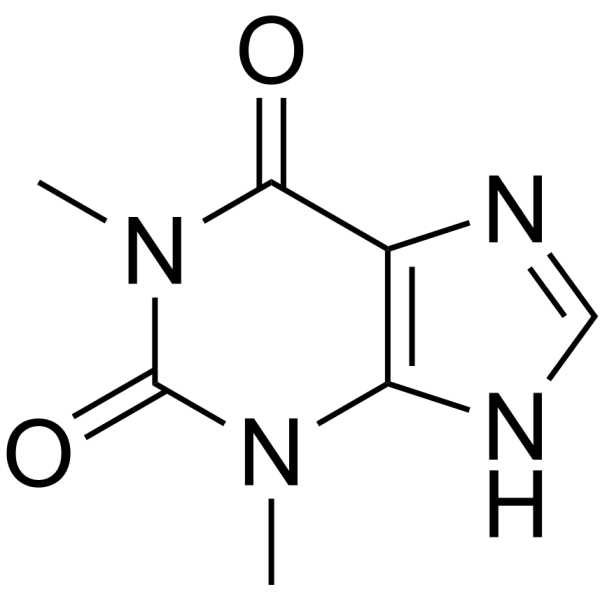
HY-B0809
TheophyllinePDE Inhibitor -
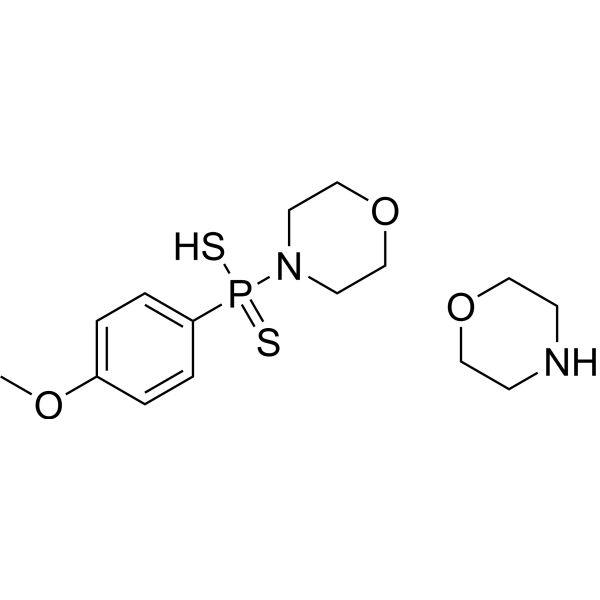
HY-107632
GYY4137H2S Donor -
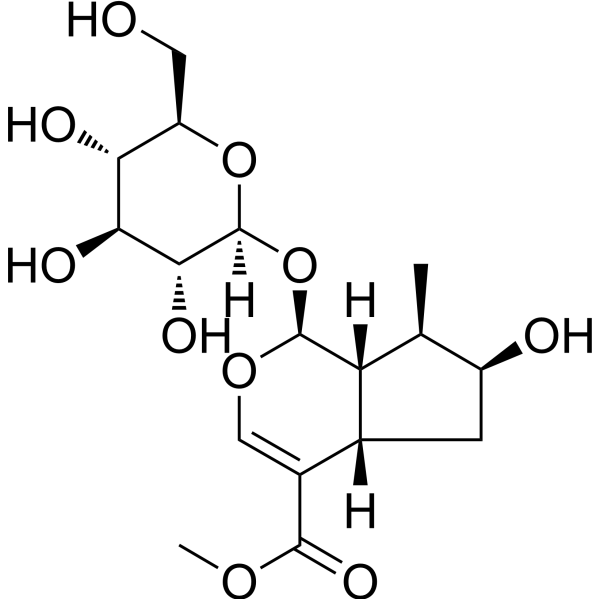
HY-N0512
LoganinIiridoid Glycoside -
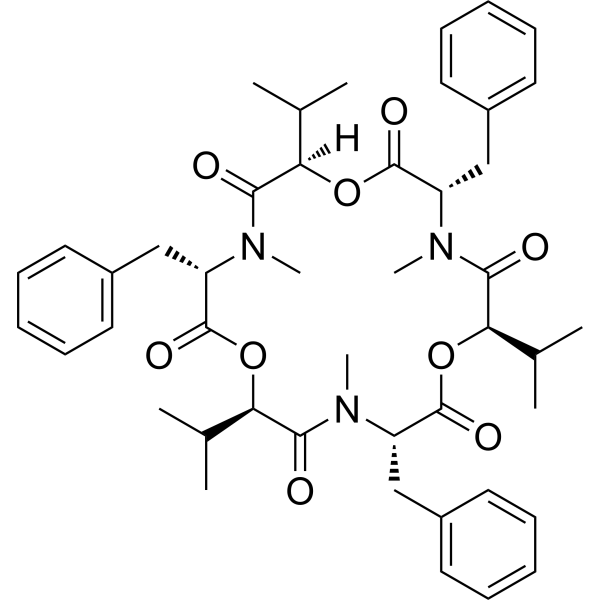
HY-N6739
BeauvericinAnticancer Fungal Mycotoxin -
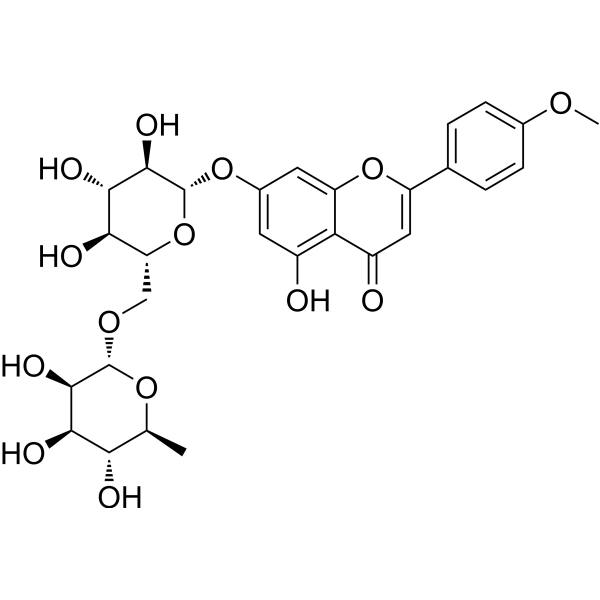
HY-N0528
LinarinAChE Inhibitor -
HY-N6796
Manumycin AAntibiotic, TrxR-1 Inhibitor -
HY-A0059
NifuratelBroad-Spectrum Antibiotic -
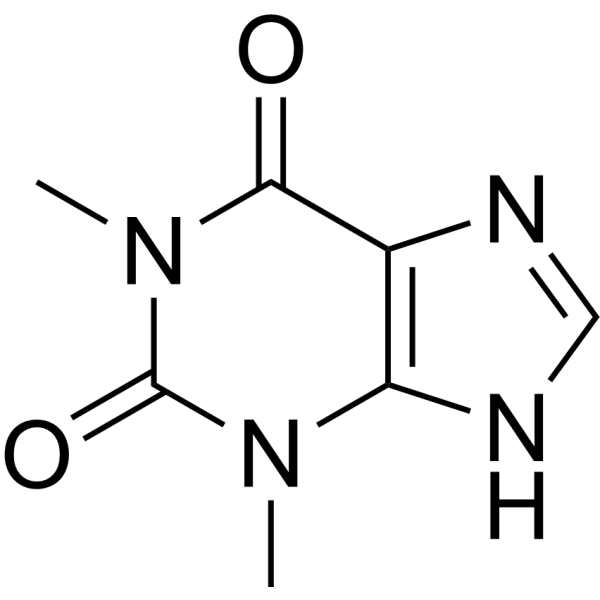
HY-B0809R
Theophylline (Standard) -
HY-N0243
TheaflavinEndogenous Metabolite
Ver todos los productos específicos de isoformas Endogenous Metabolite
MoreVer todos los productos específicos de isoformas Adenosine Receptor
MoreVer todos los productos específicos de isoformas TNF Receptor
More

Actividad biológica
Descripciòn
IC50 & Target
|
IL-10 |
IL-6 |
PDE3 |
Human Endogenous Metabolite |
In Vitro
Theophylline (1,3-Dimethylxanthine) sodium acetate (1-1000 µM) inhibits cAMP hydrolysis by PDE in homogenates of bronchial tissue to relax human bronchus and pulmonary arteries[1].
Theophylline (1,3-Dimethylxanthine) sodium acetate (10 µg/mL; 24 h; eosinophils) induces apoptosis through a reduction in the antiapoptotic protein Bcl-2[2].
Theophylline (1,3-Dimethylxanthine) sodium acetate (0-500 µM; 2 h; A549 cells) inhibits NF-κB activation, I kappa B alpha (I-κBα) degradation and decreases the level of IL-6 in a concentration-dependent manner[3].
Theophylline (1,3-Dimethylxanthine) sodium acetate (0-1000 µM; 30 min; A549 cells) induces histone deacetylase activity to decrease inflammatory gene expression[4].
MedChemExpress (MCE) has not independently confirmed the accuracy of these methods. They are for reference only.
-
Cell Line:A549 cells
-
Concentration:0, 20, 100 and 500 µM
-
Incubation Time:2 hours
-
Result:Decreased the expression of NF-κB p65 and I-κBα degradation in a concentration-dependent manner.
-
Cell Line:Eosinophils
-
Concentration:10 µg/mL
-
Incubation Time:24 hours
-
Result:Decreased the expression of Bcl-2.
In Vivo
MedChemExpress (MCE) has not independently confirmed the accuracy of these methods. They are for reference only.
-
Animal Model:Male Swiss mice[1]
-
Dosage:100 mg/kg
-
Administration:Intraperitoneal injection; daily, for 9 days
-
Result:Increased IL-6 and IL-10 levels and inhibited TNF-α and NO.


Chemical Information
-
No. CAS 8002-89-9
-
Peso molecular 284.18
-
Fòrmula C9H10N4Na2O4
-
SMILES
CC(O[Na])=O.O=C(N1C)N(C)C2=C([N-]C=N2)C1=O.[Na+]
-
Synonyms
1,3-Dimethylxanthine sodium acetate; Theo-24 sodium acetate
-
Structure Classification
-
Initial Source
-
Envío
Room temperature in continental US; may vary elsewhere.
-
Almacenamiento
Please store the product under the recommended conditions in the Certificate of Analysis.


Pureza y Documentación
Referencias
[1]. Rabe KF, et, al. Theophylline and selective PDE inhibitors as bronchodilators and smooth muscle relaxants. Eur Respir J. 1995 Apr;8(4):637-42. [Content Brief]
[2]. Chung IY, et, al. The downregulation of Bcl-2 expression is necessary for theophylline-induced apoptosis of eosinophil. Cell Immunol. 2000 Aug 1;203(2):95-102. [Content Brief]
[3]. Ichiyama T, et, al. Theophylline inhibits NF-kappa B activation and I kappa B alpha degradation in human pulmonary epithelial cells. Naunyn Schmiedebergs Arch Pharmacol. 2001 Dec;364(6):558-61. [Content Brief]
[4]. Ito K, et, al, Adcock IM, Barnes PJ. A molecular mechanism of action of theophylline: Induction of histone deacetylase activity to decrease inflammatory gene expression. Proc Natl Acad Sci U S A. 2002 Jun 25;99(13):8921-6. [Content Brief]
[5]. Barnes PJ. Theophylline. Am J Respir Crit Care Med. 2013 Oct 15;188(8):901-6. [Content Brief]

Calculators
Concentration (start) × Volume (start) = Concentration (final) × Volume (final)


Theophylline sodium acetate Related Classifications
HY-B0809B Related Classifications
 Powered by Bioz
Keywords