



Guaiazulene

Based on 1 Customer Validation
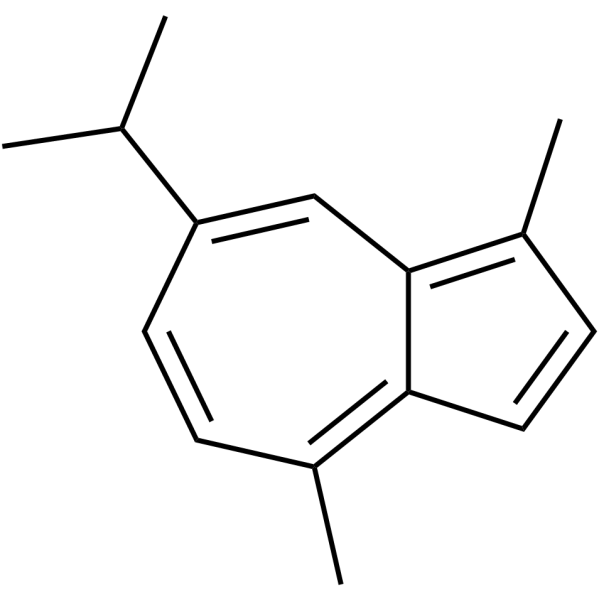
Guaiazulene is a bicyclic sesquiterpene. Guaiazulene exhibits various biological activities such as anti-inflammatory, antioxidant, hepatoprotective, antibacterial, and anti-tumor properties. Guaiazulene is also commonly used as a colorant in cosmetics. Guaiazulene shows in vitro cytotoxicity to rat neuronal cells and N2a neuroblastoma cells at high concentrations.
For research use only. We do not sell to patients.
- Purity : 99.08%
- CAS No.: 489-84-9
- Formula: C15H18
- Molecular Weight:198.30
-
Storage:Pure form -20°C, 3 years , 4°C, 2 years ; In solvent -80°C, 6 months , -20°C, 1 month

To place orders, for customer services and technical support, please contact: MedChemExpress USA
Tel: 609-228-6898 E-mail: [email protected] [email protected]


-
 Biological Activity
-
Chemical Information
-
Solvent & Solubility
- Protocols
- Purity & Documentation
- References
-
 Help & FAQs


-

HY-N6951R
Guaiazulene (Standard)Standard of Guaiazulene -
HY-N0246
Saikosaponin AAnti-inflammatory Agent -
HY-N0155
NobiletinROR Agonist -
HY-N0168
HesperetinUGT Inhibitor -
HY-N0439
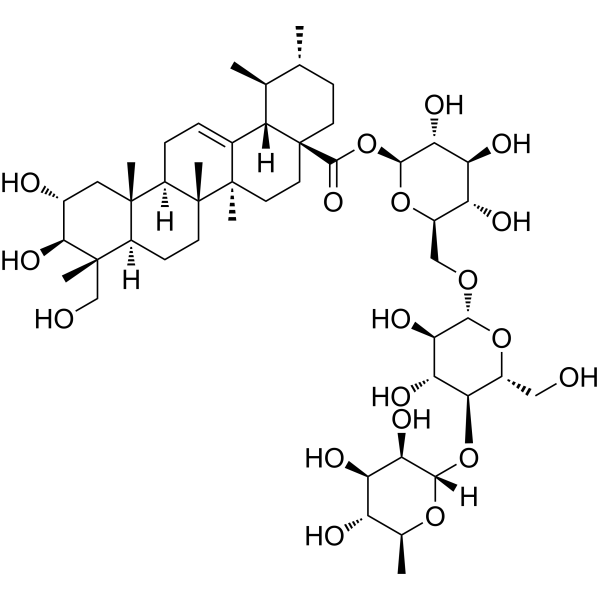
AsiaticosideTriterpene Glycoside -
HY-N0560
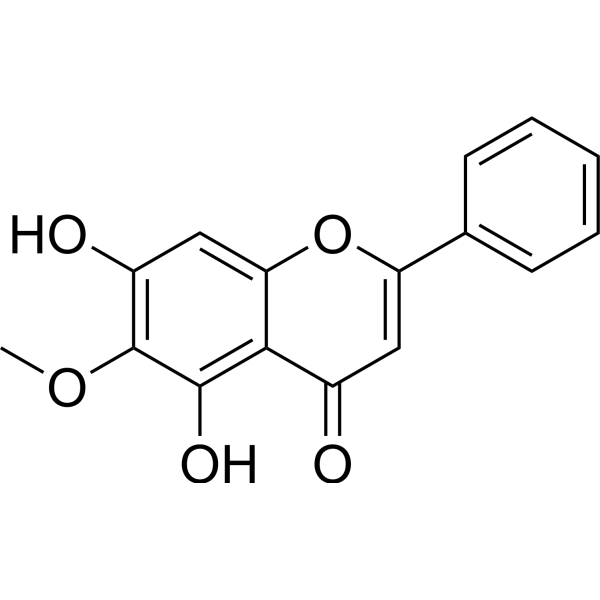
Oroxylin AAutophagy Inducer -
HY-N0803
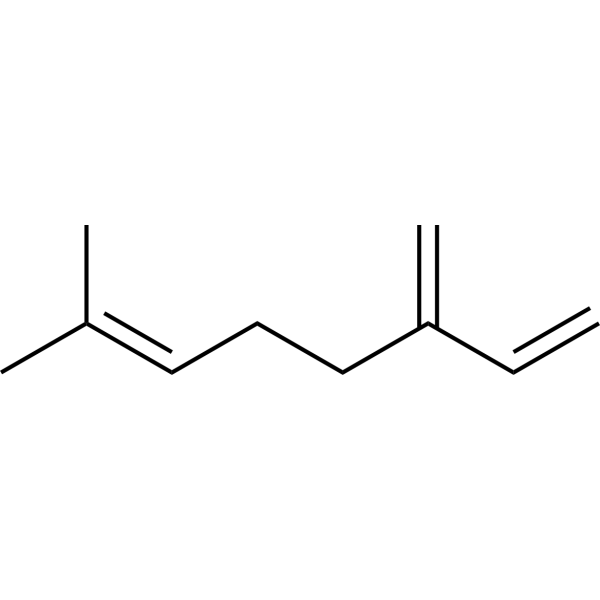
Myrcene,75% (stabilized with BHT)NF-κB Inhibitor -
HY-N0016
GlyciteinApoptosis Inducer -
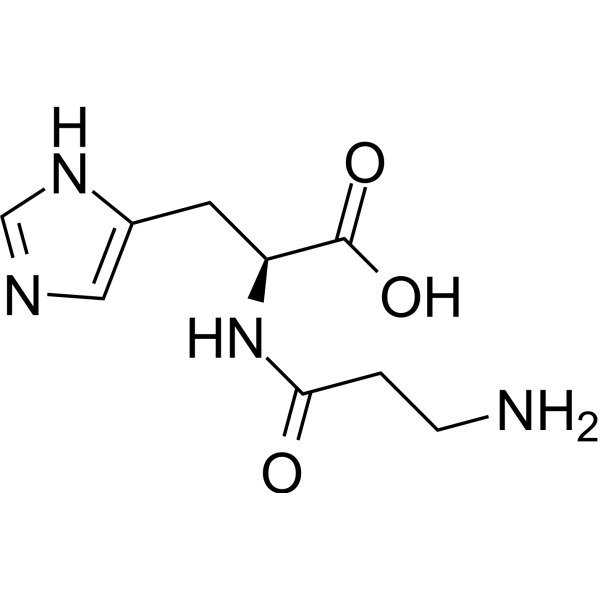
HY-W013494
L-CarnosineFree Radical Scavenger -
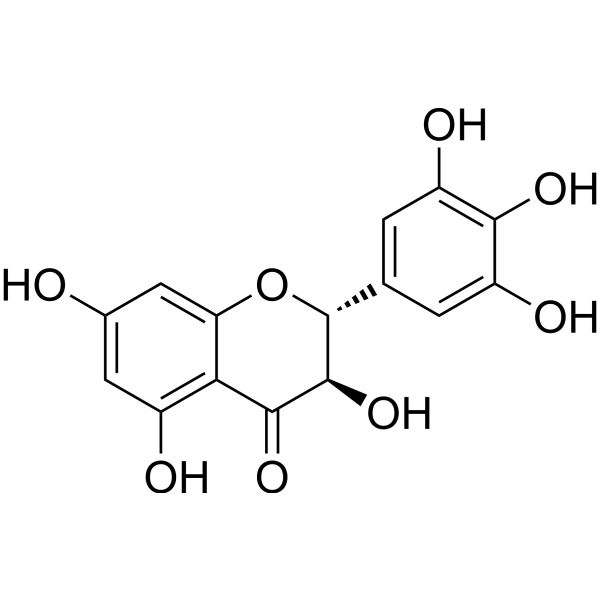
HY-N0112
DihydromyricetinAutophagy Inducer -
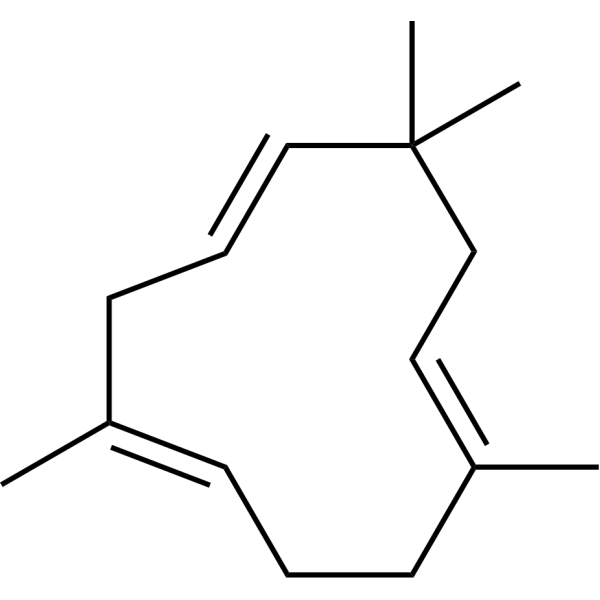
HY-N6968
α-HumuleneCOX Inhibitor -

HY-N0439R
Asiaticoside (Standard)Triterpene Glycoside
All Caspase Isoforms
More

Biological Activity
Description
In Vitro
Guaiazulene (≥150 μg/mL; 24 h) can reduce the cell viability, inhibit the total antioxidant capacity, but has no obvious DNA damage in N2a and rat neurons[1].
Guaiazulene (5-20 μM; 0-45 min) significantly inhibits lipid peroxidation in rat liver microsomes with an IC50 of 9.8 μM[2].
Guaiazulene (0-250 μM; 48 h) can inhibit the proliferation, reduce clone formation, and induce ROS accumulation and cell apoptosis of non-small cell lung cancer cell lines[3].
Guaiazulene (0-150 μM; 24-48 h) triggers a complete autophagic flux in non-small cell lung cancer cell lines A549 and H1975 by inhibiting the Akt/mTOR signaling pathway[3].
MedChemExpress (MCE) has not independently confirmed the accuracy of these methods. They are for reference only. Further protocols information, click here.
-
Cell Line:Primary rat neurons and N2a NB cells
-
Concentration:10, 25, 50, 75, 100, 150, 200, and 400 μg/mL
-
Incubation Time:24 h
-
Result:Did not affect cell viability at 10, 25, 50, 75, and 100 μg/mL
Inhibited the cell viability at 150, 200, and 400 μg/mL.
-
Cell Line:Non-small cell lung cancer cell lines
-
Concentration:0, 50, 100, 150, 200, and 250 μM
-
Incubation Time:48 h
-
Result:Inhibited the cell growth, with IC50 values of 135.0, 144.7, 148.9, 109.5, 152.8, and 207.0 μM for A549, PC9, HCC827, H1975, H1299 and 16HBE, respectively.
In Vivo
Guaiazulene (25 mg/kg; intraperitoneal injection; 3 weeks) exhibits anti-tumor activity in a nude mouse model of A549 xenograft[3].
MedChemExpress (MCE) has not independently confirmed the accuracy of these methods. They are for reference only.
-
Animal Model:Female Fischer-344 rats (180-200 g) treated Acetaminophen (Paracetamol; HY-66005) to induc liver injury[2]
-
Dosage:250 mg/kg
-
Administration:Intraperitoneal injection; single dose
-
Result:Restored the paracetamol-decreased hepatic glutathione level, and normalized other parameters including hepatic weight, cytosolic protein content, glutathione transferase activity, and glutathione reductase activity, which were affected by paracetamol.
Did not cause any macroscopic toxic symptoms, and its administration alone has no effect on all tested indices.
-
Animal Model:Female nude mice (BALB/c, 17-19 g) aged 5 weeks old treated A549 cells[3]
-
Dosage:25 mg/kg
-
Administration:Intraperitoneal injection; 3 weeks
-
Result:Caused smaller size and lighter weight of tumors.
Reduced Ki67 staining intensity, while cleaved-caspase 3 intensity was increased; LC3 staining was stronger and p-Akt levels were decreased in tumor tissues.
Caused no significant changes in mouse weight or pathologic features of major organs (heart, lung, liver, spleen, kidney)


Chemical Information
-
CAS No. 489-84-9
-
Appearance < 27 °C Solid, > 29 °C Liquid
-
Molecular Weight 198.30
-
Formula C15H18
-
SMILES
CC(C1=CC2=C(C)C=CC2=C(C)C=C1)C
-
Structure Classification
-
Initial Source
-
Shipping
Room temperature in continental US; may vary elsewhere.
-
Storage
Pure form -20°C 3 years 4°C 2 years In solvent -80°C 6 months -20°C 1 month


Solvent & Solubility
In Vitro:
DMSO : 50 mg/mL (252.14 mM; Need ultrasonic; Hygroscopic DMSO has a significant impact on the solubility of product, please use newly opened DMSO)
Please refer to the solubility information to select the appropriate solvent. Once prepared, please aliquot and store the solution to prevent product inactivation from repeated freeze-thaw cycles.
Storage method and period of stock solution: -80°C, 6 months; -20°C, 1 month. When stored at -80°C, please use it within 6 months. When stored at -20°C, please use it within 1 month.
Please refer to the solubility information to select the appropriate solvent. Once prepared, please aliquot and store the solution to prevent product inactivation from repeated freeze-thaw cycles.
Storage method and period of stock solution: -80°C, 6 months; -20°C, 1 month. When stored at -80°C, please use it within 6 months. When stored at -20°C, please use it within 1 month.
Concentration (start) × Volume (start) = Concentration (final) × Volume (final)
In Vivo:
Select the appropriate dissolution method based on your experimental animal and administration route.
- For the following dissolution methods, please ensure to first prepare a clear stock solution using an In Vitro approach and then sequentially add co-solvents:
- To ensure reliable experimental results, the clarified stock solution can be appropriately stored based on storage conditions. As for the working solution for In Vivo experiments, it is recommended to prepare freshly and use it on the same day.
- The percentages shown for the solvents indicate their volumetric ratio in the final prepared solution. If precipitation or phase separation occurs during preparation, heat and/or sonication can be used to aid dissolution.
Add each solvent one by one: 10% DMSO 40% PEG300 5% Tween-80 45% Saline
Solubility: ≥ 6.25 mg/mL (31.52 mM); Clear solution
This protocol yields a clear solution of ≥ 6.25 mg/mL (saturation unknown).
Taking 1 mL working solution as an example, add 100 μL DMSO stock solution (62.5 mg/mL) to 400 μL PEG300, and mix evenly; then add 50 μL Tween-80 and mix evenly; then add 450 μL Saline to adjust the volume to 1 mL.
Preparation of Saline: Dissolve 0.9 g sodium chloride in ddH₂O and dilute to 100 mL to obtain a clear Saline solution.
Add each solvent one by one: 10% DMSO 90% (20% SBE-β-CD in Saline)
Solubility: ≥ 6.25 mg/mL (31.52 mM); Clear solution
This protocol yields a clear solution of ≥ 6.25 mg/mL (saturation unknown).
Taking 1 mL working solution as an example, add 100 μL DMSO stock solution (62.5 mg/mL) to 900 μL 20% SBE-β-CD in Saline, and mix evenly.
Preparation of 20% SBE-β-CD in Saline (4°C, storage for one week): 2 g SBE-β-CD powder is dissolved in 10 mL Saline, completely dissolve until clear.
In Vivo Dissolution Calculator
Please enter the basic information of animal experiments:
-
-
-
-
Recommended: Prepare an additional quantity of animals to account for potential losses during experiments.
Please enter your animal formula composition:
-
%DMSO +
Recommended: Keep the proportion of DMSO in working solution below 2% if your animal is weak.
-
%+
-
+%Tween-80 + +
-
%Saline +
The co-solvents required include: DMSO, . All of co-solvents are available by MedChemExpress (MCE). , Tween 80. All of co-solvents are available by MedChemExpress (MCE).
Working solution concentration: 0.22 mg/mL
Method for preparing stock solution: mg drug dissolved in μL DMSO. Stock solution concentration: mg/mL.
1. Take μL DMSO stock solution;
2. Add μL .
μL , mix evenly;
3. Then add μL Tween 80, mix evenly;
4. Then add μL
Please ensure that the stock solution in the first step is dissolved to a clear state, and add co-solvents in sequence. You can use ultrasonic heating (ultrasonic cleaner, recommended frequency 20-40 kHz), vortexing, etc. to assist dissolution.

Protocols
-
Research Protocol for Infectious Diseases
Infectious-disease experiments test how pathogens interact with host barriers, innate immune receptors, inflammatory signaling, pathogen replication, and tissue injury; pattern-recognition receptors such as TLRs, RIG-I-like receptors, NOD-like receptors, and inflammasomes detect microbial molecules and activate NF-κB, interferon, and cytokine responses. The central hypothesis is that infection severity reflects the balance between pathogen burden and host response: protective inflammation restricts pathogen growth, whereas excessive or mislocalized inflammation contributes to tissue damage and disease phenotype. Unresolved questions include which host pathways are protective versus pathogenic, why some infection models fail to translate to human disease, and which combined readouts best predict clinically relevant infection outcomes.
-
Cell Cytotoxicity Assay
Cytotoxicity assays are usually based on the assessment of cell membrane damage, which can also be indirectly detected by measuring cell viability. Detection methods include MTT assay, CKK-8 assay, LDH assay and ATP assay, etc.
-
Mammalian live/dead viability and cytotoxicity staining
Live/dead viability and cytotoxicity staining assays are based on the simultaneous detection of intracellular esterase activity in metabolically active (viable) cells and membrane integrity loss in non-viable cells. In commonly used dual-staining approaches, membrane-permeant fluorogenic substrates are converted by intracellular esterases into fluorescent products in live cells, while impermeant DNA-binding dyes selectively enter cells with compromised plasma membranes and label nucleic acids in dead or dying cells, enabling discrimination between viable and non-viable populations by fluorescence microscopy or flow cytometry.
-
Research Protocol for Inflammation-related Diseases
The NLRP3 inflammasome is a cytosolic innate immune signaling platform that integrates priming signals and danger-signal activation to promote caspase-1 activation, maturation of IL-1β and IL-18, and gasdermin D-mediated pyroptotic cell death. The core experimental logic is to determine whether inflammatory disease phenotypes are driven by increased NLRP3 expression, ASC-containing inflammasome assembly, caspase-1 cleavage, GSDMD cleavage, and extracellular release of IL-1β/IL-18 rather than by nonspecific cell injury alone. The pathway is strongly linked to inflammation-related disease phenotypes because monosodium urate crystals activate NALP3/NLRP3 inflammasome signaling in gout-like crystal inflammation, cholesterol crystals activate NLRP3 inflammasomes in atherogenesis models, and DSS-induced intestinal inflammation has been reported to involve NLRP3 inflammasome activity. However, experimental colitis studies also show context-dependent protective effects of NLRP3 inflammasome co
-
Cell Viability Determination by MTT Colorimetric Assay
The following protocol uses the MTT colorimetric assay as a classic literature-established method for assessing cell viability/metabolic activity in cultured mammalian cells. MTT[3-(4,5-dimethylthiazol-2-yl)-2,5-diphenyltetrazolium bromide] is reduced by metabolically active cells to a colored formazan product; the amount of formazan is quantified spectrophotometrically and provides an indirect measure of metabolically active viable cells. Importantly, MTT reduction reflects cellular oxidoreductase/metabolic activity rather than an absolute direct count of living cells, so changes in cellular metabolism can alter the signal independently of cell number.


Purity & Documentation
-
Data Sheet (285 KB)
-
SDS (393 KB)
- English - EN (393 KB)
- Français - FR (393 KB)
- Deutsch - DE (393 KB)
- Norwegian - NO (393 KB)
- Español - ES (393 KB)
- Swedish - SV (393 KB)
- Italian - IT (393 KB)
- Korean - KR (393 KB)
- Portuguese - PT (393 KB)
-
Handling Instructions (2659 KB)
References
[1]. Togar B, et al. Guaiazulene biochemical activity and cytotoxic and genotoxic effects on rat neuron and N2a neuroblastom cells. J Intercult Ethnopharmacol. 2015 Jan-Mar;4(1):29-33. [Content Brief]
[2]. Kourounakis AP, et al. Antioxidant activity of guaiazulene and protection against paracetamol hepatotoxicity in rats. J Pharm Pharmacol. 1997 Sep;49(9):938-42. [Content Brief]
[3]. Ye Q, et al. Guaiazulene Triggers ROS-Induced Apoptosis and Protective Autophagy in Non-small Cell Lung Cancer. Front Pharmacol. 2021 Apr 15;12:621181. [Content Brief]
[4]. Akram W, et al. Guaiazulene and related compounds: A review of current perspective on biomedical applications. Life Sci. 2023 Mar 1;316:121389. [Content Brief]


Complete Stock Solution Preparation Table
Please refer to the solubility information to select the appropriate solvent. Once prepared, please aliquot and store the solution to prevent product inactivation from repeated freeze-thaw cycles.
Storage method and period of stock solution: -80°C, 6 months; -20°C, 1 month. When stored at -80°C, please use it within 6 months. When stored at -20°C, please use it within 1 month.
| Optional Solvent | Concentration Solvent Mass | 1 mg | 5 mg | 10 mg | 25 mg |
|---|---|---|---|---|---|
| DMSO | 1 mM | 5.0429 mL | 25.2143 mL | 50.4286 mL | 126.0716 mL |
| 5 mM | 1.0086 mL | 5.0429 mL | 10.0857 mL | 25.2143 mL | |
| 10 mM | 0.5043 mL | 2.5214 mL | 5.0429 mL | 12.6072 mL | |
| 15 mM | 0.3362 mL | 1.6810 mL | 3.3619 mL | 8.4048 mL | |
| 20 mM | 0.2521 mL | 1.2607 mL | 2.5214 mL | 6.3036 mL | |
| 25 mM | 0.2017 mL | 1.0086 mL | 2.0171 mL | 5.0429 mL | |
| 30 mM | 0.1681 mL | 0.8405 mL | 1.6810 mL | 4.2024 mL | |
| 40 mM | 0.1261 mL | 0.6304 mL | 1.2607 mL | 3.1518 mL | |
| 50 mM | 0.1009 mL | 0.5043 mL | 1.0086 mL | 2.5214 mL | |
| 60 mM | 0.0840 mL | 0.4202 mL | 0.8405 mL | 2.1012 mL | |
| 80 mM | 0.0630 mL | 0.3152 mL | 0.6304 mL | 1.5759 mL | |
| 100 mM | 0.0504 mL | 0.2521 mL | 0.5043 mL | 1.2607 mL |


Guaiazulene Related Classifications
HY-N6951 Related Classifications
 Powered by Bioz