1. Search Result
Search Result
Pathways Recommended: Stem Cell/Wnt Cell Cycle/DNA Damage
Results for "

SW480 colorectal cancer cells

" in MedChemExpress (MCE) Product Catalog:

25

Inhibitors & Agonists

2

Peptides

4

Natural
Products

1

Click Chemistry

Cat. No. Product Name Target Research Areas Chemical Structure
  • HY-A0033
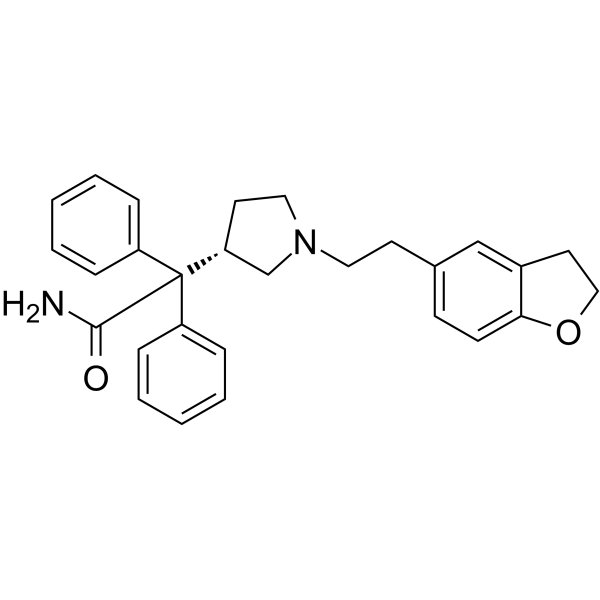
    Darifenacin
    5+ Cited Publications

    UK-88525

    mAChR p38 MAPK Akt Neurological Disease Metabolic Disease Cancer
    Darifenacin (UK-88525) is a selective and orally active M3 muscarinic receptor (M3R) antagonist with a pKi of 8.9. Darifenacin binds >20-fold more specifically to M3R than to other muscarinic receptors. Darifenacin can be used in the study of urinary incontinence and other symptoms of overactive bladder. Darifenacin inhibits tumor growth in colorectal cancer cells and has anti-tumor effects .
    Darifenacin
  • HY-A0012
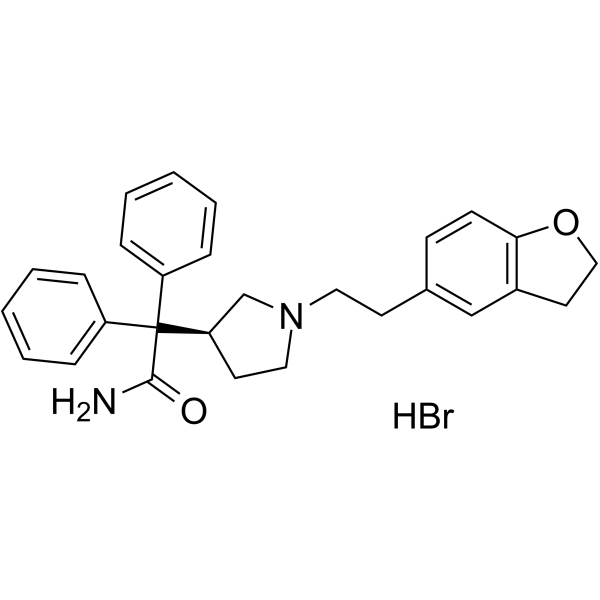
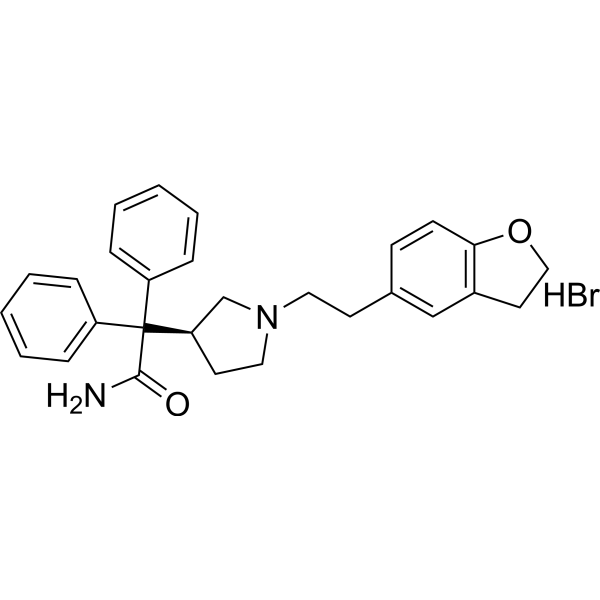
    Darifenacin hydrobromide
    5+ Cited Publications

    UK-88525 hydrobromide

    mAChR p38 MAPK Akt Neurological Disease Metabolic Disease Cancer
    Darifenacin (UK-88525) hydrobromide is a selective and orally active M3 muscarinic receptor (M3R) antagonist with a pKi of 8.9. Darifenacin hydrobromide binds >20-fold more specifically to M3R than to other muscarinic receptors. Darifenacin hydrobromide can be used in the study of urinary incontinence and other symptoms of overactive bladder. Darifenacin hydrobromide inhibits tumor growth in colorectal cancer cells and has anti-tumor effects .
    Darifenacin hydrobromide
  • HY-N3387

    Apoptosis NF-κB Akt MMP Inflammation/Immunology Cancer
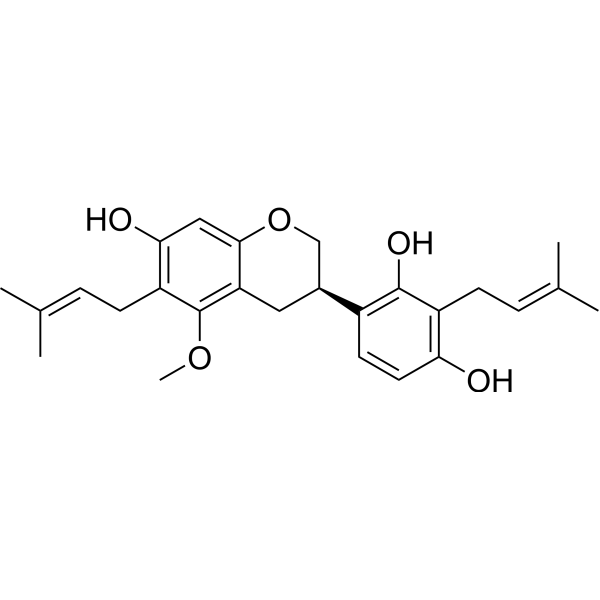
    Licoricidin (LCD) is isolated from Glycyrrhiza uralensis Fisch, possesses anti-cancer activities. Licoricidin (LCD) inhibit SW480 cells (IC50=7.2 μM) by inducing cycle arrest, apoptosis and autophagy, and is a potential chemopreventive or chemotherapeutic agent against colorectal cancer . Licoricidin (LCD) inhibits Lung Metastasis by inhibition of tumor angiogenesis and lymphangiogenesis as well as changes in the local microenvironment of tumor tissues the anticarcinogenic effect . Licoricidin enhanced gemcitabine-induced cytotoxicity in Osteosarcoma (OS) cells by inactivation of the Akt and NF-κB pathways in vitro and in vivo . Licoricidin blocks UVA-induced photoaging via ROS scavenging, limits the activity of MMP-1, it can be considered as an active ingredient in new topically applied anti-ageing formulations .
    Licoricidin
  • HY-172209

    p38 MAPK Apoptosis Reactive Oxygen Species (ROS) Caspase Bcl-2 Family Cancer
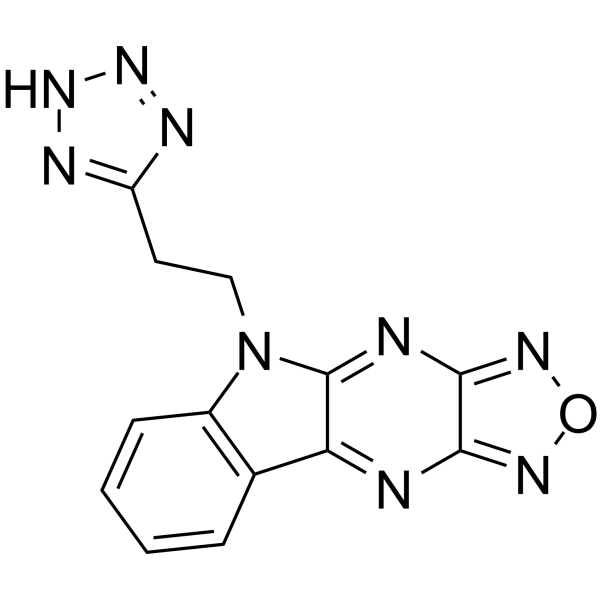
    PPIA-IN-1 is a PPIA inhibitor with a Kd value of 0.52 μM. PPIA-IN-1 inhibits the PPIA/MAPK signaling pathway to exert antiproliferative activity. PPIA-IN-1 induces G0/G1 cell cycle arrest in cancer cells. PPIA-IN-1 upregulates the expression of Bax and caspase-3, downregulates Bcl-2 expression, and induces apoptosis in cancer cells. PPIA-IN-1 induces increased ROS levels, DNA damage, endoplasmic reticulum stress, and mitochondrial dysfunction in cancer cells. PPIA-IN-1 exhibits antitumor activity in a mouse colon cancer xenograft model. PPIA-IN-1 can be used for the research of colorectal cancer .
    PPIA-IN-1
  • HY-N1854

    Drug Derivative Apoptosis Wnt Cancer
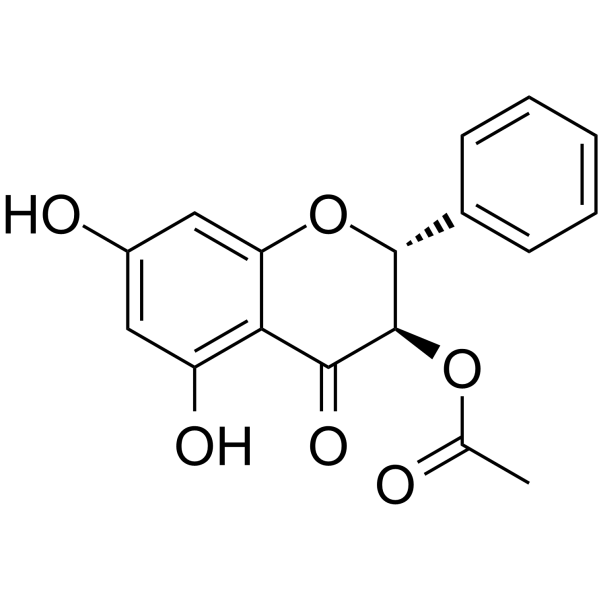
    Pinobanksin 3-acetate is a flavanone and flavonoid ester with antioxidant activity. Pinobanksin 3-acetate is naturally present in Sonoran propolis, honey, medicinal plants, and forestry coproducts of Pinus caribaea. Pinobanksin 3-acetate exerts anti-colorectal cancer activity by modulating proliferation, apoptosis, cell cycle, and Wnt signaling pathways. Pinobanksin 3-acetate can be used for the research of colon cancer .
    Pinobanksin 3-acetate
  • HY-174996

    PROTACs Epigenetic Reader Domain Apoptosis Cancer
    NEP162 is a BRD4 PROTAC degrader with DC50s of 1.2 and 1.6 μM in SW480 and U2OS cells. NEP162 exhibits antiproliferative activity, effectively inhibits tumor growth and induces apoptosis. NEP162 can be used for the study of osteosarcoma, colorectal cancer and non-small cell lung cancer, etc. (Pink: BRD4 ligand : (HY-78695), Blue: E3 ligase Ligand (HY-D2259), BLACK: Linker, E3 ligase ligand-linker conjugate (HY-174997)) .
    NEP162
  • HY-162708

    AMPK Cancer
    KHKI-01128 is a NUAK2 inhibitor, with an IC50 of 0.024 μM. KHKI-01128 exhibits potent anticancer activity against SW480 colorectal cancer cells .
    KHKI-01128
  • HY-115543

    Wnt β-catenin Cancer
    β-catenin-IN-37 is a selective β-Catenin/T-cell factor protein-protein interaction (β-catenin/Tcf PPI) inhibitor. β-catenin-IN-37 inhibits canonical Wnt signaling and the growth of colorectal cancer cells SW480 and HCT116 with the IC50 values of 20 μM and 31 μM, respectively .
    β-catenin-IN-37
  • HY-158345

    PROTACs ATM/ATR DNA/RNA Synthesis Apoptosis Cancer
    PROTAC ATM degrader-1 is a ATM PROTAC degrader with a KD value of 1.17 nM. PROTAC ATM degrader-1 triggers DNA damage response, cell cycle arrest, and apoptosis in cancer cells via the ubiquitin-proteasome-dependent degradation pathway. PROTAC ATM degrader-1 can be used for research on colorectal cancer .
    PROTAC ATM degrader-1
  • HY-168593

    β-catenin PROTACs Wnt Histone Demethylase Cancer
    PROTAC KDM3 degrader-1 (Compound 4) is a CRBN-recruiting PROTAC designed based on the IOX1 (HY-12304) scaffold. PROTAC KDM3 degrader-1 selectively degrades the KDM3A and KDM3B proteins, thereby inhibiting the Wnt/β-catenin signaling pathway. PROTAC KDM3 degrader-1 significantly suppresses the self-renewal capacity of colorectal cancer stem cells and inhibits the growth of colorectal cancer tumors. PROTAC KDM3 degrader-1 is suitable for research on colorectal cancer (Target protein ligand (Pink): HY-12304; linker (Black): HY-22335; Conjugate of E3 ligase ligand and linker: HY-112599; E3 ligase (Blue): HY-41547) .
    PROTAC KDM3 degrader-1
  • HY-175513

    HDAC Apoptosis Cancer
    ZWZH-21 is a selective and orally active HDAC1/2 dual inhibitor with IC50 values of 34 nM for HDAC1 and 41 nM for HDAC2. ZWZH-21 can inhibit HCT116 and SW480 cells growth with IC50 values of 0.524 μM and 1.063 μM, respectively. ZWZH-21 can inhibit proliferation and migration and induces apoptosis in multiple colorectal cancer cells. ZWZH-21 can be used for the research of cancer, such as colorectal cancer .
    ZWZH-21
  • HY-177742

    Molecular Glues Phosphoglycerate Dehydrogenase (PHGDH) Cancer
    LXH-3-71 is a PHGDH degrader. LXH-3-71 acts as a molecular glue to enhance the interaction of the PHGDH-DDB1-CRL E3 ligase complex, triggering ubiquitination and proteasomal degradation of PHGDH. LXH-3-71 regulates the stemness of colorectal cancer cells and inhibits tumor proliferation and colony formation. LXH-3-71 can be used in the research of colorectal cancer .
    LXH-3-71
  • HY-N4006

    Apoptosis Autophagy Inflammation/Immunology Cancer
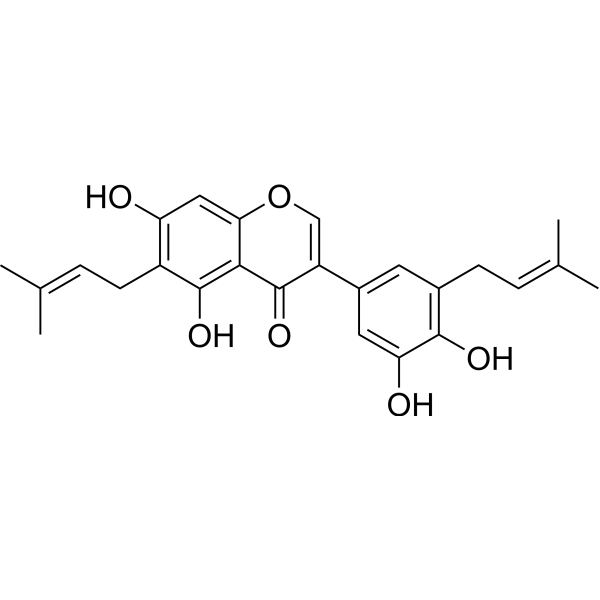
    Isoangustone A is an anticancer and anti-inflammatory agent. Isoangustone A induces cancer cells apoptosis and autophagic cell death .
    Isoangustone A
  • HY-178921

    Drug Derivative Apoptosis Cancer
    HJ-4 is a Piperine (HY-N0144) derivative. HJ-4 potently inhibits the proliferation of CRC cells by dose-dependently reducing colony formation and DNA synthesis. HJ-4 markedly suppresses the adhesion, migration, invasion and induces apoptosis of CRC cells. HJ-4 demonstrates anti-tumor efficacy in chicken embryo chorioallantoic membrane (CAM) model implanted with HCT116/SW480 tumor spheroids. HJ-4 can be used for the study of colorectal cancer (CRC) .
    HJ-4
  • HY-180537

    Apoptosis Cancer
    Apoptosis inducer 57 is a apoptosis inducer and Thymidylate Synthase (TS) inhibitor. Apoptosis inducer 57 exhibits cytotoxic activity against SW480 and MCF-7 cancer cells with IC50 values of 15.7 and 16.5 µM, and induces dose-dependent apoptosis and S-phase cell cycle arrest. Apoptosis inducer 57 stalely binds the TS active site via interactions with Asp218 and Met311. TS-IN-9 can be used for breast cancer and colorectal cancer research .
    Apoptosis inducer 57
  • HY-179151

    CDK Reactive Oxygen Species (ROS) SOD Cancer
    CDK4/6-IN-26 is a carbamate derivative that targets CDK4/CDK6. CDK4/6-IN-26 reduces CDK4/CDK6 levels, resulting in cell cycle arrest in the G0/G1 phase and in the S phase. CDK4/6-IN-26 exhibits high potency against SW480 cells (IC50 = 6.3 μM). CDK4/6-IN-26 affects ROS levels by increasing the expression of SOD2/MnSOD. CDK4/6-IN-26 establishes several interactions with the amino acids of the CDK6 active site. CDK4/6-IN-26 can be used for the research of colorectal cancer .
    CDK4/6-IN-26
  • HY-A0012R

    UK-88525 hydrobromide (Standard)

    Reference Standards mAChR p38 MAPK Akt Neurological Disease Metabolic Disease Cancer
    Darifenacin (hydrobromide) (Standard) is the analytical standard of Darifenacin (hydrobromide). This product is intended for research and analytical applications. Darifenacin (hydrobromide) is a selective and orally active M3 muscarinic receptor (M3R) antagonist with a pKi of 8.9. Darifenacin (hydrobromide) binds >20-fold more specifically to M3R than to other muscarinic receptors. Darifenacin (hydrobromide) can be used in the study of urinary incontinence and other symptoms of overactive bladder. Darifenacin (hydrobromide) inhibits tumor growth in colorectal cancer cells and has anti-tumor effects .
    Darifenacin hydrobromide (Standard)
  • HY-183060

    Cancer
    Antitumor agent-215 is an antitumor agent. Antitumor agent-215 occupies the binding pocket of thymidylate synthase and interacts with key catalytic residues. Antitumor agent-215 induces cancer cell apoptosis and cell cycle arrest, and inhibits cell proliferation. Antitumor agent-215 can be used in the research of breast cancer and colorectal cancer .
    Antitumor agent-215
  • HY-P11036

    MDM-2/p53 Cancer
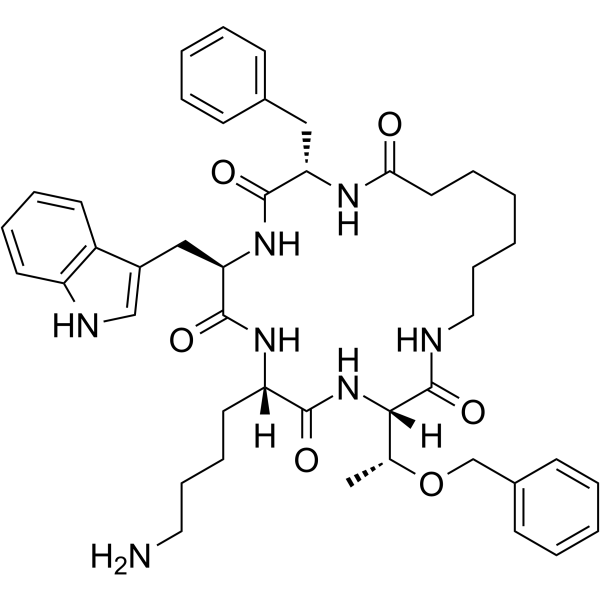
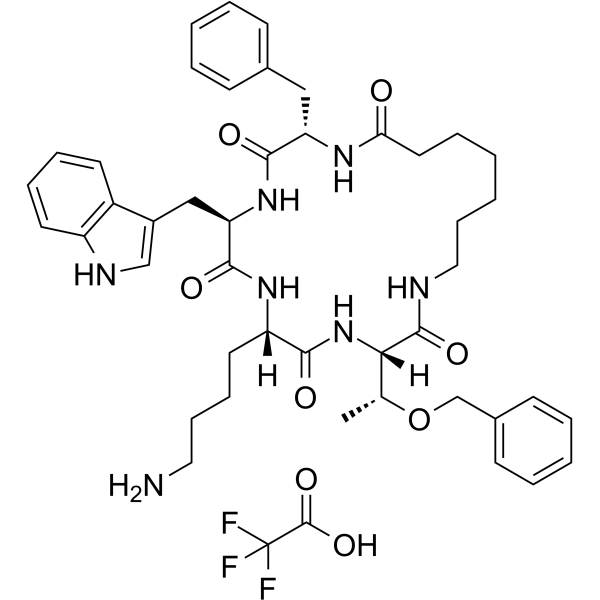
    p53-hDM2 cyclic peptide inhibitor 16e is a p53-hDM2 cell-permeable peptide inhibitor with an IC50 of 9.24 nM for hDM2. p53-hDM2 cyclic peptide inhibitor 16e can be used for cancers like breast, colorectal and cervical cancers research .
    p53-hDM2 cyclic peptide inhibitor 16e
  • HY-182404

    Free Fatty Acid Receptor Cancer
    Anticancer agent 316 (Compound 1) is an anticancer agent. Anticancer agent 316 exerts anticancer activity against colorectal cancers expressing GPR120. Anticancer agent 316 can be used in the research of colorectal cancer .
    Anticancer agent 316
  • HY-182243

    Hexokinase VDAC Apoptosis AMPK Bcl-2 Family Cancer
    HK2-IN-4 is a selective hexokinase 2 (HK2) inhibitor with an IC50 value of 0.79 μM and a Kd value of 0.41 μM. HK2-IN-4 blocks the interaction between HK2 and voltage-dependent anion channel 1 (VDAC1). HK2-IN-4 reduces lactate and ATP levels in cancer cells. HK2-IN-4 induces the production of apoptosis (apoptosis) markers in cancer cells, including increased p-AMPK/AMPK ratio and Bax levels, as well as decreased Bcl2 levels. HK2-IN-4 inhibits the proliferation of cancer cells with high HK2 expression. HK2-IN-4 can be used in research related to colorectal cancer and non-small cell lung cancer .
    HK2-IN-4
  • HY-N17821

    Sirtuin Aurora Kinase Akt GSK-3 β-catenin TGF-β Receptor Apoptosis Reactive Oxygen Species (ROS) Wnt NF-κB TNF Receptor Interleukin Related IKK Neurological Disease Inflammation/Immunology Cancer
    Butrin is a compound found in Butea monosperma flowers. Butrin reduces expression of SIRT1, AURKB, cyclin D1, pAKT, GSK-3β, β-catenin, and TGF-3β expression, enhances apoptosis and ROS production in cancer cells. Butrin downregulates Wnt and NF-κB signaling, mitigates oxidative stress, reduces proinflammatory cytokine (TNF-α, IL-6 and IL-8) production and suppresses neuroinflammation. Butrin inhibits IKK enzyme activity. Butrin can be used for the researches of colorectal cancer, Alzheimer’s disease, and rheumatoid arthritis .
    Butrin
  • HY-183338

    Apoptosis SphK Cancer
    SphK2-IN-4 is a selective SphK2 inhibitor (IC50=6.2 μM) with extremely low activity against SphK1 (IC50 > 50 μM). SphK2-IN-4 exhibits broad-spectrum antiproliferative activity against colorectal cancer cells and induces apoptosis .
    SphK2-IN-4
  • HY-182016

    PROTACs ATM/ATR Checkpoint Kinase (Chk) Apoptosis DNA/RNA Synthesis Caspase Bcl-2 Family MDM-2/p53 Cancer
    PROTAC ATR degrader-3 is a potent CRBN-based ATR PROTAC degrader with a DC50 of 127 nM. PROTAC ATR degrader-3 also degrades CHK1 with an DC50 of 135 nM. PROTAC ATR degrader-3 inhibits cancer cells proliferation, migration and invasion, triggers apoptosis and induces S phase arrest and DNA damage. PROTAC ATR degrader-3 achieves tumor growth inhibition in LoVo xenograft mouse model without apparent toxicity. PROTAC ATR degrader-3 can be used for the research of colorectal cancer .
    PROTAC ATR degrader-3
  • HY-P11757

    EGFR Cancer
    Cyclo[K(N3)larllt] is a seven-membered cyclic peptide targeting EGFR, with a Kd value of 5.09 μM, and exhibits binding selectivity toward homologous proteins HER2 and HER3. Cyclo[K(N3)larllt] has no cytotoxicity and shows no growth inhibitory effect on cancer cells overexpressing EGFR. Cyclo[K(N3)larllt] can serve as a ligand for EGFR-targeted fluorescent conjugates, which is applicable to the detection of cancers with EGFR overexpression. Cyclo[K(N3)larllt] can be used in the research of colorectal cancer .
    Cyclo[K(N3)larllt]

Inquiry Online

Your information is safe with us. * Required Fields.

Salutation


Country or Region *

Applicant Name *


Organization Name *

Department *


Email Address *


Product Name *

Cat. No.


Requested quantity *

Phone Number *


Remarks

Inquiry Online

Inquiry Information

Product Name:
Cat. No.:
Quantity:
MCE Japan Authorized Agent:

