



Akt
PKB; Protein kinase B
Akt/PKB (Protein kinase B), a serine/threonine protein kinase with antiapoptotic activity, is one of the major downstream targets of PtdIns(3,4,5)P3 signaling pathway. It contains a pleckstrin homology domain (PH domain) that specifically binds PtdIns(3,4,5)P3 on the plasma membrane. Akt phosphorylation and activation are directly determined by the level of PtdIns(3,4,5)P3 on the plasma membrane, which is regulated by PI3K.
Akt consists of three isoforms: PKBα/Akt1, PKBβ/Akt2 and PKBγ/Akt3. Akt isoforms have an N-terminal PH (pleckstrin homology) domain and a kinase domain, which are separated by a 39-amino-acid hinge region. Catalytically active Akt regulates the function of numerous substrates involved in cell survival, growth, proliferation, metabolism and protein synthesis.
Akt is a crucial mediator of cell survival and its deactivation is implicated in various stress-induced pathological cell death and degenerative diseases.
Akt Isoform Specific Products
All Product Categories
-
Akt Inhibitors
(1006)
View all products
-
Akt Agonists
(7)
View all products
-
Akt Activators
(300)
View all products
-
Akt Modulators
(25)
View all products
-
Akt Chemical
(1)
View all products
-
Akt Inducers
(9)
View all products
-
Akt Degraders
(11)
View all products
-
Akt Control
(1)
View all products
-
Akt Substrate
(1)
View all products
-
Akt Ligands
(6)
View all products
-
AKT Serine/Threonine Kinase 2 (AKT2) Proteins
(5)
View all products
-
AKT Serine/Threonine Kinase 3 (AKT3) Proteins
(6)
View all products
-
Akt Related Products (1475)
Related Products (1475)

-
Recombinant Proteins (11)
-
Antibodies (11)
-
Akt Isoform Comparison
-
Histamine-13C5, 15N3
 0 ImagesCat. No.: HY-B1204S2Synonyms: Ergamine-13C5, 15N3Histamine-13C5, 15N3 (Ergamine-13C5, 15N3) is the 13C and 15N labeled isotope of Histamine (HY-B1204). Histamine is the agonist for histamine receptor and a vasodilator. Histamine is an organic nitrogen compound that participates in local immune responses, regulates intestinal physiological functions, and acts as a neurotransmitter. Histamine affects p38 MAPK/Akt signaling pathway, exhibits antitumor, antioxidant and anti-inflammatory activities. Histamine can be used in the research of acute myeloid leukemia, malignant melanoma, and renal cell carcinoma.
-
20-5,14-HEDE-d2-1
 0 ImagesCat. No.: HY-160099S1Synonyms: WIT003-d2-120-5,14-HEDE-d2-1 (WIT003-d2-1) is the deuterated-labeled 20-5,14-HEDE (HY-160099). 20-5,14-HEDE (WIT003) is an analog of 20-HETE. 20-5,14-HEDE activates PI3K/Akt signaling pathway, thereby exhibiting anti-apoptotic and cell survival promoting effects. 20-5,14-HEDE is the agonist for 20-HETE that increases intracellular Ca2+ concentrations, thereby enhancing vasoconstriction.
-
Doxycycline monohydrate (Standard)
 0 ImagesCat. No.: HY-W008923RCAS No.: 17086-28-1Doxycycline monohydrate (Standard) is the analytical standard of Doxycycline monohydrate (HY-W008923). Doxycycline monohydrate is an orally active highly lipophilic, tissue-permeable MMP inhibitor with broad-spectrum antibacterial activity. Doxycycline monohydrate is also a semi-synthetic antibiotic with chelating properties, which blocks bacterial protein synthesis and inhibits extracellular matrix degradation through interactions with zinc and calcium atoms. Doxycycline monohydrate also inhibits mitochondrial biogenesis, translation, and the expression of respiratory chain proteins. Doxycycline monohydrate induces apoptosis, inhibits autophagy and EMT, downregulates stem cell markers, and activates the PI3K-AKT pathway, thereby effectively inhibiting the viability and proliferation of cancer cells such as breast cancer cells. Doxycycline monohydrate also promotes the survival and self-renewal of embryonic stem cells and neural stem cells, and reduces the frequency of medium changes in culture. Doxycycline monohydrate has been applied in studies related to breast cancer, prostate cancer, bladder cancer, and other cancers.
-
Histamine-15N3
 0 ImagesCat. No.: HY-B1204S4Synonyms: Ergamine-15N3Histamine-15N3 is the 15N3-labeled Histamine (HY-B1204). Histamine is the agonist for histamine receptor and a vasodilator. Histamine is an organic nitrogen compound that participates in local immune responses, regulates intestinal physiological functions, and acts as a neurotransmitter. Histamine affects p38 MAPK/Akt signaling pathway, exhibits antitumor, antioxidant and anti-inflammatory activities. Histamine can be used in the research of acute myeloid leukemia, malignant melanoma, and renal cell carcinoma.
-
Tovophyllin A
 0 ImagesCat. No.: HY-N18091CAS No.: 40738-44-1Tovophyllin A is an orally active xanthonoid compound. Tovophyllin A exerts neuroprotective effects against Parkinson's disease by activating the Akt/GSK3β signaling pathway. Tovophyllin A protects mouse models of liver injury by activating Nrf2. Tovophyllin A exhibits protective anti-inflammatory activity in mouse models of acute lung injury. Tovophyllin A inhibits the activation of NF-κB and subsequent release of pro-inflammatory cytokines. Tovophyllin A reduces apoptotic cell death (Apoptosis). Tovophyllin A has antiplasmodial activity. Tovophyllin A shows cytotoxic activity against lung epithelial cancer cells and breast cancer cells. Tovophyllin A can be used in research related to Parkinson's disease, liver injury, acute lung injury, lung epithelial cancer, and breast cancer.
-
Glycybenzofuran
 0 ImagesCat. No.: HY-N14540CAS No.: 1253641-15-4Glycybenzofuran is a flavonoid. Glycybenzofuran can be isolated from G. uralensis. Glycybenzofuran is a potent, competitive, selective PTP1B inhibitor. Glycybenzofuran shows excellent inhibitory selectivity against PTP1B. Glycybenzofuran increases insulin-stimulated pAkt levels. Glycylbenzofuran can be used in the research of hepatocellular carcinoma.
-
Solanesol (Standard)
 0 ImagesCat. No.: HY-N0576RCAS No.: 13190-97-1Solanesol (Standard) is the analytical standard of Solanesol (HY-N0576). This product is intended for research and analytical applications. Solanesol is an orally active aliphatic terpene alcohol. Solanesol is mainly found in tobacco and other Solanaceae plants. Solanesol induces HO-1 and Hsp70 expression, activates p38 and Akt signaling pathways, and inhibits Apoptosis (reduces caspase-3 and PARP cleavage). Solanesol has antioxidant, anti-inflammatory, and neuroprotective activities. Solanesol can be used in the research of Huntington's disease, alcoholic liver disease, chronic inflammatory pain, anxiety, Alzheimer's disease, and bipolar disorder.
-
Creatine-13C monohydrate
 0 ImagesCat. No.: HY-W017462S1CAS No.: 286437-18-1Creatine-13C monohydrate is the 13C-labeled Creatine monohydrate (HY-W017462). Creatine monohydrate, an endogenous amino acid derivative, plays an important role in cellular energy, especially in muscle and brain.
-
YPX-C-05
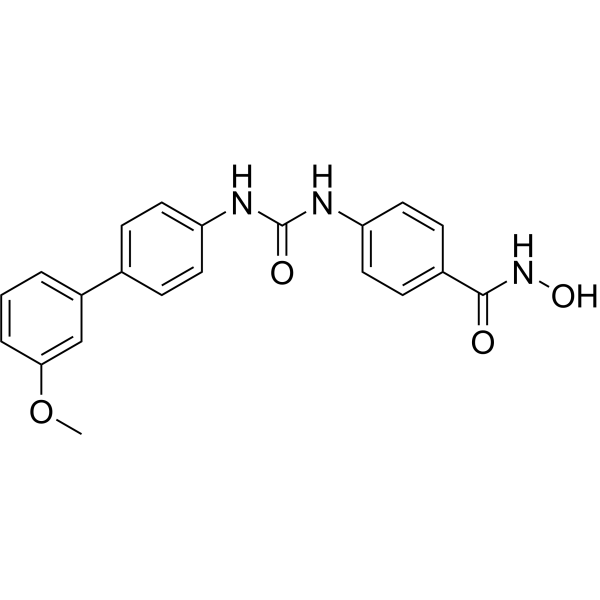 0 ImagesYPX-C-05 is an orally active HDAC inhibitor and vasodilator. YPX-C-05 inhibits HDAC enzymatic activity, increases histone H4 acetylation, activates the PI3K/Akt pathway, promotes Akt and eNOS phosphorylation, enhances eNOS activity, and boosts nitric oxide production. YPX-C-05 increases Tetrahydrobiopterin (HY-107383) levels, restores serum nitric oxide levels, reduces endothelin-1 levels, and improves endothelial function. YPX-C-05 reduces vascular remodeling and exerts antihypertensive effects in hypertensive Mus musculus mice. YPX-C-05 can be used for the research of hypertension.
-
Artemisinin-d3
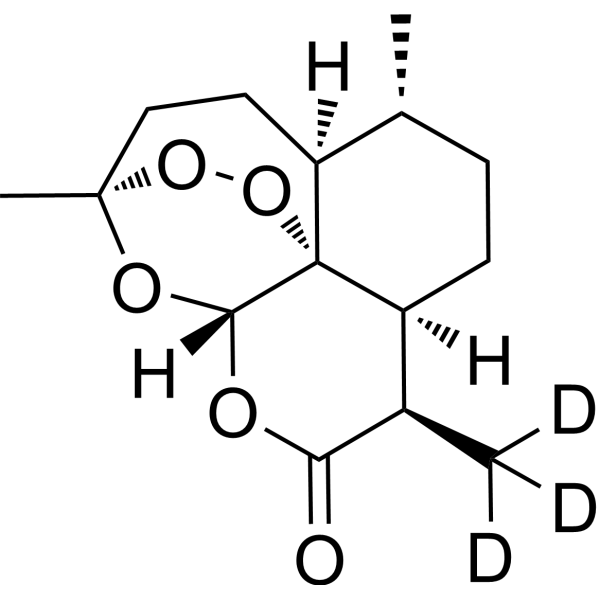 0 ImagesCat. No.: HY-B0094SCAS No.: 176652-07-6Synonyms: Qinghaosu-d3; NSC 369397-d3Artemisinin-d3 is the deuterium labeled Artemisinin. Artemisinin (Qinghaosu), a sesquiterpene lactone, is an anti-malarial agent isolated from the aerial parts of Artemisia annua L. plants. Artemisinin inhibits AKT signaling pathway by decreasing pAKT in a dose-dependent manner. Artemisinin reduces cancer cell proliferation, migration, invasion, tumorigenesis and metastasis and has neuroprotective effects.
-
PRE-084
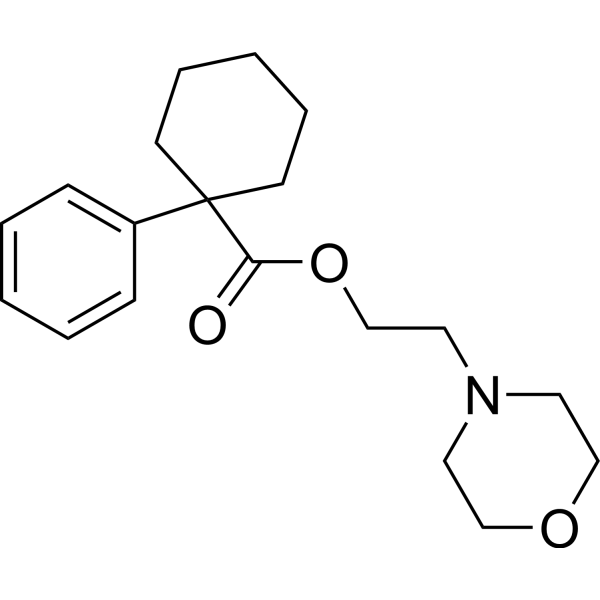 0 ImagesCat. No.: HY-18100CAS No.: 138847-85-5PRE-084 is a highly selective σ1 receptor (S1R) agonist, with an IC50 of 44 nM. PRE-084 exhibits good neuroprotective effects, can improve motor function and motor neuron survival in mice. PRE-084 also can ameliorate myocardial ischemia-reperfusion injury in rats by activating the Akt-eNOS pathway.
-
Antihypertensive agent 7
 0 ImagesCat. No.: HY-184303Antihypertensive agent 7 is a vasodilator. Antihypertensive agent 7 acts on vascular endothelial cells to activate the PI3K/AKT signaling axis, increase phosphorylated eNOS, release NO, activate the sGC/cGMP pathway in smooth muscle cells, and synergistically activate multiple K+ channels in vascular smooth muscle (Kir/Kv/KCa/KATP, thereby inducing endothelium-dependent vasodilation. Antihypertensive agent 7 can be used in the research of hypertension.
-
Chiisanogenin
 0 ImagesCat. No.: HY-N20708CAS No.: 89353-99-1Chiisanogenin is an orally active triterpenoid. Chiisanogenin reduces postprandial blood glucose by promoting GLUT4 translocation and glucose uptake via activation of the IRS-1/PI3K/Akt signaling pathway. Chiisanogenin binds to MLKL and inhibits its phosphorylation and oligomerization, maintains lysosomal integrity, restores autophagic flux, and suppresses NLRP3 inflammasome activation and pyroptosis. Chiisanogenin inhibits xanthine oxidase activity and regulates oxidative stress and ion pump activity. Chiisanogenin binds to or inhibits PKA, H+/K+-ATPase and β-glucuronidase. Chiisanogenin possesses multiple pharmacological activities, including broad-spectrum antibacterial activity, anticancer, anti-inflammatory, antirheumatic, renoprotective, cardioprotective and antiarrhythmic effects. Chiisanogenin can be used in research related to type 2 diabetes, rheumatoid arthritis, myocardial injury, hepatocellular carcinoma and ventricular arrhythmia.
-
Doxycycline (hydrochloride) (GMP)
 0 ImagesCat. No.: HY-N0565AGCAS No.: 10592-13-9Doxycycline hydrochloride GMP is Doxycycline (hydrochloride) (HY-N0565A) produced by using GMP guidelines. GMP small molecules works appropriately as an auxiliary reagent for cell therapy manufacture. Doxycycline hydrochloride is an orally active highly lipophilic, tissue-permeable MMP inhibitor with broad-spectrum antibacterial activity. Doxycycline hydrochloride is also a semi-synthetic antibiotic with chelating properties, which blocks bacterial protein synthesis and inhibits extracellular matrix degradation through interactions with zinc and calcium atoms. Doxycycline hydrochloride also inhibits mitochondrial biogenesis, translation, and the expression of respiratory chain proteins. Doxycycline hydrochloride induces apoptosis, inhibits autophagy and EMT, downregulates stem cell markers, and activates the PI3K-AKT pathway, thereby effectively inhibiting the viability and proliferation of cancer cells such as breast cancer cells. Doxycycline hydrochloride also promotes the survival and self-renewal of embryonic stem cells and neural stem cells, and reduces the frequency of medium changes in culture. Doxycycline hydrochloride has been applied in studies related to breast cancer, prostate cancer, bladder cancer, and other cancers.
-
Kazinol B
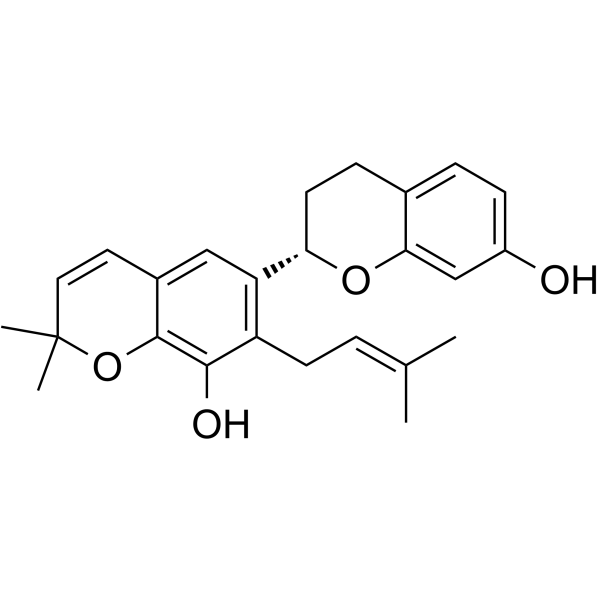 0 ImagesCat. No.: HY-N3426CAS No.: 99624-27-8
-
2,6-Dimethoxy-1,4-benzoquinone (Standard)
 0 Images2,6-Dimethoxy-1,4-benzoquinone (Standard) is the analytical standard of 2,6-Dimethoxy-1,4-benzoquinone (HY-N1677). This product is intended for research and analytical applications. 2,6-Dimethoxy-1,4-benzoquinone is a 1,4-benzoquinone derivative. 2,6-Dimethoxy-1,4-benzoquinone promotes phosphorylation of AKT, S6K, mTOR, 4E-BP1, and AMPK, and attenuates mTORC1 activity as part of the AKT/mTOR pathway. 2,6-Dimethoxy-1,4-benzoquinone stimulates myoblast differentiation, increases myotube size, elevates MHC protein expression, enhances mitochondrial biogenesis, respiration, and DNA content, and increases skeletal muscle weights, fiber size, grip strength, and treadmill performance. 2,6-Dimethoxy-1,4-benzoquinone exerts anti-cancer, anti-inflammatory, anti-adipogenic, antibacterial, and antimutagenic effects, inhibits adipogenic transcription factors, nitric oxide production, skin tumor development, Magnaporthe oryzae growth, spore germination, appressorium formation, and growth of select bacterial species, induces H2O2 generation and rice defense gene expression, and reduces rice blast lesion formation. 2,6-Dimethoxy-1,4-benzoquinone can be used for the research of obesity, skin tumorigenesis, rice blast disease, and food-borne illness.
-
Methylnissolin-3-O-glucoside (Standard)
 0 ImagesCat. No.: HY-N2473RCAS No.: 94367-42-7Methylnissolin-3-O-glucoside (Standard) is the analytical standard of Methylnissolin-3-O-glucoside (HY-N2473). This product is intended for research and analytical applications. Methylnissolin-3-O-glucoside is a flavonoid glycoside derivative of Methylnissolin (HY-N2484). Methylnissolin-3-O-glucoside is isolated from plants of the genus Astragalus (Leguminosae). Methylnissolin-3-O-glucoside effectively induces the expression of AKT/Nrf2 and its downstream target genes HO-1 and NQO1. Methylnissolin-3-O-glucoside inhibits TNF-α-induced phosphorylation of MEK and ERK. Methylnissolin-3-O-glucoside exhibits free radical scavenging activity. Methylnissolin-3-O-glucoside inhibits cell proliferation and cell migration. Methylnissolin-3-O-glucoside is used in research on esophageal squamous cell carcinoma.
-
Cyclocarioside H
 0 ImagesCat. No.: HY-N10035CAS No.: 1403937-87-0Cyclocarioside H is an AMPK agonist. Cyclocarioside H suppresses inflammatory insult-induced IKKβ phosphorylation, alleviates IRS-1 serine hyperphosphorylation and restores insulin-triggered Akt activation in differentiated 3T3-L1 adipocytes. Cyclocarioside H enhances insulin-independent and insulin-mediated 2-NBDG glucose uptake to improve adipocyte insulin resistance under inflammatory stress. Cyclocarioside H can be used for research on inflammation-associated type 2 diabetes and insulin resistance.
-
Xaliproden free base
 0 ImagesCat. No.: HY-119820CAS No.: 135354-02-8Synonyms: SR57746A free baseXaliproden (SR57746) free base is an orally active, highly selective 5-HT1A receptor agonist. Xaliproden free base activates pertussis toxin-sensitive G protein-coupled signaling cascades, as well as the PKC, ERK1/ERK2, Akt and p21 Ras/MEK-1 pathways. Xaliproden free base also downregulates the JNK/p66/c-Jun signaling pathway, induces phosphorylation of the shc adaptor protein, regulates extracellular dopamine and 5-HT levels, and induces [35S]GTPγS labeling in rat brain structures rich in 5-HT1A receptors. Xaliproden free base exerts neurotrophic, neuroprotective, renoprotective, anti-inflammatory, anti-apoptotic, anti-fibrotic and analgesic effects. Xaliproden free base also enhances NGF-induced neurite outgrowth, promotes motor neuron survival, attenuates renal tubular injury and inhibits chemotherapy-induced mechanical allodynia, without activating or altering NGF-induced TrkA receptor activation. Xaliproden free base can be used in the research of motor neuron disease, diabetic nephropathy, chemotherapy-induced peripheral neuropathy, amyotrophic lateral sclerosis, Alzheimer's disease, acute tonic nociceptive pain, inflammatory pain, depression and anxiety.
-
CHPG sodium salt (Standard)
 0 ImagesCHPG (sodium salt) (Standard) is the analytical standard of CHPG (sodium salt). This product is intended for research and analytical applications. CHPG sodium salt is a selective mGluR5 agonist, and attenuates SO2-induced oxidative stress and inflammation through TSG-6/NF-κB pathway in BV2 microglial cells. CHPG sodium salt protects against traumatic brain injury (TBI) in vitro and in vivo by activation of the ERK and Akt signaling pathways..




