



Bcl-2 Family
Bcl-2 is a family of evolutionarily related proteins. These proteins govern mitochondrial outer membrane permeabilization (MOMP) and can be either pro-apoptotic (Bax, Bad, Bak and Bok among others) or anti-apoptotic (including Bcl-2 proper, Bcl-xL, and Bcl-w, among an assortment of others). There are a total of 25 genes in the Bcl-2 family known to date. Human genes encoding proteins that belong to this family include: Bak1, Bax, Bal-2, Bok, Mcl-1.
Bcl-2 Family Isoform Specific Products
-
Bcl-2 Family
(450)
View all products
-
Bcl-2
(328)
View all products
-
Bcl-xL
(123)
View all products
-
Bcl-W
(17)
View all products
-
Mcl-1
(99)
View all products
-
Bfl-1
(11)
View all products
-
Bcl-B
(6)
View all products
-
Bax
(220)
View all products
-
Bak
(14)
View all products
-
Bim
(14)
View all products
-
BNIP3
(1)
View all products
-
Bad
(10)
View all products
All Product Categories
-
Bcl-2 Family Inhibitors
(567)
View all products
-
Bcl-2 Family Agonists
(5)
View all products
-
Bcl-2 Family Antagonists
(9)
View all products
-
Bcl-2 Family Activators
(90)
View all products
-
Bcl-2 Family Modulators
(153)
View all products
-
Bcl-2 Family Inducers
(13)
View all products
-
Bcl-2 Family Degraders
(21)
View all products
-
Bcl-2 Family Controls
(2)
View all products
-
Bcl-2 Family Ligands
(9)
View all products
-
Bcl-2 Family Related Products (1047)
Related Products (1047)

-
Antibodies (31)
-
Bcl-2 Family Signaling Pathway
-
Bcl-2 Family Isoform Comparison
-
TMX-2164
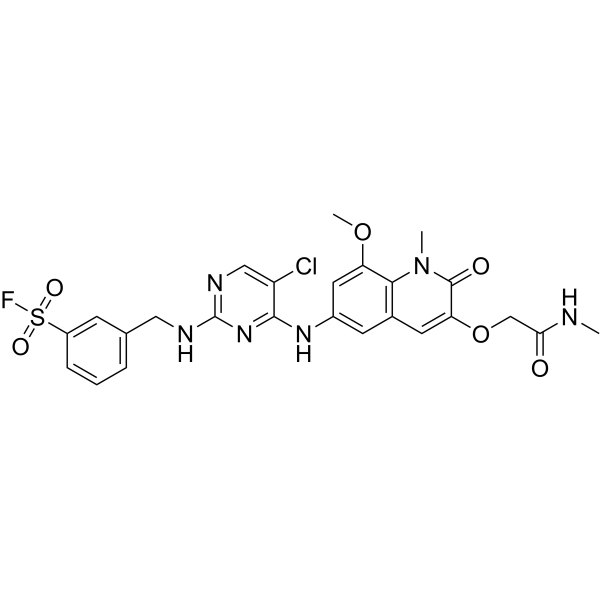 0 ImagesCat. No.: HY-148281CAS No.: 2418022-85-0TMX-2164 is a potent, irreversible B-cell lymphoma 6 (BCL6) inhibitor with an IC50 value of 152 nM. TMX-2164 displays sustained target engagement and antiproliferative activity in cells.
-
Mcl-1-IN-16
 0 ImagesCat. No.: HY-178008Mcl-1-IN-16 is an effective macrocyclic myeloid cell leukemia 1 (Mcl-1) inhibitor with a Ki of below 0.08 nM. Mcl-1-IN-16 maintains high selectivity (>50,000-fold) for Mcl-1 over other antiapoptotic Bcl-2 family members Bcl-2 and Bcl-xL. Mcl-1-IN-16 leads to the activation of caspase-3/7, thereby initiating cell apoptosis. Mcl-1-IN-16 achieves tumor regression in a lung cancer-derived tumor xenograft mice model. Mcl-1-IN-16 can be used in the research of solid tumor such as nonsmall cell lung cancer (NSCLC).
-
Lobetyol
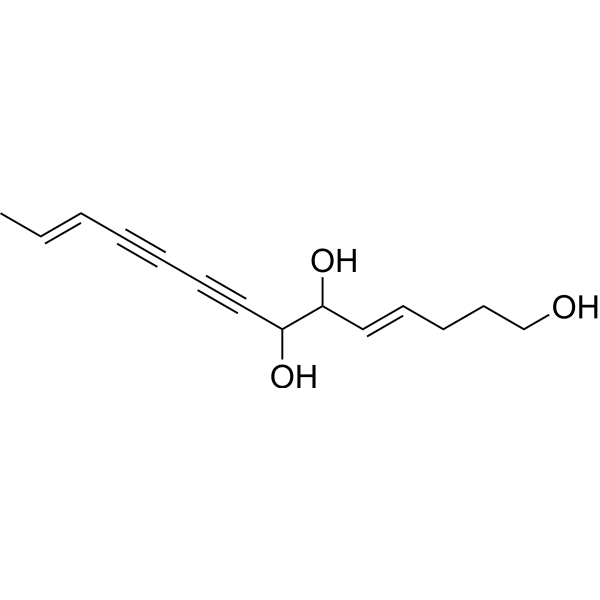 0 ImagesCat. No.: HY-117652CAS No.: 136171-87-4Lobetyol is a natural compound that can be isolated from Lobelia chinensis. Lobetyol induces apoptosis and cell cycle arrest in MKN45 cells. Lobetyol shows anti-virus, anti-inflammation and anti-tumor activity. Lobetyol is a click chemistry reagent, it contains an Alkyne group and can undergo copper-catalyzed azide-alkyne cycloaddition (CuAAc) with molecules containing Azide groups.
-
Mcl-1-IN-20
 0 ImagesCat. No.: HY-178910Mcl-1-IN-20 (Compound 26d) is a Mcl-1 inhibitor with Kis of 0.59, 6.6 and 3.6 μM against Mcl-1, Bcl-xL and Bcl-2. Mcl-1-IN-20 exhibits significant anti-proliferative activity against pancreatic cancer cells and can induce apoptosis in BxPC-3 cells. Mcl-1-IN-20 can be used for the study of pancreatic cancer.
-
(Rac)-Lonafarnib
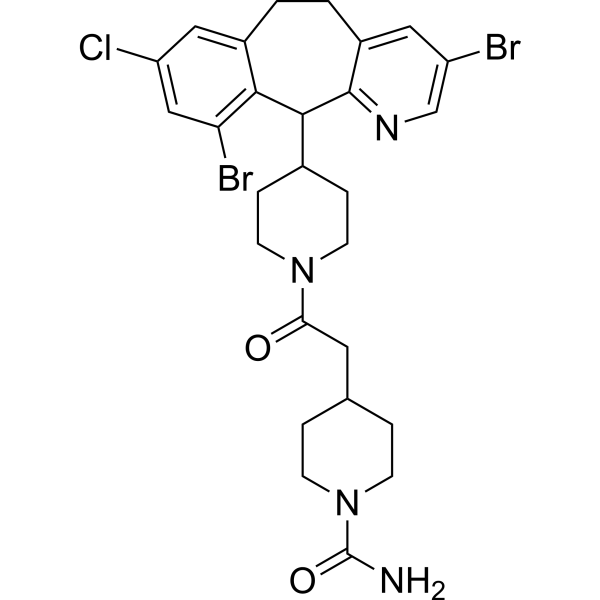 0 ImagesCat. No.: HY-15136BCAS No.: 193275-86-4Synonyms: Sch66336 racemate(Rac)-Lonafarnib (Sch66336 racemate) is an isomer of Lonafarnib (HY-15136). Lonafarnib (Sch66336) is an orally active, blood-brain barrier penetrant farnesyltransferase (FPTase) inhibitor. Lonafarnib increases the phosphorylation levels of Akt, CaMKII and CREB, upregulates BDNF expression in the hippocampus, elevates the content of α7nAChR on cell membranes, and blocks the isoprenylation of H-Ras. Lonafarnib repairs synapses and reverses spatial memory deficits in Aβ1-42 model mice. Lonafarnib inhibits RSV fusion and replication, and alleviates virus-induced lung injury. Lonafarnib activates the lysosomal and autophagic pathways, and reduces the phosphorylation and aggregation of tau. Lonafarnib acts synergistically with Sorafenib (HY-10201) to promote apoptosis, and inhibits the proliferation and invasion of melanoma cells. Lonafarnib inhibits the farnesylation of progerin, repairs nuclear membrane defects, and activates the cGAS-STING-STAT1 signaling pathway. Lonafarnib can be used in research related to diseases including Alzheimer's disease, viral infections, melanoma, and progeria.
-
Anticancer agent 296
 0 ImagesCat. No.: HY-181087Anticancer agent 296 is a potent anticancer agent that activates the PERK-eIF2α-CHOP signaling pathway to induce endoplasmic reticulum stress, thereby regulating caspase and Bcl-2 family proteins, ultimately leading to apoptosis. Anticancer agent 296 increases intracellular levels of reactive oxygen species (ROS), reduces mitochondrial membrane potential, and promotes Ca2+ release. Anticancer agent 296 suppresses cell colony formation and S-phase cell proliferation, and induces autophagy. Anticancer agent 296 is applicable for research on non-small cell lung cancer (NSCLC).
-
FMP
 0 ImagesCat. No.: HY-168877FMP is a Platinum(IV) complexe. FMP significantly upregulates the expression of γ-H2AX and p53. FMP increases the production of ROS. FMP markedly upregulates the expressions of Apoptosis-related proteins (DR5, Fas, caspase-8, Cyt-c, caspase-3, cleaved-PARP1, Bax). FMP shows antiproliferative activity against breast cancer.
-
BAK1 Human Pre-designed siRNA Set A
 0 ImagesCat. No.: HY-RS01357
BAK1 Human Pre-designed siRNA Set A contains three designed siRNAs for BAK1 gene (Human), as well as a negative control, a positive control, and a FAM-labeled negative control.
-
CDKI-83
 0 ImagesCat. No.: HY-123034CAS No.: 1189558-88-0CDKI-83 is a potent CDK9 and CDK1 inhibitor with Ki values of 21 nM and 72 nM for CDK9/T1 and CDK1/B, respectively. CDKI-83 demonstrates effective anti-proliferative activity in human tumour cell lines with a GI50<1 μM. CDKI-83 effectively induces apoptosis in A2780 human ovarian cancer cells. CDKI-83 reduces phosphorylation at Ser-2 of RNA polymerase II (RNAPII) by inhibiting cellular CDK9 activity, and down-regulates Mcl-1 and Bcl-2. CDKI-83 has the potential for anti-cancer research.
-
Scopadulciol
 0 ImagesCat. No.: HY-183390CAS No.: 136565-26-9Scopadulciol is an orally effective β-catenin degrader, HSV-TK activator and proton pump inhibitor. By inducing β-catenin degradation, Scopadulciol downregulates the expression of downstream target genes such as cyclin D1, c-myc, and survivin; it also upregulates DR4/DR5 and downregulates Bcl-2, thereby exerting cytotoxicity and inducing apoptosis in cancer cells. Scopadulciol enhances the tumor-killing and bystander effects of prodrugs via activating HSV-TK, and can inactivate HSV-1. It shows synergistic antiviral effects when combined with Acyclovir (HY-17422) or Ganciclovir (HY-13637), with no cytotoxicity as a single agent. Scopadulciol can be applied in research related to bladder cancer, cervical cancer, glioblastoma, and digestive system cancers.
-
CDK9 degrader-2
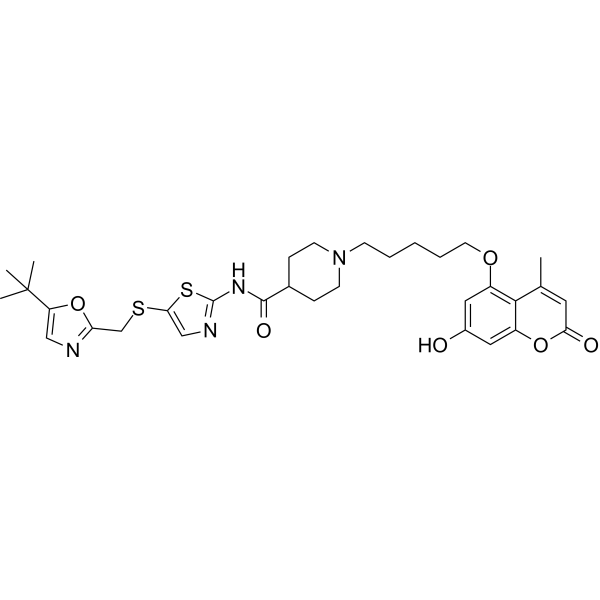 0 ImagesCat. No.: HY-156083CAS No.: 3020773-81-0CDK9 degrader-2 is a bifunctional degrader of ATTEC (Autophagy-Tethering Compound) that degrades the CDK9/cyclin T1 complex. CDK9 degrader-2 forms a ternary complex with CDK9 and LC3B, and achieves degradation through the autophagy-lysosome pathway, a process independent of the ubiquitin-proteasome system. CDK9 degrader-2 downregulates the expression of Mcl-1 and c-Myc proteins, induces apoptosis, and exhibits antitumor activity in in vivo MV4-11 xenograft models. CDK9 degrader-2 can be used for leukemia research.
-
Avicin D
 0 ImagesCat. No.: HY-N13338CAS No.: 197787-20-5Avicin D is a plant triterpenoid. Avicin D induces Autophagy by activation of AMPK. Avicin D inhibits mTOR and S6 kinase activity. Avicin D selectively induces Apoptosis and downregulates p-STAT-3, bcl-2, and Survivin. Avicin D has properties of being a selective Glucocorticoid receptor modulator. Avicin D inhibits NF-κB activation. Avicin D shows anti-tumor effects against cutaneous T-cell lymphomas.
-
8α-Tigloyloxyhirsutinolide 13-O-acetate
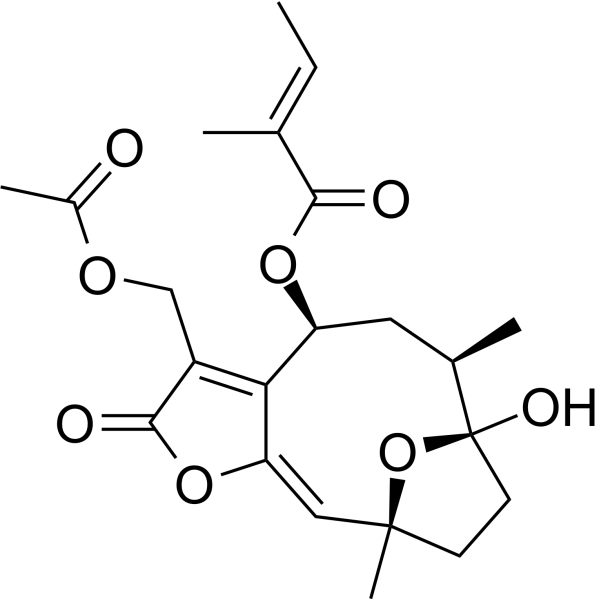 0 ImagesCat. No.: HY-138071CAS No.: 83182-58-5Synonyms: 8αTGH8α-Tigloyloxyhirsutinolide 13-O-acetate (8αTGH) is a potent and orally active STAT3 inhibitor. 8α-Tigloyloxyhirsutinolide 13-O-acetate induces early oxidative stress and pyroptosis, and late DNA damage, cell cycle arrest, apoptosis in the TNBC cells. 8α-Tigloyloxyhirsutinolide 13-O-acetate suppresses tumor cell growth in vitro and tumor growth in vivo.
-
Metuzumab
 0 ImagesCat. No.: HY-P991883Synonyms: Licartin; Metuximab; MehuzumabMetuzumab (Licartin) is a human-mouse chimeric IgG1 monoclonal antibody targeting CD147. Metuzumab induces Apoptosis, reduces levels of Cyclin D1, full-length Caspase-3, and Bcl-2, and increases Bax expression. Metuzumab enhances the sensitivity of non-small cell lung cancer (NSCLC) cells to Gemcitabine (HY-17026). Metuzumab is applicable for research on hepatocellular carcinoma and non-small cell lung cancer [1] [2].
-
OICR12694 TFA
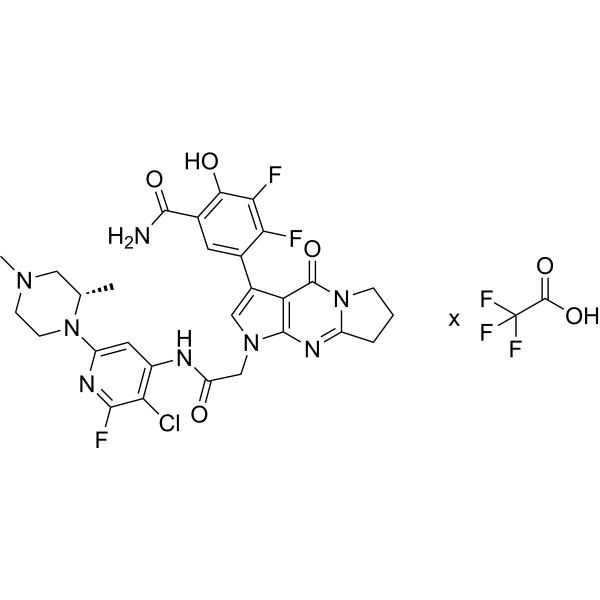 0 ImagesCat. No.: HY-153096ACAS No.: 2360625-98-3Synonyms: JNJ-65234637 TFAOICR12694 (JNJ-65234637) TFA is an orally active inhibitor of B cell lymphoma 6 (BCL6).
-
Zamzetoclax
 0 ImagesCat. No.: HY-163681CAS No.: 2388470-64-0Zamzetoclax (compound 1) is a potential Mcl-1 inhibitor.
-
Nivalenol-13C15
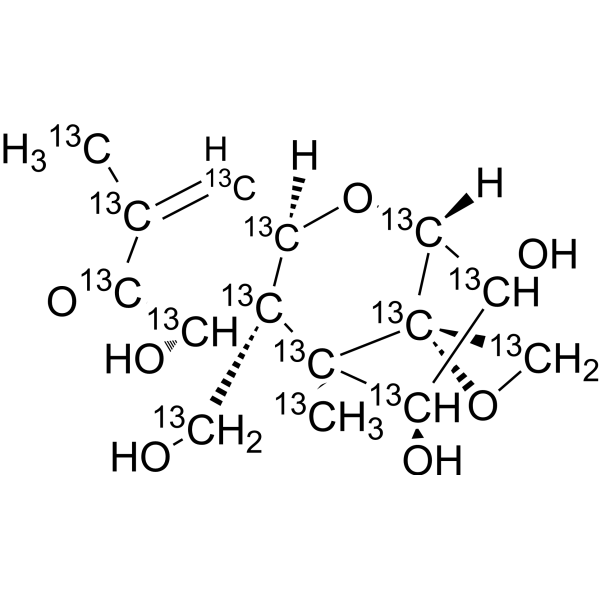 0 ImagesCat. No.: HY-N6801SCAS No.: 911392-40-0Nivalenol-13C15 is the 13C labeled Nivalenol (HY-N6801). Nivalenol, a trichothecene mycotoxin that can be produced by Fusarium graminearum, is a fungal metabolite present in agricultural product. Nivalenol modulates apoptotic pathway, cell cycle regulation, Bax, ERK, caspase-3, and poly-ADP-ribose synthase activity in macrophages. Nivalenol inhibits ribosomal peptidyltransferase site, protein synthesis, DNA synthesis, and cell proliferation. Nivalenol induces late-stage apoptotic morphological changes, reduces cellular metabolism, and decreases cell proliferation in erythroleukemia cells. Nivalenol induces lymphocyte apoptosis in murine thymus, spleen, and Peyer's patches. Nivalenol can be used for the research of erythroleukemia.
-
Mcl1 Rat Pre-designed siRNA Set A
 0 ImagesCat. No.: HY-RS08232
Mcl1 Rat Pre-designed siRNA Set A contains three designed siRNAs for Mcl1 gene (Rat), as well as a negative control, a positive control, and a FAM-labeled negative control.
-
MHY219
 0 ImagesCat. No.: HY-116267CAS No.: 1326750-61-1MHY219 is a histone deacetylase (HDAC) inhibitor with an IC50 of 0.276 μM. MHY219 inhibits total HDAC enzyme activity, increases histone H3 and H4 hyperacetylation. MHY219 induces cance cells phase arrest, apoptosis and inhibits proliferationin. MHY219 increases cleavage of PARP, Bax, cytochrome c levels, androgen receptor expression and decreases Bcl-2 expression. MHY219 can be used for the research of prostate cancer.
-
BCL-XL-IN-5
 0 ImagesCat. No.: HY-184471CAS No.: 2599098-78-7BCL-XL-IN-5 is an orally active, highly selective BH3-mimetic BCL-XL inhibitor with a cKi of 7.96 pM. BCL-XL-IN-5 triggers caspase-3 activation and robust PARP cleavage to initiate apoptosis in BCL-XL-dependent MOLT-4 T-cell acute lymphoblastic leukemia cells. BCL-XL-IN-5 serves as a potent selective probe for investigating BCL-XL-dependent malignancies, such as acute lymphoblastic leukemia.




