



Bcl-2 Family
Bcl-2 is a family of evolutionarily related proteins. These proteins govern mitochondrial outer membrane permeabilization (MOMP) and can be either pro-apoptotic (Bax, Bad, Bak and Bok among others) or anti-apoptotic (including Bcl-2 proper, Bcl-xL, and Bcl-w, among an assortment of others). There are a total of 25 genes in the Bcl-2 family known to date. Human genes encoding proteins that belong to this family include: Bak1, Bax, Bal-2, Bok, Mcl-1.
Bcl-2 Family Isoform Specific Products
-
Bcl-2 Family
(450)
View all products
-
Bcl-2
(328)
View all products
-
Bcl-xL
(123)
View all products
-
Bcl-W
(17)
View all products
-
Mcl-1
(99)
View all products
-
Bfl-1
(11)
View all products
-
Bcl-B
(6)
View all products
-
Bax
(220)
View all products
-
Bak
(14)
View all products
-
Bim
(14)
View all products
-
BNIP3
(1)
View all products
-
Bad
(10)
View all products
All Product Categories
-
Bcl-2 Family Inhibitors
(567)
View all products
-
Bcl-2 Family Agonists
(5)
View all products
-
Bcl-2 Family Antagonists
(9)
View all products
-
Bcl-2 Family Activators
(90)
View all products
-
Bcl-2 Family Modulators
(153)
View all products
-
Bcl-2 Family Inducers
(13)
View all products
-
Bcl-2 Family Degraders
(21)
View all products
-
Bcl-2 Family Controls
(2)
View all products
-
Bcl-2 Family Ligands
(9)
View all products
-
Bcl-2 Family Related Products (1047)
Related Products (1047)

-
Antibodies (31)
-
Bcl-2 Family Signaling Pathway
-
Bcl-2 Family Isoform Comparison
-
PROTAC PI3K/110β degrader-1
 0 ImagesCat. No.: HY-176421CAS No.: 3070438-85-3PROTAC PI3K/110β degrader-1 is a VHL-recruiting PROTAC degrader targeting PI3K/110β, with DC50 values of 0.416 μM (MCF-7) and 19.66 μM (A549), respectively. PROTAC PI3K/110β degrader-1 recruits VHL to induce proteasomal degradation of PI3K/110β. It activates endoplasmic reticulum stress (ERS)-mediated mitochondrial apoptosis via the PERK/ATF4/CHOP unfolded protein response (UPR) pathway, downregulates p-AKT and Bcl-2, upregulates Bax, cleaved-caspase-9 and cleaved-caspase-3, inhibits the expression and activity of P-gp, and exerts synergistic anti-tumor effects with Doxorubicin (Adriamycin, ADM) (HY-15142A) and Cisplatin (DDP) (HY-17394). PROTAC PI3K/110β degrader-1 can be used in research related to multidrug-resistant cancers.

-
BFC1103
 0 ImagesCat. No.: HY-161577CAS No.: 701231-39-2BFC1103 is a small-molecule compound whose primary mechanism of action involves interaction with a specific domain of Bcl-2, particularly its loop domain. This interaction induces a conformational change in Bcl-2, exposing its BH3 (Bcl-2 homology 3) domain, thereby switching Bcl-2's function from anti-apoptotic to pro-apoptotic. The cell death induced by BFC1103 is dependent on the presence of Bax or Bak, both of which are key proteins involved in the intrinsic apoptotic pathway mediated by mitochondria. BFC1103 has successfully inhibited lung metastasis of triple-negative breast cancer in mouse models. It can be utilized in studying the roles of Bcl-2 family proteins in cancer development and how they impact the survival and proliferation of cancer cells.
-
PROTAC BcI-2/BcI-xI Degrader-1
 0 ImagesCat. No.: HY-158551CAS No.: 3034200-49-9PROTAC Bcl-2/Bcl-xL Degrader-1 is a Bcl-2/Bcl-xL PROTAC degrader with a DC50 of 11.28 nM against Bcl-xL. PROTAC Bcl-2/Bcl-xL Degrader-1 promotes ubiquitination and degradation of Bcl-2/Bcl-xL. It exhibits anticancer activity against acute lymphoblastic leukemia. PROTAC Bcl-2/Bcl-xL Degrader-1 can be used in the research of BCL-2-mediated or BCL-2-dependent diseases.
-
EMT inhibitor-3
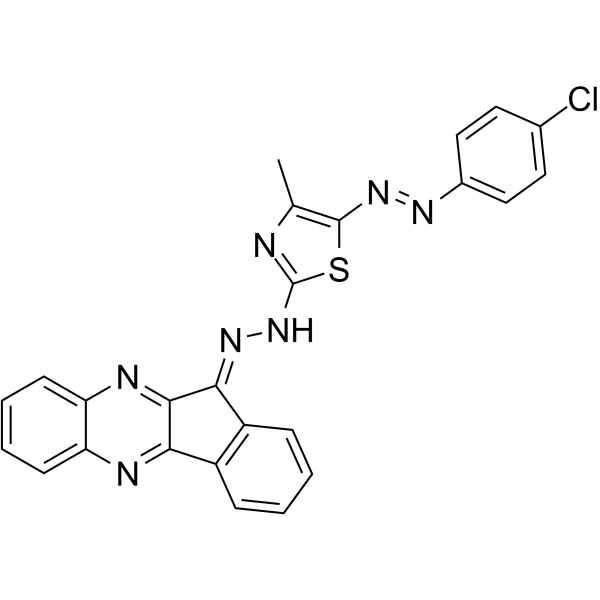
 0 ImagesCat. No.: HY-170929CAS No.: 2930726-89-7EMT inhibitor-3 (compound 11i) is a epithelial-mesenchymal transition (EMT) inhibitor. EMT inhibitor-3 inhibits neuroblastoma SK-N-SH cells with an IC50 of 2.5 μM. EMT inhibitor-3 inhibits SK-N-SH cell proliferation, migration, and invasion. EMT inhibitor-3 increases the Bax/Bcl-2 protein expression ratio, promotes Cytochrome C ( HY-125857) release from mitochondria, and activates caspases 9 and caspases 3, inducing mitochondria-mediated endogenous tumor cell Apoptosis. EMT inhibitor-3 is potential for cancer research.
-
Cyclocommunol
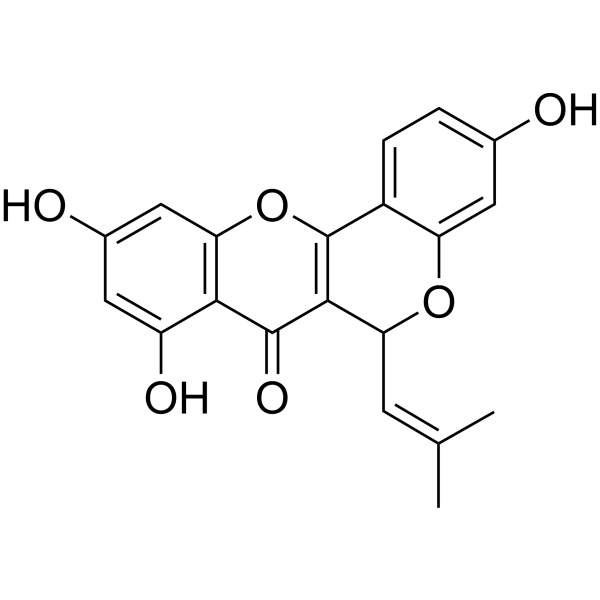 0 ImagesCat. No.: HY-N3665CAS No.: 145643-96-5Cyclocommunol is a GST inhibitor with an IC50 of 3.0 μM. Cyclocommunol downregulates the expression of the anti-apoptotic (apoptosis) protein Mcl-1, reduces the levels of phosphorylated Akt and mTOR, and induces caspase-dependent apoptosis, reactive oxygen species (ROS) production and autophagy. Cyclocommunol can be used in research related to oral squamous cell carcinoma, breast cancer, lung cancer, norovirus-induced gastroenteritis and bacterial infections.
-
Paris saponin VII (Standard)
 0 ImagesCat. No.: HY-N3584RCAS No.: 68124-04-9Synonyms: Chonglou Saponin VII (Standard)Paris saponin VII (Standard) is the analytical standard of Paris saponin VII. This product is intended for research and analytical applications. Paris saponin VII (Chonglou Saponin VII) is a steroidal saponin isolated from the roots and rhizomes of Trillium tschonoskii. Paris saponin VII-induced apoptosis in K562/ADR cells is associated with Akt/MAPK and the inhibition of P-gp. Paris saponin VII attenuates mitochondrial membrane potential, increases the expression of apoptosis-related proteins, such as Bax and cytochrome c, and decreases the protein expression levels of Bcl-2, caspase-9, caspase-3, PARP-1, and p-Akt. Paris saponin VII induces a robust autophagy in K562/ADR cells and provides a biochemical basis in the treatment of leukemia.
-
CT20p
 0 ImagesCat. No.: HY-P10993CAS No.: 1407967-57-0CT20p is an anticancer peptide based on the C hydrophobic terminus of Bax. CT20p has a unique cytotoxic effect independent of full-length Bax, and can act on mitochondria, leading to fusion-like aggregation and mitochondrial membrane hyperpolarization. CT20p can reduce α5β1 integrin levels and inhibit F-actin polymerization, thereby destroying the cytoskeleton and preventing cell attachment. CT20p can be used in the study of breast cancer.
-
DNH28
 0 ImagesCat. No.: HY-175037DNH28 is a potent NF-κB and MAPK inhibitor with an IC50 of 0.93 μM against HepG2 cells. DNH28 promotes apoptosis by down-regulating the expression of Bcl-2, up-regulating the expression of BAX and Cleaved-caspase-3. DNH28 blocks the cell cycle and inhibits migration. DNH28 can be used for the study of hepatocellular carcinoma (HCC).
-
FS1 peptide
 0 ImagesCat. No.: HY-P11707Purity: 98.79%FS1 peptide is a synthetic BH3 mimetic peptide that shows potential in enhancing NK cell-mediated cancer immunity. FS1 peptide targets anti-apoptotic BCL-2 family proteins, triggers the release of cytochrome c, and thereby promotes apoptosis (Apoptosis). FS1 peptide can be used for NK cell-based immunological research.
-
ST09
 0 ImagesCat. No.: HY-15668CAS No.: 1370037-59-4ST09 is an efficient and low toxicity Curcumin (HY-N0005) derivative. ST09 significantly inhibits cell migration and downregulates the expression of MMP1, MMP2, and Vimentin. ST09 has strong cytotoxicity to breast cancer cells, such as MDA-MB-231, MCF7 and T47D cells. ST09 induces cell apoptosis by upregulating Bax and cleaved caspase-3/9. ST09 can be used in the research of cancer such as breast cancer.
-
NSC 373981
 0 ImagesCat. No.: HY-182706CAS No.: 95455-02-0NSC 373981 is a CARD11 G4 stabilizer. NSC 373981 stabilizes the CARD11 G4 structure and inhibits CARD11 transcription in cells. NSC 373981 also inhibits BCL2 and MYC. NSC 373981 suppresses the transcription of KRAS and TERT. NSC 373981 exhibits anticancer activity against diffuse large B-cell lymphoma.
-
BCL-xL ligand 4
 0 ImagesCat. No.: HY-184547CAS No.: 3027548-08-6BCL-xL ligand 4 is a BCL-xL ligand that can be used for the synthesis of PROTACs, such as PZ703b (HY-115718), PZ703b TFA (HY-115718A), and PZ703b hydrochloride (HY-115718B).
-
Mcl-1 inhibitor 8
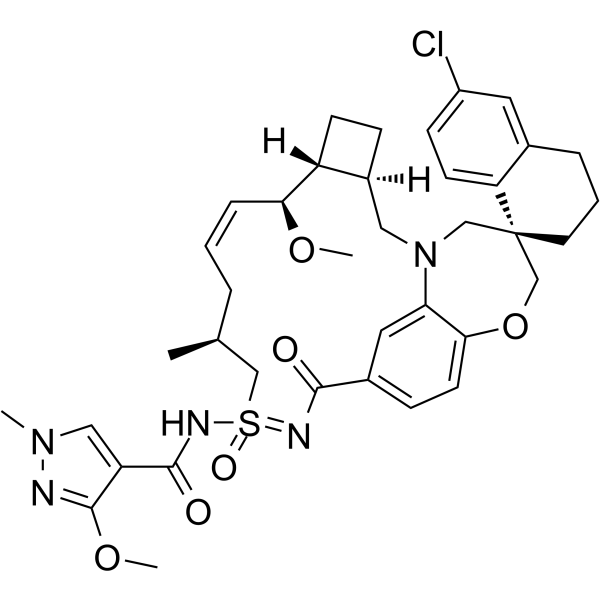 0 ImagesCat. No.: HY-145826CAS No.: 2388471-31-4Mcl-1 inhibitor 8 is a MCL-1 inhibitor, example 228, extracted from patent WO2019222112.
-
Mcl1-IN-4
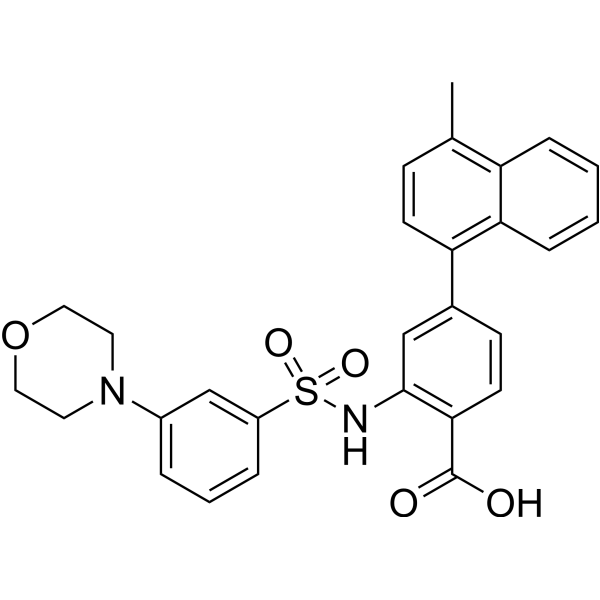 0 ImagesCat. No.: HY-111467CAS No.: 1580484-04-3Mcl1-IN-4 is an inhibitor of Mcl1 with an IC50 of 0.2 μM.
-
EGFR-IN-197
 0 ImagesCat. No.: HY-181502CAS No.: 3060883-16-8EGFR-IN-197 is an EGFR inhibitor with IC50 values of 19.5 nM and 12.0 nM against EGFRL858R/T790M and EGFRL858R/T790M/C797S, respectively. EGFR-IN-197 arrests the cell cycle of NCI-H1975 cells at the G2/M phase, while inhibiting their proliferation, colony formation and migration; it also inhibits mitochondrial translocation and upregulates mitochondrial H2S levels. EGFR-IN-197 disrupts anti-apoptotic signaling pathways by regulating apoptosis-related proteins; it induces DNA damage and activates pro-apoptotic pathways to trigger apoptosis. EGFR-IN-197 can be used in studies related to non-small cell lung cancer (NSCLC).
-
IKKβ-IN-2
 0 ImagesCat. No.: HY-150111CAS No.: 2345648-37-3IKKβ-IN-2 is an orally effective IκB kinase β (IKKβ) inhibitor. IKKβ-IN-2 inhibits the activity of IKKβ, thereby blocking TNFα-induced downstream NF-κB pathway activation and transcription, thus exerting inhibitory effects on inflammation and tumor growth. IKKβ-IN-2 can be used for research on colon cancer and pancreatic cancer.
-
Chelerythrine-d6 chloride
 0 ImagesCat. No.: HY-N2359SChelerythrine-d6 is the deuterium labeled Chelerythrine (HY-N2359). Chelerythrine is a natural alkaloid, acts as a potent and selective Ca2+/phospholopid-dependent PKC antagonist, with an IC50 of 0.7 μM. Chelerythrine has antitumor, antidiabetic and anti-inflammatory activity. Chelerythrine inhibits the BclXL-Bak BH3 peptide binding with an IC50 of 1.5 μM and displaces Bax from Bcl-XL. Chelerythrine triggers apoptosis and autophagy.




