



IFNAR
Interferon-α/β receptor; Interferon-alpha/beta receptor
The interferon-α/β receptor (IFNAR) is composed of two subunits, IFNAR1 and IFNAR2, encoding transmembrane polypeptides. Type-I IFNs, interferon α (IFN-α) and interferon β (IFN-β), act through a shared receptor complex, IFNAR. Binding of type-I IFN to IFNAR1 will robustly activate Janus activated kinase-signal transducer and activator of transcription (JAK-STAT) signaling pathway. Aberrant activation of the type-I IFN response results in a spectrum of disorders called interferonopathies.
Type-I IFN response occurs when IFN-α/β binds to their receptor complex, IFNAR. The ligand-receptor complex is phosphorylated, presumably by pre-associated Janus activated kinases (JAKs) namely tyrosine kinase 2 (TYK2) on IFNAR1 and JAK1 on IFNAR2. The phosphorylated receptors are docking sites for signal transducers and activators of transcription (STAT) factors that dimerise and translocate to the nucleus. STATs 1, 2, 3, 4, and 5 are activated by type-I IFNs in many cell types. Other kinases (e.g., mitogen-activated protein kinases) and transcription factors (e.g., nuclear factor-κB) can also be activated in response to type-I IFNs. Multiple pathways and IFN-regulated genes are activated by IFNs, many of which remain unknown.
All Product Categories
-
IFNAR Inhibitors
(130)
View all products
-
IFNAR Agonists
(11)
View all products
-
IFNAR Antagonists
(6)
View all products
-
IFNAR Activators
(87)
View all products
-
IFNAR Modulators
(4)
View all products
-
IFNAR Inducers
(23)
View all products
-
IFNAR Degraders
(2)
View all products
-
IFNAR Control
(1)
View all products
-
IFNAR Ligand
(1)
View all products
-
IFN-α/β Receptor Proteins
(16)
View all products
-
IFN-alpha/beta R2 Proteins
(6)
View all products
-
IFNAR Related Products (338)
Related Products (338)

-
Recombinant Proteins (16)
-
Antibodies (14)
-
LMP2A (426-434)
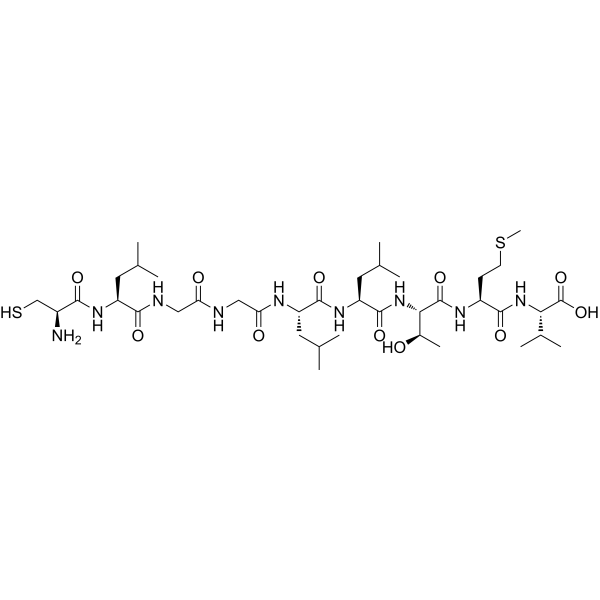 0 ImagesCat. No.: HY-P5470CAS No.: 152274-91-4LMP2A (426-434) is a HLA-A2-restricted cytotoxic T lymphocyte (CTL) epitope of Epstein-Barr virus (EBV) latent membrane protein 2A (LMP2A). LMP2A (426-434) can trigger an immune response in individuals expressing different HLA-A*02 subtypes (A*02:01, A*02:03, A*02:06 and A*02:07). LMP2A (426-434) can induce a strong IFN-γ secretion response, stimulating the production of a high proportion of CD8+ IFN-γ+ T cells. LMP2A (426-434) induces specific CTLs to effectively kill target cells expressing LMP2A. LMP2A (426-434) can be used to study EBV-related malignant tumors (such as Hodgkin's disease and nasopharyngeal carcinoma) .
-
IGRP(206-214)
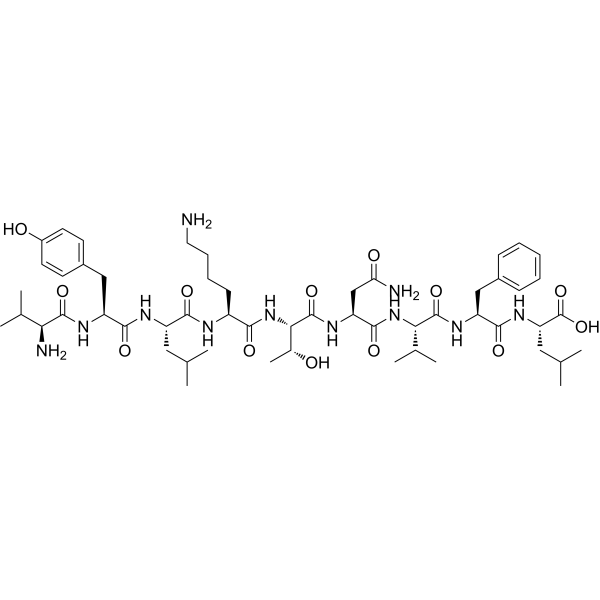 0 ImagesCat. No.: HY-P5489CAS No.: 849069-99-4IGRP(206-214) is a biological active peptide. IGRP(206-214) corresponds to residues 206-214 of murine islet-specific glucose-6-phosphatase catalytic subunit-related protein (IGRP). IGRP(206-214) is T cells specific for proinsulin and IGRP induces diabetes in non-obese diabetic (NOD) mice.
-
CCCP (Standard)
 0 ImagesSynonyms: Carbonyl cyanide 3-chlorophenylhydrazone (Standard); Carbonyl Cyanide m-Chlorophenylhydrazone (Standard)CCCP (Standard) is the analytical standard of CCCP. This product is intended for research and analytical applications. CCCP is an oxidative phosphorylation (OXPHOS) uncoupler. CCCP induces activation of PINK1 leading to Parkin Ser65 phosphorylation.
-
(R,R)-VVD-118313
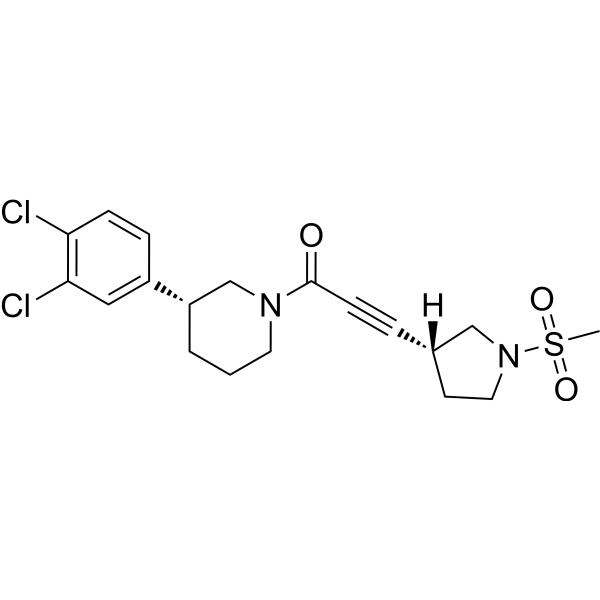 0 Images(R,R)-VVD-118313 is the isomer of VVD-118313 (HY-151385). VVD-118313 is a selective JAK1 inhibitor and blocks JAK1-dependent trans-phosphorylation and cytokine signaling. VVD-118313 can be used for research of cancer. (R,R)-VVD-118313 is a click chemistry reagent, it contains an Alkyne group and can undergo copper-catalyzed azide-alkyne cycloaddition (CuAAc) with molecules containing Azide groups.
-
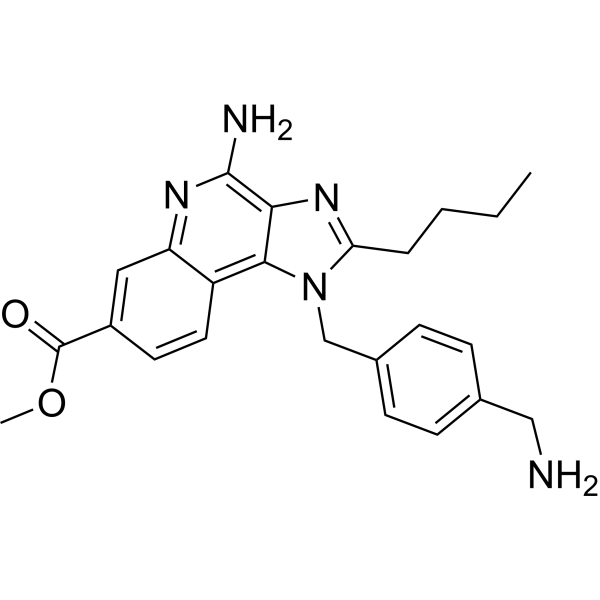
G3-YSD
 0 ImagesG3-YSD is a cGAS agonist. G3-YSD directly interacts with cGAS to enhance its enzymatic activity, promote the conversion of ATP and GTP into cGAMP, and trigger STING-dependent IFN-α/β secretion. G3-YSD acts as a viral mimic to replace actual viral DNA. G3-YSD is applicable to research related to long COVID and type 1 human immunodeficiency virus infection.
-
ODN 6016 sodium
 0 ImagesCat. No.: HY-150747APurity: 99.26%ODN 6016 sodium is a CpG-A oligonucleotides. ODN 6016 sodium can induce IFN-α production, and can be used for researching immune disorders including immunodeficiency caused by HIV-1. ODN 6016 sequence: T-sp-C-G-A-C-G-T-C-G-T-G-G-sp-G-sp-G-sp-G.
-
Omtriptolide
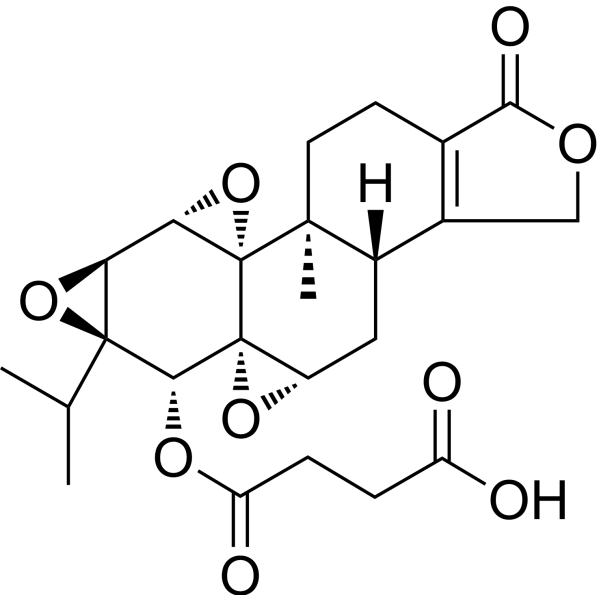 0 ImagesCat. No.: HY-16363CAS No.: 195883-06-8Synonyms: PG 490-88Omtriptolide (PG490-88) is a derivative proagent of triptolide purified from the Chinese herb.
-
Calotatug ginistinag
 0 ImagesCat. No.: HY-164919CAS No.: 2847102-44-5Synonyms: XMT-2056Calotatug ginistinag (XMT-2056) is an antibody-drug conjugate (ADC) targeting HER2, linked to a payload composed of XMT-1519 conjugate-1 (HY-148067) and STING agonist-20 (HY-148068). Calotatug ginistinag activates the STING signaling pathway in tumor cells and tumor-resident immune cells, induces the production of type I interferons and cytokines (CXCL10, IFN-β, IL-6, TNF-α, triggers innate anti-tumor immune responses, and exerts a bystander effect. Calotatug ginistinag exhibits efficacy against HER2-expressing cancer cells in co-culture with PBMCs. Calotatug ginistinag induces tumor regression and reduces systemic inflammation in various tumor models. Combination treatment with Calotatug ginistinag, Trastuzumab (HY-P9907) and T-DXd (HY-138298) yields benefits. Calotatug ginistinag can be used in studies related to HER2-expressing solid tumors such as breast cancer, gastric cancer and ovarian cancer.
-
GSK2245035
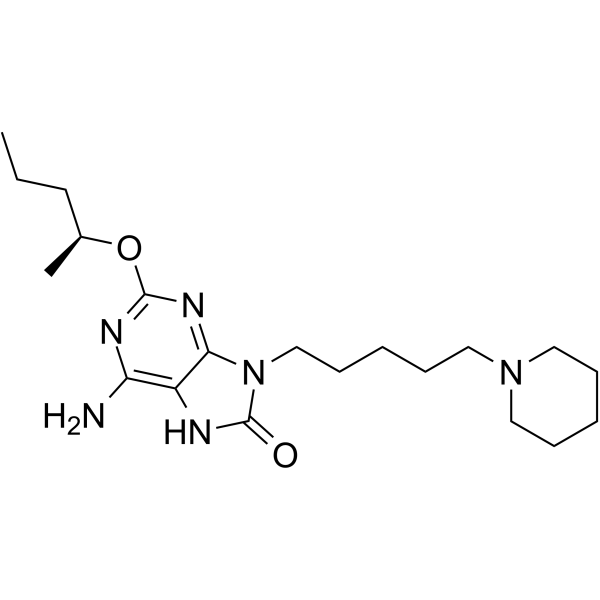 0 ImagesGSK2245035 is a highly potent and selective intranasal Toll-Like receptor 7 (TLR7) agonist with preferential Type-1 interferon (IFN)-stimulating properties. GSK2245035 has pEC50s of 9.3 and 6.5 for IFNα and TFNα. GSK2245035 effectively suppresses allergen-induced Th2 cytokine production in human peripheral blood cell cultures. GSK2245035 is used for asthma.
-
Dimethyl biphenyl-4,4'-dicarboxylate
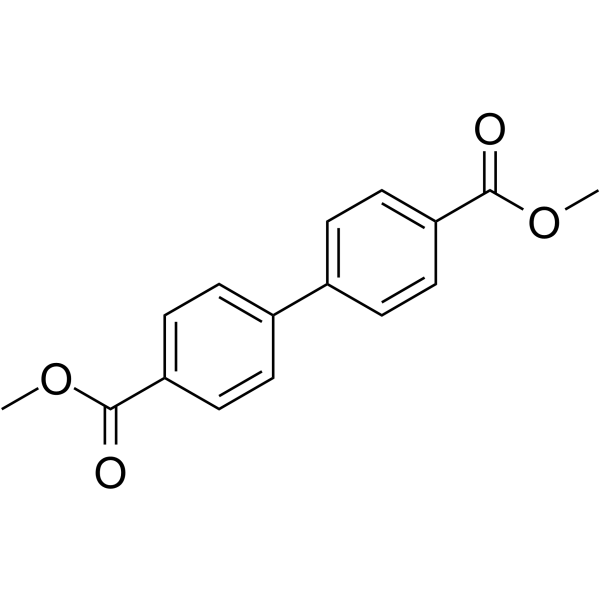 0 ImagesDimethyl biphenyl-4,4'-dicarboxylate (Biphenyl dimethyl dicarboxylate) is a hepatoprotective agent. Dimethyl biphenyl-4,4'-dicarboxylate stimulates the Jak/Stat signaling pathway and induces the expression of IFN-α-stimulated genes, particularly 6-16 and ISG12. Dimethyl biphenyl-4,4'-dicarboxylate inhibits the replication of pregenomic RNA and HBeAg. Polymer micelles loaded with Dimethyl biphenyl-4,4'-dicarboxylate can serve as carriers for the compound. Dimethyl biphenyl-4,4'-dicarboxylate can be used as an auxiliary improving agent for chronic hepatitis. Dimethyl biphenyl-4,4'-dicarboxylate is applicable to research related to chronic hepatitis B.
-
Delmitide acetate
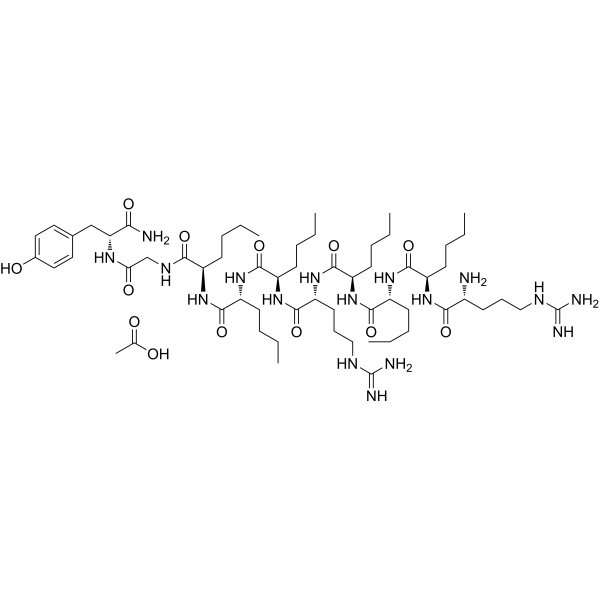 0 ImagesSynonyms: RDP-58 acetateDelmitide (RDP58) acetate is an orally active d-isomer decapeptide with potent anti-inflammatory activity. Delmitide acetate inhibits production of TNF-α, IFN-γ, and interleukin (IL)-12, and up-regulates heme oxygenase 1 activity. Delmitide acetate can be used for the research of ulcerative colitis.
-
STING agonist-45
 0 ImagesSTING agonist-45 is a selective STING agonist (EC50 = 0.28 μM). STING agonist-45 activates the innate immune response through the cGAS-STING pathway, upregulating key markers such as p-TBK1 and IRF3. STING agonist-45 exhibits robust STING activation in human peripheral blood mononuclear cells (PBMCs), inducing the production of type I interferons (such as IFN-β) and downstream cytokines (such as TNF-α and IL-6). STING agonist-45 enhances anti-tumor immunity, inhibits tumor growth, and increases CD8+ T cell infiltration in mouse models. STING agonist-45 is promising for the study of STING-related diseases.
-
Emfizatamab
 0 ImagesCat. No.: HY-P99914CAS No.: 2559704-23-1Synonyms: GNC-038Emfizatamab (GNC-038) is a monoclonal antibody against CD19/CD3E/TNFRSF9/PD-L1. Emfizatamab exhibits antitumor activity, being capable of activating CD3 and 4-1BB signals on T cells, as well as targeting the high expression of CD19 or PD-L1 on tumor cells. Emfizatamab functions as a CD19-specific T cell engager by mediating direct antitumor activity. Emfizatamab can also overcome the inhibition of T cells by PD-L1. Emfizatamab can be used in the research of tumors such as R/R non-Hodgkin lymphoma or acute lymphoblastic leukemia.
-
S-palm P0(180–199) TFA
 0 ImagesCat. No.: HY-P10441APurity: 98.13%S-palm P0(180-199) TFA is an S-palmitoylated peptide derived from P0 protein. S-palm P0(180-199) TFA induces IL-17+ cells, macrophage infiltration, and anti-P0 antibodies. S-palm P0(180-199) TFA induces chronic inflammatory demyelinating polyneuropathy in rats via active immunization, manifesting as a relapsing-remitting disease driven by persistent T cells, macrophages, Th17 cells and related cytokines, and P0-specific IgG. S-palm P0(180-199) TFA can be used in research related to chronic inflammatory demyelinating polyneuropathy.
-
(5R)-5-Hydroxytriptolide
 0 ImagesSynonyms: PG 701; LLDT-8; 5α-Hydroxytriptolide(5R)-5-Hydroxytriptolide is an extracted compound from Tripterygium, and shows lower cell cytotoxicity and higher immunosuppressive activity. (5R)-5-Hydroxytriptolide can be used for study of rheumatoid arthritis.
-
PVD-06
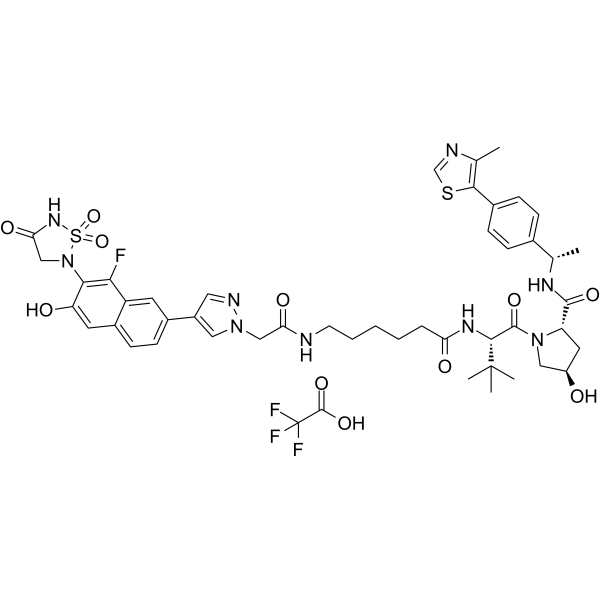 0 ImagesPVD-06 is a selective PROTAC PTPN2 degrader with a DC50 of 217 nM (selectivity index >60-fold over PTP1B). PVD-06 induces PTPN2 degradation via a VHL-, ubiquitin, and proteasome-dependent pathway. PVD-06 can promote T cell activation and amplify IFN-γ-mediated anticancer activity. PVD-06 can be used to further investigate PTPN2 in diseases such as leukemia and melanoma.
-
Cethromycin
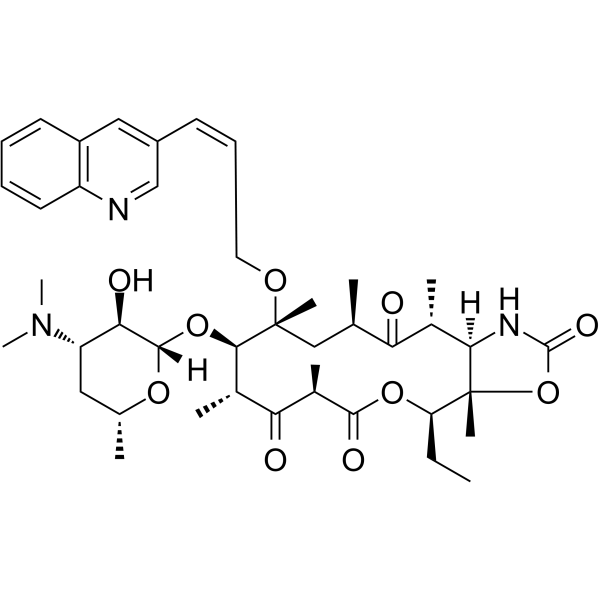 0 ImagesCat. No.: HY-19655CAS No.: 205110-48-1Synonyms: ABT-773; Abbott-195773; A-195773Cethromycin (ABT-773; Abbott-195773) is an orally effective ketolide antibiotic with broad-spectrum antibacterial activity. Cethromycin binds to domains II/V of the 23S rRNA of the 50S subunit, inhibiting bacterial protein synthesis. Cethromycin can accumulate in lung tissue, alveolar macrophages, epithelial lining fluid, and human polymorphonuclear leukocytes. Cethromycin exhibits potent in vitro activity against a variety of respiratory pathogens, including Mycoplasma pneumoniae. Cethromycin exhibits significant intracellular and pulmonary enrichment and anti-inflammatory effects against mycoplasma pneumonia in mouse models, improving airway obstruction and airway hyperresponsiveness. Cethromycin disrupts the apicoplast and reduces liver-stage parasite burden during the liver stage of Plasmodium berghei. Cethromycin can be used in research related to pneumonia, Staphylococcus aureus infection, gonorrhea, and malaria.




