



JNK
JNK is a stress-activated MAPK that phosphorylates the N-terminal transactivation domain of c-Jun and regulates proliferation, apoptosis, motility, metabolism, and DNA repair[1]. Mechanistically, MKK4 and MKK7 increase JNK activity through phosphorylation, linking development and stress responses to downstream transcriptional control[2]. In disease models, dysregulated JNK signaling contributes to neurodegeneration, chronic inflammation, cancer, ischemia/reperfusion injury, and apoptosis-related pathology[1][3]. Compared with related isoforms, JNK1 and JNK2 are widely expressed, whereas JNK3 is mainly expressed in the brain, with lower expression in heart and testis[4]. This isoform distinction is experimentally important because JNK3 disruption protected mice from kainic acid-induced seizure activity and hippocampal neuronal apoptosis[5]. For experimental applications, SP600125 provides a reversible ATP-competitive JNK inhibitor that blocks JNK1/2/3 and supports pathway-dissection studies, although inhibitor-based conclusions require target-specific validation[6].
References:
- [1]. Johnson GL, et al. The c-jun kinase/stress-activated pathway: regulation, function and role in human disease. Biochim Biophys Acta. 2007 Aug;1773(8):1341-8. [Content Brief]
- [2]. Los AP, et al. Protein kinase C inhibits binding of diacylglycerol kinase-zeta to the retinoblastoma protein. Biochim Biophys Acta. 2007 Mar;1773(3):352-7. [Content Brief]
- [3]. Cui J, et al. JNK pathway: diseases and therapeutic potential. Acta Pharmacol Sin. 2007 May;28(5):601-8. [Content Brief]
- [4]. Nakano R, et al. Biological Properties of JNK3 and Its Function in Neurons, Astrocytes, Pancreatic β-Cells and Cardiovascular Cells. Cells. 2020 Jul 29;9(8):1802. [Content Brief]
- [5]. Yang DD, et al. Absence of excitotoxicity-induced apoptosis in the hippocampus of mice lacking the Jnk3 gene. Nature. 1997 Oct 23;389(6653):865-70. [Content Brief]
- [6]. Bennett BL, et al. SP600125, an anthrapyrazolone inhibitor of Jun N-terminal kinase. Proc Natl Acad Sci U S A. 2001 Nov 20;98(24):13681-6. [Content Brief]
-
JNK Related Products (377)
Related Products (377)

-
Antibodies (8)
-
Vernodalin
 0 ImagesCat. No.: HY-N19029CAS No.: 21871-10-3Vernodalin is an orally active, cytotoxic sesquiterpene lactone with a Kd value of 9.55 μM for p38 MAPK. Vernodalin downregulates the expression of phosphorylated ERK, JNK, AKT, PI3K, mTOR, p38MAPK, FAK, MMP-2, MMP-9, and uPA, while upregulates the expression of TIMP-1 and TIMP-2. Vernodalin increases ROS production, upregulates the expression of Bax and caspase 3, downregulates the expression of Bcl-2, and induces apoptosis (apoptosis), oxidative stress response and cell cycle arrest. Vernodalin inhibits the proliferation, adhesion and metastasis of cancer cells. Vernodalin enhances the activity of VEGF-B, AMPK and eNOS signaling pathways. Vernodalin alleviates myocardial injury and restores hemodynamic parameters. Vernodalin inhibits the growth of Trypanosoma brucei rhodesiense. Vernodalin can be used in research related to various cancers including gastric cancer, colorectal cancer and lung cancer, as well as African human trypanosomiasis and myocardial infarction.
-
Saquinavir-d9
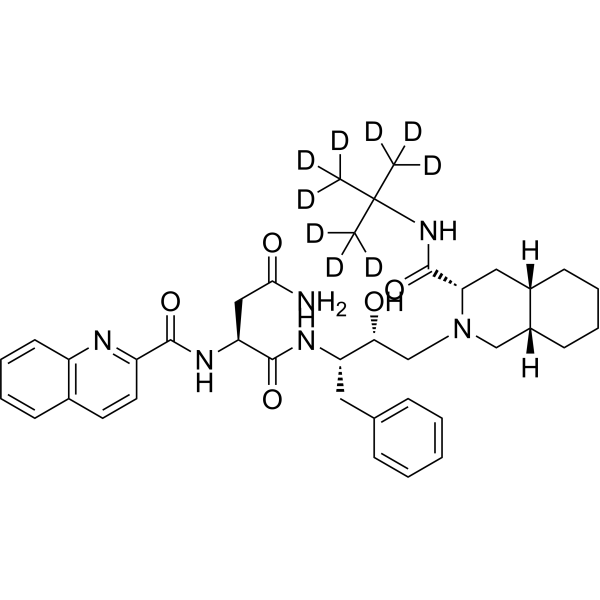 0 ImagesCat. No.: HY-17007SCAS No.: 1356355-11-7Synonyms: Ro 31-8959-d9Saquinavir-d9 (Ro 31-8959-d9) is the deuterium labeled Saquinavir (HY-17007). Saquinavir (Ro 31-8959) is an orally active HIV protease inhibitor that can be used in the research of AIDS. Saquinavir also has anti-inflammatory activity and can induce apoptosis of human red blood cells.
-
β5i-IN-2
 0 ImagesCat. No.: HY-187220CAS No.: 3119216-05-3β5i-IN-2 is a potent, selective, and orally active inhibitor of the immunoproteasome β5i subunit, with an IC50 of 0.08 μM against human β5i. β5i-IN-2 inhibits LPS (HY-D1056)- and IFN-γ-induced expression of IL-1β, IL-6, and TNF-α, and suppresses the JNK, ERK, and NF-κB signaling pathways. β5i-IN-2 can be used in research related to rheumatoid arthritis and ulcerative colitis.
-
7-O-Galloyl-D-sedoheptulose
 0 ImagesCat. No.: HY-N16527CAS No.: 233690-85-27-O-Galloyl-D-sedoheptulose is an orally effective polyphenolic compound. 7-O-Galloyl-D-sedoheptulose lowers the serum levels of glucose, leptin, insulin, C-peptide, resistin, TNF-α, IL-6, and increases the serum level of adiponectin. 7-O-Galloyl-D-sedoheptulose significantly reduces the levels of ROS and lipid peroxidation products (TBARS) by down-regulating the protein expression of NADPH oxidase subunit Nox-4 and p22phox. 7-O-Galloyl-D-sedoheptulose down-regulates NF-κB and related pro-inflammatory factors (COX-2, iNOS), inhibits the phosphorylation of JNK and the activity of its downstream AP-1. 7-O-Galloyl-D-sedoheptulose reduces the expression of TGF-β1 and fibronectin, indicating its potential in anti-tissue fibrosis. 7-O-Galloyl-D-sedoheptulose can be used for the study of type 2 diabetes and its hepatic and pancreatic complications.
-
HE4-1 leech peptide
 0 ImagesCat. No.: HY-P11650CAS No.: 2531396-44-6HE4-1 leech peptide is a p38 MAPK inhibitor with an additional c-Jun N-terminal kinase (JNK) inhibitory role. HE4-1 leech peptide suppresses macrophage migration, and does not significantly affect macrophage immunological activities including phagocytic ability, lysozyme activity, and expression levels of most inflammatory factors. HE4-1 leech peptide can be used for the research of atherosclerosis.
-
Anti-inflammatory agent 100
 0 ImagesCat. No.: HY-173416Anti-inflammatory agent 100 (Compound (+)-4S-23) is an anti-inflammatory agent. Anti-inflammatory agent 100 inhibits MAPK and NF-κB signaling, and also inhibits NF-κB pathway by suppressing the phosphorylation of IκB-α and blocking nuclear translocation of phosphorylated p65. Anti-inflammatory agent 100 inhibits NO production (IC50: 0.5 μM) and TNF-α, IL-6, IL-1β secretion.
-
Gy-CATH
 0 ImagesCat. No.: HY-P11467Gy-CATH is an anionic antimicrobial peptide. Gy-CATH activates MAPK and NF-κB signaling pathways (elevated levels of phospho-ERK, -p38, -JNK, -p65, and -IκBα). Gy-CATH upregulates the expression levels of three physiological anticoagulant pathways. Gy-CATH inhibits ADP-, Collagen-, and PMA-induced platelet aggregation. Gy-CATH has no direct antimicrobial activity, but shows significant preventive abilities against mice infected with Staphylococcus aureus, Escherichia coli, and Methicillin (HY-121544)-resistant Staphylococcus aureus. Gy-CATH exhibits potent immunomodulatory activity, enhancing macrophage-and neutrophil-mediated bactericidal functions. Gy-CATH significantly reduces the extent of pulmonary fibrin deposition and prevents thrombosis in mice.
-
Dendrobine (Standard)
 0 ImagesDendrobine (Standard) is the analytical standard of Dendrobine. This product is intended for research and analytical applications. Dendrobine is an alkaloid isolated from Dendrobium nobile. Dendrobine possesses antiviral activity against influenza A viruses, with IC50s of 3.39 μM, 2.16 μM and 5.32 μM for A/FM-1/1/47 (H1N1), A/Puerto Rico/8/34 H274Y (H1N1) and A/Aichi/2/68 (H3N2), respectively. Dendrobine activates the JNK/p38/Nrf2 signaling pathway. Dendrobine exhibits antiviral, antitumor, anti-inflammatory, and neuroprotective properties.
-
Oxypeucedanin (Standard)
 0 ImagesOxypeucedanin (Standard) is a furanocoumarin derivative found in Angelica dahurica. Oxypeucedanin (Standard) is an orally active PI3K/AKT/NF-κB, MAPK, and ROS inhibitor. Oxypeucedanin (Standard) induces cell cycle arrest and apoptosis. Oxypeucedanin (Standard) inhibits hKv1.5 channel currents (IC50: 76 nM). Oxypeucedanin (Standard) exhibits anticancer, anti-inflammatory, antioxidant and antiarrhythmic activities.
-
EGFR-PK/JNK-2-IN-1
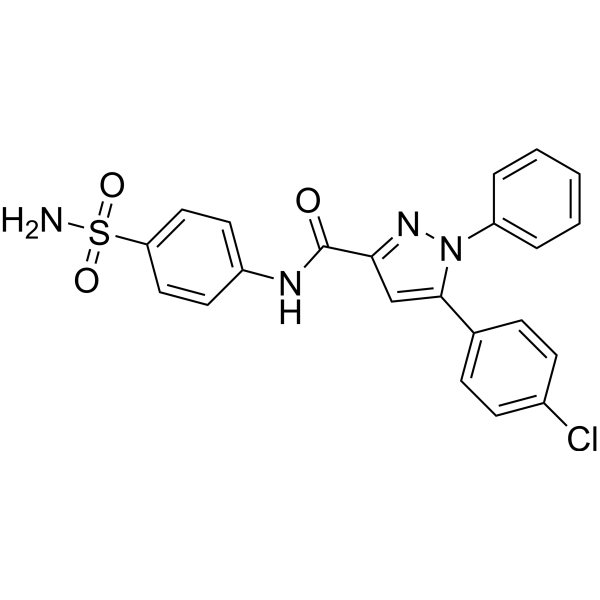 0 ImagesCat. No.: HY-162332CAS No.: 3034838-06-4
-
JNK-1-IN-2
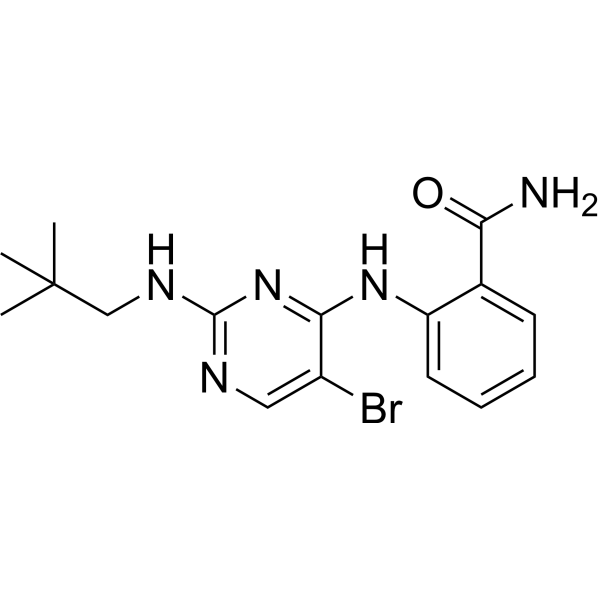 0 ImagesCat. No.: HY-155593CAS No.: 3047792-52-6JNK-1-IN-2 (Compound c6) is a JNK-1 inhibitor (IC50: 33.5 nM). JNK-1-IN-2 also inhibits JNK-2 and JNK-3 with IC50s of 112.9 nM and 33.2 nM. JNK-1-IN-2 inhibits the phosphorylation of c-Jun. JNK-1-IN-2 reverses lung impairment. JNK-1-IN-2 can be used for research of pulmonary fibrosis.
-
Berberine hemisulfate (Standard)
 0 ImagesCat. No.: HY-N0716ARCAS No.: 316-41-6Synonyms: Natural Yellow 18 hemisulfate (Standard)Berberine (hemisulfate) (Standard) is the analytical standard of Berberine (hemisulfate). This product is intended for research and analytical applications. Berberine hemisulfate is the hemisulfate form of Berberine (HY-N0716). Berberine hemisulfate is an alkaloid isolated from the Chinese herbal medicine Huanglian. Berberine hemisulfate exhibits anti-inflammatory, antibiobic, antitumor, cardiovascular protective and neuroprotective activity.
-
NSC 90469 (Standard)
 0 ImagesCat. No.: HY-114557RCAS No.: 1041-01-6Synonyms: 3,5-Diiodo-L-thyronine (Standard)NSC 90469 (Standard) is the analytical standard of NSC 90469. This product is intended for research and analytical applications. NSC 90469 (3,5-Diiodo-L-thyronine) is an orally active thyroid hormone derivative. NSC 90469 inhibits JNK phosphorylation and NF-κB acetylation, blocks SIRT1 protein expression, induces elevated PGC-1α levels, and stimulates COX activity. NSC 90469 enhances UCP1-mediated thermogenesis, increases hepatic Dio1 activity, inhibits TSH levels and hypothalamic-pituitary-thyroid axis function, enhances lipid metabolism, and regulates energy metabolism via the mitochondrial pathway. NSC 90469 prevents blood glucose reduction, reduces urinary albumin excretion, inhibits renal matrix expansion, decreases TGF-β1 expression, and reduces renal fibronectin and type Ⅳ collagen deposition. NSC 90469 also increases energy expenditure and prevents diet-induced overweight. NSC 90469 can be used in studies related to diabetic nephropathy, hypothyroidism, non-alcoholic fatty liver disease, and diet-induced obesity.
-
BDE 47 (Standard)
 0 ImagesCat. No.: HY-W762011RCAS No.: 5436-43-1BDE 47 (Standard) is the analytical standard of BDE 47. This product is intended for research and analytical applications. BDE 47 targets mitochondria, inhibits mitochondrial oxidative phosphorylation (OXPHOS), decreases mitochondrial membrane potential (MMP) and induces apoptosis in embryonic cell. BDE 47 induces the generation of ROS, and activates the JNK signaling pathway. BDE 47 exhibits embryonic developmental toxicity in zebrafish.
-
Saquinavir mesylate (Standard)
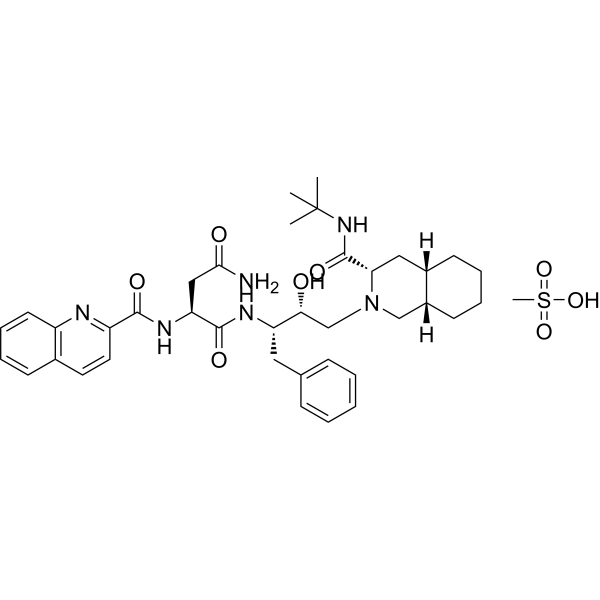 0 ImagesSynonyms: Ro 31-8959/003 (Standard)Saquinavir mesylate (Standard) (Ro 31-8959/003 (Standard)) is the analytical standard of Saquinavir mesylate (HY-17003). This product is intended for research and analytical applications. Saquinavir (Ro 31-8959) mesylate is an orally active HIV protease inhibitor that can be used in the research of AIDS. Saquinavir mesylate also has anti-inflammatory activity and can induce apoptosis of human red blood cells.
-
MAP4K4-IN-6
 0 ImagesCat. No.: HY-162922MAP4K4-IN-6 (Compound 15f) is a MAP4K4 inhibitor (IC50: 80 nM). MAP4K4-IN-6 reduces the c-Jun phosphorylation. MAP4K4-IN-6 has neuroprotective effects. MAP4K4-IN-6 increases the viability of motor neurons. MAP4K4-IN-6 can be used for research of Amyotrophic lateral sclerosis (ALS).

-
BRAFV600E/JNK-IN-1
 0 ImagesCat. No.: HY-173153BRAFV600E/JNK-IN-1 (Compound 14c) is an inhibitor of JNK1, JNK2, JNK3 and BRAFV600E, with IC50 values of 0.51 μM, 0.53 μM, 1.02 μM and 0.009 μM, respectively. BRAFV600E/JNK-IN-1 can inhibit the phosphorylation of MEK1/2 and ERK1/2. In addition, BRAFV600E/JNK-IN-1 can inhibit tumor cell proliferation, NO release and PGE2 production, and has anti-tumor and anti-inflammatory activities.
-
CT1-3
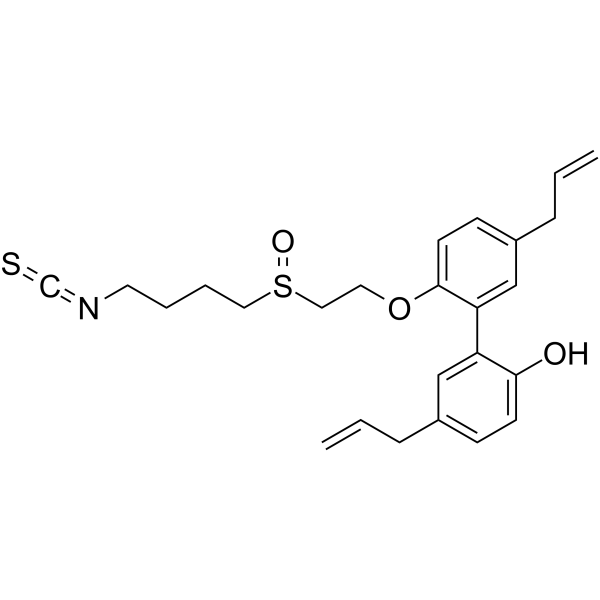 0 ImagesCat. No.: HY-150596CAS No.: 2460738-32-1CT1-3 is a potent anticancer agent. CT1-3 induces mitochondria-mediated apoptosis by regulating JNK/Bcl-2/Bax/XIAP pathway. CT1-3 suppresses the epithelial mesenchymal transition (EMT) potential of human cancer cells (HCCs) via regulating the E-cadherin/Snail axis, thus inhibits tumorigenesis. CT1-3 has a strong antitumor effect in mice model and exhibits no significant hepatic and renal toxicity.
-
Threo-Chloramphenicol-d6
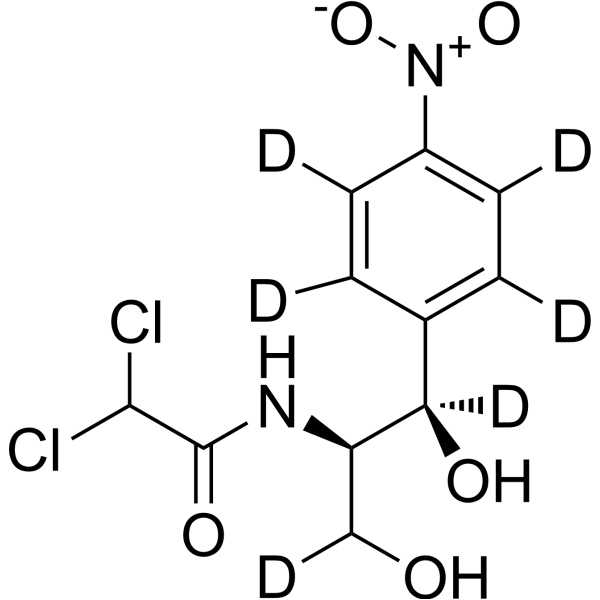 0 ImagesCat. No.: HY-B0239S2Threo-Chloramphenicol-d6 is the deuterium labeled Chloramphenicol. Chloramphenicol is an orally active, potent and broad-spectrum antibiotic. Chloramphenicol shows antibacterial activity. Chloramphenicol represses the oxygen-labile transcription factor and hypoxia inducible factor-1 alpha (HIF-1α) in hypoxic A549 and H1299 cells. Chloramphenicol suppresses the mRNA levels of vascular endothelial growth factor (VEGF) and glucose transporter 1, eventually decreasing VEGF release. Chloramphenicol can be used for anaerobic infections and lung cancer research.




