



NF-κB
Nuclear factor-κB; Nuclear factor-kappaB
NF-κB (Nuclear factor kappa-light-chain-enhancer of activated B cells) is a protein complex that controls transcription of DNA. NF-κB is found in almost all animal cell types and is involved in cellular responses to stimuli such as stress, cytokines, free radicals, ultraviolet irradiation, oxidized LDL, and bacterial or viral antigens. NF-κB plays a key role in regulating the immune response to infection. Incorrect regulation of NF-κB has been linked to cancer, inflammatory, and autoimmune diseases, septic shock, viral infection, and improper immune development. NF-κB has also been implicated in processes of synaptic plasticity and memory. There are five proteins in the mammalian NF-κB family: NF-κB1, NF-κB2, RelA, RelB, c-Rel.
NF-κB Isoform Specific Products
All Product Categories
-
NF-κB Inhibitors
(1636)
View all products
-
NF-κB Agonists
(6)
View all products
-
NF-κB Antagonist
(1)
View all products
-
NF-κB Activators
(146)
View all products
-
NF-κB Modulators
(34)
View all products
-
NF-κB Inducers
(3)
View all products
-
NF-κB Degraders
(4)
View all products
-
NF-κB Controls
(7)
View all products
-
NF-κB Ligands
(2)
View all products
-
NF-κB Related Products (1973)
Related Products (1973)

-
Antibodies (32)
-
NF-κB Signaling Pathway
-
NF-κB Isoform Comparison
-
Zaluzanin C
 0 ImagesCat. No.: HY-N15415CAS No.: 16838-87-2Zaluzanin C is a sesquiterpene lactone and antifungal agent. Zaluzanin C is isolated from the leaves of Vernonia arborea. Zaluzanin C inhibits mtROS-mediated NF-κB activity, as well as LPS- and TNF-α-induced mtROS production. Zaluzanin C alleviates mtROS-mediated mitochondrial dysfunction, enhances Mitophagy, and increases the mRNA levels of fatty acid oxidation genes and mitochondrial biogenesis factors. Zaluzanin C inhibits the formation of advanced glycation end products and α-glucosidase activity. Zaluzanin C improves intracellular lipid accumulation. Zaluzanin C exhibits anti-inflammatory, antioxidant, antifungal, anticancer and pro-osteogenic activities. Zaluzanin C can be used in studies related to non-alcoholic fatty liver disease and obesity.
-
Monotropein (Standard)
 0 ImagesMonotropein (Standard) is the analytical standard of Monotropein. This product is intended for research and analytical applications. Monotropein is an iridoid glycoside that can be isolated from the roots of Morinda officinalis. Monotropein inhibits the expression of inflammatory mediators in dextran sulfate sodium (DSS)-induced colitis mouse model. Monotropein exerts protective effects against IL-1β-induced apoptosis and catabolic responses on osteoarthritis chondrocytes. Monotropein has cartilage protective activity. Monotropein can alleviate Cisplatin (HY-17394)-induced acute kidney injury by inhibiting oxidative damage, inflammation and apoptosis through activation of Nrf2/HO-1 pathway and inhibition of NF-κB signaling. Monotropein can be studied in research for osteoarthritis, acute kidney injury and acute lung injury.
-
SR12460
 0 ImagesCat. No.: HY-124578CAS No.: 2055101-66-9SR12460 is a NEMO-binding domain mimetic and an inhibitor of the IKKβ-NEMO complex with an IC50 of 11.34 μM. SR12460 disrupts the IKKβ-NEMO interaction, thereby inhibiting NF-κB activation, including TNF-α- and LPS-induced NF-κB activation. SR12460 inhibits LPS-induced acute lung inflammation in mice and alleviates inflammatory infiltration, necrosis, and muscle degeneration in a mouse model of Duchenne muscular dystrophy. SR12460 is used for research on acute lung inflammation and Duchenne muscular dystrophy.
-
Vamorolone (Standard)
 0 ImagesSynonyms: VBP15 (Standard)Vamorolone (Standard) is the analytical standard of Vamorolone. This product is intended for research and analytical applications.
-
Recoflavone (Standard)
 0 ImagesCat. No.: HY-106449RCAS No.: 203191-10-0Synonyms: DA-6034 free acid (Standard)Recoflavone (Standard) is the analytical standard of Recoflavone (HY-106449). This product is intended for research and analytical applications. Recoflavone (DA-6034 (free acid)), a synthetic derivative of the flavonoid Eupatilin (HY-N0783), is orally active. Recoflavone can inhibit the NF-κB pathway and induce [Ca(2+)]i increase in epithelial cells. Recoflavone exhibits activities such as anti-inflammation, anti-tumor effects, protection of gastric and intestinal mucosa, and promotion of secretion in the ocular surface and salivary glands. Recoflavone can be used for the research of diseases such as dry eye, gastric injury, and intestinal injury.
-
Ecliptasaponin A (Standard)
 0 ImagesCat. No.: HY-N1508RCAS No.: 78285-90-2Ecliptasaponin A (Standard) is the analytical standard for Ecliptasaponin A (HY-N1508). Ecliptasaponin A is an orally active pentacyclic triterpenoid saponin. Ecliptasaponin A exerts anti-tumor activity by activating ASK1/JNK pathway, inducing apoptosis and autophagy in lung cancer cells. Ecliptasaponin A exerts anti-inflammatory/anti-fibrotic effects and protects the cardiovascular system by inhibiting the HMGB1/TLR4/NF-κB pathway, and the expression of COX-2 and MMP-9. Ecliptasaponin A can enhance SOD activity, reduce MDA levels, and alleviate oxidative stress damage. Ecliptasaponin A exerts chondroprotective effects by inhibiting the expression of MMP13 and regulating inflammatory factors. Ecliptasaponin A improves ovarian function and regulates sex hormones by upregulating the expression of ESR1 receptors.
-
Xanthine oxidase-IN-21
 0 ImagesCat. No.: HY-180271Xanthine oxidase-IN-21, a Genipin (HY-17389) derivative, is an orally active mixed competitive xanthine oxidase (XOD) inhibitor with an IC50 of 0.68 μM. Xanthine oxidase-IN-21 reduces renal fibrosis by decreasing α-SMA expression and suppresses pro-inflammatory cytokines IL-1β, IL-6, and TNF-α through NF-κB pathway regulation. Xanthine oxidase-IN-21 also inhibits URAT1 and GLUT9 expression, promoting uric acid excretion and lowering serum uric acid levels. Xanthine oxidase-IN-21 shows significantly hepatorenal protection activity. Xanthine oxidase-IN-21 can be used for the research of hyperuricemia.
-
4-Methoxycinnamic acid ethyl ester
 0 Images4-Methoxycinnamic acid ethyl ester (Ethyl p-methoxycinnamate) is an orally active natural compound found. 4-Methoxycinnamic acid ethyl ester exerts anti-inflammatory effects by inhibiting cyclooxygenase (COX-1 (IC50 = 1.12 μM) and COX-2 (IC50 = 0.83 μM)), NF-κB (IC50 = 88.7 μM) and cytokine production (TNF-α (IC50 = 96.84 μg/mL) and IL-1β (IC50 = 166.4 μg/mL)). 4-Methoxycinnamic acid ethyl ester inhibits tumor cell proliferation, migration and cancer metabolism and induces apoptosis.4-Methoxycinnamic acid ethyl ester inhibits VEGF expression, thereby inhibiting angiogenesis. 4-Methoxycinnamic acid ethyl ester has a significant inhibitory effect on dengue virus and Mycobacterium tuberculosis. 4-Methoxycinnamic acid ethyl ester has analgesic effects in rats.
-
Benzoylpaeoniflorin (Standard)
 0 ImagesCat. No.: HY-N0852RCAS No.: 38642-49-8Benzoylpaeoniflorin (Standard) is an analytical standard for Benzoylpaeoniflorin (HY-N0852). This product is intended for research and analytical applications. Benzoylpaeoniflorin is an orally active monoterpene glycoside compound. Benzoylpaeoniflorin exerts anti-inflammatory, anti-allergic, psoriasis-improving and sepsis-improving effects by inhibiting signaling pathways such as TNF/NF-κB and MAPK, as well as regulating immune homeostasis. Benzoylpaeoniflorin can be used in research related to immune, allergic and inflammatory diseases.
-
Rubiadin (Standard)
 0 ImagesRubiadin (Standard) is the analytical standard of Rubiadin (HY-N0444). This product is intended for research and analytical applications. Rubiadin is an orally active free radical scavenger that inhibits the activation of the NF-κB pathway. Rubiadin inhibits osteoclast formation, bone resorption, lipid peroxidation, HBV DNA replication and cancer cell proliferation; reduces pro-inflammatory cytokine levels; induces cancer cell apoptosis; and possesses antifungal, antimalarial, antibacterial and anticonvulsant activities. Rubiadin can be used in the research of osteoporosis, acute inflammation, chronic inflammation, carbon tetrachloride-induced liver injury, Alzheimer's disease, breast cancer, iron overload disorders, hepatitis B virus infection, colon cancer, liver cancer, T-lymphocytic leukemia, cervical cancer, diabetic nephropathy, epileptic seizures, fungal infections, malaria and bacterial infections.
-
4'-Methoxyresveratrol (Standard)
 0 ImagesCat. No.: HY-N2485RCAS No.: 33626-08-3Synonyms: 4'-O-Methylresveratrol (Standard)4'-Methoxyresveratrol (Standard) is the analytical standard of 4'-Methoxyresveratrol. This product is intended for research and analytical applications. 4'-Methoxyresveratrol (4'-O-Methylresveratrol) is a polyphenol derived from Dipterocarpaceae, with antiandrogenic, antifungal and anti-inflammatory activities. 4'-Methoxyresveratrol alleviates AGE-induced inflammation through suppressing RAGE-mediated MAPK/NF-κB signaling pathway and NLRP3 inflammasome activation.
-
Lercanidipine hydrochloride (Standard)
 0 ImagesLercanidipine (hydrochloride) (Standard) is the analytical standard of Lercanidipine (hydrochloride). This product is intended for research and analytical applications. Lercanidipine is a third-generation, lipophilic, brain-penetrant, vascular-selective and orally active dihydropyridine-calcium channel blocker with a pIC50 of 7.74 (converts from μM). Lercanidipine has long lasting antihypertensive action as well as reno- and neuro-protective effect. Lercanidipine also shows anti-oxidant, anti-inflammatory and anti-apoptotic properties. Lercanidipine can be used in cardiovascular and neurological research.
-
3'-Sialyllactose
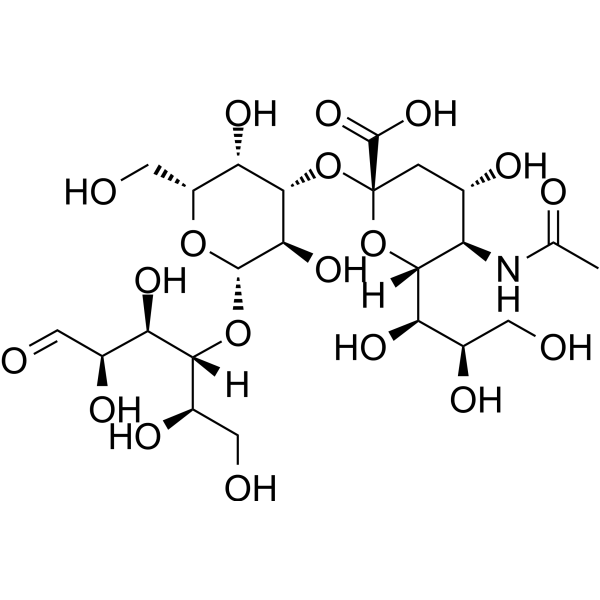 0 ImagesCat. No.: HY-108065CAS No.: 35890-38-1Synonyms: 3'-SL3'-Sialyllactose (3'-SL) is a prebiotic, maintains immune homeostasis and exerts anti-inflammatory and anti-arthritic effects. 3'-Sialyllactose is an ordinary carbohydrate with the lowest toxicity rating, it can be used for the research of inflammation.
-
Gliquidone sodium
 0 ImagesCat. No.: HY-B1114ACAS No.: 62783-47-5Synonyms: AR-DF 26 sodiumGliquidone sodium (AR-DF 26 sodium) can bind to the pancreatic β-cells and increases insulin release to regulate blood glucose levels. Gliquidone sodium significantly decreases LPS (HY-D1056)-induced proinflammatory responses and inhibits ERK/STAT3/NF-κB phosphorylation in BV2 microglial cells. Gliquidone sodium can suppress microgliosis, microglial hypertrophy mediated by LPS, and proinflammatory cytokine COX-2 and IL-6 levels in murine model. Gliquidone sodium also exhibits good anticancer activity in lung carcinoma cells. Gliquidone sodium has antioxidant property. Gliquidone sodium can be studied in research for type 2 diabetes and cancers.

-
Octahydrocurcumin (Standard)
 0 ImagesSynonyms: Hexahydrobisdemethoxycurcumin (Standard)Octahydrocurcumin (Hexahydrobisdemethoxycurcumin) is a hydrogenated derivative of curcumin and a metabolite of curcumin. Octahydrocurcumin is an orally active anticancer and anti-inflammatory agent, and is the final hydrogenated metabolite of Curcumin (HY-N0005) in vivo. Octahydrocurcumin exerts its anti-tumor and anti-inflammatory effects by inducing the mitochondrial apoptosis pathway and inhibiting the TAK1-NF-κB-COX-2 pathway, respectively.
-
Licocoumarone
 0 ImagesCat. No.: HY-N20713CAS No.: 118524-14-4Licocoumarone is an active component derived from licorice. Licocoumarone has an IC50 of 12.56 μM and a Kd of 14.90 μM against human DYRK1A. Licocoumarone inhibits NF-κB activation by blocking IκBα degradation and p65 phosphorylation, interferes with MAPK activation via inhibiting phosphorylation, and downregulates the expression of iNOS. Licocoumarone inhibits LPS-induced expression of IL-1β, IL-6 and IL-10; it induces apoptosis of pancreatic cancer cells apoptosis and acts as a neuraminidase inhibitor (IC50 = 27.8 μM). Licocoumarone exhibits anti-inflammatory and antimicrobial activities, with antibacterial activity against Listeria and antifungal activity against Candida parapsilosis. Licocoumarone can be used in studies related to immune and inflammatory diseases, pancreatic cancer, and specific bacterial and fungal infections.
-
Dehydrodiisoeugenol (Standard)
 0 ImagesDehydrodiisoeugenol (Standard) is the analytical standard of Dehydrodiisoeugenol (HY-N0589). This product is intended for research and analytical applications. Dehydrodiisoeugenol is an orally active anti-inflammatory and anti-tumor agent. Dehydrodiisoeugenol inhibits the proliferation of colorectal cancer cells, and induces apoptosis, autophagy, endoplasmic reticulum stress and cell cycle arrest. Dehydrodiisoeugenol also exerts anti-inflammatory effects by inhibiting the activation of NF-κB and the expression of COX-2. Dehydrodiisoeugenol can be used in the research related to colorectal cancer, inflammatory diseases and ulcerative colitis.
-
Emavusertib phosphate
 0 ImagesCat. No.: HY-135317FCAS No.: 2376399-38-9Synonyms: CA-4948 phosphateEmavusertib phosphate (CA-4948 phosphate) is the phosphate salt form of Emavusertib (HY-135317). Emavusertib phosphate is an orally active inhibitor for IRAK4 (IC50=57 nM) and FLT3. Emavusertib phosphate inhibits NF-κB and MyD88 signaling pathways, reduces the generation of pro-inflammatory cytokines like IL-6 and IL-10, thereby exhibiting anti-inflammatory and anti-proliferative activities against cancer cells, leading to cell apoptosis. Emavusertib phosphate exhibits antitumor activity in mouse model.
-
Indole-4-carboxaldehyde-13C
 0 ImagesCat. No.: HY-W001288SIndole-4-carboxaldehyde-13C is the 13C-labeled Indole-4-carboxaldehyde (HY-W001288). Indole-4-carboxaldehyde is an ergot alkaloid precursor that regulates glycosylation and inflammation. Indole-4-carboxaldehyde upregulates Glo-1, inhibits MGO-induced NF-κB activation, and suppresses MGO-induced expression of TNF-α and IFN-γ. Indole-4-carboxaldehyde inhibits MGO-induced formation of advanced glycation end products (AGE) and expression of their receptor (RAGE). Indole-4-carboxaldehyde is a core metabolite produced in the pedicels of Summer Black grapes after exogenous gibberellin treatment, and it directly promotes fruit enlargement and fruit set of Summer Black grapes. Indole-4-carboxaldehyde can be used in studies related to hepatic steatosis and plant growth regulation.




