



NOD-like Receptor (NLR)
Nucleotide oligomerization domain (NOD)-like receptors (NLRs) are critical cytoplasmic pattern-recognition receptors (PRRs) that play an important role in the host innate immune response and immunity homeostasis. There are 23 NLR family members in humans and at least 34 NLR genes in mice. NLRs are expressed in many cell types including immune cells and epithelial cells, although certain NLR family members are expressed primarily in phagocytes including macrophages and neutrophils. The NLR family are most commonly classified according to their N-terminal domain, falling into one of four subfamilies; NLRA, NLRB, NLRC and NLRP.
The NLRs recognize various ligands from microbial pathogens (peptidoglycan, flagellin, viral RNA, fungal hyphae, etc.), host cells (ATPs, cholesterol crystals, uric acid, etc.), and environmental sources (alum, asbestos, silica, alloy particles, UV radiation, skin irritants, etc.). Most NLRs act as PRRs, recognizing the above ligands and activate inflammatory responses. However, some NLRs may not act as PRRs but instead respond to cytokines such as interferons. The activated NLRs show various functions that can be divided into four broad categories: inflammasome formation, signaling transduction, transcription activation, and autophagy.
NOD-like Receptor (NLR) Isoform Specific Products
All Product Categories
-
NOD-like Receptor (NLR) Inhibitors
(373)
View all products
-
NOD-like Receptor (NLR) Agonists
(25)
View all products
-
NOD-like Receptor (NLR) Antagonists
(8)
View all products
-
NOD-like Receptor (NLR) Activators
(48)
View all products
-
NOD-like Receptor (NLR) Modulators
(10)
View all products
-
NOD-like Receptor (NLR) Inducer
(1)
View all products
-
NOD-like Receptor (NLR) Degraders
(2)
View all products
-
NOD-like Receptor (NLR) Ligand
(1)
View all products
-
NOD-like Receptor Proteins
(1)
View all products
-
NLRP3 Proteins
(1)
View all products
-
NOD-like Receptor (NLR) Related Products (485)
Related Products (485)

-
Recombinant Proteins (1)
-
Antibodies (2)
-
NOD-like Receptor (NLR) Isoform Comparison
-
NLRP3-IN-9
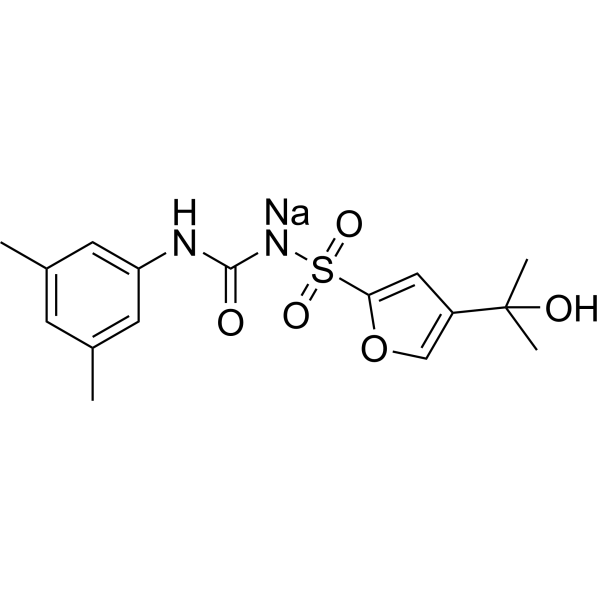 0 ImagesCat. No.: HY-146802CAS No.: 2768759-64-2
-
NLRP3-IN-43
 0 ImagesCat. No.: HY-163756CAS No.: 2769903-01-5NLRP3-IN-43 (compound II-8) is a poteny inhibitor of NLRP3 inflammasome activation that binds to the LRR domain, and disrupts NLRP3-NEK7 interaction.
-
CXCR2-IN-3
 0 ImagesCat. No.: HY-179387CXCR2-IN-3 is a CXCR2 inhibitor with an IC50 of 11.37 μM. CXCR2-IN-3 mediates CXCR2-Ca2+ signalling inhibition halted autophagic flux, subsequently facilitating ROS-mediated apoptotic cell death. CXCR2-IN-3 suppresses the CXCR2-NLRP3 canonical pathway, suppressing pre-tumorigenic markers. CXCR2-IN-3 causes autophagy-dependent cell death in polyploid giant cancer cells (PGCCs). CXCR2-IN-3 can be used for the research of oral squamous cell carcinoma (OSCC).
-
Dexpramipexole dihydrochloride (Standard)
 0 ImagesSynonyms: (R)-Pramipexole dihydrochloride (Standard); R-(+)-Pramipexole dihydrochloride (Standard); KNS-760704 dihydrochloride (Standard)Dexpramipexole ((R)-Pramipexole) dihydrochloride (Standard) is the analytical standard of Dexpramipexole (dihydrochloride). This product is intended for research and analytical applications. Dexpramipexole dihydrochloride is an orally active, blood-brain barrier permeable mitochondrial protective agent. Dexpramipexole dihydrochloride upregulates the expression of Parkin, PINK1, GPX4 and FSP1; binds to mitochondrial F1/Fo-ATP synthase; blocks the Nav1.8 sodium channel; and inhibits the activation of the NLRP3 inflammasome. Dexpramipexole dihydrochloride induces mitophagy, inhibits ferroptosis, pyroptosis, apoptosis, neuroinflammation and eosinophilopoiesis; maintains mitochondrial function and redox homeostasis; reduces reactive oxygen species production; and decreases myocardial infarct size. Dexpramipexole dihydrochloride is applicable to studies on eosinophilic asthma, myocardial ischemia/reperfusion injury, sepsis-associated encephalopathy, analgesia, and more.
-
JNUTS013
 0 ImagesCat. No.: HY-182779CAS No.: 2763983-45-3JNUTS013 is a NLRP3 inflammasome inhibitor. JNUTS013 promotes proteasome-dependent degradation of NLRP3 and inhibits the release of downstream cytokines. JNUTS013 downregulates the expression of inflammation-related proteins including iNOS and COX-2. JNUTS013 exhibits anti-inflammatory activity and can be used in the research of inflammatory diseases.
-
HNW005
 0 ImagesCat. No.: HY-172778HNW005 is a dual inhibitor of NLRP3 inflammasome and urate transporter 1 (URAT1). It has a KD value of 204.6 nM and an IC50 of 1.7 μM for inhibiting NLRP3 inflammasome activation, and an IC50 of 6.4 μM for inhibiting uric acid transmembrane transport. When administered at a dose of 2 mg/kg in vivo, HNW005 can achieve a uric acid reduction rate of 64.8%. It can exert anti - inflammatory, analgesic, and uric acid - lowering activities by inhibiting the activation of NLRP3 inflammasome and uric acid transmembrane transport. HNW005 can be used in the research of gouty arthritis.
-
Ligusticum cycloprolactam
 0 ImagesCat. No.: HY-N17383CAS No.: 2283387-37-9Ligusticum cycloprolactam is a potent, orally active, and CNS-penetrant TLR4/NF-κB inhibitor, exhibiting anti-inflammatory and neuroprotective activity. Ligusticum cycloprolactam reduces FPR1 expression, inhibits NLRP3 inflammasome, TLR4/NF-κB, hepatic MAPK and TGF-β signaling, and selectively activates hepatic FXR. Ligusticum cycloprolactam attenuates pro-inflammatory mediator production, enhances anti-inflammatory cytokine secretion, regulates renal uric acid transporters, and preserves intestinal microbiota composition. Ligusticum cycloprolactam can be used for the research of ischemic stroke, hyperuricemic nephropathy, neuroinflammation, and metabolic dysfunction-associated fatty liver disease.
-
Caulerpin
 0 ImagesCat. No.: HY-N10650CAS No.: 26612-48-6Caulerpin is an orally active natural product with anti-tumor, anti-viral, anti-oxidant, anti-fungal, anti-bacteria and analgesic activities. Caulerpin acts as an inhibitor of mitochondrial ETC complex I and acetylcholinesterase. Caulerpin blocks hypoxia-induced activation of HIF-1α protein, inhibits VEGF secretion and tumor angiogenesis under hypoxic conditions, reduces the expression of NLRP3 and the production of pro-inflammatory cytokines, and suppresses the load of Mycobacterium tuberculosis. Caulerpin can be used in studies related to breast cancer, prostate cancer, tuberculosis and viral infections.
-
NLRP3-IN-41
 0 ImagesCat. No.: HY-163695CAS No.: 1209698-02-1NLRP3-IN-41 (compd S-9) is an orally active and brain-penetrant NLRP3 inhibitor with anti-inflammatory activities, anti-neuroinflammatory effect and without obvious cytotoxicity. NLRP3-IN-41 inhibits the priming and activation stages of the NLRP3 inflammasome and can be used for inflammasome-related diseases research.
-
NLRP3-IN-45
 0 ImagesCat. No.: HY-168009NLRP3-IN-45 (D6) is an inhibitor of NLRP3 inflammasome activation, inhibiting the activity of IL-1β (IC50=41.79 nM). NLRP3-IN-45 exerts its effects without affecting the initial stage of NLRP3 inflammasome activation. NLRP3-IN-45 specifically inhibits the activation of NLRP3 inflammasome in the LPS-induced acute lung injury (ALI) mouse model.
-
NLRP3-IN-37
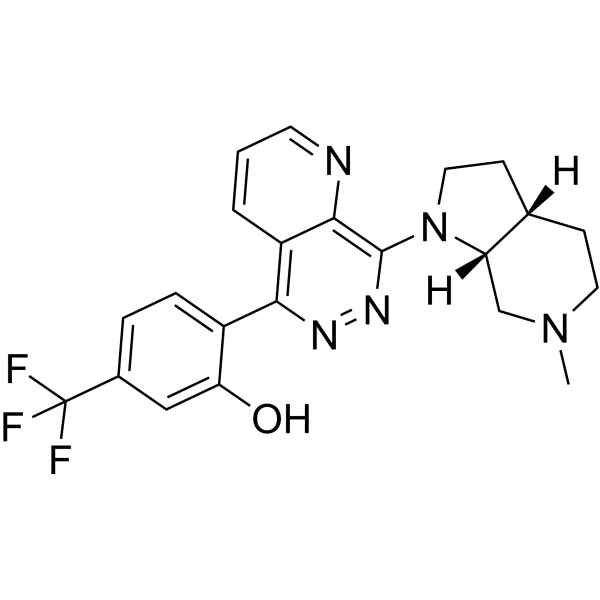 0 ImagesCat. No.: HY-163498CAS No.: 3033054-51-9NLRP3-IN-37 (Compound 23) is a NLRP3 inhibitor (EC50: 5 nM). NLRP3-IN-37 can be used for NLRP3 related research, such as gout, pseudogout, CAPS, NASH fibrosis, heart failure, idiophathic pericarditis, atopic dermatitis, inflammatory bowel disease, Alzheimer's Disease, Parkinson's Disease and traumatic brain injury.
-
IIIM-1270
 0 ImagesIIIM-1270is a NLRP3 inflammasome inhibitor. IIIM-1270 inhibits IL-1β release in mouse macrophages (J774A.1 cells) (IC50 = 3.5 μM) and significantly reduced the protein expression level of mature IL-1β. IIIM-1270 can be used for the study of inflammation.
-
NLRP3-IN-91
 0 ImagesCat. No.: HY-183296NLRP3-IN-91 is a potent NLRP3 inflammasome inhibitor with a Kd of 558.4 nM. NLRP3-IN-91 directly targets the NLRP3 NACHT domain, blocks inflammasome assembly and activation, and exerts anti-inflammatory effects. NLRP3-IN-91 increases survival time in a murine model of LPS (HY-D1056)-induced sepsis. NLRP3-IN-91 can be used for the research of sepsis.
-
NLRP3-IN-20
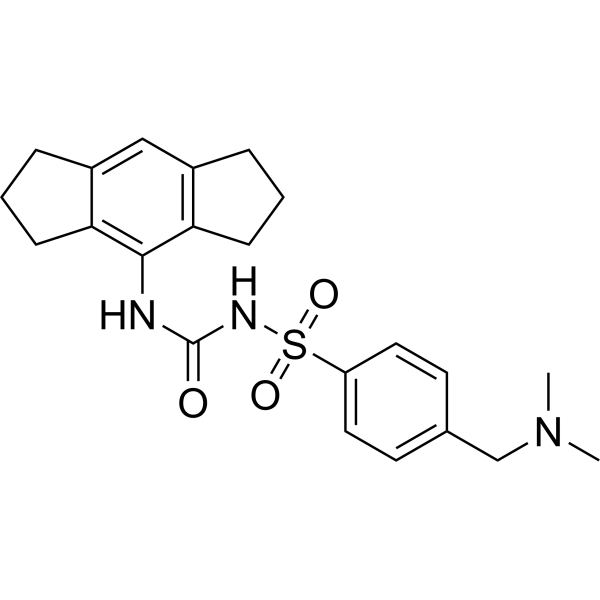 0 ImagesCat. No.: HY-156121CAS No.: 2428478-22-0
-
NLRP3-IN-55
 0 ImagesCat. No.: HY-169227NLRP3-IN-55 (Compound 19) is a potent NLRP3 inhibitor (IC50 = 0.34 μM). NLRP3-IN-55 directly targets the NLRP3 protein (KD = 0.45 μM), blocking the assembly and activation of the NLRP3 inflammasome, leading to anti-inflammatory effects and inhibition of cellular pyroptosis.
-
SH-26
 0 ImagesCat. No.: HY-183995SH-26 is a PHD1 PROTAC degrader with DC50s of 1.06 μM, 4.16 μM and 4.91 μM in MDA-MB-231, HepG2 and HEK-293T cells, respectively. SH-26 recruits CRBN to induce PHD1 degradation via the ubiquitin-proteasome system. SH-26 attenuates APAP (HY-66005)-triggered ROS accumulation, mitochondrial dysfunction, and NLRP3 inflammasome activation. SH-26 can be used for the research of acute liver injury.
-
CAII-IN-15
 0 ImagesCat. No.: HY-183283CAII-IN-15 is a potent carbonic anhydrase II (CA II) inhibitor with a hCA II IC50 of 10 nM. CAII-IN-15 elevates cGMP levels, releases nitric oxide, reduces oxidative stress, and exhibits neuroprotective activity in vitro. CAII-IN-15 inhibits NLRP3 inflammasome activation, reduces neuronal apoptosis. CAII-IN-15 reduces Intraocular pressure (IOP) in rabbits. CAII-IN-15 can be used for the research of glaucoma.
-
NOD1/2-IN-1
 0 ImagesCat. No.: HY-168024NOD1/2-IN-1 (Compound 18) is a potent RIPK2 inhibitor with an IC50 value of 1.4 nM, as determined by the ADP-Glo assay. NOD1/2-IN-1 blocks the production of pro-inflammatory cytokines by inhibiting the NOD1/NOD2 pathways, with IC50 values of 18 nM and 170 nM for NOD1 and NOD2, respectively, thereby reducing inflammatory responses. NOD1/2-IN-1 can be used in studies related to colitis.
-
BD-AcAc2
 0 ImagesSynonyms: R,S-1,3-Butanediol acetoacetate diesterBD-AcAc2 (R,S-1,3-Butanediol acetoacetate diester) is an orally active, CNS-penetrant antiepileptic agent. BD-AcAc2 inhibits NF-κB, NLRP3 inflammasome, caspase-1/3, pyroptosis, apoptosis, and enhances autophagy. BD-AcAc2 exhibits antioxidant activity by modulating ROS, MDA, SOD, and GSH levels, and alleviates oxidative stress. BD-AcAc2 mitigates chronic colitis, counteracts Dextran Sodium Sulfate (DSS)-induced pathology, protects against central nervous system oxygen toxicity and acute lung injury, and exhibits anti-seizure efficacy. BD-AcAc2 can be used for the research of colitis, sarcopenia, acute lung injury, seizure, and obesity.
-
Muscone (Standard)
 0 ImagesMuscone (Standard) is the analytical standard of Muscone. This product is intended for research and analytical applications. Muscone is the main active monomer of traditional Chinese medicine musk. Muscone inhibits NF-κB and NLRP3 inflammasome activation. Muscone remarkably decreases the levels of inflammatory cytokines (IL-1β, TNF-α and IL-6), and ultimately improves cardiac function and survival rate.




