



TNFRSF5/CD40
TNFRSF5/CD40 is a tumor necrosis factor receptor family member expressed by B cells, professional antigen-presenting cells, non-immune cells, and tumors[1]. Mechanistically, CD40-CD40L/CD154 engagement regulates humoral and cellular adaptive immunity, including B-cell proliferation, immunoglobulin isotype switching, and germinal center formation[1][2]. CD40 signaling recruits TRAFs and activates NF-κB, with additional involvement of PI3K/AKT, MAPKs, and JAK3/STAT pathways[3]. In inflammatory disease models, CD40 ligation promotes cytokines, chemokines, matrix metalloproteinases, growth factors, adhesion molecules, and procoagulant responses in vascular and immune-associated cells[4][5]. Compared with related pathway forms, CD40 and CD40L both have membrane and soluble forms, and soluble CD40 may bind CD40L and reduce transmembrane CD40 receptor activation[3][6]. For experimental applications, CD40 agonistic antibodies and CD40L-based strategies require receptor clustering or trimerization, while antagonistic approaches target autoimmune disease, allograft rejection, and inflammatory pathology[3][7].
References:
- [1]. Elgueta R, et al. Molecular mechanism and function of CD40/CD40L engagement in the immune system. Immunol Rev. 2009 May;229(1):152-72. [Content Brief]
- [2]. Lougaris V, et al. Hyper immunoglobulin M syndrome due to CD40 deficiency: clinical, molecular, and immunological features. Immunol Rev. 2005 Feb;203:48-66. [Content Brief]
- [3]. Tang T, et al. Molecular basis and therapeutic implications of CD40/CD40L immune checkpoint. Pharmacol Ther. 2021 Mar;219:107709. [Content Brief]
- [4]. Chatzigeorgiou A, et al. CD40/CD40L signaling and its implication in health and disease. Biofactors. 2009 Nov-Dec;35(6):474-83. [Content Brief]
- [5]. Schönbeck U, et al. CD40 signaling and plaque instability. Circ Res. 2001 Dec 7;89(12):1092-103. [Content Brief]
- [6]. Lakshman N, et al. Microglia in the spinal cord stem cell niche regulate neural precursor cell proliferation via soluble CD40 in response to myelin basic protein. Stem Cells. 2025 Feb 12;43(2):sxae076. [Content Brief]
- [7]. Richards DM, et al. Concepts for agonistic targeting of CD40 in immuno-oncology. Hum Vaccin Immunother. 2020;16(2):377-387. [Content Brief]
-
TNFRSF5/CD40 Related Products (138)
Related Products (138)

-
CD28-IN-4
 0 ImagesCat. No.: HY-184441CAS No.: 3116073-35-6CD28-IN-4 is a selective CD28 inhibitor with a human IC50 of 231 nM and a human Kd of 344 nM. CD28-IN-4 binds to CD28, disrupts its interaction with CD80, blocks CD28-mediated co-stimulatory signal transduction, and reduces cytokine secretion in a human primary tumor-PBMC and epithelial tissue co-culture model. CD28-IN-4 can be used for cancer-related research.
-
Pentadecane (Standard)
 0 ImagesPentadecane (Standard) is the analytical standard of Pentadecane (HY-N7926). This product is intended for research and analytical applications. Pentadecane is an orally active natural plant volatile alkane with anti-inflammatory, analgesic, antipyretic and anti-leishmanial activities. Pentadecane presents IC50 values of 65.3 μM, 60.5 μM and 194.8 μM against Leishmania infantum promastigotes, amastigotes and intracellular amastigotes, respectively. Pentadecane downregulates the mRNA expression of TNF-α and IL-12 and inhibits the release of inflammatory mediators. Pentadecane arrests the cell cycle of Leishmania infantum and induces apoptosis. Pentadecane can be applied to the research of inflammation and leishmaniasis.
-
Lard oil
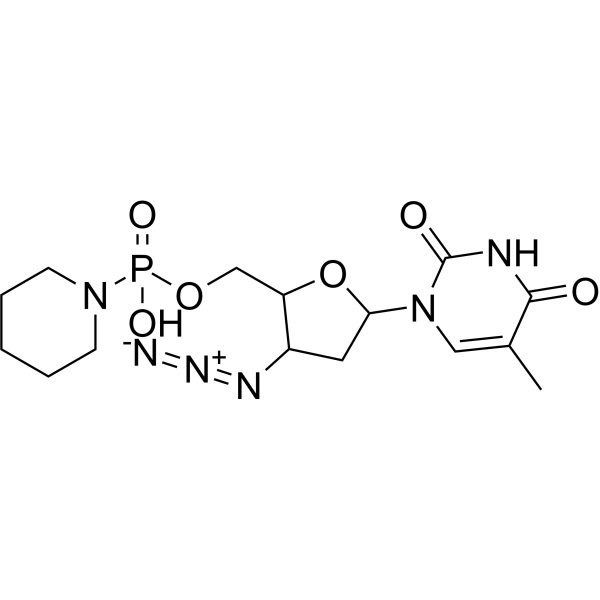 0 ImagesCat. No.: HY-W127601CAS No.: 8016-28-2Lard oil is an orally active biochemical reagent. Lard oil upregulates PERK, eIF2a, CHOP, OPN, TLR2, TLR4, TNF-α, and downregulates GRP78 and IRE1a. Lard oil induces responses such as body fat accumulation, elevated serum insulin levels, increased HOMA-IR, hepatic ectopic lipid deposition, hepatic endoplasmic reticulum stress, and hepatic inflammation. Lard oil can be used in studies related to diet-induced obesity, insulin resistance, and non-alcoholic fatty liver disease.
-
2,2-Diphenyltetrahydrofuran
 0 Images2,2-Diphenyltetrahydrofuran (DPTHF) acts as a TRPV3 channel antagonist and is a structural analog of 2-Aminoethyl diphenylborinate (HY-W009724). 2,2-Diphenyltetrahydrofuran shows weak inhibitory activity against TRPV1 and TRPV2. It reduces hedonic feeding in mice exposed to Olanzapine (HY-14541). 2,2-Diphenyltetrahydrofuran can be used in the research of nervous system-related diseases.
-
Indole-4-carboxaldehyde-13C
 0 ImagesCat. No.: HY-W001288SIndole-4-carboxaldehyde-13C is the 13C-labeled Indole-4-carboxaldehyde (HY-W001288). Indole-4-carboxaldehyde is an ergot alkaloid precursor that regulates glycosylation and inflammation. Indole-4-carboxaldehyde upregulates Glo-1, inhibits MGO-induced NF-κB activation, and suppresses MGO-induced expression of TNF-α and IFN-γ. Indole-4-carboxaldehyde inhibits MGO-induced formation of advanced glycation end products (AGE) and expression of their receptor (RAGE). Indole-4-carboxaldehyde is a core metabolite produced in the pedicels of Summer Black grapes after exogenous gibberellin treatment, and it directly promotes fruit enlargement and fruit set of Summer Black grapes. Indole-4-carboxaldehyde can be used in studies related to hepatic steatosis and plant growth regulation.
-
Vulgarin
 0 ImagesVulgarin is an orally active, naturally occurring eudesmane sesquiterpene with multiple biological activities including anti-inflammatory and antioxidant properties. Vulgarin targets and inhibits HMGB1, NF-κB and iNOS, while regulating key genes involved in hepatic gluconeogenesis; it also blocks inflammatory signaling pathways and inhibits the production and release of pro-inflammatory cytokines such as TNF-α and IL-1β. Vulgarin effectively alleviates pancreatic oxidative stress by reducing lipid peroxidation levels and restoring antioxidant enzyme activity. Vulgarin reverses abnormally elevated serum pancreatic enzyme levels, preserves the integrity of pancreatic acinar cells, and reduces pancreatic edema, hemorrhage and inflammatory infiltration. Vulgarin remodels the function of pancreatic endocrine cells, restores insulin content in β cells, and downregulates glucagon levels in α cells and somatostatin levels in δ cells. Vulgarin can be used in studies related to pancreatic injury and diabetes.
-
Pexmetinib hydrochloride
 0 ImagesCat. No.: HY-16782ACAS No.: 1416216-01-7Synonyms: ARRY-614 hydrochloridePexmetinib hydrochloride (ARRY-614 hydrochloride) is an orally active dual Tie-2 and p38 MAPK inhibitor. Pexmetinib hydrochloride binds to Tie-2 and p38 MAPK in a "DFG-out" conformation, attenuates the phosphorylation of p38, inhibits STAT3 activation, reduces the promoter-binding activity of NFATc1, and decreases the expression of MMPs. Pexmetinib hydrochloride inhibits leukemia cell proliferation, abrogates TNF-α-mediated myelosuppression of healthy hematopoietic stem cells, stimulates hematopoiesis in primary myelodysplastic syndrome (MDS) samples, inhibits RANKL-induced osteoclast formation and bone resorption, and suppresses migration, invasion and induced osteolysis of breast cancer cells. Pexmetinib hydrochloride can be used in research related to myelodysplastic syndrome, acute myeloid leukemia and breast cancer-induced osteolysis.
-
Hibiscetin
 0 ImagesHibiscetin is an orally active anti-inflammatory, antioxidant, antihyperglycemic, hypolipidemic, hepatoprotective and neuroprotective agent. Hibiscetin reduces the levels of TNF-α, IL-1β and IL-6. Hibiscetin inhibits lipid peroxidation, reduces MDA levels, and induces the activities of antioxidant enzymes CAT, GSH and SOD. Hibiscetin lowers blood glucose, reverses reduced insulin levels, regulates adipokine levels, and reduces elevated AST and ALT levels. Hibiscetin alleviates Rotenone (HY-B1756)-induced akinesia and catalepsy, normalizes neurotransmitter levels, and modulates the activities of activated caspase 3 and BDNF. Hibiscetin can be used in the research of type 2 diabetes, Parkinson's disease and Huntington's disease.
-
11β,13-Dihydrolactucopicrin
 0 ImagesCat. No.: HY-N9932CAS No.: 125519-47-311β,13-Dihydrolactucopicrin is a sesquiterpene lactone and the main bitter component of chicory root. 11β,13-Dihydrolactucopicrin inhibits yeast α-glucosidase activity (IC50 = 27.49 μM) and inhibits Crz1 activation and nuclear accumulation. 1β,13-Dihydrolactucopicrin possesses blood-brain barrier penetration capacity in an in vitro HBMEC blood-brain barrier model and can generate cysteine-conjugated metabolites within brain microvascular endothelial cells. 11β,13-Dihydrolactucopicrin can regulate the lncRNA H19/miR-21-3p signaling axis; it upregulates the expression of ABCG2 and lncRNA H19, downregulates miR-21-3p, inhibits the release of IL-6, TNF-α, and hs-CRP pro-inflammatory mediators, and alleviates urate-induced inflammatory injury in renal epithelial cells. 11β,13-Dihydrolactucopicrin can be used in research on diabetes and renal urate deposition.
-
4-Methoxybenzyl alcohol (Standard)
 0 ImagesSynonyms: P-Methoxy-benzyl alcoho (Standard); (4-Methoxyphenyl)methanol (Standard)4-Methoxybenzyl alcohol (Standard) (P-Methoxy-benzyl alcoho (Standard); (4-Methoxyphenyl)methanol (Standard)) is the analytical standard of 4-Methoxybenzyl alcohol (HY-W015777). This product is intended for research and analytical applications. 4-Methoxybenzyl alcohol (P-Methoxy-benzyl alcoho; (4-Methoxyphenyl) methanol) is a naturally derived volatile aromatic compound. 4-Methoxybenzyl alcohol upregulates the phosphorylation level of PI3K/Akt pathway proteins, downregulates the expression of pro-inflammatory factors, increases the content of tight junction proteins occludin and claudin-5, and alleviates structural damage to the blood-brain barrier. 4-Methoxybenzyl alcohol improves the decrease in viability and NO level of cerebral microvascular endothelial cells induced by oxygen-glucose deprivation/reperfusion, and reduces the release of lactate dehydrogenase. 4-Methoxybenzyl alcohol serves as a substrate in the two-phase persulfate-mediated electro-oxidation system, where it is directionally oxidized to p-anisaldehyde. 4-Methoxybenzyl alcohol acts as a substrate for wild-type fungal aryl alcohol oxidase. 4-Methoxybenzyl alcohol can be used in studies related to ischemic stroke, as well as in research across various fields such as chemical synthesis, including the synthesis of fragrances and flavorings.
-
(-)-Isoproterenol
 0 Images(-)-Isoproterenol (Levisoprenalinel) is the R-isomer of Isoproterenol. (-)-Isoproterenol can reduce the cleavage of caspase 3 and TNFα levels in retinal endothelial cells (REC). (-)-Isoproterenol can be used for the study of diabetic retinopathy.
-
JH-I-25
 0 ImagesCat. No.: HY-138834CAS No.: 1042673-20-0JH-I-25 is an orally active IRAK1 and IRAK4 inhibitor. JH-I-25 inhibits LPS-induced IRAK4 phosphorylation, IRAK1 degradation, MAPK activation, and the expression of proinflammatory cytokines TNF-α and IL-6 in lung tissues. JH-I-25 improves the survival rate of LPS-induced septic mice and serves as an IRAK4 recruiter in the design of proteolysis-targeting chimeric molecules. JH-I-25 can be used in research related to diffuse large B-cell lymphoma, Waldenström's macroglobulinemia, septic shock, rheumatoid arthritis, atherosclerosis, Alzheimer's disease, acute lung injury, sepsis, and psoriasis.
-
LASSBio-1829 hydrochloride
 0 ImagesCat. No.: HY-118973CAS No.: 1807810-16-7LASSBio-1829 hydrochloride is an orally active IKK2 inhibitor with an IC50 of 3.8 μM against the human target (Sf21 cells). LASSBio-1829 hydrochloride blocks signal transduction of the inflammation-associated NF-κB activation pathway. LASSBio-1829 hydrochloride reduces leukocyte migration, TNF-α biosynthesis, ROS production and NO production. LASSBio-1829 hydrochloride exhibits anti-inflammatory activity in a carrageenan-induced subcutaneous air pouch mouse model. LASSBio-1829 hydrochloride alleviates licking behavior during the inflammatory phase of the mouse formalin test. LASSBio-1829 hydrochloride can be used in inflammation-related research.
-
N-Desmethyl clomipramine-d7
 0 ImagesCat. No.: HY-12388SSynonyms: Desmethylclomipramine-d7; Norclomipramine-d7N-Desmethyl clomipramine-d7 (Desmethylclomipramine-d7; Norclomipramine-d7) is the deuterated-labeled N-Desmethyl clomipramine (HY-12388). N-Desmethyl clomipramine is the orally active major active metabolite of the tricyclic antidepressant Clomipramine (HY-B0457A), possessing multiple activities including anti-inflammatory, antioxidant, antibacterial, and antiparasitic effects. N-Desmethyl clomipramine blocks autophagosome-lysosome fusion, leading to the accumulation of LC3-II, p62, ATG7, WIPI2, and ATG5-12, reactivates the p53/p21 pathway, induces apoptosis through C-PARP and C-CAS3, and inhibits the proliferation, migration, and invasion of renal cancer cells. N-Desmethyl clomipramine inhibits LdTOPIA, inducing R-loop accumulation in the nucleus of Leishmania, ultimately causing parasite death. N-Desmethyl clomipramine can be used for research on depression, metastatic renal cell carcinoma, and leishmaniasis.
-
Myristoyllysophosphatidylcholine
 0 ImagesCat. No.: HY-165316CAS No.: 13699-45-1Myristoyllysophosphatidylcholine is a NLRP3 inflammasome inhibitor with multiple activities including anti-inflammatory and antioxidant effects. Myristoyllysophosphatidylcholine inhibits LPS-induced NLRP3 inflammasome activation, reduces pro-inflammatory cytokine secretion, decreases ROS and MDA levels, alleviates lung tissue and cell damage, and mediates apoptosis. Myristoyllysophosphatidylcholine serves as a myristate donor for myristoylation of the Glucose-6-Phosphate Isomerase (GPI) anchor in Trypanosoma brucei and undergoes hydrolysis. Myristoyllysophosphatidylcholine acts as a biomarker for the severity of community-acquired pneumonia. Myristoyllysophosphatidylcholine can be used in research related to diseases such as community-acquired pneumonia and acute lung injury.
-
AD-35 free base
 0 ImagesCat. No.: HY-117710ACAS No.: 1531586-58-9AD-35 free base is an orally active, blood-brain barrier-permeable acetylcholinesterase inhibitor with an IC50 of 793 nM. AD-35 free base inhibits metal-induced amyloid-β aggregation and disassembles preformed amyloid-β aggregates. In rat models of cognitive impairment, AD-35 free base attenuates Aβ25-35-induced astrocyte activation, TNF-α and IL-1β release, inhibits ERK phosphorylation, and alleviates learning and memory deficits. AD-35 free base can be used for research on Alzheimer's disease.
-
Berkeleyacetal C
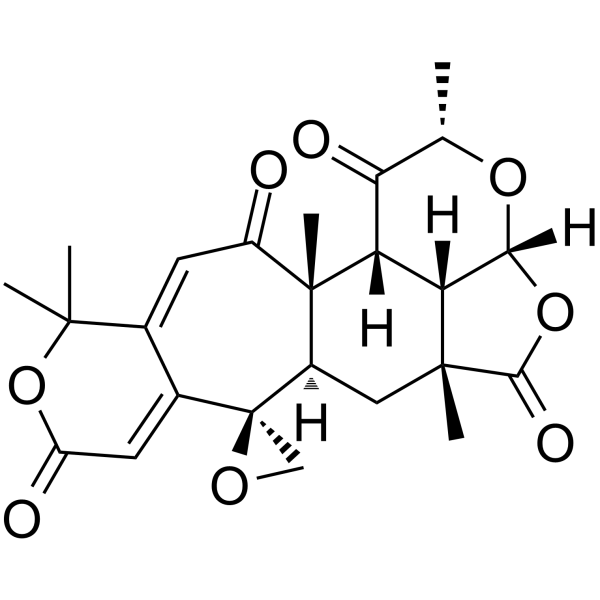 0 ImagesCat. No.: HY-N10175CAS No.: 959772-67-9keleyacetal C, a meroterpenoid compound with anti-inflammatory effects via inhibiting NF-κB, ERK1/2 and IRF3 signaling pathways. Berkeleyacetal C significantly inhibits the expression of iNOS and the following NO production by macrophages. Berkeleyacetal C inhibits expression and secretion of key pro-inflammatory factors and chemokines (TNF-α, IL-6, IL-1β, MIP-1α, and MCP-1). Berkeleyacetal C also inhibits activation of neutrophils and reactive oxygen species (ROS) production. Berkeleyacetal C can be used for the study of inflammatory disorders.
-
N-Desmethyl clomipramine-d6
 0 ImagesCat. No.: HY-12388S1Synonyms: Desmethylclomipramine-d6; Norclomipramine-d6N-Desmethyl clomipramine-d6 (Desmethylclomipramine-d6; Norclomipramine-d6) is the deuterated-labeled N-Desmethyl clomipramine (HY-12388). N-Desmethyl clomipramine (Desmethylclomipramine; Norclomipramine) is the orally active major active metabolite of the tricyclic antidepressant Clomipramine (HY-B0457A), possessing multiple activities including anti-inflammatory, antioxidant, antibacterial, and antiparasitic effects. N-Desmethyl clomipramine blocks autophagosome-lysosome fusion, leading to the accumulation of LC3-II, p62, ATG7, WIPI2, and ATG5-12, reactivates the p53/p21 pathway, induces apoptosis through C-PARP and C-CAS3, and inhibits the proliferation, migration, and invasion of renal cancer cells. N-Desmethyl clomipramine inhibits LdTOPIA, inducing R-loop accumulation in the nucleus of Leishmania, ultimately causing parasite death. N-Desmethyl clomipramine can be used for research on depression, metastatic renal cell carcinoma, and leishmaniasis.



