



UF010
Based on 2 publication(s) in Google Scholar
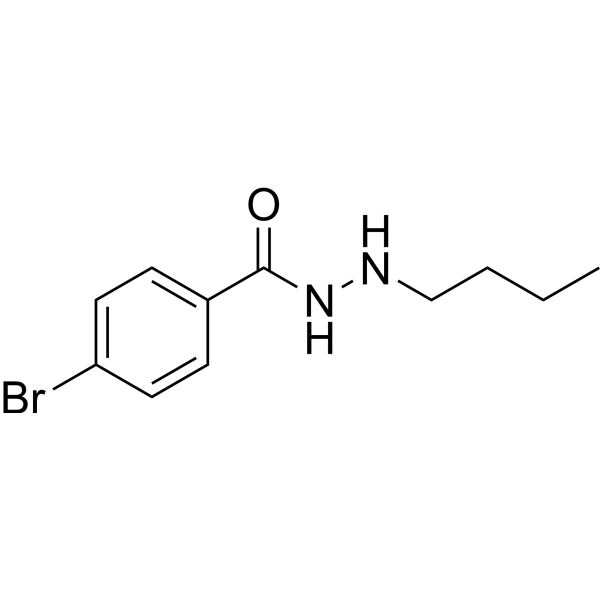
UF010 is a selective inhibitor of class I HDAC. UF010 has cytotoxicity to cancer cells and reduces neuroinflammation in the hippocampus. UF010 can be used for the research of neurological diseases.
For research use only. We do not sell to patients.
- Purity : 99.83%
- CAS No.: 537672-41-6
- Formula: C11H15BrN2O
- Molecular Weight:271.15
-
Storage:Powder -20°C, 3 years , 4°C, 2 years ; In solvent -80°C, 2 years , -20°C, 1 year

To place orders, for customer services and technical support, please contact: MedChemExpress USA
Tel: 609-228-6898 E-mail: [email protected] [email protected]


-
 Biological Activity
-
Chemical Information
-
Solvent & Solubility
- Protocols
- Purity & Documentation
- References
-
 Help & FAQs


-
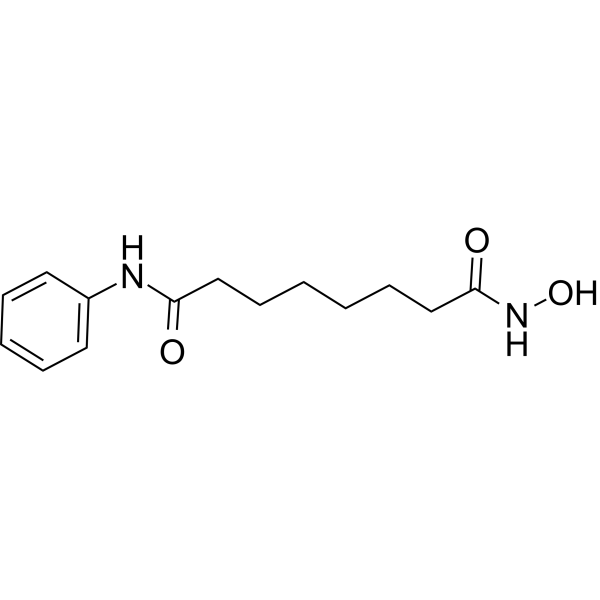
HY-10221
VorinostatHDAC Inhibitor -
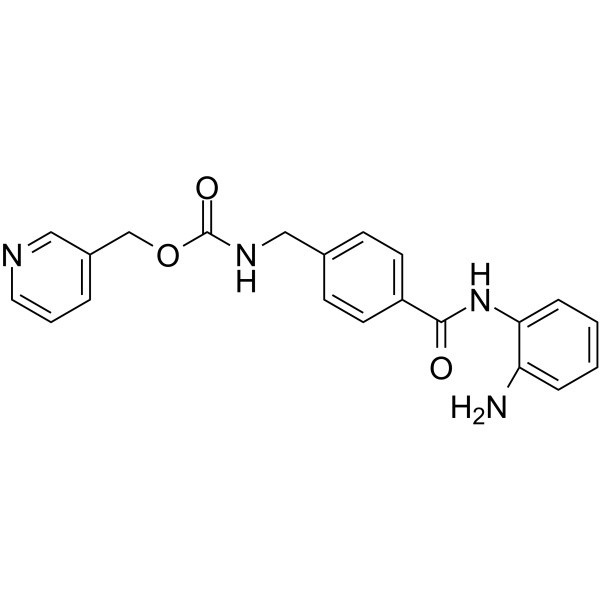
HY-12163
EntinostatHDAC Class I Inhibitor -
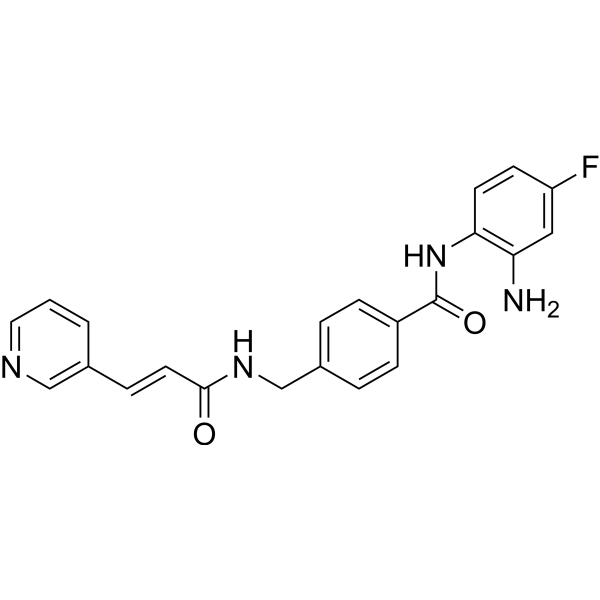
HY-109015
TucidinostatHDAC Inhibitor -
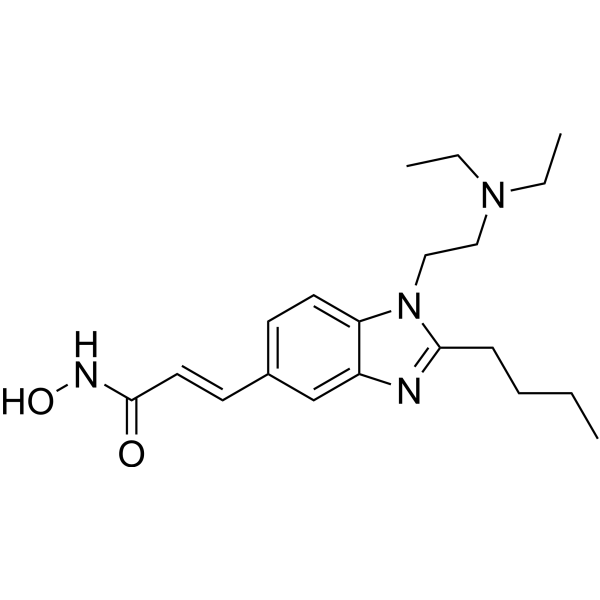
HY-13322
PracinostatHDAC/MBLAC2 Inhibitor -
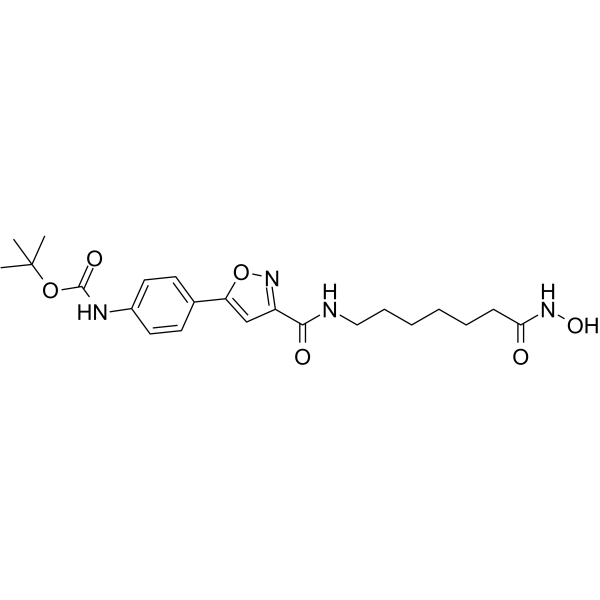
HY-18613
CAY10603HDAC Inhibitor -
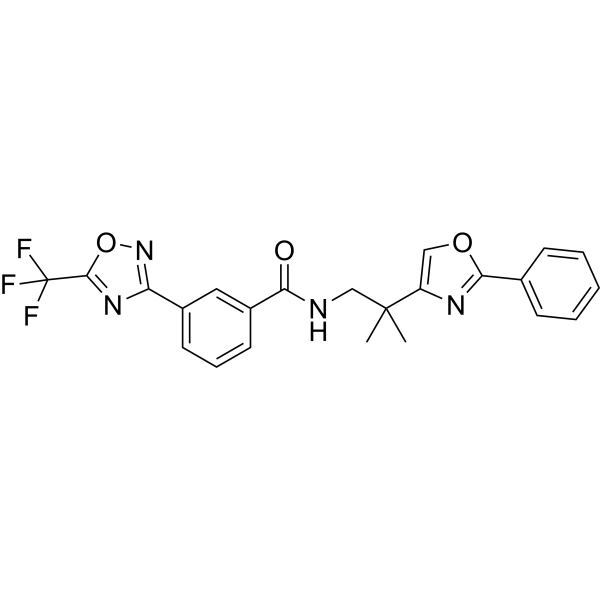
HY-18361
TMP195HDAC Inhibitor -
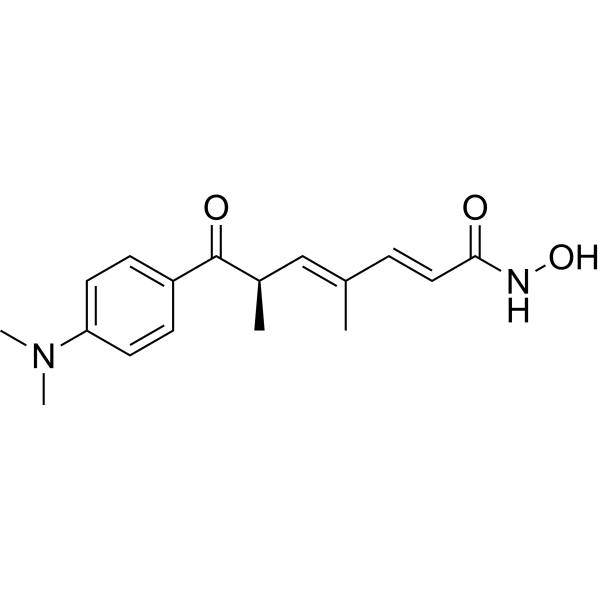
HY-15144
Trichostatin AHDAC Class I/II Inhibitor -
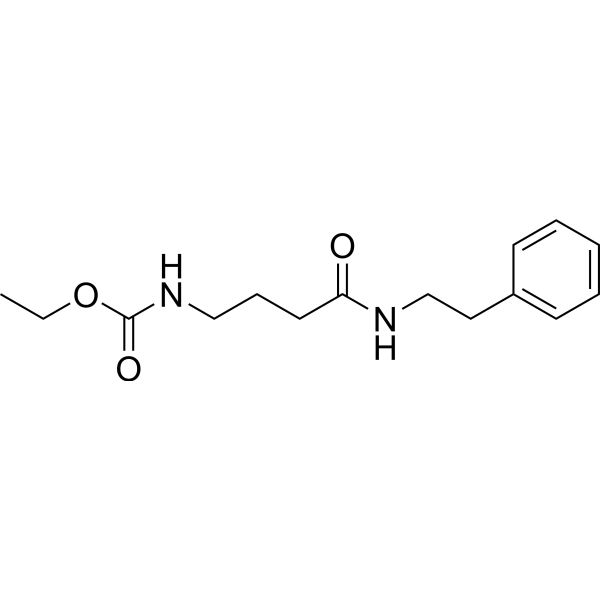
HY-N0931
Santacruzamate AHDAC2 Inhibitor -
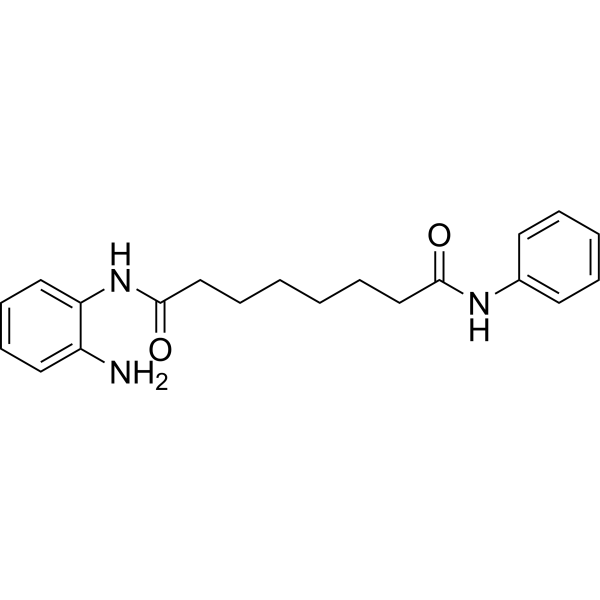
HY-19350
BML-210HDAC Inhibitor -
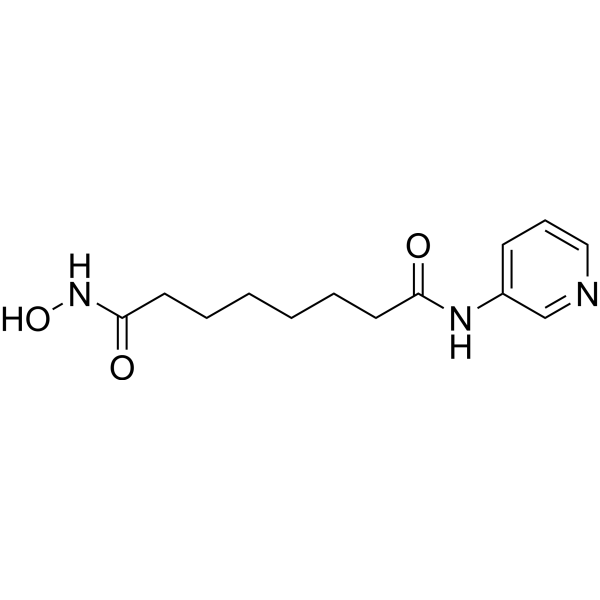
HY-13216
PyroxamideHDAC1 Inhibitor -
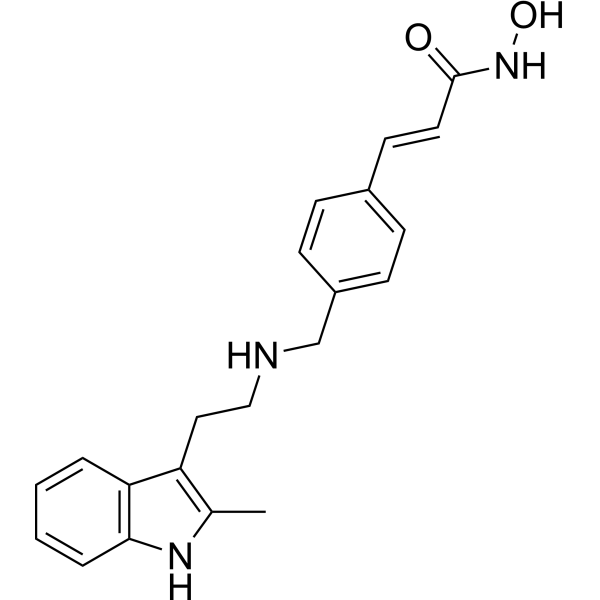
HY-10224
PanobinostatHDAC Inhibitor -
HY-15224
PCI-34051Apoptosis Inducer
Publications Citing Use of MedChemExpress (MCE) UF010
More

Biological Activity
Description
IC50 & Target
[1]|
HDAC1 1.42 μM () |
HDAC2 0.32 μM (IC50) |
HDAC3 256.7 nM (IC50) |
HDAC6 18.93 μM (IC50) |
HDAC8 3.97 μM (IC50) |
IL-6 |
Cellular Effect
|
Cell Line

|
Type | Value | Description | References |
|---|---|---|---|---|
| 4T1 | IC50 |
7.72 μM
Compound: UF010
|
Cytotoxicity against mouse 4T1 cells assessed as inhibition of cell growth incubated for 72 hrs by MTT assay
Cytotoxicity against mouse 4T1 cells assessed as inhibition of cell growth incubated for 72 hrs by MTT assay
|
[PMID: 37660352] |
| 4T1 | IC50 |
8.4 μM
Compound: UF010
|
Cytotoxicity against mouse 4T1 cells assessed as inhibition of cell viability for 72 hrs by MTT assay
Cytotoxicity against mouse 4T1 cells assessed as inhibition of cell viability for 72 hrs by MTT assay
|
[PMID: 35635949] |
| A549 | IC50 |
20.81 μM
Compound: UF010
|
Cytotoxicity against human A549 cells assessed as inhibition of cell viability for 72 hrs by MTT assay
Cytotoxicity against human A549 cells assessed as inhibition of cell viability for 72 hrs by MTT assay
|
[PMID: 35635949] |
| B16-F10 | IC50 |
2.41 μM
Compound: UF010
|
Cytotoxicity against mouse B16-F10 cells assessed as inhibition of cell viability for 72 hrs by MTT assay
Cytotoxicity against mouse B16-F10 cells assessed as inhibition of cell viability for 72 hrs by MTT assay
|
[PMID: 35635949] |
| HEK293 | IC50 |
98.52 μM
Compound: UF010
|
Cytotoxicity against human HEK293 cells assessed as inhibition of cell viability for 72 hrs by MTT assay
Cytotoxicity against human HEK293 cells assessed as inhibition of cell viability for 72 hrs by MTT assay
|
[PMID: 35635949] |
| HEK293 | IC50 |
98.52 μM
Compound: UF010
|
Cytotoxicity against human HEK293 cells assessed as inhibition of cell growth incubated for 72 hrs by MTT assay
Cytotoxicity against human HEK293 cells assessed as inhibition of cell growth incubated for 72 hrs by MTT assay
|
[PMID: 37660352] |
| MCF-10A | IC50 |
99.3 μM
Compound: UF010
|
Cytotoxicity against human MCF-10A cells assessed as inhibition of cell growth incubated for 72 hrs by MTT assay
Cytotoxicity against human MCF-10A cells assessed as inhibition of cell growth incubated for 72 hrs by MTT assay
|
[PMID: 37660352] |
| MCF7 | IC50 |
15.36 μM
Compound: UF010
|
Cytotoxicity against human MCF7 cells assessed as inhibition of cell growth incubated for 72 hrs by MTT assay
Cytotoxicity against human MCF7 cells assessed as inhibition of cell growth incubated for 72 hrs by MTT assay
|
[PMID: 37660352] |
| MCF7 | IC50 |
17.93 μM
Compound: UF010
|
Cytotoxicity against human MCF7 cells assessed as inhibition of cell viability for 72 hrs by MTT assay
Cytotoxicity against human MCF7 cells assessed as inhibition of cell viability for 72 hrs by MTT assay
|
[PMID: 35635949] |
| MDA-MB-231 | IC50 |
24.74 μM
Compound: UF010
|
Cytotoxicity against human MDA-MB-231 cells assessed as inhibition of cell growth incubated for 72 hrs by MTT assay
Cytotoxicity against human MDA-MB-231 cells assessed as inhibition of cell growth incubated for 72 hrs by MTT assay
|
[PMID: 37660352] |
| MDA-MB-231 | IC50 |
24.74 μM
Compound: UF010
|
Cytotoxicity against wild type human MDA-MB-231 cells assessed as reduction in cell viability incubated for 72 hrs by MTT assay
Cytotoxicity against wild type human MDA-MB-231 cells assessed as reduction in cell viability incubated for 72 hrs by MTT assay
|
[PMID: 37660352] |
| MDA-MB-453 | IC50 |
25.34 μM
Compound: UF010
|
Cytotoxicity against human MDA-MB-453 cells assessed as inhibition of cell growth incubated for 72 hrs by MTT assay
Cytotoxicity against human MDA-MB-453 cells assessed as inhibition of cell growth incubated for 72 hrs by MTT assay
|
[PMID: 37660352] |
| RAW264.7 | IC50 |
121.1 μM
Compound: UF010
|
Cytotoxicity against mouse RAW264.7 cells assessed as inhibition of cell viability for 72 hrs by MTT assay
Cytotoxicity against mouse RAW264.7 cells assessed as inhibition of cell viability for 72 hrs by MTT assay
|
[PMID: 35635949] |
In Vitro
UF010 (500 nM, 4 days) leads to a signifcant reduction in rod production with a concomitant increase in Müller cells[1]. UF010 (10-100 μM, 72 h) has cytotoxicity to B16F10 cells, MCF-7 cells, A549 cells, 4T1 cells, HEK-293 cells and HCEC cells[2].
MedChemExpress (MCE) has not independently confirmed the accuracy of these methods. They are for reference only.
-
Cell Line:B16F10 cells, MCF-7 cells, A549 cells, 4T1 cells, HEK-293 cells and HCEC cells
-
Concentration:10 μM, 100 μM
-
Incubation Time:72 h
-
Result:Showed IC50 values of 2.41 μM for B16F10 cells, 20.81 μM for A549 cells, 17.93 μM for MCF-7 cells, 8.40 μM for 4T1 cells, 98.52 μM for HEK-293 cells, 95.4 μM for HCEC cells.
In Vivo
MedChemExpress (MCE) has not independently confirmed the accuracy of these methods. They are for reference only.
-
Animal Model:postoperative cognitive dysfunction (POCD) mice[4]
-
Dosage:15 mg/kg
-
Administration:Intraperitoneal injection (i.p.)
-
Result:Weakened the infiltration of CD4+ T cells and NK cells in hippocampal tissues. Reduced inflammatory parameters in serum and hippocampal tissues, such as interleukin 6 (IL-6), C-reactive protein (CRP), and tumor necrosis factor alpha (TNF-α) levels. Activated the NF-κB/p65, JAK/STAT and TLR/MyD88 pathways.
-
Animal Model:4T1-Luc tumor-bearing mouse model[5]
-
Dosage:15 mg/kg
-
Administration:Intraperitoneal injection (i.p.)
-
Result:Inhibited the tumor growth rate percentage to 55.56, 38.36, 39.52% at days 7, 14, and 21. Induced high levels of ROS generation, causing apoptosis-mediated tumor cell death.


Chemical Information
-
CAS No. 537672-41-6
-
Appearance Solid
-
Molecular Weight 271.15
-
Formula C11H15BrN2O
-
Color White to off-white
-
SMILES
O=C(NNCCCC)C1=CC=C(Br)C=C1
-
Shipping
Room temperature in continental US; may vary elsewhere.
-
Storage
Powder -20°C 3 years 4°C 2 years In solvent -80°C 2 years -20°C 1 year


Publications (2)
-
Journal Impact Factor
-
Most Recent


Solvent & Solubility
In Vitro:
DMSO : ≥ 100 mg/mL (368.80 mM; Hygroscopic DMSO has a significant impact on the solubility of product, please use newly opened DMSO)
* "≥" means soluble, but saturation unknown.
Please refer to the solubility information to select the appropriate solvent. Once prepared, please aliquot and store the solution to prevent product inactivation from repeated freeze-thaw cycles.
Storage method and period of stock solution: -80°C, 2 years; -20°C, 1 year. When stored at -80°C, please use it within 2 years. When stored at -20°C, please use it within 1 year.
Please refer to the solubility information to select the appropriate solvent. Once prepared, please aliquot and store the solution to prevent product inactivation from repeated freeze-thaw cycles.
Storage method and period of stock solution: -80°C, 2 years; -20°C, 1 year. When stored at -80°C, please use it within 2 years. When stored at -20°C, please use it within 1 year.
Concentration (start) × Volume (start) = Concentration (final) × Volume (final)
In Vivo:
Select the appropriate dissolution method based on your experimental animal and administration route.
- For the following dissolution methods, please ensure to first prepare a clear stock solution using an In Vitro approach and then sequentially add co-solvents:
- To ensure reliable experimental results, the clarified stock solution can be appropriately stored based on storage conditions. As for the working solution for In Vivo experiments, it is recommended to prepare freshly and use it on the same day.
- The percentages shown for the solvents indicate their volumetric ratio in the final prepared solution. If precipitation or phase separation occurs during preparation, heat and/or sonication can be used to aid dissolution.
Add each solvent one by one: 10% DMSO 40% PEG300 5% Tween-80 45% Saline
Solubility: ≥ 2.5 mg/mL (9.22 mM); Clear solution
This protocol yields a clear solution of ≥ 2.5 mg/mL (saturation unknown).
Taking 1 mL working solution as an example, add 100 μL DMSO stock solution (25.0 mg/mL) to 400 μL PEG300, and mix evenly; then add 50 μL Tween-80 and mix evenly; then add 450 μL Saline to adjust the volume to 1 mL.
Preparation of Saline: Dissolve 0.9 g sodium chloride in ddH₂O and dilute to 100 mL to obtain a clear Saline solution.
Add each solvent one by one: 10% DMSO 90% (20% SBE-β-CD in Saline)
Solubility: ≥ 2.5 mg/mL (9.22 mM); Clear solution
This protocol yields a clear solution of ≥ 2.5 mg/mL (saturation unknown).
Taking 1 mL working solution as an example, add 100 μL DMSO stock solution (25.0 mg/mL) to 900 μL 20% SBE-β-CD in Saline, and mix evenly.
Preparation of 20% SBE-β-CD in Saline (4°C, storage for one week): 2 g SBE-β-CD powder is dissolved in 10 mL Saline, completely dissolve until clear.
In Vivo Dissolution Calculator
Please enter the basic information of animal experiments:
-
-
-
-
Recommended: Prepare an additional quantity of animals to account for potential losses during experiments.
Please enter your animal formula composition:
-
%DMSO +
Recommended: Keep the proportion of DMSO in working solution below 2% if your animal is weak.
-
%+
-
+%Tween-80 + +
-
%Saline +
The co-solvents required include: DMSO, . All of co-solvents are available by MedChemExpress (MCE). , Tween 80. All of co-solvents are available by MedChemExpress (MCE).
Working solution concentration: 0.22 mg/mL
Method for preparing stock solution: mg drug dissolved in μL DMSO. Stock solution concentration: mg/mL.
1. Take μL DMSO stock solution;
2. Add μL .
μL , mix evenly;
3. Then add μL Tween 80, mix evenly;
4. Then add μL
Please ensure that the stock solution in the first step is dissolved to a clear state, and add co-solvents in sequence. You can use ultrasonic heating (ultrasonic cleaner, recommended frequency 20-40 kHz), vortexing, etc. to assist dissolution.


Purity & Documentation
-
Data Sheet (277 KB)
-
SDS (392 KB)
- English - EN (392 KB)
- Français - FR (392 KB)
- Deutsch - DE (392 KB)
- Norwegian - NO (392 KB)
- Español - ES (392 KB)
- Swedish - SV (392 KB)
- Italian - IT (392 KB)
- Korean - KR (392 KB)
- Portuguese - PT (392 KB)
-
Handling Instructions (2659 KB)
References
[1]. Mattar P, et al. A Casz1–NuRD complex regulates temporal identity transitions in neural progenitors [J]. Scientific reports, 2021, 11(1): 3858. [Content Brief]
[2]. Pulya S, et al. Selective inhibition of histone deacetylase 3 by novel hydrazide based small molecules as therapeutic intervention for the treatment of cancer [J]. European Journal of Medicinal Chemistry, 2022, 238: 114470. [Content Brief]
[3]. Dai Y, et al. Classical HDACs in the regulation of neuroinflammation[J]. Neurochemistry International, 2021, 150: 105182. [Content Brief]
[4]. Yang C X, et al. The inhibitory effects of class I histone deacetylases on hippocampal neuroinflammatory regulation in aging mice with postoperative cognitive dysfunction [J]. European Review for Medical & Pharmacological Sciences, 2020, 24(19). [Content Brief]
[5]. Pulya S, et al. Selective HDAC3 Inhibitors with Potent In Vivo Antitumor Efficacy against Triple-Negative Breast Cancer [J]. Journal of Medicinal Chemistry, 2023, 66(17): 12033-12058. [Content Brief]


Complete Stock Solution Preparation Table
Please refer to the solubility information to select the appropriate solvent. Once prepared, please aliquot and store the solution to prevent product inactivation from repeated freeze-thaw cycles.
Storage method and period of stock solution: -80°C, 2 years; -20°C, 1 year. When stored at -80°C, please use it within 2 years. When stored at -20°C, please use it within 1 year.
| Optional Solvent | Concentration Solvent Mass | 1 mg | 5 mg | 10 mg | 25 mg |
|---|---|---|---|---|---|
| DMSO | 1 mM | 3.6880 mL | 18.4400 mL | 36.8800 mL | 92.1999 mL |
| 5 mM | 0.7376 mL | 3.6880 mL | 7.3760 mL | 18.4400 mL | |
| 10 mM | 0.3688 mL | 1.8440 mL | 3.6880 mL | 9.2200 mL | |
| 15 mM | 0.2459 mL | 1.2293 mL | 2.4587 mL | 6.1467 mL | |
| 20 mM | 0.1844 mL | 0.9220 mL | 1.8440 mL | 4.6100 mL | |
| 25 mM | 0.1475 mL | 0.7376 mL | 1.4752 mL | 3.6880 mL | |
| 30 mM | 0.1229 mL | 0.6147 mL | 1.2293 mL | 3.0733 mL | |
| 40 mM | 0.0922 mL | 0.4610 mL | 0.9220 mL | 2.3050 mL | |
| 50 mM | 0.0738 mL | 0.3688 mL | 0.7376 mL | 1.8440 mL | |
| 60 mM | 0.0615 mL | 0.3073 mL | 0.6147 mL | 1.5367 mL | |
| 80 mM | 0.0461 mL | 0.2305 mL | 0.4610 mL | 1.1525 mL | |
| 100 mM | 0.0369 mL | 0.1844 mL | 0.3688 mL | 0.9220 mL |


UF010 Related Classifications
HY-18976 Related Classifications
 Powered by Bioz