45 Results for "

gastric cancer cell migration

" in MedChemExpress (MCE) Product Catalog:
Products (45)

45 Results for "gastric cancer cell migration" in MCE Product Catalog:

37
37 Publications Verification
Cat. No.: HY-16954
CAS No.: 1818885-28-7
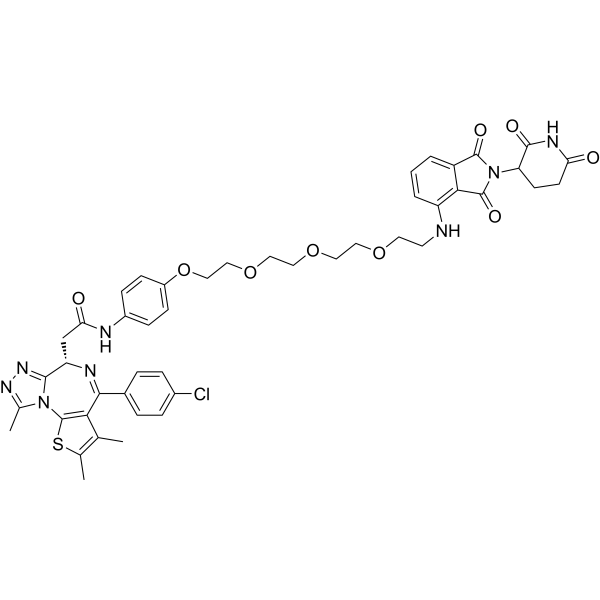
ARV-825 is a BET protein PROTAC degrader that recruits cereblon, and it targets BRD2, BRD3, and BRD4 for degradation via the ubiquitin-proteasome pathway. ARV-825 downregulates c-MYC, PLK1, MYCN, CDK4/6, JAK2, pSTAT3/5, PIM1, and Bcl-xL, upregulates p21 and p27, and modulates H3K27Ac-mediated transcription, the G2/M checkpoint, the Wnt/β-catenin pathway, and amino acid transport pathways. ARV-825 induces G1 phase cell cycle arrest, caspase 3/PARP-mediated apoptosis, DNA damage, and reactive oxygen species (ROS) production, reduces mitochondrial respiration, and simultaneously inhibits cell proliferation, clonogenic growth, and cell migration. ARV-825 is used in research on gastric cancer, leukemia, neuroblastoma, and cholangiocarcinoma .
loading...
    loading...
4
4 Cited Publications
Cat. No.: HY-103363
CAS No.: 247580-43-4
Purity:  99.58%
Research Areas:  

Inflammation/Immunology Cancer

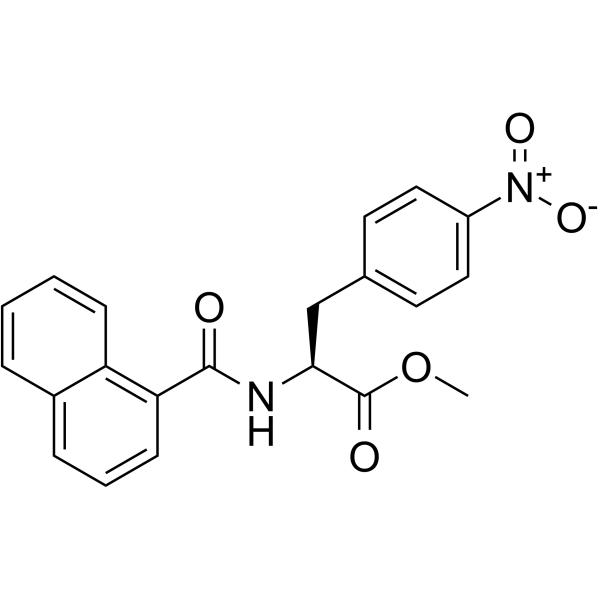
SB-328437 is a potent, selective non-peptide CCR3 antagonist with an IC50 of 4.5 nM. SB-328437 can inhibit eosinophil migration induced by eotaxin, eotaxin-2, and monocyte chemotactic protein-4. In addition, SB-328437 can sensitize 5-FU (HY-90006)-resistant gastric cancer cells. SB-328437 can also reduce the recruitment of neutrophils to the lungs and pulmonary inflammation during acute inflammation. SB-328437 can be used in the research of inflammation-related diseases .
loading...
    loading...
3
3 Cited Publications
Cat. No.: HY-108628
CAS No.: 251356-45-3
Purity:  99.36
Target:  

PDGFR

Research Areas:  

Cancer

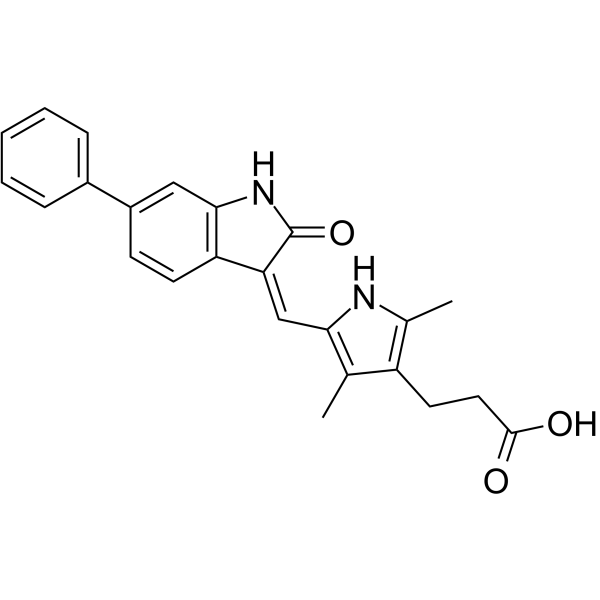
SU16f is a potent and selective PDGFRβ inhibitor with IC50s of 10 nM, 140 nM, 2.29 μM for PDGFRβ, VEGF-R2, FGF-R1, respectively . Neutralization of PDGFRβ receptor by SU16f blocks the promoting role of GC-MSCs (gastric cancer-derived mesenchymal stem cells) conditioned medium in gastric cancer cell proliferation and migration .
loading...
    loading...
3
3 Cited Publications
Cat. No.: HY-N4185
CAS No.: 61153-77-3
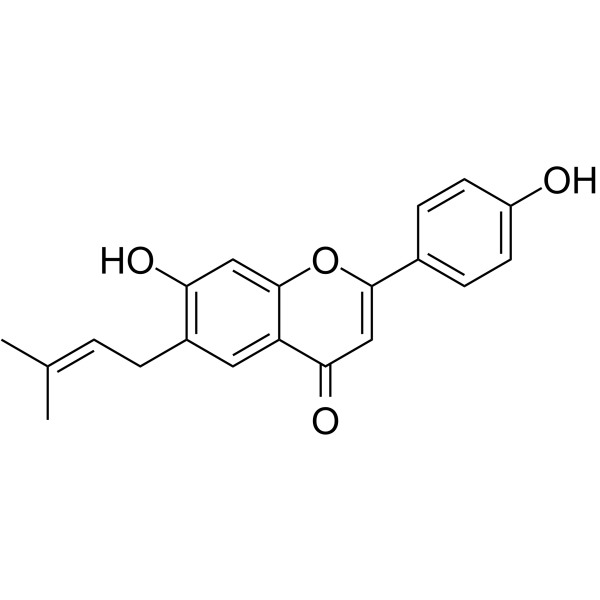
Licoflavone A is an orally active PTP1B/VEGFR-2 inhibitor, with an IC50 of 54.5 μM against PTP1B, an IC50 of 14.36 μM and a Kd of 142.38 nM against human VEGFR-2. Licoflavone A blocks the PI3K/AKT and MEK/ERK signaling pathways. Licoflavone A induces G1 phase cell cycle arrest, apoptosis via the intrinsic mitochondrial pathway (apoptosis), and inhibits migration, invasion and epithelial-mesenchymal transition (EMT) of gastric cancer cells. Licoflavone A inhibits the proliferation of gastric cancer cells in vitro and in xenograft models. Licoflavone A reduces the expression levels of HIF-1α, GLUT1, LDHA, PKM2 and HK2 in hypoxic gastric cancer cells, decreases glucose uptake and suppresses glycolysis. Licoflavone A can be used in research related to gastric cancer, type 2 diabetes and obesity .
loading...
    loading...
1
1 Cited Publications
Cat. No.: HY-N0554
CAS No.: 123748-68-5
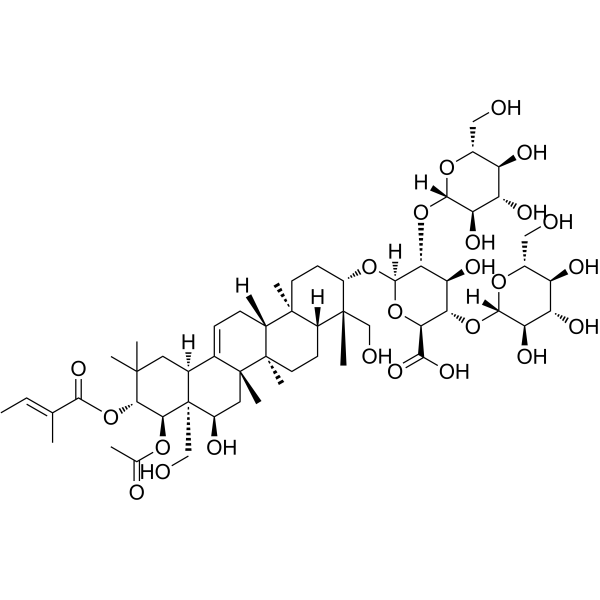
Escin IA is an oral LOXL2 inhibitor and EMT inhibitor, with selectivity for LOXL2-expressing cells. Escin IA suppresses invasion, migration, and metastasis of breast cancer cells, and acts as the primary anti-TNBC metastasis constituent of Aesculus chinensis Bunge fruit saponin fraction. Escin IA can be used for the research of triple-negative breast cancer, acute inflammation, and ethanol-induced gastric mucosal lesions .
loading...
    loading...
1
1 Cited Publications
Cat. No.: HY-12873
CAS No.: 361185-42-4
Purity:  ≥98.0%
Target:  

Ras p38 MAPK JNK

Research Areas:  

Cancer

RBC8 is a selective and allosteric RALA and RALB inhibitor. RBC8 stabilizes the inactive GDP-bound state of Ral, preventing its activation. RBC8 promotes the phosphorylation of proteins related to the MAPK/JNK pathway. RBC8 has the activity of inhibiting tumor cell proliferation, migration and invasion. RBC8 is used in the study of various cancers such as lung cancer, gastric cancer, and multiple myeloma .
loading...
    loading...
1
1 Cited Publications
Cat. No.: HY-N4247
CAS No.: 75629-19-5
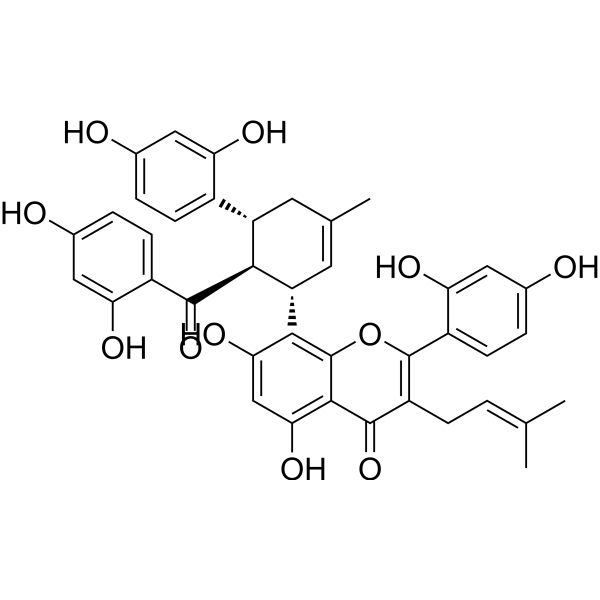
Kuwanon G is a flavonoid compound and an antagonist of the bombesin receptor. Kuwanon G has multiple activities such as bactericidal, anti-tumor, anti-inflammatory, antioxidant, anti-atherosclerotic, and neuroprotective effects. Kuwanon G exhibits strong antibacterial activity against oral pathogens, especially cariogenic bacteria and periodontal pathogens. Kuwanon G can induce apoptosis and inhibit proliferation, migration, and invasion of tumor cells. Kuwanon G can be used in the research of diseases such as gastric cancer and atherosclerosis .
loading...
    loading...
1
1 Cited Publications
Cat. No.: HY-155115
CAS No.: 2904571-94-2
Purity:  98.88%
Research Areas:  

Cancer

LSD1-IN-27 is an orally active LSD1 inhibitor (IC50: 13 nM). LSD1-IN-27 inhibits the stemness and migration of gastric cancer cells. LSD1-IN-27 also reduces the expression of PD-L1 in BGC-823 and MFC cells. LSD1-IN-27 can enhance T cell immune response in gastric cancer .
loading...
    loading...
Cat. No.: HY-P991567
Synonyms: VX5/5261

Target:  

CXCR

Research Areas:  

Inflammation/Immunology Cancer

VX5 (VX5/5261) is a humanized IgG1κ monoclonal antibody inhibitor targeting BCA-1/CXCL13. VX5 significantly inhibits human CXCL13-mediated internalization of CXCR5, blocks both human and mouse CXCL13-dependent B-cells chemotaxis and migration. VX5 can be used to study autoimmune diseases like multiple sclerosis and arthritis, and cancers like gastric lymphomas and colon cancer .
loading...
    loading...
Cat. No.: HY-16441
CAS No.: 150863-82-4
Synonyms: S-1; TS-1
Research Areas:  

Cancer

Tegafur-gimeracil-oteracil potassium (S-1; TS-1) is an orally active anticancer agent composed of Tegafur (HY-17400), Gimeracil (HY-17469), and Oteracil potassium (HY-17511). Tegafur-gimeracil-oteracil potassium inhibits the proliferation, migration and invasion of endometrial cancer cells and induces apoptosis by blocking the PI3K/AKT/mTOR signaling pathway. Tegafur-gimeracil-oteracil potassium can be used in research related to endometrial cancer and gastric cancer with peritoneal metastasis .
loading...
    loading...
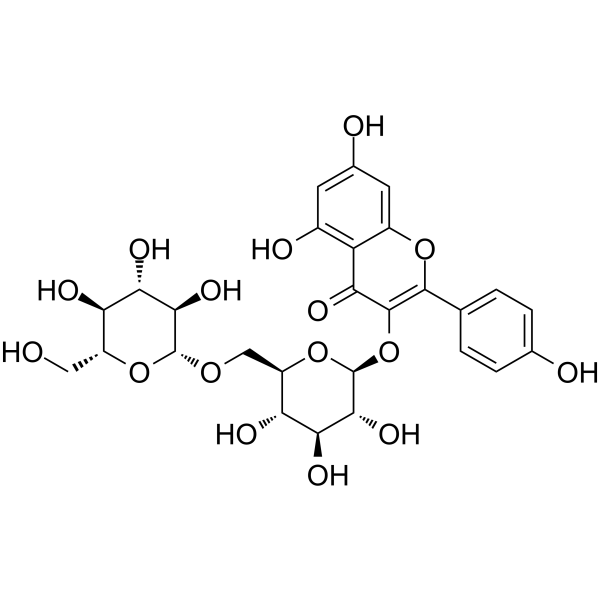
Cat. No.: HY-N1510
CAS No.: 22149-35-5
Kaempferol 3-O-gentiobioside is an orally active flavonoid, with a Ka value of 57 µM against human NOTCH1 and an IC50 value of 50 μM against α-glucosidase. Kaempferol 3-O-gentiobioside inhibits the NOTCH signaling pathway. It downregulates the expression of TLR4 and NLRP3, and suppresses the activation and nuclear translocation of NF-κB. Kaempferol 3-O-gentiobioside inhibits the expression of MUC5AC, reduces nitrite and ROS levels, and attenuates excessive mucus secretion. It exhibits antibacterial activity, reducing the formation and growth of MRSA biofilms. Kaempferol 3-O-gentiobioside blocks the TGF-β/ALK5/Smad signaling pathway and inhibits epithelial-mesenchymal transition. It suppresses the proliferation, migration, invasion and metastatic growth of tumor cells. Kaempferol 3-O-gentiobioside alleviates airway inflammation and mucus hypersecretion in mice with allergic asthma . It reduces the volume of ovarian cancer xenografts in mice. Kaempferol 3-O-gentiobioside can be used in research related to allergic asthma, diabetes, MRSA infection, breast cancer, gastric cancer and ovarian cancer .
loading...
    loading...
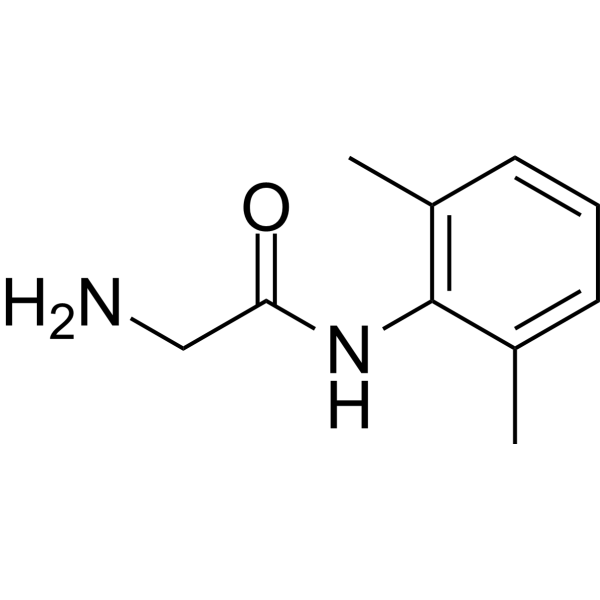
Cat. No.: HY-W357818
CAS No.: 18865-38-8
Synonyms: GX
Glycinexylidide (GX) is the active metabolite of Lidocaine. Lidocaine is a local agent that can suppress or relieve pain, that inhibits sodium channels involving complex voltage and dependence. Lidocaine also reduces the growth, migration and invasion of gastric cancer cells. Glycinexylidide has research potential for use in anesthesia, cancer, and cardiovascular disease .
loading...
    loading...
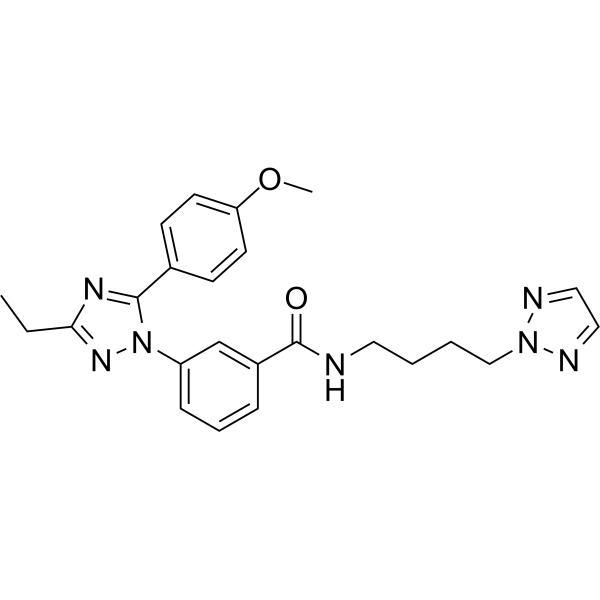
Cat. No.: HY-163084
CAS No.: 3032441-59-8
Research Areas:  

Cancer

HJ445A is an orally active myoferlin (MYOF) inhibitor with a Kd value of 0.17 μM against human targets. HJ445A directly binds to the MYOF-C2D domain to stabilize the MYOF protein, thereby regulating vesicle trafficking, cell proliferation, colony formation, migration and apoptosis processes in cancer cells, and exhibits anti-tumor efficacy. HJ445A can be used in gastric cancer-related research .
loading...
    loading...
Cat. No.: HY-168608
CAS No.: 1909225-07-5
Research Areas:  

Cancer

TRPM7-IN-1 (compound SUD), a benzoylurea derivative, is an effective TRPM7 inhibitor. TRPM7-IN-1 induces cell cycle arrest and apoptosis, decreases the migration of MCF-7 and BGC-823 cells. TRPM7-IN-1 decreases vimentin expression and increases E-cadherin expression. TRPM7-IN-1 potentially reduces the TRPM7-like current and decreases TRPM7 expression through the PI3K/Akt signaling pathway. TRPM7-IN-1 is a potential agent to suppress the metastasis of breast and gastric cancer by inhibiting TRPM7 expression and function .
loading...
    loading...
Cat. No.: HY-162938
CAS No.: 3098980-02-7
Target:  

E1/E2/E3 Enzyme

Research Areas:  

Cancer

Skp2 inhibitor 3 is an orally active inhibitor of the Skp2-Cks1 complex, with an IC50 of 4.86 μM. Skp2 inhibitor 3 reduces Skp2 protein expression while upregulating the expression of p21 and p27. Skp2 inhibitor 3 inhibits colony formation and migration of cancer cells, and induces cell cycle arrest at the S phase. Skp2 inhibitor 3 suppresses tumor growth in xenograft mice. Skp2 inhibitor 3 can be used in the research of gastric cancer and prostate cancer .
loading...
    loading...
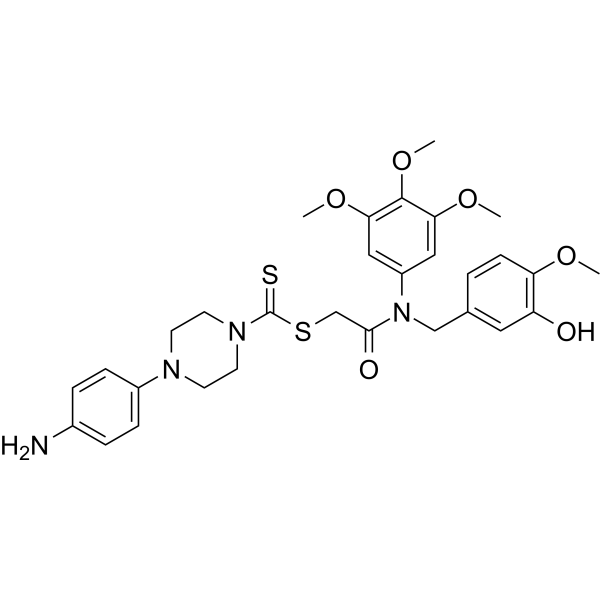
Cat. No.: HY-149249
CAS No.: 3043676-46-3
Purity:  98.01%
Research Areas:  

Cancer

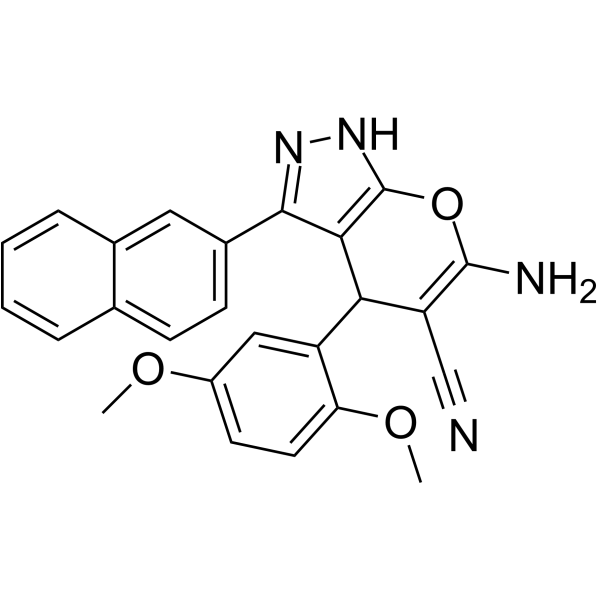
MY-943 is a potent tubulin polymerization and LSD1 inhibitor with anticancer activity. MY-943 induces G2/M phase arrest and apoptosis, and inhibits cell migration. MY-943 can be used for gastric cancer research .
loading...
    loading...
Cat. No.: HY-176237
CAS No.: 3077970-44-3
Target:  

NAMPT Apoptosis

Research Areas:  

Cancer

Nampt-IN-16 (Compound 9a) is an orally active NAMPT inhibitor with an IC50 of 0.15 μM. Nampt-IN-16 can reduce intracellular NAD + and ATP levels. Nampt-IN-16 can inhibit the proliferation, migration, and invasion, induce cell cycle arrest and apoptosis, and alter cellular metabolism of gastric cancer cells. Nampt-IN-16 can be used in the research of tumors such as gastric cancer .
loading...
    loading...
Cat. No.: HY-168895
CAS No.: 3125025-31-9
Target:  

AP-1 ERK Apoptosis

Research Areas:  

Cancer

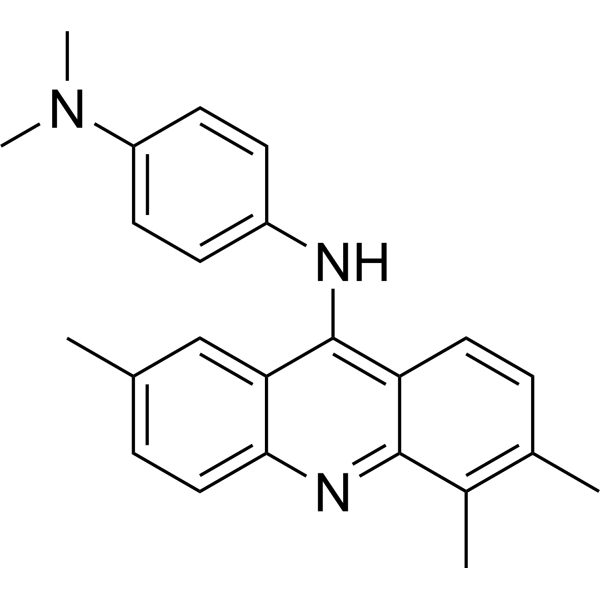
c-Fos-IN-1 (Compound P16) is a c-Jun inhibitor, and decreases mRNA levels and protein levels of c-Fos. c-Fos-IN-1 also inhibits the phosphorylation activity of ERK and the transcriptional activity of AP-1. c-Fos-IN-1 shows anticancer activity by inhibiting ERK/c-Fos/Jun pathway. c-Fos-IN-1 inhibits the proliferation and migration of gastric cancer cells (IC50: 2.31 μM for MGC-803 cell). c-Fos-IN-1 arrests cell cycle at G2/M phase and induces cancer cell apoptosis. c-Fos-IN-1 inhibits gastric cancer tumor growth .
loading...
    loading...
Cat. No.: HY-N4247R
CAS No.: 75629-19-5
Kuwanon G (Standard) is the analytical standard of Kuwanon G (HY-N4247). This product is intended for research and analytical applications. Kuwanon G is a flavonoid compound and an antagonist of the bombesin receptor. Kuwanon G has multiple activities such as bactericidal, anti-tumor, anti-inflammatory, antioxidant, anti-atherosclerotic, and neuroprotective effects. Kuwanon G exhibits strong antibacterial activity against oral pathogens, especially cariogenic bacteria and periodontal pathogens. Kuwanon G can induce apoptosis and inhibit proliferation, migration, and invasion of tumor cells. Kuwanon G can be used in the research of diseases such as gastric cancer and atherosclerosis .
loading...
    loading...
Cat. No.: HY-164374
CAS No.: 445007-59-0
Target:  

PAK

Research Areas:  

Cancer

AK963/40708899 is a potent PAK1 inhibitor. AK963/40708899 suppresses the proliferation of human gastric cancer cells by downregulation of PAK1-NF-κB-cyclinB1 pathway. AK963/40708899 induces cell cycle arrest at G2 phase and reduces the migration and invasion. AK963/40708899 inhibits the formation of filopodia and promots cell adhesion which in turn inhibits invasive potential of gastric cells by negatively regulating PAK1-LIMKl-cofilin and PAK1-ERK-FAK pathways .
loading...
    loading...

