



Diatrizoic acid

Based on 1 Customer Validation
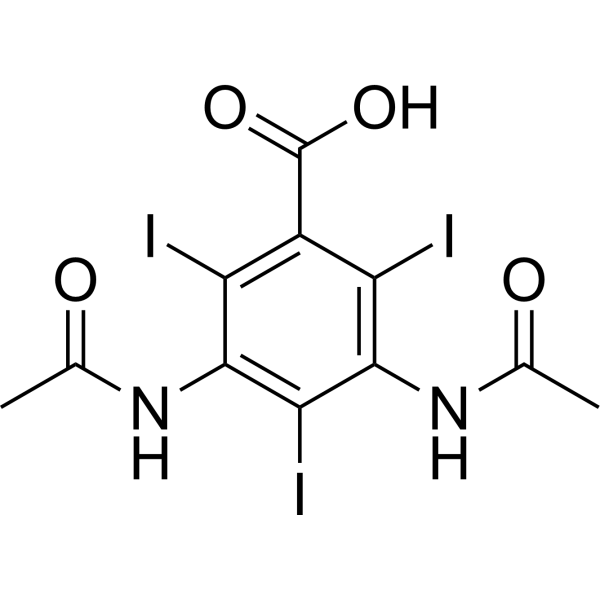
Diatrizoic acid (Diatrizoate) is an iodinated contrast agent. Diatrizoic acid induces intracellular calcium homeostasis dysregulation, activates calpain and caspase-12, and activates the executor caspase-3, inducing cell apoptosis. Diatrizoic acid induces mitophagy, oxidative stress, and TNFα secretion/inflammatory responses, while inhibiting mitochondrial respiratory function. Diatrizoic acid can be used for research on contrast-induced acute kidney injury (ci-aki).
For research use only. We do not sell to patients.
- Purity : 99.73%
- CAS No.: 117-96-4
- Formula: C11H9I3N2O4
- Molecular Weight:613.91
-
Storage:Powder -20°C, 3 years , 4°C, 2 years ; In solvent -80°C, 2 years , -20°C, 1 year

To place orders, for customer services and technical support, please contact: MedChemExpress USA
Tel: 609-228-6898 E-mail: [email protected] [email protected]


-
 Biological Activity
-
Chemical Information
-
Solvent & Solubility
- Protocols
- Purity & Documentation
- References
-
 Help & FAQs


-
HY-B0594
IohexolContrast Agent -
HY-B0926R
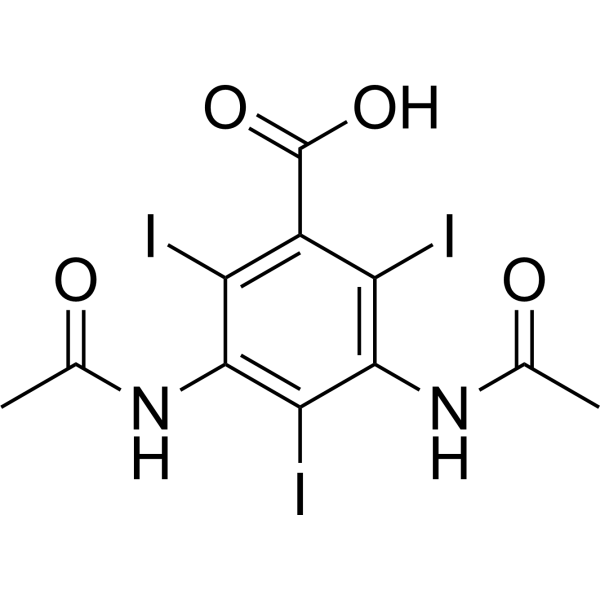
Diatrizoic acid (Standard)Reference Standard -
HY-B1426
IodixanolRadiocontrast Agent -
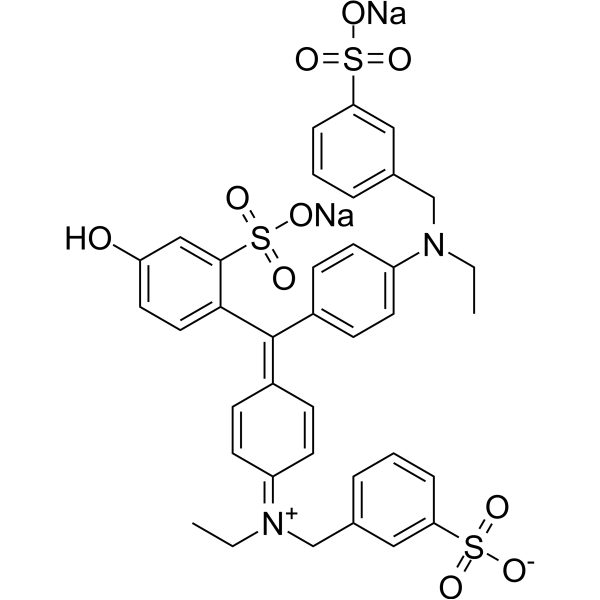
HY-D0914
Fast Green FCFSea Green Triarylmethane Food Dye -

HY-B0594R
Iohexol (Standard)Contrast Agent -
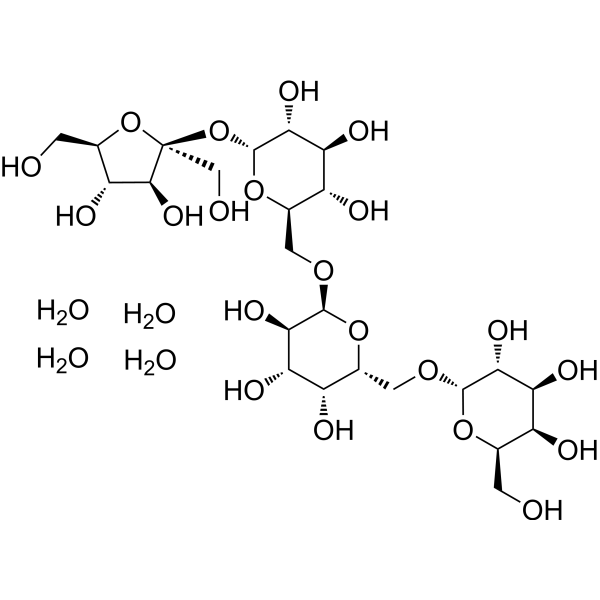
HY-113529
Stachyose tetrahydratePrebiotic -
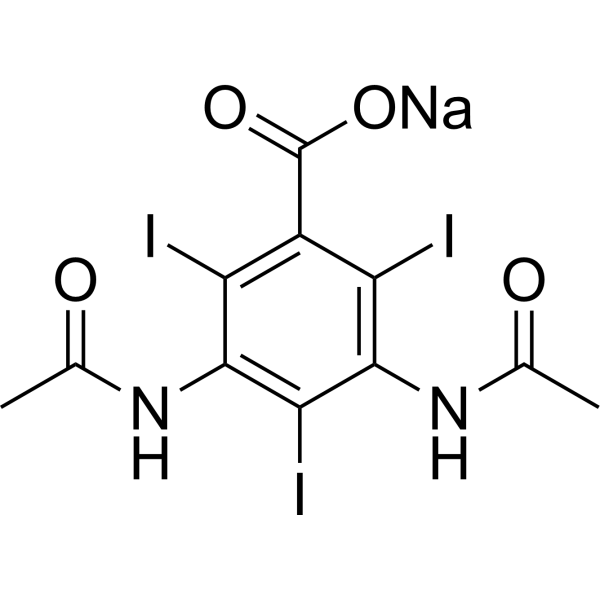
HY-B0926A
Sodium diatrizoateIodinated Contrast Agent -

HY-B0926AR
Sodium diatrizoate (Standard)Reference Standard -

HY-113529R
Stachyose tetrahydrate (Standard)Prebiotic
All Caspase Isoforms
More

Biological Activity
Description
IC50 & Target
[1]|
Caspase-12 |
calpain |
Caspase-3 |
TNFα |
In Vitro
Diatrizoic acid (15-30 mg I/mL; 24 h) activates caspase 3 and caspase 12 in HK-2 cells starting from 28 mg I/mL at 24 h, but does not activate caspase 4[1].
Diatrizoic acid (15-30 mg I/mL; 8-24 h) increases 4HNE protein adduct formation in HK-2 cells starting from 18 mg I/mL at 24 h[1].
Diatrizoic acid (30 mg I/mL; 24 h) induces LC3B conversion in HK-2 cells, which is prevented by intracellular calcium chelation and partially attenuated by calpain inhibition[1].
Diatrizoic acid (30 mg I/mL; 24 h) induces caspase 12 activation in HK-2 cells, and this activation is attenuated by intracellular calcium chelation and calpain inhibition[1].
Diatrizoic acid (15-30 mg I/mL; 8-24 h) impairs HK-2 mitochondrial respiration at 8 h, with maximal respiratory capacity and spare respiratory capacity decreasing from 15 mg I/mL, and a broader range of respiratory defects at 24 h[1].
Diatrizoic acid (15-30 mg I/mL; 2-24 h) induces mitochondrial toxicity in HK-2 cells, which is prevented by intracellular calcium chelation and partially attenuated by extracellular calcium chelation or IP3 receptor antagonism[1].
Diatrizoic acid (15-30 mg I/mL; 24 h) decreases total SOD and Cu/ZnSOD activity in HK-2 cells at 24 h, while MnSOD activity and expression remain unchanged[1].
Diatrizoic acid (30 mg I/mL; 24 h) induces 4HNE adduct formation in HK-2 cells, and this formation depends on intracellular calcium and calpain activity[1].
MedChemExpress (MCE) has not independently confirmed the accuracy of these methods. They are for reference only.
-
Cell Line:HK-2 cells
-
Concentration:2, 5, 10, 15, 18, 23, 28, and 30 mg I/mL
-
Incubation Time:2, 8, and 24 h
-
Result:Concentration-dependent decreases were evident at 8 h and 24 h, and a time-dependent decrease was evident across 2, 8, and 24 h.\nNo decrease in cell viability was seen at 2 h or 8 h.
At 24 h, viability decreased at 23 mg I/mL and higher, with additional decline at 28 and 30 mg I/mL.
-
Cell Line:HK-2 cells
-
Concentration:15, 18, 23, 28, and 30 mg I/mL
-
Incubation Time:8 and 24 h
-
Result:LC3BI decreased at 8 h at 18-30 mg I/mL and at 24 h at 15-30 mg I/mL.
LC3BII trended upward at 8 h but was not different; LC3BII increased at 24 h.
The LC3BII/LC3BI ratio increased at both 8 h and 24 h.\n4HNE adduct formation was unchanged at 8 h.
At 24 h, 4HNE adduct formation increased at 18-30 mg I/mL.
-
Cell Line:HK-2 cells
-
Concentration:18 and 30 mg I/mL
-
Incubation Time:24 h
-
Result:Cytosolic cytochrome c increased at 18 and 30 mg I/mL.
Mitochondrial cytochrome c decreased at 30 mg I/mL.
-
Cell Line:HK-2 cells
-
Concentration:15, 18, 23, 28, and 30 mg I/mL
-
Incubation Time:24 h
-
Result:Cleaved caspase 3 and caspase 12 expression increased at 28 and 30 mg I/mL.
Caspase 4 expression was unchanged.
Clinical Trial
| NCT Number | Sponsor | Condition | Start Date |
Phase

|
|---|---|---|---|---|
| NCT01329991 | 2011-05 | PHASE1 |


Chemical Information
-
CAS No. 117-96-4
-
Appearance Solid
-
Molecular Weight 613.91
-
Formula C11H9I3N2O4
-
Color White to off-white
-
SMILES
O=C(O)C1=C(I)C(NC(C)=O)=C(I)C(NC(C)=O)=C1I
-
Synonyms
Diatrizoate; Amidotrizoic acid
-
Shipping
Room temperature in continental US; may vary elsewhere.
-
Storage
Powder -20°C 3 years 4°C 2 years In solvent -80°C 2 years -20°C 1 year


Solvent & Solubility
In Vitro:
DMSO : 100 mg/mL (162.89 mM; Need ultrasonic; Hygroscopic DMSO has a significant impact on the solubility of product, please use newly opened DMSO)
Please refer to the solubility information to select the appropriate solvent. Once prepared, please aliquot and store the solution to prevent product inactivation from repeated freeze-thaw cycles.
Storage method and period of stock solution: -80°C, 2 years; -20°C, 1 year. When stored at -80°C, please use it within 2 years. When stored at -20°C, please use it within 1 year.
Concentration (start) × Volume (start) = Concentration (final) × Volume (final)
In Vivo:
Select the appropriate dissolution method based on your experimental animal and administration route.
- For the following dissolution methods, please ensure to first prepare a clear stock solution using an In Vitro approach and then sequentially add co-solvents:
- To ensure reliable experimental results, the clarified stock solution can be appropriately stored based on storage conditions. As for the working solution for In Vivo experiments, it is recommended to prepare freshly and use it on the same day.
- The percentages shown for the solvents indicate their volumetric ratio in the final prepared solution. If precipitation or phase separation occurs during preparation, heat and/or sonication can be used to aid dissolution.
Add each solvent one by one: 10% DMSO 40% PEG300 5% Tween-80 45% Saline
Solubility: ≥ 2.5 mg/mL (4.07 mM); Clear solution
This protocol yields a clear solution of ≥ 2.5 mg/mL (saturation unknown).
Taking 1 mL working solution as an example, add 100 μL DMSO stock solution (25.0 mg/mL) to 400 μL PEG300, and mix evenly; then add 50 μL Tween-80 and mix evenly; then add 450 μL Saline to adjust the volume to 1 mL.
Preparation of Saline: Dissolve 0.9 g sodium chloride in ddH₂O and dilute to 100 mL to obtain a clear Saline solution.
Add each solvent one by one: 10% DMSO 90% (20% SBE-β-CD in Saline)
Solubility: ≥ 2.5 mg/mL (4.07 mM); Clear solution
This protocol yields a clear solution of ≥ 2.5 mg/mL (saturation unknown).
Taking 1 mL working solution as an example, add 100 μL DMSO stock solution (25.0 mg/mL) to 900 μL 20% SBE-β-CD in Saline, and mix evenly.
Preparation of 20% SBE-β-CD in Saline (4°C, storage for one week): 2 g SBE-β-CD powder is dissolved in 10 mL Saline, completely dissolve until clear.
In Vivo Dissolution Calculator
Please enter the basic information of animal experiments:
-
-
-
-
Recommended: Prepare an additional quantity of animals to account for potential losses during experiments.
Please enter your animal formula composition:
-
%DMSO +
Recommended: Keep the proportion of DMSO in working solution below 2% if your animal is weak.
-
%+
-
+%Tween-80 + +
-
%Saline +
The co-solvents required include: DMSO, . All of co-solvents are available by MedChemExpress (MCE). , Tween 80. All of co-solvents are available by MedChemExpress (MCE).
Working solution concentration: 0.22 mg/mL
Method for preparing stock solution: mg drug dissolved in μL DMSO. Stock solution concentration: mg/mL.
1. Take μL DMSO stock solution;
2. Add μL .
μL , mix evenly;
3. Then add μL Tween 80, mix evenly;
4. Then add μL
Please ensure that the stock solution in the first step is dissolved to a clear state, and add co-solvents in sequence. You can use ultrasonic heating (ultrasonic cleaner, recommended frequency 20-40 kHz), vortexing, etc. to assist dissolution.


Purity & Documentation
-
Data Sheet (282 KB)
-
SDS (393 KB)
- English - EN (393 KB)
- Français - FR (393 KB)
- Deutsch - DE (393 KB)
- Norwegian - NO (393 KB)
- Español - ES (393 KB)
- Swedish - SV (393 KB)
- Italian - IT (393 KB)
- Korean - KR (393 KB)
- Portuguese - PT (393 KB)
-
Handling Instructions (2659 KB)
References


Complete Stock Solution Preparation Table
Please refer to the solubility information to select the appropriate solvent. Once prepared, please aliquot and store the solution to prevent product inactivation from repeated freeze-thaw cycles.
Storage method and period of stock solution: -80°C, 2 years; -20°C, 1 year. When stored at -80°C, please use it within 2 years. When stored at -20°C, please use it within 1 year.
| Optional Solvent | Concentration Solvent Mass | 1 mg | 5 mg | 10 mg | 25 mg |
|---|---|---|---|---|---|
| DMSO | 1 mM | 1.6289 mL | 8.1445 mL | 16.2890 mL | 40.7226 mL |
| 5 mM | 0.3258 mL | 1.6289 mL | 3.2578 mL | 8.1445 mL | |
| 10 mM | 0.1629 mL | 0.8145 mL | 1.6289 mL | 4.0723 mL | |
| 15 mM | 0.1086 mL | 0.5430 mL | 1.0859 mL | 2.7148 mL | |
| 20 mM | 0.0814 mL | 0.4072 mL | 0.8145 mL | 2.0361 mL | |
| 25 mM | 0.0652 mL | 0.3258 mL | 0.6516 mL | 1.6289 mL | |
| 30 mM | 0.0543 mL | 0.2715 mL | 0.5430 mL | 1.3574 mL | |
| 40 mM | 0.0407 mL | 0.2036 mL | 0.4072 mL | 1.0181 mL | |
| 50 mM | 0.0326 mL | 0.1629 mL | 0.3258 mL | 0.8145 mL | |
| 60 mM | 0.0271 mL | 0.1357 mL | 0.2715 mL | 0.6787 mL | |
| 80 mM | 0.0204 mL | 0.1018 mL | 0.2036 mL | 0.5090 mL | |
| 100 mM | 0.0163 mL | 0.0814 mL | 0.1629 mL | 0.4072 mL |


Diatrizoic acid Related Classifications
HY-B0926 Related Classifications
 Powered by Bioz
Keywords
- Diatrizoic acid
- 117-96-4
- Diatrizoate
- Amidotrizoic acid
- Apoptosis
- Calpain
- Caspase
- Mitophagy
- TNF Receptor
- apoptosis
- calpain
- caspase-12
- caspase-3
- contrast-induced acute kidney injury
- intracellular calcium dysregulation
- mitophagy
- oxidative stress
- radiographic airway imaging
- radiopaque contrast agent
- Inhibitor
- inhibitor
- inhibit