



Akt
PKB; Protein kinase B
Akt/PKB (Protein kinase B), a serine/threonine protein kinase with antiapoptotic activity, is one of the major downstream targets of PtdIns(3,4,5)P3 signaling pathway. It contains a pleckstrin homology domain (PH domain) that specifically binds PtdIns(3,4,5)P3 on the plasma membrane. Akt phosphorylation and activation are directly determined by the level of PtdIns(3,4,5)P3 on the plasma membrane, which is regulated by PI3K.
Akt consists of three isoforms: PKBα/Akt1, PKBβ/Akt2 and PKBγ/Akt3. Akt isoforms have an N-terminal PH (pleckstrin homology) domain and a kinase domain, which are separated by a 39-amino-acid hinge region. Catalytically active Akt regulates the function of numerous substrates involved in cell survival, growth, proliferation, metabolism and protein synthesis.
Akt is a crucial mediator of cell survival and its deactivation is implicated in various stress-induced pathological cell death and degenerative diseases.
Akt Isoform Specific Products
All Product Categories
-
Akt Inhibitors
(1013)
View all products
-
Akt Agonists
(7)
View all products
-
Akt Activators
(301)
View all products
-
Akt Modulators
(25)
View all products
-
Akt Chemical
(1)
View all products
-
Akt Inducers
(9)
View all products
-
Akt Degraders
(11)
View all products
-
Akt Control
(1)
View all products
-
Akt Substrate
(1)
View all products
-
Akt Ligands
(6)
View all products
-
AKT Serine/Threonine Kinase 2 (AKT2) Proteins
(5)
View all products
-
AKT Serine/Threonine Kinase 3 (AKT3) Proteins
(6)
View all products
-
Akt Related Products (1482)
Related Products (1482)

-
Recombinant Proteins (11)
-
Antibodies (11)
-
Akt Isoform Comparison
-
FGF7p
 0 ImagesFGF7p is a small molecule peptide and a potential bladder protector. FGF7p can activate downstream signaling pathways of FGFR2 in the urinary tract epithelium (pFRS2α, pAKT and pERK). FGF7p alleviates cyclophosphamide induced apoptosis and tissue damage in urinary tract epithelial cells by activating AKT and its downstream anti apoptotic targets (pBAD, pS6/mTORC1). FGF7p is commonly used in the study of inflammatory conditions.
-
Deferoxamine (Standard)
 0 ImagesSynonyms: Deferoxamine B (Standard); Deferriferrioxamine B (Standard); Deferrioxamine (Standard)Deferoxamine (Standard) is the analytical standard of Deferoxamine. This product is intended for research and analytical applications. Deferoxamine (Deferoxamine B) is an iron chelator (binds to Fe(III) and many other metal cations), is widely used to reduce iron accumulation and deposition in tissues. Deferoxamine upregulates HIF-1α levels with good antioxidant activity. Deferoxamine also shows anti-proliferative activity, can induce apoptosis and autophagy in cancer cells. Deferoxamine can be used in studies of diabetes, neurodegenerative diseases as well as anti-cancer and anti-COVID-19.
-
(E/Z)-OSM-SMI-8
 0 ImagesCat. No.: HY-148693ASynonyms: (E/Z)-NSC642624(E/Z)-OSM-SMI-8 ((E/Z)-NSC642624) is the racemate of OSM-SMI-8 (HY-148693). OSM-SMI-8 is an oncostatin M (OSM) inhibitor with a pKi of 44.82 nM against human targets. OSM-SMI-8 inhibits the activation of STAT3, JNK, ERK 42/44 and AKT signaling pathways induced by OSM. OSM-SMI-8 is applicable to research related to cancer metastasis and Crohn's disease.
-
(22S,23S)-Homobrassinolide
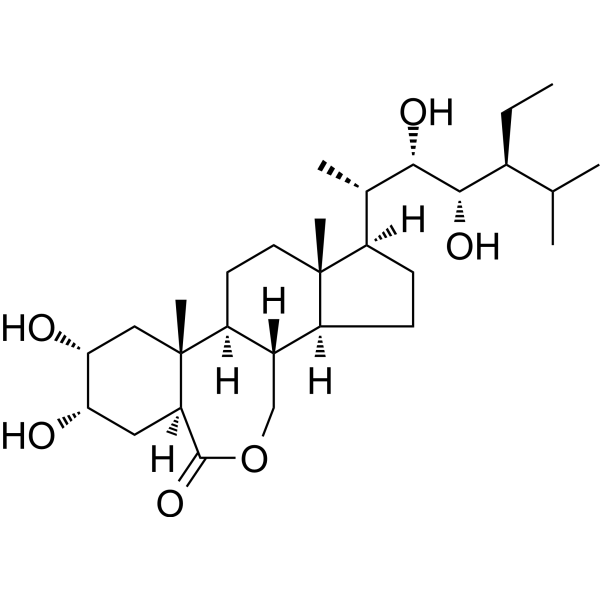 0 ImagesSynonyms: SSHB(22S,23S)-Homobrassinolide is one of the most active brassinosteroids in inducing plant growth in various plant bioassay systems. (22S,23S)-Homobrassinolide shows Akt-dependent anabolic activity in rat skeletal muscle cells. Orally active.
-
IMC-EB10
 0 ImagesCat. No.: HY-P991641Purity: 98%Synonyms: LY3012218IMC-EB10 (LY3012218) is an anti-FLT3 monoclonal antibody. IMC-EB10 binds to FLT3 with high affinity (Kd = 158 pM) and blocks the binding of FLT3 ligand to FLT3 (IC50 ≈ 10 nM), thereby inhibiting MAPK, STAT5, and PI3K/Akt signaling in leukemia cells. IMC-EB10 can enhance the anti-leukemic effect of Methotrexate (HY-14519) and inhibit leukemias expressing wild-type or ITD-mutated FLT3 receptors. IMC-EB10 prolongs the survival of acute lymphoblastic leukemia (ALL) cells and primary leukemia samples and reduces engraftment in non-obese diabetic/severe combined immunodeficiency patients. IMC-EB10 is indicated for leukemia research.
-
KHK-2898
 0 ImagesCat. No.: HY-P990610KHK-2898 is a monoclonal antibody targeting CD98, which binds to the extracellular domain of CD98 on the tumor cell membrane in a non-covalent antigen-specific mode. KHK-2898 can disrupt the heterodimeric complex formed by CD98 with LAT1 and xCT light chains, reduce the amino acid uptake capacity of tumor cells, block the PI3K/AKT/mTOR proliferative signaling cascade, and mediate antibody-dependent cytotoxicity. KHK-2898 can be used for cancer-related research. The isotype control of KHK-2898 can be found in Human IgG1 kappa, Isotype Control (HY-P99001).
-
FC131
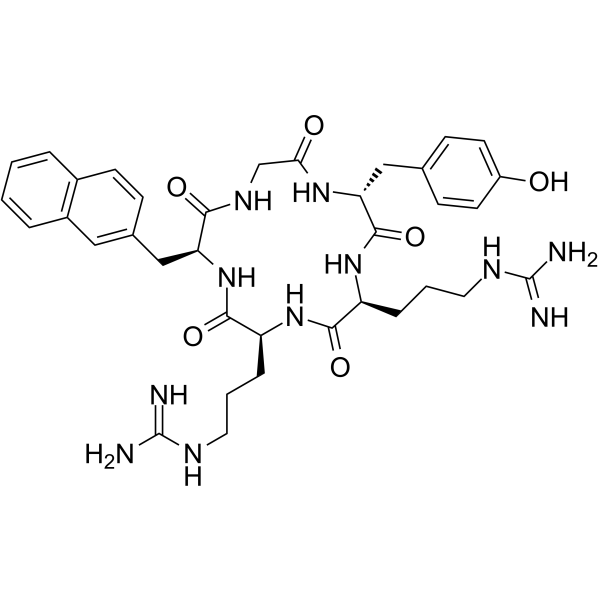 0 ImagesFC131 is a CXCR4 antagonist that inhibits AKT kinase activity in AML OCI-AML3 cells. D-ArgFC131, a derivative of FC131, inhibits the phosphorylation of downstream ERK1/2 and Akt, induces caspase-3 pathway-mediated apoptosis, and causes cell cycle arrest. FC131 exerts cytotoxic effects in cancer cells such as AML cells. FC131 is applicable for cancer-related research.
-
Propylparaben (Standard)
 0 ImagesSynonyms: Propyl parahydroxybenzoate (Standard); Propyl 4-hydroxybenzoate (Standard)Propylparaben (Propyl parahydroxybenzoate) (Standard) is the analytical standard of Propylparaben (HY-N2026). Propylparaben (Propyl parahydroxybenzoate) is an antibacterial preservative that can be produced by plants and bacteria. Propylparaben is an orally active weak estrogen receptor agonist. Propylparaben regulates the PI3K-AKT and JNK signaling pathways, and induces oxidative stress. Propylparaben is commonly used in cosmetics, pharmaceuticals and foods, and can be used in studies related to ovarian aging and myocardial ischemia-reperfusion injury.
-
Gamma-glutamylcysteine TFA (Standard)
 0 ImagesCat. No.: HY-113402ARCAS No.: 283159-88-6Synonyms: γ-Glu-Cys TFA (Standard)Gamma-glutamylcysteine (TFA) (Standard) is the analytical standard of Gamma-glutamylcysteine (TFA). This product is intended for research and analytical applications. Gamma-glutamylcysteine TFA (γ-Glu-Cys TFA) is an orally active, blood-brain barrier permeable dipeptide. Gamma-glutamylcysteine TFA activates AMPK, SIRT1, IL-4/STAT6, AC/cAMP/PI3K, IGF-1R/IRS1/PI3K, and Nrf2 signaling pathways; it inhibits NF-κB, JAK1/STAT1/3, MAPKs, cadmium-induced p38 MAPK, JNK, and PI3K/Akt signaling pathways. Gamma-glutamylcysteine TFA regulates macrophage polarization, modulates the trafficking of CD36 and GLUT4, induces glutathione synthesis, improves metabolic dysfunction, reduces lipid deposition, ameliorates glucose homeostasis, inhibits apoptosis (Apoptosis), stabilizes mitochondria, suppresses lipid peroxidation, iron accumulation and ferroptosis (Ferroptosis), reduces ds-HMGB1 levels, reverses mechanical hyperalgesia, and alleviates hepatic lipid droplet formation. Gamma-glutamylcysteine TFA is applicable to research related to inflammatory bowel disease, type 2 diabetes, cadmium-induced neurotoxicity, Alzheimer's disease, cerebral ischemia/reperfusion injury, neuropathy, and alcoholic liver disease.
-
Asperosaponin VI (Standard)
 0 ImagesSynonyms: Akebia saponin D (Standard)Asperosaponin VI (Standard) is the analytical standard of Asperosaponin VI. This product is intended for research and analytical applications. Asperosaponin VI is a saponin component from Dipsacus asper. Asperosaponin VI induces osteoblast differentiation through the BMP-2/p38 and ERK1/2 signaling pathways. Asperosaponin VI protects against hypoxia-induced cardiomyocyte apoptosis by activating the PI3K/Akt and CREB pathways. Additionally, Asperosaponin VI also has antidepressant and wound-healing-promoting activities.

-
Artemisinin (Standard)
 0 ImagesSynonyms: Qinghaosu (Standard); NSC 369397 (Standard)Artemisinin (Standard) is the analytical standard of Artemisinin. This product is intended for research and analytical applications. Artemisinin (Qinghaosu), a sesquiterpene lactone, is an anti-malarial agent isolated from the aerial parts of Artemisia annua L. plants. Artemisinin inhibits AKT signaling pathway by decreasing pAKT in a dose-dependent manner. Artemisinin reduces cancer cell proliferation, migration, invasion, tumorigenesis and metastasis and has neuroprotective effects.
-
Deguelin (Standard)
 0 ImagesSynonyms: (-)-Deguelin (Standard); (-)-cis-Deguelin (Standard)Deguelin (Standard) is the analytical standard of Deguelin. This product is intended for research and analytical applications. Deguelin, a naturally occurring rotenoid, acts as a chemopreventive agent by blocking multiple pathways like PI3K-Akt, IKK-NF-κB, and MAPK-mTOR-survivin-mediated apoptosis. Deguelin binding to Hsp90 leads to a decreased expression of numerous oncogenic proteins, including MEK1/2, Akt, HIF1α, COX-2, and NF-κB.
-
Isocannflavin B
 0 ImagesCat. No.: HY-N12677CAS No.: 199167-23-2Synonyms: Caflanone; FBL-03GIsocannflavin B (Caflanone) is a flavonoid compound. Isocannflavin B exhibits anti-tumor and anti-viral activities. Isocannflavin B induces apoptosis, autophagy and cell cycle arrest in tumor cells, and inhibits cell proliferation. Isocannflavin B inhibits HCoV-OC43. Isocannflavin B can be used in research related to cancer and COVID-19.
-
Propylparaben sodium
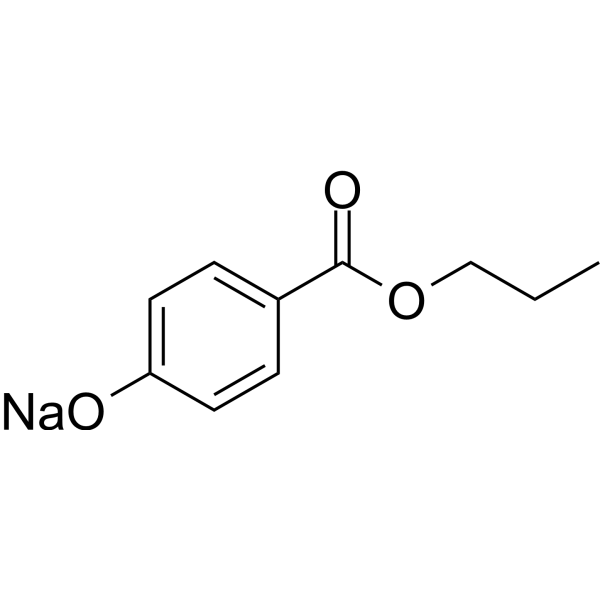 0 ImagesSynonyms: Propyl parahydroxybenzoate sodium; Propyl 4-hydroxybenzoate sodiumPropylparaben (Propyl parahydroxybenzoate) sodium is an antibacterial preservative that can be produced by plants and bacteria. Propylparaben sodium is an orally active weak estrogen receptor agonist. Propylparaben sodium regulates the PI3K-AKT and JNK signaling pathways, and induces oxidative stress. Propylparaben sodium is commonly used in cosmetics, pharmaceuticals and foods, and can be used in studies related to ovarian aging and myocardial ischemia-reperfusion injury.
-
(Z)-2-(Oleoyloxy)propane-1,3-diyl dipalmitate
 0 ImagesSynonyms: 1,3-Dipalmitoyl-2-oleoylglycerol; ?1,3-Palmitin-2-Olein; TG(16:0/18:1/16:0)(Z)-2-(Oleoyloxy) propane-1,3-diyl dipalmitate (1,3-Dipalmitoyl-2-oleoylglycerol) is an orally active PTP1B inhibitor with an IC50 of 31.01 μM and a Ki of 16.36 μM. (Z)-2-(Oleoyloxy) propane-1,3-diyl dipalmitate also inhibits α-glucosidase with an IC50 of 163.31 μM. It inhibits phosphorylation of p38 MAPK, activates the PI3K/Akt/CREB pathway, and exhibits antioxidant, anti-apoptosis and anti-inflammatory activities, as well as inhibits peroxynitrite-mediated albumin nitration. (Z)-2-(Oleoyloxy) propane-1,3-diyl dipalmitate can be used in studies related to cerebral ischemia-reperfusion injury and diabetes.
-
(Rac)-AAA
 0 Images(Rac)-AAA is a regulator and inhibitor targeting GPR75. By blocking the 20-HETE-induced downregulation of GPR75 expression, (Rac)-AAA effectively inhibits the activation of key downstream signaling pathways including EGFR, AKT, NF-κB and FAK. (Rac)-AAA reverses 20-HETE-mediated epithelial-mesenchymal transition, which is specifically characterized by downregulating vimentin (vimentin), upregulating E-Cadherin, as well as reducing MMP-2 activity and cancer cell migration ability. (Rac)-AAA also abolishes the 20-HETE-induced upregulation of HIC-5 expression and anchorage-independent growth, and modulates the subcellular localization of PKC-α and phosphorylated AKT. (Rac)-AAA is investigated in androgen-independent prostate cancer (castration-resistant prostate cancer).
-
Anti-CD160 Antibody (MAT 302)
 0 ImagesCat. No.: HY-P992201Synonyms: CL1-R2Anti-CD160 Antibody (MAT 302) (CL1-R2) is a human monoclonal antibody targeting CD160. Anti-CD160 Antibody (MAT 302) blocks the CD160-HVEM protein interaction, inhibits FGF2-mediated renal tubular vascular growth, and induces endothelial cell apoptosis. Anti-CD160 Antibody (MAT 302) targets CD160 on neovascularization to exert anti-angiogenic and vascular normalization effects, trigger the production of IFN-γ, TNF and IL-6 by NK cells, and enhance glucose metabolism of NK cells through the AKT/mTOR/s6k signaling pathway. Anti-CD160 Antibody (MAT 302) reduces vascular density, normalizes remaining tumor blood vessels, and inhibits tumor growth in melanoma-bearing mice. Anti-CD160 Antibody (MAT 302) can be used in research related to neovascularization, proliferative diabetic retinopathy, and melanoma.




