



Ferroptosis
Ferroptosis
Ferroptosis is a non-apoptotic form of regulated cell death. It is distinct from other regulated cell death phenotypes, such as apoptosis and necroptosis. Ferroptosis is characterized by extensive lipid peroxidation, which can be suppressed by iron chelators or lipophilic antioxidants. Mechanistically, Ferroptosis inducers are divided into two classes: (1) inhibitors of cystine import via system xc− (e.g., Erastin), which subsequently causes depletion of glutathione (GSH), and (2) covalent inhibitors (e.g., (1S, 3R)-RSL3) of glutathione peroxidase 4 (GPX4). Since GPX4 reduces lipid hydroperoxides using GSH as a co-substrate, both compound classes ultimately result in loss of GPX4 activity, followed by elevated levels of lipid reactive oxygen species (ROS) and consequent cell death.
Ferroptosis is an iron- and ROS-dependent form of regulated cell death (RCD). Misregulated Ferroptosis has been implicated in multiple physiological and pathological processes, including cancer cell death, neurotoxicity, neurodegenerative diseases, acute renal failure, drug-induced hepatotoxicity, hepatic and heart ischemia/reperfusion injury, and T-cell immunity.
All Product Categories
-
Ferroptosis Related Products (771)
Related Products (771)

-
Antibodies (6)
-
Related Compound Screening Libraries (1)
-
Ferroptosis Signaling Pathway
-
5-O-Methylvisammioside (Standard)
 0 ImagesCat. No.: HY-N0442RCAS No.: 84272-85-5Synonyms: 4'-O-β-D-Glucosyl-5-O-methylvisamminol (Standard)5-O-Methylvisammioside (4'-O-β-D-Glucosyl-5-O-methylvisamminol) (Standard) is the analytical standard of 5-O-Methylvisammioside. This product is intended for research and analytical applications. 5-O-Methylvisammioside is an orally active natural chromone glycoside and multiple biological activities. 5-O-Methylvisammioside inhibits ferroptosis by activating the Nrf2/HO-1 signaling axis. 5-O-Methylvisammioside alleviates intestinal barrier damage by inhibiting the ROS/NF-κB/NLRP3 pathway. 5-O-Methylvisammioside exerts a protective effect against acute liver injury by reducing ALT/AST, decreasing inflammatory infiltration, and inhibiting IκB-α phosphorylation and NF-κB nuclear translocation. 5-O-Methylvisammioside blocks the HMGB1/RAGE/MEK/ERK signaling axis to exert anti-tumor and anti-angiogenic effects. 5-O-Methylvisammioside improves depression-like behaviors by inhibiting Src kinase and the NF-κB pathway.
-
Cephaeline (Standard)
 0 ImagesSynonyms: (-)-Cephaeline (Standard); NSC 32944 free base (Standard)Cephaeline ((-)-Cephaeline), a desmethyl analog of Emetine, is a phenolic alkaloid in Indian Ipecac roots isolated from the Cephaelis ipecacuanha. Cephaeline exhibits potent inhibition of both Zika virus (ZIKV) and Ebola virus (EBOV) infections. Cephaeline is an inductor of histone H3 acetylation and an inhibitor of mucoepidermoid carcinoma cancer stem cells (MEC), which promotes ferroptosis by inhibiting NRF2 to exert anti-lung cancer efficacy.
-
Ferrous gluconate (Standard)
 0 ImagesCat. No.: HY-W698249RCAS No.: 299-29-6Ferrous gluconate (Standard) is the analytical standard of Ferrous gluconate. This product is intended for research and analytical applications. Ferrous gluconate is a highly water-soluble iron-containing agent with high bioavailability and bactericidal activity. As a non-heme iron, Ferrous gluconate is used for meat product fortification and improvement of iron deficiency anemia. Ferrous gluconate induces ferroptosis in E. coli through Fe2+ infiltration, reactive oxygen species burst, lipid peroxidation and direct interaction with DNA. Ferrous gluconate also downregulates the SOS responsive transcriptional repressor LexA. In addition, Ferrous gluconate regulates multiple key pathways in E. coli such as fatty acid metabolism, iron-sulfur cluster assembly and pyruvate metabolism, and is applied in studies related to *E. coli* infection and iron deficiency anemia.
-
GPX4-IN-13
 0 ImagesCat. No.: HY-163995CAS No.: 2644044-43-7GPX4-IN-13 (compound 16) is a GPX4 inhibitor with anticancer activity. GPX4-IN-13 reduces thyroid cell proliferation and induces ferroptosis by inhibiting the expression level of GPX4. GPX4-IN-13 inhibits the growth of three thyroid cancer cell lines: N-thy-ori-3-1 (IC50=8.39 μM), MDA-T32 (IC50=10.28 μM) and MDA-T41 (IC50=8.18 μM).
-
Erastin (Standard)
 0 ImagesCat. No.: HY-15763RCAS No.: 571203-78-6Erastin (Standard) is the analytical standard of Erastin (HY-15763). This product is intended for research and analytical applications. Erastin is a ferroptosis inducer. Erastin exhibits the mechanism of ferroptosis induction related to ROS and iron-dependent signaling. Erastin inhibits voltage-dependent anion channels (VDAC2/VDAC3) and accelerates oxidation, leading to the accumulation of endogenous reactive oxygen species. Erastin also disrupts mitochondrial permeability transition pore (mPTP) with anti-tumor activity. Furthermore, Erastin can block the uptake of cystine mediated by SLC7A11 and also spares UMRC6-EV and -C91A cells from disulfidptosis under glucose starvation.
-
Gamma-glutamylcysteine ammonium
 0 ImagesCat. No.: HY-113402BSynonyms: γ-Glu-Cys ammoniumGamma-glutamylcysteine ammonium (γ-Glu-Cys ammonium) is an orally active, blood-brain barrier permeable dipeptide. Gamma-glutamylcysteine ammonium activates AMPK, SIRT1, IL-4/STAT6, AC/cAMP/PI3K, IGF-1R/IRS1/PI3K, and Nrf2 signaling pathways; it inhibits NF-κB, JAK1/STAT1/3, MAPKs, cadmium-induced p38 MAPK, JNK, and PI3K/Akt signaling pathways. Gamma-glutamylcysteine ammonium regulates macrophage polarization, modulates the trafficking of CD36 and GLUT4, induces glutathione synthesis, improves metabolic dysfunction, reduces lipid deposition, ameliorates glucose homeostasis, inhibits apoptosis (Apoptosis), stabilizes mitochondria, suppresses lipid peroxidation, iron accumulation and ferroptosis (Ferroptosis), reduces ds-HMGB1 levels, reverses mechanical hyperalgesia, and alleviates hepatic lipid droplet formation. Gamma-glutamylcysteine ammonium is applicable to research related to inflammatory bowel disease, type 2 diabetes, cadmium-induced neurotoxicity, Alzheimer's disease, cerebral ischemia/reperfusion injury, neuropathy, and alcoholic liver disease.
-
Ethylenediaminetetraacetic acid trisodium salt (Standard)
 0 ImagesSynonyms: EDTA trisodium salt (Standard); Trisodium EDTA (Standard)Ethylenediaminetetraacetic acid (trisodium salt) (Standard) is the analytical standard of Ethylenediaminetetraacetic acid (trisodium salt). This product is intended for research and analytical applications. Ethylenediaminetetraacetic acid trisodium salt (EDTA trisodium salt; Trisodium EDTA) is a kind of metal chelating agent (binds to bivalent and trivalent metal cations, including calcium). Ethylenediaminetetraacetic acid trisodium salt has antibacterial, anti-inflammatory, antioxidant, anti-hypercalcemia and anticoagulant activities. Ethylenediaminetetraacetic acid trisodium salt decreases the metal ion-catalyzed oxidative damage to proteins, and allows maintenance of reducing environment during protein purification. Ethylenediaminetetraacetic acid trisodium salt can alleviate the liver fibrosis. Ethylenediaminetetraacetic acid can be used for coronary artery disease and neural system disease research.
-
Diphenyl disulfide (Standard)
 0 ImagesDiphenyl disulfide (Standard) is an analytical standard for diphenyl disulfide (HY-Y1177). This product is intended for research and analytical applications. Diphenyl disulfide (Phenyl disulfide) is an organic disulfide compound. Diphenyl disulfide inhibits the PI3K/AKT/mTOR pathway, and induces ferroptosis (ferroptosis), apoptosis (apoptosis) and autophagy (autophagy) in cancer cells. Diphenyl disulfide downregulates GPX4 expression, inhibits NRF2 phosphorylation, induces lipid peroxidation, promotes xCT ubiquitination, induces proteolytic cleavage of p21 Bax into p18 Bax, and suppresses cell proliferation and viability. Diphenyl disulfide can be used in research related to melanoma and breast cancer.
-
Imidazole ketone erastin (Standard)
 0 ImagesCat. No.: HY-114481RCAS No.: 1801530-11-9Imidazole ketone erastin (Standard) is the analytical standard of Imidazole ketone erastin (HY-114481). This product is intended for research and analytical applications. Imidazole ketone erastin is a potent, selective, and metabolically stable inhibitor of the cystine-glutamate antiporter, system xc- and an activator of ferroptosis. Imidazole ketone erastin has anti-tumor activity.
-
ML385 (Standard)
 0 ImagesML385 (Standard) is the analytical standard of ML385 (HY-100523). This product is intended for research and analytical applications. ML385 is a potent and selective Nrf2 inhibitor with an IC50 of 1.9 μM. ML385 directly binds to the Neh1 domain of NRF2, interferes with the binding of the MAFG-NRF2 protein complex to the antioxidant response element (ARE) DNA sequence, thereby blocking the expression of downstream target genes of NRF2. ML385 can be used in studies related to adult T-cell leukemia, breast cancer, myocardial ischemia/reperfusion injury, non-small cell lung cancer, esophageal squamous cell carcinoma, head and neck squamous cell carcinoma, and lung squamous cell carcinoma.
-
Troglitazone (Standard)
 0 ImagesSynonyms: CS-045 (Standard)Troglitazone (Standard) is the analytical standard of Troglitazone. This product is intended for research and analytical applications. Troglitazone is an orally active PPARγ agonist, with EC50s of 550 nM and 780 nM for human and murine PPARγ receptor, respectively. Troglitazone has anticancer activity, prevents and inhibits the development of type 2 diabetes.
-
1(R)-(Trifluoromethyl)oleyl alcohol
 0 ImagesCat. No.: HY-158740CAS No.: 2644636-20-21(R)-(Trifluoromethyl)oleyl alcohol (compound (R)-24) is a trifluoromethyl alcohol derivative of Oleic acid (HY-N1446) with activity in multiple models of Friedreich ataxia (FRDA). 1(R)-(Trifluoromethyl)oleyl alcohol inhibits ferroptosis induced by Erastin (HY-15763) and decreases lipid peroxidation in NBT human myoblasts with frataxin (FXN) siRNA knockdown. 1(R)-(Trifluoromethyl)oleyl alcohol at 40 μM increases survival to 95% in a model of FRDA where a significant percentage of cell death is caused by FAC (HY-B1645) and BSO (HY-106376).
-
Ferroptosis-IN-3
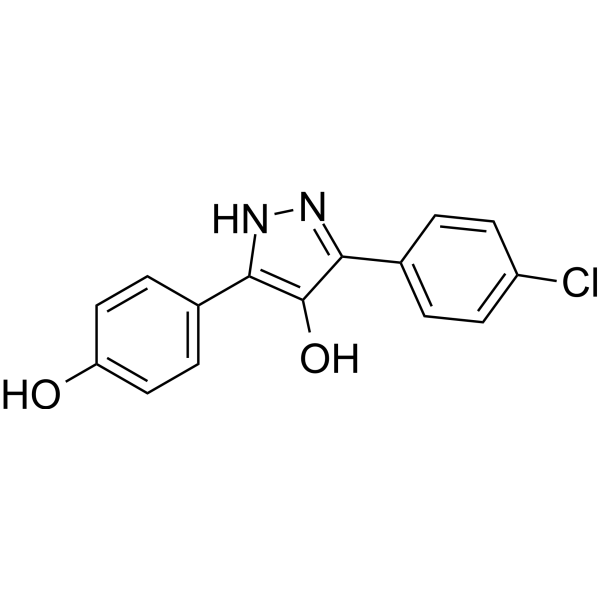 0 ImagesCat. No.: HY-149670CAS No.: 3017222-33-9Ferroptosis-IN-3 (Compound 25) is a ferroptosis inhibitor. Ferroptosis-IN-3 inhibits RSL3-induced ferroptosis (EC50: 8.6 nM in HT-1080 cells). Ferroptosis-IN-3 scavenges DPPH and ABTS radicals (EC50: 3.94 and 6.3 μM respectively). Ferroptosis-IN-3 decreases lipid peroxidation.
-
Sipeimine (Standard)
 0 ImagesCat. No.: HY-N0696RCAS No.: 61825-98-7Synonyms: Imperialine (Standard)Sipeimine (Standard) is the analytical standard of Sipeimine (HY-N0696R). Sipeimine (Imperialine) is an inhibitor targeting the PI3K/AKT/NF-κB pathway and NLRP3 inflammasome, which can competitively bind to PI3K and p65. Sipeimine inhibits PI3K/AKT phosphorylation, blocks NF-κB nuclear translocation and NLRP3 inflammasome activation. Sipeimine exerts anti-inflammatory activities, inhibits pyroptosis and ferroptosis, and protects the extracellular matrix. Sipeimine can reduce cartilage degradation and synovial inflammation in osteoarthritis and improve PM2.5-induced lung injury. Sipeimine is mainly used in the study of anti-inflammatory and degenerative diseases.
-
TOFA-Plasmalogen
 0 ImagesCat. No.: HY-161947CAS No.: 3055534-09-0TOFA-Plasmalogen (compound 1) is a glyceraldehyde derivative with ferroptosis-inducing activity. TOFA-Plasmalogen causes cytotoxicity by promoting lipid peroxidation on cell membranes (IC50=32.87 μM).

-
6-Hydroxyindole (Standard)
 0 Images6-Hydroxyindole (Standard) is the analytical standard of 6-Hydroxyindole (HY-W002438). This product is intended for research and analytical applications. 6-Hydroxyindole is an orally active, endogenous long-acting OATP1B1 inhibitor. 6-Hydroxyindole does not alter the cell surface expression or subcellular localization of OATP1B1. 6-Hydroxyindole protects cells against Ferroptosis. 6-Hydroxyindole possesses intrinsic radical-trapping antioxidant activity. 6-Hydroxyindole serves as a component of oxidative hair dyes. 6-Hydroxyindole can be used in research related to renal failure and neurodegenerative diseases.
-
DL-Buthionine-(S,R)-sulfoximine hydrochloride (Standard)
 0 ImagesCat. No.: HY-106376BRPurity: 98%Synonyms: Buthionine sulfoximine hydrochloride (Standard); BSO hydrochloride (Standard)DL-Buthionine-(S,R)-sulfoximine (hydrochloride) (Standard) is the analytical standard of DL-Buthionine-(S,R)-sulfoximine (hydrochloride). This product is intended for research and analytical applications. DL-Buthionine-(S,R)-sulfoximine hydrochloride (Buthionine sulfoximine hydrochloride) is a potent inhibitor of glutamylcysteine synthetase biosynthesis.
-
Pifithrin-α hydrobromide (Standard)
 0 ImagesCat. No.: HY-15484RCAS No.: 63208-82-2Synonyms: Pifithrin hydrobromide (Standard); PFTα hydrobromide (Standard)Pifithrin-α (hydrobromide) (Standard) is the analytical standard of Pifithrin-α (hydrobromide). This product is intended for research and analytical applications. Pifithrin-α hydrobromide is a p53 inhibitor which blocks its transcriptional activity and prevents cells from apoptosis. Pifithrin-α hydrobromide is also an aryl hydrocarbon receptor (AhR) agonist.
-
Lapatinib ditosylate (Standard)
 0 ImagesSynonyms: GW572016 ditosylate (Standard); GW2016 ditosylate (Standard)Lapatinib (ditosylate) (Standard) is the analytical standard of Lapatinib (ditosylate). This product is intended for research and analytical applications. Lapatinib ditosylate (GW572016 ditosylate) is a potent, orally active inhibitor of the ErbB-2 and EGFR tyrosine kinase domains with IC50 values against purified EGFR and ErbB-2 of 10.2 and 9.8 nM, respectively.




