



Integrin
Integrins, a family of heterodimeric adhesion receptors for diverse extracellular matrices, have consistently been implicated as crucial drivers of ovarian cancer development and progression. A number of the RGD-based members of the integrin family, including α5β1, and αvβ3 or αvβ5 integrins, are markedly elevated in aggressive ovarian tumors. These adhesion receptors appear to promote cell adhesion, survival, motility and invasion during ovarian tumor growth or metastatic progression. Importantly, the functions of these integrins are strongly dependent on the activation of focal adhesion kinase (FAK) and its downstream signaling, including the PI3K/Akt- and Ras/MAPK-dependent pathways.
Integrins are transmembrane proteins and are major receptors for cell-extracellular matrix (ECM) and cell-cell adhesion. Modulation of these molecules, particularly αv integrin family, has exhibited profound effects on fibrosis in multiple organ and disease state. Based on the several studies, the integrins αvβ3, αvβ5, αvβ6, and αvβ8 have been known to modulate the fibrotic process via activation of latent transforming growth factor (TGF)-β in pre-clinical models of fibrosis.
Each integrin is typically formed by the non-covalent pairing of one α subunit, of which, 18 types are known to exist, and one β subunit, of which 8 types are known to exist. Together, 24 distinct heterodimers have been identified to date. The αv subunit can form heterodimers with the β1, β3, β5, β6 or β8 subunits and β1 can associate with many different α subunits from α1 to α11, and αv, indicating that not all theoretically possible α and subunit pairs form. Interestingly, the activation of TGF-β appears to be a common function of multiple αv integrins.
Integrin Isoform Specific Products
-
Integrin
(384)
View all products
-
αvβ1
(7)
View all products
-
αvβ3
(35)
View all products
-
αvβ5
(13)
View all products
-
αvβ6
(25)
View all products
-
αvβ8
(11)
View all products
-
α5β1
(19)
View all products
-
α1β1
(3)
View all products
-
α2β1
(9)
View all products
-
α4β1
(22)
View all products
-
α9β1
(4)
View all products
-
αIIbβ3
(14)
View all products
-
α4β7
(18)
View all products
-
αLβ2
(3)
View all products
All Product Categories
-
Integrin Inhibitors
(253)
View all products
-
Integrin Agonists
(10)
View all products
-
Integrin Antagonists
(96)
View all products
-
Integrin Activators
(8)
View all products
-
Integrin Modulators
(6)
View all products
-
Integrin Chemicals
(2)
View all products
-
Integrin Inducers
(3)
View all products
-
Integrin Degrader
(1)
View all products
-
Integrin Controls
(4)
View all products
-
Integrin Substrate
(1)
View all products
-
Integrin Ligands
(26)
View all products
-
Integrin alpha 1 beta 1 Proteins
(2)
View all products
-
Integrin alpha V beta 3 Proteins
(5)
View all products
-
Integrin alpha V beta 5 Proteins
(4)
View all products
-
Integrin alpha V beta 6 Proteins
(8)
View all products
-
Integrin alpha V beta 8 Proteins
(8)
View all products
-
Integrin Related Products (519)
Related Products (519)

-
Recombinant Proteins (27)
-
Antibodies (31)
-
Integrin Isoform Comparison
-
Fuzapladib sodium
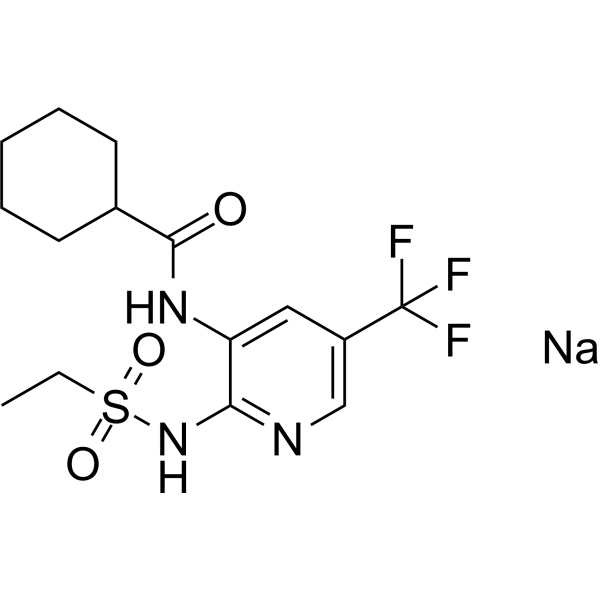 0 ImagesSynonyms: IS-741 sodiumFuzapladib (IS-741) sodium, an orally active leukocyte-function-associated antigen type 1 (LFA-1) activation inhibitor, is a leukocyte adhesion molecule. Fuzapladib sodium is also a phospholipase A2 (PLA2) inhibitor. Fuzapladib sodium exerts anti-inflammatory effects by inhibiting leukocyte migration into the inflammatory site.

-
Sigvotatug (Biotinylated)
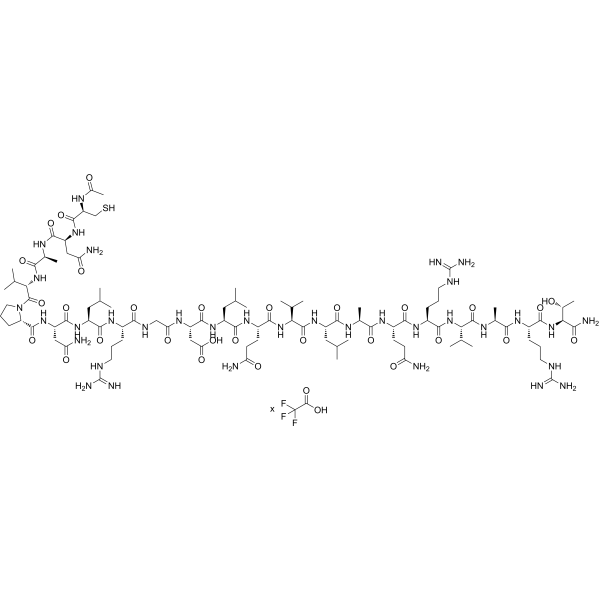
 0 ImagesCat. No.: HY-P990764BSigvotatug (Biotinylated) is a biotinylated derivative of Sigvotatug (HY-P990764). Sigvotatug (Biotinylated) is a humanized IgG1 κ monoclonal antibody inhibitor against ITGB6. Recommend Isotype Controls: Human IgG1 kappa, Isotype Control (HY-P99001).
-
Fibronectin sctive fragment control acetate
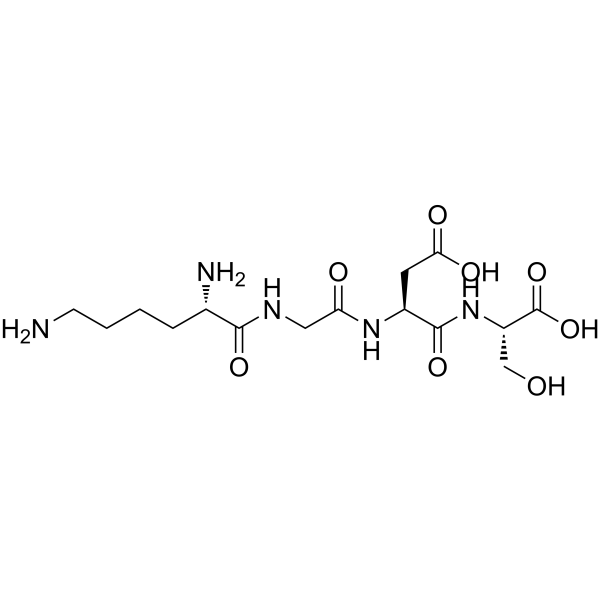
 0 ImagesCat. No.: HY-P1897APurity: 99.19%Fibronectin active fragment control acetate is an active peptide fragment of fibronectin. Fibronectin is a glycoprotein interacting with integrins. Fibronectin active fragment control acetate can be used as a control for Gly-Arg-Gly-Asp-Ser (HY-P0295).
-
Fradafiban hydrochloride
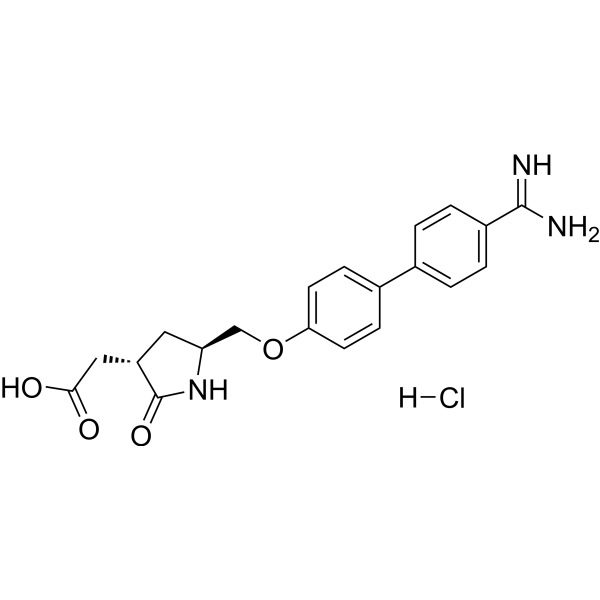 0 ImagesCat. No.: HY-101720APurity: 99.96%Synonyms: BIBU-52 hydrochlorideFradafiban (BIBU-52) hydrochloride is a nonpeptide platelet glycoprotein IIb/IIIa antagonist, which binds to the human platelet GP IIb/IIIa complex with a Kd value of 148 nM.
-
Fibronectin CS1 Peptide
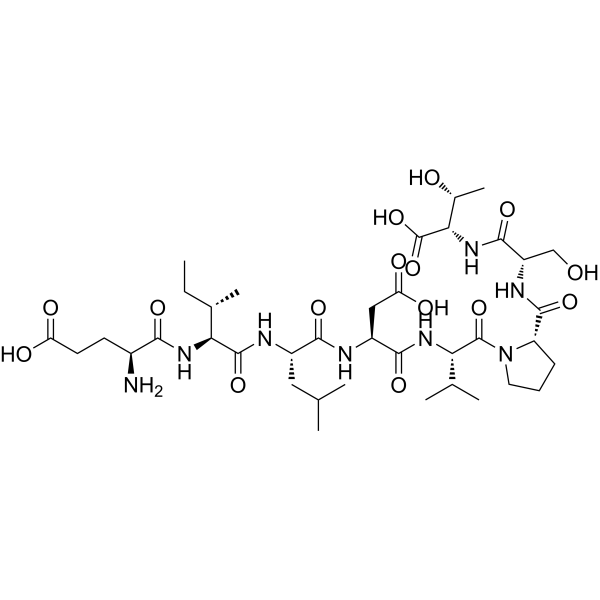 0 ImagesThe connecting segment 1 (CS-1) is a cell attachment domain located in the type III homology connecting segment (IIICS) of fibronectin. Fibronectin CS1 Peptide lacks the Arg-Gly-Asp-containing domain, actively inhibits tumor metastases in spontaneous and experimental metastasis models.
-
Sibrafiban
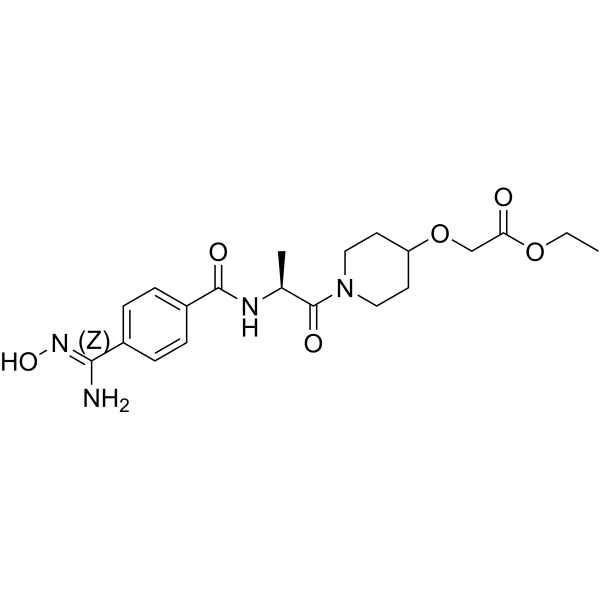 0 ImagesSynonyms: RO 48-3657Sibrafiban (RO 48-3657) is the orally active, nonpeptide, double-proagent of Ro 44-3888 and a selective glycoprotein IIb/IIIa receptor antagonist. Sibrafiban inhibits platelet aggregation.
-
Alicaforsen
 0 ImagesCat. No.: HY-145728CAS No.: 185229-68-9Synonyms: ISIS-2302Alicaforsen is an oligonucleotide and immunostimulant targeting human ICAM-1 mRNA. Alicaforsen hybridizes to specific sites to reduce the expression level of ICAM-1. Alicaforsen is applicable to relevant research on psoriasis, rheumatoid arthritis and inflammatory bowel disease.
-
AFP464 free base
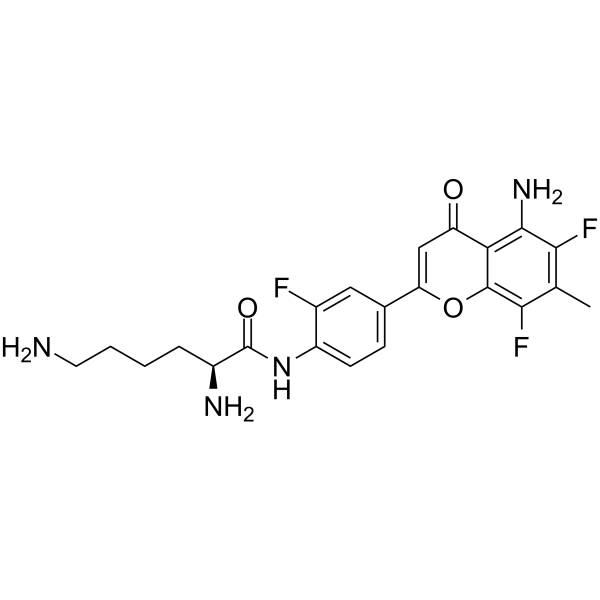 0 ImagesCat. No.: HY-16031CAS No.: 468719-52-0Synonyms: NSC710464 free baseAFP464 (NSC710464) free base is a prodrug of Aminoflavone (HY-132974) and an agonist of the aryl hydrocarbon receptor (AhR). AFP464 free base downregulates the expression of α6-integrin (α6-integrin), inhibits breast tumor growth, reduces the population of tumor-initiating cells, disrupts mammosphere structure, induces the formation of mucin lake clusters, triggers DNA damage, and exerts antiproliferative activity. AFP464 free base is rapidly converted to Aminoflavone by nonspecific esterases in plasma and cell culture media. AFP464 free base is applicable to research related to breast cancer.
-
Fibrinogen γ-chain (117-133)
 0 ImagesFibrinogen γ-chain (117-133) is a selective intercellular adhesion molecule-1 (ICAM-1) inhibitor (IC50≈20-40 μg/mL). Fibrinogen γ-chain (117-133) blocks fibrinogen-mediated monocyte-endothelial adhesion. Fibrinogen γ-chain (117-133) is promising for research of thrombo-inflammatory diseases (e.g., atherosclerosis, organ transplant rejection).
-
Arg-Gly-Glu-Ser
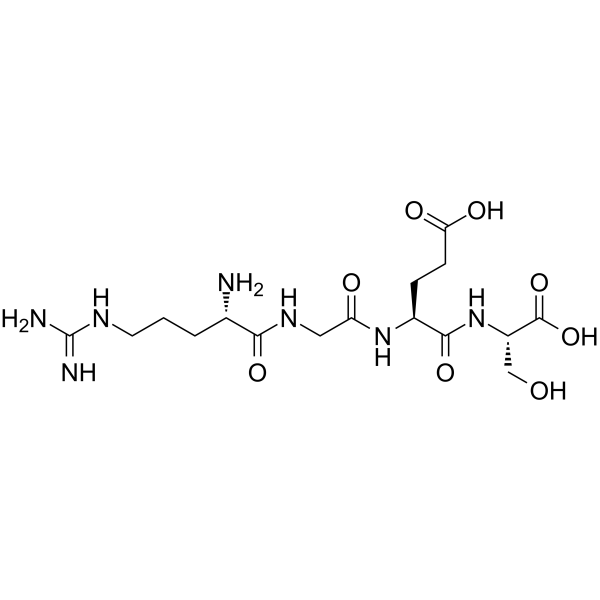 0 ImagesCat. No.: HY-P0309CAS No.: 93674-97-6Arg-Gly-Glu-Ser is a polypeptide related to RGD and is a negative control for Arg-Gly-Asp-Ser (HY-12290).
-
IMGN388 Antibody
 0 ImagesCat. No.: HY-P991644Purity: 99.0%IMGN388 Antibody is an Integrin targeting humanized monoclonal antibody. IMGN388 Antibody can be used for synthesis ADCs.
-
STX-100 (Biotinylated)
 0 ImagesCat. No.: HY-P990667BSynonyms: BG00011 (Biotinylated)STX-100 (BG00011) Biotinylated is a biotin-labeled STX-100 (HY-P990667). STX-100 is a humanized antibody expressed in HEK293 cells, targeting Integrin aVb6 (ITGAV & ITGB6).
-
c(phg-isoDGR-(NMe)k) TFA
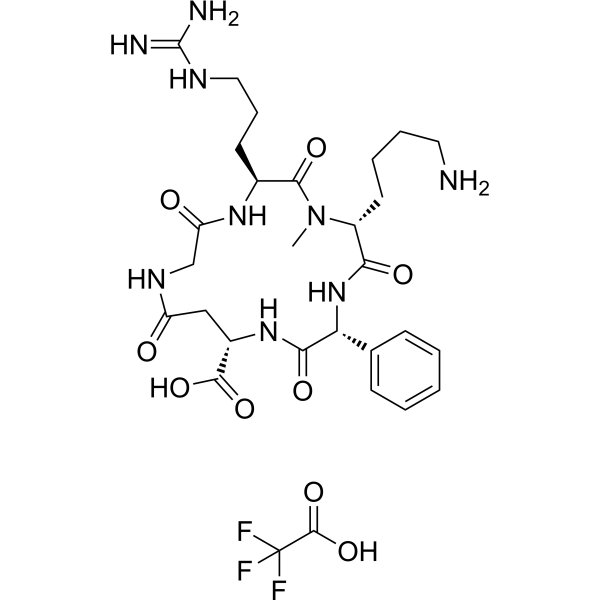 0 ImagesCat. No.: HY-111413APurity: 99.63%c(phg-isoDGR-(NMe)k) TFA is a selective and potent α5β1-integrin ligand with an IC50 of 2.9 nM.

-
P15
 0 ImagesP15 is a type I collagen-mimetic peptide with pro-adhesive properties. P15 binds to membrane integrin, including α2β1, to mediate cell adhesion and trigger the production of growth factors and cytokines. P15 upregulates the expression of osteogenic genes via targets including RUNX2, OSTRX and BSP. P15 stimulates the adhesion and proliferation of osteoblasts, enhances alkaline phosphatase activity and calcium deposition, and supports osteogenic differentiation. P15 can be used in research related to periodontal bone defects, cervical intervertebral disc defects, and non-union/bone defects.
-
EILEVPST
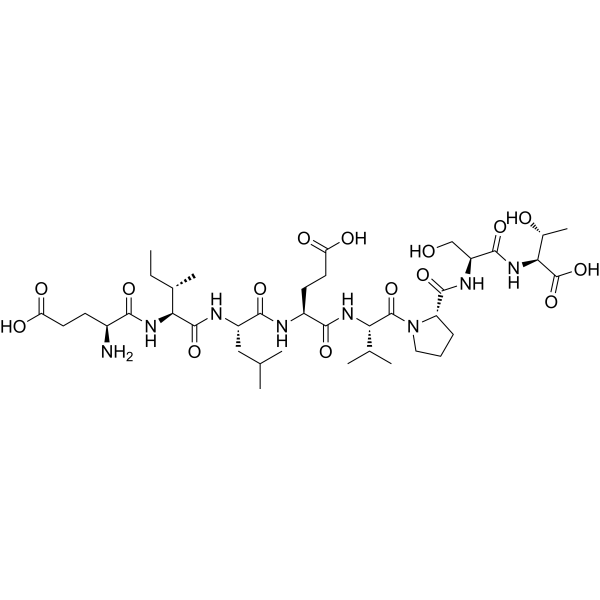 0 ImagesEILEVPST is a recombinant human fibronectinderived low-molecular-weight peptide fragment. EILEVPST can promote cell type-specific α4 integrin-mediated adhesion. EILEVPST can be used for the research of thrombogenesis.
-
C16Y acetate
 0 ImagesCat. No.: HY-P10704APurity: 98.60%C16Y acetate is a short peptide and an inhibitor of integrins αvβ3 and α5β1. C16Y acetate acts on the cell membrane and exerts its anticancer activity by inhibiting angiogenesis .




