



Microtubule/Tubulin
Microtubules are a component of the cytoskeleton, found throughout the cytoplasm. These tubular polymers of tubulin can grow as long as 50 micrometres, with an average length of 25 µm, and are highly dynamic. The outer diameter of a microtubule is about 24 nm while the inner diameter is about 12 nm. Microtubules are found in eukaryotic cells and are formed by the polymerization of a dimer of two globular proteins, alpha and beta tubulin. Tubulin is one of several members of a small family of globular proteins. The tubulin superfamily includes five distinct families, the alpha-, beta-, gamma-, delta-, and epsilon-tubulins and a sixth family which is present only in kinetoplastid protozoa. The most common members of the tubulin family are α-tubulin and β-tubulin, the proteins that make up microtubules. Microtubules are very important in a number of cellular processes. They are involved in maintaining the structure of the cell.
All Product Categories
-
Microtubule/Tubulin Inhibitors
(812)
View all products
-
Microtubule/Tubulin Agonists
(2)
View all products
-
Microtubule/Tubulin Antagonist
(1)
View all products
-
Microtubule/Tubulin Activators
(21)
View all products
-
Microtubule/Tubulin Modulators
(20)
View all products
-
Microtubule/Tubulin Inducers
(5)
View all products
-
Microtubule/Tubulin Degraders
(3)
View all products
-
Microtubule/Tubulin Controls
(19)
View all products
-
Microtubule/Tubulin Ligands
(5)
View all products
-
Microtubule/Tubulin Related Products (1003)
Related Products (1003)

-
Antibodies (69)
-
Tubulin inhibitor 44
 0 ImagesCat. No.: HY-161614CAS No.: 3025180-36-0Tubulin inhibitor 44 (Compound 26r) is an inhibitor for tubullin. Tubulin inhibitor 44 exhibits cytotoxicity in cancer cells NCI-H460, BxPC-3 and HT-29, with IC50s of 0.96, 0.66 and 0.61 nM, respectively.
-
KMG-732
 0 ImagesCat. No.: HY-184580KMG-732 is a dual-target inhibitor that targets GAK and β-tubulin, with Kd values of 12.0 nM and 19.3 μM, respectively. KMG-732 exhibits broad-spectrum antiproliferative activity in various human cancer cell lines and directly binds to purified tubulin in vitro. KMG-732 reduces the phosphorylation level of AP2M1, induces G2/M phase cell cycle arrest, disrupts the microtubule network, and inhibits cancer cell migration and invasion. KMG-732 shows significant antitumor activity in organoid and in vivo xenograft models. KMG-732 can be used for cancer research.
-
Tubulin inhibitor 50
 0 ImagesCat. No.: HY-172616Tubulin inhibitor 50 (compound 07) is a tubulin inhibitor that increases the mitochondrial reactive oxygen species level. Tubulin inhibitor 50 has anti-cancer effect in HeLa cells with IC50 value of 0.46 μM. Tubulin inhibitor 50 shows low toxicity in normal cell lines.
-
Auristatin S
 0 ImagesCat. No.: HY-164107CAS No.: 3028453-70-2Auristatin S is a potent Auristatin payload. Auristatin S binds to the vinca-binding site on tubulin, thereby inhibiting microtubule assembly and inducing cell cycle arrest and apoptosis. Auristatin S acts as a cytotoxic component of antibody-drug conjugates (ADCs) and exerts target-specific cytotoxicity against cancer cells. Auristatin S can be used in the research of lymphoma, anaplastic large cell lymphoma and Hodgkin lymphoma.
-
HDAC-IN-39
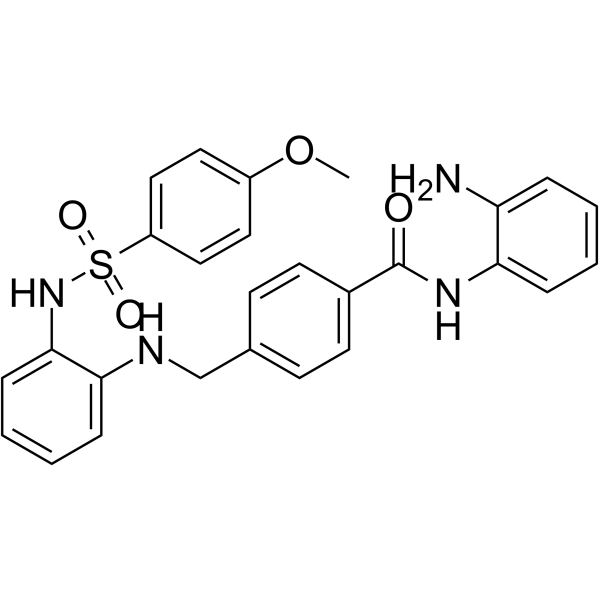 0 ImagesCat. No.: HY-146392CAS No.: 2414046-33-4HDAC-IN-39 (compound 16c) is a potent HDAC inhibitor, with IC50 values of 1.07 μM (HDAC1), 1.47 μM (HDAC2), and 2.27 μM (HDAC3), respectively. HDAC-IN-39 also significantly inhibits microtubule polymerization. HDAC-IN-39 induces cell cycle arrest at the G2/M phase. HDAC-IN-39 displays promising anticancer activity against resistant cancer cells.
-
Ohchinolide B
 0 ImagesCat. No.: HY-N12331CAS No.: 71902-49-3Ohchinolide B is a tubulin inhibitor. Ohchinolide B inhibits microtubule polymerization (IC50=2.3 μM) and induces G2/M phase cell cycle arrest via mitochondrial apoptotic pathways. Ohchinolide B is promising for research of solid tumors (e.g., breast, lung cancer).
-
3,3'-Dihydroxy-2,6-bis(4-hydroxybenzyl)-5-methoxybibenzyl
 0 ImagesCat. No.: HY-N17845CAS No.: 87530-27-63,3'-Dihydroxy-2,6-bis(4-hydroxybenzyl)-5-methoxybibenzyl, a stilbenoid compound, is a tubulin inhibitor with an IC50 of 10 μM. 3,3'-Dihydroxy-2,6-bis(4-hydroxybenzyl)-5-methoxybibenzyl inhibits tubulin polymerization. 3,3'-Dihydroxy-2,6-bis(4-hydroxybenzyl)-5-methoxybibenzyl functions as a potentiator that potentiates SN-38 (HY-13704) cytotoxicity in BCRP-transduced cancer cells. 3,3'-Dihydroxy-2,6-bis(4-hydroxybenzyl)-5-methoxybibenzyl can be used for the study of breast cancer.
-
Isodienestrol
 0 ImagesCat. No.: HY-W699620CAS No.: 35495-11-5Synonyms: (Z,Z)-DienestrolIsodienestrol, a Diethylstilbestrol (HY-14598) derivative, is a Microtubule inhibitor. Isodienestrol can be used for cancers research
-
Tubulin inhibitor 49 hydrobromide
 0 ImagesCat. No.: HY-169882APurity: 99.12%Tubulin inhibitor 49 (Compound 18) hydrobromide is an inhibitor for tubulin polymerization with an IC50 of 48 μM. Tubulin inhibitor 49 hydrobromide disrupts the cell microtubule network, arrests the cell cycle at G2 phase, and exhibits cytotoxicity (IC50=8.8 μM in HeLa cell). Tubulin inhibitor 49 hydrobromide can be used in the research of cervical cancer.
-
Larotaxel-d9
 0 ImagesCat. No.: HY-125374SSynonyms: XRP9881-d9Larotaxel-d9 (XRP9881-d9) is the d9-labeled Larotaxel (HY-125374). Larotaxel (XRP9881) is an orally active and blood-brain barrier penetrant Microtubule stabilizer with an IC50 of 0.21 μM. Larotaxel shows activity in Taxane-resistant tumor models. Larotaxel exhibits antitumor activity in intracranial glioblastoma models. Larotaxel can be used for research on advanced solid tumors.
-
Tubulin inhibitor 31
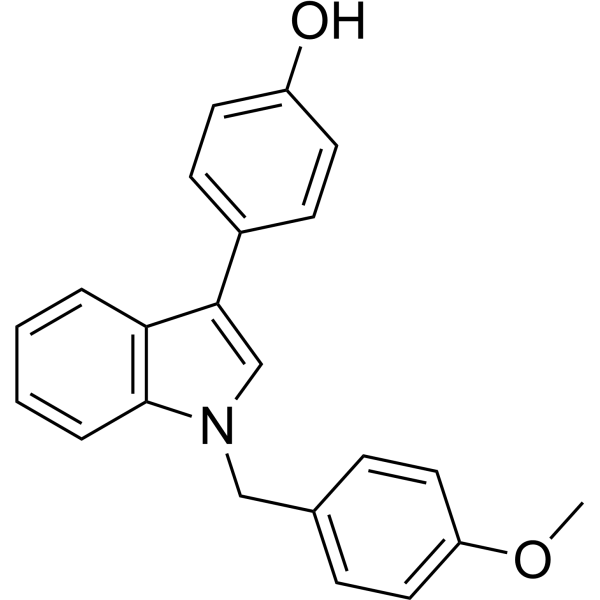 0 ImagesCat. No.: HY-151996CAS No.: 3033553-03-3Tubulin inhibitor 31 is a potent tubulin inhibitor with an IC50 value of 4 μM. Tubulin inhibitor 31 shows anti-proliferative activity. Tubulin inhibitor 31 inhibits the HUVEC migration.
-
Tubulin inhibitor 35
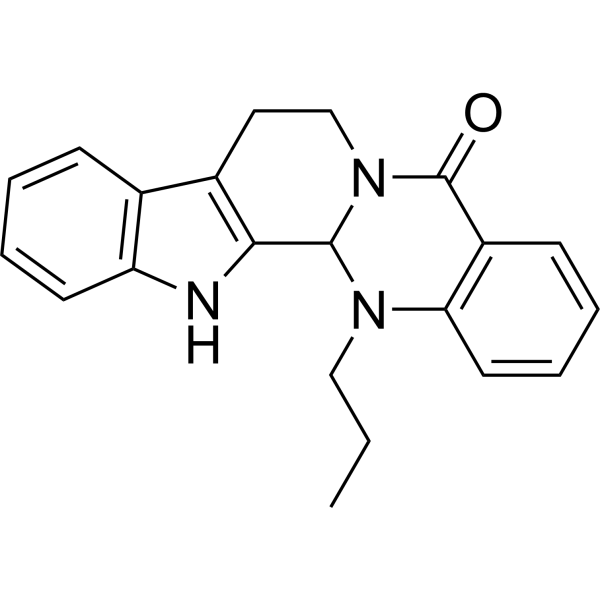 0 ImagesCat. No.: HY-155073CAS No.: 2247047-77-2Tubulin inhibitor 35 (compound 6b) is a dual inhibitor of topoisomerase I (IC50=~50 μM) and tubulin polymerization (IC50=5.69 μM). Tubulin inhibitor 35 inhibits migration and invasion of MGC-803 and RKO cell lines,and induces apoptosis via arresting cell cycle at G2/M phase. Tubulin inhibitor 35 exhibis potent efficacy in gastrointestinal tumor inhibiton (inhibits MGC-803 (IC50=0.09 μM) and RKO (IC50=0.2 μM) cell lines).
-
Tubulin inhibitor 38
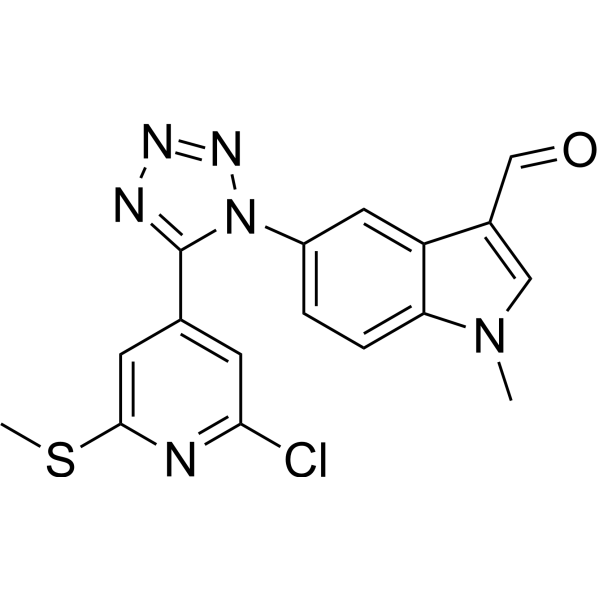 0 ImagesCat. No.: HY-149376Tubulin inhibitor 38 (compound 14) is a tetrazole-based Tubulin inhibitor with antiproliferative potencies. Tubulin inhibitor 38 (100 nM,24 h) mediates mitotic arrest,blocks cell cycle at G2/M phase and induces apoptosis. Tubulin inhibitor 38 exhibits high cytotoxicity with high selectivity index among HeLa,MCF7,and U87 MG cells.
-
Tubulin inhibitor 12
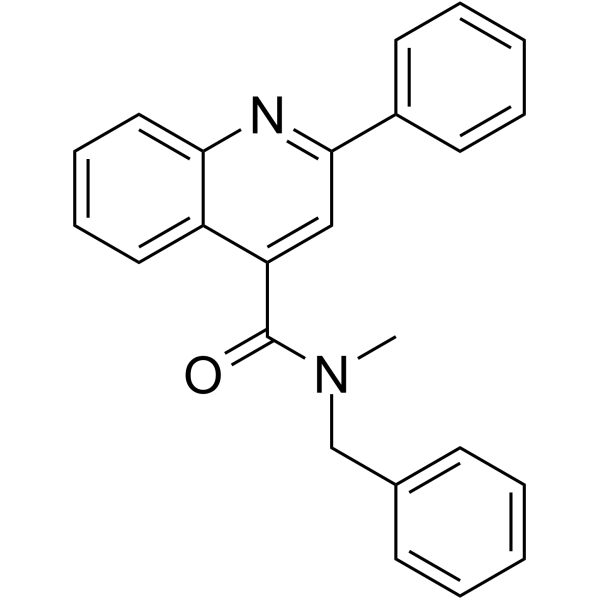 0 ImagesCat. No.: HY-143250CAS No.: 92575-00-3Tubulin inhibitor 12 (Hit 9) is a novel tubulin inhibitor (IC50=25.3 μM). Tubulin inhibitor 12 shows anti-tumor activity and anti-proliferative activity.
-
EGFR-IN-144
 0 ImagesCat. No.: HY-172111EGFR-IN-144 (Compound 4B) exhibits inhibitory activities against EGFR (IC50=0.639 µg/mL) and tubulin polymerization (IC50=7.339 µg/mL). EGFR-IN-144 exhibits cytotoxicity in multiple cancer cell with GI50 of nanomolare levels. EGFR-IN-144 downregulates the expressions of mTOR, TNF-α, and IL-6, arrests the cell cycle at G1/S phase, and induces apoptosis.
-
MDL-27048
 0 ImagesCat. No.: HY-182478CAS No.: 124711-23-5MDL-27048, a tubulin inhibitor, binds competitively, reversibly to the Colchicine (HY-16569)-binding site on tubulin heterodimers. MDL-27048 inhibits microtubule assembly, induces slow depolymerization of preassembled microtubules, disrupts microtubule polymerization-depolymerization dynamics, and disrupts cytoplasmic microtubule networks. MDL-27048 exerts growth inhibitory effects on human cancer cells, induces mitotic arrest, and does not disrupt actin filaments at microtubule-depolymerizing concentrations. MDL-27048 can be used for the research of malignant tumors.
-
Tubulin-IN-57
 0 ImagesCat. No.: HY-178325Tubulin-IN-57 is a Tubulin inhibitor. Tubulin-IN-57 is a potent antiproliferative agent that inhibits clonogenic formation, migration, and invasion of ovarian cancer cells. Tubulin-IN-57 inhibits tubulin polymerization, which in turn induces G2/M arrest and apoptosis in SKOV3 cells. Tubulin-IN-57 demonstrates potent antitumor activity without observable toxicity in an SKOV3 xenograft model. Y60S can be used for the study of ovarian cancer.
-
Tubulin polymerization-IN-31
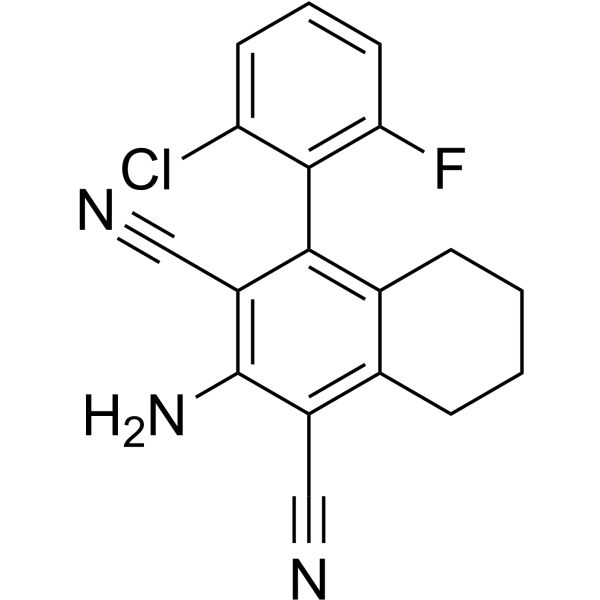 0 ImagesCat. No.: HY-147981CAS No.: 2421121-79-9
-
Alyssin
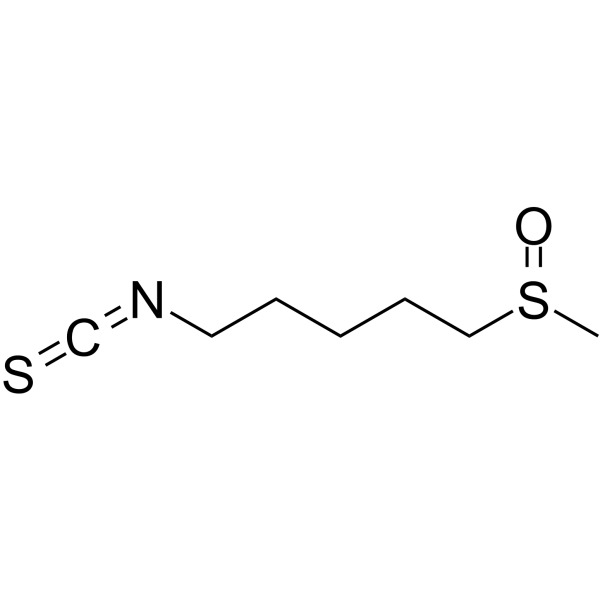 0 ImagesAlyssin, found in Cruciferous Vegetables, exerts anticancer activity in HepG2 by increasing intracellular reactive oxygen species and tubulin depolymerization.
-
PROTAC Tubulin degrader-2
 0 ImagesCat. No.: HY-181143PROTAC Tubulin degrader-2 is a cereblon (CRBN)-dependent α/β-tubulin PROTAC degrader with DC50 values of 1.73 μM and 1.38 μM. PROTAC Tubulin degrader-2 can inhibit cancer cells proliferation and migration. PROTAC Tubulin degrader-2 can induce G2/M arrest, apoptosis, ROS accumulation. PROTAC Tubulin degrader-2 can be used for the research of cancer, such as non-small-cell lung cancer.




