



Reactive Oxygen Species (ROS)
Reactive oxygen species (ROS), such as superoxide anion (O2-), hydrogen peroxide (H2O2), and hydroxyl radical (HO•), consist of radical and non-radical oxygen species formed by the partial reduction of oxygen. Cellular ROS are generated endogenously during mitochondrial oxidative metabolism as well as in cellular response to xenobiotics, cytokines, and bacterial invasion.
ROS also activates MAPK pathways by the direct inhibition of MAPK phosphatases. Through PTEN, the PI3K pathway is subject to reversible redox regulation by ROS generated by growth factor stimulation. The activation of autophagy may be a cellular defense mechanism in response to ROS.
All Product Categories
-
Reactive Oxygen Species (ROS) Inhibitors
(1091)
View all products
-
Reactive Oxygen Species (ROS) Agonists
(37)
View all products
-
Reactive Oxygen Species (ROS) Antagonists
(2)
View all products
-
Reactive Oxygen Species (ROS) Activators
(525)
View all products
-
Reactive Oxygen Species (ROS) Modulators
(22)
View all products
-
Reactive Oxygen Species (ROS) MDM2 Inhibitor
(1)
View all products
-
Reactive Oxygen Species (ROS) Inducers
(645)
View all products
-
Reactive Oxygen Species (ROS) Controls
(5)
View all products
-
Reactive Oxygen Species (ROS) Substrates
(3)
View all products
-
Reactive Oxygen Species (ROS) Related Products (2859)
Related Products (2859)

-
Antibodies (8)
-
BDE 47 (Standard)
 0 ImagesCat. No.: HY-W762011RCAS No.: 5436-43-1BDE 47 (Standard) is the analytical standard of BDE 47. This product is intended for research and analytical applications. BDE 47 targets mitochondria, inhibits mitochondrial oxidative phosphorylation (OXPHOS), decreases mitochondrial membrane potential (MMP) and induces apoptosis in embryonic cell. BDE 47 induces the generation of ROS, and activates the JNK signaling pathway. BDE 47 exhibits embryonic developmental toxicity in zebrafish.
-
GDCNF-11
 0 ImagesCat. No.: HY-169133CAS No.: 2991588-80-6GDCNF-11 is a type of HSP90 interaction-mediated protein degradation chimera (HIM-PROTAC) degrader that targets and degrades GPX4, with a DC50 of 0.08 μM. GDCNF-11 mediates the ubiquitination and proteasome-dependent degradation of GPX4 by recruiting GPX4 to form a ternary complex with HSP90, increases intracellular lipid peroxides and ROS, and ultimately triggers Ferroptosis. GDCNF-11 inhibits tumor growth in mouse models, downregulates GPX4 protein in xenograft tumors, and upregulates the lipid peroxidation marker. GDCNF-11 can be used for the research of fibrosarcoma.
-
Ensulizole (Standard)
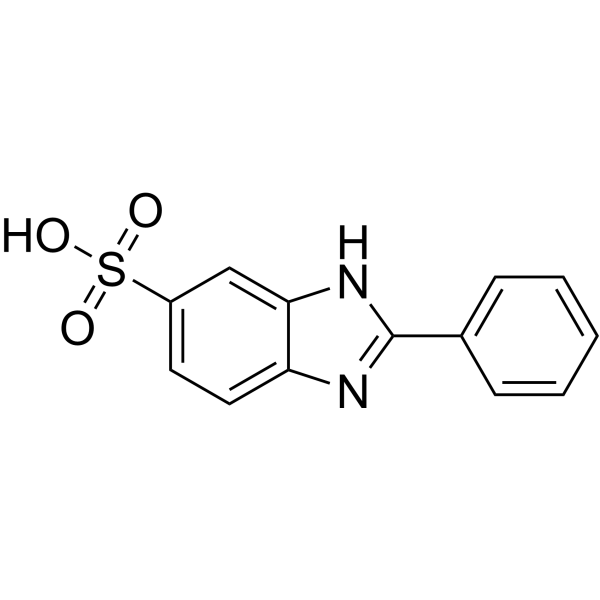 0 ImagesEnsulizole (Standard) is the analytical standard of Ensulizole. This product is intended for research and analytical applications. Ensulizole is a sulfonated UV absorber and can intense UVB and partial UVA absorption. Ensulizole can damage the DNA through the generation of reactive oxygen species (ROS) upon UV or sunlight irradiation.
-
Saquinavir mesylate (Standard)
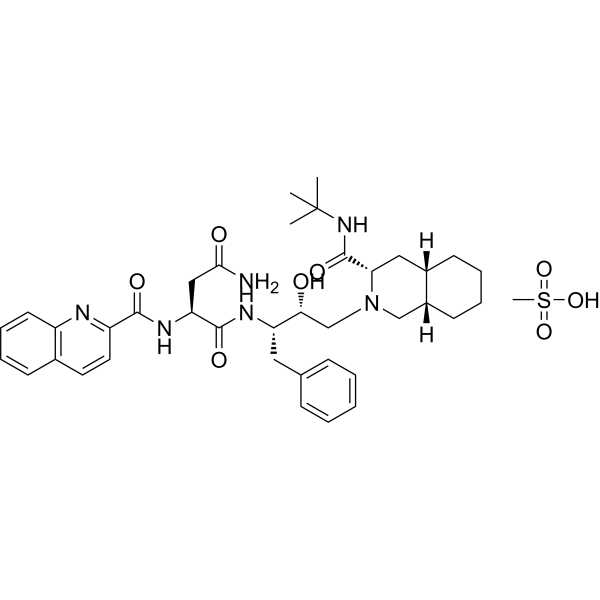 0 ImagesSynonyms: Ro 31-8959/003 (Standard)Saquinavir mesylate (Standard) (Ro 31-8959/003 (Standard)) is the analytical standard of Saquinavir mesylate (HY-17003). This product is intended for research and analytical applications. Saquinavir (Ro 31-8959) mesylate is an orally active HIV protease inhibitor that can be used in the research of AIDS. Saquinavir mesylate also has anti-inflammatory activity and can induce apoptosis of human red blood cells.
-
Fomesafen-d3
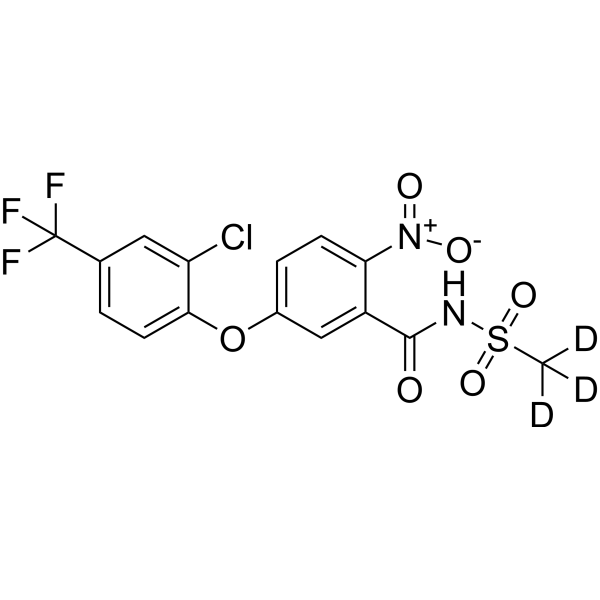 0 ImagesCat. No.: HY-B2010SFomesafen-d3 is the deuterium-labeled Fomesafen (HY-B2010). Fomesafen is an orally active herbicide. Fomesafen inhibits protoporphyrinogen oxidase (PPO). Fomesafen induces Apoptosis and increases ROS. Fomesafen exhibits developmental toxicity, immunotoxicity, and neurotoxicity. It induces precancerous lesions in the liver and hepaturoporphyria in mice. Fomesafen is used to control broadleaf weeds in soybean fields, rubber plantations, and orchards.
-
3-Hydroxyphenylacetic acid (Standard)
 0 Images3-Hydroxyphenylacetic acid (Standard) is the analytical standard of 3-Hydroxyphenylacetic acid (HY-W001083). This product is intended for research and analytical applications. 3-Hydroxyphenylacetic acid is an orally active flavonoid metabolite produced by intestinal flora, with blood pressure-lowering activity. 3-Hydroxyphenylacetic acid can also inhibit ferroptosis by upregulating the expression of GPX4, thereby improving spermatogenic dysfunction in aged mice. In addition, abnormal levels of 3-Hydroxyphenylacetic acid are closely related to certain diseases, such as autism spectrum disorders.
-
VEGFR-2-IN-81
 0 ImagesCat. No.: HY-181493VEGFR-2-IN-81 is a thiazole-based isoquinolin-1(2H)-one derivative and an VEGFR-2 inhibitor with IC50 of 1.94 μM. VEGFR-2-IN-81 exhibits significant selective cytotoxicity against colorectal cancer cells (IC50 = 7.75 μM). VEGFR-2-IN-81 exerts anti-colorectal cancer effects by inducing apoptosis, elevating intracellular ROS levels and reducing mitochondrial transmembrane potential. VEGFR-2-IN-81 can be used for the research of colorectal cancer, lung cancer, breast cancer, liver cancer.
-
Veratric acid-d6
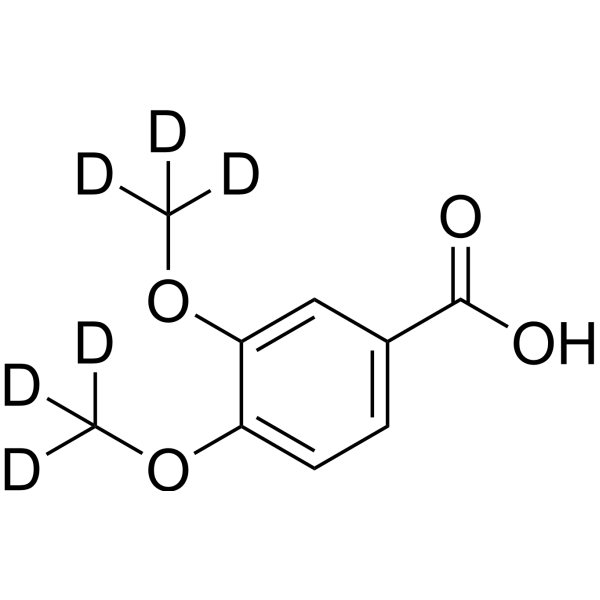 0 ImagesSynonyms: 3,4-Dimethoxybenzoic acid-d6Veratric acid-d6 is deuterium labeled Veratric acid. Veratric acid (3,4-Dimethoxybenzoic acid) is an orally active phenolic compound derived from vegetables and fruits, has antioxidant and anti-inflammatory activities. Veratric acid also acts as a protective agent against hypertension-associated cardiovascular remodelling. Veratric acid reduces upregulated COX-2 expression, and levels of PGE2, IL-6 after UVB irradiation.
-
Chalcomoracin
 0 ImagesCat. No.: HY-N20674CAS No.: 76472-89-4Chalcomoracin is an orally active anticancer agent. Chalcomoracin exhibits anticancer, antibacterial, and α-glucosidase inhibitory activities, with an IC50 of 14.23 µM against yeast α-glucosidase and an IC50 of 5.5 μM against FabI of Staphylococcus aureus. Chalcomoracin reduces the phosphorylation levels of ERK, JNK, and P38; enhances the phosphorylation level of ERK1/2; regulates the MAPK, mTOR, AKT, and p53 signaling pathways; upregulates the expression of Chop, Bip, PINK1, GRP78, and GADD153; and downregulates the expression of Alix. Chalcomoracin induces apoptosis (apoptosis), endoplasmic reticulum stress (endoplasmic reticulum stress), paraptosis (paraptosis), ROS production, mitophagy (mitophagy), and autophagy (autophagy); it inhibits cancer cell viability, colony-forming ability, migration, invasion, proliferation, tumorigenesis, fatty acid synthesis, S. aureus growth, vitreous-stimulated retinal cell activity, and cell cycle progression at the G0/G1 phase. Chalcomoracin can be used in research related to hepatocellular carcinoma, non-small cell lung cancer, triple-negative breast cancer, prostate cancer, proliferative vitreoretinopathy, pancreatic cancer, diabetes, and bacterial infections.
-
PI3Kδ/HDAC6-IN-1
 0 ImagesCat. No.: HY-174396CAS No.: 3075011-99-0PI3Kδ/HDAC6-IN-1 (Compound 22E) is an orally active and dual inhibitor of PI3Kδ and HDAC6 with IC50 values of 2.4 nM and 6.2 nM, respectively. PI3Kδ/HDAC6-IN-1 exhibits potent antiproliferative effects on non-Hodgkin lymphoma (NHL) cells and possesses in vivo antitumor activity without significant toxicity. PI3Kδ/HDAC6-IN-1 arrests the cell cycle at the G0/G1 phase and induces apoptosis. PI3Kδ/HDAC6-IN-1 blocks the PI3K/AKT/mTOR signaling pathway and increases the acetylation levels of α-tubulin and histone H3.
-
DHODH-IN-26
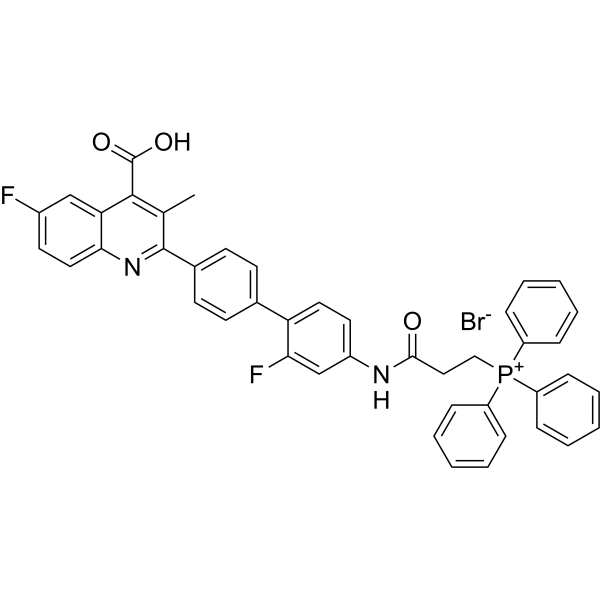 0 ImagesCat. No.: HY-158023DHODH-IN-26 (compound B2) is a mitochondria-targeting DHODH inhibitor. DHODH-IN-26 shows anticancer activity, triggers the formation of reactive oxygen species (ROS), promots mitochondrial lipid peroxidation, and induces ferroptosis.
-
MAOS
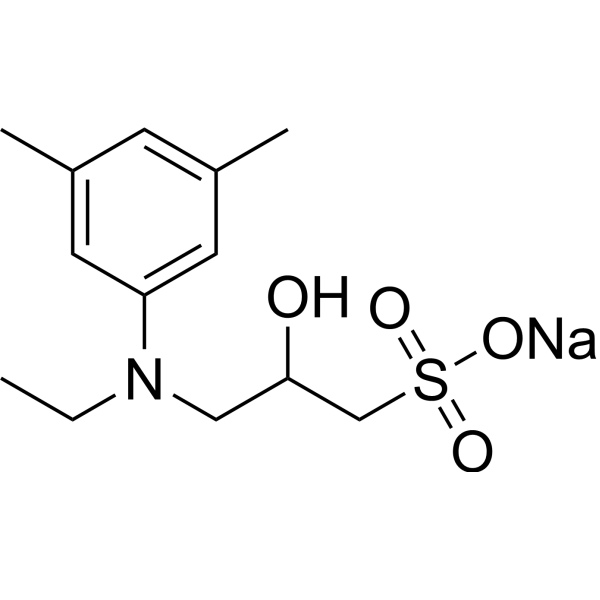 0 ImagesMAOS is a modified Trinder’s reagent that can be used as a chromogenic probe for the determination of H2O2. MAOS is strongly dependent on the pH of the reaction medium.
-
SDH-IN-36
 0 ImagesCat. No.: HY-178495CAS No.: 261929-60-6SDH-IN-36 (Compound 17) is a derivative of alpha-D-tocopherol. SDH-IN-36 increases ROS and induces apoptosis by inhibiting SDHC and blocking electron transfer. SDH-IN-36 can inhibit the proliferation of various tumor cells, such as SSK4 (GI50 = 0.156 µM), SSNU638 (GI50 = 0.659 µM), and SKATOIII (GI50 = 0.490 µM) cells. SDH-IN-36 can significantly inhibit tumor growth. SDH-IN-36 can be used for research on cancers such as gastric cancer.
-
MO-2097
 0 ImagesCat. No.: HY-N13009CAS No.: 2744300-63-6MO-2097 is a RAF-1/HIF-1α inhibitor. MO-2097 induces RAF-1 destabilization, leading to a reduction in EMT-associated transcription factors and mesenchymal markers. MO-2097 inhibits HIF-1a protein expression mediated by hnRNPA2B1 under hypoxic and mimetic hypoxia. MO-2097 induces mitochondrial ROS, which leads to apoptosis in cells. MO-2097 effectively suppresses colorectal cancer metastasis by inhibiting the RAF/MEK/ERK signaling pathway. MO-2097 attenuates tumor growth in a xenograft HCT116 cell mouse model. MO-2097 can be used for the study of colorectal cancer.
-
(E/Z)-3-Hydroxylicochalcone A
 0 ImagesCat. No.: HY-N12571ACAS No.: 1083200-74-1(E/Z)-3-Hydroxylicochalcone A (Compound 1) is a flavonoid found in licorice (Glycyrrhiza inflata and
Glycyrrhiza uralensis), with antioxidant and anti-inflammatory activity. (E/Z)-3-Hydroxylicochalcone A inhibits lipid peroxidation in rat liver microsomes. (E/Z)-3-Hydroxylicochalcone A inhibits LPS (HY-D1056)-induced ROS, NO, IL-6, and PGE2 production.
-
GSK1370319A
 0 ImagesCat. No.: HY-165557CAS No.: 1001389-31-6GSK1370319A is a human P2X7 receptor inhibitor with an IC50 of 474 nM and a Ki of 176 nM. GSK1370319A inhibits the production of IL-1β, reduces the generation of reactive oxygen species (ROS), and increases the survival rate of macrophages. GSK1370319A can be used for the research of inflammatory bowel disease.
-
Landiolol
 0 ImagesCat. No.: HY-100607CAS No.: 133242-30-5Synonyms: ONO1101Landiolol (ONO1101) is a highly selective, ultra-short-acting competitive inhibitor of β1 adrenergic receptors. Landiolol specifically blocks cardiac β1 receptors, reducing heart rate and myocardial oxygen consumption. Landiolol inhibits TNF-α-induced excessive mitochondrial oxygen consumption and reactive oxygen species production in a sepsis model, alleviating renal injury. Landiolol has little effect on cardiac ion channels (such as L-type calcium current and inward rectifier potassium current) and has a weak negative inotropic effect. Landiolol can be used for perioperative tachycardia control and protection studies of sepsis-related acute kidney injury.
-
HCM-01
 0 ImagesHCM-01 is an Excitatory amino acid transporter 2 (EAAT2) activator with oral effectiveness and blood-brain barrier penetration.HCM-01 binds to the allosteric site of EAAT2, increases EAAT2 expression in astrocytes, enhances glutamate-handling capacity, and modulates glutamate homeostasis.HCM-01 acts as an antioxidant, improves oxidative/antioxidative balance and increases total antioxidant capacity. HCM-01 can be used for the research of Alzheimer's disease.
-
5-Methoxyindole-d3
 0 ImagesCat. No.: HY-W007328SCAS No.: 90663-68-65-Methoxyindole-d3 is the deuterated-labeled 5-Methoxyindole (HY-W007328). 5-Methoxyindole is an L-tryptophan metabolite with antifungal activity, and also serves as a pharmaceutical intermediate. Metabolites of 5-Methoxyindole exhibit COX-2 inhibitory, anti-inflammatory and anti-tumor activities. 5-Methoxyindole induces morphological distortion of hyphae and conidia, ROS accumulation, apoptosis and cell death in Gaeumannomyces graminis. 5-Methoxyindole can be used in studies related to fungal infections and organic synthesis.
-
STAT3/CAIX-IN-1
 0 ImagesCat. No.: HY-174457CAS No.: 3053583-60-8STAT3/CAIX-IN-1 is a dual-target inhibitor of STAT3 (Kd: 60.03 μM) and CAIX (IC50: 80.45 nM). STAT3/CAIX-IN-1 induces ferroptosis by increases the levels of reactive oxygen species (ROS) and lipid peroxides. STAT3/CAIX-IN-1 inhibits cell migration, induces apoptosis, and causes cell cycle arrest in MDA-MB-231 cells. STAT3/CAIX-IN-1 can be used for the study of triple-negative breast cancer (TNBC).




