



Reactive Oxygen Species (ROS)
Reactive oxygen species (ROS), such as superoxide anion (O2-), hydrogen peroxide (H2O2), and hydroxyl radical (HO•), consist of radical and non-radical oxygen species formed by the partial reduction of oxygen. Cellular ROS are generated endogenously during mitochondrial oxidative metabolism as well as in cellular response to xenobiotics, cytokines, and bacterial invasion.
ROS also activates MAPK pathways by the direct inhibition of MAPK phosphatases. Through PTEN, the PI3K pathway is subject to reversible redox regulation by ROS generated by growth factor stimulation. The activation of autophagy may be a cellular defense mechanism in response to ROS.
All Product Categories
-
Reactive Oxygen Species (ROS) Inhibitors
(1091)
View all products
-
Reactive Oxygen Species (ROS) Agonists
(37)
View all products
-
Reactive Oxygen Species (ROS) Antagonists
(2)
View all products
-
Reactive Oxygen Species (ROS) Activators
(525)
View all products
-
Reactive Oxygen Species (ROS) Modulators
(22)
View all products
-
Reactive Oxygen Species (ROS) MDM2 Inhibitor
(1)
View all products
-
Reactive Oxygen Species (ROS) Inducers
(645)
View all products
-
Reactive Oxygen Species (ROS) Controls
(5)
View all products
-
Reactive Oxygen Species (ROS) Substrates
(3)
View all products
-
Reactive Oxygen Species (ROS) Related Products (2859)
Related Products (2859)

-
Antibodies (8)
-
SHN7
 0 ImagesCat. No.: HY-184706CAS No.: 3126116-06-8SHN7 is a selective HDAC1/HDAC6 inhibitor, NQO1 substrate and ROS inducer, with an IC50 of 30 nM against HDAC1 and an IC50 of 10 nM against HDAC6. SHN7 inhibits STAT3 with a Kd of 8.9 μM. SHN7 arrests the cell cycle at the G2/M phase and induces Apoptosis. SHN7 exhibits anti-tumor effects in triple-negative breast cancer (TNBC) xenograft models. SHN7 can be used for the research of triple-negative breast cancer.
-
13'-Carboxy-δ-tocopherol
 0 ImagesCat. No.: HY-N17653CAS No.: 1160974-35-513'-Carboxy-δ-tocopherol is a metabolite of long-chain vitamin E.13'-Carboxy-δ-tocopherol exhibits antiproliferative properties in cancer cells. 13'-Carboxy-δ-tocopherol activates caspase-3, caspase-9, causes PARP-1 cleavage, reduces mitochondrial membrane potential, increases ROS formation, and drives apoptosis.13'-Carboxy-δ-tocopherol can be used for the research of hepatocellular carcinoma.
-
Norgestrel (Standard)
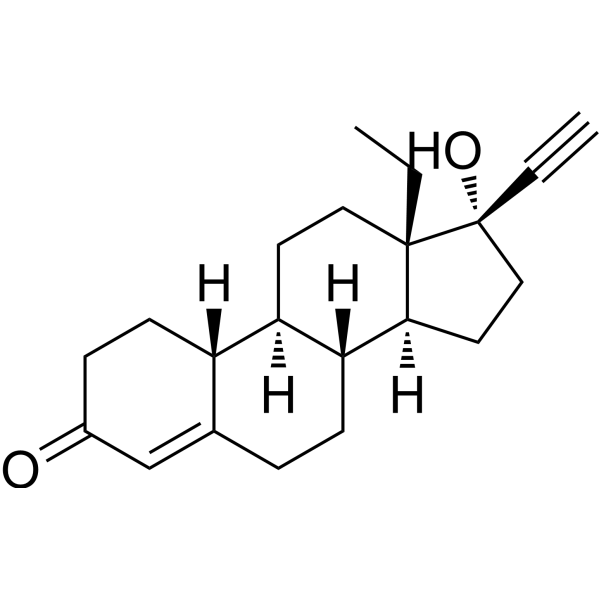 0 ImagesNorgestrel (Standard) is the analytical standard of Norgestrel. This product is intended for research and analytical applications. Norgestrel is a synthetic analog of progesterone, a compound commonly found in oral contraceptive pill, and a powerful neuroprotective antioxidant, preventing light-induced ROS in photoreceptor cells, and cell death.
-
TBC-1
 0 ImagesCat. No.: HY-168854CAS No.: 2522115-48-4TBC-1 is a chlorophyll-a derivative, is a photosensitizer that can be used in photodynamic therapy (PDT). TBC-1 efficiently generats Type-I ROS and endoplasmic reticulum targeting ability. TBC-1 shows biocompatibility and PDT efficiency in vitro under both normoxia and hypoxia.
-
CDK4/6-IN-26
 0 ImagesCat. No.: HY-179151CDK4/6-IN-26 is a carbamate derivative that targets CDK4/CDK6. CDK4/6-IN-26 reduces CDK4/CDK6 levels, resulting in cell cycle arrest in the G0/G1 phase and in the S phase. CDK4/6-IN-26 exhibits high potency against SW480 cells (IC50 = 6.3 μM). CDK4/6-IN-26 affects ROS levels by increasing the expression of SOD2/MnSOD. CDK4/6-IN-26 establishes several interactions with the amino acids of the CDK6 active site. CDK4/6-IN-26 can be used for the research of colorectal cancer.
-
D-(+)-Glucono-1,5-lactone-13C6
 0 ImagesCat. No.: HY-W768262CAS No.: 1637561-71-7Synonyms: Gluconic acid lactone-13C6D-(+)-Glucono-1,5-lactone-13C6 (Gluconic acid lactone-13C6) is the 13C-labeled D-(+)-Glucono-1,5-lactone (HY-I0301). D-(+)-Glucono-1,5-lactone is a polyhydroxy (PHA) that is capable of metal chelating, moisturizing and antioxidant activity.
-
Anticancer agent 235
 0 ImagesCat. No.: HY-N13063CAS No.: 2411108-21-7Anticancer agent 235 (Compound 49) is a modulator for PI3K/AKT/mTOR pathway, that promotes the generation of ROS, reduces the mitochondrial membrane potential, and thereby inhibits the proliferation of cancer cells HCT116, Caco-2, AGS and SMMC-772 with IC50 of 0.35-26.9 μM. Anticancer agent 235 arrests the cell cycle at G2/M phase, and induces apoptosis in HCT116.
-
α-Tubulin polymerization-IN-1
 0 ImagesCat. No.: HY-173039α-Tubulin polymerization-IN-1 (Compound 8l) is an inhibitor for α-Tubulin polymerization. α-Tubulin polymerization-IN-1 modulates the NRF2/KEAP-1 signaling pathway, induces ROS generation in PC-3 cell, thereby inducing apoptosis in PC-3. α-Tubulin polymerization-IN-1 inhibits the proliferation of PC-3 cell with a GI50 of 0.17 µM, arrests the cell cycle at G2/M phase. α-Tubulin polymerization-IN-1 exhibits antitumor efficacy in mouse model.
-
VEGFR2/C-RAF kinase-IN-1
 0 ImagesCat. No.: HY-189471VEGFR2/C-RAF kinase-IN-1 is a type II dual kinase inhibitor targeting VEGFR2 and C-RAF, with IC50 values of 12.22 nM and 38.04 nM, respectively. VEGFR2/C-RAF kinase-IN-1 binds VEGFR2 and CRAF in a Type-II mode and inhibits the downstream Raf-MEK-ERK signaling cascade. VEGFR2/C-RAF kinase-IN-1 induces cell cycle arrest, apoptosis, and intracellular ROS accumulation in H1299 cells, while partially inhibiting P-gp efflux function. VEGFR2/C-RAF kinase-IN-1 can be used for cancer research, such as non-small cell lung cancer and liver cancer.
-
Citronellol-d3
 0 ImagesCat. No.: HY-W010201S1Synonyms: (±)-Citronelloll-d3; (±)-β-Citronelloll-d3Citronellol-d3 ( (±)-Citronelloll-d3) is the deuterium labeled Citronellol (HY-W010201). Citronellol ((±)-Citronellol) is an orally active inducer of apoptosis. Citronellol can prevent oxidative stress, mitochondrial dysfunction, and apoptosis in the SH-SY5Y cell Parkinson's disease model induced by 6-OHDA by regulating the ROS-NO, MAPK/ERK, and PI3K/Akt signaling pathways. Citronellol can induce necroptosis in human lung cancer cells through the TNF-α pathway and accumulation of ROS. Citronellol can reduce the levels of LC-3 and p62 to regulate the autophagy pathway, inhibit oxidative stress and neuroinflammation, and thus have neuroprotective effects on Parkinson's rats. Citronellol exhibits anti-fungal activity against Trichophyton rubrum by inhibiting ergosterol synthesis.
-
CAII-IN-11
 0 ImagesCat. No.: HY-180916CAII-IN-11 (Compound A1) is a dual-target compound that contains a hCA II inhibitor (IC₅₀ = 2 nM) portion and a NO donor portion. CAII-IN-11 also has inhibitory activity against hCA IX, hCA XII, and hCA I, with IC50 values of 6, 3, and 152 nM respectively. CAII-IN-11 significantly increases the intracellular cGMP level in human trabecular meshwork cells. CAII-IN-11 reduces the apoptosis of retinal ganglion cells by reducing oxidative stress (ROS levels), inhibiting astrocytes and the NLRP3 inflammasome activation. CAII-IN-11 has hypotensive activity in rabbit models and can be used for the study of glaucoma.
-
MCI
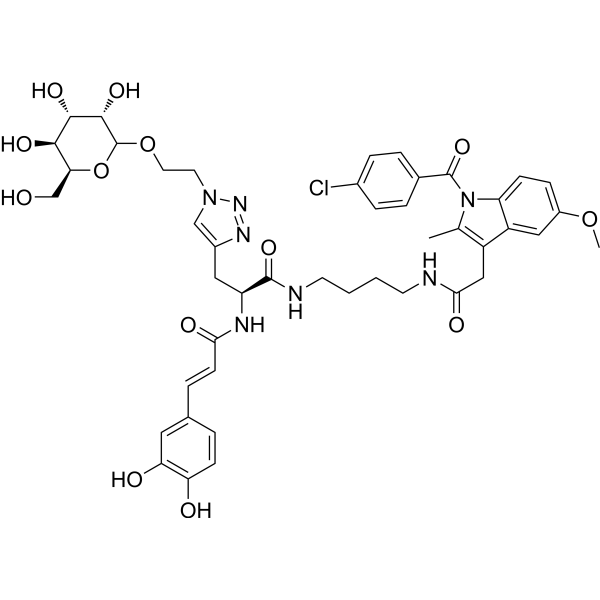 0 ImagesCat. No.: HY-155031MCI alleviates inflammation by macrophage reprogramming via targeting ROS scavenging and COX-2 downregulation. MCI inhibits COX-2 with an IC50 value of 1.23 μM. MCI has significant anti-inflammatory effects in collagen-induced arthritis (CIA) models. MCI can be used in research for rheumatoid arthritis (RA).
-
Dimethoxycurcumin-d6
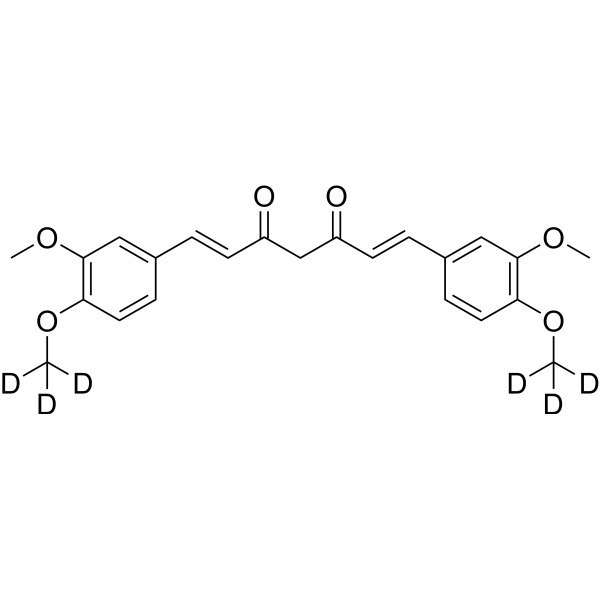 0 ImagesCat. No.: HY-100977SCAS No.: 3006902-95-7Synonyms: DiMC-d6; CHC 004-d6; Di-O-methylcurcumin-d6Dimethoxycurcumin-d6 (DiMC-d6; CHC 004-d6; Di-O-methylcurcumin-d6) is the deuterated-labeled Dimethoxycurcumin (HY-100977). Dimethoxycurcumin (DiMC) is a curcuminoid compound found in Curcuma longa. Dimethoxycurcumin is also an orally active thioredoxin reductase inhibitor (IC50 = 5.4 μM) and androgen receptor antagonist. Dimethoxycurcumin inhibits thioredoxin reductase, leading to oxidized thioredoxin accumulation, ROS production, DNA damage, glutathione depletion, mitochondrial membrane potential decrease, ATP depletion, S phase arrest, and apoptosis. Dimethoxycurcumin inhibits NF-κB, NADPH oxidase subunits, ATP synthase subunits, CDK4, cyclin-D1, FASN, ACC, and the IRS2-PI3K-Akt pathway, while activating AMPK, ERK, and JNK. Dimethoxycurcumin can be used for research on cancer, arsenic-induced hepatotoxicity, and tuberculosis.
-
5-Acetamide-Butenolide
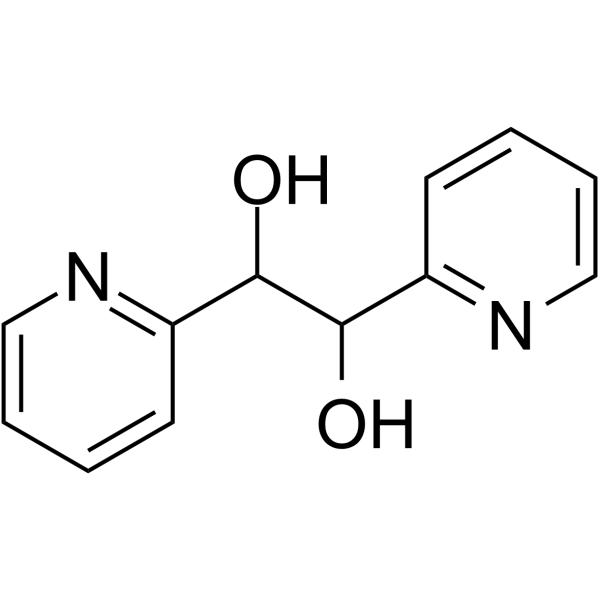
 0 ImagesCat. No.: HY-W402074CAS No.: 16275-44-8Synonyms: Butenolide5-Acetamide-Butenolide (Butenolide) is a mycotoxin with pro-oxidant activity, which is found in Fusarium. 5-Acetamide-Butenolide disrupts the mitochondrial membrane potential in primary neonatal rat cardiomyocytes. 5-Acetamide-Butenolide also induces the production of thiobarbituric acid reactive substances (TBARS) in isolated rat myocardial mitochondria. 5-Acetamide-Butenolide increases the production of reactive oxygen species (ROS), decreases the levels of GSH and reduces the viability of HepG2 cells.
-
USP30-IN-20
 0 ImagesCat. No.: HY-175826USP30-IN-20 is an orally active USP30 inhibitor (Kd = 1.61 μM, IC50 = 12.8 μM). USP30-IN-20 induces ferroptosis by promoting ubiquitination-mediated degradation of GPX4. USP30-IN-20 inhibits the proliferation, migration, invasion, and stemness of prostate cancer cells. USP30-IN-20 induces G0/G1 cell cycle arrest and ROS levels in prostate cancer cells. USP30-IN-20 exhibits significant anti-tumor efficacy in PC3 cell subcutaneous xenografts in mice. USP30-IN-20 can be used for the study of advanced prostate cancer.

-
Avenanthramide A (Standard)
 0 ImagesCat. No.: HY-114977RCAS No.: 108605-70-5Avenanthramide A (Standard) is the analytical standard of Avenanthramide A. This product is intended for research and analytical applications. Avenanthramide A is an orally active phytoalexin that targets the RNA helicase DDX3 with a KD of 8.8 μM. Avenanthramide A induces mitochondrial swelling and increased ROS production, and triggers apoptosis in CRC cells. Avenanthramide A inhibits smooth muscle cell proliferation and enhances nitric oxide production. Avenanthramide A can be used in research on colorectal cancer and atherosclerosis.
-
MTHFD2-IN-6
 0 ImagesCat. No.: HY-172910CAS No.: 3077252-76-4MTHFD2-IN-6 is an orally active selective inhibitor of MTHFD2, with a human IC50 of 1.46 μM. MTHFD2-IN-6 binds directly to MTHFD2, selectively inhibits cancer cell proliferation, promotes ROS accumulation in cancer cells, and induces cancer cell cycle arrest and apoptosis. MTHFD2-IN-6 inhibits tumor growth in Mus musculus xenograft models. MTHFD2-IN-6 can be used for lung cancer research.
-
Rehmannioside D (Standard)
 0 ImagesCat. No.: HY-N0912RCAS No.: 81720-08-3Rehmannioside D (Standard) is the analytical standard of Rehmannioside D (HY-N0912). This product is intended for research and analytical applications. Rehmannioside D is an orally active Sirt7 modulator. Rehmannioside D upregulates Sirt7 expression, inhibits the level of acetylated p53, and blocks the activation of the p53 signaling pathway. Rehmannioside D alleviates liver injury, inflammatory response, collagen deposition and hepatocyte apoptosis. Rehmannioside D is applicable to research related to liver fibrosis.




