



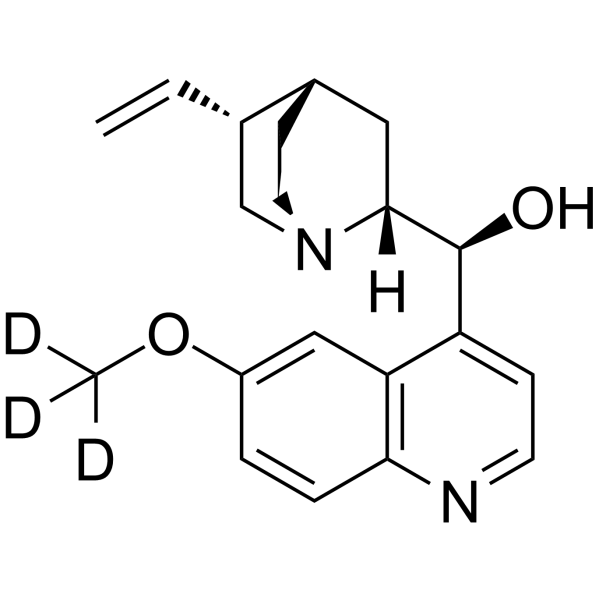
Quinidine-d3
Quinidine-d3 is the d3-labeled Quinidine (15% dihydroquinidine) (HY-B1751). Quinidine (15% dihydroquinidine) is an orally active antiarrhythmic agent. Quinidine (15% dihydroquinidine) reduces the expression level of P-gp, inhibits P-gp-mediated efflux, increases the intracellular accumulation of P-gp substrates, induces PARP cleavage and Caspase-3 activation, and elevates the proportion of Apoptotic cells at the sub-G1 phase. Quinidine (15% dihydroquinidine) exerts sustained block and open-channel block effects on IK(f). Quinidine (15% dihydroquinidine) alters the urinary metabolic ratio of Amphetamine, modulates the Pentylenetetrazol-induced seizure threshold, and regulates the anticonvulsant effect of Dextromethorphan. Quinidine (15% dihydroquinidine) can be used in studies related to uterine sarcoma and seizures.
Nos produits utilisent uniquement pour la recherche. Nous ne vendons pas aux patients.
- CAS No.: 1267657-68-0
- Formule: C20H21D3N2O2
- Masse moléculaire:327.44
-
Stockage:
Please store the product under the recommended conditions in the Certificate of Analysis.

To place orders, for customer services and technical support, please contact: MedChemExpress USA
Tel: 609-228-6898 E-mail: [email protected] [email protected]


-
 Activité biologique
-
Chemical Information
- Protocole
- Pureté et documentation
- Références
-
 Help & FAQs


-
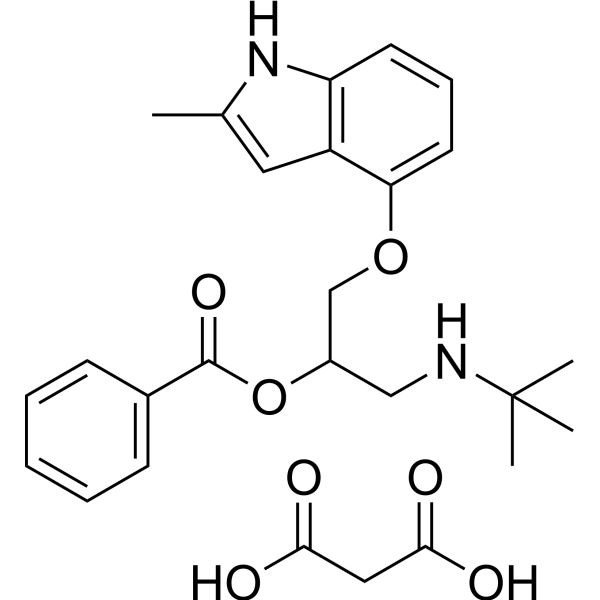
HY-B1562B
Bopindolol malonateβ-Adrenoceptors Antagonist -

HY-112076A
Atropine methyl nitratemAChR Antagonist -
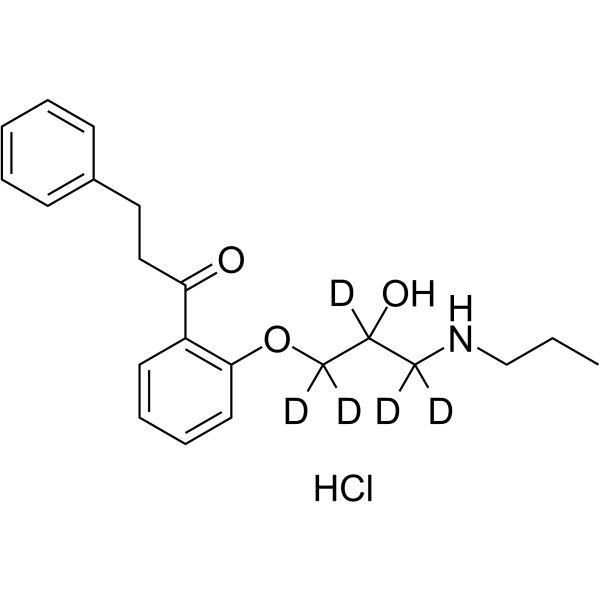
HY-B0432AS2
Propafenone-d5 hydrochlorideStable Isotope -
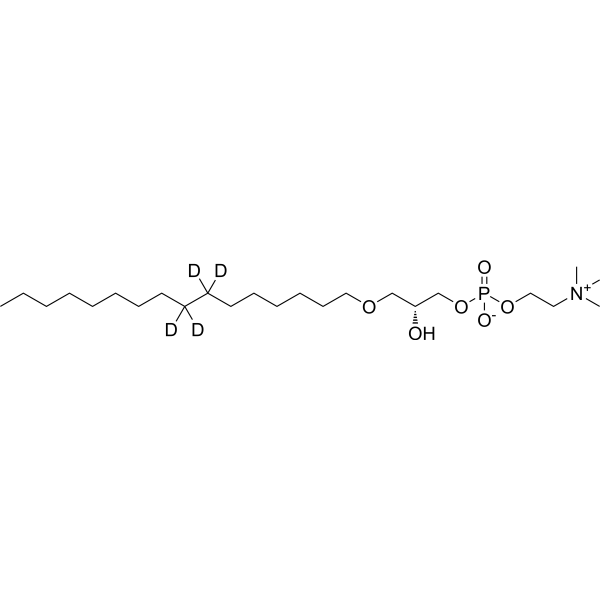
HY-141570S
Lyso-PAF C-16-d4Stable Isotope -
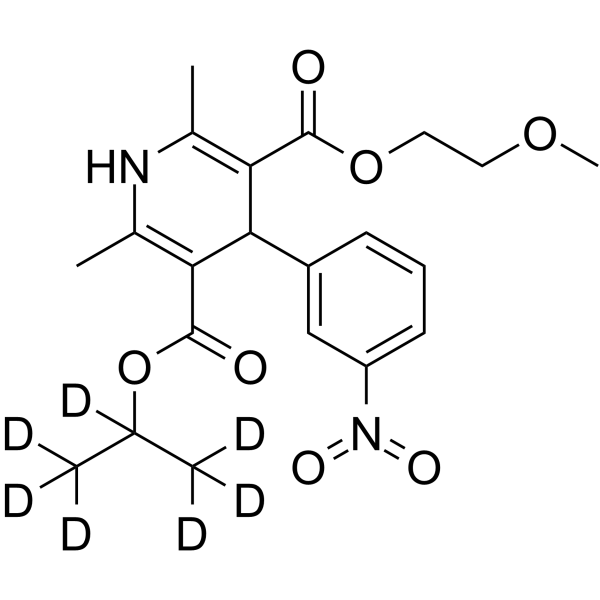
HY-B0265S
Nimodipine-d7Stable Isotope -
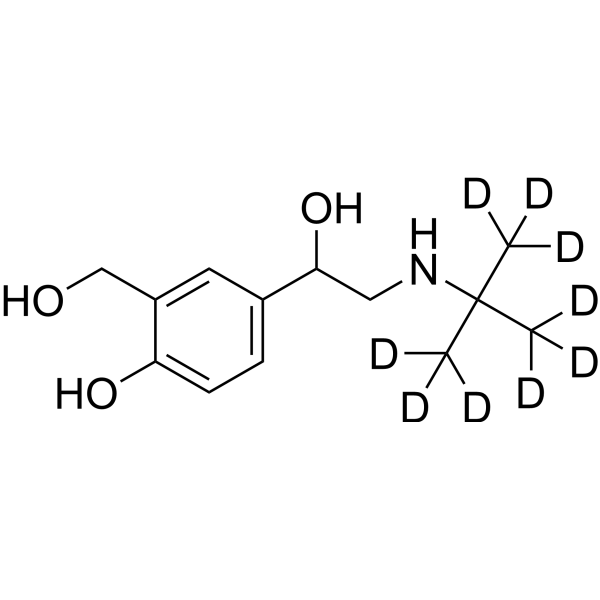
HY-B1037S2
Salbutamol-d9Stable Isotope -

HY-W700344
o-Desmethyl ranolazineDrug Metabolite -
![16-[[2-(Methylamino)-2-oxoacetyl]amino]-11Z-hexadecenoic acid](https://file.medchemexpress.com/product_pic/hy-120500.gif)
HY-120500
16-[[2-(Methylamino)-2-oxoacetyl]amino]-11Z-hexadecenoic acidOrganic -
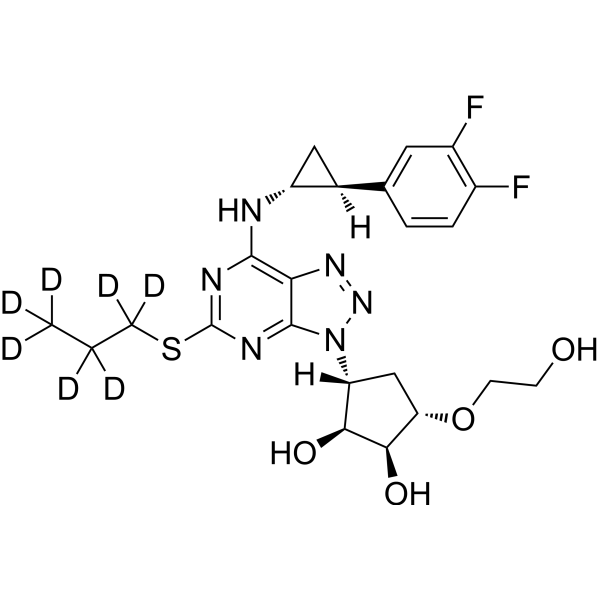
HY-10064S
Ticagrelor-d7Stable Isotope -
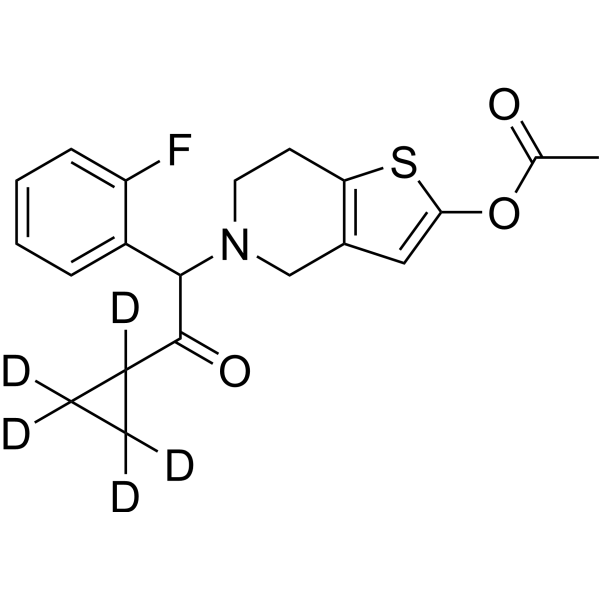
HY-15284S
Prasugrel-d5Stable Isotope
Voir tous les produits spécifiques à Isoform Caspase
More

Activité biologique
Description
IC50 & Target
|
Caspase 3 |
Application
1. This compound can be used as a tracer
2. This compound can be used as an internal standard for quantitative analysis by NMR, GC-MS, or LC-MS.


Chemical Information
-
CAS No. 1267657-68-0
-
Unlabeled CAS 56-54-2
-
Masse moléculaire 327.44
-
Formule C20H21D3N2O2
-
SMILES
O[C@H]([C@]1([H])[N@@]2C[C@@H]([C@@H](CC2)C1)C=C)C3=CC=NC4=C3C=C(OC([2H])([2H])[2H])C=C4
-
Livraison
Room temperature in continental US; may vary elsewhere.
-
Stockage
Please store the product under the recommended conditions in the Certificate of Analysis.


Pureté et documentation
Références
[1]. Lee SY, et al. Hydrocinchonine, cinchonine, and quinidine potentiate paclitaxel-induced cytotoxicity and apoptosis via multidrug resistance reversal in MES-SA/DX5 uterine sarcoma cells. Environ Toxicol. 2011 Aug;26(4):424-31. [Content Brief]
[2]. Kehl SJ, et al. Quinidine-induced inhibition of the fast transient outward K+ current in rat melanotrophs. Br J Pharmacol. 1991;103(3):1807-1813. [Content Brief]
[3]. Moody DE, et al. Quinidine inhibits in vivo metabolism of amphetamine in rats: impact upon correlation between GC/MS and immunoassay findings in rat urine. J Anal Toxicol. 1990;14(5):311-317. [Content Brief]
[4]. Jamali H, et al. Effect of dextromethorphan/quinidine on pentylenetetrazole- induced clonic and tonic seizure thresholds in mice. Neurosci Lett. 2020;729:134988. [Content Brief]

Calculators
Concentration (start) × Volume (start) = Concentration (final) × Volume (final)


Quinidine-d3 Related Classifications
HY-B1751S Related Classifications
 Powered by Bioz
Keywords
- Quinidine-d3
- 1267657-68-0
- Isotope-Labeled Compounds
- P-glycoprotein
- PARP
- Caspase
- Apoptosis
- Potassium Channel
- apoptosis
- caspase-3
- fast transient outward potassium current channel
- cytochrome P450db
- MES-SA uterine sarcoma cells
- uterine sarcoma
- PARP cleavage
- seizures
- MES-SA/DX5 uterine sarcoma cells
- Inhibitor
- inhibitor
- inhibit