



Resveratrol-d4

Based on 1 Customer Validation
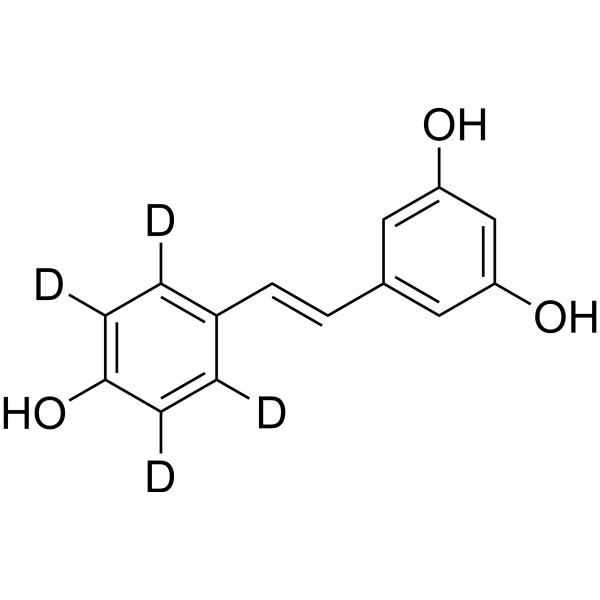
Resveratrol-d4 is the deuterium labeled Resveratrol. Resveratrol (trans-Resveratrol; SRT501), a natural polyphenolic phytoalexin that possesses anti-oxidant, anti-inflammatory, cardioprotective, and anti-cancer properties. Resveratrol (SRT 501) has a wide spectrum of targets including mTOR, JAK, β-amyloid, Adenylyl cyclase, IKKβ, DNA polymerase. Resveratrol also is a specific SIRT1 activator. Resveratrol is a potent pregnane X receptor (PXR) inhibitor. Resveratrol is an Nrf2 activator, ameliorates aging-related progressive renal injury in mice model. Resveratrol increases production of NO in endothelial cells.
Nur für Forschungszwecke. Wir verkaufen nicht an Patienten.
- Reinheit : 99.36%
- CAS. Nr.: 1089051-56-8
- Formel: C14H8D4O3
- Molecular Weight:232.27
-
Speicherung:Powder -20°C, 3 years ; In solvent -80°C, 6 months , -20°C, 1 month

To place orders, for customer services and technical support, please contact: MedChemExpress USA
Tel: 609-228-6898 E-mail: [email protected] [email protected]


-
 Biologische Aktivität
-
Chemical Information
-
Lösungsmittel & Löslichkeit
- Protokoll
- Reinheit & Dokumentation
- Verweise
-
 Help & FAQs


-
HY-W016498S
Paraxanthine-d6Stable Isotope -
HY-W355129S
MeIQx-d3Stable Isotope -
HY-16561
ResveratrolPolyphenolic Phytoalexin -
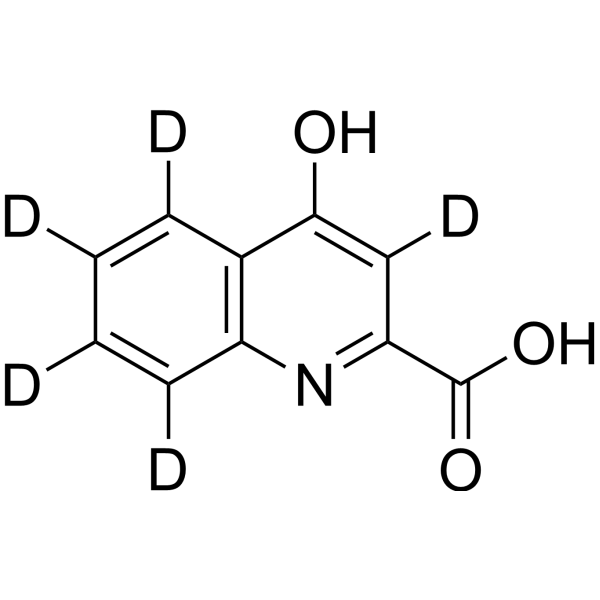
HY-100806S
Kynurenic acid-d5Stable Isotope -
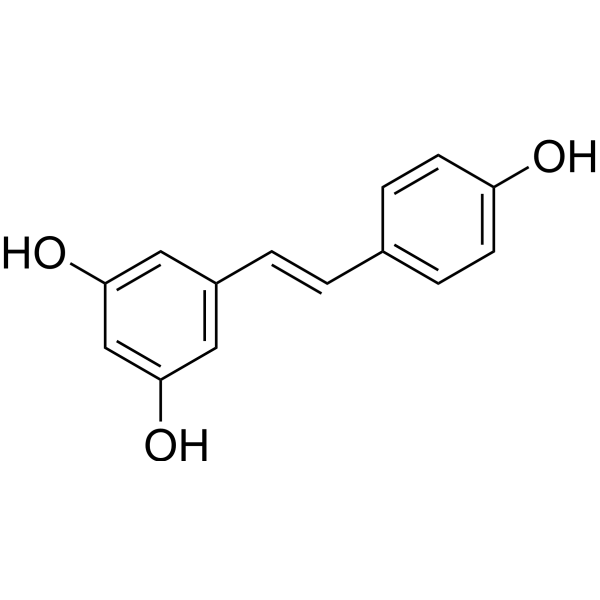
HY-16561R
Resveratrol (Standard) -
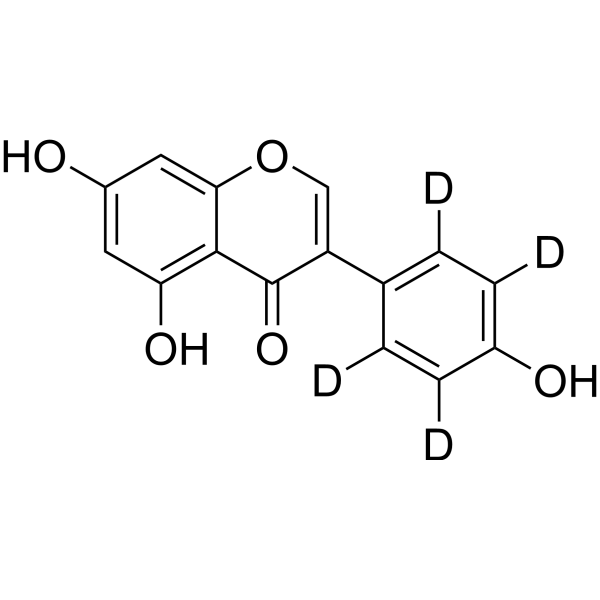
HY-14596S
Genistein-d4Stable Isotope -
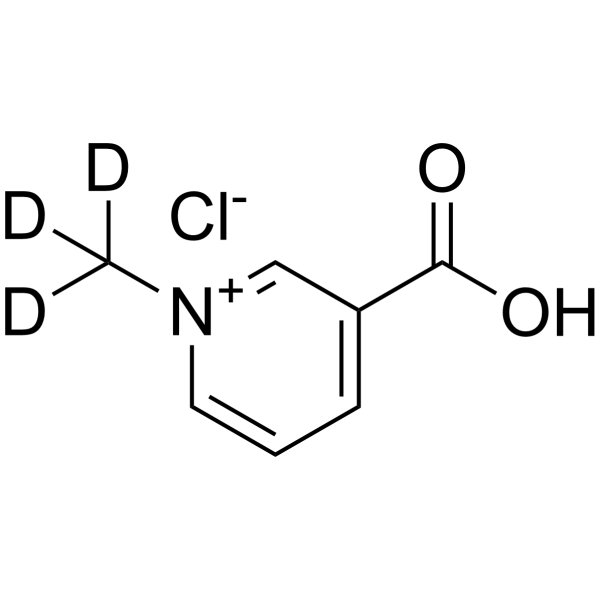
HY-N0415S
Trigonelline-d3 chlorideStable Isotope -
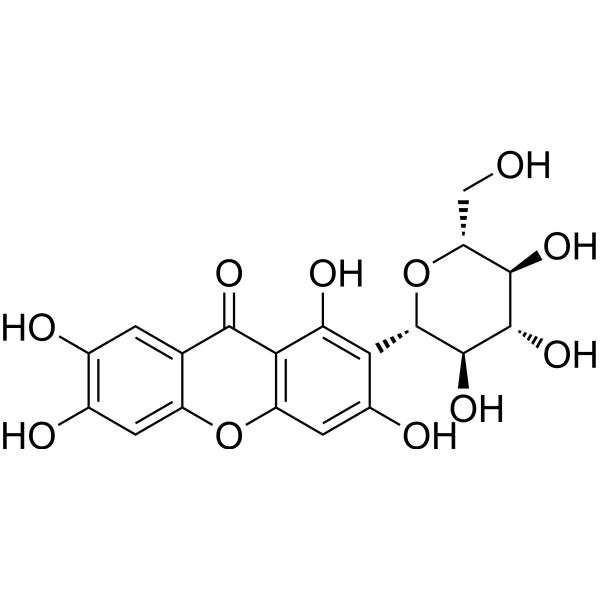
HY-N0290
MangiferinNrf2 Activator -
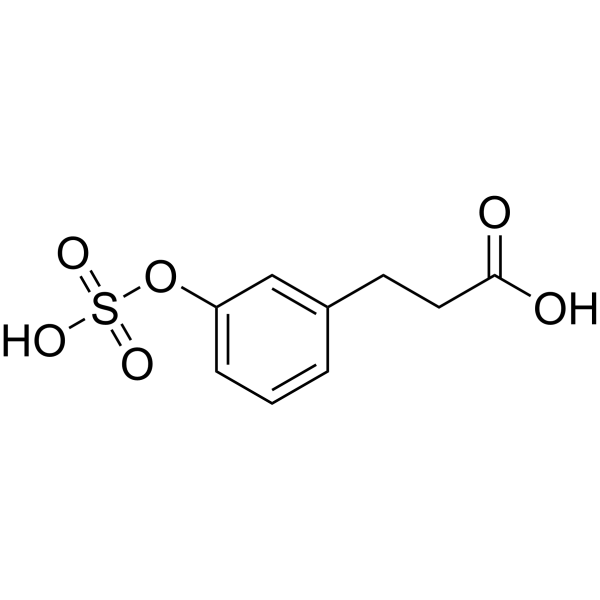
HY-160236
3-(3-Sulfooxyphenyl)propanoic acidMetabolite of Echinacoside -
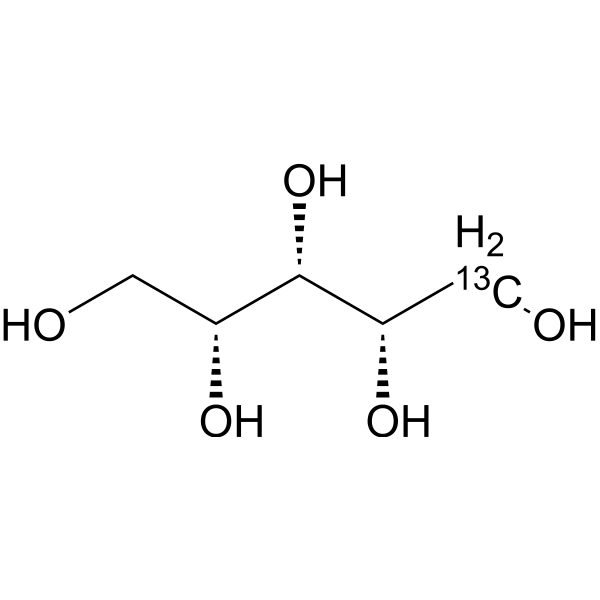
HY-N0538S2
Xylitol-5-13CStable Isotope -
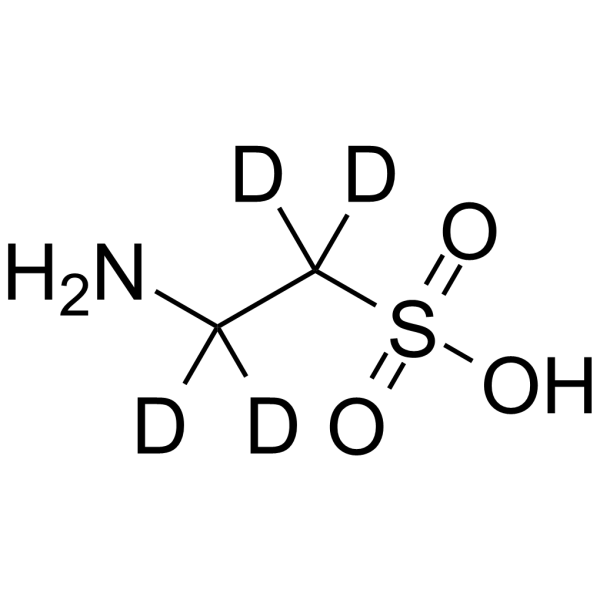
HY-B0351S
Taurine-d4Stable Isotope -

HY-N0290R
Mangiferin (Standard)Nrf2 Activator
Alle DNA/RNA Synthesis Isoform-spezifische Produkte anzeigen
MoreAlle Antibiotic Isoform-spezifische Produkte anzeigen
More

Biologische Aktivität
Beschreibung
IC50 & Target
|
DNA Polymerase |
In Vitro
Stable heavy isotopes of hydrogen, carbon, and other elements have been incorporated into drug molecules, largely as tracers for quantitation during the drug development process. Deuteration has gained attention because of its potential to affect the pharmacokinetic and metabolic profiles of drugs[1].
MedChemExpress (MCE) has not independently confirmed the accuracy of these methods. They are for reference only.
Anwendung
1. This compound can be used as a tracer
2. This compound can be used as an internal standard for quantitative analysis by NMR, GC-MS, or LC-MS.


Chemical Information
-
CAS. Nr. 1089051-56-8
-
Unlabeled CAS 501-36-0
-
Appearance Solid
-
Molecular Weight 232.27
-
Formel C14H8D4O3
-
Color White to off-white
-
SMILES
OC1=CC(/C=C/C2=C([2H])C([2H])=C(O)C([2H])=C2[2H])=CC(O)=C1
-
Synonyms
trans-Resveratrol-d4; SRT501-d4
-
Versand
Room temperature in continental US; may vary elsewhere.
-
Speicherung
Powder -20°C 3 years In solvent -80°C 6 months -20°C 1 month


Lösungsmittel & Löslichkeit
In Vitro:
DMF : ≥ 100 mg/mL (430.53 mM)
Ethanol : ≥ 50 mg/mL (215.27 mM)
DMSO : ≥ 50 mg/mL (215.27 mM; Hygroscopic DMSO has a significant impact on the solubility of product, please use newly opened DMSO)
* "≥" means soluble, but saturation unknown.
Please refer to the solubility information to select the appropriate solvent. Once prepared, please aliquot and store the solution to prevent product inactivation from repeated freeze-thaw cycles.
Storage method and period of stock solution: -80°C, 6 months; -20°C, 1 month. When stored at -80°C, please use it within 6 months. When stored at -20°C, please use it within 1 month.
Please refer to the solubility information to select the appropriate solvent. Once prepared, please aliquot and store the solution to prevent product inactivation from repeated freeze-thaw cycles.
Storage method and period of stock solution: -80°C, 6 months; -20°C, 1 month. When stored at -80°C, please use it within 6 months. When stored at -20°C, please use it within 1 month.
Konzentration (Stammlösung) × Volumen (Stammlösung) = Konzentration (Ziellösung) × Volumen (Ziellösung)


Reinheit & Dokumentation
-
Data Sheet (274 KB)
-
SDS (396 KB)
- English - EN (396 KB)
- Français - FR (396 KB)
- Deutsch - DE (396 KB)
- Norwegian - NO (396 KB)
- Español - ES (396 KB)
- Swedish - SV (396 KB)
- Italian - IT (396 KB)
- Korean - KR (396 KB)
- Portuguese - PT (396 KB)
-
Handling Instructions (2659 KB)
Verweise
[1]. Russak EM, et al. Impact of Deuterium Substitution on the Pharmacokinetics of Pharmaceuticals. Ann Pharmacother. 2019;53(2):211-216. [Content Brief]
[2]. Pirola L, et al. Resveratrol: one molecule, many targets. IUBMB Life. 2008 May;60(5):323-32. [Content Brief]
[3]. Lu R, et al. Resveratrol, a natural product derived from grape, exhibits antiestrogenic activity and inhibits the growth of human breast cancer cells. J Cell Physiol. 1999 Jun;179(3):297-304. [Content Brief]
[4]. Lee MH, et al. Resveratrol suppresses growth of human ovarian cancer cells in culture and in a murine xenograft model: eukaryotic elongation factor 1A2 as a potential target. Cancer Res. 2009 Sep 15;69(18):7449-58. [Content Brief]
[5]. Du LL, et al. Activation of sirtuin 1 attenuates cerebral ventricular streptozotocin-induced tau hyperphosphorylation and cognitive injuries in rat hippocampi. Age (Dordr). 2014 Apr;36(2):613-23. [Content Brief]
[6]. Smutny T, et al. Resveratrol as an inhibitor of pregnane X receptor (PXR): another lesson in PXR antagonism. J Pharmacol Sci. 2014;126(2):177-8. [Content Brief]
[7]. Eun Nim Kim,et al. Resveratrol, an Nrf2 activator, ameliorates aging-related progressive renal injury. Aging (Albany NY). 2018 Jan; 10(1): 83–99. [Content Brief]
[8]. Huige Li, et al. Resveratrol and Vascular Function. Int J Mol Sci. 2019 Apr 30;20(9):2155. [Content Brief]


Complete Stock Solution Preparation Table
Please refer to the solubility information to select the appropriate solvent. Once prepared, please aliquot and store the solution to prevent product inactivation from repeated freeze-thaw cycles.
Storage method and period of stock solution: -80°C, 6 months; -20°C, 1 month. When stored at -80°C, please use it within 6 months. When stored at -20°C, please use it within 1 month.
| Optional Solvent | Concentration Solvent Mass | 1 mg | 5 mg | 10 mg | 25 mg |
|---|---|---|---|---|---|
| Ethanol / DMSO / DMF | 1 mM | 4.3053 mL | 21.5267 mL | 43.0533 mL | 107.6334 mL |
| 5 mM | 0.8611 mL | 4.3053 mL | 8.6107 mL | 21.5267 mL | |
| 10 mM | 0.4305 mL | 2.1527 mL | 4.3053 mL | 10.7633 mL | |
| 15 mM | 0.2870 mL | 1.4351 mL | 2.8702 mL | 7.1756 mL | |
| 20 mM | 0.2153 mL | 1.0763 mL | 2.1527 mL | 5.3817 mL | |
| 25 mM | 0.1722 mL | 0.8611 mL | 1.7221 mL | 4.3053 mL | |
| 30 mM | 0.1435 mL | 0.7176 mL | 1.4351 mL | 3.5878 mL | |
| 40 mM | 0.1076 mL | 0.5382 mL | 1.0763 mL | 2.6908 mL | |
| 50 mM | 0.0861 mL | 0.4305 mL | 0.8611 mL | 2.1527 mL | |
| 60 mM | 0.0718 mL | 0.3588 mL | 0.7176 mL | 1.7939 mL | |
| 80 mM | 0.0538 mL | 0.2691 mL | 0.5382 mL | 1.3454 mL | |
| 100 mM | 0.0431 mL | 0.2153 mL | 0.4305 mL | 1.0763 mL |


Resveratrol-d4 Related Classifications
HY-16561S Related Classifications
 Powered by Bioz